Archive | January, 2024

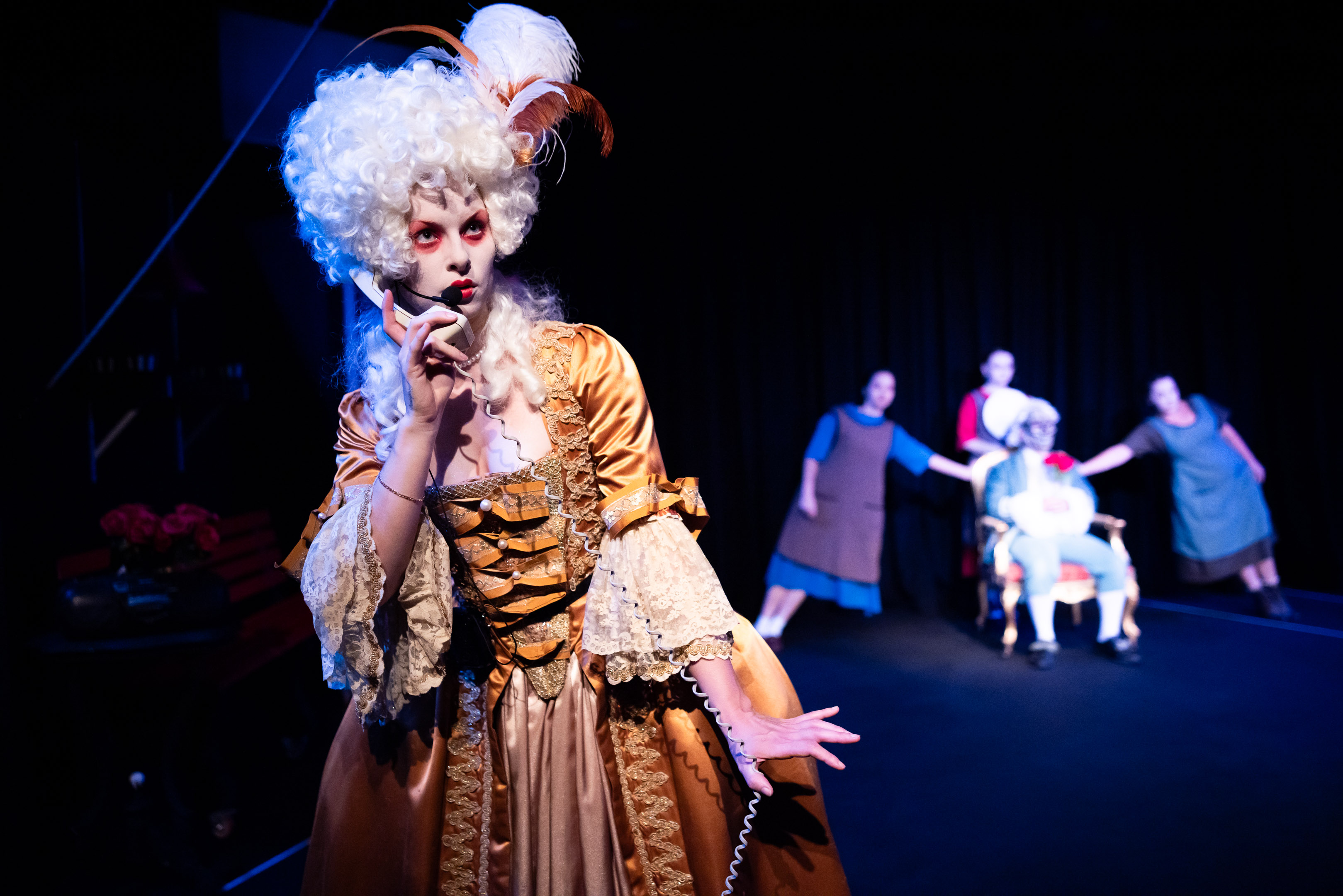
Sophia = (Wisdom): The Cliffs

25 Jan

Not to be told what to think … how wonderfully refreshing!

It’s pure relief to see a play that doesn’t have a blatant message. It’s a burst of cool, clean air – one which the Sydney theatre scene badly needs. All too often our audiences are offered productions in which the artists have something to say, and boy are you going to hear that something good and hard.

I’m not such a nihilist that I object to a message per se. It’s just that the message is often either painfully obvious, bereft of any complexity, or simply utterly lacking originality. You don’t need to go to the theatre for this sort of thing; you could go to your local church. The performance there has every chance of being more entertaining. And, honestly, the message might be richer. And I guarantee you’ll need to throw far less into the collection plate.

Artists, if you can say it in a slogan, maybe you don’t need a story. You certainly don’t need the dramatic form, whose particular magic is multiplicity. Yes, I’m being harsh, but we really must re-explore theatre’s potential. All justice and no joy makes theatre a deathly dull and dangerous toy.

Directed by Patrick Kennedy, Richard Foreman’s Sophia = (Wisdom): The Cliffs is a wondrous gift of a piece. It playfully invites us to think: about wisdom, about theatre, about being an audience. Or perhaps it’s more tongue in cheek than that. Perhaps it’s allowing us to not think at all.

Light on both narrative and characterisation, it’s constructed from a deliciously beautiful use of space (some of the most brilliant I’ve ever seen), a glorious use of colour and costume, and an extraordinarily eclectic and evocative soundscape. All design is by Kennedy and it’s a magnificent achievement. Foreman has created a marvellously mischievous meta-theatrical template and Kennedy makes the most of its wild potential.

The cast do terrific work, inhabiting a performative world in which flat realism is almost entirely replaced by near mechanically-precise movement and vocal work. This joyfully jolts us from any risk of deadening complacency, reminding us we’re not passive witnesses and that what occurs on the far side of the fourth wall can’t (in itself alone) be Life.

And, every now and then, the lights dim and the house lights come up. We become witnesses to ourselves, and we might recall, that despite all the fabulous work on stage, it’s our response that’s crucial. We’re not mere recipients of a message. We’re co-creators of the magic.

And what magic it is!

Paul Gilchrist

Sophia = (Wisdom): The Cliffs by Richard Foreman

Produced by Patrick Kennedy Phenomenological Theatre

At New Theatre until 27 Jan

newtheatre.org.au/sophiawisdom-the-cliffs/

Image by Daniel Boud
The Strong Charmion

20 Jan

This is a thrilling piece of theatre.

I have to admit, I love a historical drama. Much of the focus in contemporary theatre is on sharing our stories and giving voice to particular communities, phraseology that creates the impression that theatre is merely a type of reportage.

But historical drama is clearly not reportage: the artists creating any drama that is set in a distant historical period were simply not there! No matter how much research has been done, we know the artists are making things up, are being thrown back onto fiction, and that’s a delightful thing. Fiction can be a glorious invitation to the audience to engage, to enjoy, to flourish, rather than merely be informed. (I’m aware I’m giving little weight to the fact that theatre that shares our stories or gives voice might be offering representations of particular lives to people who have never before seen their lives represented on stage. Of course theatre can do this, and I hope it continues to do so. But it’s not all theatre does, or all it might do.)      

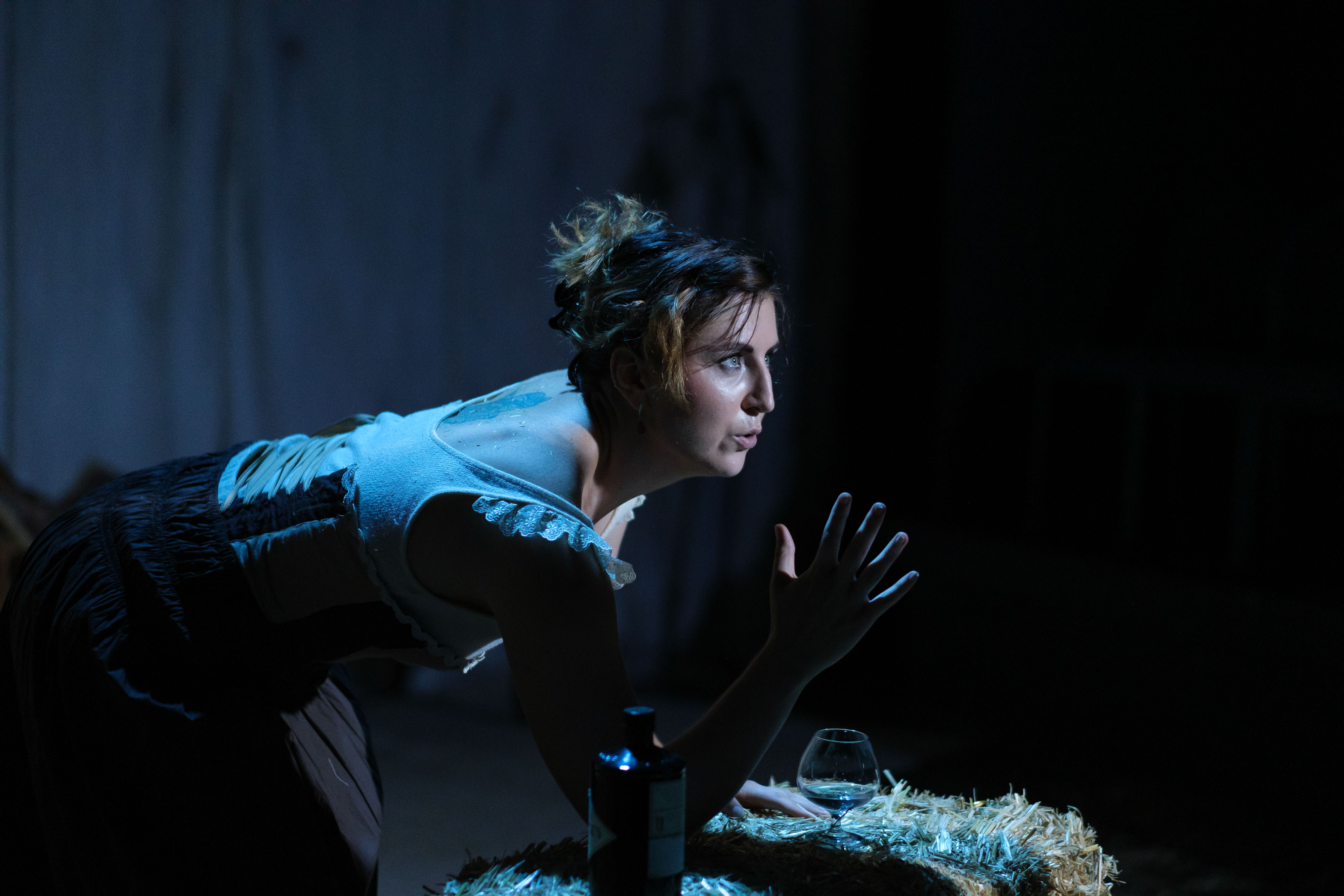
The Strong Charmion by Chloe Lethlean Higson is set in a circus in the 1920’s. Circuses traditionally present the unconventional. They are the orient of normalcy, defining what is expected, and acceptable, by displaying what is not. They operate both as freak show and as pressure valve; they offer both the titillation of the bizarre and relief from the banal. Lethlean Higson has chosen the perfect setting for her exploration of both repressive social mores and the intoxicating potential for growth. Bella Saltearn’s set and Catherine Mai’s lighting design are wonderfully evocative of the shadows and squalor from which new visions of life ultimately burst forth to find the light.    

Rosalie Whitewood (Gabrielle Bowen) is The Strong Charmion, a woman of unconventional strength. She refuses to be small, she refuses to be physically vulnerable. She is one of several characters who challenge traditional visions of femininity. Her family and friends (Emily Crow, Niky Markovic and Alyssa Peters) question chastity, marriage and reductive visions of gender. Their tales are told with both humour and poignancy.

In this, its first showing, the production suffers from a few issues. On opening night, gremlins played havoc with the tech, making changeovers between scenes awkward and slow – but these demons will no doubt be exorcised as the run continues. (These tech gremlins were probably also why it took me so long to appreciate that some of the scenes were flashbacks. Or at least I’m blaming them; it might be just that I’m stupid.) The script could do with a little fleshing out; these characters are fascinating – and I’d love them to say more. I also wonder whether the piece is served by the doubling that means the male experience is not granted a fullness approximating that of the female and non-binary characters; if we better comprehend the battle, more sweetly we savour the victory.

There’s an absolutely terrific story here and I hope it gets the chance to grow further.

Lethlean Higson was the recipient of the 2023 Katie Lees Fellowship, and once again this brilliant initiative by Flight Path Theatre has added something of value to the Sydney theatre scene.  

Paul Gilchrist

The Strong Charmion by Chloe Lethlean Higson

Flight Path Theatre until Jan 27

flightpaththeatre.org

Image by Clare Hawley

Tiddas

18 Jan

This play continues Belvoir’s magnificent commitment to indigenous theatre.

It’s an adaptation of Anita Heiss’ novel by the writer herself, directed by Nadine McDonald-Dowd and Roxanne McDonald.

Six women meet regularly as members of a book club and we witness their changing relationships as each faces their own individual problems.

This is, of course, not new territory. However, presented from an indigenous perspective, it’s fascinating.

Yes, there are several challenges involved in using this type of plot in theatre. One is that the positing of five (or is it six?) protagonists makes it difficult to give sufficient time to each individual story. Secondly, by setting many of the scenes in the actual club meetings – an exclusively female space – the main problem each woman appears to face is her relationship with other women. And to achieve dramatic tension, these women bicker and fight. In a tale which aims (I think) to ultimately valorise sisterhood, that tension is disconcerting.

But is it a truthful representation? I wouldn’t know.

And that raises the issue of theatre that purports to tell our stories. As an outsider, am I to take all this as reportage?

I suggested initially that the following of the standard tropes of a sisterhood story was made more intriguing by its indigenous perspective. How?

Firstly, all the books discussed by the club are written by indigenous writers (once again, I think). We’re spared lengthy discussions of texts we may not be familiar with, but it’s curious that what the characters often value about the chosen books is their focus on what might be called political issues. Valuing a novel for its content or theme is not what is usually done. A book about, say, native title might be well written or it might be poorly written. Consider the enormous range in quality of novels about, say, love. When an artwork is valued primarily for its content or theme it suggests either a lack of sophistication on the part of the reader, or a glorious relief that finally a deep silence is being broken. (It’s worth noting that the much esteemed Jane Austen wrote six novels about love – which is six more than she wrote about native title.)

Continuing to addressing the deep silences in our nation’s literature, the characters suggest that the great Australian novel would need to include indigenous characters and to have a “message.” The first of these requirement is obvious, but the second is highly debatable. Heiss’ Tiddas is playfully asking us to think about fiction (I’m deliberately avoiding the phrase our stories.)

In a gorgeously provocative twist, though the novels the club reads are often valued for their focus on indigenous political issues, most (though not all) of the issues Heiss’ characters face are more universal; sexual relations, procreation, and friendship. (I’ll point out a fascinating blurring of this: one character uses the word “sovereignty” to describe the experience of personal autonomy or individual independence. It will be interesting to see, over the next few years, the changing usage of this oddly legalistic word.)  

If I take Tiddas as reportage, I should also point out that a fundamental aspect of the characters’ experience is an intense awareness and assertion of distinctions: Blak as against white, Aboriginal as against Torres Strait Islander, Koori as against Murri, woman as against man. Definition by opposition can feel empowering. And the characters’ emphasis on nomenclature (which word or phrase is the correct or acceptable one) expresses both a desire to be accurately represented and a desire for power. Considering this nation’s appalling colonial history, both desires are utterly understandable. (That knowledge is readily aligned with power is highlighted in a scene in which the sole white character apologises for her terrible behaviour, saying “There is so much I need to learn.” Learn? Is ignorance really her fault? Though it seems counter-intuitive, to emphasise her moral culpability would be to further underline her power. Ascribing ignorance to her weakens her, particularly when what counts as knowledge is beyond her remit.)   

The cast – Louise Brehmer, Lara Croydon, Jade Lomas-Ronan, Roxanne McDonald, Anna McMahon, Perry Mooney and Sean Dow (playing all the male roles) – are very watchable, and warmly invite us to share their characters’ frustrations and joys.  

I’ll finish by describing a golden moment in the performance. It’s understated and unobtrusive. The spoiler rule prevents me giving much detail, but it’s a piece of stage business involving two glasses of alcohol and which of two characters is drinking what. It’s a delightful subversion of stereotypes, and a wonderful example of the dramatic form’s ability – through its juxtaposition of voice with voice, and words with actions – to remind us that the world will refuse to fit our theories (our stories?) and will constantly challenge us to growth.   

Paul Gilchrist

Tiddas by Anita Heiss

At upstairs Belvoir (as part of the Sydney Festival) until Jan 28

belvoir.com.au/productions/tiddas/  

Image by Stephen Wilson Barker

Reflections on Writing about Theatre; or Making a Splash!

16 Jan

In every production, the least convincing performance is the one by the critic attempting the role of Teller-of-the-Truth.

But it’s nothing new to assert that evaluations of productions are subjective. (Though, in my defence, theatre is not particularly interested in novelty. It’s been quipped that Jane Austen wrote not six novels, rather the same novel six times – but the accusation that Austen endlessly returned to the same material loses any sting when compared to an artform in which practitioners routinely present plays that have been produced 100’s of times before. Theatre is an artform in love with repetition. Do that to me one more time, Once is never enough….)

But back to my earlier point: my reluctance to accept a role in which my performance (as Teller-of-the-Truth) will undoubtedly be graded somewhere on the spectrum between foolishly naïve and laughably arrogant.

Of course, I’m happy to double, briefly appearing in that small role of self-important judge. (“Small role!” I hear publicists declare imperiously, “There are no small roles, only small reviewers!”)

But I’ll double that small role of evaluator with a more important one: facilitator of what the artwork offers.

A good play is like a stone thrown into a stagnant pond. When I write about theatre, I’m not especially interested in judging how the stone was thrown; I’m hoping to perpetuate the ripples.

Paul Gilchrist

Image by aceebee from Camberley, UK, CC BY-SA 2.0 creativecommons.org/licenses/by-sa/2.0, via Wikimedia Commons