Claim a sportsperson has made History and you’re probably hoping to forget the horrors of which History usually consists.
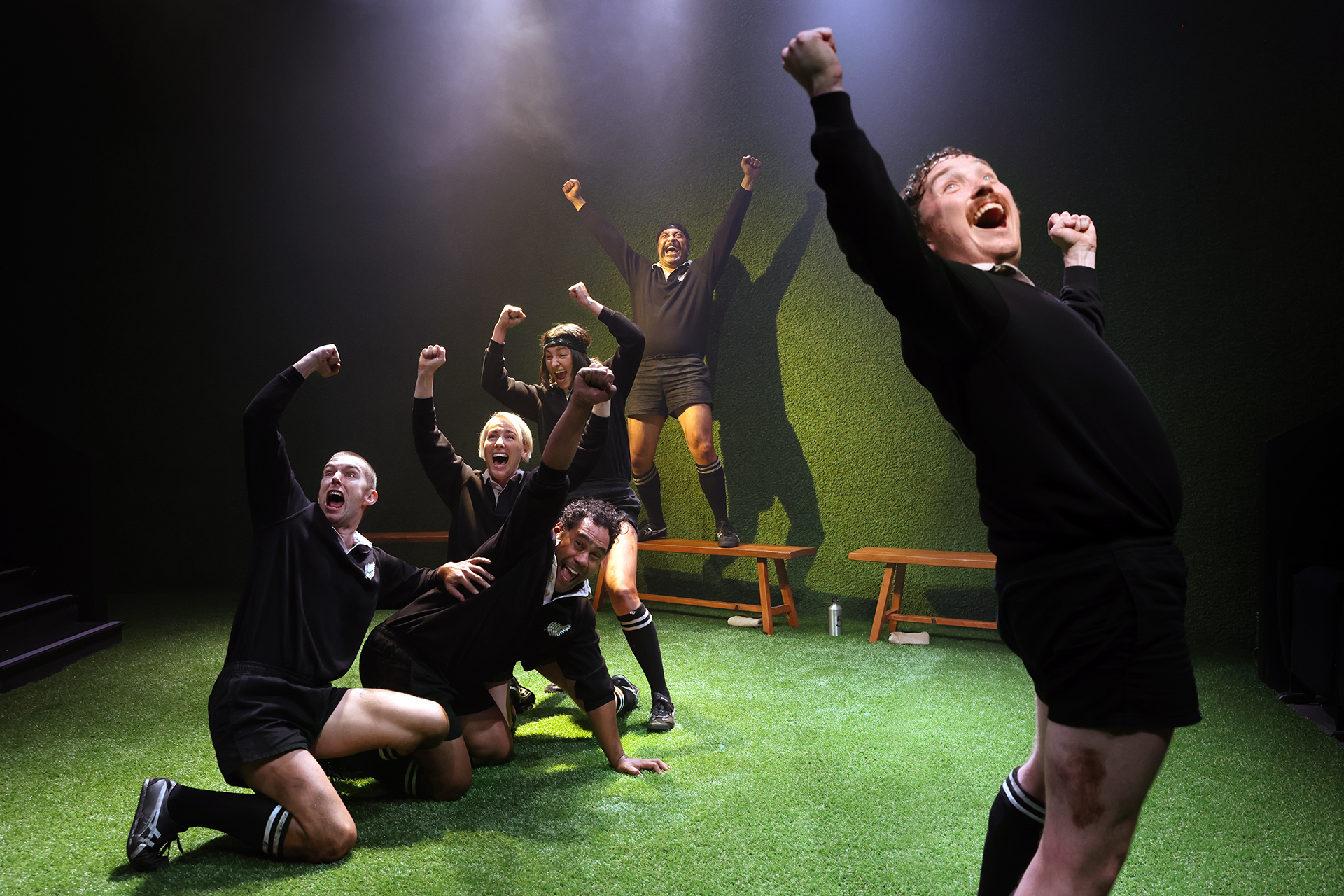
In 1978, the Irish provincial team of Munster played the touring All Blacks. For many people, it’s a game to forever remember.
For those ignorant of rugby, this might seem a little odd. But to appreciate this as a mouse-that-roared story you need to be aware, that on football pitches around the globe and for some time, little New Zealand had themselves been displaying decidedly un-rodentlike behaviour.
You might also think it sounds a little sentimental. And when one of the characters lists by name each of the Munster men who played on that famous day, I couldn’t help recollect Yeats’ roll call in “Easter, 1916” – though the events that poet memorialises are far more terrible.
Perhaps Alone it Stands is a slight story. Perhaps.
It’s certainly a terrific evening’s entertainment. Under the expert and endlessly inventive direction of Janine Watson, we’re treated to absolutely brilliant comic performances.
All six cast members play both Irish and Kiwi characters, and one of the piece’s many charms is the juxtaposition of accents. The skill with which this is presented is a tribute to dialect coach Linda Nicholls-Gidley.
The physical performances are also marvellous, and credit should go to the actors and Watson, but also to the support team of fight director Tim Dashwood and intimacy coordinator Chloë Dallimore.
The program suggests the cast play sixty roles in all. To give a taste of this amazing feast of physicality, let me pick out a few faves.
Alex King as All Black Stu Wilson magnificently embodies the extraordinary confidence and agility of a world class athlete, and she also displays true comic genius as Sinbad (and, no, Wikipedia won’t reveal who that is. Go see yourself!) Tristan Black as the Kiwi manager hilariously encapsulates the absurdly confrontational hypermasculinity of the middle-aged sporting official. Briallen Clarke is glorious in the range suggested by the portrayals of a tense expectant mother to that of perfectly assured All Black Gary Knight. Skyler Ellis presents a beautiful contrast with his suave BBC commentator and his bewildered everyman Munster fan. Anthony Taufa’s sheepish soon-to-be father, struggling to balance new responsibilities with his passion for the game, is wonderful, as is Ray Chong Nee’s young mischief-making urchin, a boy with more on his mind than football.
And these last examples hint at the glory of the piece. Yes, it’s about a football game. And, yes, a dramatist inventing the whole thing from scratch would most likely have chosen a different scoreline.
But, apart from providing an opportunity for talented comedians to show off their stuff, what playwright John Breen does so well is to create a truly Bruegelesque world.
Auden wrote in his famous commentary on Bruegel “About suffering they were never wrong,
The old Masters: how well they understood
Its human position: how it takes place
While someone else is eating or opening a window or just walking dully along;
How, when the aged are reverently, passionately waiting
For the miraculous birth, there always must be
Children who did not specially want it to happen, skating
On a pond at the edge of the wood….”
It’s this Master status that Breen achieves, not by what he says about suffering, but by what he says about joy. It need not be grand or otherworldly. Rather it hides, amongst all the business of Life, waiting in surprise.
Paul Gilchrist
Alone it Stands by John Breen
at Ensemble until 2 March
Image by Prudence Upton
 Theatre Red
Leave a comment