Wallis Heads is a beautiful but sleepy coastal town. Multi-million dollar property developer Alex Whittle thinks it’s ripe for a make-over.
As the new playground for the rich, jobs and money will pour in. It’s entirely logical, if driven by self-interest.
And the local mayor thinks it’s a terrific idea, especially since Whittle will fund a brand new council chambers.
But where will all this leave the little people? Any chance for maintaining a pristine environment will be gone. Any possibility of social housing will disappear. Market forces will mean new jobs, but the people working them will no longer be able to pay the rent.
That’s the great divide of the title, the division of the rich from the less so.
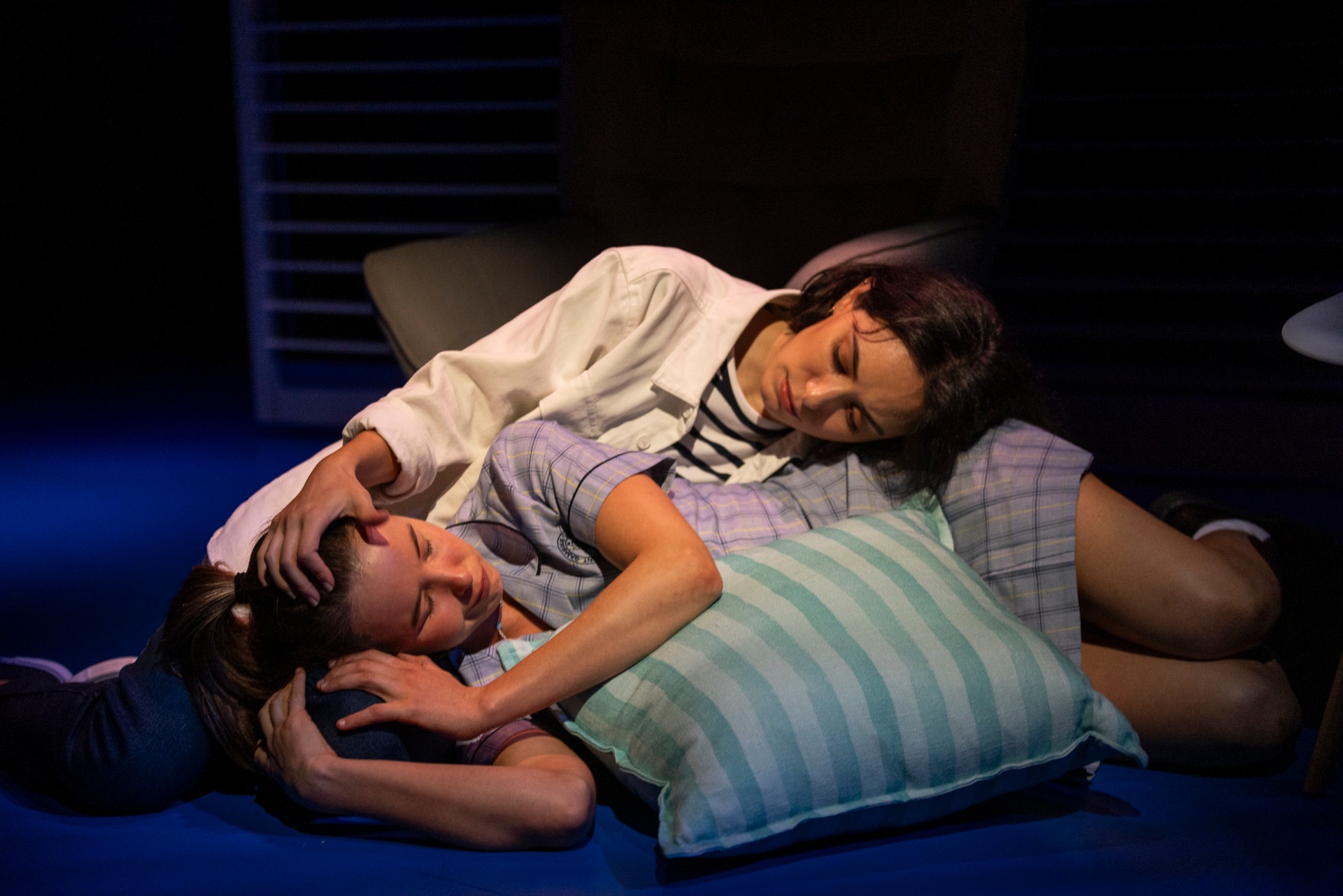
Single mum Penny, stacking shelves at Woolies to make ends meet, has had enough. There are things you have to fight for.
In the battle for hearts and minds, one field of engagement is Rachel, Penny’s teenage daughter. To widen the cracks in an already fractious mother-daughter relationship, Whittle expresses belief in Rachel’s big dreams, aspirations her more caring mother tempers with caution.
David Williamson’s script has a majestic simplicity, an exquisite clarity. In many ways, it’s not a new story. But, in the most important ways, it’s a true story. I don’t mean it’s non-fiction; I mean it openly deals with genuine tensions in our society.
There’s gentle humour aplenty, sprinkled with silent assassin satire; it’s a warm, hearty chicken soup, laced with shards of glass.
Mark Kilmurry’s cast is magnificent. Georgie Parker as Whittle plays every note of the script with a precision and attention to detail that’s an utter comic delight.
I haven’t cried in many Williamson plays, except from laughter, but here the mother-daughter relationship is presented with an honesty and insight that had my eyes stinging with salt only a scene or two in. Emma Diaz as Penny and Caitlin Burley as Rachel are extraordinary.
Maybe the end of play has a whiff of the deus ex machina about it. (Ironic, considering what the deus is in this case…. I don’t think the spoiler rule prohibits me from mentioning the word election.) This is not a criticism of the script; the dramatic form simply has it limits. Drama confidently represents the struggles between individuals and between small groups, but it can only hint at larger movements. Its power is not to represent the masses, but to galvanise them. What we can’t see on stage, we’re encouraged to enact ourselves. Democracy is drama in the daylight. And that aphorism, like the play that inspired it, is an invitation.
Paul Gilchrist
The Great Divide by David Williamson
at Ensemble until April 27
Image by Brett Boardman
 Theatre Red
Leave a comment