With a title like this, I was expecting the story of a giant squid. I was expecting a hideous creature from the murky depths, a cold blooded monster from that mysterious world down under, a frightening phenomenon with a disturbing multiplicity of arms, arms that grab at everything we hold dear, at every civilised thing, at that fragile ship we call society, and drag it all down, down, down.
So, you can imagine my surprise when I found this show was about Rupert Murdoch.
Written by James Graham and first produced in the UK in 2018, Ink tells the story of the first year of Murdoch’s ownership of the newspaper The Sun and the impact on the Fleet Street scene.
In some ways it’s ancient history; despite Murdoch still being with us, the play is set over 50 years ago. Whatever was the impact then, you might wonder whether it’s worth crying now over spilt ink. I grew up in a world in which the damage was already done.
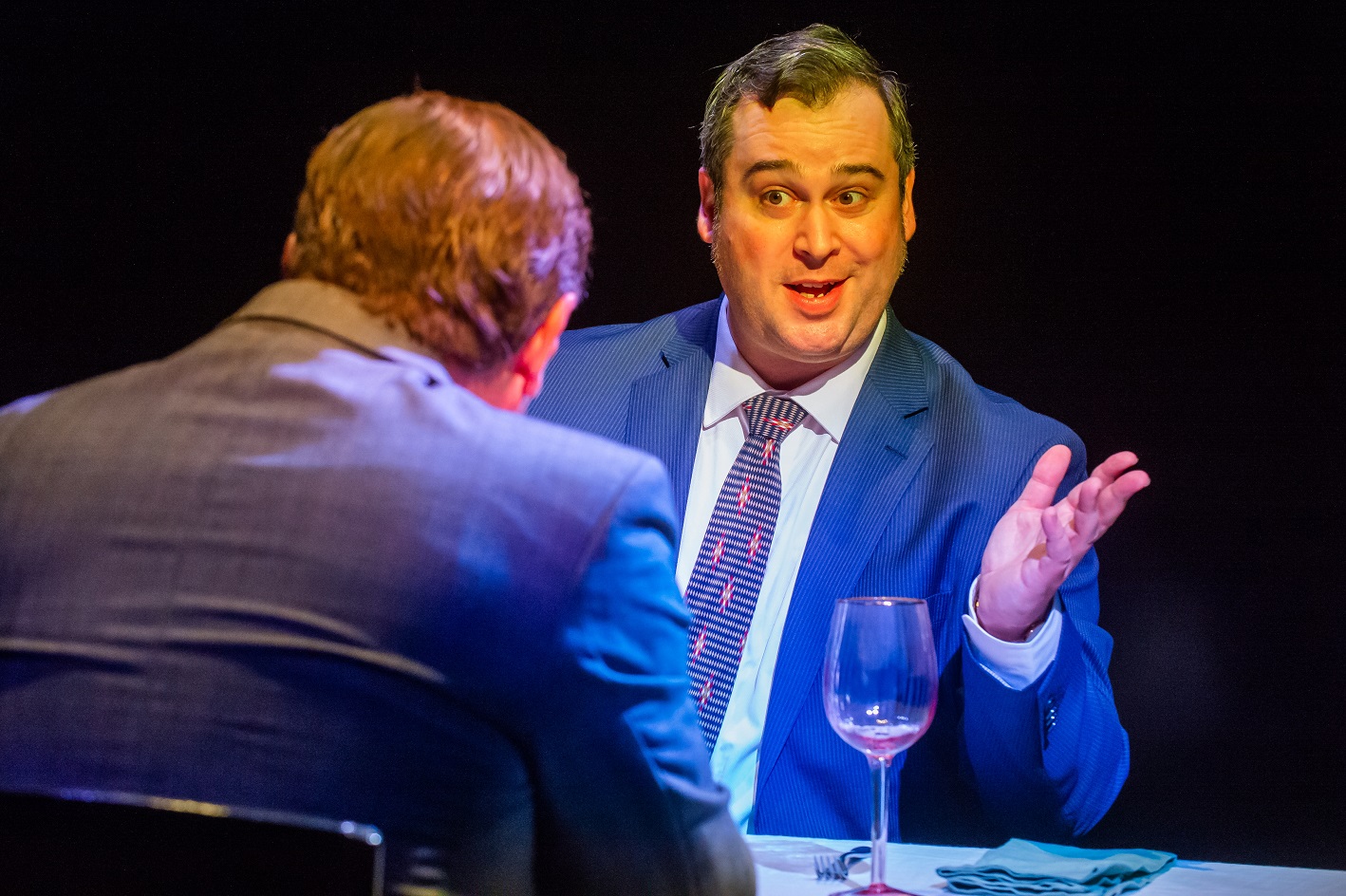
It’s a grand piece of storytelling, with a huge dramatis personae and 2 hours 30 minutes stage time (and an interval.) Director Louise Fischer marshals a fine cast.
Despite this grandeur, the piece has a curiously small focus. This is a result of three of the playwright’s creative decisions.
Firstly, The Sun’s editor, the now deceased Larry Lamb, gets far more stage time than Murdoch, and the media mogul is presented as almost reluctant to accept some of his editor’s more trashy strategies. (Lamb is played wonderfully by Nick Curnow, in a performance that drives the production.)
Secondly, we’re shown only Fleet Street, so the point of debate – whether The Sun’s tawdriness actually affected society or merely reflected it – is reduced to competing assertions from characters within the parochial world of the press.
And finally, the complaint many people have had about Murdoch over the years is his political impact, his alleged pushing of the working class towards the Right. However, in the year represented in the play, that tentacle is yet to surface. The Sun’s sin is that it’s low brow, not that it’s fascist.
Not that the play is oblivious to the possibility of political influence; in the final moments there’s an ominous swirl in the inky waters.
And it will no doubt be a discussion starter.
I’ll get the ball rolling. The role of the media in civic society is always ambiguous. The media can help and it can hinder. Democracy may die in the dark, but neither does it cope well with noise.
And we’re often tempted to ignore the role of the media’s audience. It’s easy for us to assume that the audience are passive consumers who unthinkingly accept whatever they’re told. (Fortunately, this is an error we ourselves never, ever commit.)
In a capitalist society – in any society – can we be surprised when the media chases an audience?
How are both civic society and culture created?
Where does responsibility, and power, lie?
Paul Gilchrist
Ink by James Graham
at New Theatre until June 29
Image by Chris Lundie
 Theatre Red
Leave a comment