Archive | September, 2024

I Worked with Heath Ledger Once…

28 Sep

It would be natural to assume, that as a theatre critic, I would relate to a story of a failed artist.

Jarred Keane plays Jeremy, an actor who’s made a pact with himself that he’ll quit if he hasn’t “made it” by 35.

Trouble is, 35 is hurtling towards Jeremy with the velocity of a dinosaur-ending rock.

Written and directed by Keane, this piece asks questions every performer should ask themselves:

Am I doing this for fame?

If so, WHY?

And how, EXACTLY, do I define success?

And is success really a HELPFUL concept?

Let me lay my cards on the table: I think the pursuit of fame is disturbing, at best symptomatic of a deep insecurity or at worst indicative of a myopic self-obsession. Similarly, I think success is a sloppy, problematic concept. Doing something successfully is a secondary virtue. The crucial issue is what you’re trying to do, not how well you do it. Surely, it’s better to fail at something worthwhile than succeed at something worthless. For example: Who’d want to be remembered for producing a piece of art that most effectively keeps the world small and cold? Alternatively, if being a success as an actor only means being able to earn a living wage from the craft, the concept loses its magic aura, and becomes akin to the success or failure you might have as, say, an Uber Eats delivery driver.)

Jeremy’s pact implies he isn’t really interested in art. (Stanislavsky said you should “love the art in yourself, not yourself in the art”.)

But as his deadline gets closer, Jeremy’s beginning to realise his simple ultimatum might just be that – too simple.

One possible catalyst for his change might be that a young filmmaker is shooting a documentary – with Jeremy as the subject. I don’t know why. It does allow the production to be a hybrid, with most scenes being played live but with sections of the documentary shown on a screen.

There are problems with pace. Everything would benefit from being faster, from the changeovers between scenes to the delivery of many of the lines. Some of the cast would also gain from a greater focus on vocal projection.

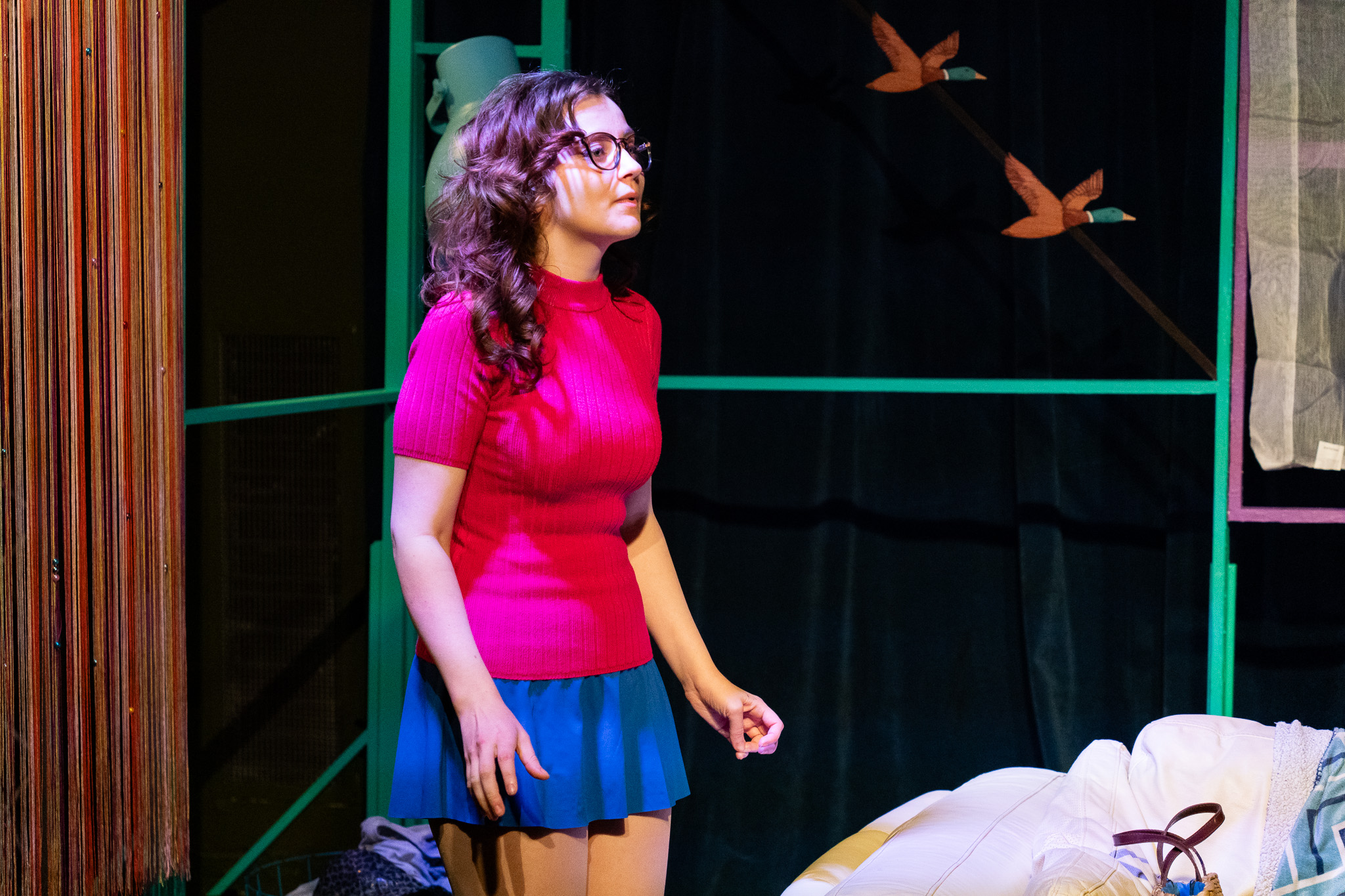
Jade Nicholson-Lamb as Nikki, Jeremy’s ex, has a wonderful stage presence, effectively portraying a woman who’s definitely moved on from a past relationship but refuses to dismiss it as merely a step in some upward progression, something to be kicked away and forgotten when finished.

Richard Cotter is very amusing, presenting a subtly satirical portrait of the experienced actor who’s worked with everyone – and makes sure you know it.

Lisa Hanssens plays a famous, successful filmmaker, more interested in art than fame and success. Hanssens has a gentle easy-going gravitas that makes for a magnetic performance.

I Worked with Heath Ledger Once playfully pokes at some unhealthy values that permeate the artistic world, and with some further tightening, it could prove the revitalising detox we need.  

Paul Gilchrist

I Worked with Heath Ledger Once… by Jarred Keane

At 107 Projects as part of the Sydney Fringe

until 28 September

sydneyfringe.com/events/i-worked-with-heath-ledger-once/

Image by Matej Hakl

Gilgamesh

27 Sep

This is a world premiere, a collaboration between Sydney Chamber Opera, Opera Australia and Carriageworks, in association with Australian String Quartet and Ensemble Offspring.

Yes, that’s a lot of talent and expertise.

It’s an adaptation of an old tale, seriously old, possibly the oldest written tale we have. The original source was created in ancient Mesopotamia and was bubbling around in different forms from around 2100 BCE. It settled into The Epic of Gilgamesh around 1800 BCE and was rediscovered in the late nineteenth century. Since then it has increasingly become an inspiration for modern artists, including the novelist Saddam Hussein.

A more skilled adaptation is this one by Australian artists composer Jack Symonds and librettist Louis Garrick. (Though you can imagine my disappointment when I found the libretto was in English, not Ancient Sumerian. Ten Tuesday nights at a community college for nothing!)

One of the attractions of the tale is its sheer age. But why does age create an aura? Age doesn’t automatically guarantee value. (Left Field Example: Though no longer young, I still have my appendix – but that ancient organ is still here not because it’s valuable; it simply hasn’t tried to kill me yet.)

But Gilgamesh’s tale is so old it seems to come from the dawn of civilization. It feels like an origin story, and that genre is often used to explain inherent, irresolvable tensions.

In this particular tale, the tension is between civilization and nature.

Gilgamesh is king of Uruk, but he has become a tyrant (a danger inherent to all civilization.) To weaken him, the gods create Enkidu, a wild man, a natural man. However, before Enkidu confronts Gilgamesh, he’s prepared for life in the community – by a temple priestess. (So much for our idea that sex is so rock’n’roll; it’s actually one of the great glues of human society. Nature? Or civilization?)

Gilgamesh and Enkidu fight, and are revealed as equals. They become close friends and lovers. United, they challenge the monster who guards the Forest of Cedar, a natural resource that Gilgamesh has long coveted. (Once again, civilization versus nature.)

Not actually being fluent in Ancient Sumerian (the community college brochure promising more than the course actually delivered) I’m not sure whether this nature versus civilization motif is a layering of modern concerns on an ancient tale. I’m not sure it matters.

Whatever the case, the environmental strand disappears for a while as the tale explores the relationship between Gilgamesh and Enkidu, using it as a lens to consider fundamentals of the human condition, such as longing and mortality. Perhaps the environmental strand of the story doesn’t so much disappear as deepen, as human ambition and desire for dominance are questioned at an existential level.  

Symonds’ score is superb, sufficiently traditional to evoke the past (or at least the relatively recent past in which opera was created and the ancient world was rediscovered) and sufficiently contemporary to give the tale a vibrant immediacy. Its performance is thrilling, emotive and utterly engaging.

Director Kip Williams elicits from the cast brilliant physical performances. Mitchell Riley as Enkidu, his wildness slowly tamed but never completely erased, and Jeremy Kleeman as Gilgamesh, his arrogant regal bearing tested by the gods, are both outstanding.

Williams’ use of space is a delight. With costumer designer David Fleischer, set designer Elizabeth Gadsby and lighting designer Amelia Lever-Davidson, he creates a stunning visual world. In the vast stage of Bay 17, symbols of nature gradually mix with those of civilized decadence, and the final scene that completes this portrait of perpetual tension is theatrical magic.  

Paul Gilchrist

Gilgamesh by Jack Symonds and Louis Garrick

At Carriageworks until 5 Oct

carriageworks.com.au

Image by Daniel Boud

Tom Moran is a Big Fat Filthy Disgusting Liar

25 Sep

Sometimes, when I’m tired or sick or hungry, I worry about silly things – like if I’m liked. And then I remember that some of the people in history I admire the most were burnt at the stake in the public square.

The desire to be liked is pretty universal, and sometimes problematic. When I work with young people, I always try to slip in the same piece of advice: Don’t worry if you’re disliked, because you’ll often be disliked for qualities and actions of which you should be rightfully proud. I’m looked at blankly, or with boredom tinged with disdain – and it becomes apparent that my advice, though unsolicited, is entirely sound.

In Tom Moran is a Big Fat Filthy Disgusting Liar, Moran tells us how so very desperately he has wanted to be liked. So desperate, that the desire has often trumped the truth.

Moran’s delivery is utterly superb, trippingly-on-the-tongue fast and strong … until it’s not, until it slows, until it softens, and with enormous emotional impact he shares moments of shame. The lighting design (Colin Doran) and soundscape (Aoife Kavanagh) beautifully accentuate this journey.

Directed by Davey Kelleher, the show is very funny and incredibly powerful; a brilliant performance by Moran.

If performance is the correct word. Presumably it’s a sharing, not a piece of fiction. (It’s odd how commonly we now do this on stage. Genuine honesty is rare enough in Life; in the theatre, until recently, it was completely unknown.) The whole thing feels a little like being at a support group – except that the guy whose turn it is to speak is absolutely riveting for 70 minutes straight.

The piece is about Moran and his family, and audiences will no doubt respond to the psychological particulars in different ways. Some might feel they’ve been invited to gaze through a portal into a bizarre alternative universe. From others it all might evoke a there-for-the-grace-of-God sort of response. Others still might feel the thrill of recognition, a realisation which can be either comforting or confronting, either assuring them they’re not alone, or challenging them that it can’t go on.

Of my three imagined responses, mine was of the first variety.

But undoubtedly, Moran is exploring one of the fundamental tensions in the human experience: the outside world is filled with people but your inside world is filled with you. How do we reconcile our social needs with the solitary aspect of consciousness? How does anything from that outer world become an unquestioned part of our inner world?

Is the only way out of these thorny dilemmas to focus on loving, rather than being loved?

This piece is fun, thought-provoking and soul-expanding.

Paul Gilchrist

Tom Moran is a Big Fat Filthy Disgusting Liar by Tom Moran

At New Theatre, as part of the Sydney Fringe Touring Hub

Until 28 September

https://sydneyfringe.com/events/tom-moran-is-a-big-fat-filthy-disgusting-liar/

Image by Owen Clarke

Drink Rum with Expats

24 Sep

This is classic fringe theatre.

Sh!t theatre (creators and performers Rebecca Biscuit and Louise Mothersole) tell us how they got a gig to develop a piece of theatre in Malta. It’s to be presented at The Pub, a favourite haunt of British expats. (My choice of noun is deliberate; not expats, haunt; it’s the bar where Oliver Reed died. Not that the great actor has a continuing spectral presence; it’s just that, apparently, the venue milks the unfortunate incident for all it’s worth.)

Drink Rum with Expats is an intentionally playful, laidback telling. It’s constructed of bits and pieces: songs and sing-alongs (mainly drinking songs); slide shows and videos (caricatures of expats, screen shots of the daggy local media, snaps and reels revealing the beauty of the island); flash language lessons (fundamentals, like how to say penis in Maltese); free beer and rum (no joke); crowd surfing – and dancing (at least, impressions of Oliver Reed dancing).

Think of it as a trash and treasure stall, where in the ragged wildness of detritus true gold lies hidden. Or think of it as a mosaic, where the impressive, the inspiring, is made from many unlikely little parts. You could call it the theatrical equivalent of scrap-booking, except it’s terrific fun.

But what begins as a collection of cheeky anecdotes from a sun and booze holiday grows into a story of political awareness.

Ultimately, the show explores corruption and the plight of refugees. Expats party in Malta while those who manage to make it by raft from Libya are held in detention centres. But, at a more insidious level, we hear of the selling of European passports and the assassination of journalist Daphne Caruana Galizia who dared to challenge the practice. We see a deeply moving video of a protest attended by the performers, a candle lit vigil demanding truth and justice. (Convictions have since been made.)

The straightforward, overtly political approach works because the performers present as easy-going and fun-loving. What they say about the issues becomes indubitable – simple common sense. If only the world were cakes and ale. Alas, it’s not.

However, the show is a splendid example of theatrical exuberance, an invaluable reminder, that in the confrontation with the dark and dirty, the torch of truth might best be wielded by joy.

Paul Gilchrist

Drink Rum with Expats by Rebecca Biscuit and Louise Mothersole

at New Theatre, as part of The Sydney Fringe Touring Hub

until 28 Sept

https://sydneyfringe.com/events/drink-rum-with-expats/

Image supplied by Sh!t Theatre

Plenty of Fish in the Sea

23 Sep

Firstly, this is top-class physical theatre.

Created and directed by Emily Ayoub and Madeline Baghurst, and performed by these two artists and Christopher Carroll, Plenty of Fish in the Sea is a visual wonder.

The choreographed movement is extraordinary, and the individual clowning a treat – replete with hilarious visual gags and moments of playful poignancy.

Tobhiyah Stone Feller’s design is both beautiful and inventive and, mounted all on wheels, it dances with the performers. The soundscape with composition by Daniel Herten is enchanting and fun, and the performers’ interaction with it is superb. Victor Kalka’s lighting design is a gorgeous game of light and shadow, creating a magical aura that invites us into the play’s fabulous world.

Which brings me to Secondly: What is it all about?

On the surface, a French speaking nun (Je ne pourrais pas) and her silent novitiate go fishing and catch – with a hook – a man. They then want to teach him to fish. He learns. They catch a huge amount of fish. He says too many. And I’ll leave it there.

Except for the sex. I really should mention the sex.

Fables don’t usually have sex (which is probably why they’re of little interest to most people.) I guess the piece is a fable about excess, in particular sexual excess; a sort of allegorical presentation of the endless opportunities offered in our society for hooking up, and the way that can lead to hyper-sexualisation (which may, or may not, be a good thing.)

You can probably sense a little doubt. I’m uncertain about the meaning of the piece for two reasons. One reason is the work’s potential for sensory overload, which (for me, at least) results in semantic overload. In addition to the extraordinary visuals and soundscape, there’s also spoken word. A recorded voice over reads from a book the women have given the man. The book appears to be some treasured text about fishing, but it’s salted with symbolism and mischievous hints of higher meaning (or perhaps lower meaning; see earlier comments about sex.) I found the VO difficult to follow; I’m not sure if that was because of a technical thing or an accent thing. There’s also a lot of talk from the French speaking nun which, va sans dire que, I didn’t understand. The only spoken word accessible to me was the dialogue of the male character, and I felt positioned a little like him – bewildered, charmed, and ultimately fucked over (in the nicest possible way.)

The second reason I’m uncertain about the meaning is that I’m not sure the piece really does operate as a fable or an allegory.

Perhaps, instead, it does what abstract art can do: that is, present a mood that resists or escapes linguistic statement. (Picasso, or somebody, said something about not wanting to paint what trees look like, but rather how they make you feel.)  

Or, perhaps, the piece functions as a sort of Zen koan; a teasingly deliberate denial of certainty; a cheeky refusal to flatten into a dull, explicit meaning; a type of tricksy epistemological illusion that offers intimations of spiritual liberation.

Whatever the case, seek depth, if you want – but know for sure this work delivers true delight.

Paul Gilchrist

Plenty of Fish in the Sea by Emily Ayoub and Madeline Baghurst

Played at New Theatre, as part of the Sydney Fringe,

17 -21 September

Image by Geoff Magee

Colder than Here

21 Sep

Go gentle into that good night….(with apologies to Dylan Thomas.)

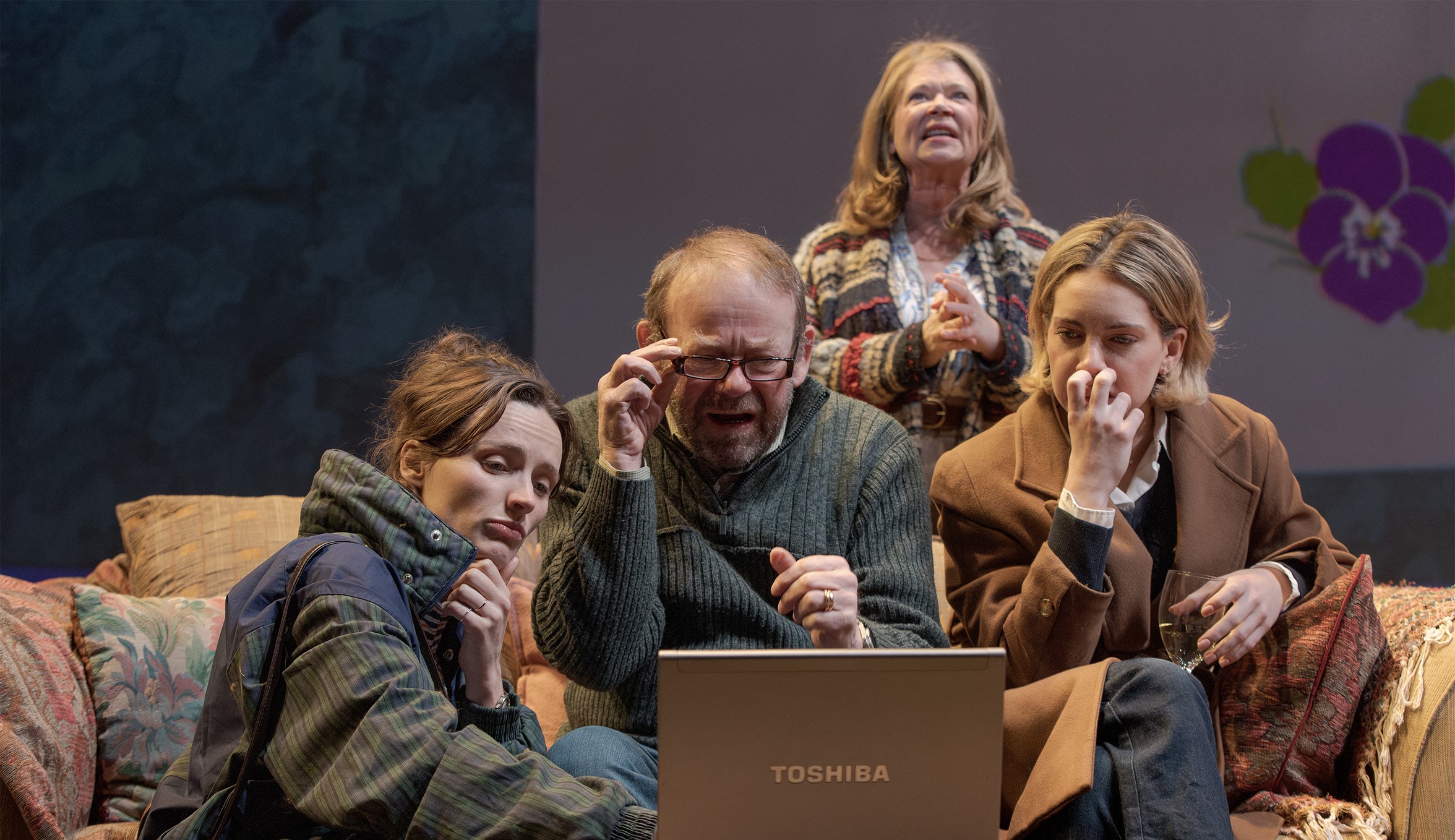
In Laura Wade’s play, Myra is dying of cancer. She has six months to live.

Her husband and two adult daughters struggle to deal with this. (Myra seemingly less so.)

Told with gentle humour, it’s an unusual story to put on stage – because it’s so very, very common an experience. That almost seems the point of the piece, the mundanity of it all.

Apart from being kept busy dying, Myra seems most interested in where she will be buried and what will be painted on her coffin. I’m not sure why. Perhaps it’s a coping mechanism, but the script offers so little about Myra that it’s difficult to tell. This British play is definitely set in a post-Christian world: there’s no judgement or evaluation of what Myra’s life has been worth, and no thought of an afterlife. Her death, like her life, is part of no grand soul-lifting (or even crushing) narrative.

In some ways, Colder than Here reminds me of Margaret Edson’s W;t, but without that play’s references to John Donne’s religious poetry which make apparent the relative spiritual poverty of modern secular materialism. Perhaps in this play, in which a richer worldview is never even alluded to, the pathos is more powerful.

Or perhaps we’re being offered comfort. Perhaps we’re being reminded, that after all, none of it matters that much. Perhaps it’s the equivalent of standing in a century old graveyard and finding peace in the knowledge that in an hundred years’ time no one will mourn you, that you will be forgotten, as all are forgotten.

Not that Myra’s family isn’t troubled by her impending death. In fact, the play’s focus does seem mostly on the family members who will survive her – on her Death as against her Dying. (Dying being what the sick person does, it’s only those who remain who experience Death.)

But the family are a rather hapless bunch; they clearly love Myra, but their responses are a mixture of bewilderment, confusion and self-concern. Before the giant Death, they are little people. The confrontation forces them to grow, but not very much. Nor is there a Life-affirming defiance in the face of the Great Inevitability, there’s no sense that though “we cannot make our sun stand still, yet we will make him run” (with no apologies to Andrew Marvell.) If Death can’t provoke from us Poetry, or at least Rhetoric, you got to wonder what Death is for.

Director Janine Watson elicits fine performances from the cast, each actor successfully finding the balance between humour and fragility. Hannah Waterman as Myra begins with an almost cheeky sense of fun, that might be part acceptance part denial, but gradually textures this with the increasing irritability of a person in genuine pain. Huw Higginson as her husband perfectly delivers the one-liner-wit that is clearly key to the couple’s ongoing attraction, but also movingly presents a man emotionally frozen, overwhelmed by the demands of the moment – a deepening cold that holds no promise of future warmth. Charlotte Friels as Myra’s eldest daughter offers a poignant portrait of a woman responsible and mature, but one imperceptibly and frighteningly losing her sense of centre. As younger sister Jenna, Airlie Dodds gives us perhaps the most fascinating journey of the characters, unexpectedly charming in her initial clumsy self-centredness before growing to a greater awareness of others, but one still subtly tinged with the personal absorption which is the hallmark of current perceptions of what it is to be human.   

This is a simple piece, a small piece, but in these qualities an honest one, both a powerful encouragement to acceptance and a surreptitious challenge to the pettiness of our vision of Life.

Paul Gilchrist

Colder Than Here by Laura Wade

At Ensemble until 12 Oct

www.ensemble.com.au/shows/colder-than-here/

Image by Phil Erbacher

Vickie & Vinnie

18 Sep

They’re filming the pilot of the TV sitcom Vickie & Vinnie and we’re the studio audience.

I pray the show never gets the green light to be developed into a full series; it’s truly awful. And that’s one of the comic delights of Amy Lawler’s play – it delivers a terrific parody of a genre that too often deals in cliché and untruth.

In the pilot, the titular and platonic housemates are surprised by a visit from Vickie’s mum. (No-one living on the planet on which television was invented over 70 years ago would be surprised by that plotline.) Incomprehensibly, Vickie’s mum is outraged that her adult daughter is sharing a house with a man. Even more incomprehensibly, to placate her, the housemates pretend to be engaged. If you were pitching the idea to a producer, you might say it features a group of creatures who look human but who share with that species only the qualities of deceit and mean-spiritedness. These creatures spend a lot of time insulting each other – and this is the interesting bit – they do it while sitting on a couch.

Yes, television like this gets made.  

And people watch it.

(It’s probably best not to think too much about what that says about human nature.)

But Lawler digs deeper by presenting the world in which such rubbish is created. Alexis has been cast as Vickie. It’s her first big chance in the industry – but it’s not going to be easy: the director is abusive; the first AD is obsessed with an unrealistic schedule; her co-star is unsympathetic and impatient; and the actor playing her mother, a TV legend, is a total diva. Like all good satire, it feels like there’s only a sprinkle of hyperbole.

The conceit that we are the studio audience, and that we’re expected to respond to cue lights demanding Laughter and Applause is great fun, and effectively encapsulates the superficiality of sitcoms. (The conceit, however, does come with a cost: the piece is forced into a similitude of real time; location becomes frozen into a type of static realism; and, when there are conversations that would presumably be private, our presence as studio audience is conveniently forgotten.)  

Directed by Lawler, performances are wonderfully comic. Theo Rule as the TV director is gloriously shallow and inconsiderate. Linda Nicholls-Gidley as the diva is tremendous fun; imperious and hilariously self-important. Nicholas Richard as the first AD does awkward with elegant acumen. Nikita Khromykh as the actor playing Vinnie slips smoothly between the uptight smart alec of his TV character and the cynical professional whose talents are being wasted – while simultaneously offering sufficient hints that he might just be human after all. Milli Higgins as the gopher delivers some magical physical comedy. Claudia Elbourne as Alexis beautifully balances the humour of the parody and satire with a naturalism of genuine confusion and hurt that gives the piece its emotional punch.

The program suggests Alexis is neurodiverse. I wouldn’t have picked this up from the production; the character simply appears to be what used to be called a sane, good person – she just happens to be stuck in an utterly barking mad environment. Semantically, the term neurodiverse implies the existence of a common or typical experience. (Does the term imply there’s a normal? No, but I’ll get back to that weaselly little word.) Clearly, there are individuals who experience life differently than many others do, and often their experience is more challenging. And, if the writer director and some of the creative team of this piece say they’re sharing their experience then that can only be a good thing, one that shines light on some otherwise neglected aspects of what it is to be alive. However, the program note suggesting the play represents the experience of a neurodiverse individual still has me wondering if it’s one last cheeky piece of satire – not aimed at those who are neurodiverse, or even aimed at the term itself, but rather at the TV industry, where barbaric behaviour might be so common, that some might say it’s just normal, and if you can’t cope with it, then you’re the one with the problem.

Which is, of course, a most insidious way of silencing criticism.

Vickie & Vinnie by Amy Lawler

at 107 Projects until 21 Sept

as part of the Sydney Fringe

sydneyfringe.com/events/vickie-vinnie/

Image by Holly-Mae Steen Price

AUTO-TUNE

5 Sep

This is a brilliantly inventive, totally engaging piece of theatre, written by Mark Rogers and directed by Solomon Thomas.

It’s a rock opera. Sort of. Unlike most operas, the fourth wall has fallen. But it does have surtitles – with some terrifically funny graphics.

Ostensibly, it’s the story of a love triangle between young friends Michael (Rogers), Brooke (Ashley Bundang) and Andy (Liam ‘Snowy’ Halliwell), and the consequences when Michael makes a dreadful mistake.

It’s about the desire to correct errors, to smooth the rough. Hence the title.

Michael has a portal. He uses it to go back a moment or two in time to fix things. I don’t think we’re being asked to take this idea seriously.  (Though the song that introduces the conceit is absolute gold.) The portal operates as metaphor for our wish to perfect our lives.

We’re told that “In opera, it’s easy to get lost in the story.”

Which I doubt.

What’s being flagged is that the piece itself is about storytelling.

Michael tells a story about several performances he’s given. A story about stories, if you will. (Perhaps it’s also an exploration of narrative therapy, of how we’ll tell ourselves a story  …. about ourselves …. in order to lull pain, to quiet conscience, to silence Truth.)

And the chosen form draws further attention to storytelling. Songs – very cool and lyrically exciting ones – are performed with tremendous energy and exuberance by Rogers, Bundang and Halliwell. Yes, performed. What I mean is that the usual conceit of operas and musicals (that people just sing) is abandoned. The conceit is it’s a concert, and we are the audience. (Yes, I know we’re always the audience, but there are audiences and there are audiences.)

Also pulling us out of any representational realism is nostalgia. By reminding us of the blind obsessions and ferocious loyalties of pop culture, we’re invited to gently laugh at our youthful selves. Similarly, the love triangle narrative is set in regional NSW. The Wagga Wave might only come through at 5, but it will come through at 5 forever.

Though gloriously intellectually playful, the piece has also got real emotional impact. It’s like being invited to a crack-fuelled dinner party with Socrates, but with the chance of being speared in the stomach by a Spartan hoplite (which is a pull-out quote I expect to see splattered all over social media, and on the side of buses when the show gets the international tour it deserves.) 

I admit, the piece makes no actual reference to ancient Greek philosophy. Instead it spends stage time on more topical issues, like the value of hip-hop (a riff which includes one of the funniest lines I’ve heard in contemporary Aus theatre.)

I could finish with Plato. Auto-tune, our desire to tame wildness, does evoke the Cave and the shadows we watch, while all reality lies behind us, unruly but unnoticed. (Yes, I know, I’ve flipped Plato; he seems to have thought we really should be paying attention to the auto-tune.)

So I’ll finish with Mark Rogers. Performer, composer, writer – it’s an absolutely extraordinary achievement.

Paul Gilchrist

AUTO-TUNE by Mark Rogers

currently playing at the Sydney Opera House until 7 September 2024, as part of UnWrapped

www.sydneyoperahouse.com/theatre/unwrapped-auto-tune

Image by Ravyna Jassani