Archive | June, 2024

[Your Name]

24 Jun

It’s tempting to think of fan fiction as some kooky, contemporary phenomenon.

Driven by obsessions with pop culture, celebrity and the net, we tell stories based on other people’s stories. We happily steal the universe created by some well-known story teller, people it with their characters, and then slip in some of our own – often ourselves.

It might all seem rather bizarre, but it’s actually what most of us do all the time. We make sense of our lives by viewing them through a narrative we didn’t invent. We do this whenever we call ourselves a feminist or a socialist or a Christian, or any other label that marks our participation in a grand narrative not of our own making. And we’re doing it even when we don’t label ourselves. Few moments are lived free of the phenomenon; narrative abhors a vacuum.

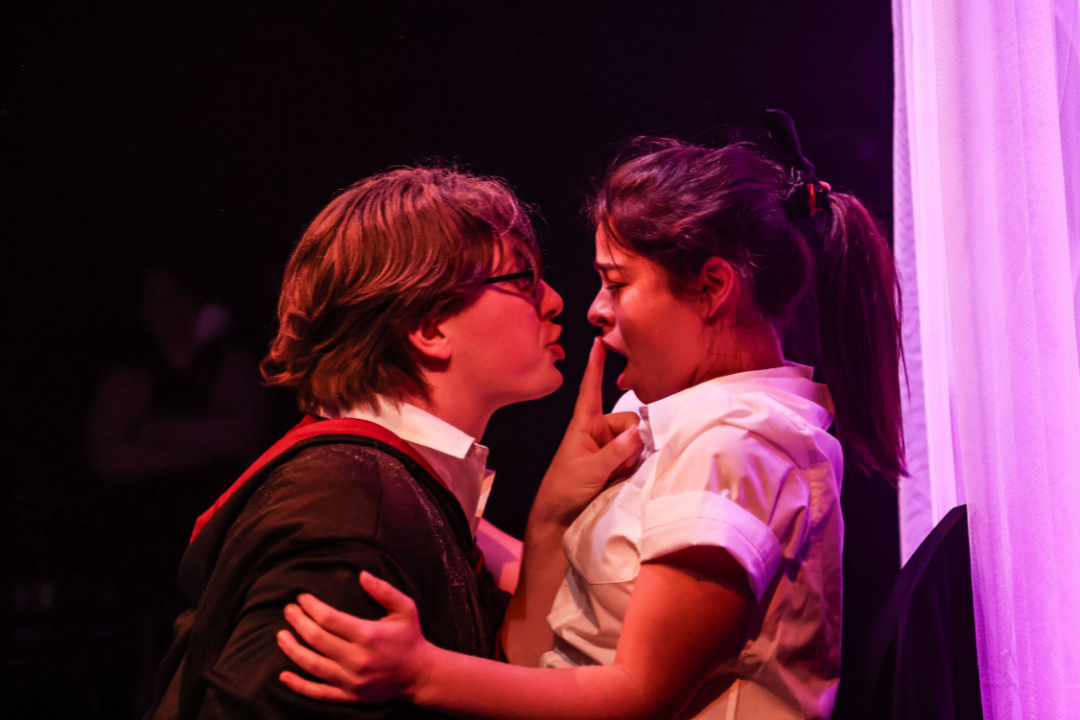
In [Your Name] by Kate Bubalo, three fourteen year old girls write fan fiction inspired by those famous children’s stories of a decade or two ago, the ones about the school for wizards. Being teenagers, it’s not long before these stories take on a distinctly sexual nature, and are shared with the wrong people.

Bubalo’s script is very funny. It’s constructed from the juxtaposition of two experiences: the fraught navigation of teen friendships and the wild fantasies of the fan fiction.

Director Lily Hayman understands exactly what she’s working with and pitches the production beautifully between honesty and audacity. The cast deliver wonderfully high-energy comic performances. Evelina Singh as Petra offers a marvellous portrait of a passionate, no-nonsense advocate for Truth, one who’s beginning to realise that advocacy is not as clear cut as she imagined. Georgia McGinness is terrific as Nadine, the young woman who’s already begun to wonder whether Truth is just a type of tale, and that human connections are more important. Lola Bond as Kris – brittle, fearful and full of uncertain affections – induces both laughter and deep pathos. Andrew Fraser, doubling as both the girls’ PDHPE teacher and Larry the young wizard of the fantasies, is superb. His total commitment to the physical humour is a delight. (On a dramaturgical note, some of the teacher’s decisions are ones no sensible professional would make, yet the script only glances briefly at this behaviour. Of course, this creative choice ensures the girls are the real focus, and since few groups have been more thoroughly erased in our culture than teenage girls – either entirely objectified or utterly dismissed – this is hardly a fatal flaw.)

Tyler Fitzpatrick’s design creates a stage world where magical transformations are possible.

And what transformations do we witness?

Bubalo’s joyous play illuminates one of the most important spiritual opportunities Life offers. If we live through borrowed narratives, then maturity is when we become conscious of that fact. Only then are we able to choose our tales deliberately, or dare to ask if the comfort of story can be cast aside entirely.

Paul Gilchrist

[Your Name] by Kate Bubalo

at KXT until 29 June

kingsxcrosstheatre.com

Image by Georgia Brogan

Masterclass

20 Jun

It’s a tradition for the less inventive of my reviewing colleagues to play with the title of a show when they write it up.

A show called, say, Simply the Best will be responded to with the highly inventive quip this show is simply the best. Or admiration for a production of Twelfth Night might be expressed in the gushing creativity of I can’t wait for Thirteenth Night!

Formulaic wit is how mediocrity shields itself from the dangerous provocation of genius.

If I actually read theatre reviews, I’d be tallying how many times the reviewers fall into the formulaic with this production.

Terrence McNally’s Masterclass gives Lucia Mastrantone the opportunity to show what an extraordinary performer she is. (And so you can probably guess what the formulaic quip will be.)

Opera icon Maria Callas is offering instruction to young singers. Apart from the occasional psychological flashback to Callas’ troubled past (which I’m not sure are necessary), the play operates as a vignette, a character portrait of a legend.

Callas is presented as a diva. She is fussy, self-obsessed, inconsiderate and deeply, deeply serious about the art.

It’s hilarious and wonderfully stimulating.

Mastrantone is utterly brilliant. She catches the glorious humour in every nuance of the script. In even the simplest of pauses, in the stare that’s a fraction of a second too long, in the smile that flits across her face, she projects a woman of intense vivacity. It’s a performance of phenomenal attention to detail. But equally impressive is its remarkable openness to possibility: the fourth wall is firmly down, and Mastrantone as Callas responds with exhilarating ease to the wild unpredictability of the audience.

Director Liesel Badorrek gives her a terrific support cast. Callas famously lost her voice in later years, so Mastrantone is not called upon to sing, but the rest of the cast gives us a delicious taste of the operatic art form. Bridget Patterson is very funny as the nervous student whose lesson establishes just how challenging working with Callas will be – and later Patterson reveals an outstanding voice. Elisa Colla is hysterical as the student attempting to follow instructions beyond her understanding, but both her voice and her final response to the master are truly beautiful. Matthew Reardon as a cocky young tenor is enormous fun, a joy to both watch and hear. Maria Alfonsine’s work as piano accompanist (and musical director) is marvellous and she induces many a giggle as she deals with Callas’ obtusity. Damian de Boos-Smith is magnificent on the cello, and as the surly stage attendant not at all cowed by the diva.

The play ultimately poses some provocative questions. What makes an artist? What is art? What is it worth? What does it cost? Perhaps you shy away from such questions.

But priceless is an evening in the company of a woman whose genius provokes them.

It’s a masterclass in acting.

Paul Gilchrist

Masterclass by Terrence McNally

At Ensemble until 20 July

ensemble.com.au

Image by Prudence Upton

Death in the Pantheon

19 Jun

This is an odd one.

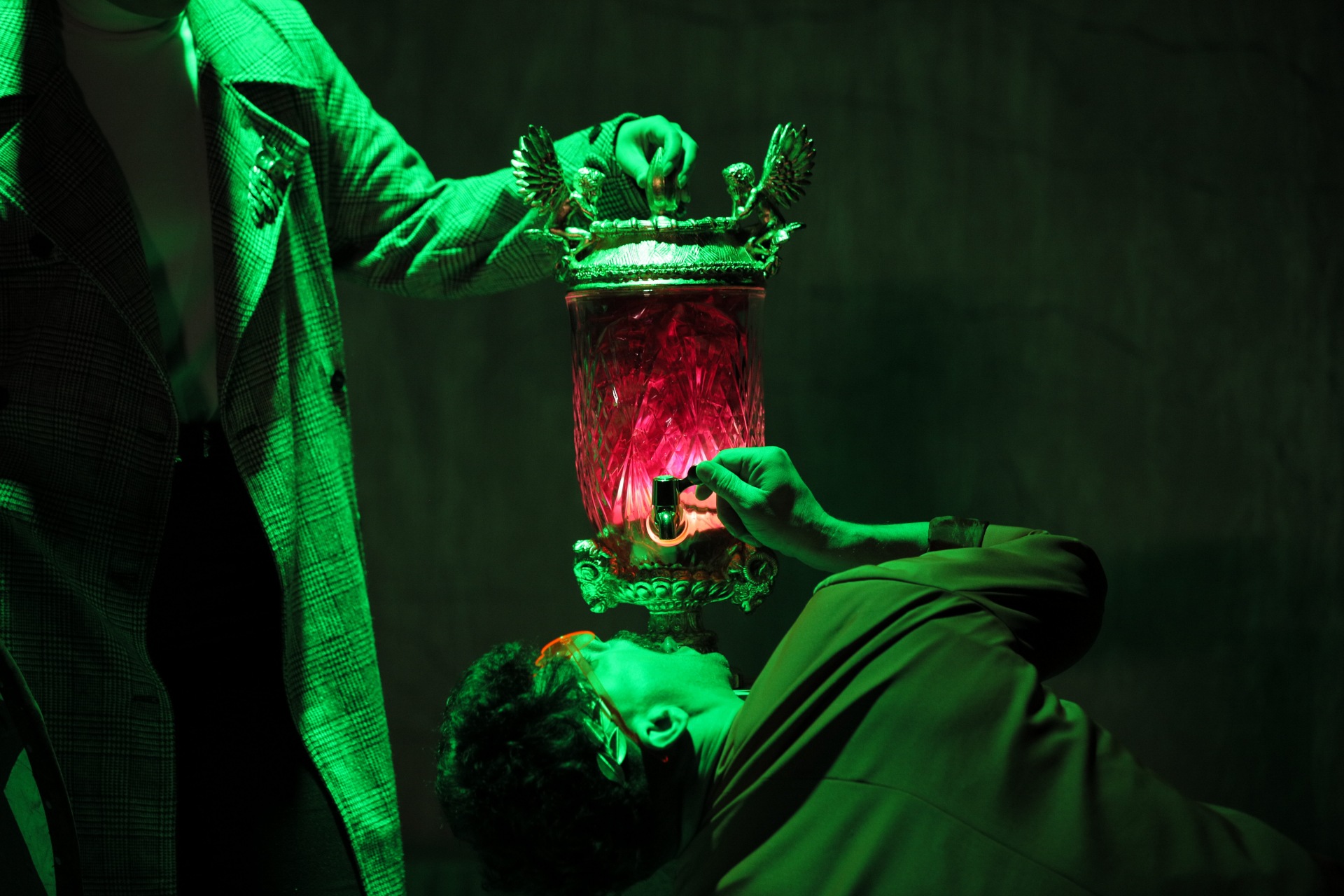
Written and directed by James Hartley, it’s a whodunnit comedy featuring the ancient Greek gods.

Someone has murdered Hephaestus, the god of artisans. All the other gods of the pantheon, excepting Hermes the messenger, are suspects. Athena, the god of wisdom, must identify the killer before more immortal lives are lost. (Don’t worry, that seeming inconsistency is cleverly overcome.)

The Agatha Christie style set-up means no-one can leave until the crime is solved. So the suspects mope around and bicker amongst each other (which is sort of what we moderns think the Greek gods did – that’s if we think of them at all.)

It’s the rather bizarre dramatis personae that’s one of the main reasons I call this piece an oddity. After all, the Greek gods are hardly household names in Australia, and no-one, anywhere, has taken them seriously as objects of devotion for millennia. However, the script ensures even a classical novice can navigate this foreign world.

Natasha Cheng is absolutely outstanding as Athena. Her presence and poise are divine. Brenton Aimes as Hermes delivers one-liners with perfect comic timing. Cam Ralph uses his beautiful bass voice to superb effect in creating an amusingly self-important Poseidon. Daniel Moxham as Dionysius induces giggles with a portrait of a deity who has simply partied too hard, a god who offers not life-affirming ego-destroying joy, but rather falls into pathetic little tricks to hide a substance-abuse problem.  

The humour of the piece would gain from an increased pace and further development of the physical comedy. (Since you can’t present the truth of fictional characters, you may as well have theatrical fun with their hyperbolic nature.)

Ironically, English speaking theatre was given an energising boost when early puritanism curbed the representation of divine characters on stage. Responding to Christian morality plays, featuring God the Father and Jesus, the fifteenth century Treatise of Miraclis Pleyinge has a deity assert “Do not play with me. Go play with your peers.” And so the generations that followed, geniuses of the likes of Marlowe and Shakespeare, portrayed instead the human experience, in all its messy glory.

But though Hartley gives us gods, he provokingly leaves us pondering our relationship with them. Not the irrelevant ones of Olympus, but rather all those authority figures, all those grand narratives, that we project into the firmament – in the unspoken hope that this will somehow secure them from earthly Life’s frightening untidiness.

Paul Gilchrist

Death in the Pantheon by James Hartley

at Flight Path Theatre until June 22

flightpaththeatre.org

Image by Tobias Moore

King James

17 Jun

This is a wonderful production of a wonderful play.

It’s also one of the funniest, most joyous, serious plays I’ve seen.

I mean this: though grounded in realism, the territory explored by Rajiv Joseph’s King James is exuberance.

Two men become friends through a shared enthusiasm for the Cleveland Cavaliers and its star player LeBron James. These men need each other, but no relationship remains static or fixed.

It’s sometimes suggested that male friendships are shallow because they consist of two men looking in a similar direction rather than at each other. But there’s something to be said for not staring too closely at the other person. After all, there is no essential truth to see. The assertion I know you completely is not love; it’s control. All of us change, and any attempt to definitively sum up or categorise an individual is misguided. Each of us is more a happening than a thing. The essential you is just a careless, or convenient, construct.

The scene in which Joseph has the issue of race raise its ugly head is a masterclass in this type of richness in dramatic writing. To witness these two extremely likable characters tear at each other is heart-rending. In any play, the conflict can represent a wider cultural tension, but if we don’t feel it in all its irreducible messiness in the actual characters, if we read it solely as a critique of society, what’s the real takeaway? That individuals are of little value. The glory of theatre is that it’s fundamentally existential; it knows that Life is what happens to you while you’re otherwise occupied maintaining some grand narrative. (There was a logical consistency in the Puritan dislike of theatre. They understood what it had in common with the Prince of Darkness; like the Devil, Life is in the details.)

Directed by Bali Padda, the performances by Aaron Glenane and Tinashe Mangwana are brilliant. They portray beautifully characters who are gorgeously vulnerable, the desire for an ongoing relationship carefully and doggedly navigating friendship’s envies, awkwardnesses and sensitivities. This wary gentleness is brought into glorious relief by tremendous bursts of jubilant energy (including one extraordinarily fun scene change.) Designer Ian Kanik does a terrific job creating the play’s two settings in the Old Fitz space (and filling them with some oddly specific, but absolutely, crucial props.)

Joseph’s dialogue is superb. The affectionate raillery between the two men is pitch perfect. Who is the G.O.A.T? Michael Jordan or LeBron James? And equally delightful are the hyperbolic expressions of fanatic admiration. The claim that James is capable of teleportation nails the glee with which sports fans manage to find glimmers in a world where others see only triggers.

But, no, don’t worry. You don’t need to know anything about basketball. You don’t even need to like sport.

The joy of this show is utterly infectious.  

Paul Gilchrist

King James by Rajiv Joseph

at The Old Fitz until Jun 29

oldfitztheatre.com.au

Image by Daniel Asher Smith

No Love Songs For Lady Basses

15 Jun

This is a beautiful show.

It’s an autobiographical sharing. We’re currently seeing a lot of this form on our stages. I’ve previously expressed curiosity that this major shift in our theatrical language seems to be going unnoticed. I don’t mean these sort of pieces aren’t getting positive responses. (Usually they do, and usually they should.) What I mean is that the common perspective on what’s happening in our theatres is partly erroneous. The popular position could be summed up like this: Until recently, only certain privileged groups have been permitted to tell their stories on our stages; other groups have not, and now it’s their turn. This is a perfectly valid historical statement, but it slips in, unnoticed as it were, the assumption that theatre is traditionally autobiographical.  

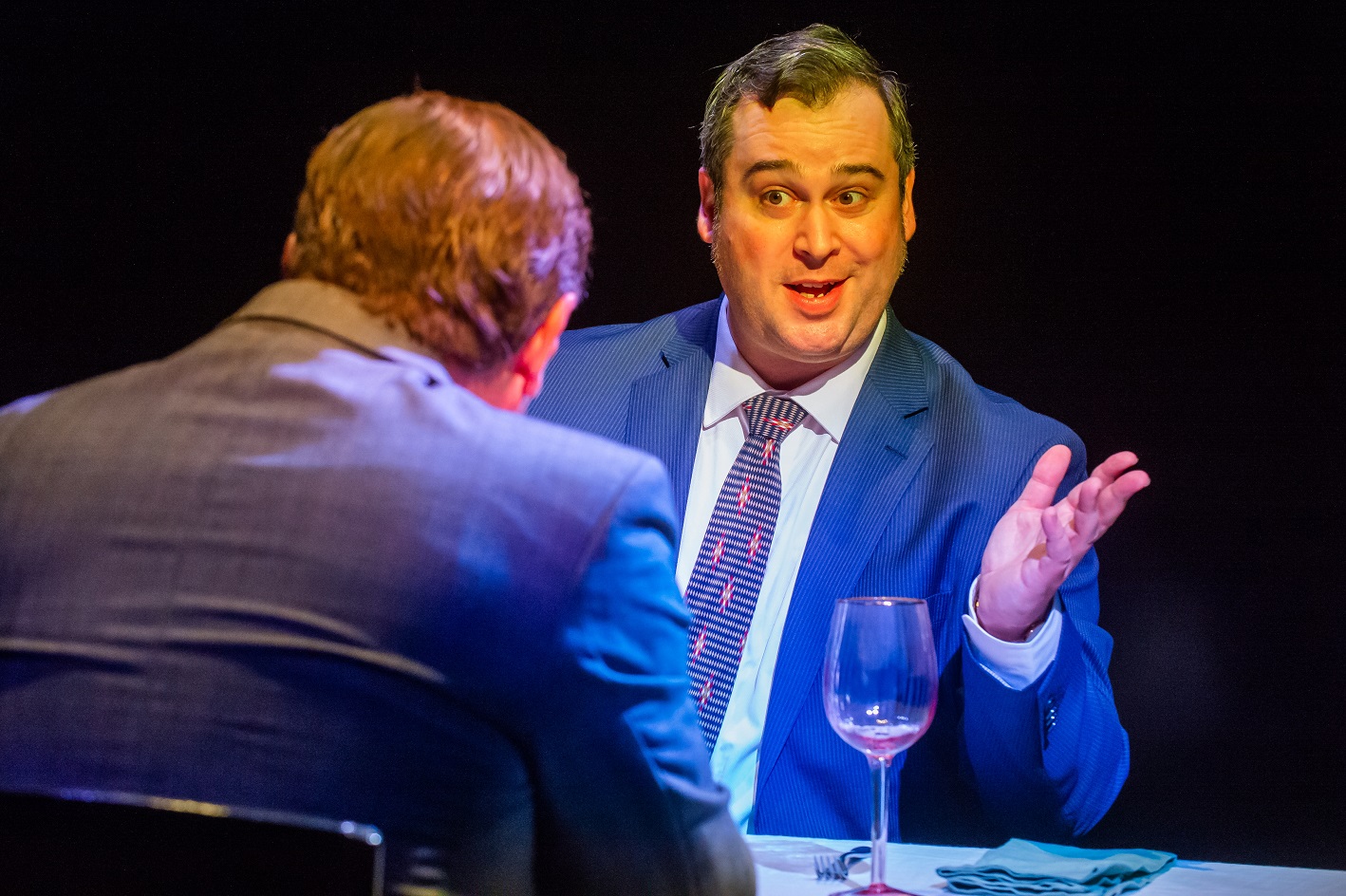
Written and performed by Sheanna Parker Russon, No Love Songs For Lady Basses tells of her journey to accept she is a woman and how that has been received in the show business industry. Because that industry sees its role as storytelling, this show becomes, among other things, her story about her story. It’s this explicit awareness that makes the show insightful, wise and very funny.

Her conversations with a straight, middle-aged, cis male director are a comic delight – and only partly because he’s reduced to a sock puppet.

The songs are superb. Written by Lillian M. Hearne, they’re replete with gorgeous melodies. The lyrics by Parker Russon are both hilarious and moving. Accompanied by Hearne and Aisling Bermingham, Parker Russon’s performance of them is magical.

Director Cassie Hamilton helps Parker Russon navigate the whole fourth-wall-down-meta-theatricality of the thing in a way that allows humour and honesty to co-exist, and to nourish each other.

When Parker Russon speaks of the challenges facing the trans community you’d have to have a hard heart to feel we shouldn’t do better. But there’s a mindful paucity of rage. She gently jokes that her supposedly non-woke approach makes her more appealing to conservatives and the politically timid, but she’s right. Just as we’ve unconsciously come to assume theatre is autobiographical, we’ve come to assume anger equates with a commitment to change. It doesn’t. Anger is a perfectly understandable response to injustice, but it’s not the perfect tool for ending it.   

The inner voice that tells Parker Russon she is a woman also tells her to be nice to herself. It’s indicative of the spirit that infuses this piece, a glorious generous-heartedness.

Paul Gilchrist

No Love Songs For Lady Basses by Sheanna Parker Russon

At Old Fitz, as a Late Show, until 16 June

oldfitztheatre.com.au

Image by Jamie James

Ink

10 Jun

With a title like this, I was expecting the story of a giant squid. I was expecting a hideous creature from the murky depths, a cold blooded monster from that mysterious world down under, a frightening phenomenon with a disturbing multiplicity of arms, arms that grab at everything we hold dear, at every civilised thing, at that fragile ship we call society, and drag it all down, down, down.

So, you can imagine my surprise when I found this show was about Rupert Murdoch.

Written by James Graham and first produced in the UK in 2018, Ink tells the story of the first year of Murdoch’s ownership of the newspaper The Sun and the impact on the Fleet Street scene.

In some ways it’s ancient history; despite Murdoch still being with us, the play is set over 50 years ago. Whatever was the impact then, you might wonder whether it’s worth crying now over spilt ink. I grew up in a world in which the damage was already done.

It’s a grand piece of storytelling, with a huge dramatis personae and 2 hours 30 minutes stage time (and an interval.) Director Louise Fischer marshals a fine cast.

Despite this grandeur, the piece has a curiously small focus. This is a result of three of the playwright’s creative decisions.

Firstly, The Sun’s editor, the now deceased Larry Lamb, gets far more stage time than Murdoch, and the media mogul is presented as almost reluctant to accept some of his editor’s more trashy strategies. (Lamb is played wonderfully by Nick Curnow, in a performance that drives the production.)

Secondly, we’re shown only Fleet Street, so the point of debate – whether The Sun’s tawdriness actually affected society or merely reflected it – is reduced to competing assertions from characters within the parochial world of the press.

And finally, the complaint many people have had about Murdoch over the years is his political impact, his alleged pushing of the working class towards the Right. However, in the year represented in the play, that tentacle is yet to surface. The Sun’s sin is that it’s low brow, not that it’s fascist.

Not that the play is oblivious to the possibility of political influence; in the final moments there’s an ominous swirl in the inky waters.

And it will no doubt be a discussion starter.

I’ll get the ball rolling. The role of the media in civic society is always ambiguous. The media can help and it can hinder. Democracy may die in the dark, but neither does it cope well with noise.

And we’re often tempted to ignore the role of the media’s audience. It’s easy for us to assume that the audience are passive consumers who unthinkingly accept whatever they’re told. (Fortunately, this is an error we ourselves never, ever commit.)

In a capitalist society – in any society – can we be surprised when the media chases an audience?

How are both civic society and culture created?

Where does responsibility, and power, lie?

Paul Gilchrist

Ink by James Graham

at New Theatre until June 29

newtheatre.org.au

Image by Chris Lundie

dog

3 Jun

Reviews are utterly subjective, but I like to maintain the illusion that what I write has some value. One way I do this is by never mentioning myself. I do this in the hope that my voice – that of a specific but unexceptional human being – will be confused with some sort of disembodied, indubitable, God-like authority. Most people seem willing to go along with the charade. After all, they suspend disbelief while in the theatre; how hard can it be to continue that childlike habit when reading the reviews afterwards?

But in this review (or, at least, before this review) I will write about myself.

In this production, dog by Shayne, two characters struggle with mental health issues. One suffers from alcoholism. The other suffers from Obsessive Compulsive Disorder.

I have suffered from OCD for forty years. One might expect my personal response to dog to be one of two types: frustration that the condition I struggle with is not represented in the way I’ve experienced it OR relief that the condition is being represented at all.

But my response is neither. I’m not especially interested in the idea that art is valuable because it represents aspects of the human condition. Those aspects of Life exist regardless of whether we represent them. The need to have them represented seems oddly secondary to the business of living.

Many people will disagree with me. Some of those people will be artists – because we’ve come to see the justification for creating art as the giving of voice to marginalised peoples and their experiences. Other people who disagree with me will assert that art, like abstract thinking, is how we make sense of Life, how we hold it apart from ourselves, at arm’s length, to turn it around in the light, to have a good look at it.

But we also represent aspects of Life in an attempt to control them. And, having suffered OCD for 40 years, I know a little about the temptation to control. (I can’t emphasise enough that I’m making absolutely no comment about what may have motivated the writer of this piece of theatre.)

And here ends talk of me.

Now my review – sorry, the review – of dog by Shayne.

The script is beautifully spare; honest, brave and true.

Kim Hardwick’s direction gives space. Nothing is hurried. The world spins faster than it does in reality (it always does in drama) but here the pace is such that nothing feels artificially concentrated.

The performances are excellent. Jack Patten’s laconic working class Aussie male is pitch perfect, and the slow soak of his alcoholism is both frightening and mesmerising. Laneikka Denne’s victim of OCD has no such gradualism: their performance begins with a representation of the condition that is powerfully pathos inducing, and is then beautifully balanced with scenes in which the character’s deep and full humanity is allowed to gloriously shine.

The titular character is less convincing. But … that’s not necessarily a bad thing. Representations can fail in their portrayal of reality but succeed in something more important: the invitation, the reminder, to exercise imagination and agency.

For that way hope lies.  

Paul Gilchrist

dog by Shayne

at KXT on Broadway until 8 June

kingsxtheatre.com

Image by Clare Hawley  

POV

3 Jun

This is an intriguing one.

It has layer upon layer, making it a very rich theatrical experience.

Let me try to explain the basic set-up.

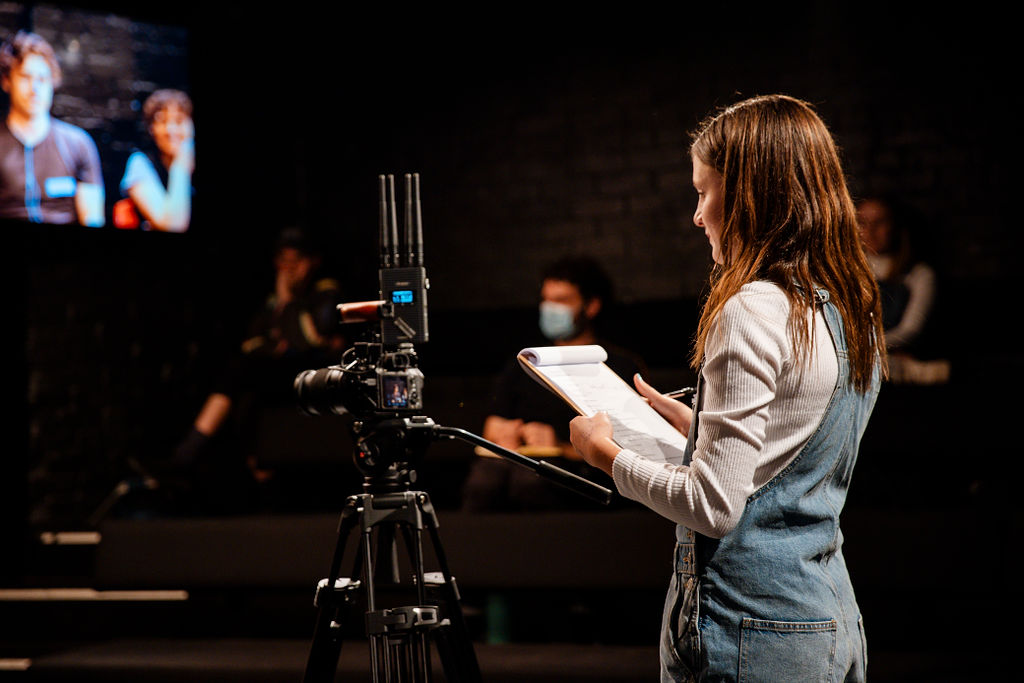
Each night of the production a different pair of actors play the mother and father of an 11 year old child. The child actor, either Edith Whitehead or Mabelle Rose, is prepared. The adult actors are not.

The child actor helps the adult actors through the performance, telling them where to stand, helping them understand their roles, ensuring they’re reading their lines from the right source (printed script or electronic screen.) The child’s director-like role is facilitated by the fact that the story being told is one in which the child, Bub, is making a documentary film about her parents. The complication is that mum is suffering a mental illness, and dad is uncertain how to help his daughter navigate this. (Bub writes to the legendary documentary film maker Werner Herzog for advice, and receives responses.)

What’s the impact of all this? I’ll break it into four points. (And I choose the noun consciously, points being sharp, and this piece written by Mark Rogers and directed by Solomon Thomas is whip smart.)

Firstly, and most obviously, the piece is a poignant reminder of what mental illness can do to its sufferers and to those they love. However, the emotional impact is tempered by the set-up; we’re never really encouraged to forget these are actors playing roles. And Bub’s additional role of ring master means any confusion or fear this child character might experience is diluted. But representational realism, a request to believe in the veracity of imagined characters and the world they inhabit, is clearly not the aim.

Secondly, the set-up highlights the wondrous skill of the actors. On the night I saw the show, Yael Stone and Benedict Hardie played the parents. To see gifted actors adapt to the tricky conditions and explore roles they knew nothing about only minutes before is a true delight, a testimony to the mastery of these performers. And 13 year old Edith Whitehead is utterly brilliant, confident and composed. Rogers’ script has much fun playing with stereotypes of the precocious child – and Whitehead lands each joke like a pilot with a life-time of experience. This second point, about the performances, develops the first: we’re being asked to pay attention to the art more than the reality it could represent.

And the third point makes sense of why we’re being asked to focus on the art. The improvisational form of the piece operates as a metaphor for how we actually deal with challenges like mental illness: we make it up as we go, trying to make the best of what is thrown at us. Despite endless media articles bearing absurd titles like “What not to say to someone who is depressed” or “How to talk to your child about bi-polar” there never will be a definitive correct response to Life’s wildness. (In the performance I saw, Stone twice ad-libbed lines. On one of those occasions, the piece invited her to do so, asking her to share how she might explain mental illness to a child. Her answer was beautiful – humble and wise. On the other occasion, she simply broke character and said “I didn’t think it would be this hard.” This stepping out of the art form and reflecting on the process was the most moving moment of the show. To find this to be the case is quite a provocation, and links with my final point.)  

Which is…. the filming of the documentary also operates as metaphor. A cynic might suggest that the whole film motif simply allows the theatre makers to play with technology. But creating a documentary (as the term suggests) is an attempt to document the Truth. And that’s what we so desperately try do when confronted with wildness – we try to control it, we try to make sense of it, we even try to find the mysterious alchemy that might transform our pain and bewilderment into beauty. With Herzog always hovering just out of sight, the piece can hint that making art is akin to dealing with Life’s bigger challenges. “Every man should pull a boat over a mountain once in his life,” says Herzog. And once again, this is an exciting provocation. The statement is normative. Should? Many of us don’t have much choice.

POV is an extraordinarily inventive piece, one sure to send audiences out into the night with minds burning with questions about the theatrical form, and with hearts relit with compassion for those who suffer.  

Paul Gilchrist

POV

Text by Mark Rogers

At Belvoir as part of 25a until June 16

belvoir.com.au