Tag Archives: Sheanna Parker Russon

Afterglow

13 Jul

It’s been a while since I’ve been invited to a Griffin show. Perhaps I’d been banned. Perhaps I’d been banned because I spoke Truth to Power. See how I’m creating a story, one in which I’m some sort of cultural hero. But that’s a story no-one needs (least of all me.)

We do need a story like the one told in Afterglow.

But need doesn’t quite express what I mean – but that’s something I’ll come back to.

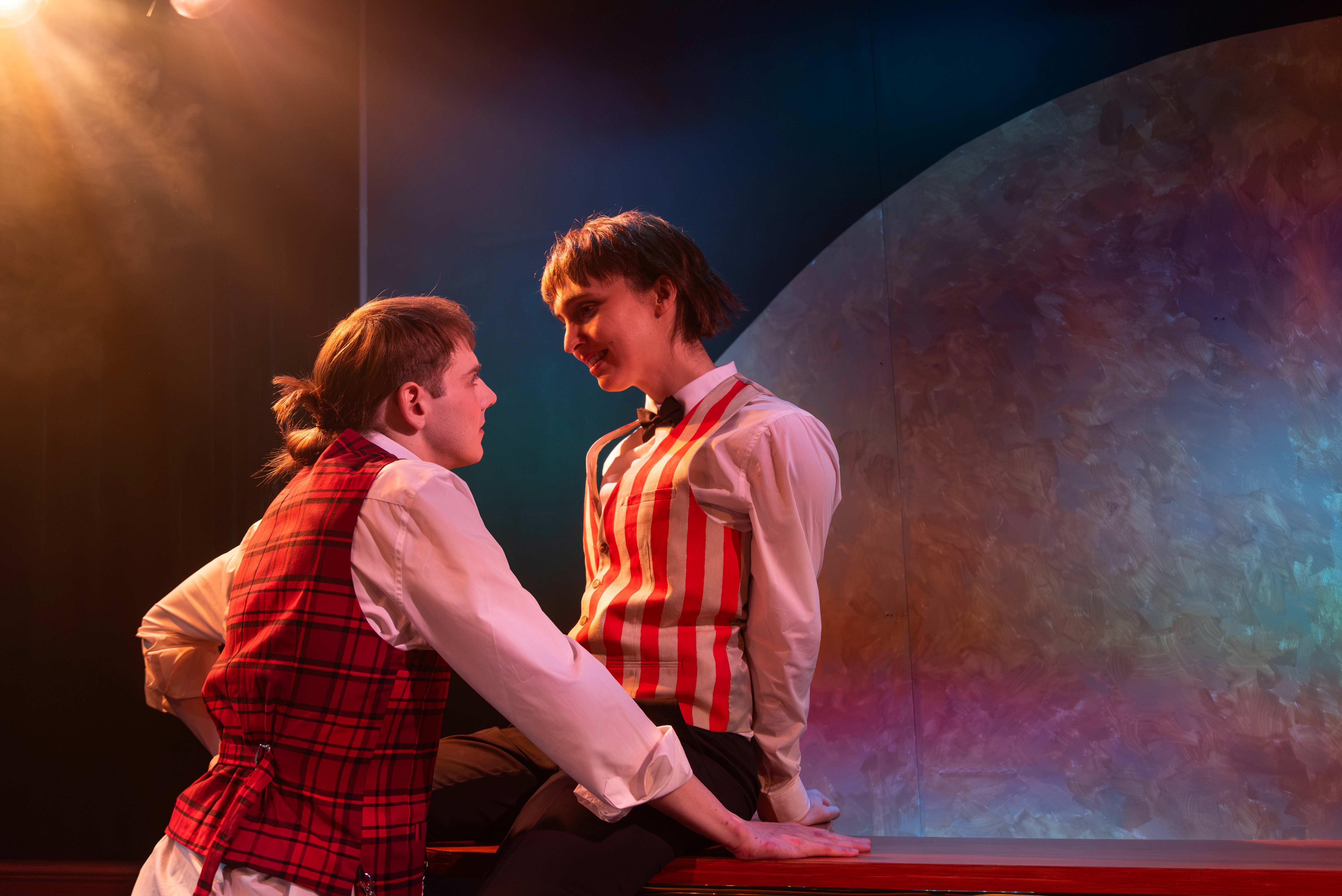
Sheanna Parker Russon and Lillian M. Hearne’s Afterglow is a glorious celebration of sexual and gender diversity.

It’s a thoroughly enchanting rom-com with songs. The songs are in the style of barbershop quartet and contemporary music theatre. The barbershop is, of course, sung acapella and the contemporary is accompanied by Hearne on piano. The performance of both styles is an absolute delight.

Michael loves singing in a barbershop quartet, but he’s not quite sure who he is, and there’s good reason to believe that those who partake in the quaint artform may not be too accepting of where his journey of self-discovery may take him.

Afterglow shares with Strictly Ballroom the playful presentation of a rather antiquated artform to parody parochial insistence on conformity.

Performances are comic gold. Directors Cassie Hamilton and Lily Hayman know the sort of piece they have and make it sing. Clever lighting choices by Tyler Fitzpatrick add to the merriment.

The script hilariously targets the narrowness of some of the quartet. Playing characters who are bigoted and bumbling, Nat Jobe and Lincoln Elliott are excellent. Rarely have such bores been such fun.

The potential lovers are utter magic. Hamilton offers a superb portrait of a charming, confused vulnerability and Nic Prior gifts us a moving presentation of confidence and courage.

The script is not without provocations.

Can straight people really be reduced to middle class conventionality, to the kids, the house, the lawn? (It’s a reduction that presupposes the existence of some sort of contrasting cultural heroes. And I’ve told you already what I think about that.)

Does a cis heterosexual male really need to define his own moral growth using someone else’s language?

And there’s that word – need. As we leave behind a smaller, suffocating world, how prescriptive will we be? Can we only break old norms by introducing new ones? Or is there a wider vision of flourishing?

The absolute joy of this piece suggests the latter.

Paul Gilchrist

Afterglow by Sheanna Parker Russon & Lillian M. Hearne

presented by Griffin Theatre Company and Purple Tape Productions

at Downstairs Theatre, Belvoir, until 25 July

griffintheatre.com.au

Image by Lucy Parakhina

No Love Songs For Lady Basses

15 Jun

This is a beautiful show.

It’s an autobiographical sharing. We’re currently seeing a lot of this form on our stages. I’ve previously expressed curiosity that this major shift in our theatrical language seems to be going unnoticed. I don’t mean these sort of pieces aren’t getting positive responses. (Usually they do, and usually they should.) What I mean is that the common perspective on what’s happening in our theatres is partly erroneous. The popular position could be summed up like this: Until recently, only certain privileged groups have been permitted to tell their stories on our stages; other groups have not, and now it’s their turn. This is a perfectly valid historical statement, but it slips in, unnoticed as it were, the assumption that theatre is traditionally autobiographical.  

Written and performed by Sheanna Parker Russon, No Love Songs For Lady Basses tells of her journey to accept she is a woman and how that has been received in the show business industry. Because that industry sees its role as storytelling, this show becomes, among other things, her story about her story. It’s this explicit awareness that makes the show insightful, wise and very funny.

Her conversations with a straight, middle-aged, cis male director are a comic delight – and only partly because he’s reduced to a sock puppet.

The songs are superb. Written by Lillian M. Hearne, they’re replete with gorgeous melodies. The lyrics by Parker Russon are both hilarious and moving. Accompanied by Hearne and Aisling Bermingham, Parker Russon’s performance of them is magical.

Director Cassie Hamilton helps Parker Russon navigate the whole fourth-wall-down-meta-theatricality of the thing in a way that allows humour and honesty to co-exist, and to nourish each other.

When Parker Russon speaks of the challenges facing the trans community you’d have to have a hard heart to feel we shouldn’t do better. But there’s a mindful paucity of rage. She gently jokes that her supposedly non-woke approach makes her more appealing to conservatives and the politically timid, but she’s right. Just as we’ve unconsciously come to assume theatre is autobiographical, we’ve come to assume anger equates with a commitment to change. It doesn’t. Anger is a perfectly understandable response to injustice, but it’s not the perfect tool for ending it.   

The inner voice that tells Parker Russon she is a woman also tells her to be nice to herself. It’s indicative of the spirit that infuses this piece, a glorious generous-heartedness.

Paul Gilchrist

No Love Songs For Lady Basses by Sheanna Parker Russon

At Old Fitz, as a Late Show, until 16 June

oldfitztheatre.com.au

Image by Jamie James