Archive | March, 2025

Rabbit & Crow

7 Mar

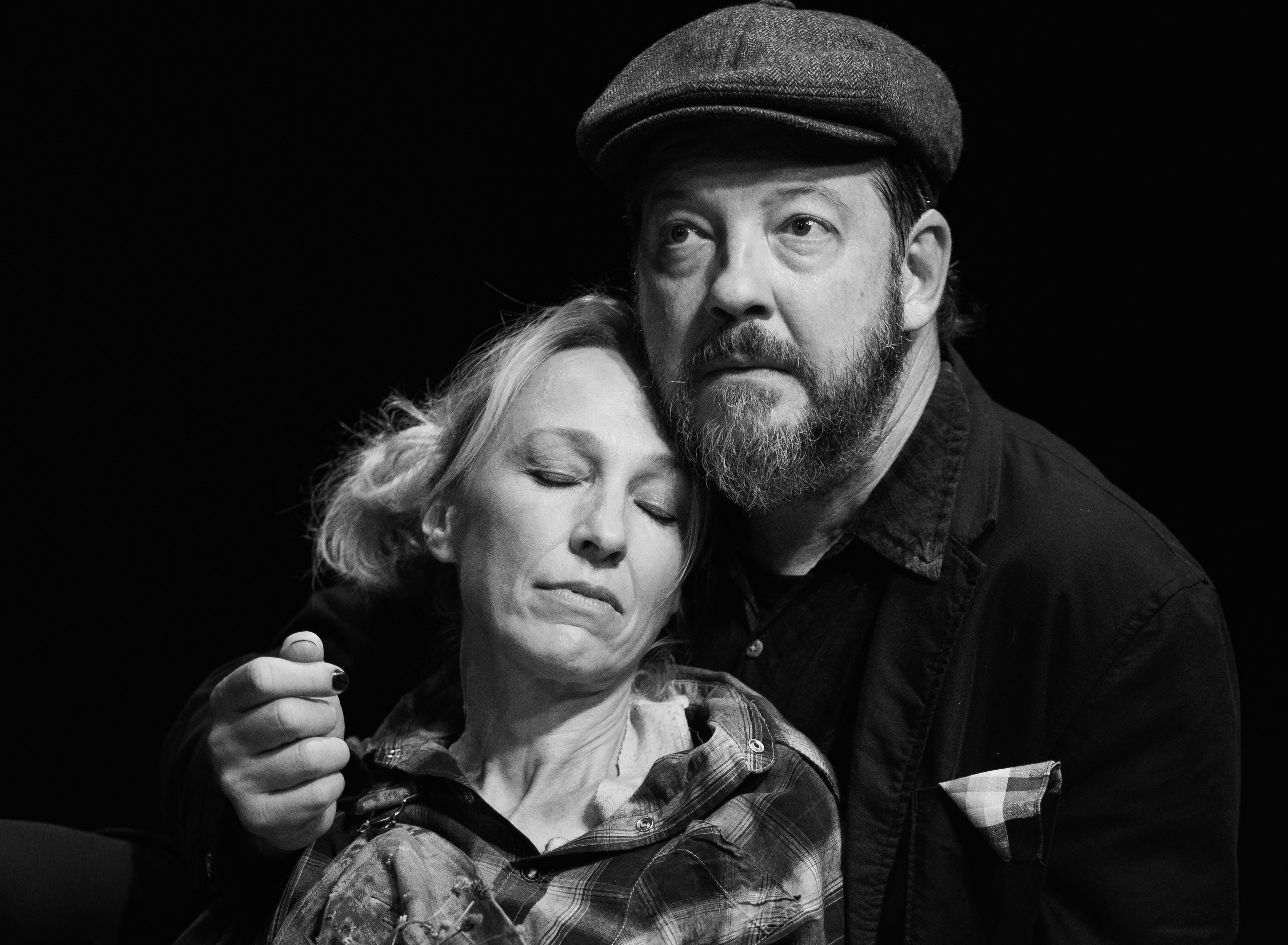
A rabbit is hit by a car and now lies injured on the road. A crow waits for it to become carrion, in order to consume it.

In a brave and laudable snub to trendy woke identity politics, writer and director Leon Ford casts humans in the animal roles.  

As the titular rabbit and crow, Sophie Gregg and Justin Smith are brilliant. Philip Lynch is equally superb as another crow who later attempts to join in on the action. With enormous skill, they play Ford’s amusing script, finding the magic in every moment, and achieving both humour and pathos. (All you performers who identify as crows and rabbits, notice has been given. The days of lazily asserting you’re entitled to the role simply because you’re a bird or a small furry animal are over. From now on, you might have to try actually acting.)

The humour of the piece comes from various mechanisms. One is simple anthropomorphism. We delight in the conceit that the animals speak in our vernacular, display our peccadillos, and face very human problems. (It’s a vein of humour long mined by cartoonists. The artists working for The New Yorker, for example, have especially excelled in it.) It’s a genre that both gently mocks humankind, but also expresses joy at the non-human Other. (Who hasn’t been enchanted by the absolute amorality of cats?)

Another comic mechanism is dramatic irony. Neither the rabbit nor the crows understand human aspirations and human technology, but I suspect a small percentage of the audience do.

So, is it allegory, fable or just fun?

It certainly brings to mind Aesop and Orwell. But it also evokes the ancient Greek poet Archilochus and his claim “The fox knows many things, but the hedgehog knows one big thing.”  In Ford’s 50 minutes of fun, it’s the crow who knows many things, who is an individualist, an opportunist, an obfuscator, a chancer. The rabbit knows one big thing: love.

You might argue that the tension between these two worldviews is a false dichotomy, that life is not simply a choice between the individual and the community, and that any such reductive binary belongs in a children’s book – but to quote someone with even greater moral authority than a theatre critic: “Unless you become like little children, you will never enter the Kingdom of Heaven.” (And that allusion offers me a segue to a speech the rabbit gives concerning the afterlife; it’s a superb parody of eschatological wishful thinking.)

The other tension Rabbit & Crow plays with is that between choice and inevitability, between the things we can change and the things we can’t. Must crows eat carrion?

Perhaps the piece gets itself into a bit of a corner here. When much of the humour comes from the sense that the animals represent types, and when our overarching belief is that the animal world is utterly innocent because it’s without a moral dimension, the presentation here of an ethical dilemma might be hard to swallow (like road kill.)  

But something else is on offer, or more accurately, not on offer. As the play doesn’t actually represent people, that is, specific human characters, we’re not offered the option to respond to it in the following, time-honoured, tired manner: This play is a criticism of all those people who claim they have no choice, when they indubitably do. This play is a criticism of all those people who resist moral progress, when they assert it’s against the “nature of things”. This play is a criticism of all those people who maintain the immutability of the “nature of things”, when they’re simply defending their own privilege. This play is a criticism of all those people who are not people like me!

Rabbit & Crow denies us this easy out, as the sheer playfulness of the script, and the magnificence of the performances, lifts it into universality.  

Paul Gilchrist

Rabbit & Crow by Leon Ford

At Flight Path Theatre until March 8

flightpaththeatre.org

Image by Philip Le Masurier 

Don’t Save Me

3 Mar

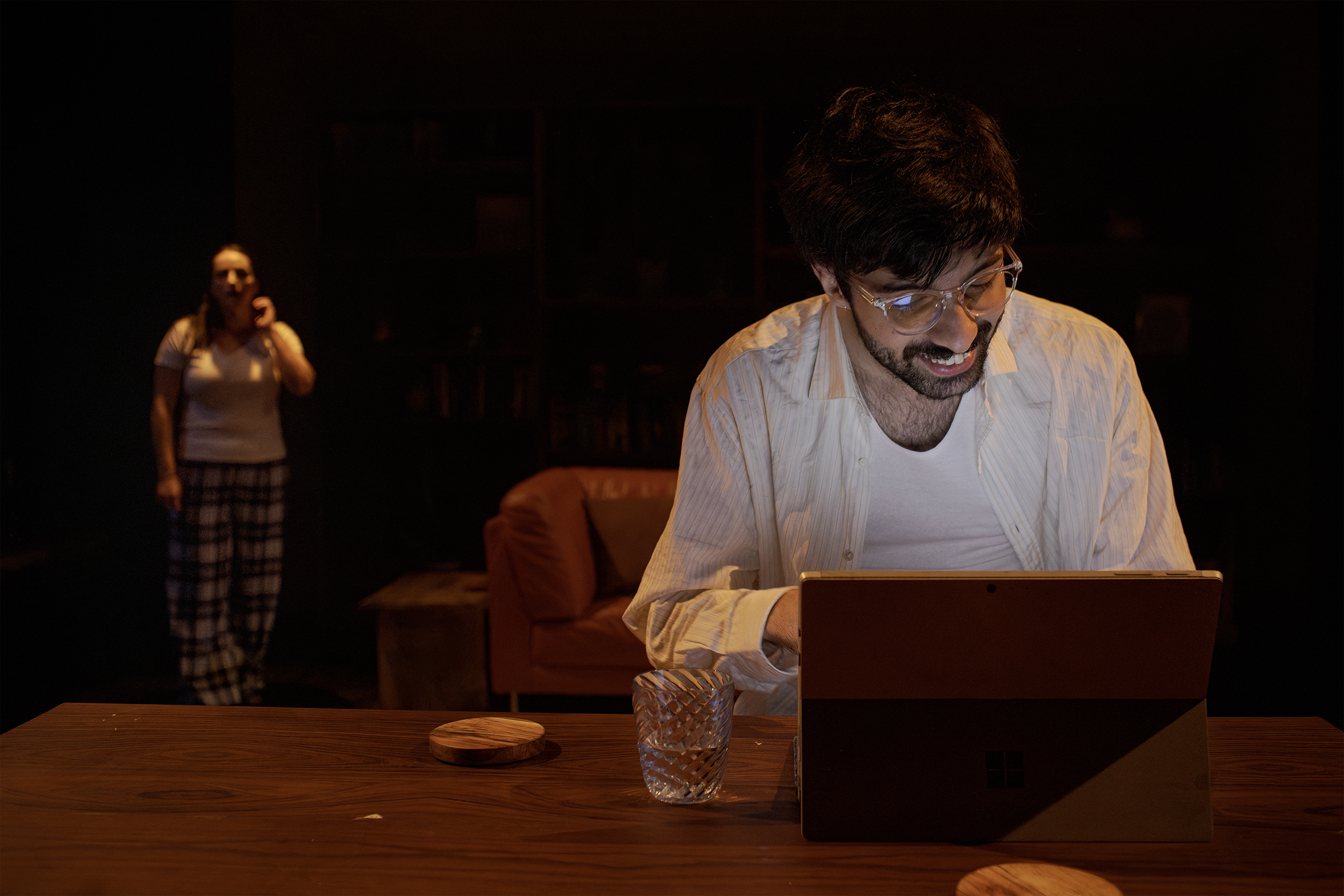
The premise of Don’t Save Me is so thought-provoking that it almost makes redundant the actual writing or production of the play.

Jade (Holly Mazzola) is dying. Her husband Pat (Ben Itaba) secretly records their conversations, so she can be brought “back to life” by AI.

Does Pat have the right?

Written by Karina Young and directed by Nelson Blake, the focus of the play is primarily, and narrowly, ethical.

But when Jade discovers Pat’s plan, and objects, his response is a flat But you’ll be dead – which doesn’t quite trump all further argument, but feels awfully close to doing so. The dead, after all, don’t have rights. (You can lie about the dead, but you can no longer libel them.) And, with little time left, and that time to be inevitably filled with physical suffering, Jade’s insistence on her rights seems odd, an unacknowledged avoidance strategy as against a justified indignation. (Life perceived solely through the lens of rights is particularly barren. As victims of blind circumstance, which we all ultimately are, rights offer little counsel and even less consolation.)

And, with its sights firmly on ethics, the play sidesteps more interesting ontological issues. Instead of Should we do it? how about Could we do it?

The answer to the second of these questions is not only dependent on technology, but also on what we think it is to be a person. Are we just a collection of relatively consistent words and behaviours? If so, AI is perfectly capable of replicating us. However, vitally aware of our own agency, our freedom and the endless dynamism of being alive, we resist such a reductive vision of personhood

But the experience of love raises a thorny problem. We love particular people. Or, if we’re talking romance, solely one person. Based on what? Their relatively consistent words and behaviours? If that is so, Pat’s reductive AI plan is disturbingly little different from his choice to marry Jade in the first place!

And that’s why a deeper psychological exploration would have been fruitful. We don’t see Pat make the decision to record his wife. He’s already doing it before the play begins. We don’t see him so overwhelmed by the sheer wonder of his wife’s existence, that in the mad hope it might continue, he desperately clutches at straws. Similarly, when Jade discovers Pat’s plan, her response is merely anger. It doesn’t seem to occur to her to seriously consider why her husband might be tempted. She’s too focussed on her supposed rights to openly face the awful, bewildering mystery of ultimate loss. (Even when she asserts she is scared of death, we aren’t shown her fear, only her anger that her husband has failed to recognise her emotions.) For most of the 90 minutes of the play, the characters are remarkably unchanging, altering only in mood rather than outlook – and that’s a pity, because character development is a terrific dramatic tool to explore the moral, philosophical and emotional complexities of any thorny issue.

Indeed, the characters appear to be deliberately infantilised: her sister (Raechyl French) attempts to bribe her way back into Jade’s trust with ice-cream; the married couple’s dream holiday is Disneyland; they build a pillow fort in the loungeroom; and their relationship appears to consist of home cooking, including the baking of cookies, and watching reality TV on the couch. (Admittedly, the last of these could be an invitation to consider authenticity, after all, the play is about AI.)

But why are they such static children?

It functions as a powerful portrait of fear, of debilitating terror before those two most dreadful agents of change: Technology, control of which we’ve lost, and Death, whose measure we never had.

Paul Gilchrist

Don’t Save Me by Karina Young

presented by Puncher’s Chance Co in association with bAKEHOUSE Theatre Co

at KXT until March 8

kingsxtheatre.com

Image by Phil Erbacher