Archive | October, 2025

Chicken in a Biscuit

10 Oct

Tyger Tyger burning bright,

In the forests of the night:

What immortal hand or eye,

Dare frame thy fearful symmetry?

Did he smile his work to see?

Did he who made the Lamb make thee?

So wrote William Blake, as he struggled to make sense of the eternal Other.

Blake is not the only writer to wrestle with our relationship with our animal relatives. Christopher Smart in Jubilate Agno asks us to consider his cat Jeffrey – and urges us to see him as a wondrous example of Creation. Jack London’s Call of The Wild invites us to note the huge gap between domestication and an animal’s natural state. Lord Dunsley’s My Talks with Dean Spanley (adapted to film in a version with Sam Neill) has a gentler take on this peculiar relationship.

Chicken in a Biscuit by Mary Rachel Brown and Jamie Oxenbould is the inheritor of a grand tradition.

These writers focus particularly on our relationship with pets, and the style is wacky fun.

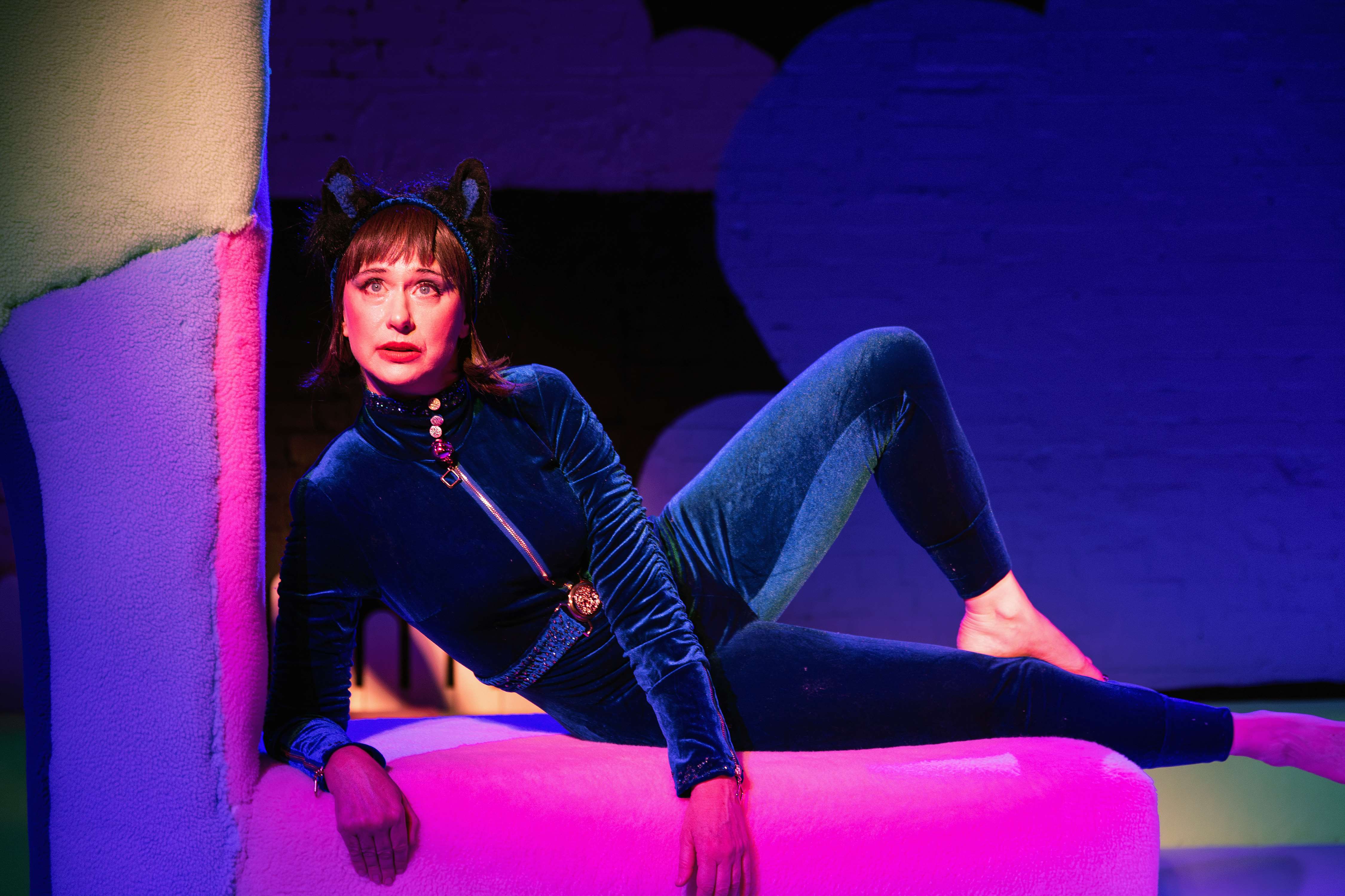
It’s a loose collection of monologues. Half portray pet owners. Half portray pets. In a bold decision, all are performed by human actors.

In the portraits of pet owners, a common note is an interest in unusual expressions of sexuality and a gentle mocking of dagginess. Not that the piece presents as a satirical attack on pet owners – with 75% of Australian households owning a pet, it’s more a comment on humanity and what we find amusing about that very strange species.

The portraits of animals riff on familiar tropes – cats as proudly imperious and dogs as dumbly loyal. In our Age of Offence, I’m sure someone will find the anthropomorphism a little tasteless (maybe me)– but the writers are doing no differently than have generations of cartoonists.

Directed by Brown, performances by Mandy Bishop and Oxenbould are delightful committed silliness.

Paul Gilchrist

Chicken in a Biscuit by Mary Rachel Brown and Jamie Oxenbould

Presented by Fixed Foot Productions

At The Old Fitz until 18 October

oldfitztheatre.com.au

Image by Becky Matthews

A Behanding in Spokane

10 Oct

Twenty-five years ago, Carmichael’s hand was cut off. He’s been searching for it ever since.

This is a black comedy by Martin McDonagh, the writer of The Beauty Queen of Leenane, The Cripple of Inishmaan and The Pillow Man.

First presented in 2010, it’s the first of McDonagh’s plays set in America. 

75 minutes long, the action plays out (almost) in real time. Two grifters have come to Carmichael’s motel room, hoping to sell him a hand – which may or not be his.

It’s tremendous fun, with great laugh-out-loud lines. Directed by Kai Paynter, we’re treated to hilarious high-energy performances. (There were a few tiny hiccups, in vocal work and in staging, but I did see a preview.)

As the grifters, Cynthia Taylu and Alexander W. Hunter have a very amusing bickering repartee and both deliver terrific portrayals of comic fear.

As a motel employee, Christopher Northall is wonderfully quirky, a true loose cannon, brazenly outside usual motivations and empathies.

As Carmichael, James Yeargain brilliantly captures the character’s heartless determination, a frightening brutality which reaps enormous comic rewards when he falls into petty quibbles with the other characters.

But with the avalanche of politically incorrect language and suggestions of extreme violence, what’s it all about?

Crazed determination? Carmichael has been looking for his (unusable) hand for a long, long time.  

Crazed consistency? On the phone, Carmichael’s mother questions whether he can legitimately claim to be racist if he finds women of colour sexually attractive. And the motel employee hangs on to a resentment which the current horrific circumstances should render utterly irrelevant.

Or perhaps, like many black comedies, it’s more about clearing the air.

Black comedies often seem untruthful – some people dismiss them as such – but they function as an invitation to break free from the spell of language and artistic representation. (A critic with even more authority than me has warned of the danger of bewitchment by our own creations, commanding “Thou shalt not make unto thee any graven image….”)

Through their mischievous and vicious exuberance, comedies like this refuse to be confused with the real thing. They remind us that our words, and the worlds they conjure, are not actually reality – certainly not in its totality – and that spirit of cheeky rebellion is gloriously liberating.

Paul Gilchrist

A Behanding in Spokane by Martin McDonagh

Presented by The Americas, A Theatre Co, in association with Beartiger Productions

At Schell Medical Corp (Flow Studios 88) until 12 October

theamericas.beartigerproductions.com

Image by Lola Carlton

Samson

5 Oct

This is the first production by Luminar Theatre Company. Debuts are always thrilling, a sign of a vibrant scene and a promise of things to come.

Samson by Julia-Rose Lewis was first produced at Downstairs Belvoir in 2015.  I probably saw it; it’s reminiscent of a lot of new Australian plays from the time.

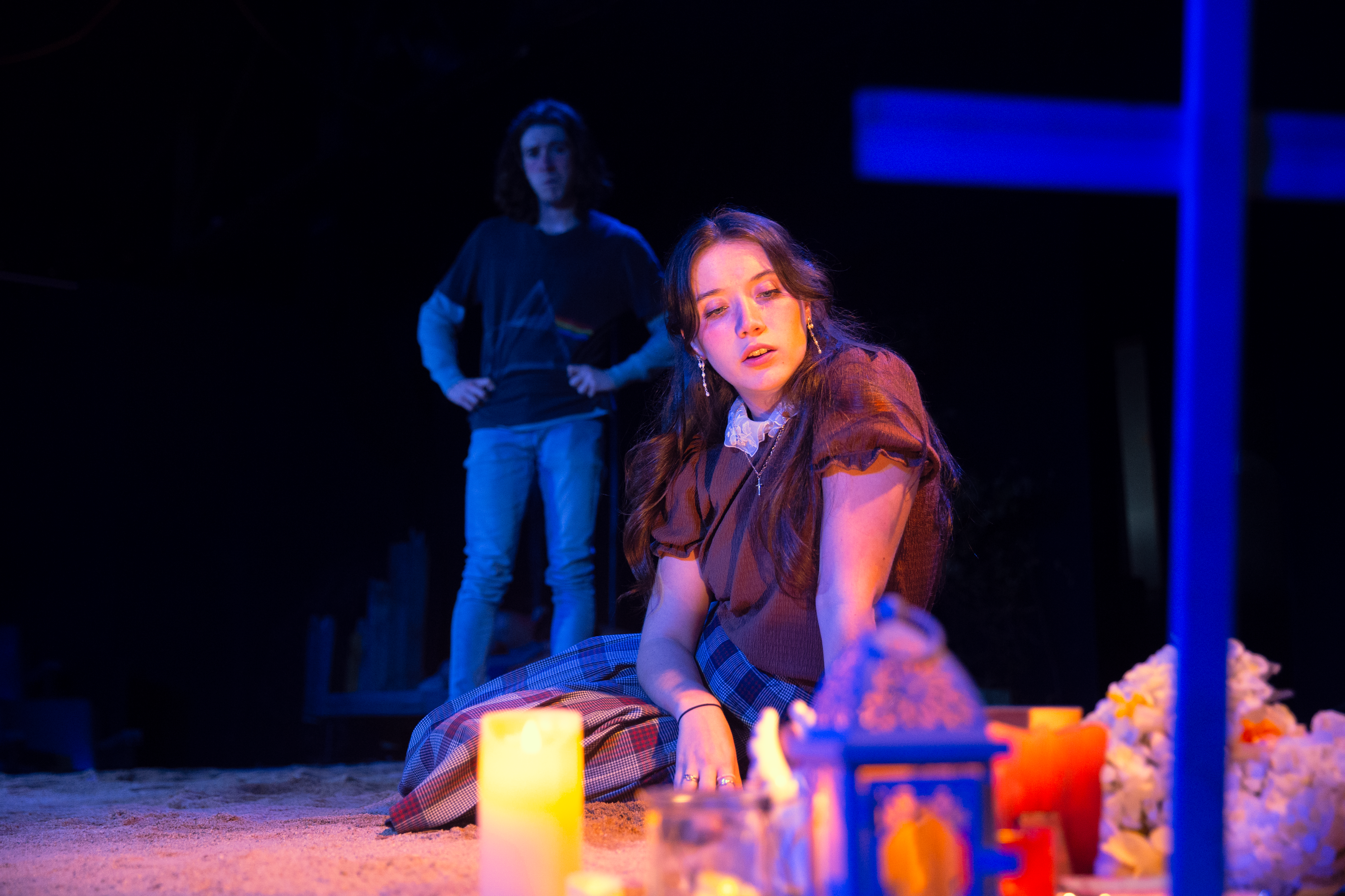
Set in a country town, it presents four teenagers dealing with grief.

It was Lewis’ first play and it throws down plenty of challenges for a director and their cast. It has a large number of short scenes. None of the characters seem to have sufficient dialogue. Some ideas are repeated too often (I need to get out of this town!) while others are left tantalisingly, or frustratingly, oblique (the recurring motif of burning.)

No one over twenty is given any stage time nor, it seems, has much impact on the lives of the characters we do see. I find this odd. What I take to be the themes of the piece – grief, guilt and metaphysical speculation – are experienced by everyone, not only teenagers. It could be argued that the piece’s purpose is to present a snap-shot of rural youth, but if so, why choose a moment in which they are confronted by problems that are so universal? Perhaps it all operates as a metaphor: the characters’ immaturity symbolising the inadequacy of us all in the face of Life’s grand questions.

Having suggested the play is an odd creature, one which some will find flawed while others will find powerfully resonant, what about this production? How does it deal with the challenges presented?

Director Chloe Callow and her design team use the space well. Sound design by Rhiannon Jean, lighting design by Julian Dunne and set design by Max Shaw effectively evoke a world of lost souls, tantalisingly suggestive of the gothic, but never giving in to the temptation to give that genre full rein – the character’s problems are genuinely existential, but aren’t soaked in a sensationalism that would reduce them to the rousing rather than the real.  

Callow also helps her eminently watchable cast (Samuel Ireland, Henry Lopez Lopez, Ava Jones and Jean) find the appropriate and always engaging tension between the characters’ natural youthful energy and the bewildering enervation of their loss.

Perhaps it would’ve been better for the company to choose a script in which the cast were asked to play characters of their own ages. But, even still, there are wonderful moments: of exuberant humour and lively physicality, and of honestly portrayed suffering and gentle commitment to the craft of truth-telling.

I look forward to seeing more from Luminar.

Paul Gilchrist

Samson by Julia-Rose Lewis

Produced by Luminar Theatre Company

At The Greek Theatre, Marrickville

Until Oct 11

Image by Simon Pearce