Archive | Musings RSS feed for this section

Sydney’s Worst Theatre Critic

21 Jan

Theatre, almost by definition, is a forum for many voices. Doubtlessly, the following nominations will be much debated.

So, without further ado, here are the nominees for Sydney’s Worst Theatre Critic:

(drum roll)

Me.

Just me.

DSCF9664

Why you ask?

After all, there are plenty of reasons I shouldn’t win:

  • I’m not especially supercilious, pompous or arrogant.
  • I don’t write too badly. (I assume potential theatre goers appreciate what language can do, so I make an effort.)
  • I do try to give some reasons for my opinions.
  • I don’t say nasty things and kid myself I’m being witty.
  • I don’t forget that my opinions are simply that.

So why, exactly, have I won this prestigious and coveted award?

Well, firstly, I don’t do much evaluation, and if you don’t do that, you can’t claim to be much of a critic.

Secondly, and most crucially, I have the highly annoying habit of writing about my own ideas.

But wait, you say, every reviewer has their own interests. Call them prejudices if you want, but it’s unavoidable. Objectivity is a myth. Don’t, Veronica, be too harsh on yourself.

But I’m serious; I do write about my own ideas. I don’t attempt to sum up the production I’ve attended. I take it merely as a starting point. If a piece of theatre makes me think about, say, democracy, I write about democracy. Not what the play says about it, but what it leads me to think about it.

So I’m a terrible reviewer.

Maybe I’m not even much of an audience member.

Perhaps I think too much.

Veronica Kaye

What are reviews for?

15 Jan

The recent International Theatre Critics’ Conference in Anchorage was an amazing opportunity for intense self-reflection for many in my field, and that opportunity was taken by three of us.

On a desultory Wednesday afternoon, I attended a session entitled ‘What are reviews for?’ There was me, the speaker, and one guy nursing a hangover. Our colleagues were exploring the more pressing question of ‘When does the bar open?’

Here is the transcript of the paper given that afternoon:


What are reviews for?

Let me begin by saying that reviews are merely one way you can respond in writing to a piece of theatre. You can also write a letter of complaint to the artistic director. Or you can scrawl obscenities in red paint on the stage door.

Perhaps these approaches have one thing in common; the desire to evaluate. I think that’s what reviews fundamentally do; tell us whether the reviewer thought the production was any good. I’m not suggesting this is all they do, but it’s their crucial component.

Of course, you can write about theatre in other ways. In fact, one of the leading proponents of an alternative approach has honored us with her presence today. (Let the record state that at this moment I went through the motions of glancing around the auditorium, to humbly imply the speaker may have been referring to someone other than me.)

But reviews evaluate.

Have I answered my initial question so soon? No. (Let the record state that at this moment the guy nursing the hangover exited the auditorium.)

I think it needs to be asked what purpose do reviews serve for each of the major stakeholders; audience members, artists, and the critics themselves.

What the general public wants from a review depends on whether they’ve already seen the production. A surprising number of people read reviews the way they read letters to the editor; simply to see what crazy ideas are out there. And just like letters to the editor, there’s a warm pleasure in finding our opinions shared, but a more intense one in finding they’re not. This phenomenon explains the hyperbolic language many critics employ. It gives the theatre going public what they want; drama.

Paul Gilchrist ruining another of my photos from the recent (and entirely fictitious)  critics' conference

Paul Gilchrist ruining another of my photos from the recent (and entirely fictitious) critics’ conference

People tossing up whether they want to see a particular play also read reviews, but less commonly than you might imagine. Decisions to buy tickets are rarely based on carefully argued evaluations, but rather on the general buzz the publicity team manage to create. (For this purpose, a reviewer might include potential pull out quotes when they want to aid the publicist, or avoid them if they don’t. To the untrained eye, reviews can appear equally positive, but publicists see the difference. )

Artists are immensely grateful that reviewers come at all, and sometimes they read the reviews. That is, when they don’t have a publicity team to do it for them. It’s not that artist aren’t interested in the views of critics. No, a critic’s opinion is just as valid as anyone else’s. And some artists care what other people think, though usually not the artists worth their salt.

For artists, the purpose of reviews is to help garner an audience. Obviously, it’s a calculated risk.

We reviewers need to keep in mind that if the artist really valued our opinion, they’d ask us to read the script before the production, or at least get us along to a couple of rehearsals. As it is, they ask us in when they’re finished. Obviously, they don’t intend taking what we say that seriously. (Analogy: We think we’re specialists, yet we’re only ever called in at the autopsy.)

I don’t want to overstate this. A friend* opened on Thursday, a review on Sunday claimed the play was too long, and by Tuesday the show was thirty minutes shorter, and by the writer’s own admission, half an hour better. We can push theatre in certain directions.

Which leads me to the final stakeholder; ourselves. Why do we write reviews? Perhaps for the money? I hear laughter. (Let the record state that there was no laughter from the auditorium at this point. None, whatsoever.)

Do we write in order to give consumer advice? Why would anyone do this, unless they were being paid? I never feel the slightest urge to write advice for anyone considering purchasing, say, a refrigerator.

I write in order to push theatre in the direction I want. I like to think I’m conscious of this (political) motivation behind my writing.

But perhaps I delude myself. Perhaps I write in order feel powerful. Or, perhaps, to assert my existence in a world so large that any of us can be easily overlooked.

Whatever my motivation, if I’m a reviewer, I wish to evaluate. Where does this desire come from? Why is it my purpose?


And then he, too, headed to the bar.

I sat in the empty auditorium, and told myself I don’t write ‘reviews’. I write what I call ‘responses’. Of course, they do include a bit of evaluation.

Perhaps I was just quibbling with words.

Well, if a writer can’t do that, I told myself, I don’t know who can!

And I headed off to do the other thing writers do.

Veronica Kaye

*The speaker’s friend was the obscure Sydney playwright Paul Gilchrist.

Things reviewers hate

10 Jan

And so I continue to file my reports from the International Theatre Critics Conference in Anchorage, an event which has been exciting, thought provoking and entirely fictitious.

Paul Gilchrist ruins another photo

Paul Gilchrist ruins another photo

Here is a transcript of one of the most popular presentations.

Things Reviewers Hate (shared for the edification of theatre makers)

  1. Shows without programs. It doesn’t need to be printed. Electronic will do. It’s difficult enough to do this job without looking like an idiot. There’s so much to process in so little time. Please don’t make it harder.
  2. Not being thanked. Or even acknowledged. Most of us don’t get paid. And those that do are hardly rolling in it. Ok, if we break our part of the bargain and write a rant that slams you as utterly incompetent or truly evil, then perhaps a dignified silence is the best response. Or maybe you should just contact your solicitor. But, in all other cases, an email saying thanks wouldn’t go astray.
  3. Finding positive reviews have been buried. Once again, if we compare you to Hitler, fair enough. But if our only criticism was that, say, the sound design was a little loud, it’s frustrating to find our review is not mentioned on your newsletter or social networks. Ok, it sounds like we’re stalking you. But since most of us write on an electronic format we know how many people have read the review and where those readers come from. I want readers just like you want audiences. You scratch my back…….
  4. Aggression to negative reviews. Sometimes I won’t like what you’ve done and I’ll say it. I don’t expect you to be overjoyed, but it seems a bit rich if you then send death threats. You invited a critic, not your grandmother.
  5. Refusal to accept that we have an existence beyond your work. I have opinions. I have preoccupations. When I write, these are the things I’ll be drawn to. Don’t swallow the lie about critical honesty. I’m not saying I’m going to write anything that I feel to be untrue, but if I think the play is about, say, feminism and you don’t, please don’t complain that I’ve misunderstood. No two people see an art work the same way. And to demand they should is to make the whole dramatic form redundant.
  6. Terrible wine at opening night. Ok, this one’s a joke. A free drink is a free drink. But I would like to raise my glass to all theatre makers. You teach us to see. And you teach us to dream. Thank you.


I would like to thank the writer of this paper, but the critic wished to remain anonymous. (Which is a perfect segue to Things Theatre Makers Hate. Stay tuned.)

Veronica Kaye

Truth in the Theatre Foyer

7 Jan

Recently I’ve filed a couple of reports from the International Theatre Critics’ Conference in Anchorage.

And several people have had the temerity to suggest that no such event is actually occurring.

You can imagine my indignation. (In fact, you’ll have to, as I’m not going to waste a moment describing it.)

As incontrovertible proof, I offer the following:

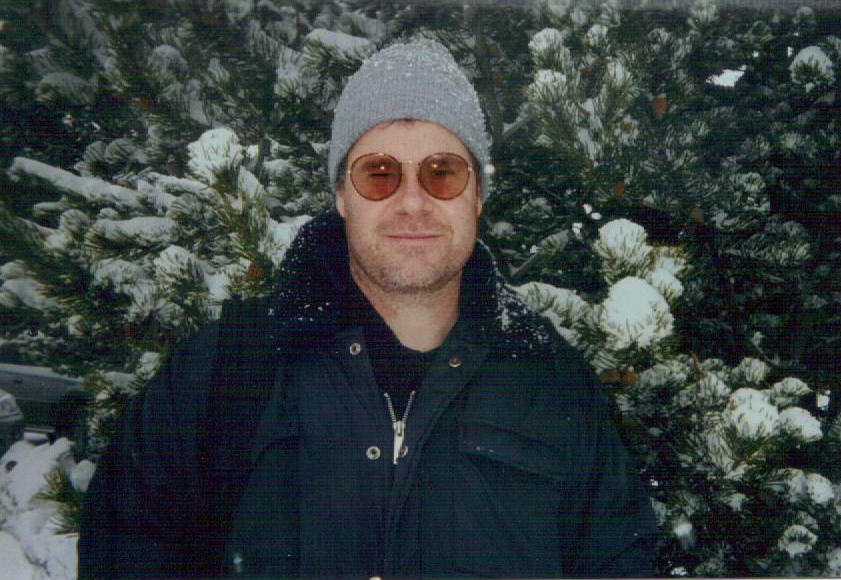
Firstly, this photo

veronica in the snow2

I’m holding the camera. The subject is a pine tree covered with snow. (Annoyingly, Paul Gilchrist, from subtlenuance, has bombed the shot; another example of a playwright getting in the way of the creation of a perfectly good piece of art.)

Secondly, I offer this, the transcript of Paul’s address to the conference:

Truth in the Theatre Foyer

“Recently a friend asked ‘What do you say in the foyer on opening night when the play you’ve just seen is horrible?’

Say it’s wonderful and drink more champagne.

Why does it matter what you think? (The exception is if the play is promoting something evil. In that case, drink even more champagne – then confront the people responsible.)

Otherwise, you have no moral responsibility to be ‘honest’.

In fact, one might question why you feel the need to be ‘honest’ at all.

Annoyingly, I keep suggesting ‘honest’ should be in inverted commas. Why? Because I believe it’s a word used to hide a multitude of sins. Bullies, for example, are always ‘just being honest’.

Before you are ‘honest’ with anyone else, you should be ‘honest’ with yourself.

If you hated the work, ask yourself why. What criteria of yours hasn’t it fulfilled? (You might even remind yourself that it’s unlikely the work was produced in order to satisfy your criteria.) And then, as you reflect, (and this is the serious part) you might ask yourself why you hold those particular criteria? (Perhaps you’ll realize that you have no criteria you can actually articulate. Maybe you respond to a play merely according to whether you want to sleep with the lead actor, or whether your last play was rejected by the literary manager.)

It takes courage to acknowledge that our ‘honesty’ is often just self serving.

I’m not suggesting you shouldn’t have an opinion. And I’m not suggesting you don’t have the right to evaluate the work. (Indeed, if you’re a reviewer, that might be the very reason you were invited.) And, regardless of who you are, if the artist asks you what you think, there’s no need to lie or to hide behind equivocation.

But every evaluation is a political act.

Let me be clear, I’m not suggesting you have to like everything. You can think plays are poorly executed. You can think they’re downright incompetent.

But remember, artists are not offering themselves up for assessment. Or only the worst are.

In a society that rightly prides itself on its pluralism, we should be asking ‘What is this trying to say?’ Or, perhaps more importantly, ‘What is this trying to give?’

(You don’t even need to ask ‘What is this trying to do?’, thinking this is the fairest way to judge the play on its own terms. It’s not asking to be judged at all.)

Let’s not turn art into a competency test. Let’s not have our basic response be ‘Is this good enough?’ Good enough for what?

A work of art is a sharing.  Don’t ask merely ’Was this presented well enough?’ Don’t even ask ‘Is it true?’

Ask ‘In what ways is this true as well?’

Because it is.

Accept the gift, and become richer.” *

Veronica Kaye

*I’d like to thank Paul Gilchrist for this transcript, but not for ruining my photo.

Writing Honestly

6 Jan

Recently I attended the International Theatre Critics’ Conference and reported on the keynote address.

The speaker, a jolly old fellow, had six pieces of advice for reviewers:

  1. Write beautifully.
  2. Give evidence.
  3. Don’t confuse mean-spiritedness with wit.
  4. Go easy on the hyperbolic language.
  5. Write quickly.
  6. Do more than evaluate.

Several of my friends are reviewers. (I’ll own it; after all, Jesus Christ associated with tax collectors and prostitutes.)

A couple of these friends suggested that the six guidelines were missing something crucial: that reviewers should write honestly.

I can’t speak for the man who delivered the address (though I do intend to send him a letter before next Christmas) but I do have some things to say about honesty.

Some might argue that it’s implicit; that honesty is obviously a requirement of a reviewer.

I would argue that it’s not (first and foremostly) the audience you have to be honest with, but yourself.

Why did you like or not like the production?

Why did you think it was about this and not that?

What assumptions have you brought to the performance that informed your evaluation or understanding?

I’m not particularly talking about personal prejudice (you know the sort: you like someone’s work because they bought you beers at uni, or you don’t like it because they didn’t buy you enough.)

I’m talking about political, aesthetic and moral assumptions.

And if you don’t think you make any assumptions, get yourself to a play.

And watch carefully the action on your side of the curtain. (It’s the true magic of theatre.)


Veronica Kaye

Guidelines for Reviewers

6 Jan

Recently, I attended the International Theatre Critics’ Conference in Anchorage. (It’s held in Alaska for the sake of the keynote speaker. He drops in from the North Pole and shares his infallible knowledge of who’s been naughty or nice.)

Lest you suspect I’m just making this up, here’s the summary of his address:

  1. Write beautifully. Or, at least, try. Theatre goers appreciate language. It’s one of the things the artform does so well. Don’t be the weak link.
  2. Give evidence. Regardless of whether you liked the production or not, back up what you say. Remember, your readers are actually interested in the theatre, not you.
  3. Don’t confuse mean-spiritedness with wit. You may have really disliked the production. And you can write that. But put downs are only funny when the target has actual power. Remember, you’re not writing about an evil dictator. Actually, remember you are not writing about an evil dictator; you’re spending your time writing about theatre. Difficult to claim any sort of moral superiority, dickhead. (See, that wasn’t funny.)
  4. Go easy on the hyperbolic language. You didn’t have an orgasm. You weren’t tortured. Really, you weren’t. Save exaggeration for the marketing people. (After all, there’s plenty of them. Billions, really.)
  5. Write quickly. (In so far as this is compatible with point 1). You weren’t given a free seat so you could write for posterity. Posterity doesn’t buy tickets.
  6. Do more than evaluate. Don’t just write about whether you thought the production was done well or not. Theatre is not Olympic diving. Hey, Olympic diving isn’t just Olympic diving. Beauty can’t be reduced to a number. And theatre might even have meaning. It’s an idea worth considering, and writing about. Take the work seriously.

Of course, most critics didn’t hear these guidelines for writing. They were practising the other skill necessary for a reviewer. They were at the bar.

Veronica Kaye

Reading Reviews

17 Oct

Every artist knows there’s an art to reading reviews.

(Or maybe not an art. Maybe there’s a wine list. Or should be.)

But as a writer about theatre, I have a confession: I enjoy reading reviews of plays after I’ve seen them.

I know this makes nonsense of the idea that reviews are consumer advice. (My attending of theatre is rather like drinking from some random bottle I find under the sink – and then reading the label.)

I avoid reviews before seeing the play because everything feels like a spoiler.

I like to sit down to Hamlet and be surprised. “Oh, it’s in Swahili this time.”

I like to read reviews after I’ve seen the play because I don’t particularly want to know about the play. (I’ve seen it.) I want to know about the reviewer.

Or more precisely, I want to know about another person. I want to know what they value.

Because we do value different things. In aesthetics. In morality. In politics.

There is a danger to living in a pluralistic society that openly acknowledges this: we can forget to be truly amazed at how varied is the human experience. We can reduce the idea we value different things into a mere truism. But each one of us gazes through a different window. To……….. where?  I want a peek.

Reviewers say ‘Have a look through this window.’ And I want to thank them for that.

And to mix imagery, and to return to artists, let me conclude with this:

Putting on a production is like firing up a particle accelerator.  You get a small number of very excited particles and send them hurtling at a larger, more inert mass. Then, after the collision, you know more about the universe.

Veronica Kaye

Note: The image is Paul Gilchrist reading a review to an interested friend.

Theatre and Judgement

2 Oct

We have a predilection to judgement. It’s a good thing. It powers our moral life. Only the most naive think that a predetermined set of  rules can guide you through the complexities we face. We constantly have to judge the best course of action.

However, our faculty of judgement is often corrupted. An example of this is when we judge the person not the behaviour.

Is it also possible that it’s a corruption of our faculty of judgement when we apply it to art? I appreciate this is a radical suggestion.

Imagine you were on a panel to determine which theatre maker might receive a $1 million grant. (I’m obviously assuming you have a healthy imagination.) Unless you’re going to pull a name out of a hat, your decision must be based on something. Perhaps you will suggest the grant be given to the artist whose work would most benefit society. (This, of course, would be difficult to determine, but that’s why judgement is a serious matter.) If you choose to give the money in this way you would be making a moral judgement.

However, if you merely attend an evening of theatre and afterwards make a judgement, what is the moral component? I’m not arguing there isn’t one. Perhaps you’ll judge the production to be promoting racism or sexism. Or joy and acceptance. Or you might simply decide it’s presenting an unnecessarily narrow vision of life.

But if you judge the acting to be poor, or the costumes to be garish, what exactly is the moral component?

Well, it might be you who is promoting an unnecessarily narrow vision of life.

Of course, you could counter that I’m ignoring the category of aesthetic judgement altogether, or unfairly collapsing it into a minor subset of ethics.

Perhaps I am.

And perhaps my qualms about the passion sometimes displayed in our aesthetic judgements are indeed misplaced, and we should shout and scream about what happens on our stages, and in our stories, while somewhere else children quietly starve.

Veronica Kaye.

Writing Satire

26 Aug

I used to write satires.

I was the author of several plays burning with rage at our sleeping spoilt society. (Don’t bother googling for them; I wrote them under a different name, before I was the woman I am now.)

‘We live healthier wealthier lives than any time in human history, yet we’re bunkered down like it’s the Ice Age,’ my satires would say.

They objected to our materialism, but saved their greatest vitriol for the fact we didn’t even know how to enjoy it.

I don’t know if my audiences ever learnt a thing from my satires.

But I learnt two things.

Every satire has a target.

The first thing I learnt was that audience members never expected to be that target. If they found they were, they were shocked – an entirely understandable response from anyone who is perfect.

(It fascinated me that anyone would choose to identify themselves as the target. It’s not as though I named names. But they did. And paid for the privilege of doing so.)

The second thing I learnt was that offended audiences members had a simple defense mechanism, a mantra they would repeat. They didn’t always use the same words, but the gist was the same.

I was told I shouldn’t underestimate an audience; an attitude that proved difficult to adopt when audiences kept turning up, only to be surprised that I’d written a play aimed at the people who might actually attend.

‘That’s obvious’ they would say.  As if the purpose of a satire was to take them  on a journey of intellectual discovery, and at the end of the class they would understand relativity, or something else that had absolutely no relevance to their day to day lives.

But satires are not about knowledge. They’re about ethics. They’re not interested in what you know. They’re interested in what you do.

Satires aren’t classrooms. They’re trials.

And when you’re convicted of crimes against humanity there’s no point saying you didn’t know it was wrong.

Or that you did…………

I no longer write satire.

Now, I write with a gentler irony. Which kind friends might call maturity and honest ones despair.

Veronica Kaye

Theatre Experts

16 Aug

Whenever someone says they see a lot of theatre, I’m not sure whether it’s a claim to expertise, or a cry for help.

I do not claim to be an expert.

This is not because of a lack of experience.

I’ve been around.

It’s simply because I hear such a claim with suspicion. (There’s a hidden violence to it, like the Australia Day air force fly by;  it’s official, and ominous.)

I imagine there are fields of human endeavour where the claim to expertise can be fairly made. Perhaps stamp collecting.

I don’t think it can be made in theatre criticism.

I’m not arguing that a theatre critic cannot, and will not, amass something that might pass as knowledge. (And I’d certainly argue they should be trying to!)

What I’m arguing is that to identify yourself as an expert is a political act.

You’re asserting an authority to which you have no right. Your knowledge is so tied up with your values and preferences (aesthetic, philosophical and political) as to be best thought of as personal.

And there’s nothing wrong with that. There’s no reason why you shouldn’t share that very personal knowledge with others. It is, after all, what the theatre makers are doing in the first place.

But the assertion that your knowledge transcends your personal perspective and somehow speaks for us all is something a psychologist might indeed describe as a cry for help.

The rest of us could be excused for hearing it as a war cry.

Veronica Kaye