DEMO

23 Sep

Language is a net we drag through the icy sea of reality. The small escapes this net; the subtle, the nuanced, they all slip through. And the large, the grand, the sublime, they rip through. The net of language only captures the mediocre. And that it kills.

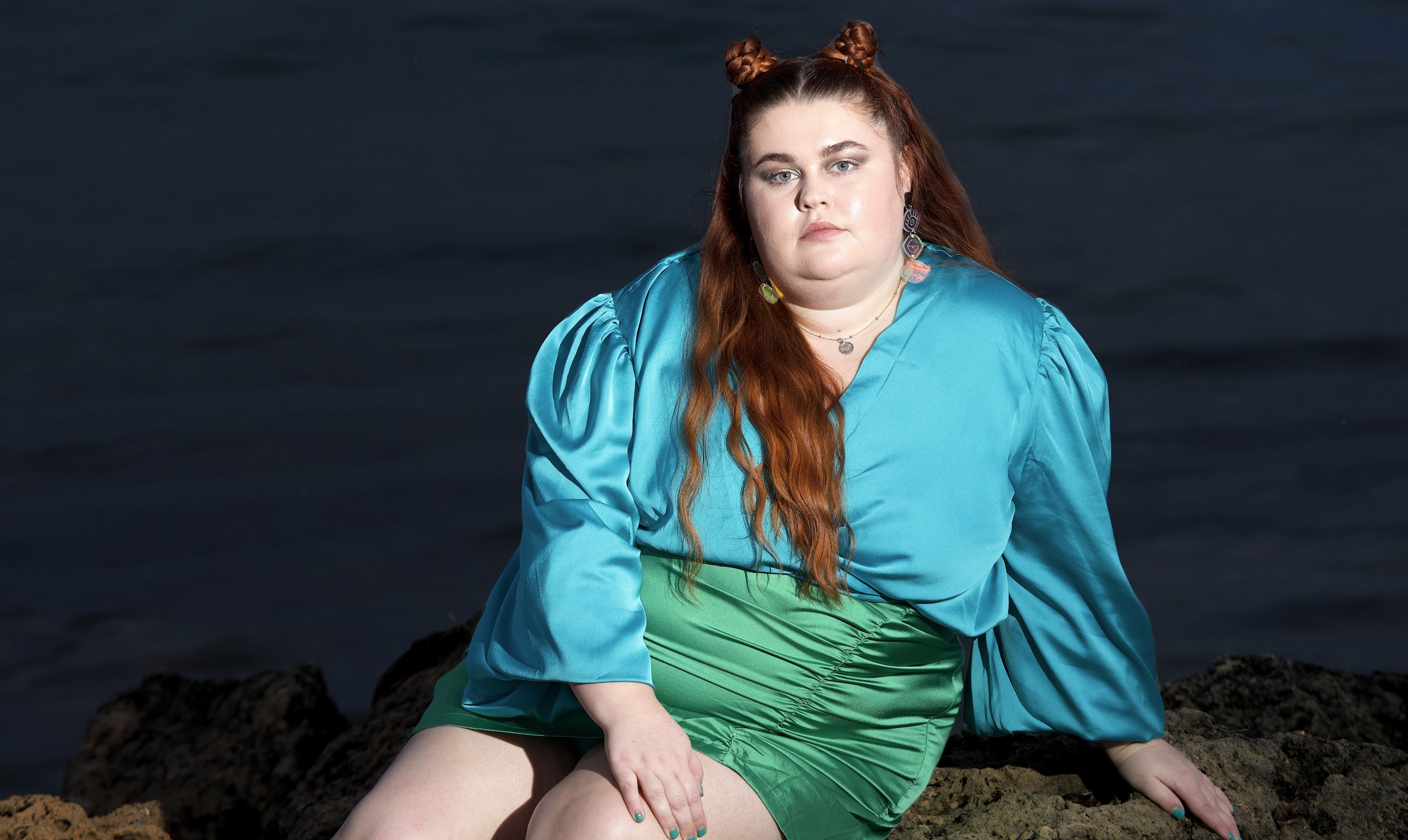
DEMO, created and performed by Melody Rachel, is a fascinating piece that playfully invites us to consider the limitations of language and the dangers of simplistic labelling.

It’s done without words, or at least the spoken word. The performance begins with a captivating movement piece that powerfully expresses a desire to break free. Then, through single words or phrases written on foam board signs, we’re offered a series of alternatives – apples or oranges, Coke or Pepsi, Labor or the other lot – but Rachel’s movement suggests the absurd reductionism inherent in privileging such narrow choices. And then the signs become more mischievous  – feminism or men, progressive or progress – teasing out the limitations of an outlook that insists on binary opposition and excludes life-giving complexity. There’s non-compulsory audience involvement, and the gang gleefully joined in this subversion of stifling simplicity. (If WB Yeats had been present – he wasn’t – he might have offered the Dancer or the Dance.)

At one moment, Rachel’s written signs suggest she is both a church going Christian and a lesbian. It’s a suitable grounding of an abstract debate. It gently reminds us that the genuine will resist the categories we impose. The real thing will escape the net, and live.

This is a warm-hearted, intelligent show, beautifully performed.

Paul Gilchrist

DEMO by Melody Rachel

at The Emerging Artist Sharehouse, Erskineville, as part of the Sydney Fringe

until September 23

sydneyfringe.com/events/demo/

Cate Fucking Blanchett

22 Sep

Before this show, the writer asked that I be “brutal” in my review. She was joking. Receiving an unfavourable review is equivalent to being savaged by a sponge. But, more to the point, a review that does not shy away from the supposedly honest but harsh truth is usually one written by someone with only a passing acquaintance with Truth. (My fleeting impressions are hardly handed down from heaven, especially in a world where fewer and fewer of us believe there’s a heaven from which they could be handed.)

As you can see, the meta route is available to us all, playwrights and reviewers both, and I suspect it will always leave some audiences dissatisfied. (If two footballers must stop playing in order to argue the rules, the least they could do, for our entertainment, is decide their differences with their fists.)

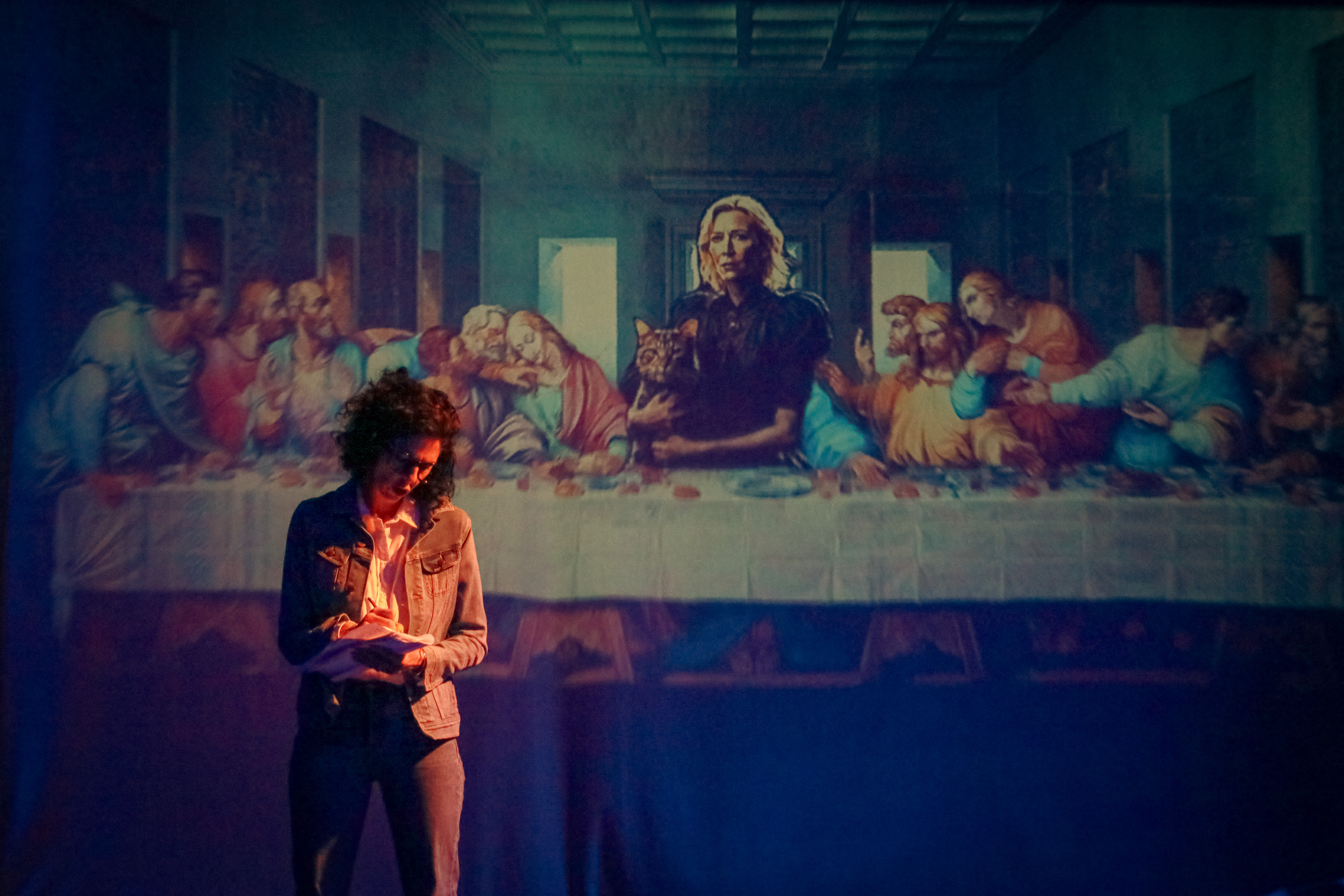
But Cate Fucking Blanchett by Karolina Ristevski is a piece of meta-theatricality that does satisfy; it’s extremely funny and enormously clever, a teasing invitation to consider the nature of theatre itself.

One of the characters is a writer. She has written a play about her family, and they argue about whether they are an appropriate source for her inspiration. And, in that play she has written about her family, they argue about the very same thing.

Meta-theatricality is a dangerous game; play that card and have you thrown away your chance to evoke empathy? Perhaps. Sometimes the wisest thing is to push on, which is what this piece does, allowing a play within a play to become another play within another play.  (Analogy: You see your partner in the act of applying lipstick. This might make her beauty appear a façade, or it could be an erotically charged moment. Does Performance hide Truth? Does it reveal Truth? Or is it the only Truth?)

In addition to the meta-theatricality, another element of this magnificently rich script is the plotline in which the writer donates eggs to her sister so she can have another child. I give you something; you develop it; it’s no longer mine – an allegory of the creative process.

The play is beautifully directed by Ristevski herself.  And her cast is absolutely terrific. Melissa Jones, Lana Morgan and Angela Johnston as the three sisters offer performances of comic brilliance. John Michael Narres give an exceptional turn as a fast talking doctor (and as a fast talking actor playing a fast talking doctor …. you get the drift.) As the writer observing the play being performed, both Kate Bookallil and Josie Waller deliciously capture the inevitable tension between the creative dream and the stage reality. And Siobhan Lawless’ cameo as chairperson in the mock Q and A post-show is played with a wonderfully deliberate obtuseness to the absurd.

And what about Cate? She wasn’t present on the night I attended. But there were several hilarious imitations. (Jones’ shot was glorious; gorgeously balanced between replication and parody, perfectly suiting the production’s goal.)

So why is Cate referred to at all? She is to play one of the sisters if (when?) the play (within a play…) is picked up by a major company. It’s a divine conceit; a reminder that despite all our talk of Truth within theatre, the subtext is often the pursuit of Fame.

Paul Gilchrist

Cate Fucking Blanchett by Karolina Ristevski

At Flight Path Theatre as part of the Sydney Fringe

Until 23 September

sydneyfringe.com

Human Activity

21 Sep

It’s a Dan Murphy’s now.

But, in 2014, it was a Lindt Café, and the scene of a siege in which three people, including the gunman, died.

This is the background action to Katie Pollock’s Human Activity. Somewhere off stage, this horror has happened, or is happening.

The stories we follow, the ones in the foreground, are also about male violence. A woman seeks an abortion but must do it secretly due to her controlling husband. Another now lives on the street because of abuse from her man. Another woman is fired when she complains about sexual harassment. An elderly couple trace the route taken by their niece on her final day; her partner’s malicious behaviour has driven her to take her own life. Linking all this with the Lindt siege, an act of terrorism, is deliberately and powerfully thought-provoking.

Lest this seem all too dire, there’s much humour and gloriously understated poetry. There’s a group of teenagers whose dialogue is pitch perfect. On occasion, this group morph into a flock of birds. Theatrical playfulness in combination with concerns of vital importance is what makes this a thrilling example of new Australian work.

Director Suzanne Millar wisely mines all the diverse elements of this rich script, and offers us a cast that reflects the diversity of this rich city of ours.

And there’s a further motif: loss. Belongings are lost, as is a sense of belonging. Species are lost. Innocence is lost. It’s a deeply humane vision and a courageous one: the acknowledgement that the world flows in one way, and that way is often not the way we’re looking. It’s a vision beautifully encapsulated in the most surprising of closing monologues.

Paul Gilchrist

Human Activity by Katie Pollock

at KXT on Broadway until 8 October

www.kingsxtheatre.com/human-activity

Image by David Hooley

Lady Day at Emerson’s Bar and Grill

18 Sep

Billie Holiday was one of the greatest jazz singers of all time, but she had a difficult life.

She faced racism and abusive partners. She had serious trouble with drugs and drink. She spent a year in gaol.

This production of Lanie Robertson’s play captures brilliantly both the genius and the pain.

The piece consists of a single gig at Emerson’s Bar and Grill. Holiday sings and, between songs, banters.  

Zahra Newman’s performance of Billie is absolutely outstanding. Supported by a seriously classy band (Kym Purling, Victor Rounds and Calvin Welch), Newman’s rendition of Holiday’s songs is pure gold. But it’s her performance of the banter that makes this extraordinary theatre. Robertson’s script is an astounding tight rope walk; what could be the drunken ramblings of a traumatised individual becomes a glorious invitation to empathy. Holiday has been hard done by, and despite the beautiful dream that suffering makes us saints, it rarely does. (The fact suffering does not automatically make you better is at least one of the reasons we call it suffering.) Billie is both flawed and worthy of our deepest respect; not because she was a star, but because she was a person. Newman’s portrayal of this Billie is superb, a true image of humanity, a window into the soul.

The only reservation I have about this production is Pepe. Pepe is a dog. Pepe is carried onstage. Pepe may have loved the experience, but it didn’t seem to me he did. I might be wrong; thanks to Newman’s performance, I can understand what it might have been to be Billie, but I really have no idea what it is to be Pepe. We definitely live in the age of call out culture, and if I see injustice, I am to name it. (This appears to be the criteria for modern sainthood.) But, here, I don’t have the necessary certainty; I can only record that Pepe’s presence made me feel uncomfortable.

Paul Gilchrist

Lady Day at Emerson’s Bar and Grill by Lanie Robertson

at Belvoir until Oct 15

belvoir.com.au

Image by Matt Byrne

The Importance of Being Earnest Expedited

15 Sep

There are currently two (at least) productions of The Importance of Being Earnest running in Sydney. To wildly misquote a famous playwright: “To have one production may be regarded as good fortune; to have two is a godsend.”

One of these productions is by the Sydney Theatre Company at the Roslyn Packer Theatre. That show runs 2 hours 20 mins (with interval) and tickets are $117. The other is in The Bordello Room at the Kings Cross Hotel. This show runs 65 mins and tickets are $35.

I saw the one at the top of the pub.

Wilde’s script has been shortened (as the more discerning may have guessed from the word ‘expedited’ in the title.) The play is an absolute classic of comedy, and in this version all its wit and mischief shine through.

Three actors play all nine characters, and this doubling, tripling, quadrupling beautifully enhances the madcap fun. Under the direction of Keith Bosler, David Woodland, Lib Campbell and Tai Scrivener are magnificent, playing each character with a total commitment to their crazy comic potential. The deliciously absurd costuming by Tanya Woodland is icing on the cake.

The show gallops through at a cracking pace, and is given a suitably playful sound track by musician Courtney Powell.

For some time now, it’s been the fashion to view The Importance of Being Earnest as a type of queer piece, a coded exploration of the necessity for complex and duplicitous identities in a heteronormative society. This reading is no doubt encouraged by Wilde’s miserable fate. However, this production privileges audacity and exuberance, and so joyfully resists any single reading; it both delights and indicts, in myriad ways, with Wilde’s gloriously subversive humour.

Paul Gilchrist  

The Importance of Being Earnest Expedited

at The Bordello Room, Kings Cross Hotel, as part of the Sydney Fringe

until 23 Sept

sydneyfringe.com/events/the-importance-of-being-earnest-expedited/

Image by Stephen Reinhardt

Summer of Harold

13 Sep

This is a 90 minute evening of three short plays written by Hilary Bell and directed by Francesca Savige.

Each playlet is delightful. (As is the word ‘playlet’, if you think about it. Like ‘spiderling’, it’s a diminutive that manages to only partially hide the thrilling, ferocious potential of the thing it labels.)

Summer of Harold opens the night. It’s a monologue, delivered beautifully by Hannah Waterman. Her character recalls when she and a friend spent a summer housekeeping for Harold Pinter. The acclaimed playwright is portrayed as daunting, at least to the young protagonist. It’s a charming piece about the passing of time and where we direct our fears.

Enfant Terrible is performed by Berynn Schwerdt. Gareth has just returned from an award night honouring his long-time friend, a world renowned ceramicist. It’s a terrifically amusing portrait of smallminded envy.

Lookout is a two hander. Jonathan is about to set off on a life changing road trip with his new love. Waterman and Schwerdt combine wonderfully to tell a tale of the need to grow, even in age.

So what do the three pieces have in common? They’re all told with a captivating humour. They’re all superbly performed. And they’re all tightly constructed; each is like a little mousetrap (though without the ghastly consequences.) This sort of clever tightness is so valued by the production that I was warned by the publicists not to write spoilers. Such a warning might seem unnecessary, but if the snap of the trap is both satisfyingly and sufficiently loud, there are some of my oh so noble profession who can’t but help let the echo sound in their review.  

Another connection between the pieces is that each is about our relationship with what might be called size. Two of the playlets are clearly fascinated with fame and our response to it. (And here I’ll point out that Summer Of Harold references Pinter’s cricket team, the Gaieties, and it’s important for everyone to know that I am personally acquainted with someone who played in that team.) The closing piece alludes not to fame, to those of us who appear larger than Life, but is instead an exhortation to acknowledge Life is larger than us, and to embrace it, regardlessly.   

Paul Gilchrist

Summer of Harold by Hilary Bell

at Ensemble until 14 Oct

ensemble.com.au

Image by Jaimi Joy

Betty is a Butcher

8 Sep

Thomas Campbell is an extraordinary performer.

Betty is a Butcher is his debut as a playwright. Presenting this one-man show himself, Campbell offers a fascinating series of vignettes. A grand old actress talks of love. An online sex worker growls and complains. A child tasked with giving a speech at school finds unexpected help. A man submits to counselling for abuse of his boyfriend. And there’s the delightful surprise of the final number.

Are these scenes connected? I’m not sure. Two motifs bubble and crackle through: unicorns and the heart. It’s an intriguing jigsaw, a teasing meditation on dreams, desires, and deep dissatisfactions.

Campbell is eminently watchable, displaying a glorious range.

Director Kate Gaul creates a simple but beautiful theatrical space for Campbell to play. Lit wonderfully by Victor Kalka (wait for the disco ball) and buoyed by Nate Edmondson’s sound design and composition, PACT looks and sounds terrific.

Paul Gilchrist

Betty is a Butcher by Thomas Campbell

at PACT as part of the Sydney Fringe

until 9 September

sydneyfringe.com/events/betty-is-a-butcher/

Image by Geoff Magee

Banana Crabtree Simon

7 Sep

Alan has started to forget things. Just little things, but his wife is concerned. His doctor asks him to remember three words. They become the title of this piece.

Alan has early onset dementia. This one-man show portrays the development of the disease.

Written by David Hendon, it’s a work both beautifully crafted and searingly truthful. Alan does not want to accept this is happening. He desperately holds on to the belief that his memory lapses are mere aberrations. He interprets the concern of his loved ones as a desire to prove him wrong. As his forgetfulness deepens, we see how it’s the ability to maintain a coherent vision of the past that grants us a place in the present.

As Alan, CJ de Mooi is magnificent. He presents such a wonderfully rich portrayal – the denial, the anger, the warmth, the fear – that it feels utterly real, that it seems unbelievable that it’s a just performance. A gushingly naïve evaluation? Such is the power of this show.

It’s an empathy maker: we feel for Alan and – this is a testament to the writing and the performance – we feel for those who care for him, though we never meet them. Alan’s story, their story, is silently repeated in many homes, unnoticed by the rest of us, or deliberately forgotten.  

I’ve suggested before that the best theatre either reminds the miserable of happiness or the happy of misery. On the strength of such a production, I would add this: from darkness, theatre makes beauty. Hearts are softened by the honest telling of hard truths.

Paul Gilchrist

Banana Crabtree Simon by David Hendon

Emerging Artists Sharehouse, as part of the Sydney Fringe

until 16 Sept

sydneyfringe.com/events/banana-crabtree-simon/

SARAH Quand Même

31 Aug

Sarah Bernhardt was a great actor.

The concept of the “great actor” functions as a type of myth. Great actors are like Greek gods. They have human desires and flaws, but they remain above us, always, visitors from some wondrous realm.

Perhaps it’s an accurate description of certain gifted individuals, like Bernhardt. Or perhaps it’s suggestive of the role these individuals fill in popular culture. (It’s curious that we’re only allowed one or two great actors per generation. Too many gods is equivalent to having no gods. The currency must not be debased.)

Susie Lindeman’s Sarah Quand Même presents Bernhardt’s life. Bernhardt recalls to her granddaughter key events. Lindeman performs both roles, and if you were to cast someone as a great actor, she’s your choice. Lindeman’s vocal performance and physicality are superb.

Lindeman has also written the piece (for the anniversary of Bernhardt’s death). She tells a fascinating tale of Bernhardt’s glorious resilience. Quand Même means “despite all” or “no matter what”. Bernhardt was a superstar, and like anyone who mounts the monster of fame, the ride has its moments.

In a particularly poignant choice, Lindeman uses as a motif Bernhardt’s description of the audience as “the monster”. If you have gods, there will be monsters; and perhaps it’s only the gods who can tame them. I would’ve loved to have seen more of Bernhardt the actor, the god who tamed the monster, perhaps a speech or two from the great classics, a sample of her extraordinary ability. Lindeman could do it. Instead, we must be satisfied with review quotes that expound Bernhardt’s talent, and we all know what the opinion of reviewers is worth.

Paul Gilchrist

SARAH Quand Même by Susie Lindeman

at Meraki Arts Bar until Sept 2

meraki.sydney

A Very Expensive Poison

30 Aug

What would you call this? A reportage play? A recent history play? Whatever you call it, it’s a happening genre. Recent events, covered by the media, become a work of theatre.

The reasoning is simple: what the media provides is problematic. The media throws information at us helter skelter, bit by bit, hour by hour, and then moves on. The media isn’t trying to help us make sense of the world; it’s simply trying to get our attention. It treats us like children; it shakes a rattle, it plays peek a boo. For those of us who have achieved object permanence, this can feel a little dissatisfying. I’m informed that such and such happened, but I often don’t know what happened before such and such, and I rarely find out what happens after. A lack of understanding of how motivations, actions and consequences interconnect is a recipe for disempowerment. The media purports to offer information, but often is only selling passivity and impotence.  

Dramatists, and writers of other forms, have realised there’s a place for an extended narrative that makes sense of the helter skelter of the media, joining the before and after of an event into a coherent whole.  

In 2017, Luke Harding wrote A Very Expensive Poison: The Definitive Story of the Murder of Litvinenko and Russia’s War with the West. In 2019, dramatist Lucy Prebble adapted it, presenting the story of Alexander Litvinenko, poisoned by Russian agents in London in 2006.

Of course, the challenge of this type of writing for theatre is that some of it will naturally be invention. Did Putin really say that? Fiction can be taken as fact. Prebble guards against this through the use of a playful meta-theatricality, reminding us to remain alert, that the passivity endemic to television viewing is no option.

The point of all this – apart from entertainment, and this play and this production are hugely entertaining – is to impart political insight. Sure, some of these insights may appear too obvious to earn that title. That expediency often trumps justice, that determination is necessary if justice is to be ultimately achieved, are assertions unlikely to enlighten anyone – but in any seriously engaged political life they bear repetition.

Other insights offered are more drama-ish. (Yes, a made up word.) By it I mean the insights that drama is particularly suited to give. These are often of the giving-voice-to-the-devil type. Several men whose ethics we might find reprehensible are given voice in this piece. One tells of Russia’s history of suffering, suggesting that our moral objections might, from another perspective, seem merely irrelevant self-indulgent scruples. Not for a moment does Prebble suggest that Litvinenko deserved to be murdered; her intention is clearly to indict a Russian regime capable of such an atrocity, and to critique Britain’s reluctance to seek justice.  But it remains a valid point, that despite our deepest wishes, moral systems are not universal. To successfully live with others (other countries, other individuals) and to retain the hope that we might nudge the world a little closer to the ideal we desire, we need to know this.

Have I made all this seem rather heavy? It’s not. Prebble’s script is brilliant, and director Margaret Thanos’ production allows it to shine. With movement director Diana Paola Alvarado, Thanos gives a show brimming with pace, energy and pizazz.

Performances are excellent. Richard Cox as Alexander Litvinenko gives a moving portrait of the relationship between moral exertion and woe. Chloe Schwank as Marina Litvinenko beautifully portrays a journey from fear and frustration to strength and resoluteness. Tasha O’Brien as Putin is absolutely marvellous; she gloriously embraces the comic possibilities of the role while simultaneously presenting a character whose personal awkwardness and deep mistrust make a truly dangerous enemy.

Paul Gilchrist

A Very Expensive Poison by Lucy Prebble

at New Theatre until Sept 16

newtheatre.org.au

Image by Bob Seary