Tag Archives: Ensemble

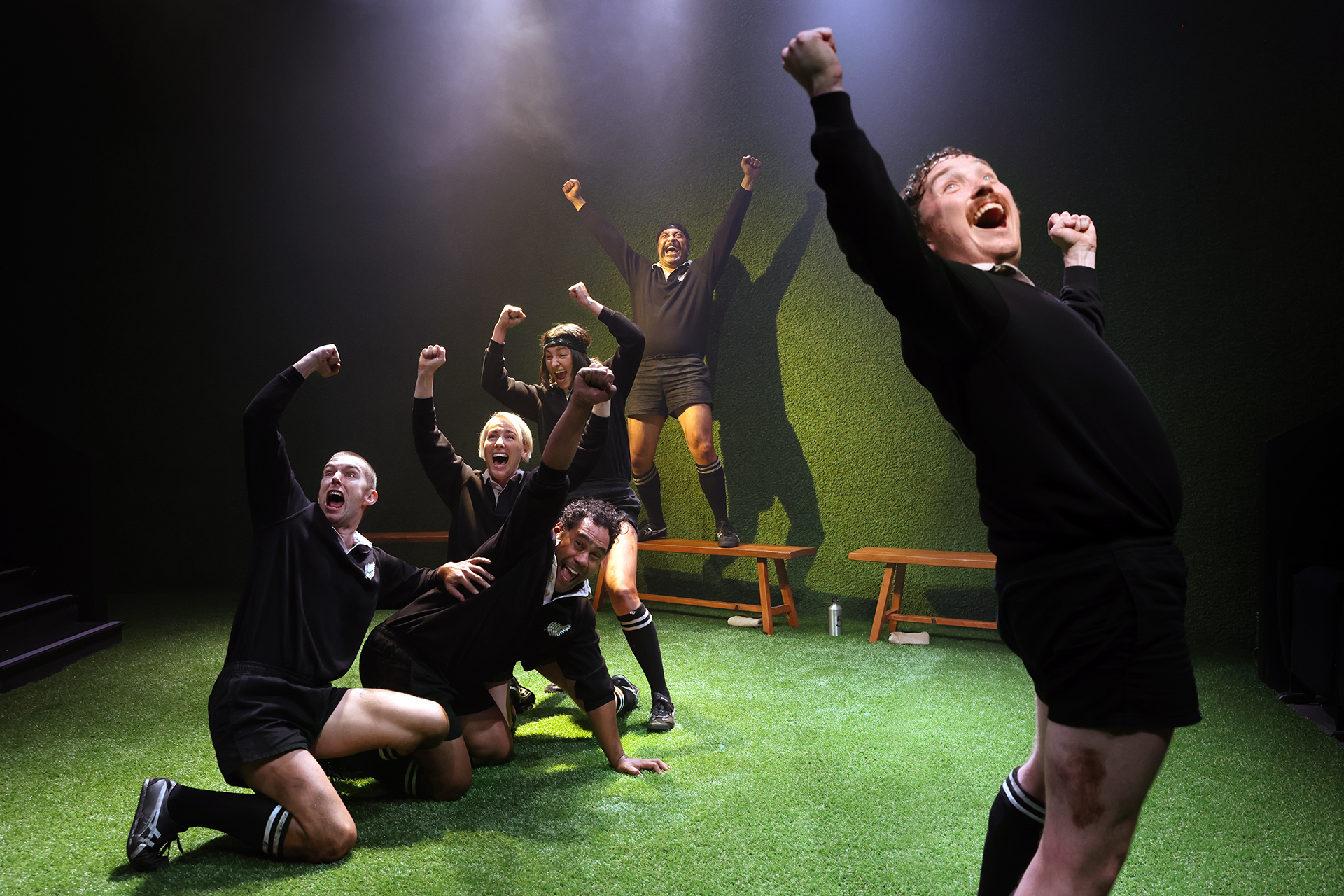
Alone it Stands

1 Feb

Claim a sportsperson has made History and you’re probably hoping to forget the horrors of which History usually consists.

In 1978, the Irish provincial team of Munster played the touring All Blacks. For many people, it’s a game to forever remember.   

For those ignorant of rugby, this might seem a little odd. But to appreciate this as a mouse-that-roared story you need to be aware, that on football pitches around the globe and for some time, little New Zealand had themselves been displaying decidedly un-rodentlike behaviour.     

You might also think it sounds a little sentimental. And when one of the characters lists by name each of the Munster men who played on that famous day, I couldn’t help recollect Yeats’ roll call in “Easter, 1916” – though the events that poet memorialises are far more terrible.

Perhaps Alone it Stands is a slight story. Perhaps.

It’s certainly a terrific evening’s entertainment. Under the expert and endlessly inventive direction of Janine Watson, we’re treated to absolutely brilliant comic performances.

All six cast members play both Irish and Kiwi characters, and one of the piece’s many charms is the juxtaposition of accents. The skill with which this is presented is a tribute to dialect coach Linda Nicholls-Gidley.

The physical performances are also marvellous, and credit should go to the actors and Watson, but also to the support team of fight director Tim Dashwood and intimacy coordinator Chloë Dallimore.

The program suggests the cast play sixty roles in all. To give a taste of this amazing feast of physicality, let me pick out a few faves.

Alex King as All Black Stu Wilson magnificently embodies the extraordinary confidence and agility of a world class athlete, and she also displays true comic genius as Sinbad (and, no, Wikipedia won’t reveal who that is. Go see yourself!) Tristan Black as the Kiwi manager hilariously encapsulates the absurdly confrontational hypermasculinity of the middle-aged sporting official. Briallen Clarke is glorious in the range suggested by the portrayals of a tense expectant mother to that of perfectly assured All Black Gary Knight. Skyler Ellis presents a beautiful contrast with his suave BBC commentator and his bewildered everyman Munster fan.  Anthony Taufa’s sheepish soon-to-be father, struggling to balance new responsibilities with his passion for the game, is wonderful, as is Ray Chong Nee’s young mischief-making urchin, a boy with more on his mind than football.

And these last examples hint at the glory of the piece. Yes, it’s about a football game. And, yes, a dramatist inventing the whole thing from scratch would most likely have chosen a different scoreline.

But, apart from providing an opportunity for talented comedians to show off their stuff, what playwright John Breen does so well is to create a truly Bruegelesque world.

Auden wrote in his famous commentary on Bruegel “About suffering they were never wrong,
The old Masters: how well they understood
Its human position: how it takes place
While someone else is eating or opening a window or just walking dully along;
How, when the aged are reverently, passionately waiting
For the miraculous birth, there always must be
Children who did not specially want it to happen, skating
On a pond at the edge of the wood….”

It’s this Master status that Breen achieves, not by what he says about suffering, but by what he says about joy. It need not be grand or otherworldly. Rather it hides, amongst all the business of Life, waiting in surprise.  

Paul Gilchrist

Alone it Stands by John Breen

at Ensemble until 2 March

ensemble.com.au

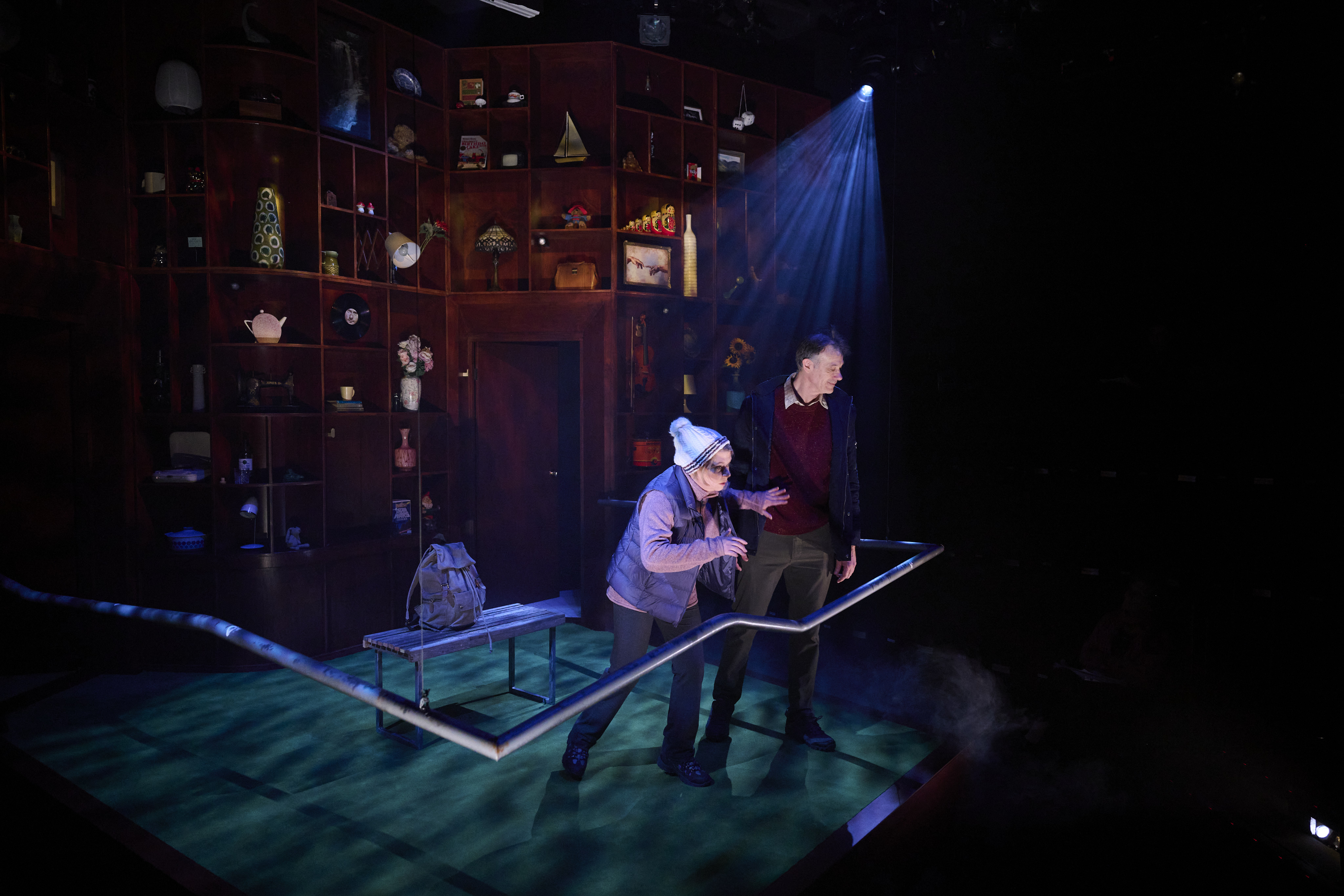
Image by Prudence Upton

Midnight Murder at Hamlington Hall

8 Dec

As a reviewer of theatre, it would be no surprise to anyone that I find reading difficult. Consequently, when I’m sent marketing material, I don’t read it. If I’m invited to a show, and I’m available, I go.

The tiny amount of hype about this show that managed to seep through my obtuseness had lead me to expect a satire, with amateur theatre as its target. Now, as amateur theatre companies are the epitome of all that is evil in our society – in their unthinking, unearned privilege, in their wanton misuse of power – I was looking forward with relish to their being taken down a good peg or two.

But satire this was not. Instead, it’s an utterly charming sitcom. (Which is probably just as well; on more sober reflection, a professional theatre company taking aim at amateurs smacks of a mean-spiritedness more suited to my role than theirs.)

It’s opening night of the Middling Cove Amateur Drama Society’s production of Midnight Murder at Hamlington Hall, but more than half the cast have come down with the lurgy. Cancel? God forbid! The show must go on! 

The script by Jamie Oxenbould and director Mark Kilmurry is hilarious, a glorious mixture of gags and set-ups that facilitate character based humour, both verbal and physical. And the cast know what they’ve been given and they make it sing. (And some of the characters want to actually sing – when they really probably shouldn’t.)

Performances are comic brilliance. I especially enjoyed Sam O’Sullivan as the so-serious auteur, Eloise Snape as the part-time actor who absolutely lives for her brief moments on stage (Providence having in its wisdom kept them brief), and Oxenbould as the old hand whose optimism remains untempered by experience. And Ariadne Sgouros as the stage manager, with her Hey-this-is-reality-calling attitude, is splendid.  

To successfully present truly terrible acting you have to be one of two things – truly terrible, or a true actor.

Like all sitcom, there are a couple of conceits an audience must accept to enjoy the ride. The first of these is that actors in a production know the lines of characters other than their own (I would’ve thought they struggled to remember even these.) The second is that amateur companies do new work. (Thank God that professional companies like Ensemble commit to it.)

In addition to sitcom, there’s also parody of the murder mystery genre. This type of parody is, of course, as easy as shooting fish in a barrel – only more common. (But I have to admit, in the case of that particular genre, I think the fish still definitely have it coming.)

And is something serious spun from all this marvellous, magic, comic mayhem?

During the show, the couple next to me whispered that it was difficult to know when the line between art and reality was being crossed. (Or, as the more cynical might rephrase it, when performance started and Life stopped.)

For me, the question the piece very pertinently asks is why do we value art? Is art created ultimately for the audience, or for the artist? It’s not merely amateurs that must ask themselves that.

So satire, after all.

As Someone-or-other-ski once said “Love the art in yourself, not yourself in the art”.

Paul Gilchrist

Midnight Murder at Hamlington Hall by Mark Kilmurry and Jamie Oxenbould

at Ensemble until 14 January

ensemble.com.au

Image by Prudence Upton

The Memory of Water

26 Oct

The Memory of Water follows some familiar tropes. Members of a dysfunctional family gather for a loved ones’ funeral. Forced to be in the same room, they argue their conflicting perceptions of family history. Though hard to imagine, if any of my reviewing colleagues were ever tempted to petty mindedness they might dub this piece The Memory of Other Plays. However, the seeming familiarity of the plot has no doubt been enhanced by the presentation of other similar stories in the twenty seven years since this play was originally written.  

But the plot is not the play, and it’s certainly not the production. Playwright Shelagh Stephenson’s take on family differences is hilarious and director Rachel Chant elicits from her cast brilliant comic performances. Madeleine Jones as Catherine is especially engaging, presenting a personality whose enormous energy knows no matching purpose. Jones’ portrayal of this lost soul is both terrifically funny and deeply poignant. Thomas Campbell’s Frank is also extremely amusing, as he desperately tries to maintain distance from the family craziness. Michala Banas as Mary is the emotional heart of the piece, with sarcasm balancing beautifully with vulnerability she attempts to understand her relationships, both with the living and with the dead.

Designer Veronique Benett deserves special mention; her vibrant set and costuming create the perfect space for comic fun.

Not that it’s just frivolity; one of the tropes of modern theatre (and one I don’t grow tired of) is that it has philosophical ideas. The title invites us to consider memory. I’m not sure if the play’s observation that memories are neither objective nor deliberate will strike many audience members as particularly insightful – however, eighteen hours after seeing it, my memory of the play is neither entirely objective nor entirely deliberate.

But the glory of the philosophical in theatre is that it provokes reflection. Rather than being told what to think, we’re teased into thought.

Paul Gilchrist

The Memory of Water by Shelagh Stephenson

at Ensemble Theatre until 25 Nov

www.ensemble.com.au

Image by Prudence Upton

Summer of Harold

13 Sep

This is a 90 minute evening of three short plays written by Hilary Bell and directed by Francesca Savige.

Each playlet is delightful. (As is the word ‘playlet’, if you think about it. Like ‘spiderling’, it’s a diminutive that manages to only partially hide the thrilling, ferocious potential of the thing it labels.)

Summer of Harold opens the night. It’s a monologue, delivered beautifully by Hannah Waterman. Her character recalls when she and a friend spent a summer housekeeping for Harold Pinter. The acclaimed playwright is portrayed as daunting, at least to the young protagonist. It’s a charming piece about the passing of time and where we direct our fears.

Enfant Terrible is performed by Berynn Schwerdt. Gareth has just returned from an award night honouring his long-time friend, a world renowned ceramicist. It’s a terrifically amusing portrait of smallminded envy.

Lookout is a two hander. Jonathan is about to set off on a life changing road trip with his new love. Waterman and Schwerdt combine wonderfully to tell a tale of the need to grow, even in age.

So what do the three pieces have in common? They’re all told with a captivating humour. They’re all superbly performed. And they’re all tightly constructed; each is like a little mousetrap (though without the ghastly consequences.) This sort of clever tightness is so valued by the production that I was warned by the publicists not to write spoilers. Such a warning might seem unnecessary, but if the snap of the trap is both satisfyingly and sufficiently loud, there are some of my oh so noble profession who can’t but help let the echo sound in their review.  

Another connection between the pieces is that each is about our relationship with what might be called size. Two of the playlets are clearly fascinated with fame and our response to it. (And here I’ll point out that Summer Of Harold references Pinter’s cricket team, the Gaieties, and it’s important for everyone to know that I am personally acquainted with someone who played in that team.) The closing piece alludes not to fame, to those of us who appear larger than Life, but is instead an exhortation to acknowledge Life is larger than us, and to embrace it, regardlessly.   

Paul Gilchrist

Summer of Harold by Hilary Bell

at Ensemble until 14 Oct

ensemble.com.au

Image by Jaimi Joy

Benefactors

23 Jun

Michael Frayn’s Benefactors is a beautifully rich play and Mark Kilmurry’s production is superb.

Set in late 60’s England, it’s a comic four-hander presenting the changing dynamics of two marriages.

Colin and Sheila live near David and Jane, but visit so often it’s as though they live with them. It’s an old dramatic trick, the juxtaposition of two couples so they compare relationships, and we do too.

This comic exploration happens in the foreground of architect David’s plans for a housing development. An old grey district will be torn down, to be replaced by two whopping towers

Frayn directly references Ibsen’s The Master Builder and overtly connects the building project – its hubris, its hollowness, its hope – with other human ambitions. Of course, it’s a literary conceit dating back to Genesis, to the unknown writer who crafted the story of the tower of Babel. Frayn is working in a grand tradition and does so magnificently, offering humour and deep insight.

Kilmurry and his team know they have a gem to work with and they make it shine. Gareth Davies’ David is a gorgeous mixture of narrow obsession and gentle-heartedness. His final line is gold. Emma Palmer’s portrait of Jane is fascinatingly complex: a sharp, intelligent woman, brave enough to acknowledge her bewilderment at the workings of time. Colin, played by Matt Minto, is a delightfully provocative concoction of arrogance and perceptiveness. Megan Drury, as Colin’s pitifully perplexed wife Sheila, delivers a performance both hilarious and deeply moving.

The world is imperfect. What do we do? Accept the flaws? Tear everything down and start again? Or do we beaver away, slowly attempting to rehabilitate what we have? And, whatever our decision, time flows on, washing away some of the old problems, while ever depositing new ones.  

Benefactors is both a wonderful evening’s entertainment, and an invitation to return to further explore its extraordinary richness.  

Paul Gilchrist

Benefactors by Michael Frayn

at Ensemble until 22 July

ensemble.com.au

Image by Prudence Upton

Clyde’s

11 May

“I’m not mean. The world is mean, and I’m in it.”

So says Clyde to one of her employees. (Apologies to playwright Lynn Nottage if I’ve misquoted her beautiful words.)

Clyde runs a sandwich shop frequented by truckers and staffed by ex-cons like herself.

Clyde, played by Nancy Denis with superbly exuberant strut and sass, actually is mean. In a unjust world, it’s a totally understandable survival strategy.

But this play is about not letting yourself be defined by what’s been done to you. It glories in agency, in responsibility, in the shedding of the excuses that hold us back.

Sandwich hand Letitia, played by Ebony Vagulans with a mesmerising combination of swagger and vulnerability, says she wants to stop blaming other people. Co-worker Jason is dreadfully ashamed of his past racism and is desperate to leave it behind, and Aaron Tsindos presents him as an utterly fascinating battle between anger and restraint. Rafael, in a performance by Gabriel Alvarado that glitters with comic magic, firmly looks forward, seeking reasons to celebrate. He and his fellow employees gain encouragement from Montrellous, the Buddha in the ‘hood (to paraphrase Rafael). Charles Allen captures Montrellous’ magnificent dignity and his ability to inspire others to find a beauty that can transcend cruel mundanity. Nottage’s masterstroke is to make the beauty they seek the perfect sandwich. It’s so every day that it can speak to everyone.

Darren Yap’s production of this splendid play is gloriously uplifting.   

Is the world perfect? no.

Can everyone transcend their suffering? maybe not.

Is it worth being reminded it’s a possibility? yes. Yes. And YES!!!!

Paul Gilchrist

Clyde’s by Lynn Nottage

Ensemble Theatre until 10 June

ensemble.com.au

Image by Prudence Upton

Rhinestone Rex and Miss Monica

16 Mar

It’s natural to assume, that as a theatre reviewer, I’d relate to a story about failed artists.

David Williamson’s Rhinestone Rex and Miss Monica, directed by Mark Kilmurry, is a light two-hander, a gleeful rom-com, performed with comic expertise by Georgie Parker and Glenn Hazeldine.

It’s a simple tale of the need to be open-minded. (If you’re thinking No, not that again; I’ve had it up to here with that I salute your obtusity.)

Monica can no longer perform with the Sydney Symphony; tendonitis has robbed her of the ability to play the violin.

Her life is one of rage and renovations; rage at the injustice of a career cut short and renovations ….well, just renovations. She’s getting her kitchen done.

Gary does kitchens. He used to play country. Think Golden Guitar. And there’s nothing that makes you appreciate country music’s perpetual paean to loss more than installing kitchens when you were meant to be playing Tamworth.

Does this make them a pair of failed artists? Sort of. The true failure lies elsewhere. Apart from kitchen quibbles, their source of tension is the refusal to accept the other’s taste in music. She loves Mahler and Shostakovich; he loves Cline and Parton. In comic shorthand, she’s a snob, he’s a philistine. Narrow mindedness, of both types, has long been a source of laughter, and with it Williamson and these two wonderful actors make hay. Not that I’m suggesting with my rural reference that the play favours the unsophisticated – but it certainly makes a space for the sort of thing it is itself: unashamedly simple fun.

Before getting back to that failure thing, I’ll mention one scene in particular. The pair are out together for the first time. They’re at a pub in Glebe. Is it a date? Confronted by the possibilities the evening offers, Monica has drunk too much before Gary has even arrived. Is this a door opening or closing? It’s brilliant comic work from both Parker and Hazeldine, a spotlight on human ambiguity, an acknowledgement of multiplicities (which belies my earlier assertion about the play’s simplicity.)

And what is artistic failure – and we’re all artists – but the failure to say Maybe this too?

Paul Gilchrist

Rhinestone Rex and Miss Monica by David Williamson

Ensemble Theatre until 29 April

ensemble.com.au

Image by Prudence Upton

A Broadcast Coup

3 Feb

I used to laugh at reviews that referenced theorists such as Michel Foucault. When the play being critiqued did not actually mention the famous philosopher, and he had most certainly not written the thing – he hadn’t even volunteered to do front of house one night – then a discussion of his ideas seemed somewhat out of place.

But sometimes we learn (and, in doing so, become the cause of mirth in other petty-minded individuals.)

One of Foucault’s most famous works is The History of Sexuality. It’s three volumes long, and being a theatre critic, beyond my attention span. Fortunately, the dynamite is lit in the title: the history of sexuality….. how can sex have a history? Isn’t sex just a biological thing, as fundamental, as universal and as immutable as, say, breathing. Except in terms of some deep evolutionary perspective, how can sex be said to change? But Foucault was pointing out that sex is contingent on other aspects of the human experience. And, for Foucault, the key other aspect is power.

Sex and power; this is playwright Melanie Tait’s subject matter, and she approaches it with sharp humour, vibrant characters, recognisable tensions and a captivating story (and absolutely none of my theoretical pomposity.)

Mike King is a much lauded radio presenter. After so long at the top, his manner is imperious (if not quite Nero, certainly not Marcus Aurelius). In a wonderful portrayal, Tony Cogin captures both Mike’s charisma and selfishness. Mike is faithfully served by Louise (Sharon Millerchip), who admires his talent and cleans up the mess. Mike makes life hell for Troy (Ben Gerrard), the station manager, dismissing him as a mere “bureaucrat”. But new assistant producer, Noa, presents a challenge. Alex King brings to the role a brilliant energy that presents the truth of youth: that the blaze of righteous passion is partly fuelled by naivete.

And then there’s Jez, played by Amber McMahon. I’d pay to hear McMahon read the phonebook (though I appreciate such tickets might be expensive due to the rarity of the prop.) Jez is an ex-colleague of Mike’s, now producing a red hot podcast exposing the mistreatment of women in the workplace.

Tait’s script works a thrilling tension: that power is an aphrodisiac, and that power determines what is deemed acceptable sexual behaviour.

Our society is trying to work this tension out….and if Foucault is right, and sexuality has a history, then change for the better is possible (at least until that better is again redefined.)  

Paul Gilchrist

A Broadcast Coup by Melanie Tait

at Ensemble until 4 March

www.ensemble.com.au

Image by Prudence Upton

Boxing Day BBQ

11 Dec

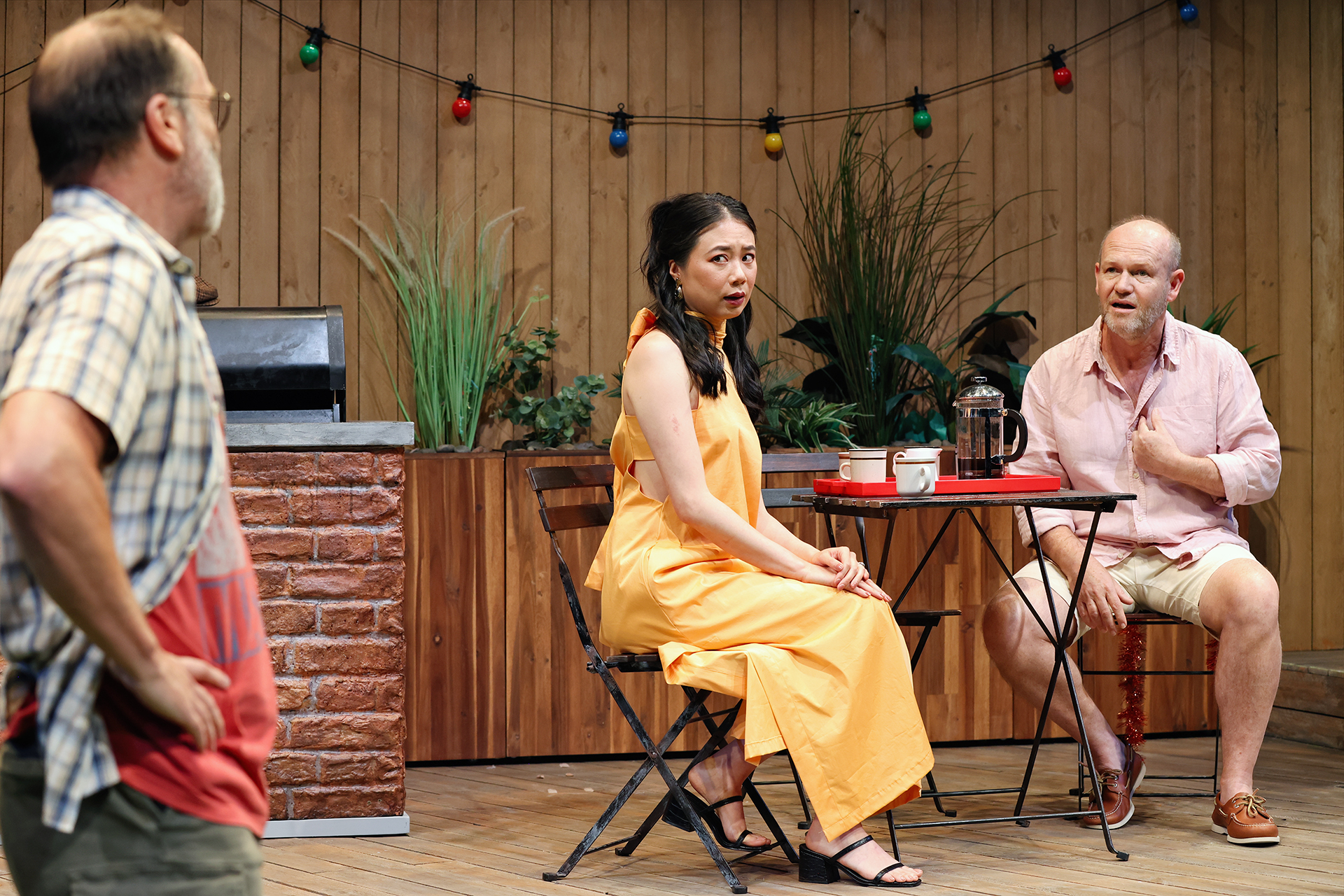
Sam O’Sullivan’s Boxing Day BBQ is a fun take on some serious fracture lines in our society. Directed by Mark Kilmurry, the cast deliver comic magic.  

The BBQ is a family tradition. It was grandpa’s baby, but he and g-ma are gone, so now the younger generation(s) skate the hot plate. The gathering throws together the usual mix of ill-fitting pieces that make up the insolvable jigsaw that is family. (Comedy plus tragedy equals family; though this play is definitely comedy – the tragedy lies offstage, in the reality this comedy gives us the courage to acknowledge.)  

The new self-appointed patriarch, Peter, proudly wields the BBQ mate, finding what scant meaning he can from the upholding of banalities. Brian Meegan wonderfully captures Peter’s mix of unthinking privilege and dismayed emptiness. His daughter, Jennifer (Harriet Gordon-Anderson), is about to volunteer a year of her life as part of the crew of the Sea Bandit (a riff on the environmental activists’ Sea Shepherd.) Peter is horrified. His new wife, Val (Aileen Huynh) is not much of an ally, not because she agrees with Jennifer, but because intellectually she has vacated the field. (More on this below.) O’Sullivan gives Val one liners of beautiful vacuity, which Huynh plays to perfection. Peter’s sister Connie (Danielle Carter) is also at the do, an intelligent, articulate woman navigating both her brother’s obtuseness and her ex-husband’s gentle but futile longing. Jamie Oxenbould as Morris, her ex-husband, delivers a brilliant performance, heart-warming and full of pathos.    

Those fracture lines I began with? O’Sullivan’s play is a musing on objectivity versus subjectivity, and the collapse of these two categories into one in contemporary discourse. This is presented partly through discussions of perception; Peter is a wine merchant who takes for granted the notoriously slippery language of taste descriptors. But it is mainly explored through the characterisation of Val, who consistently avoids the tough issues by asserting the mantra of the lightweight Right: you have to question everything. This is, of course, never the radical and universal doubt of Descartes, but rather the selective use of ignorance to shore up privilege. (In the play, some characters are correct and others are not, and we’re invited to laugh at the inflexibility of the latter, and we do – but I won’t pretend that it wasn’t slightly disconcerting to find myself so easily enjoying the mockery of those who endorse intellectual humility, even when they don’t practise it.)

The play also explores change versus continuity, questioning the value of tradition. We’re told about the monkey step ladder experiment, in which five caged primates are sprayed with icy water if one attempts to climb a certain step ladder. Place a banana at the top of that ladder, replace some of the monkeys, and those remaining familiar with the spraying will police the others – inadvertently ensuring the banana is wasted. Val laughs at this experiment as an example of the absurdity of much that purports to be science but, of course, the story functions as a fable. Mechanical adherence to convention limits our ability to think outside the cage, leaving a lot of bananas wasted – or one planet, as is the case for us as we refuse the changes that might avert environmental disaster. (But traditions and conventions can also have value; they’re a type of cultural capital. One such tradition is that social tensions can be profitably explored through the dramatic trope that posits disparate characters and places them in an inescapable situation like a family Boxing Day BBQ – though O’Sullivan does disrupts this convention, offering the spoonful of honey of some magical realism to ease our acceptance of radical change.)

Finally, the play also offers itself as a representation of generational conflict. In the real war between the generations, the ultimate outcome is dully predictable; all that’s of interest is whether – this time – anything will be learnt from the vanquished before they forever quit the field. But this is comedy, and Boxing Day BBQ is a merry war, a playful paean to reconciliation and hope.

Paul Gilchrist

Boxing Day BBQ by Sam O’Sullivan

Ensemble until 15 Jan

ensemble.com.au

Image by Prudence Upton

A Christmas Carol

1 Dec

Ebenezer Scrooge is one of the best known characters in literature, and his catch phrase “Bah humbug” is oft quoted. (Especially by me when assaulted by Xmas muzak in shopping centres.)

It’s an absolute joy to watch John Bell in this role, and the pantomime-like retelling of Dickens’ famous tale by writer Hilary Bell and director Damien Ryan is delightful.

Dickens was one of those great nineteenth century writers who gave cruelty a bad name. If that seems a joke, as if cruelty could ever have been valorised, it’s indicative of how influential voices like Dickens have been. For much of our history, cruelty has not only been tolerated, it’s been encouraged. (Spare the rod and spoil the child was not the injunction of some sick sadists, or not only so: it was read from the Bible and taught from the pulpit.)  

Dickens had a gift for empathy. It’s suggested by his take on damnation. Marley, Scrooge’s deceased business partner, returns on Christmas Eve to warn of what awaits beyond the grave: an eternal vision of human suffering but no ability to intervene. It’s an odd vision of Hell. Compare it to Sartre’s. A cynic might say that to witness suffering and to do nothing is the very definition of secular heaven, a paradise the privileged enjoy perpetually.

What happens to Scrooge – that the visions he’s shown by the Ghosts of Christmas Past, Present and Future affect a change in his character –  epitomises Dickens’ artistic purpose. If Scrooge’s moral transformation seems merely convenient to the cynic, Dickens might well look down on us and humbly suggest such visions do indeed make a difference. And clearly, by his own definition, he’s in Heaven, because if he is witnessing the suffering we inflict on each other, his stories, and this particular dramatization, do have the ability to intervene. They gently urge kindness.

And Dickens’ stories brim with good will. There are villains, of course, but there are also an extraordinary number of kind souls. (The cynic would say Dickens was a great writer of fiction.) The conceit of this production is that it’s performed by the Crummles, that inept but good-hearted acting troupe from Nicholas Nickleby.  

Part of the fascination of A Christmas Carol is its role in our image of the holiday. Christmas had long been built on solstice feasting but, in an increasingly secularised Victorian England, the day began to shed those other elements that made it a religious festival honouring the supposed incarnation of the divine in Jesus of Nazareth, and morphed into what it has become in the modern West – the day we wish each other well. (Good will to all was Dickens’ every day; we have at least gifted him Christmas.)

Dickens was endlessly comically inventive, and Ryan’s production captures this glorious exuberance. With Bell on stage is a terrific troupe, much more gifted than the Crummles. Valerie Bader, Jay James-Moody, Emily McKnight, Anthony Taufa, and Daryl Wallis on keyboard, give playful performances that evoke both laughter and tears. There’s song, dance, and puppetry.

And there’s one moment between Bell and a puppet (expertly given life by McKnight) that elicits gasps from the audience. You might call it the sound of hearts melting. Or you might call me sentimental. Dickens wouldn’t.

Paul Gilchrist

A Christmas Carol by Charles Dickens, adapted for the stage by Hilary Bell

Ensemble Theatre until 29 Dec

www.ensemble.com.au/shows/a-christmas-carol/

Image by Jaimi Joy