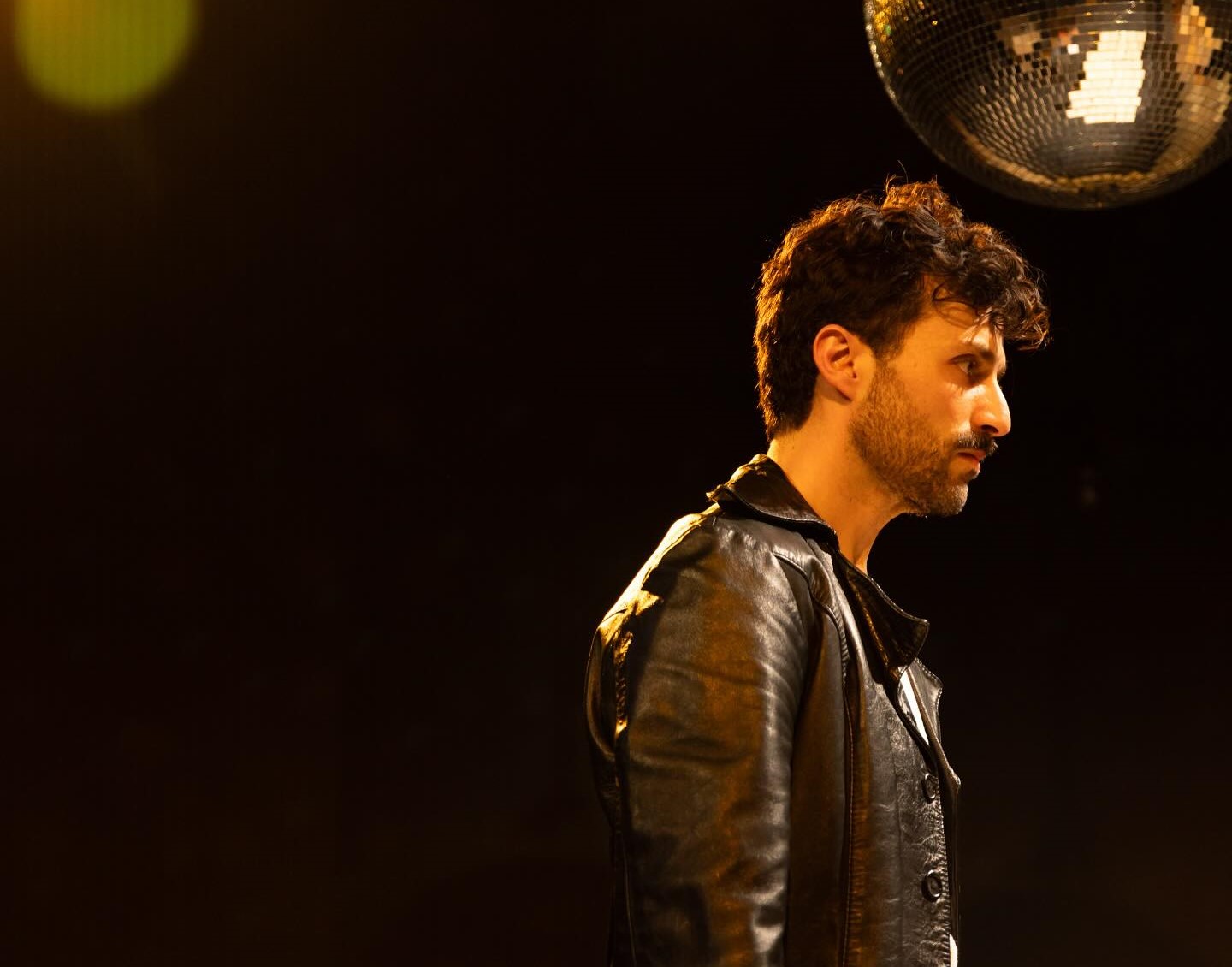
Written by James Elazzi, this is new work, but it’s a historical piece, with everything occurring forty to fifty years ago.
And it’s set in Lebanon, rural Queensland, and Sydney.
This is big storytelling, and it’s terrific to see it on one of our stages (and the Loading Dock and Qtopia deserve credit for giving space to such stories.)
But Saints of Damour is also small storytelling; we’re very much focussed on Pierre, his mother, his wife and his lover. The big historical events remain in the background. (The dramatic form doesn’t make this inevitable, but very different creative decisions would’ve had to been made on the script level if a grand historical drama was to be offered.)
The title is a tease: are these characters saints?
Sure, they feel the weight of duty, especially to family, but they’re also quite prepared to behave in ways that cause serious pain to others. Migrants in a new country, they stick together, but the dust of dishonesty dirties everything. It’s a long time before Pierre’s homosexuality is acknowledge or accepted by anyone except his lover. And Pierre’s decision to not reveal his sexual orientation to his wife before their marriage – even privately – seems unnecessarily cruel.
Are we victims of our circumstances or can we rise above them? That’s the fundamental question the play posits (though I’m not sure if it posits it consciously.)
We talk a lot about theatre that makes us feel seen.
And this narrative feels as though it’s attempting to be true to some particular personal history. I say this because it sprawls, as though it’s trying to capture what actually happened to someone.
Seemingly superfluous to a story, the family spend several years in Goondiwindi. They buy land and try sheep farming, though they’ve had no previous experience. They also open a small shop in town and an ad runs in the local paper telling residents to boycott them. These challenges are not especially developed in the script, it’s as though it’s sufficient they are recorded. Witness needs to be borne. (A similar recording of what appears to be actual events happens when the family move to Sydney: an Anglo-Australian who has lived in this city his entire life, and who has the privilege of a tertiary education, says he’s never seen the Blue Mountains. It seems so unlikely that it has to be based on the truth.)
Ironically, this sense of truth being recorded is emphasised by the play’s treatment of major historical events. Big issues are, oddly, given short shrift; they’re outside the parameters of a story dedicated to documenting personal lived experience. For example, the gay lovers believe they will have more freedom in a Western country, which is probably true, but when Pierre gets to Australia no mention is made of the fact homosexuality remains illegal or that the battle to change that injustice is being fought. It’s outside this story’s scope. Similarly, the outbreak of the Lebanese Civil War is the impetus for the characters’ migration, but the complexity and tragedy of a society tearing itself apart remains curiously offstage. Ethnically, the two lovers are from opposing sides in the conflict, but little is made of this. And, when they’re in Australia, only Pierre is interested in what happens in the homeland, and seemingly only in terms of his lover. No one else seems haunted by the past, or as it is for them, the ongoing present.
It’s the sort of play where characters, when they’re concerned about who might have survived the conflict in Lebanon, say things like I’m concerned about who might have survived the conflict in Lebanon.
As a whole, the dialogue is lucid and limpid. Or direct and flat. It’s a matter of taste.
There are many quick scenes and, aided by a clean, functional design by James Smithers, director Anthony Skuse creates a beautiful sense of flow.
The cast are imminently watchable. The two lovers (Antony Makhlouf and Saro Lepejian) have a delightful, intense chemistry. Nicole Chamoun as Layla, Pierre’s wife, pitches her performance gorgeously between protest and pathos, while still finding that vital spark of joy. Max Cattana as Todd (who’s never been to the mountains) is splendidly gentle and, in other bit roles, displays a laudable versatility. As Pierre’s mother, Deborah Galanos has a glorious waspish tongue (which she also used on us before the performance, asking us to turn off our mobile phones.) At the finale, her bewildered terror, her explosive anger, is a moment in which the piece realises the dramatic form’s full potential (that is, refusing us any easy, unthinking judgement of the characters.)
Stories that make us feel seen – I suspect many audience members will feel this piece does this in spades.
But the title invites more: it’s a provocative reminder that having our challenges acknowledged does not automatically result in our actions being approved. It would be a pity for the dramatic artform if being seen was allowed to diminish into being justified.
Paul Gilchrist
Saints of Damour by James Elazzi
At the Loading Dock Theatre until 6 April
Image by Emma Elias
 Theatre Red