Tag Archives: Sydney Fringe

Vickie & Vinnie

18 Sep

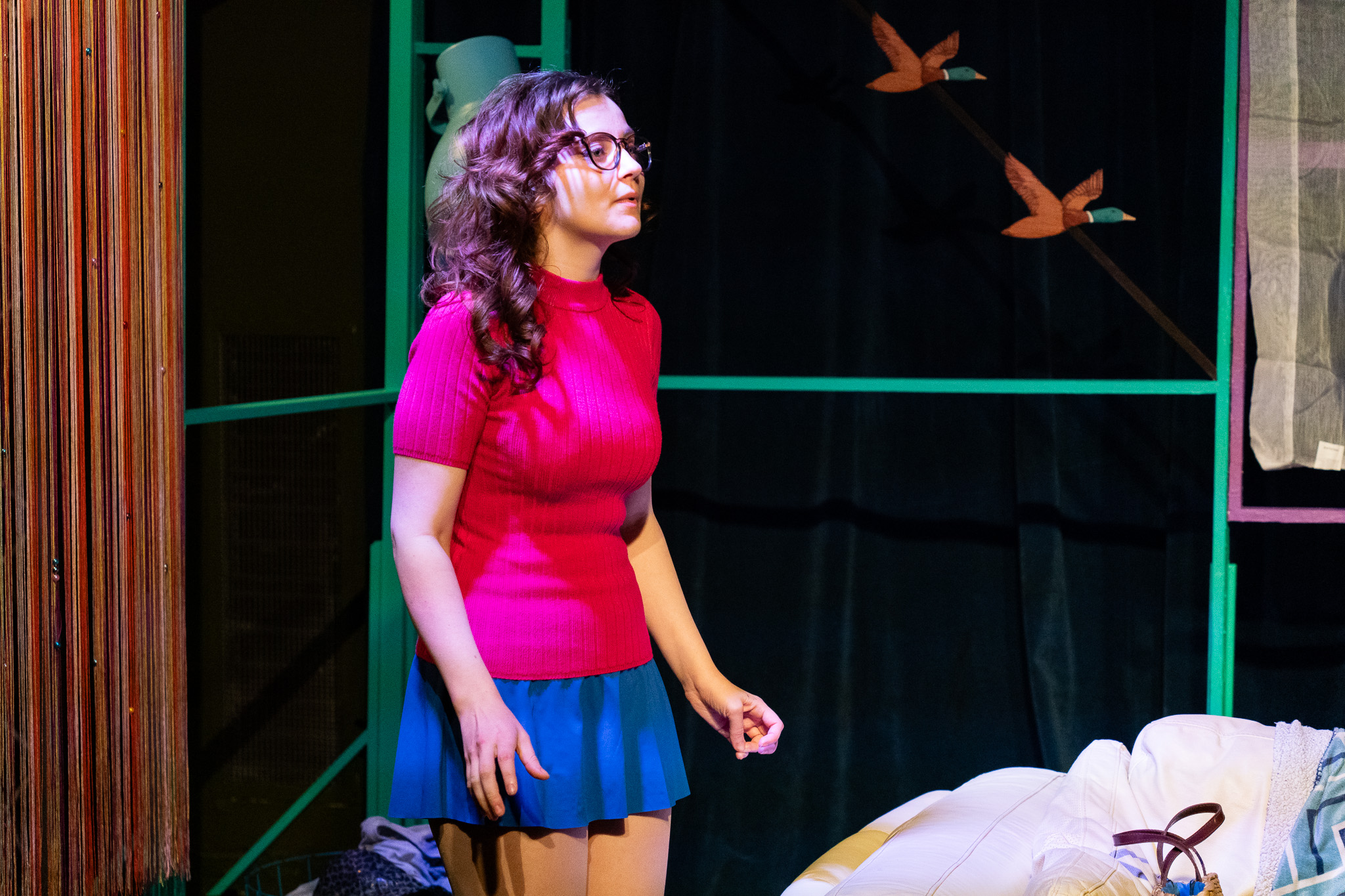
They’re filming the pilot of the TV sitcom Vickie & Vinnie and we’re the studio audience.

I pray the show never gets the green light to be developed into a full series; it’s truly awful. And that’s one of the comic delights of Amy Lawler’s play – it delivers a terrific parody of a genre that too often deals in cliché and untruth.

In the pilot, the titular and platonic housemates are surprised by a visit from Vickie’s mum. (No-one living on the planet on which television was invented over 70 years ago would be surprised by that plotline.) Incomprehensibly, Vickie’s mum is outraged that her adult daughter is sharing a house with a man. Even more incomprehensibly, to placate her, the housemates pretend to be engaged. If you were pitching the idea to a producer, you might say it features a group of creatures who look human but who share with that species only the qualities of deceit and mean-spiritedness. These creatures spend a lot of time insulting each other – and this is the interesting bit – they do it while sitting on a couch.

Yes, television like this gets made.  

And people watch it.

(It’s probably best not to think too much about what that says about human nature.)

But Lawler digs deeper by presenting the world in which such rubbish is created. Alexis has been cast as Vickie. It’s her first big chance in the industry – but it’s not going to be easy: the director is abusive; the first AD is obsessed with an unrealistic schedule; her co-star is unsympathetic and impatient; and the actor playing her mother, a TV legend, is a total diva. Like all good satire, it feels like there’s only a sprinkle of hyperbole.

The conceit that we are the studio audience, and that we’re expected to respond to cue lights demanding Laughter and Applause is great fun, and effectively encapsulates the superficiality of sitcoms. (The conceit, however, does come with a cost: the piece is forced into a similitude of real time; location becomes frozen into a type of static realism; and, when there are conversations that would presumably be private, our presence as studio audience is conveniently forgotten.)  

Directed by Lawler, performances are wonderfully comic. Theo Rule as the TV director is gloriously shallow and inconsiderate. Linda Nicholls-Gidley as the diva is tremendous fun; imperious and hilariously self-important. Nicholas Richard as the first AD does awkward with elegant acumen. Nikita Khromykh as the actor playing Vinnie slips smoothly between the uptight smart alec of his TV character and the cynical professional whose talents are being wasted – while simultaneously offering sufficient hints that he might just be human after all. Milli Higgins as the gopher delivers some magical physical comedy. Claudia Elbourne as Alexis beautifully balances the humour of the parody and satire with a naturalism of genuine confusion and hurt that gives the piece its emotional punch.

The program suggests Alexis is neurodiverse. I wouldn’t have picked this up from the production; the character simply appears to be what used to be called a sane, good person – she just happens to be stuck in an utterly barking mad environment. Semantically, the term neurodiverse implies the existence of a common or typical experience. (Does the term imply there’s a normal? No, but I’ll get back to that weaselly little word.) Clearly, there are individuals who experience life differently than many others do, and often their experience is more challenging. And, if the writer director and some of the creative team of this piece say they’re sharing their experience then that can only be a good thing, one that shines light on some otherwise neglected aspects of what it is to be alive. However, the program note suggesting the play represents the experience of a neurodiverse individual still has me wondering if it’s one last cheeky piece of satire – not aimed at those who are neurodiverse, or even aimed at the term itself, but rather at the TV industry, where barbaric behaviour might be so common, that some might say it’s just normal, and if you can’t cope with it, then you’re the one with the problem.

Which is, of course, a most insidious way of silencing criticism.

Vickie & Vinnie by Amy Lawler

at 107 Projects until 21 Sept

as part of the Sydney Fringe

sydneyfringe.com/events/vickie-vinnie/

Image by Holly-Mae Steen Price

Home Country & The One

2 Oct

New work is always exciting, and here we have two original, distinct pieces.

Home Country, written by Stephanie Reeves and directed by Glen Hamilton and Romney Hamilton, is a gentle but sophisticated tale about loss and belonging. Dot, played by Reeves, has migrated to Australia from Britain. She feels the distance from the home country and from family members she left physically behind and who seem to have left her emotionally behind. Dot visits Uluru, where she must camp with a stranger, Jane played by Susan Jordan. In the very watchable growth of their friendship, the thematic concerns of loss and belonging are further teased out: the indigenous connection with the land, the evaporation of pride in what it is to be British; the dislocation that results when cultural discourse moves to a certainty that jettisons subtlety; the personal grief of bereavement.  

The One, written and directed by Mel Jensen, feels almost like two plays. It begins as a satire on dating via the apps. The female protagonist (Jensen) tells her friend (Emily Shaddick) of the absurd and disgusting behaviour of some of the men she has communicated with or met. An interesting theatrical gimmick is to have the friend play out scenes that the protagonist has already lived; this creates humour but also distance, with focus being on the evaluation of the lived experiences, rather than the actual experiences themselves. (More on this phenomena later.) There are some great one liners delivered by both Jensen and Shaddick, and the male actors (Oliver Harcourt-Ham, Enoch Li and Matthew Van Den Berg) playing the victims of this satire display wonderful comic commitment. There’s a provocative ambiguity to the satire; the female characters are hardly presented as flawless. You’ll struggle to find a play in which both the words “feminist” and “dick” are repeated more often, and said by the same character the logical incoherence is stark. Similarly, there is much talk of “love”, of the I-want-someone-to-love-me or the I-deserve-someone-worthy-of-my-love types; so it all falls into that horrible trap of validation or evaluation (a reminder that romance is the stupidest of the serious things.) One way out of this trap is to focus on the physical mechanics of sex, which is what both the men and women do.

In the last third of the piece we get something much more dark and confronting, with John Michael Narres giving a terrific performance of both vulnerability and frightening volatility. It’s difficult to write about the end without spoilers, but the shift in genre and tone is so very large in the final scenes that I’m not sure the piece doesn’t inadvertently sabotage itself. What I guess is meant to be a warning that dehumanising dating apps and immature, entitled masculinity inevitably culminate in violence ends up potentially implying something rather different, and sinister: that any sensible woman simply should know better than to get herself in such a situation.  

But, of course, good theatre often sends you out into the darkness feeling the darkness to be deeper than when you arrived.

Paul Gilchrist

Home Country by Stephanie Reeves

The One by Mel Jensen

at Darlo Drama Studio Theatre as part of the Sydney Fringe

These productions closed on Oct 1

Wolves are coming for you

30 Sep

Are they? Really? In these modern times?

But howling has been heard in the wind. And there have been sightings, admittedly in half light, and from witnesses less than reliable. But now a girl has gone missing. The people of the village barricade themselves in the local hall.

This is a terrifyingly good play about fear, about that greatest of tensions in the human experience: how much of Life can we manage or control, and how much of it must we leave wild, to grow and flourish in gloriously unpredictable ways?

Joel Horwood’s script was first produced in the UK in 2017, and it’s both evocatively poetic and entirely truthful to the nuances of everyday speech.

This production directed by Georgia Britt is magnificent. Britt, Riley McNamara and Cameron Hutt play all the roles, and their performances are utterly enthralling. I love this sort of fringe production because it spotlights what I think are the things about theatre that really matter: fine writing and fine acting.

It’s probably beyond my skill to give a complete description of these virtuoso performances, so I’ll cherry pick.

Hutt gives us a splendid portrait of an adult son overwhelmed by the responsibility of managing his aging mother, and then slips effortlessly into the role of local teacher, calm and almost, almost, almost in control, and then off into the local councillor, a hilarious combination of self-importance and paranoid hysteria.

McNamara masterfully presents an uncertain but wonderfully sane small town policeman and then, living in the nearby forest in a dilapidated caravan, an almost mythically self-aware outlier, only to offer a thrilling contrast to these characterisations of male pragmatism, that of an aging farm woman whose failing mind is being overcome by the bestial anger that is the natural child of fear.

Britt gives two superb portraits of young people: one a teenage girl refusing to be defined by her physicality, and the other a small child – perhaps the boy who cries wolf, except with the insight born of innocence that stories actually do matter. And then to top this off, Britt plays the local vicar, and it’s a deeply moving portrait of a soul on a journey to understand the true nature of Good. The epiphany she presents is powerfully provocative, a Life affirming response to the coming of the wolves, in whatever shape they may take.   

Paul Gilchrist

Wolves are coming for you by Joel Horwood

at the Emerging Artist Sharehouse, Erskineville, as part of the Sydney Fringe

until 30 September

sydneyfringe.com/events/wolves-are-coming-for-you/

Shadow Boxing

29 Sep

This show is a knockout!

It packs quite a punch!

It floats like a butterfly and stings like a bee!

Some of my reviewing colleagues, those who’ve spent more time in the ring than me and have suffered the resultant brain trauma, will probably rely on such clichés.

But they’re all entirely accurate (and I expect to be quoted on them.)

In a snappy, totally engaging 45 minutes, Flynn tells of his career as a boxer. The rub is that he’s gay and no one knows. His plan is to come out – after he wins the national title. The piece worries away wonderfully at the concept of respect: why it’s desired, how it’s measured, how it’s achieved, and what is its value.

Written originally in 1989, James Gaddas’ script is beautifully rich. It takes its rhythms from the world of boxing, its vigorous muscular language in a glorious dance with pace and poetry.

Samuel Addison as Flynn is superb. Under the guidance of director Teresa Izzard, he delivers a performance that is high energy and tremendously physical while simultaneously utterly at one with Gaddas’ brilliant words.

Simple staging, a terrific script and a sensational performance – if boxing were this good I’d be at every bout.

(Did I prove victorious in my fight against cliche? No, I suspect I have lost on points. The reigning champion of reviews remains undefeated. But….)

With productions like this, theatre is the true winner.

Paul Gilchrist

Shadow Boxing by James Gaddas

at the Emerging Artist Sharehouse, Erskineville, as part of the Sydney Fringe

until September 30

sydneyfringe.com/events/shadow-boxing/

Image by Hannah Oliver

Whale

28 Sep

Fringe festivals often have a lot of shows where performers talk about themselves. The theatre of personal testimony seems to suit the usual parameters of fringe: low tech, minimal set, short running time, niche audiences.

Theatre of personal testimony is also indicative of our current cultural focus on untold stories, of our belief that there are demographics within our population who have been silenced and now must be allowed a voice.

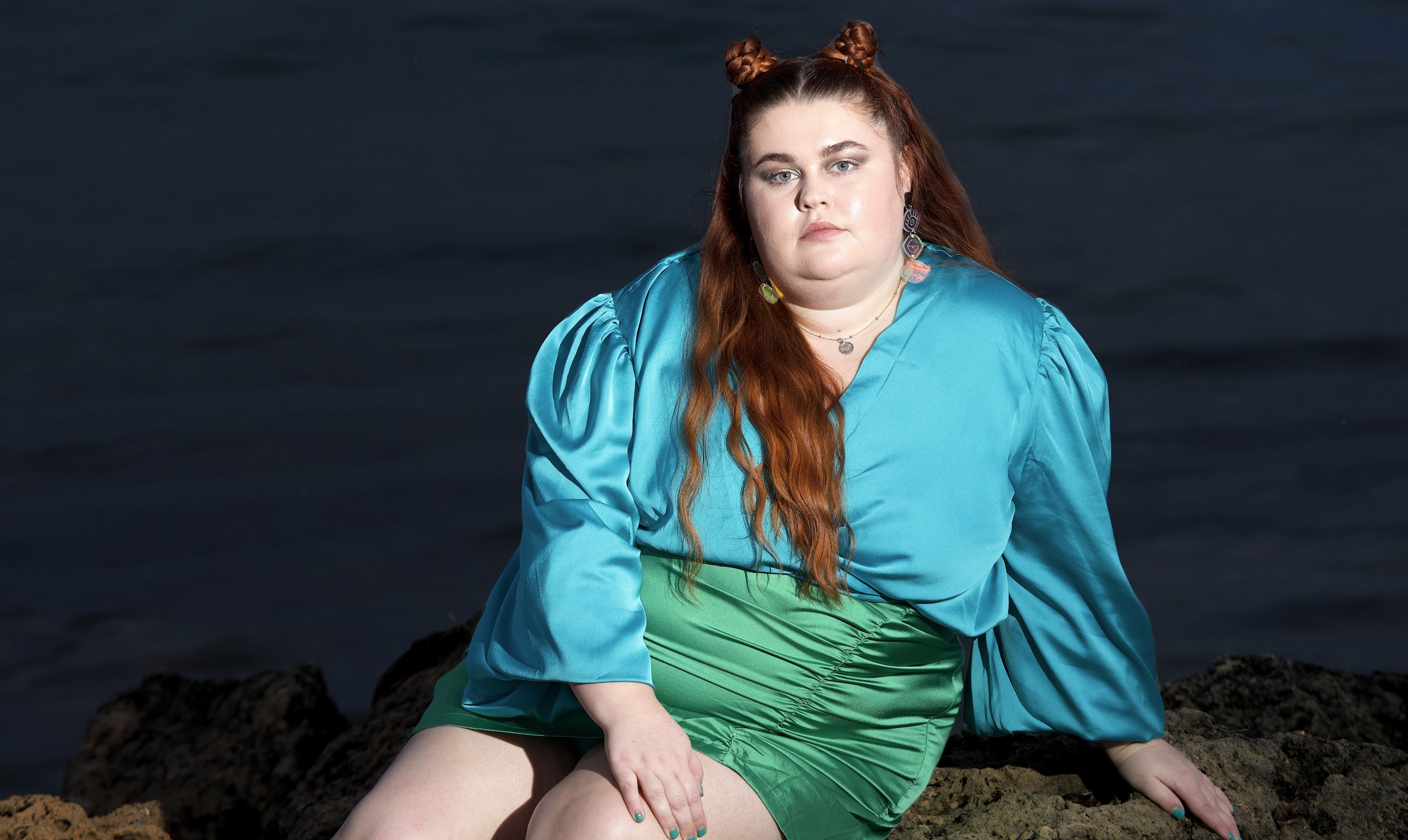
Whale, written and performed by Courtney McManus, speaks of fatness. She tells of the prejudices faced by people larger than average: supposed friends who unnecessarily and patronisingly compare her to Rebel Wilson; shop assistants who give unwanted advice; doctors who fail to listen and see only the issue of weight.

I say ‘tell’, but the first two thirds of this production is definitely ‘show’. McManus interacts with recorded voiceovers. Sometimes these encounters are sadly amusing. At other times they are damning evidence of the lack of empathy we have for those who differ from some supposed norm. McManus’s performance is always engaging (though some of the voiceover performances are a little flat; though perhaps that’s the point.)

In the last third, we get less showing and more telling as McManus claims her own identity. I wish the focus had remained on showing (though I acknowledge this is perhaps an illogical wish when the piece is about the performer finding her own voice.)

Identity is a funny concept. It clearly serves the purpose of giving individuals a sense of stability and certainty in the vast, tumultuous ocean of humanity. (McManus evocatively compares suffering prejudice to being dumped over and over by the surf.) But, in so far as identity offers stability and certainty, it is a denial of complexity and change.

This sort of first person theatre is fascinating for its silences; its truth-telling is narrative-building. The story you need to tell yourself will not necessarily satisfy me. I wanted to know more: more about the impact of intergenerational trauma; more about the health consequences of weight; more about body acceptance and sexuality. This is a powerful and provocative piece, and my curiosity is one proof of that.

The sharing of personal experiences was once the province of churches and self-help groups. It’s fun to theorise why this particular form is growing in popularity in theatre. But sociological interpretation aside, this show, standing alone, is a generous-hearted invitation to empathy and understanding, and an inspiring paean to resilience.

Paul Gilchrist

Whale by Courtney McManus

at the Emerging Artist Sharehouse, Erskineville, as part of the Sydney Fringe

until 30 September

sydneyfringe.com/events/whale/

Good Grief

27 Sep

I’m a huge fan of the one-person show.

But I do feel it’s odd that the actor often tells their own story. (It does make for an experience rather different to watching an actor play Macbeth.)

Truth telling creates an intriguing frisson in theatre. Such pieces are performative, ingenious, theatrical, yet not fiction. And as the performer shares their feelings (which we take as genuine) we know they will do it all again tomorrow night, which is teasingly intriguing, because such personal Truth is notoriously fickle and resistant to repetition.

And all this fascinating oddness is increased when the topic is something as personal and poignant as grief.

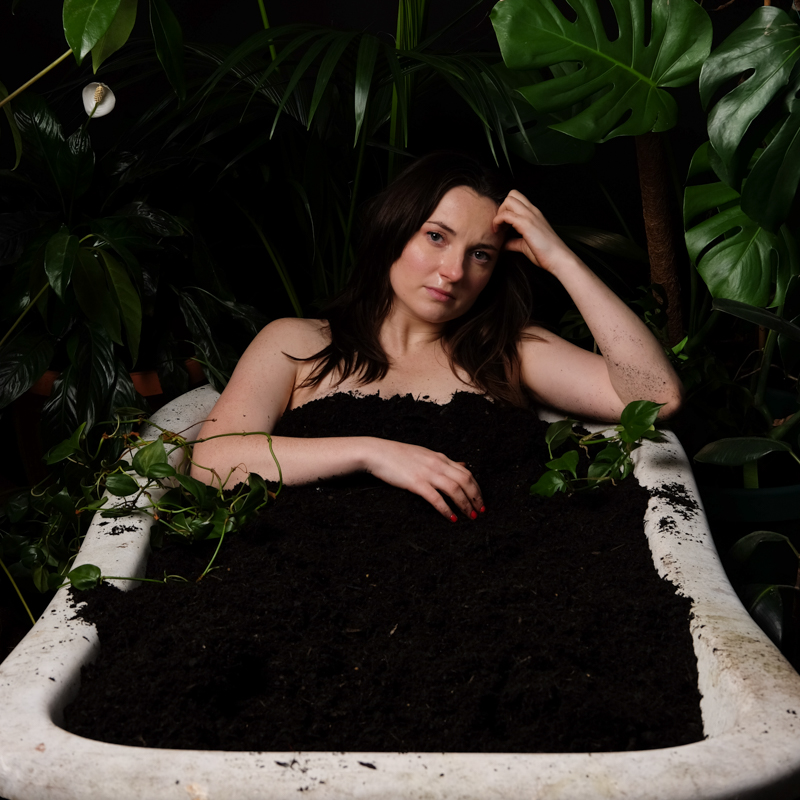
Writer and performer Georgina Pender tells us of the death of her mother and of her response. We are told her mother was an alcoholic who died early of throat cancer.

Grief is a ubiquitous thing, perhaps the most so: who is there among us without loss? How do you say anything original? Is there really any requirement to do so? Perhaps Pender comes from a place of sufficient difference: her relationship with her mother was frightening and fractious. How do we grieve someone for whom our feelings are so complex?

It’s a truism that people grieve in different ways, and it’s become one because it’s had to be repeated so often. We judge grief. It’s stupid and narrow-minded to do so, but that’s never stopped anyone. That she stares down this demon is what makes Pender’s performance so very admirable. Sharings like this broaden our world.

Directed by Lauren Bennett, this show is especially theatrically rich. Georgia Wilkinson has created clever projections with voice over with which Pender interacts. Oliver Close has composed and plays live a beautiful soundtrack, and Pender reveals a gorgeous singing voice. She also presents some powerful movement pieces and a gift for finding unexpected humour in the darkness. All this makes for a stimulating and compelling production, one that dares to both share and explore that everyday mystery, our eternal connection with the eternally absent.

Paul Gilchrist

Good Grief by Georgina Pender

at the Emerging Actors Sharehouse, Erskineville, as part of the Sydney Fringe

until 30 September

sydneyfringe.com/events/good-grief/

DEMO

23 Sep

Language is a net we drag through the icy sea of reality. The small escapes this net; the subtle, the nuanced, they all slip through. And the large, the grand, the sublime, they rip through. The net of language only captures the mediocre. And that it kills.

DEMO, created and performed by Melody Rachel, is a fascinating piece that playfully invites us to consider the limitations of language and the dangers of simplistic labelling.

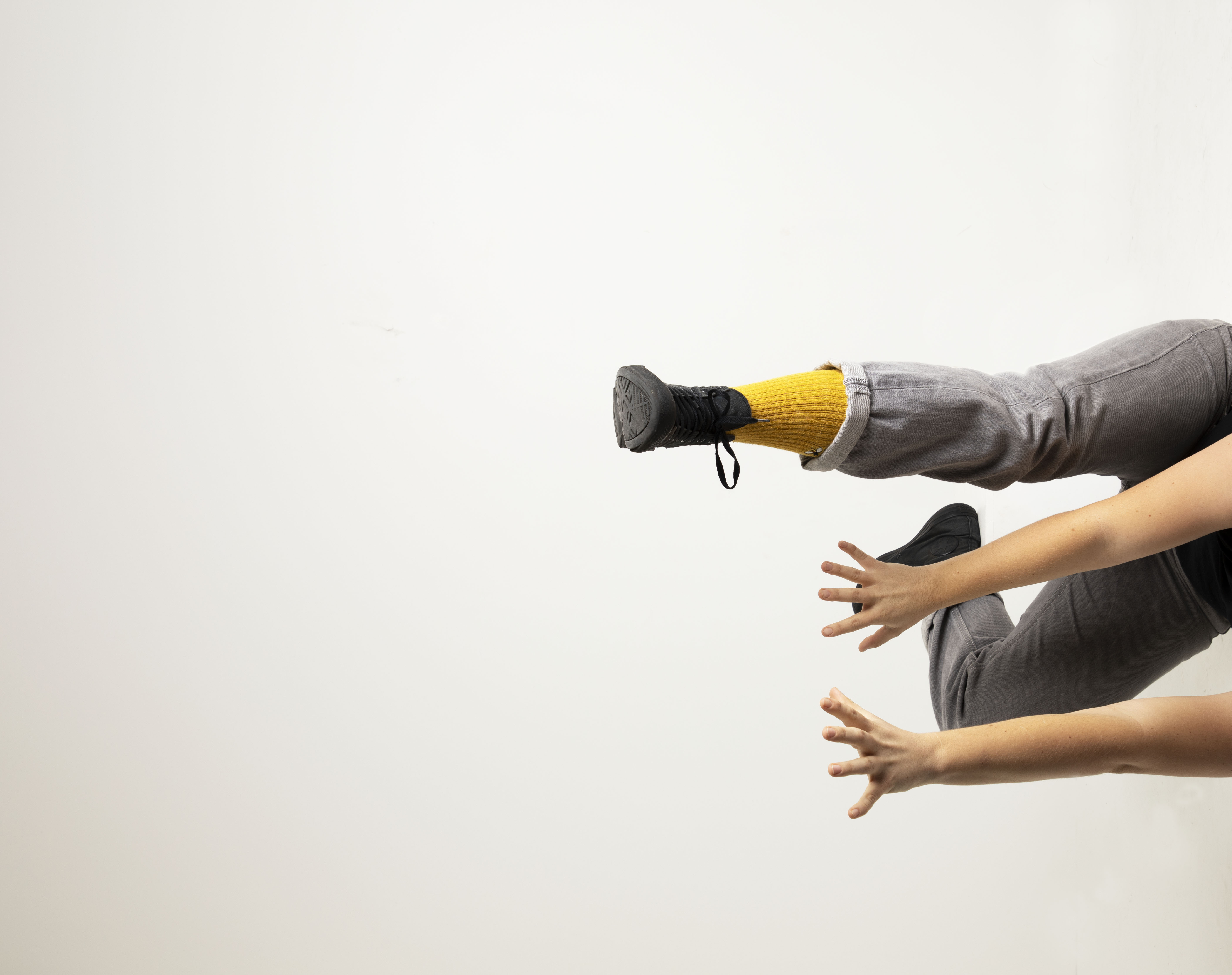
It’s done without words, or at least the spoken word. The performance begins with a captivating movement piece that powerfully expresses a desire to break free. Then, through single words or phrases written on foam board signs, we’re offered a series of alternatives – apples or oranges, Coke or Pepsi, Labor or the other lot – but Rachel’s movement suggests the absurd reductionism inherent in privileging such narrow choices. And then the signs become more mischievous  – feminism or men, progressive or progress – teasing out the limitations of an outlook that insists on binary opposition and excludes life-giving complexity. There’s non-compulsory audience involvement, and the gang gleefully joined in this subversion of stifling simplicity. (If WB Yeats had been present – he wasn’t – he might have offered the Dancer or the Dance.)

At one moment, Rachel’s written signs suggest she is both a church going Christian and a lesbian. It’s a suitable grounding of an abstract debate. It gently reminds us that the genuine will resist the categories we impose. The real thing will escape the net, and live.

This is a warm-hearted, intelligent show, beautifully performed.

Paul Gilchrist

DEMO by Melody Rachel

at The Emerging Artist Sharehouse, Erskineville, as part of the Sydney Fringe

until September 23

sydneyfringe.com/events/demo/

Banana Crabtree Simon

7 Sep

Alan has started to forget things. Just little things, but his wife is concerned. His doctor asks him to remember three words. They become the title of this piece.

Alan has early onset dementia. This one-man show portrays the development of the disease.

Written by David Hendon, it’s a work both beautifully crafted and searingly truthful. Alan does not want to accept this is happening. He desperately holds on to the belief that his memory lapses are mere aberrations. He interprets the concern of his loved ones as a desire to prove him wrong. As his forgetfulness deepens, we see how it’s the ability to maintain a coherent vision of the past that grants us a place in the present.

As Alan, CJ de Mooi is magnificent. He presents such a wonderfully rich portrayal – the denial, the anger, the warmth, the fear – that it feels utterly real, that it seems unbelievable that it’s a just performance. A gushingly naïve evaluation? Such is the power of this show.

It’s an empathy maker: we feel for Alan and – this is a testament to the writing and the performance – we feel for those who care for him, though we never meet them. Alan’s story, their story, is silently repeated in many homes, unnoticed by the rest of us, or deliberately forgotten.  

I’ve suggested before that the best theatre either reminds the miserable of happiness or the happy of misery. On the strength of such a production, I would add this: from darkness, theatre makes beauty. Hearts are softened by the honest telling of hard truths.

Paul Gilchrist

Banana Crabtree Simon by David Hendon

Emerging Artists Sharehouse, as part of the Sydney Fringe

until 16 Sept

sydneyfringe.com/events/banana-crabtree-simon/

Year of the Abbott

9 Sep

Seriously, sometimes Sydney theatre can seem like a thought-free zone. Leave your intellect at the door.

But this is an intelligent production; sharp and very funny.

Year of the Abbott begins with Brent Thorpe as Deidre Flick, ‘self funded retiree from Mosman’. She chats to ‘Alan’ on talk-back radio. It’s a beautiful skewering of the uninformed Right.

Year of the Abbott GS pix IMG_0421

The majority of the show is Shane Addison and Timothy Hugh Govers presenting what looks like a TV talk show, but is actually a wonderfully performed satirical revue of the last year of federal politics. They chat to each other and to some fascinating guests. The impersonations of both Rudd (Nathan Lentern) and Abbott (Jonas Holt) are superb.

A show like this reminds us of the power of good satire: we laugh at certain individuals, but the laughter empowers us. We’re not left cynical about the political process; we’re reminded how truly fascinating the whole thing is, and how important.

Veronica Kaye


Year of the Abbott

The Den (Chippendale Hotel)

Sat 27 Sept 9.30pm

https://www.sydneyfringe.com/whats_on/search/presenter/24521f7d-3831-4bf1-b67d-4a2844e79484/

Harry and Liv

5 Sep

Harry and Liv are brother and sister, played with delightful irony by brother and sister Evan and Charlotte Kerr.

There’s a playful exuberance to this cabaret. Musical virtuosity is neatly balanced with fun, silly banter.

The venue, despite its lighting and acoustic challenges, has a lounge room charm.

harryliv1

Charlotte Kerr’s opening number, a gentle ballad, reminded me what an extraordinarily beautiful voice she has. As the show continued, I occasionally wished the pace would slow, so I could savour that beauty even more.

However, these two performers have a vibrant, utterly engaging stage presence. They close tonight, but hopefully they’ll be back with more.

Veronica Kaye

Harry and Liv

closes tonight 6 Sept

Glebe Justice Centre (37-47 St Johns Rd)

https://www.sydneyfringe.com/whats_on/event/3b7cc7f9-73f6-4c6e-9e1f-7c7aab51cb2d/