
The joy of a classic is twofold: you’ve either seen it before and are fascinated by the choices made by this particular production, or you’re seeing it for the first time and are sharing in an experience that has enthralled millions before you.
This version, adapted and directed by Anthony Skuse, will thrill audiences both familiar with the play and those to whom it is entirely new.
Skuse has tightened the piece so it runs a brisk 90 minutes, a remarkable achievement as there’s not much fat to trim off Ibsen’s original, a piece that can run two hours fifteen.
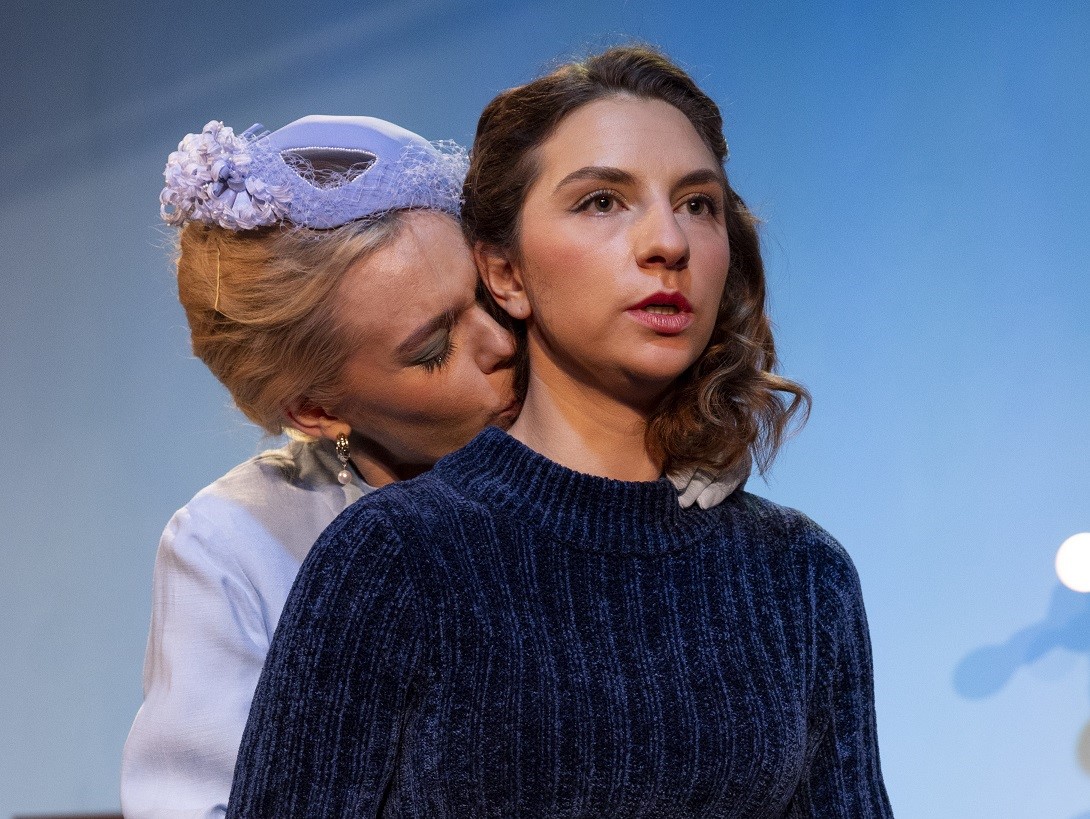
Hedda has just returned from her honeymoon with her more conventional husband Jørgen Tesman. It’s clearly not a perfect match, a fact underlined by the play’s title: Hedda’s maiden name. In the drawing room of the couples’ newly acquired home is a portrait of her father, General Gabler, watching over all. And, waiting in a drawer, is the set of pistols he bequeathed his daughter.
It’s tempting to read the plays of the second half of Ibsen’s career as documenting social issues. When Nora leaves her husband at the end of A Doll’s House, it can seem like she’s slamming the door on the whole damned patriarchy. And, I guess, if you like your theatre as a type of animated slogan, a sort of cutely repeating GIF, who am I to say you shouldn’t. But I do wonder if reducing Ibsen to a message is to rob the dramatic experience of its richness. From long, hard experience, I’ve come to the conclusion that the best way to pass the time in the theatre is by paying attention to the actual play, rather than holding tight to some theory you brought pre-packed from home.
Ibsen, I suspect, is best appreciated through character rather than message. Famously, he claimed to have spoken to his characters, heard their voices, noted their choice of dress. They weren’t puppets for his particular philosophy, but people….with all the wild heaving breathing contradictions that implies.
Skuse’s version honours this gloriously Life-affirming approach, and Hedda as performed by Ella Prince is beautifully rich and complex. Prince’s Hedda is intense and bewildered, focussed and fraught, iron-strong and vapour-vulnerable. She’s both the pistol and its puff. She’s a long way from some other Heddas I’ve seen: silly middleclass housewives who are close cousins to Emma Bovary, bored with their lives and self-medicating with fantasy. Prince’s Hedda longs for something more, but in a way that’s so genuine, so potent, that it doesn’t so much indict the mediocrity of the society she’s trapped in as offer a Dionysian vision of ecstatic fecundity, of human flourishing …. of tragically lost opportunity.
With a terrific cast, Skuse surrounds Hedda with characters who are tougher and less comically inconsequential than those some directors choose to present. There’s still plenty of humour, but these characters, though not Hedda’s equal in strength, inhabit a psychological world that is neither inconceivably nor prohibitively distant from her own. Considering the notorious final line of the play, this is both ironic and deeply poignant. The use of space is brilliant, making the most of KXT’s traverse stage, and the simple conceit of having characters occasionally sit with us in the front row is a powerful reminder that Ibsen offers people, just like ourselves.
Paul Gilchrist
Hedda Gabler by Henrik Ibsen, in a version by Anthony Skuse
Presented by Secret House in association with bAKEHOUSE theatre co
At KXT until 2 November
Image by Braiden Toko



 Theatre Red