You might argue this is a prime example of the Theatre of Audacity. You could argue it asks to be valued because it surprises and shocks. It has us say of the actors I can’t believe you stood in front of people and did that! (I’m contrasting it to the Theatre of Authenticity, which asks to be valued because of its veracity and honesty. It has us say of the actors You made me believe that was true.)
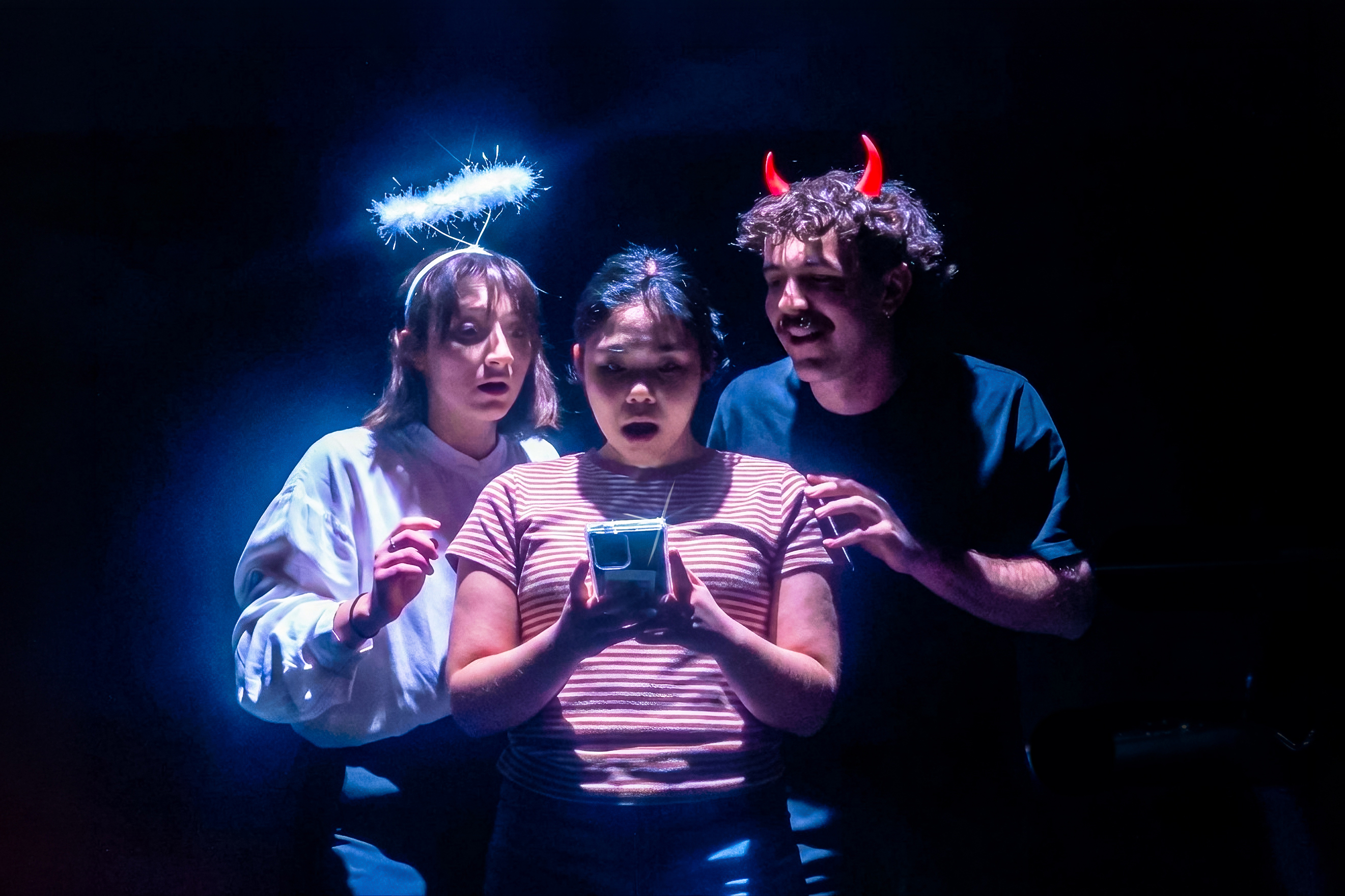
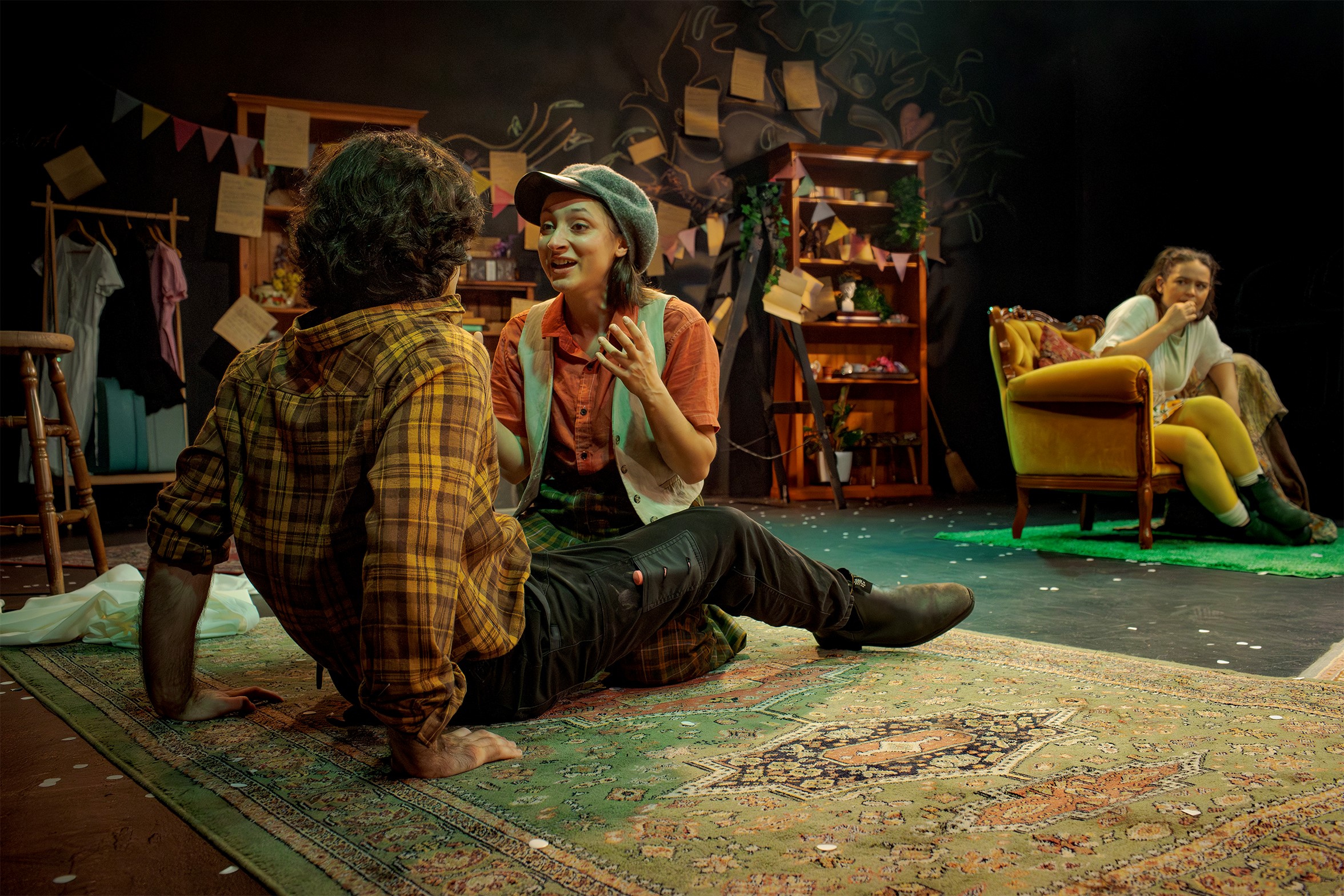
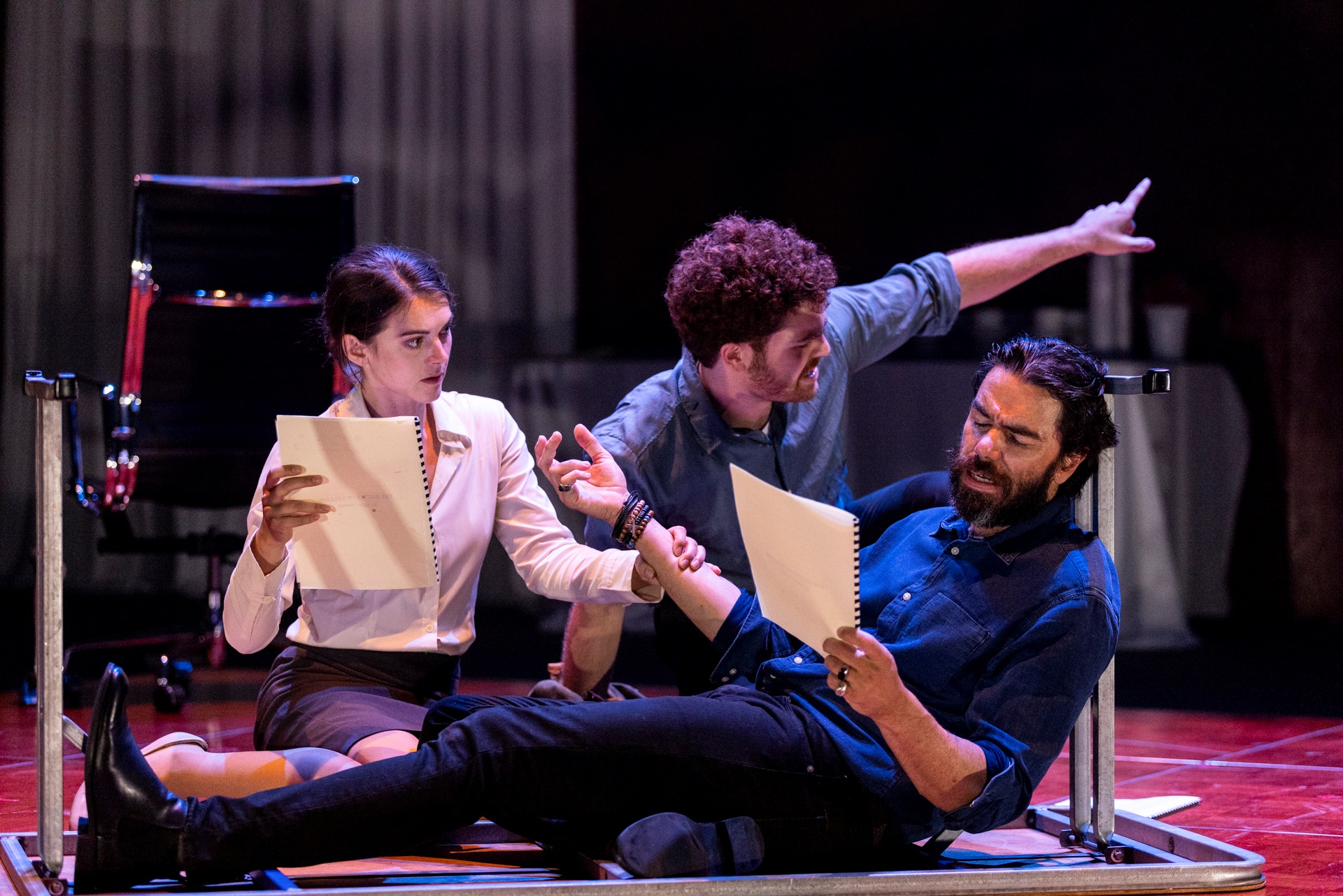
Everyone Knows I’m a Pervert by Taylor Fernandez playfully tells the story of Chastity, who accidently shares a saucy email with all her contacts. I wasn’t sure why this was such a problem, since Chastity also writes an erotic blog called The Vaginal Chronicles. (I’m guessing the Chronicles are anonymous – but the pace is so intense and the exuberance so stupefying, I think I missed that point of exposition.)
The show is certainly fast and furious, and ninety minutes long. (In the style of much of the humour, I can suggest it needs a good edit … a good, long, HARD edit.)
Directed by Beatrice Blackwell, the cast (Jenny Guigayoma, Jade Fuda & Jake Walker) totally commit to high-energy performances.
In suggesting the show’s audacity, rather than its authenticity, I have a few caveats.
Firstly, the show presents a poetic (by which I mean life-affirming) Truth. But more on that later.
Secondly, very few of the sexual acts mentioned by the characters are perversions. They’re not uncommon acts, and they’re certainly not taboo. What is in our society? There’s only the illegal. (I think one such act was mentioned.)
Perversion is, of course, in the eye of the beholder, and I guess that’s the point: Chastity suffers guilt about things she really shouldn’t. To compensate for this guilt, she wades in even deeper, like Macbeth when he says “I am in blood stepped in so far, that, should I wade no more, returning were as tedious as go o’er” – except for the fact Shakespeare’s tragic hero goes on to actually do things. Chastity just talks about doing things.
And, thirdly, the way she speaks about these acts is revealing. Chastity talks of sex as merely mechanical pleasure. The utter absence of intimacy is tragic, and this sadness is the truth of the piece; the pity, the poetry.
Paul Gilchrist
Everyone Knows I’m a Pervert by Taylor Fernandez
Presented by NIDA in association with bAKEHOUSE Theatre Co.
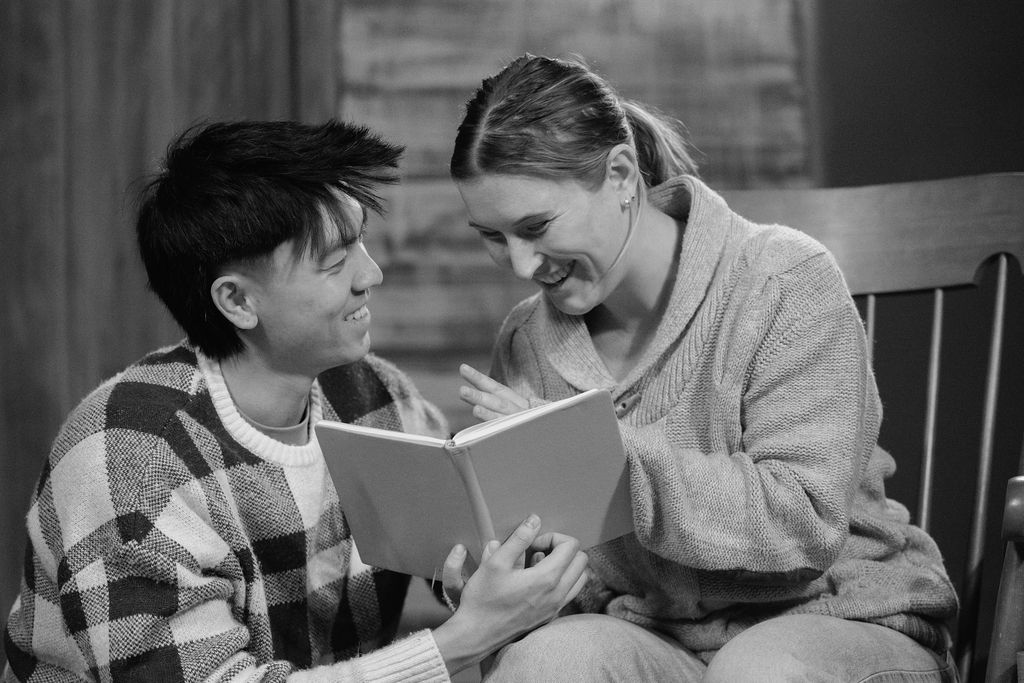
Written by David Auburn, Proof has an absolutely extraordinary first act. It brilliantly works the element of surprise – which means I can’t tell you very much.
Suffice to say, it’s set on the porch of the home of a family of mathematicians. The University of Chicago is perhaps just over the fence. Robert has produced works of genius across multiple fields of mathematics. But then he is attacked by mental illness. His daughter Catherine, a potential genius herself, becomes his prime carer. The job has clearly taken its toll.
The opening of my review implies the second act doesn’t compare to the first, but if that’s a criticism, it’s akin to suggesting that a 24 carat stone is worthless junk besides the Hope Diamond.
If I was in charge of marketing this play to a new audience, I might suggest it’s A Beautiful Mind meets The Big Bang Theory (which explains why I’m not in marketing.) It’s probably enough to point out that, in 2001, Proof won both the Tony Award for Best Play and the Pulitzer Prize.
The title tells us it’s about the search for certitude, but it’s ultimately not the mathematical certitude we might expect. In fact, there’s very little maths in the play at all. Except for the fact it’s about prime numbers, we never really know the subject matter of the ostensible titular proof. And the play doesn’t manifestly use maths as some kind of metaphor (as, for example, the Uncertainty Principle is used in Michael Frayn’s Copenhagen.) This absence of maths is partly structural; with the four characters that Auburn posits, there’s really no one who is the complete innocent who could stand in for an ignorant audience and have the maths explained to them. And the genius of the maths can’t really be shown (unlike Shaffer’s Amadeus, in which the music can simply be played, or Edson’s W;t, in which the poems are recited.)
So (no doubt to the great relief of many) there’s not much maths.
Instead we get a family drama of genuine heart and humour.
But the Proof is in the performance. Auburn has set a tough task: characters of top-class intellect, characters suffering mental illness (or maybe they don’t…)
Director Adam Dunn’s cast produces some fascinating work, the highlight of which is the emotional presence of the actors. Occasionally performances would gain from a greater focus on vocal technique – but we’re gifted an engaging night of theatre.
Kate Wooden as Catherine displays an exciting range, from sharp wit to weary confusion to raw vulnerability. As her father, Robert, Justin Knights is pathos-inducing. As Hal, a young academic interested in both the maths and Catherine, Johnny Nguyen is so likeably goofy as to make us suitably suspicious – but the scenes of romantic intimacy between he and Catherine are played with a truthfulness that is disarming. Claire, Catherine’s older sister, is intimidated by the genes of genius that flow through her family and guilty for her absence during her father’s illness, and Beth Williams gives a splendid performance of that great retreat, that soul-shrinking pretence of control and practicality with which we hide from Life’s most daunting mysteries.
This is a very funny and extraordinarily heart-warming love story.
Of course, the title tells us it will be some sort of love story. (Though no one in the play comments on the uncanny similarity between the characters’ names and those of their iconic forebears.)
Shakespeare’s play is a tale of star-crossed lovers (though it’s rarely described as ‘very funny and extraordinarily heart-warming.’) In what way are the two lovers in Gary Owen’s play star-crossed?
Well, Julie is academically gifted and from a upper-working class family.
Romeo is academically challenged and is an eighteen year old single dad with an alcoholic mother.
Julie will probably get into Cambridge and study physics.
Romeo didn’t finish school and can barely read.
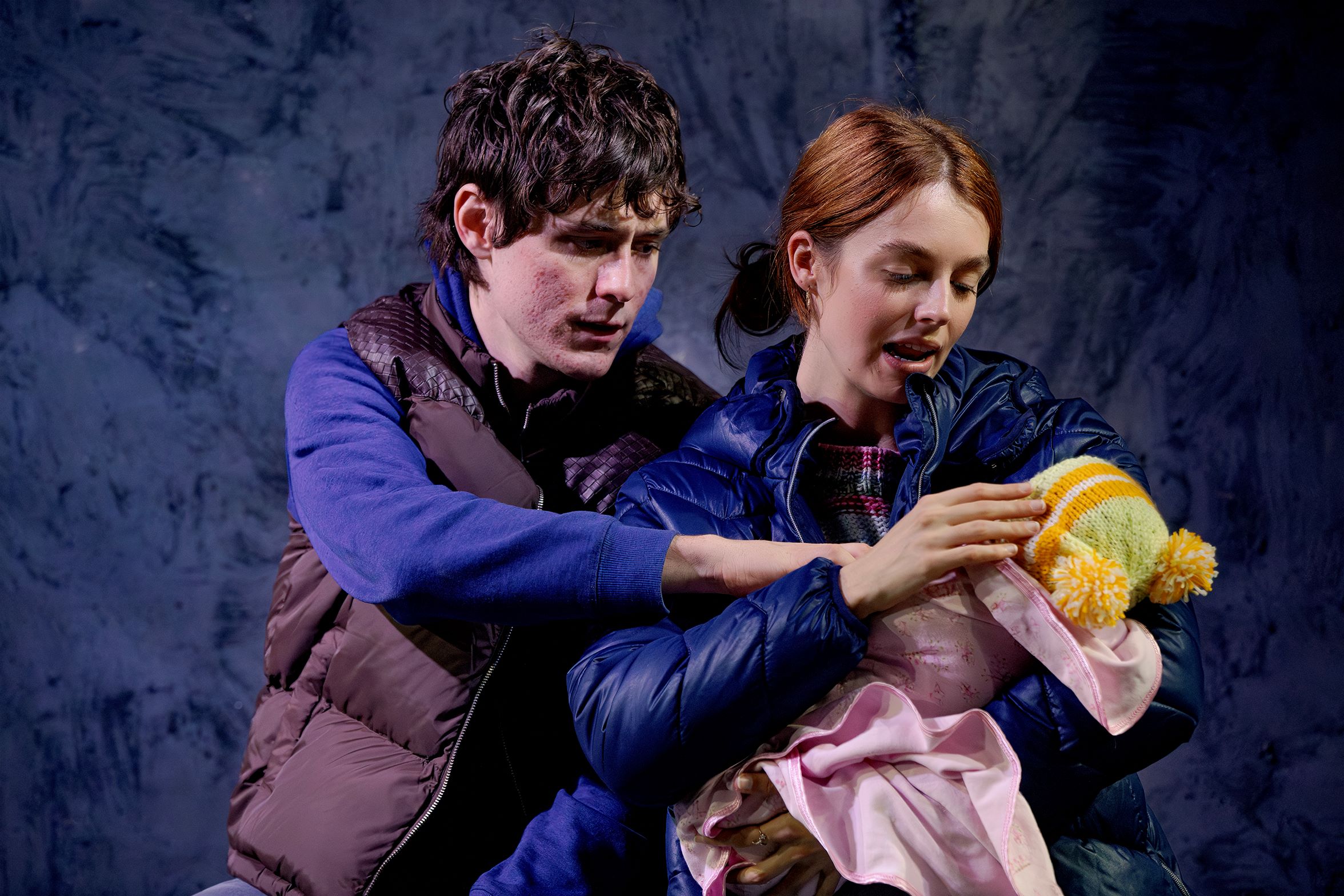
Estelle Davis as Julie and Alex Kirwan as Romeo are absolutely superb. Both the attraction and the tension between the couple is evoked gently and with such attention to detail that their relationship feels utterly real. (And that verisimilitude is quite an achievement – because true love has always been where flat reality loses its recognisable solidity and evaporates into ethereality, taking flight as fairy dust.)
As Julie’s mother and father, Linda Nicholls-Gidley and Christopher Stollery are terrific, revealing the multifarious manifestations of parental devotion. Nicholls-Gidley perfectly encapsulates a spiky concern. Stollery offers a moving portrait of love as seemingly soft as water and, ultimately, just as unrelenting.
Claudia Barrie excels as both director and performer. As Romeo’s mother, she finds playful humour in the character, while still projecting the self-protecting hardness of the wounded soul.
It’s unlike me to have said so little about the script so far. Usually that’s a sign I didn’t like it much; my policy always being, if you can’t say something nice, say something about French Existentialism.
But Owen’s script is beautifully structured and his dialogue sparkles with truth.
And there are two motifs I’d like to consider.
The first is the Theory of Everything that Julie hopes to discover when she is a physicist. A Theory of Everything would be one that reconciles relativity with quantum mechanics, a theory that harmonises what works with the big with what works for the small. But, as one of the characters asserts, the small can be the big. In a play about parenthood, can there be a better description of that awesome, aching responsibility?
The other motif is class consciousness. The class difference between the lovers and their respective families certainly exists, but there’s a greater divide. There’s the world all these characters inhabit and then there’s the world of the wealthy and those who go to Oxbridge. Owen’s treatment of this divide at the end of the play is especially provocative. I suspect some audience members may choose the offered option of a feel good sentimentality. But, in this story of aspiration, something else is offered as well, something far less comforting: some stinging questions about the source of our values and the strength of our loyalties.
Paul Gilchrist
Romeo and Julie by Gary Owen
presented by Mad March Hare Theatre Company, in association with bAKEHOUSE Theatre Company,
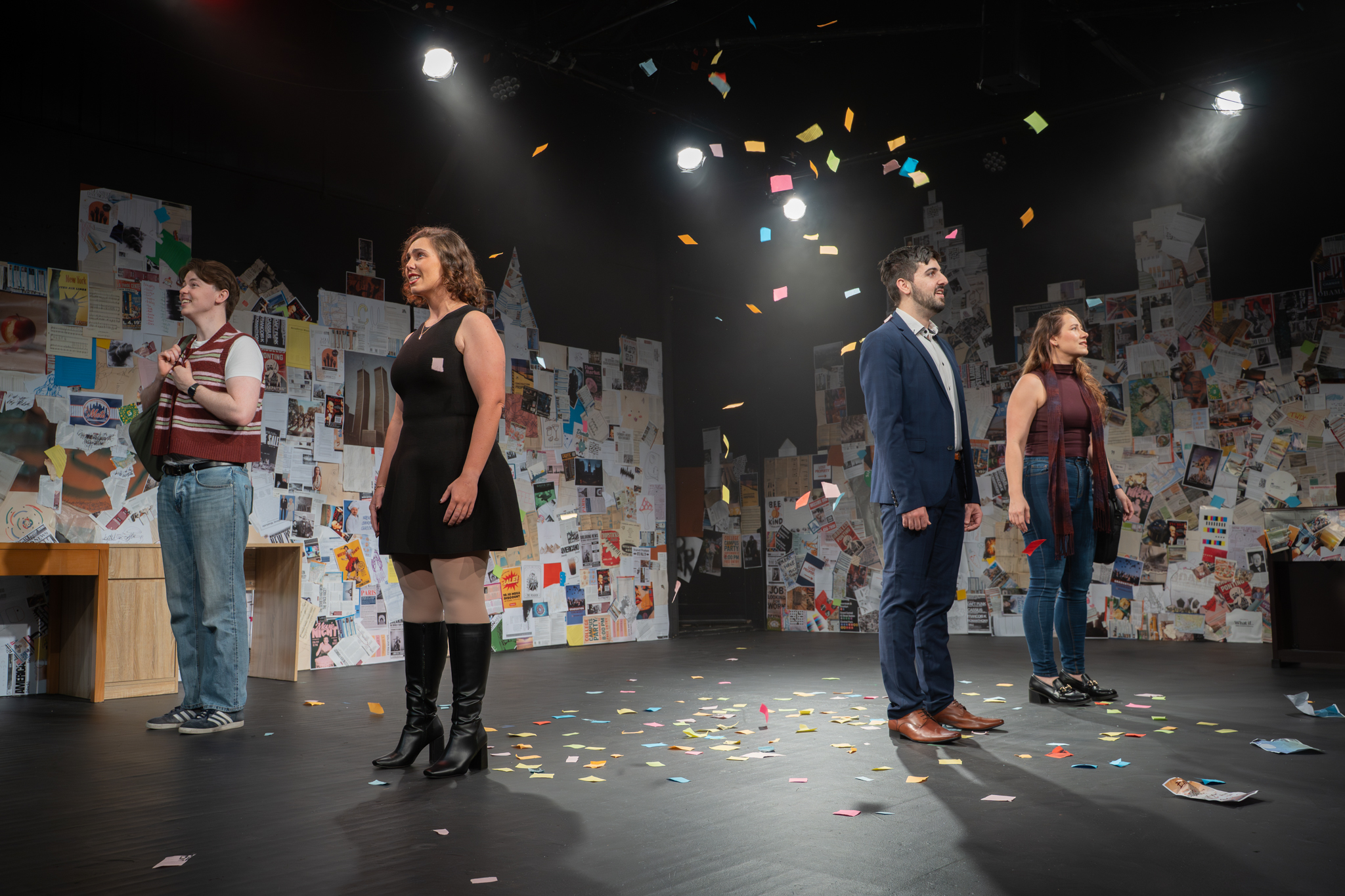
It’s an American micro-musical, with lyrics and music written by Adam Gwon. It tells the story of four people making their way in New York City. It’s American-ness is part of its charm; it was very easy to imagine I’d been transported to an off-Broadway theatre (except for the occasional fruit bat squeal slipping in from the trees outside the Flight Path.)
Under the direction of Aidan O’Donnell & Jacob Macri, the cast of four – Ethan Bourke, Chantal Elyse, Jordan Berry & Lachlan Ceravolo – give sensational performances, both musically and dramatically. Gwon’s lyrics are great fun and the humour is beautifully delivered.
Musical director Joseph O’Reilly on keyboard is the sole accompaniment, and he’s brilliant, playing with both exuberance and nuance for the show’s entire ninety minutes.
Despite being a musical, Ordinary Days has real depth. It’s a musing on finding beauty, even when you fear being overwhelmed. Remember, this is New York City.
It’s sung-through, and the majority of the songs are solo pieces. This means the structure is a little like that of a conventional play consisting of alternating monologues. This creates a poignant sense of isolation, entirely fitting the story of four people who are each a little lost. (Remember, New York City)
The final image of the show is gold. The spoiler rule prohibits a description, but the image is the perfect encapsulation of the duality of modern life: the importance of the individual in the multitude and, conversely, the importance of the multitude to the individual.
Opening night was sold out, as I believe is tonight. The show closes this Saturday.
Five rather different women meet to play netball. The focus is not so much on plot as character. (We’re not being asked to care who wins a game.)
You could read the piece as a representation of the female experience; the sort of piece with the raison d’etre of bearing witness.
And, if you do read it that way, you have very good reason. After all, over millennia, too much theatre has represented the lives and values of men, and this sort of piece seems an appropriate response.
The reason I’m not suggesting that it’s my reading of Emilie Collyer’s Contest is because I think it’s more dramatically thrilling than that. (When we say too many plays represent the male experience, we often make the mistake of thinking that was their conscious purpose. If it had been, the theatre created would never have had the cultural impact we rightfully complain that it’s had.)
Contest is thrilling, not because of its reportage, but because of its metaphors.
The metaphors are provocative, and threefold.
Firstly, we’re presented a team. Are we ever really a team? Do we pursue shared goals? Or are all our relationships purely transactional? And, if they are, of what are we robbing ourselves?
Secondly, the team plays in a competition. Is Life a competition? Is it really a zero-sum game, one in which my gain necessitates your loss? And, since so little of Life is actually played out on any field where comparisons could be made – our inner lives, for example – what’s the impact of our focus on competition? What is being erased?
Thirdly, it’s a sporting competition. Since sport is physical, we’re asked to what degree do we see ourselves as our bodies? There’ s probably no Life without the physical body, but there’s so much of Life in which we are unconscious of the body. How do we get the balance right?
I’ve outlined these metaphors without reference to the female experience, partly because I’m not in a position to evaluate their veracity or efficacy, and partly because the excitement of this piece of theatre derives not from being a representation, but from being an invitation. (As the above questions assert.)
Under the leadership of director Kirsty Semaan, the creative team make bold choices.
The soundscape by Charlotte Leamon is suitably tension-creating (though sometimes in performance it challenges the actors’ vocal work.)
The simple evocation of a court by designer Jason Lowe gives the performers a fitting place to play. (It would’ve been great to see the physicality pushed even more; netballers can really throw.)
Semaan elicits good work from her cast. Willa King effectively reveals the tension between authority and waning power. Emma Monk presents well the annoyance of being reduced to an inspiring anecdote. As the over-pleaser, Suz Mawer is both amusing and affecting. Lana Morgan gives a disquieting portrait of almost existential enervation. Melissa Jones takes a character who is almost resolutely shallow, and successfully unpacks her to give us a portrayal of subtlety and poignancy.
Directed by Alex Kendall Robson, this is a marvellous presentation of a Shakespearean classic.
Full disclosure: As You Like It is one of my favourite Shakespearean plays, and its protagonist, Rosalind, is certainly my favourite Shakespearean heroine.
Rosalind is whip-smart but no fool. (With such a penchant for paradox, might I wear motley?) What I mean is that Rosalind is witty but humble; she entertains no hubristic dreams that her intelligence makes her superior to the world and its grand forces. This being a romantic comedy, the grand force is Love. Rosalind accepts Love’s power – but knows that this power does not automatically grant romantic Love pre-eminence in the human experience.
Rosalind might have said Love is the silliest of the serious things. Instead Shakespeare gives her lines like these:
Men have died from time to time and worms have eaten them, but not for love.
Love is merely a madness, and, I tell you, deserves as well a dark house and a whip as madmen do; and the reason why they are not so punished and cured is that the lunacy is so ordinary that the whippers are in love too.
Shakespeare gifts us a heroine who is both bubbly and balanced, who both feels and thinks.
Jade Fuda’s portrayal of Rosalind is absolutely brilliant. And I found it a wonderfully fresh interpretation: more giggly and more fraught than customary, and this tender vulnerability, coupled with Fuda’s total command of the wit, makes her portrayal of Rosalind extraordinarily rich.
As You Like It is one of my favourites for other reasons. It includes one of my favourite scenes in the whole of English drama, the one in which Celia accepts exile rather than part from Rosalind. In a play centring on romantic Love, here’s a shining example of a different type of love: friendship. It’s a scene that always brings tears to my eyes, and played here by Fuda and Larissa Turton as Celia it did so again.
The play also features some of Shakespeare’s greatest poetry.
And this our life, exempt from public haunt, Finds tongues in trees, books in the running brooks, Sermons in stones, and good in everything.
So says the Duchess, exiled to the Forest of Arden by her tyrannical sister. The two roles are doubled superbly by Sonya Kerr in a performance that excels both physically and vocally, and with glorious authority juxtaposes compassion and cruelty.
All the world’s a stage, And all the men and women merely players
So says the melancholy Jaques. Sure, this most famous of lines could simply be read as a case of professional myopia: if Shakespeare had been a footballer he might have said All the world’s a game; or if he had been a risk assessor, All the world’s an accident waiting to happen; or a fisherman, All the world smells of fish. But Shakespeare the dramatist captured something of Life’s bewildering, and perhaps unbearable, lightness – the sense that it all deeply matters, but at the same time, it all doesn’t matter that much. Kendall Robson plays Jaques with splendid humour and a show-stopping poignancy.
O, how bitter a thing it is to look into happiness through another man’s eyes!
So says Orlando, in a stinging moment when it seems his brother has secured love but he never will. Traditionally, Orlando is a challenging role; lover of the effervescent Rosalind, there’s always the danger he may not seem worthy of her, a smaller man than Love’s grand game of hide-and-seek in which he is a prime participant. But here, Pat Mandziy creates a magnificent Orlando, a beautiful balance of confusion and charisma.
So, as I suggested, a play of unparalleled poetry. (And I think we get almost the whole thing!) The entire ensemble is exemplary; with a mastery of the Elizabethan language and a complete commitment to comic exuberance, we’re invited to a world of delight.
This is an utterly engaging production of a clever, curious piece.
Written by Sam Holcroft, it was first produced in the UK in 2023.
It has a play-within-a-play structure; it’s art about art.
It’s set in a fictional oppressive regime, one in which the Ministry of Culture censors plays critical of that regime and promotes ones that encourage a positive vision. In this regime, plays like Julius Caesar and Romeo & Juliet are banned. It’s not obvious why. Certainly, the Ministry’s response to any new work is to go at it hard with a red pen, eliminating anything deemed inappropriate – from garden-variety profanity to whatever might cast life in the regime in a poor light. Plays, it is dictated, must inspire.
The outer play – the one that frames the other – presents an underground theatre company producing an illegal play. We the audience are included in this act of transgression; we’re addressed as co-conspirators, as though we’ve defiantly come to see this clandestine performance. (Everyone’s familiar with that sometimes-true fantasy that artists are cool rebels, and it was nice to be included in the cosplay – though sitting in my comfortable Belvoir seat after a good meal and a glass of wine, with the promise later of my usual warm bed, I’m not sure I could entirely fool myself that what I was doing was an act of rebellion.) But in the world of A Mirror, surveillance is overarching, and this underground theatre company is prepared, at any moment, to hide their illegal play and us, its audience, behind the pretence of a legal wedding and joyful congregation.
The play-within-the-play, the supposedly illegal play of which we are the risk-taking audience, presents the story of a playwright called to the Ministry of Culture. He is asked to explain a play he has submitted, one which has broken many of the dictated guidelines.
Despite the serious themes of A Mirror, the structure I’ve outlined obviously invites playful mischief – and it’s an invitation director Margaret Thanos and her cast fully embrace. Despite its one hour fifty length, the production has an exhilarating energy.
Performances are splendid. (I’ll refer only to the performers in their roles in the play-within-a-play.) As Čelik, Director of the Ministry of Culture, Yalin Ozucelik is superbly suave, but also animated and personable, a tension that beautifully hints at danger. As his new assistant, Mei, Rose Riley presents a character arc of brilliant comic awkwardness, hilarious enthusiasm, and moving desperation. As Bax, legendary playwright and long-time inhabitant of the theatre milieu, Eden Falk gives a portrayal, equally funny and poignant, of that world’s painful potential to promise more than it can deliver. Faisal Hamza, as Adem, is suitably bewildered by the Department’s unexpected attention.
But back to those serious themes. Apart from the critique of political repression, Holcroft’s play is about the nature of theatre. The most obvious tension is between theatre as fiction and theatre as non-fiction, or between theatre as myth-making and theatre as reality-recording.
What Holcroft does that is so curious, or so stimulating, is to present these two alternatives in strawman fashion; that is, they are presented so hyperbolically that both seem absurd. Embodied in the attitudes of the Director of the Ministry of Culture, Čelik, the myth-making aspect of theatre is reduced to the promotion of a problematic regime. Embodied in young playwright, Adem, the reality-recording aspect of theatre is reduced to the verbatim transcription of actual conversations. Adem is not even characterised as possessing a gift for dialogue; he just has a photographic memory.
With these two facetious alternatives set before us, we the audience are impishly asked What is the nature, and potential, of theatre?
You could be tempted to think Adem’s perspective is meant to be the correct one; after all, you’ve got to get brownie points for not being actively complicit in oppression. But Čelik gets the best speeches, ones expressing the purpose and power of storytelling. In contrast, for much of the play-within-a-play, Adem seems without an aesthetic philosophy at all, appearing not that far from an individual with Savant Syndrome, exhibiting a political and artistic naivete that is unexpectedly combined with one extraordinary ability. And to assume Adem’s supposedly simple truth-telling is superior to Čelik’s myth-making is to ignore that the very play that might lead you to this conclusion is gloriously artificial, meticulously structured and entirely fictional – nothing like the sort of play Adem would write.
It’s Hamlet who suggests theatre is the holding of a mirror up to nature. The metaphor that Art is a Mirror has long been in circulation, but it is a figure of speech that deconstructs itself. If a mirror exemplifies the reflection of an unadorned reality, while art implies some sort of craft or artifice, then (like all metaphors) the metaphor that Art is a Mirror is more arty than it is mirrory.
Of course, theatre can do something mirrors do: both show us ourselves from the outside – which is the exact opposite of how each individual experiences Life. It’s no wonder that both mirrors and theatre can be fascinating in a disturbing way. I’ve quipped before that There are times and places in which theatre has been banned, and if you don’t know why, it’s because you haven’t seen it done well. But I would add, it’s not the being-done-well part that is the only disconcerting, and thrilling, aspect of theatre. And when Savonarola lit his famous Bonfire of the Vanities in Florence, mirrors were among the many soul-sapping fripperies thrown into the flames.
As you can probably tell (if you’re still reading) A Mirror set me thinking.
Real mirrors are flat; only in fantasy is there any through the looking glass. Mirrors just stare back at us, dully. But this play and this production entirely transcend this quality; intelligent and exuberant, it’s all wonderfully invigorating.
This is a beautiful presentation of an absolutely terrific play.
Written by Jennifer Lunn and first presented in the UK in 2023, it tells the story of the lesbian couple of the title.
Es and Flo met and fell in love during the anti-nuclear protests of the 1980’s, but now, like us all, they have aged. Es is beginning to have difficulty with her memory, and Flo is caught between acknowledging this and wanting to wish the problem away.
And then care worker Beata and her daughter turn up, paid for by Peter, Es’ never present son. A battle has begun, for control of Es, and her property.
Director Emma Canalese allows the pace to be truthfully gentle, and she elicits wonderful performances from her cast.
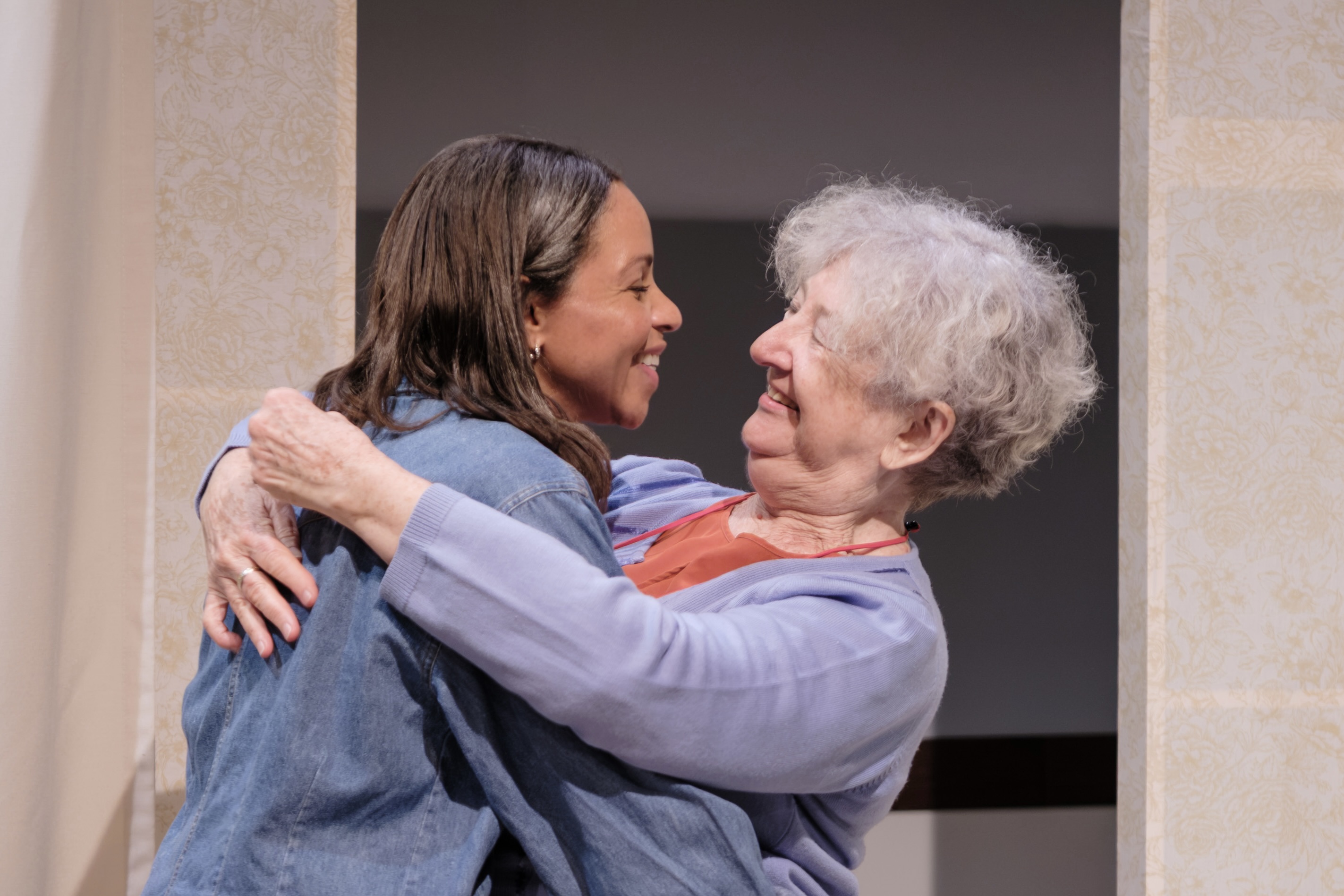
As Es, Annie Byron splendidly blends the exuberance of the woman at her peak with a growing bewilderment at her diminishment and a pathos-inducing fear of being a burden. Fay Du Chateau as Flo offers a superb portrait of indignation tempered by doubts and personal inadequacies. (Her stunned disbelief, her unwieldy tongue, her unreflecting mistakes are so much more truthfully human than the self-righteous grandstanding which too often struts our stages, a pontificating that is probably the unconscious projection of a need to be moral heroes in a world so loud and large that it threatens us with irrelevancy.)
In seeming contrast to our flailing protagonists, Charlotte Salusinszky as Beata, Polish immigrant and carer, offers a model of no-nonsense competency. But Lunn’s script is textured so that Beata does not reduce to some sort of magical migrant dispensing wisdom; she suffers challenges and makes errors, and Salusinszky marvellously captures both her practicality and her vulnerability. As her daughter Kasia, Erika Ndibe presents delightfully both the grace of innocence and its naïve moral certainty. If there was a moment that best encapsulates the piece’s extraordinary achievement, it’s when Kasia shares a plan she has for good with Es’ daughter-in-law, Catherine. Played brilliantly by Eloise Snape, Catherine is on the surface a silly, glibly narrow-minded woman, but realising the danger of little Kasia’s plan, she gently warns her it might be more complicated than she imagines.
Simplicity is resisted. Even forever offstage Peter is not simplified to mere villainy. His attitude to his mother and Flo may seem self-interested, but he is given reasons, ones that are – if not acceptable – certainly comprehensible.
The play is a moving representation of the challenges of aging, a stinging indictment of the erasure of lesbian experience, and a glorious hymn in praise of loyalty and love in their many, many forms.
But its brilliance is its honest acknowledgement of complexity. This is drama in the great tradition, a stage in which the human condition is honestly portrayed, where good and its opposite might be real, but are never found unmixed in any human soul. And to acknowledge complexity is to stand at the gateway to compassion.
I’m twice as old as the protagonist of this piece, but I can still relate to the story because it’s about a failed artist and I’m a reviewer.
(Incidentally, the protagonist claims that the reviewers in Sydney are dogs. The more sensitive among us might find this offensive, but fortunately no dogs were in the audience.)
But seriously, I found Gia Ophelia, written by Grace Wilson and directed by Jo Bradley, very intriguing, vastly entertaining and quite disturbing (in a good way.)
Despite obstacles possibly unjust but entirely predictable, Gia desperately wants to play the role of Ophelia.
It can be difficult to care whether someone (else) succeeds in the arts. It’s a small story, even for those who love art (or perhaps even more so for people who love art and are familiar with Stanislavski’s exhortation Love the Art, and not yourself in the Art.) And, anyway, success is what we pursue until we realise there are more important things to work for.
In Gia Ophelia, I’m not sure we’re not being gifted a portrait of a sort of madness. There are parallels to Ophelia’s famous mad scene from Shakespeare’s play, with Gia handing random audience members books just as Ophelia distributes flowers. (And, just like Laertes, it lit in me a burning desire to find out who had done this to her.)
Somewhere, I’d heard that this was a story about ageism and sexism in the arts. Such evils clearly exist – they exist throughout our society – but this story seems far too idiosyncratic to be a serious attempt to take them on. It does riff on the societal privileging of youthful looks and of motherhood. But if it does operate as an indictment of ageism, it does this most provocatively by presenting Gia as having internalised the very prejudice she rails against. And curiously, in regard to sexism, it’s Gia who reduces Shakespeare’s Gertrude to the mother. Ironically, this diminution of Gertrude is in direct contrast with Hamlet’s response, who is upset that his mother is refusing to fulfill the conventional female role. (I know Gia’s dismissal of Gertrude as the mother is also fed by the bitter irony of her own situation but, as I’ve suggested, there’s also a stimulating lack of self-awareness. More on that later.)
Rather than a social justice piece, the play most fascinatingly operates as a Saturn returns story. Characters in stories of this type often ask Is this all Life offers? Or have I settled too early? But here, Gia’s quarter life crisis is about confronting the question If this is what Life has dealt me, can I really go on pretending otherwise? Gia must cope with the closing of two of Life’s opportunities, one rather specific and small (the opportunity to play Ophelia), the other much closer to universal (a situation which Gia refers to most of the play as my secret, and concerns her fertility.)
I found Gia a difficult character to like – she’s too-cool-for-school, oddly obsessed with the Ophelia role, and dangerously dishonest. Despite the enormous dissonance between the characters’ personalities, we’re tempted to view both Ophelia and Gia as mainly sinned against. It’s a temptation to which Gia seems to succumb. But she’s also perfectly capable of doing the sinning herself – the keeping of her secret being the prime example – but Gia never seems to consider her choice problematic.
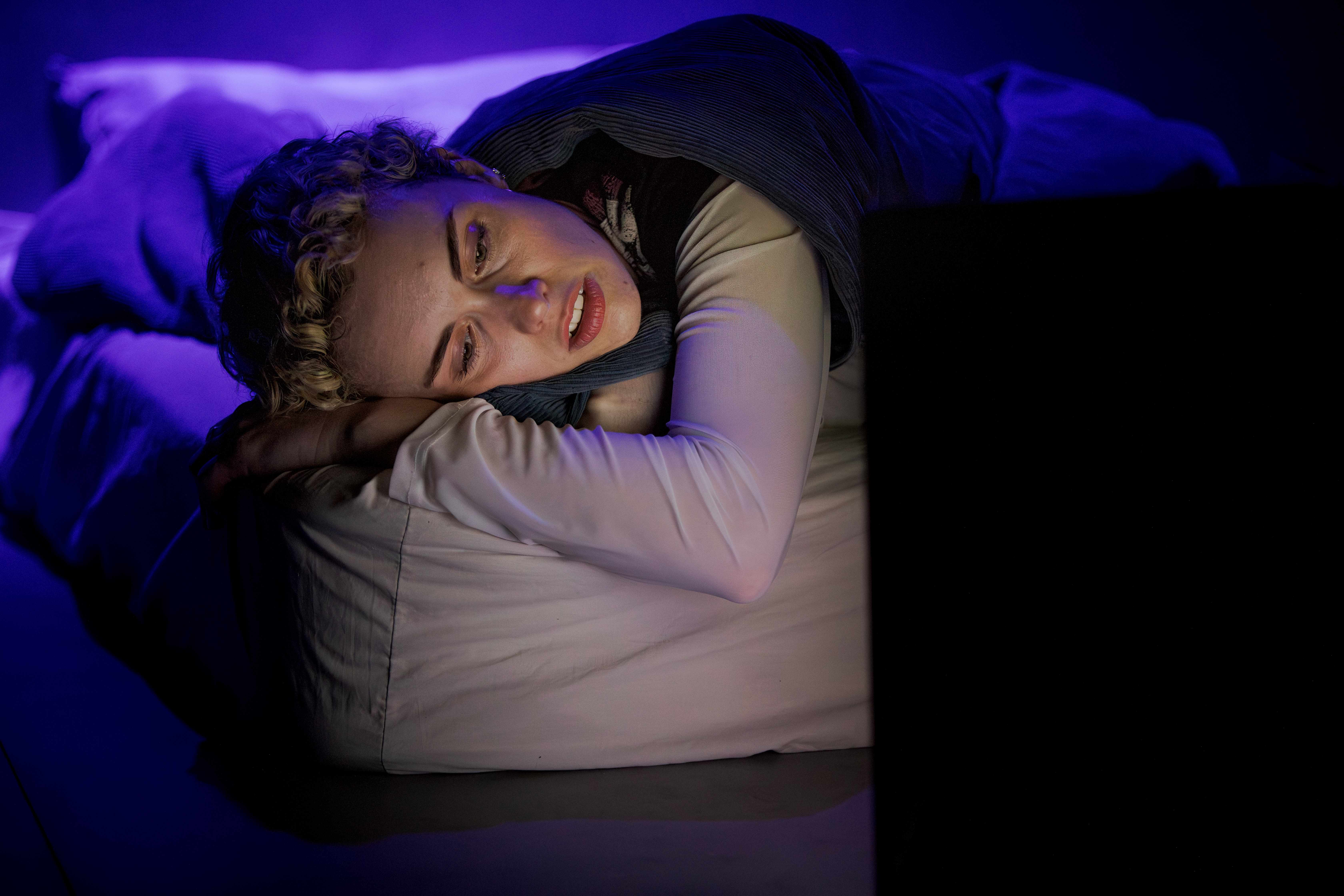
All this is not a criticism of the writing; it’s a rich, complex, very human portrait. And it’s not a criticism of the performance; actor Annie Stafford is magnificent. A droll but fierce intelligence simmers through the first two-thirds of her performance, textured beautifully by brief but very skilful embodiments of other characters. And when Gia’s exterior cool is finally broken, Stafford presents her grief with a heart-rending power.
Grief. Is this the key to the connection between Gia and Ophelia? Shakespeare’s play is often read as suggesting Ophelia goes mad with grief. Is this what has happened to Gia? But what, exactly, is she grieving? The obvious answer, one that relates to her secret, her fertility, is mooted. But Gia seems unwilling to own that plainly, to state that her other obsession is just a type of psychological smokescreen, conjured to hide a more fundamental pain. But, then again, maybe it’s not…. Thrillingly, the play resists simple answers.
Early on, I suggested I found this play disturbing (in a good way.) Here’s why.
In Shakespeare’s play, in a moment of lucidity despite her madness, Ophelia says Lord, we know what we are, but know not what we may be. In Wilson’s play, Gia could be accurately described by an inversion of this famous observation. It’s as though Gia imagines she knows all she needs to know about her future, whilst not knowing herself.
If that’s a type of madness, it’s one many of us suffer.
I find this piece thrilling and disturbing (in a good way) because it represents the incomplete messiness of very human Truths.
Paul Gilchrist
Gia Ophelia by Grace Wilson,
presented by JB Theatre Co. in association with bAKEHOUSE Theatre,
I last saw this play more than a decade ago, and I’ve never read it, yet going into this production at the Old Fitz, I still remembered a line from the script.
“I forgive you.”
It’s a line we all desperately need to hear more often – though, I admit, it’s not one that seems especially memorable from either a theatrical or literary perspective.
But it’s the context in which it’s used in John Patrick Shanley’s Danny and the Deep Blue Sea which makes this line so very extraordinary.
The spoiler rule means I can’t describe that context. But I can say that line is followed closely by this line “Just because it doesn’t make sense, doesn’t mean it isn’t true” – which might give a hint of the type of experiences Shanley is exploring.
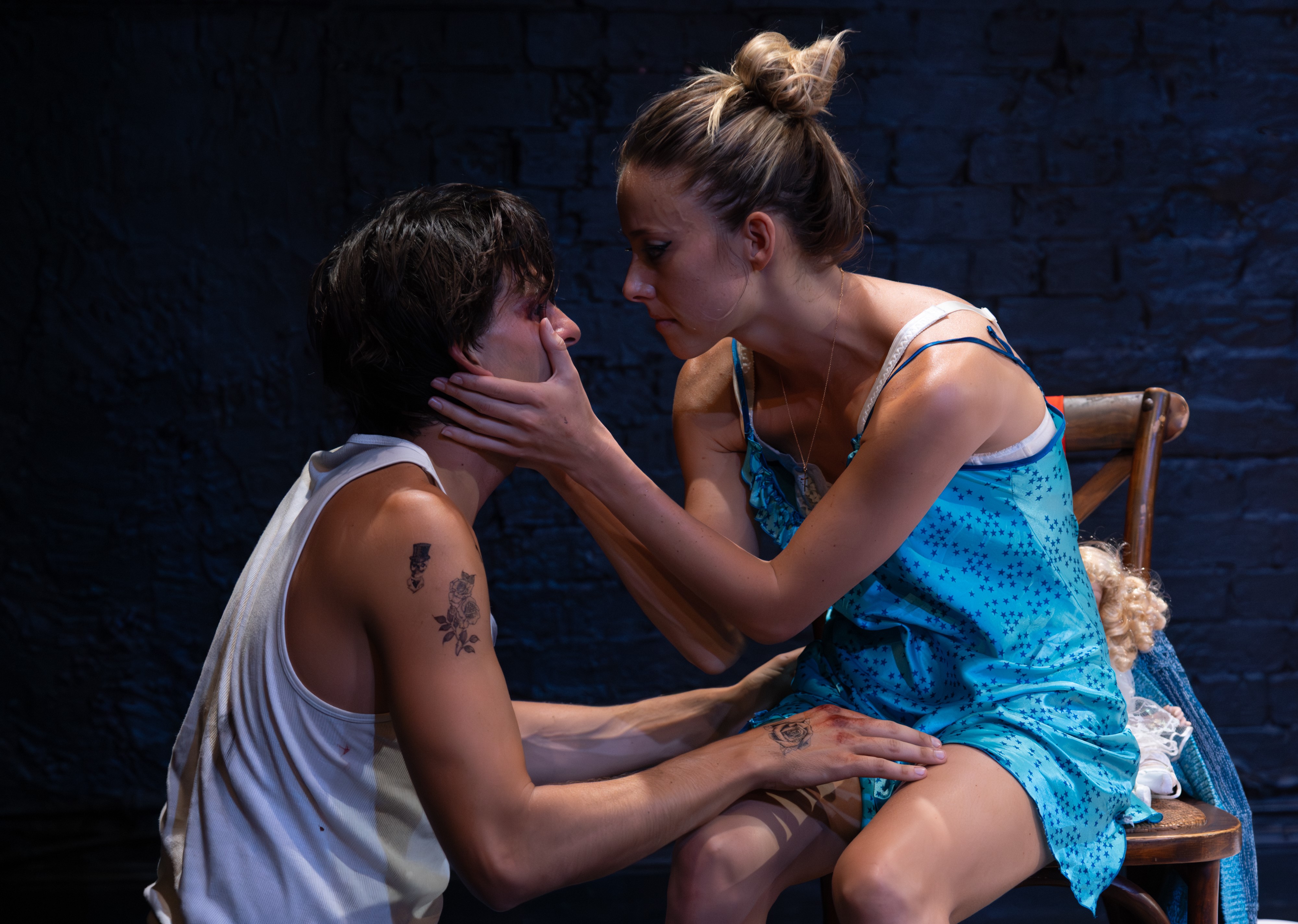
But first, some basics. Danny and the Deep Blue Sea is a 70 minute two-hander that’s very funny and deeply moving. Roberta meets Danny in a deadbeat bar. Danny is a fighter, though more in the style of perpetual belligerence than praiseworthy resilience. He’s at war with the world. And any victories he’s achieved are entirely Pyric; he might have just killed a man. His behaviour is a clear red flag, but it doesn’t frighten Roberta. In fact, she courts the danger. Perhaps she feels she needs to be punished; she certainly feels she’s done something awfully wrong.
These characters are big and colourful, passionate and physical, and under the superb direction of Nigel Turner-Carroll, JK Kazzi and Jacqui Purvis give utterly beautiful performances.
But back to that line (or, at least, the line adjacent to that line): “Just because it doesn’t make sense, doesn’t mean it isn’t true.” This is an assertion of the supra-rational, and though the play is not religious in any conventional way, Shanley does explore material that’s often the province of religion: deep human faults, deep human needs and the regenerative nature of love.
In addition, as Danny and Roberta try to imagine a relationship together, we’re asked to consider the power of make believe, to contemplate hope’s miraculous ability to untether the future from the past. Despite their self-loathing, by being “nice” to each other, perhaps these two can gain some control of their destiny, and might yet share in the good things of Life.
It’s agency born of imagination, and so it retains the childlike quality of innocence, seeing only the world’s promise.
Perhaps it won’t work out. After all, both characters can be brutal, Danny especially so.
But didn’t I say the production was funny?
Well, it is. Not that it’s a black comedy. Nor is the potential for violence taken lightly. The humour is an expression of the love the playwright, and these actors, have for the characters. It’s a love we’re invited to share, and it’s a very easy, and very worthwhile, invitation to accept. (Especially when you’ve heard that line.)
Paul Gilchrist
Danny and the Deep Blue Sea by John Patrick Shanley