Archive | January, 2026

The Girl’s Guide to Saving the World

30 Jan

Do men just hate women?

So asks a character in Elinor Cook’s terrific little play, The Girl’s Guide to Saving the World.

It’s a big punch of a question.

Drama is not especially suited to answering such generalised questions, not with its focus on the specific and the concrete.

But, considering their experience, it’s completely understandable why particular women might be led to ask this question, and then to answer it themselves with an angry Yes!

Which is exactly the sort of specific, concrete situation drama excels at presenting – and which is one of the things this play does.

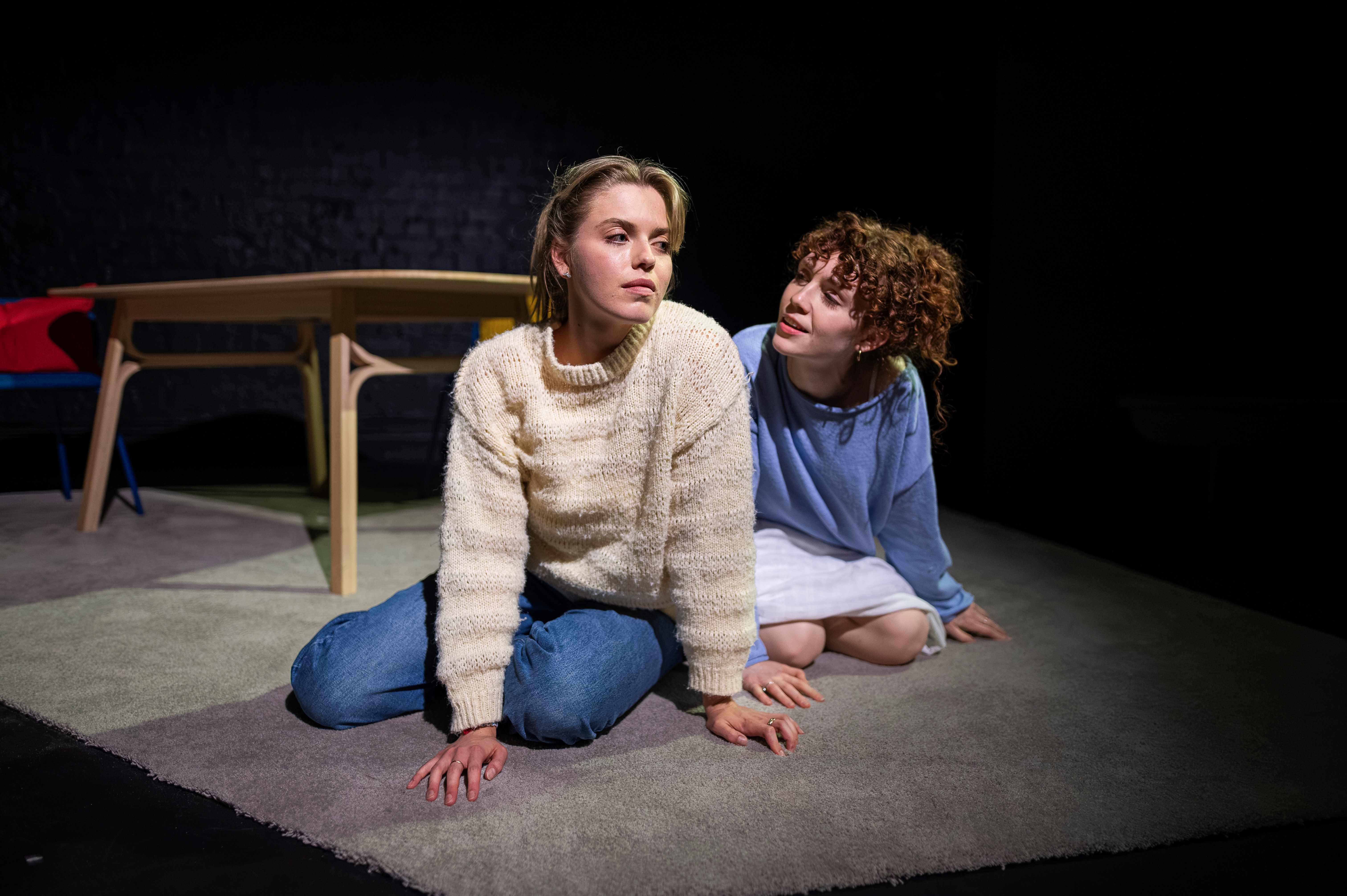
Jane and Bella launch a blog with the goal of telling it how it is from a feminist perspective. The blog immediately goes viral. This success is incredible – in the traditional sense of the word – but the play is a comedy, so hyperbole is par for the course. Sadly, what is entirely credible is how much hate the two women then cop.

Juxtaposed with this storyline is that of the relationship between Jane and her boyfriend, Toby. Though he’s far from a hater, Toby doesn’t really see Jane. Example: Jane announces she has important news (the blog) but Toby jumps in with his own news, and then never gets around to asking about hers. It’s a painfully funny representation of stereotypical male self-centredness.

This juxtaposition of blatant hate and egocentric blindness is provocative. In our culture-fixated culture (no, that’s not a typo) it’s become natural to conflate the two, to see every human behaviour as the result of the dominant cultural norms. The play’s juxtaposition of antipathy and a lack of awareness is an invitation to consider if the two phenomena actually are related. It can also operate as a reminder that a vision of the world that sees every injustice, every torment, and even every misunderstanding, as a manifestation of the patriarchy posits an enemy who might be satisfyingly simple but who is also, inadvertently, granted a demoralizing omnipotence.

Which brings me to another thing the play offers: a snapshot of a couple of personal relationships. (Once again, specific and concrete content.)

Yes, there’s the fraught relationship between Jane and Toby, but there’s also the friendship between Jane and Bella. In some ways, the two relationships are not that dissimilar. Certainly both relationships have Jane musing on the need to live life on her own terms. This focus on choice, as against voice (which the blog symbolises) is a cogent reminder not to let our culture’s fixation with cultural debate blind us to the importance of personal decision making and personal action. (And, yes, at the risk of repetition, I think drama is exceptionally effective at highlighting these aspects of human experience, rather than representing that rather nebulous thing, the zeitgeist.)

The play is a clever, impressionistic comedy, a quick 75 minutes of tickling and poking. True to its comic intentions, it’s speedy rather than thorough.

Under Roisin Wallace-Nash’s direction, the ensemble do splendid work (though there was a moment early on when I started to really long for some vocal variation – which then came with delightful results.)

In a world in flux, Toby focuses on securing a safe role for only himself. Alex Kirwan offers a hilarious portrait of this narrow, clumsy self-obsession.

Mia Fitzgerald as Bella brilliantly manifests the energy of a certainty that entertains no doubts, and so proves especially entertaining when doubts inevitably come knocking.

Bridget Bourke as Jane is the emotional centre of the piece, and there’s a joy in her journey. There’s a joy in witnessing her presentation of restraint in the face of relationships flawed by unexpected pettiness, a restraint that’s part mature avoidance of conflict and part dispirited bewilderment. And there’s an even greater joy in Bourke’s presentation of the epiphany which concludes the character’s journey: this specific, concrete, personal moment is not so much a saving of the world, but a birthing of a whole new one.

Paul Gilchrist

The Girl’s Guide to Saving the World by Elinor Cook

Presented by With Pleasure Productions,

at the Old Fitz until 1 Feb

oldfitztheatre.com.au

Image by Robert Miniter

Dean, Don’t Dance

23 Jan

This is a very enjoyable fifty minutes of theatre.

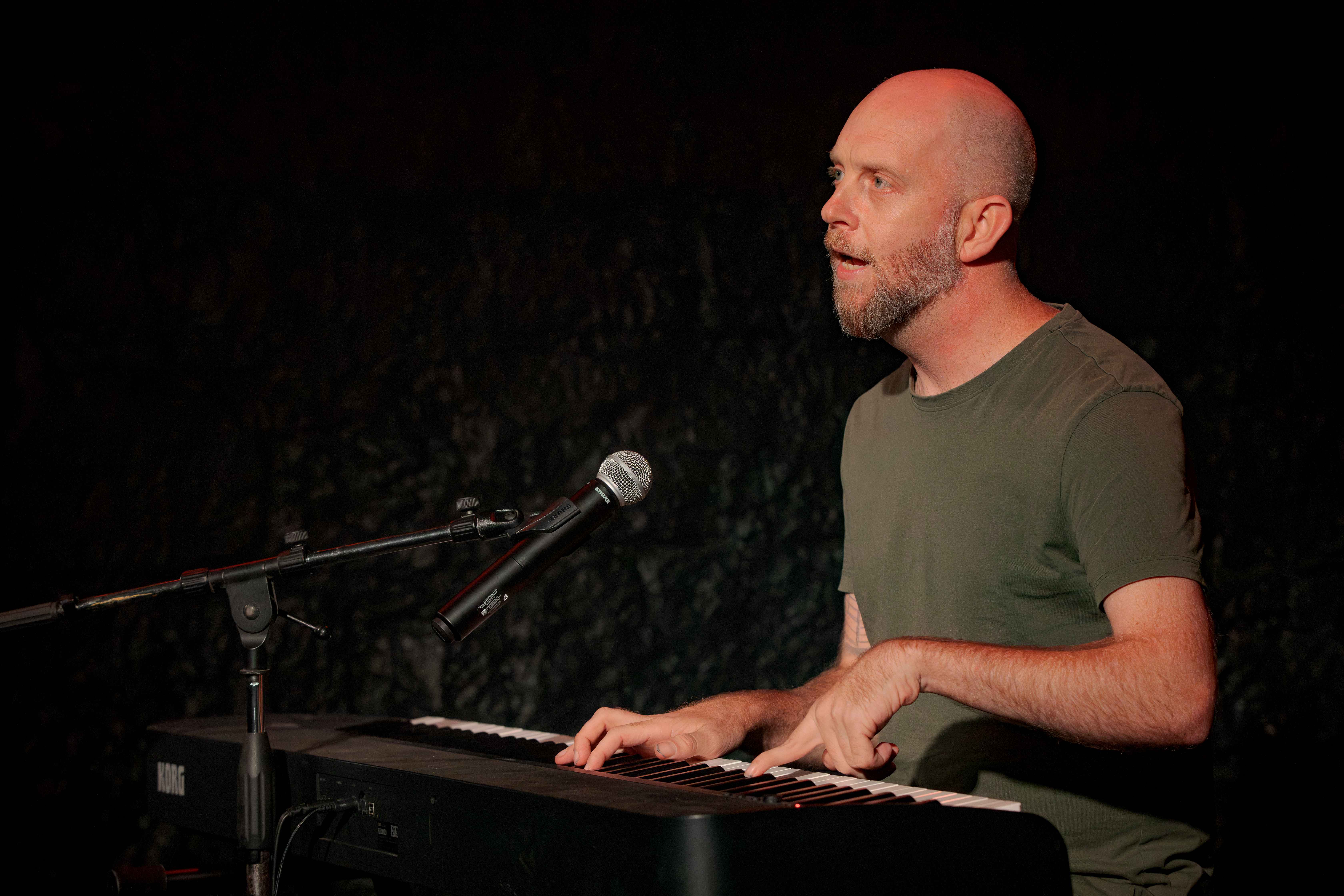
Written and performed by Dean Nash, it’s an autobiographical piece, telling us of his experiences as a person and a performer with cerebral palsy.

In wittily told anecdotes, engaging dramatic recreations and brilliant comic songs, Nash outlines some of the prejudice he’s faced. (He also offers some wonderfully sharp insights into what it is to be an actor.)

The show is presented with Aslan interpretation (Yasmin Dandachi) and audio description (Emma Bedford & Charley Allanah), and these not only aid people who might need these services, but by being fully integrated into the show, also provide terrific opportunities for richness and humour.

The piece as a whole works on a fascinating tension, that between difference and sameness. In one hilarious song, Nash suggests that the only difference between people that actually matters is whether you’re an “arsehole” or not. Ethical responsibility is universal. In another sketch, he tells a casting director that, yes, he has a disability, but it won’t prevent him doing the job. And there’s the show’s provocative tagline: “There are only two kinds of people in the world: disabled people, and pre-disabled people. Dean’s just ahead of the f#ckin curve!”

But counter to these assertions of fundamental human unity is the recorded fact, that for some people, at some times, difference will not be overlooked. And Nash himself clearly suggests representation of difference in the arts is vital.

You might think I’m making too much of the obvious, that the simple way forward is that we should just be open to everyone. But I wouldn’t be the first person to suggest that a glib just being open to everyone can easily result in the erasure of lived experience.

A balance is required, between a faith in the concept of humankind and an acknowledgement of its extraordinary diversity. Nash’s marvelously fun show achieves this balance, simultaneously embracing unity and celebrating difference.  

Paul Gilchrist

Dean, Don’t Dance by Dean Nash

At the Old Fitz until 25 Jan

oldfitztheatre.com.au

Image by Phil Erbacher

Split Ends

21 Jan

This a work of non-fiction, yet it’s highly theatrical. The artist bears witness to her experience, yet her method of telling her truth eschews any mundane assertions of a flat objectivity.

Instead we’re gifted a rich, high-energy performance that serves as an invitation into her emotional and psychological world. We’re not shown a mere map; we’re given a personal tour of the landscape.     

Writer/performer Claudia Shnier presents her experiences of obsessive compulsive disorder and of an abusive relationship. The latter seems to exacerbate the former. It’s a story of suffering, but also of strength and resilience.

Shnier employs multimedia to suggest intrusive voices, and her interaction with the technology is superb.

A pair of scissors, a pair of tweezers and a vacuum cleaner double both as their everyday selves and as people in her life, and the commitment to the theatrical metamorphosis of each prop is fascinating.

Shnier’s delivery moves between a fast-paced-almost-aggressive swagger, a playful humour, and a deeply-moving, bewildered vulnerability.

I’ve written previously about the oddness of autobiographical theatre. It seems strange to use the artform for personal sharing, considering the glory of theatre usually derives from its multi-voiced possibilities. And perhaps even more threatening to the autobiographical purpose is the fact that – more than most artforms – theatre seems to court a very public judgement, one as unreflective as it is immediate.  

But if sharing is the goal, there are few means more direct and more powerful than standing before an audience and opening one’s heart. And considering that the sting of many a pain is worsened by the fear we bear it in isolation, the sharing of an artist such as Shnier is gloriously generous-spirited, for it assures those who suffer that they’re not alone.

Paul Gilchrist

Split Ends by Claudia Shnier

at the Loading Dock, Qtopia, until 24 January

qtopiasydney.com.au

Danny and the Deep Blue Sea

18 Jan

I last saw this play more than a decade ago, and I’ve never read it, yet going into this production at the Old Fitz, I still remembered a line from the script.

“I forgive you.”

It’s a line we all desperately need to hear more often – though, I admit, it’s not one that seems especially memorable from either a theatrical or literary perspective.

But it’s the context in which it’s used in John Patrick Shanley’s Danny and the Deep Blue Sea which makes this line so very extraordinary.

The spoiler rule means I can’t describe that context. But I can say that line is followed closely by this line “Just because it doesn’t make sense, doesn’t mean it isn’t true” – which might give a hint of the type of experiences Shanley is exploring.

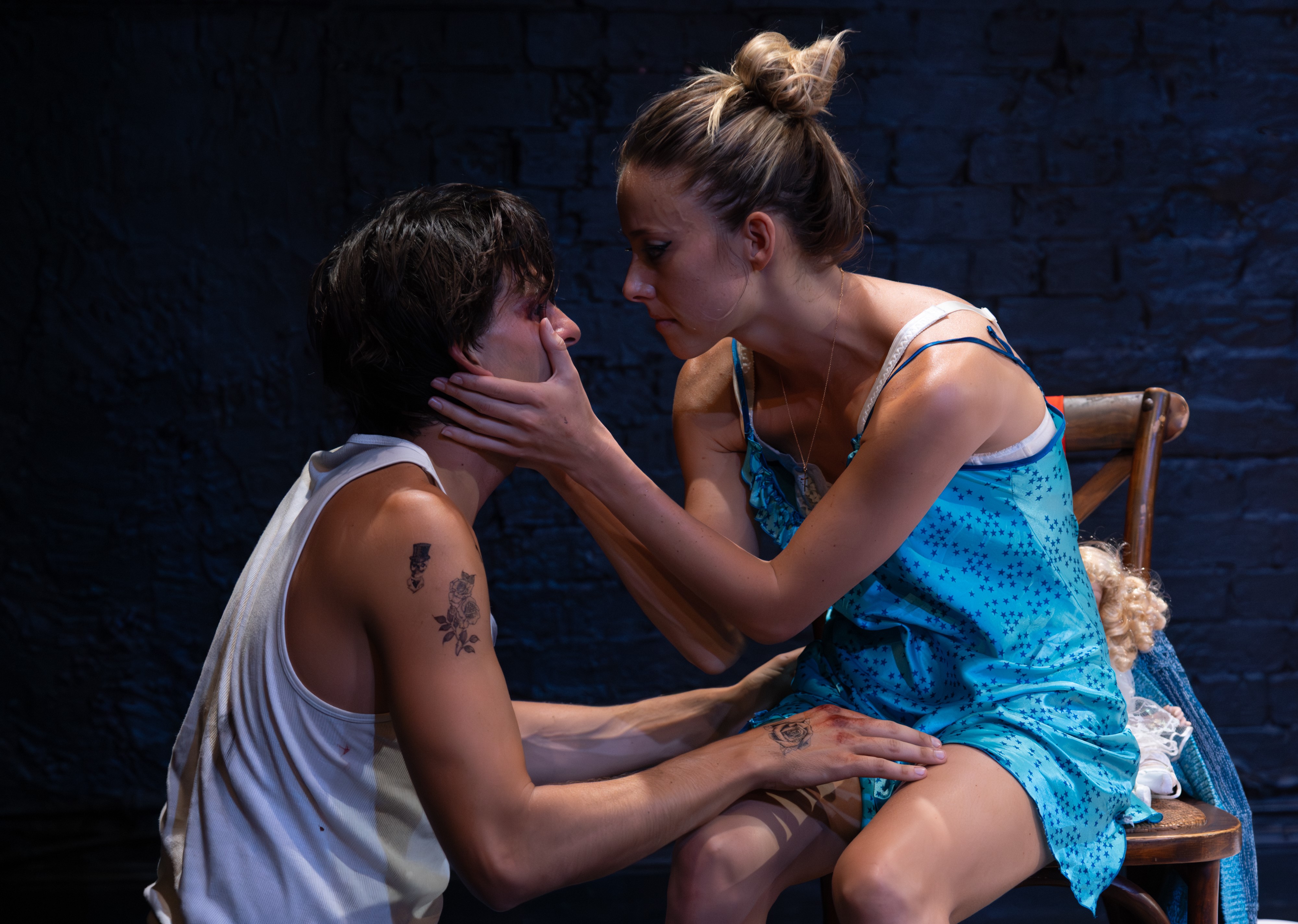
But first, some basics. Danny and the Deep Blue Sea is a 70 minute two-hander that’s very funny and deeply moving. Roberta meets Danny in a deadbeat bar. Danny is a fighter, though more in the style of perpetual belligerence than praiseworthy resilience. He’s at war with the world. And any victories he’s achieved are entirely Pyric; he might have just killed a man. His behaviour is a clear red flag, but it doesn’t frighten Roberta. In fact, she courts the danger. Perhaps she feels she needs to be punished; she certainly feels she’s done something awfully wrong.

These characters are big and colourful, passionate and physical, and under the superb direction of Nigel Turner-Carroll, JK Kazzi and Jacqui Purvis give utterly beautiful performances. 

But back to that line (or, at least, the line adjacent to that line): “Just because it doesn’t make sense, doesn’t mean it isn’t true.” This is an assertion of the supra-rational, and though the play is not religious in any conventional way, Shanley does explore material that’s often the province of religion: deep human faults, deep human needs and the regenerative nature of love.

In addition, as Danny and Roberta try to imagine a relationship together, we’re asked to consider the power of make believe, to contemplate hope’s miraculous ability to untether the future from the past. Despite their self-loathing, by being “nice” to each other, perhaps these two can gain some control of their destiny, and might yet share in the good things of Life.

It’s agency born of imagination, and so it retains the childlike quality of innocence, seeing only the world’s promise.

Perhaps it won’t work out. After all, both characters can be brutal, Danny especially so.

But didn’t I say the production was funny?

Well, it is. Not that it’s a black comedy. Nor is the potential for violence taken lightly. The humour is an expression of the love the playwright, and these actors, have for the characters. It’s a love we’re invited to share, and it’s a very easy, and very worthwhile, invitation to accept. (Especially when you’ve heard that line.)

Paul Gilchrist

Danny and the Deep Blue Sea by John Patrick Shanley

presented by NicNac Productions

at the Old Fitz until 1 Feb

oldfitztheatre.com.au

Image by Tony Davison

A Lie of the Mind

17 Jan

Beth has been viciously beaten by her husband Jake. Sam Shepard’s play presents the consequences for both characters.

First produced off-Broadway forty years ago, A Lie of the Mind can appear both curiously historical and searingly relevant.  

Contemporary society is hyper-aware of domestic violence, and this makes it natural for us to expect from Shepard’s play something we might term social justice realism. But a condemnation of the crime of DV is only part of what this play offers.  

Firstly, there’s the poetry born of Shepard’s masterly use of the vernacular; specks of gold dust that suddenly sparkle from out of the common dirt of Truth. It’s the poetry of Love, and its terrible alternatives.

The script also brims with satire aimed at the stupid and the obtuse (those Hillary Clinton called the deplorables – possibly accurately, probably unwisely.) Jake’s father is hyperbolically self-centred, an egoistic centring only possible because he has a chip on each shoulder. Beth and Jake’s mothers both claim not to remember their children’s marriage; it’s a dull-wittedness that’s so extreme it leaves you wondering if it’s deliberate. In this context, Beth’s brain injury comes to appear almost as a literalisation of the desperate psychological survival strategy adopted by the American married woman.   

I use the adjective American advisedly, because A Lie of the Mind could be read as a state-of-the-nation play, rather than solely a domestic drama. The last time Jake saw his father, in Mexico, they were disgustingly drunk and racing each other to get back to the States. And this father wasn’t just any American, he was a decorated serviceman, and after his death his ashes were delivered to the family with a flag – a prop which then features prominently in the events of the present.

So, if it is a state-of-the-nation play, what’s it say about America?

Building on my earlier observations about violence and obtuseness, the play could be read as presenting a nation of barely concealed brutality, exacerbated by a barely conscious duplicity. If there’s an American meanness, it’s not going to be acknowledged – and it’s this refusal that is a lie of the mind.    

Director Johann Walraven elicits some good performances (though the homogeneity of age of the cast results in some roles being more challenging than others.) Lily MacNevin as Beth hits the poetic moments beautifully. Finn Couzner as Jake is suitably dangerous, and Amos Walker as his brother suitably frightened. Felicity Cribb as their sister finds a real truthfulness, and her genuine bewilderment contrasts wonderfully with the glib certainty of her mother, played with humour by Indiana Jamie.

Paul Gilchrist

A Lie of the Mind by Sam Shepard

produced by Light the Torch Productions in association with New Theatre

at New Theatre until Jan 24

newtheatre.org.au

Image by Josh Merten