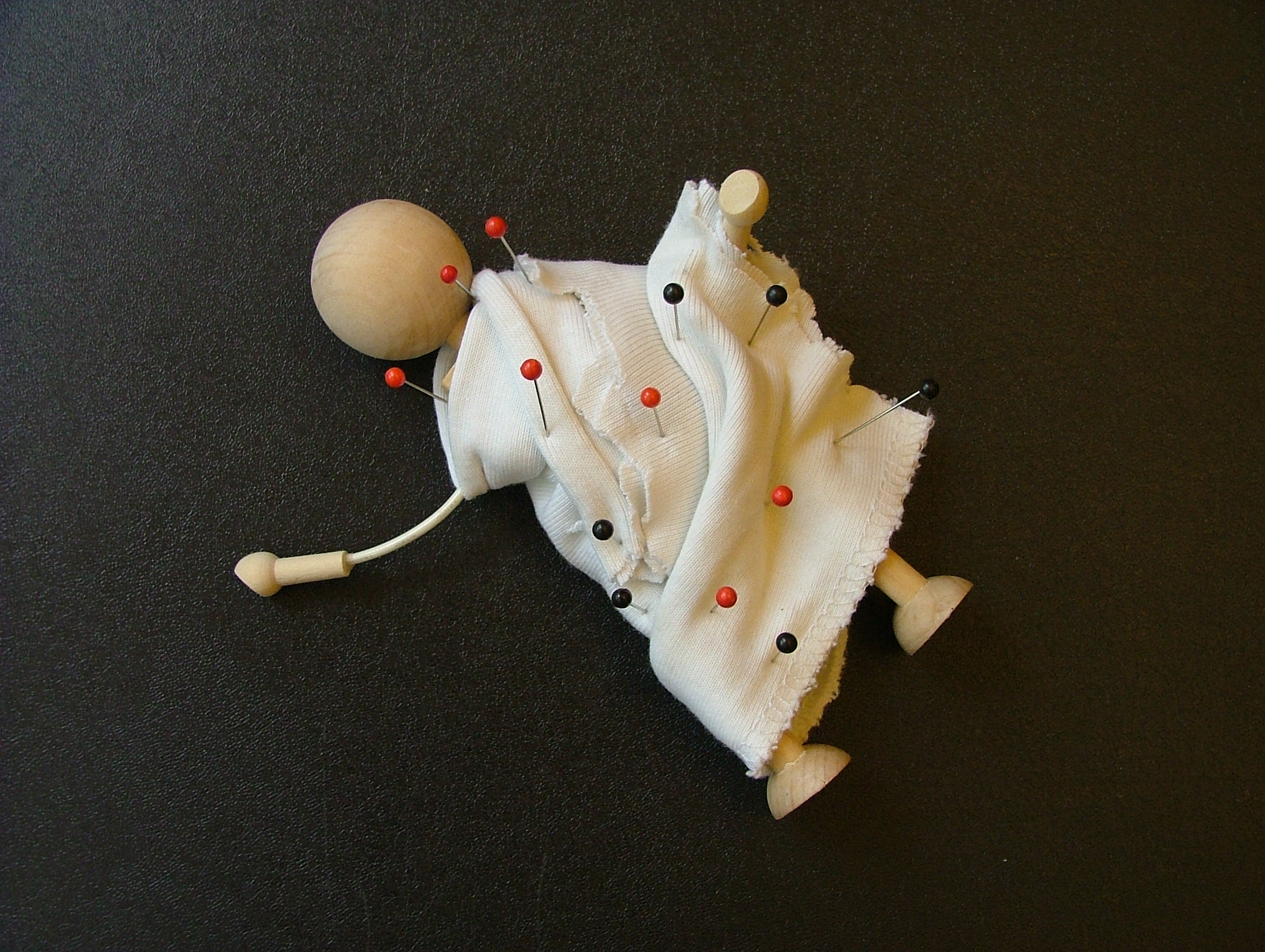
This is one of the things they teach you at reviewer school. Usually on a Friday afternoon, when everything is old.
The Critic’s Curse on Theatre Makers
“May no-one understand your work.
May no-one appreciate your effort.
May my condemnation be taken at its word.
May audiences stay at home, or prefer elective surgery, to your play.
May you touch no-one, as you will not touch me.
May you move no-one, as you will not move me.
May your audience feel only the dryness of their throats, the hardness of their seats, the passing of time.
May your production be as ephemeral as the melting dew, or the breaking dawn, while my judgement be as eternal and effortless as the ubiquitous electronic screen.
May no-one share your joy, but know only obligation, as I have.
And though you bless all creation with your celebration, may it be only my cold evaluation that remains.”
Writing that evaluates theatre doesn’t especially interest me.
I don’t want consumer advice.
Audience members are not consumers. They’re co-producers.
Sure, there’s a place for evaluative writing – the recycling.
No, seriously, the place is on marketing collateral. Artists don’t want to be judged, but they’ll endure it – for the chance to convince potential audience members to co-produce. Who’s going to knock back a “Recommended”?
Reviews are our revenge on theatre. (And not just when we hate it. After all, 5 STARs is rather parsimonious, considering how many stars there actually are.)
In answer to the beautiful multiplicity of theatre, reviews offer a stern monotone. Which is why no-one takes them too seriously. Which is why I don’t write them.
They’re are a bit like trying to catch starlight in a jar.
We need to find ways to respond to art other than mere evaluation.
So what do I want from writing about theatre?
Truth?
To speak truthfully is one of the lessons of childhood. But maturity has a different lesson: to listen truthfully.
To listen truthfully is to hear a voice other than your own and ask ‘In what way is this true?”
Not “Is this true?”
It is true.
But in what way?
Just as actors and writers are called to truthfulness, so are audiences.
Theatre writing that focuses solely on evaluation conceals this.
Every play is a hook on which to hang a masterpiece.
I’m not talking about the process of taking a play from page to stage. I’m talking about our responses to plays.
Recently a friend asked ‘What do you say in the foyer on opening night when the play you’ve just seen is horrible?’
Say it’s wonderful and drink more champagne.
Why does it matter what you think? (The exception to this is if the play is promoting something evil. In that case have even more champagne – then confront the people responsible.)
I’m not suggesting you have to like everything. You can think plays are poorly executed. You can think they’re downright incompetent.
But, remember, artists are not offering themselves up for assessment. Or only the worst are.
In a society that rightly prides itself on its pluralism, we should be asking ‘What is this trying to say?’ Or, perhaps more importantly, ‘What is this trying to give?’
(You don’t even need to ask ‘What is this trying to do?’ thinking this is the fairest way to judge the play on its own terms. It’s not asking to be judged at all.)
Let’s not turn art into a competency test. Let’s not have our basic response be “Is this good enough?” Good enough for what?
The ‘masterpiece’ I began this essay speaking of is the ability to take ourselves – our ego and our career ambitions – out of the equation. I call it a ‘masterpiece’ because it’s so difficult.
A work of art is a sharing. Don’t ask merely ‘Was this presented well enough?’ Don’t even ask ‘Is it true?’
Ask ‘In what ways is this true as well?’
Because it is. Accept the gift, and become richer.
The ancient Greeks left us a terrible legacy – and I don’t mean the Olympic Games.
They gave us theatre.
It’s a strange art form. Thanks to them, we now take it for granted that we can posit other worlds – imaginary worlds – and then let them run on, night after night. It might be a deep error. After all, not every culture does it.
And theatre is premised on some rather dubious assumptions:
That we can, in any way, represent Life.
That the outside of things – our actions and words – is where we actually live.
That the stories of individuals (and fictional ones at that!) are somehow indicative of something broader.
But of these strange assumptions, more another time.
No, the dreadful legacy of the Greeks is that theatre should be competitive, that it is a type of sport.
At the annual City Dionysia, Sophocles won the first prize eighteen times. Aeschylus won thirteen times. Euripides only managed five victories, and was no doubt appropriately pilloried by his local medea. (Yes, that was a pun.)
So what is the problem with competition?
In a competition, competitors agree on the rules. The point is to be the best. Questioning the rules is not the point. But that type of questioning, of course, is exactly what art does do best.
(And any artist who creates desiring to be the best is already amongst the worst. Or at least the shallowest.)
Competition also devalues art in another way. It makes us focus on technique. But competency as a primary value is problematic. There’s little use in being the best misogynist, or a world beating homophobe, or number one racist. Competency is a secondary virtue. We need it, but not alone.
As theatre makers, we’re in a sad place if we believe that the key aspect of our work is whether it’s done well, or even worse still, merely done better than that of our contemporaries.
Recently, several commentators have compared our society unfavourably with the ancient Greeks (forgetting, momentarily, that the Greeks refused women the vote, kept slaves, and put Socrates to death for suggesting people should think). But they did give gold medals to artists and we do not. It is assumed that competition, and the attendant prizes, means a society values art.
But there can be a different vision of artists. By focusing on valuing them (that is, evaluating them) we are denying that they evaluate us. They surprise, cajole and shock us into looking at our lives more closely. It is they who teach us how to more fully feel the world, to sing its praises and howl its discontents.
Art is not competition. It is war. A war against our own complacency and conservatism.
May we be blest with artists who do not compete, but who lay to waste our fortifications of indifference, storm our citadels of deadening habit, and in our inner fields of fear, where will grow only weeds, may they sow stinging salt.
Why is there so little discussion of the meaning of plays?
Is it a defense? Is it like the way we speak of people we find attractive? ‘Oh, he’s an 8’ – and by that glib reduction deny their power over us?
Or is it because we don’t expect to find any valuable meaning [any power] in a play? Do we expect to find it anywhere? And if not in art, where? Where do we think we get our ways of seeing from?
Or do we simply not realize – or refuse to acknowledge – that we see the world in a particular way? Or, as a Marxist critic might suggest, do we have a vested interested in believing that our particular vision is the unadorned Truth?
To be honest, I find it difficult to be overly interested in judging the technical details of a production. Maybe I lack something. But I want a play to give me more than the satisfaction that I am superior to it and its creators.
No-one survives this life, but I intend to go down fighting. I want a play to arm me for that fight. I want to leave the theatre with more than I entered. And that “more” is not disdain – or even admiration – for the artists.
The plays I need are fuel for life; logs to feed our open fire. They give warmth. They give light. So we’ll gather, in silent fascination, and watch. And as one flickers out, we’ll throw on another, and no two will burn the same. And so we’ll pass this night, the dark and the cold all around us, and know that no dawn comes, except of our own making.
A post in which I use a capital T when I write the word Truth, and so prove I’m a serious Thinker.
I recently discussed the effect of conservatism on theatre criticism. Now I’d like to focus on its effect on performance.
We still work in the shadow of a great reaction – the reaction to nineteenth century melodrama.
In this reaction, Truth became the new standard.
It is still the watchword of most artists’ theatre practice.
But there’s a worm in its heart.
How do you judge if something is the Truth? [I’m going to deliberately ignore the issue of how do you then represent it.]
Something is True if it corresponds with what you already know. Perhaps you can see where I’m going?
Something is True in the theatre if it corresponds with what has already happened.
In other words, nothing that happens in the theatre actually matters.
Conservatism is the belief that all the important things have already happened and all the big decisions have already been made.* It’s the belief that they can’t happen in the theatre.
But they do.
Theatre makers don’t just reflect the Truth. We make it. Or, at least, we make something just as important.
When Jesus of Nazareth told his parables, or Aesop his fables, the response “that’s never happened” somewhat missed the point.
Plays present not just Truths, but also Ways of Seeing.
Ok, it’s a half a glass of water. But it’s not Truth that makes us See that glass as either half full or half empty.
So, if a piece of theatre doesn’t appear truthful, maybe its not.
Maybe it’s original.
Veronica Kaye
Theatre Red
* Once I again think I might have borrowed this line – but I don’t know where from!
It is the belief that all the important things have already happened and all the big decisions have already been made.*
It is the belief that the world is old and we are insignificant, and all that’s left for us to do is follow the path and observe the rules.
In theatre, one effect of conservatism is lazy and uninspired criticism.
Go to a piece of theatre with certain criteria to be met and you’re ignoring that the work itself may have no interest in your criteria.
In response to this overt conservatism, you’ll sometimes hear that a work should be allowed to set its own criteria of success. “What were you trying to achieve?” says the critic to the artist.
But I’m not sure that’s so very different. It assumes that what you experienced in the theatre is not the actual thing, but rather an attempt at the actual thing.
So where is the actual thing?
Ways of seeing that diminish the importance of the present deserve our distrust.
For everything that can be done, can only be done now.
Veronica Kaye
Theatre Red
* I have a feeling I’ve borrowed this line from somewhere, but I don’t know where.
The popular perception of reviewers is that we are superficial, lazy, pompous, careless and shallow.
Being a reviewer is tough.
It’s not all champagne and free tickets.
Firstly, you have so little time. The play may have taken years to write, had oodles of development and months of rehearsal. At most, you have a couple of days. So you seem superficial.
Secondly, you have so little space. A play can last two and a half hours. You can’t expect a reader’s attention for more than five minutes. So you look lazy.
Thirdly, the criteria by which you evaluate the play are hardly universal, are probably idiosyncratic, and are almost certainly not shared by the artists. But the review isn’t meant to be a discussion of you and your aesthetics, so you mention your criteria blandly or ignore them all together. So, you sound pompous.
Fourthly, you really can’t give much away. There’s the taboo against spoilers, but its pretty much true of all the best bits of the play. All your assertions seem unsubstantiated. So you’re careless.
Fifthly, a play has multiple voices. That’s their point, and their glory. You only have one. You’re shallow.
And when you publish the review, trying so very hard to believe honesty is possible, a whole bundle of serious artists read it and think ‘That superficial, lazy, pompous, careless, shallow bitch got free tickets. And champagne. Which we paid for.’
Poorly executed art does little harm. Its flaws are obvious, and its effect negligible. Let the children keep their paint boxes. The crayons need not be hid.
The danger lies in the slick and soul-less.
We should be wary when too many of our conversations about theatre sound like demarcation disputes, performance reviews, price negotiations, quality control panels, courts of petty session and magistrate’s verdicts.
Only one conversation is vital. And it happens in the desert, when the artist battles with the devil – alone, naked and true – and in that battle forfeits her ego to win her soul.
And tired but free, she returns to the city, and scratched in the dirt if necessary, she offers a vision of the kingdom of heaven.