Archive | Responses to Plays RSS feed for this section

Member

28 Feb

Member, written and performed by Ben Noble, is a powerful indictment of gay hate crimes.

If you’re privileged and naive, like me, it can sometimes be hard to imagine they actually occur. What motivates them? Of course, it should be no surprise: our inability to allow same sex marriage is indicative of a deep seated homophobia. Assaults and deaths happen, in shocking numbers. This production focuses on the epidemic of violence that occurred in Sydney in the 70’s through to the 90’s, in which up to 80 people were murdered. The show’s impact is to draw attention to this awful and ongoing failing in our society.
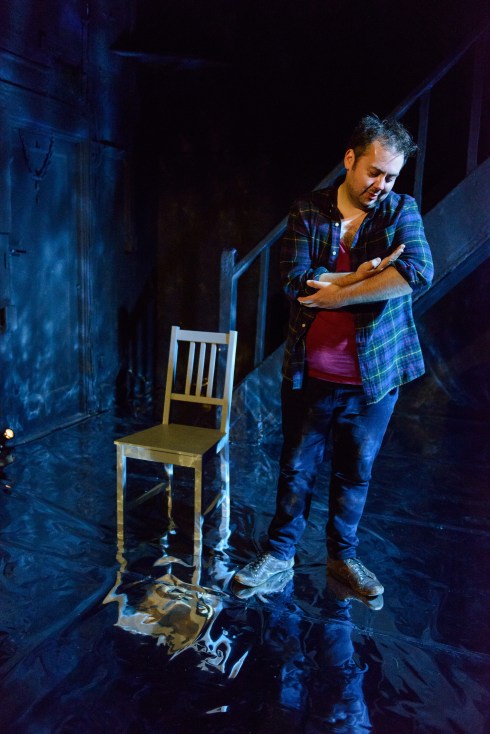
ben-noble-photo-credit-deryk-mcalpin

Photo by Deryk McAlpin

Noble’s performance is compelling and passionate. He presents a range of characters, but the focus is on Corey, father to a man who now lies hospital, a victim of a bashing. As the story unfolds, it’s revealed that Corey himself has been a perpetrator of violence, and continues to struggle with his confusion and guilt.

That the sins of the fathers will be visited on the sons might seem a dramatic convenience, but it is sociologically truthful. The society we live in is one of our own creation. If we are cold and uncaring, cowardly and violent, what world do we think we will make for ourselves?

Member has its origin in a multi-playwright project, and this still sometimes shows in its complexity. But the kernel of the piece is incredibly moving. A lost child falls in with the wrong crowd and commits a terrible evil. He seeks guidance from the one adult he trusts…… and gets nothing. It is the way things are, he’s told, as inarguable as the movement of the sea.

But we know it’s not. This piece is a timely reminder that equality is something we make, and that we must.

Paul Gilchrist


Member by Ben Noble

Blood Moon Theatre til March 4

Info and tix here
Big Crow

27 Feb

Congratulations again to Brave New Word. They’re a company dedicated to new work. Our culture needs it.

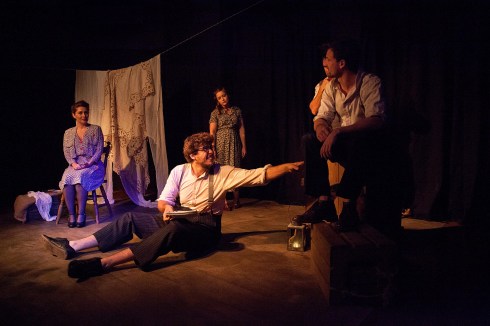
Big Crow by Mark Langham is a provocative confection. Set in 1930’s rural New South Wales, it’s concocted from elements of sitcom, black humour and Australian Gothic. This is challenging for performers but fascinating for audience members.

big-crow-3

Photo by David Hooley

The play’s concern is the oppressed: exploited workers, mistreated women and the dispossessed, original inhabitants of this land.

Like much Australian Gothic, there’s an overarching sense of dread, a sense that crimes committed are yet to be fully acknowledged. Something’s not right with the world.

Langham’s recurring motif is the crow. Ominous and evoking death, they perpetually scratch at the roof above us. They’ll have our eyes out, I fear, if we don’t learn to see our failings.

Paul Gilchrist


Big Crow by Mark Langham

til 4 March at The Actor’s Pulse, 103 Regents St, Redfern

Info and tix here

The Trouble With Harry

23 Feb

An Australian play! And by a living writer! Thank you Siren. Thank you Seymour.

But The Trouble With Harry is set in the past. Designers Alice Morgan, Matt Cox and Nate Edmondson effectively create a forlorn, sepia, early twentieth century Sydney.

The trouble with Harry is one of identity. Lachlan Philpott’s play is rich in motif: Little boys wanting to leave short trousers behind. Roosters called Lena. Bearded ladies at freak shows. Returned soldiers, in uniform still, but no longer whole. And the ceaseless suburban drone of ‘decency’.

“You think I chose this?” asks Harry, in a rare moment of vulnerability.

Elsewhere, “We’re doing fine,” he tells his wife.

“You act like a man,” she replies. “Do you also have to think like one?”*

harry

Photo by Ben Rushton

With a fine cast, director Kate Gaul creates a captivating night of theatre. As always, her visual imagery is extraordinary.

Philpott’s script is both beautifully poetic and powerfully narrative driven. It’s a thought-provoking mix of direct address to the audience and firm-fourth-wall naturalism. Jodie Le Vesconte and Jane Phegan create the couple at the heart of the story, and present a moving portrayal of genuine affection under threat. Jonas Thomson and Bobbie-Jean Henning play their children, and it is in them we see the contrast between innocence and the pain of knowledge.  Niki Owen and Thomas Campbell linger and lurk, giving voice to the gossipy neighbour, the constant observer, the perpetual gaze. They are the hegemonic narrative, and their performance is suitably unsettling.

The great tension in the concept of identity is this: Identity is our own, but it must be lived socially. (You can have your own private language, but it’s difficult to remain fluent, and only too easy to slip into a soulless silence.) Identity is both personal and political. This fault line is the cause of much pain.

A play set in the past always provokes. It asks are we doing any better.

Paul Gilchrist


The Trouble With Harry by Lachlan Philpott

Produced by Siren Theatre Company

Seymour Centre til 3 March

Tix and info here

* Apologies to Lachlan Philpott if I have misquoted his beautiful words.

The Little Dog Laughed

17 Feb

The Little Dog Laughed, by Douglas Carter Beane, was first performed in the US in 2006.

It’s a satire on the entertainment business, and hence – by virtue of the economic imperative – on wider society as well. It’s an attack on the inability to accept a world view beyond the hegemonically heterosexual.

I have little time for satires that target only those who are absent.  I feel a real satire, one with teeth, has to take on its audience. One might think that an American play with a showbiz focus might not pass my stringent test. However, when you play to an audience of responsible citizens of a country that has yet to grant marriage equality, you pass with flying colours.

Excluding its thematic concerns, Beane’s play is in the grand tradition of American mainstream comedy. It’s close kin to sitcom. It even has entirely random throwaway one-liners (such as “Talking to you is like sewing a button on cottage cheese”) which evoke the style of some of the most popular Broadway comedies of the 50’s and 60’s.

tldl-11

Photo by Bob Seary

Alice Livingstone’s production is great fun and her cast plays the humour beautifully. Sarah Aubrey as the cynical agent is terrific. Brett Rogers and Charles Upton play the two lovers with real charm. Madeline Beukers creates a lovable, laughable, lost soul.

This is a play that values giggles over depth, but it’s not a thought-free zone. Mitchell (Rogers) is uncertain about his sexuality, uncertain whether he wishes to own what he feels. “Homosexual is an adjective,” he tells himself.

Coming Out is one of the great tension points in our society. And I don’t mean simply that it’s a difficult thing to do. Coming Out implies integrity. The problem is, that in a post-modern world, we’re sometimes uncertain whether integrity is a virtue after all. Perhaps it’s just an oversimplification, an attempt to label the ineffable. Diane (Aubrey) gives an almost convincing argument about the meaninglessness of integrity. “You want my word? That’s like asking a whore for her cherry!”

Perhaps the way to grow through both the beauty and challenge of identity politics is this:

Label yourself as you wish, label others as they wish, and remember that all labels are like buttons sewn on cottage cheese.

Paul Gilchrist


The Little Dog Laughed by Douglas Carter Beane

New Theatre til March 4

Info and tix here.


Blink

15 Feb

Blink, by Phil Porter, was first produced in the UK in 2012.

It’s a generous-spirited meditation on the nature of love.

We’re inclined to believe love is all about communication. But connection can be made in ways other than words.

In this love story, the two characters Jonah and Sophie talk more to us than to each other. Their relationship is based on attention.

She wants to be watched. He wants to watch.

Stories Like These presents Blink

Photo by Robert Catto

That our life is worthy of attention is, of course, greatly comforting. Until the advent of Jonah, Sophie had begun to feel she was invisible.

Jonah was raised on a Christian commune. Perhaps it was in this overly vigilant community that he learnt the power of watching.

(When faced with the criticism that their God is too judgmental, some Christians answer that the belief that someone is paying attention, and cares what they do, is exactly what they find so attractive.)

This production by Luke Rogers is very funny, utterly charming and deeply thought provoking. Charlotte Hazard as Sophie and James Raggatt as Jonah give beautifully pitched performances. They gently draw out what is laughable about these quirky characters, but also find the truthfulness that makes them deeply lovable.

I don’t want to give the impression this is some sort of religious play. It’s not. But it does explore themes that have drawn many of the great mystics, of all traditions.

Talking to the one we love maybe important, but the silent acceptance of their presence and the simple acknowledgement of their otherness is where love begins, and where it finds fulfillment.

Paul Gilchrist


Blink by Phil Porter

Kings Cross Theatre til March 4

Tix and info here


Hero and Companion

3 Feb

Yes, I’m a fan of new work. And of writer-directors.

Some might find my tastes a little unusual. After all, theatre is one of those strange art forms where the norm seems to be that you do other people’s work, preferably once it’s already been done by someone else. (Of course, there are reasons for this: many understandable, few admirable.)

Hero and Companion is new work by writer-director Erica J. Brennan. It’s exciting and experimental, full of beautiful imagery, both visual and linguistic.

The two pieces are explorations of fear and anger.

hero

Photo by Reef Gahaa

The Hero Leaves a Tooth is a comedy of manners, set in a world where women have grown forbidding teeth in their vaginas. It’s a type of revenge fantasy. Set in a dining room amongst friends, it suggests that the potential for violence and fear that underscores sex, especially for women, is found not only in extreme circumstances but in the everyday.

Companion Piece tells of a woman who visits a watch shop for a repair, but it’s she herself who needs mending. If Hero suggests anger, this suggests that anger needs extraction.

These pieces value imagery, risk taking and a seductive resistance to clarity. They brim with metaphor, but rather than ponderously signifying, these metaphors invite reflection. Rather than snapping shut, like a set of teeth, the world opens up.

Brennan has surrounded herself with a quality team. Jake Nielsen and Matthew Predny have written two cracking opening numbers, which effectively introduce the vibrant theatre to follow. The design team (Camilla Turnbull, Ester Karuso-Thurn and Liam O’Keefe) do work that is attractive and effective.

Performances are generally good, especially the pitch perfect energy of Cat Martin and Victoria Greiner in Companion. Each piece has a show stopping monologue, each performed brilliantly – by Pollyanna Nowicki in Hero and Shauntelle Benjamin in Companion. It is in these set pieces that Brennan’s writing most shines.

Hero and Companion is presented as part of the Old 505 Freshworks season. The Old 505 should be congratulated for this, and for their ongoing commitment to new work.

Paul Gilchrist


Hero and Companion by Erica J. Brennan

Old 505 Theatre til 5 Feb

Tix and info here

Much Ado About Nothing

1 Feb

Needless to say, this is not new work. The play was written in 1598. It’s been performed a few times since then.

This production, by director Deborah Mulhall, is fun and intriguing.

When you choose to produce a play like this you’re in an interesting situation. Your audience will be made up of a whole range of people, some of who virtually know the play off-by-heart and others who are experiencing it for the first time. You’re either in conversation with a vast tradition or casting fresh magic.

img_7645

Photo by Grant Fraser


Mulhall finds in the play not just the oft played “merry war” between the sexes but also the fight for equal rights for women. There’s scriptural basis for this. Beatrice makes the impassioned plea “Oh God, that I were a man!” But the nub of this interpretation is the characterization of Hero. Here’s her journey in a nut shell (yes, a spoiler): She’s wary of marrying her suitor, but accepts him anyway. She then happily helps in the light-hearted plot to get a husband for her cousin. At her own wedding, she is defamed by her foolish fiance, and is so shocked she struggles to defend herself. When her husband-to-be is forced to acknowledge his breathtaking injustice, she criticizes him for his behavior, and marries him anyway. And then in the final moments she playfully teases her cousin for falling in love. Back and forth between refusal and acceptance of societal expectations; which is no problem, except Shakespeare only gives her sixty lines to do it in. Catherine Lewis as Hero is wonderful, an engaging stage presence, but if the character is to symbolize the struggle to end gender inequality perhaps the role is being asked to do too much. If you’re part of the great conversation with the text, it’ll give you plenty to talk about into the night. See it and make up your own mind.

But, as I said earlier, it’s an enjoyable night. Mulhall elicits some good performances from her cast. The comedy works well – not always an easy feat with Shakespeare.  The two characters who have long dominated the way the play is received, Beatrice and Benedict, are played marvelously by Emma Wright and Ted Crosby. They‘re articulate, charming and smart.

Possibly Shakespeare’s greatest insight into the human condition is that love, which can seem a type of madness, doesn’t necessarily make us stupid. We can both woe and be wise.

Paul Gilchrist

Much ado About Nothing by William Shakespeare

Genesian Theatre til 25th February

Tix and info  here

Osama the Hero

27 Jan

This is a foreign play, played in accent and set in a UK housing estate.

Theatre has always sought street cred. Though it’s gloriously fun, there’s something childish about pretending to be someone else. To compensate, we choose stories that are confronting and characters that are dangerous.

This production values bold vocal performances, a furious energy, and the exploration of the socially gritty.

Director Richard Hilliar and his cast give it their all. It’s not pretty (and not meant to be) but it is fiery and thought-provoking.

osama-the-hero

Dennis Kelly’s script is about aspiration: wanting someone to look up to, wanting to do better, wanting safety.

Joshua McElroy plays Gary, a bewildered and isolated high school student, and finds both the humour and pathos in the character’s unsophisticated truth telling. Gary is asked to give a speech about ‘crimes against humanity’ and chooses to discuss Hello magazine, citing its celebrity nonsense and trashy materialism. Unsurprisingly, he’s not understood by his peers. This is exacerbated by his next speech, about Osama bin Laden. Gary admires bin Laden because (supposedly) he fought for what he believed – really fought, as against merely sent others to fight while eating in fancy restaurants.

This theme is taken up later, in a different key, by another teenager, Mandy (played intriguingly by Poppy Lynch as a tension between idiot child and sage.) Mandy once thought that somewhere there were some grownups in charge of everything, but she’s realized that no such abrogation of responsibility is possible.

In the meantime, the adults are exercising their authority in the only manner they know: violence. Gary has been tortured. His crime against humanity?  Allegedly blowing up a garage.

The residents of the estate are all damaged souls. Louise has a father who’s in prison for assaulting a pedophile, purportedly for her protection. Nicole Wineberg plays Louise with a fascinating mix of fire and vulnerability, allowing her to oscillate wildly between certainty and doubt; not so much a candle in the wind, as a blow torch in a hurricane. Louise’s brother, Francis, has been forced into acts of extreme cruelty, but has also had intimations of an alternative. Tel Benjamin plays him with power and insight. Recent arrival at the estate, Mark (Lynden Jones), is accused of being a pedophile himself. Jones nails cowardly and simpering (and considering the roles I’ve had the pleasure to see him in, including Atticus in To Kill a Mockingbird, it’s a tribute to his versatility as a performer.)

Yes, Osama the Hero is a violent play. But it’s also a play about the sources of violence: culture, environment and, most of all, fear.

I began by suggesting this is a foreign play, but fear, that so urges us to erect borders, knows none itself.

Paul Gilchrist


Osama the Hero by Dennis Kelly

Kings Cross Theatre til 4 Feb

Tix and info here


The Testament of Mary

19 Jan

Here are a few things to keep in mind while reading this review:

  1. The performance I saw was a preview.
  2. I paid for my ticket.
  3. I don’t write reviews.

Despite whatever nonsense you may have learnt in Sunday School, the Original Sin was the writing up of a preview performance.

But I claim Immaculate status – because of the above point 3. I’m not going to do the whole judgement thing. Anyone who’s had anything to do with Christianity is probably over the whole judgement thing. It’s all a little more complex than that.

And this production begins with an image that suggests that very idea; a statue of Mary becomes a living, breathing woman. She then tells us her version of events.

Her life has been dominated by her son, and considering his fate, she is understandably traumatized. Alison Whyte gives an engrossing performance.

testament-of-mary

Image by Lisa Tomasetti

Jesus is not presented as some great religious teacher or the Redeemer (but nor is he just a naughty boy.) Whatever vision he may have had, it is not shared by his mother. The evangelists who harass Mary for details of Jesus’ life are keen to aggrandize him, but according to his mother’s testimony, so was the man himself. The play offers many myths for reassessment, but perhaps the most universal of these myths is that of a mother’s uncritical devotion. This Mary suffers from a spiritual and imaginative exhaustion.

Her narrative focuses on only a few events: the raising of Lazarus from the dead, the wedding in Canaan, the crucifixion. She denies the Resurrection.

However, playwright Colm Tóibín allows Mary’s story some intriguing anomalies, preventing it from descending into a commonplace materialist attack on Christian theology. For example, Jesus is capable of miracles (though their value is ambiguous.) And, regarding the fate of the man, Mary and Lazarus’ sister oddly have exactly the same dream.

It is this dream that the evangelists wish to twist into the story of the Resurrection.

Mary says “They want what happened to live forever. What is being written down, they say, will change the world.”

So, in summary, Tóibín has made up a story about the evangelists making up a story.

Most audiences will feel Tóibín’s story is more likely, but only the naive will think he’s claiming it’s true.

The actual Original Sin is to expect stories to be true. If they are to be judged at all, it’s not in that way.

Paul Gilchrist


The Testament of Mary
By Colm Tóibín

Sydney Theatre Company
Directed by Imara Savage
Performed by Alison Whyte

Wharf 1
13 Jan — 25 Feb

Tix and info here

Tom Ballard: Boundless Plains to Share

16 Jan

As a dramatist, I don’t particularly warm to stand-up comedians, especially really good ones.

Stand-up seems like tennis played with the net down. (Writing a play is using the net as a tightrope, and chainsaws for balance.)

Boundless Plains to Share is about how we’ve put a net up and then popped razor wire on top: it’s about Australian policy towards asylum seekers. The title refers to the second verse of our national anthem.

In addition to being really funny, Ballard presents a history of the policy, and offers a solution to the ongoing issue.

Moral conundrum: When writing up a stand-up show, can you be guilty of a SPOILER?

Since our society has had trouble seeing any problem with the indefinite incarceration of children, I won’t be waiting for an answer to that one.

tomballard-image-richard-hedger

Image by Richard Hedger


So here’s the SPOILER: Ballard has no solution. Instead, he intelligently, humanely and humorously suggests we can do better than we’re doing now. (For starters, we could release all children being held in detention.)

All dramatists (or, at least, really good ones) know that there never are complete solutions.

The whole messy unpleasant business that is Life only ceases to throw up conundrums when you’ve retired from the business.

The best we can do is to try to do better.

Fortunately, when you’re doing so badly*, that’s really easy.

Paul Gilchrist

*Currently 50 children are being held in detention, and over 2000 adults. None of them have committed a crime.


Tom Ballard: Boundless Plains to Share

Belvoir, 13 – 15 January

This production has now closed. I was not invited to write about this show.