Archive | Responses to Plays RSS feed for this section

Indian Embrace

23 Aug

If you’re reading this, you’ve won the lottery of life.

You could have been living at a time prior to the technological culture that makes this blog possible.

Or you could be living in a part of the world that still does not have access to this culture.

This culture, within two short centuries, has doubled our life spans.

Indian Embrace by Carol Dance is a fascinating exploration of the responsibilities that come with winning the lottery of life.
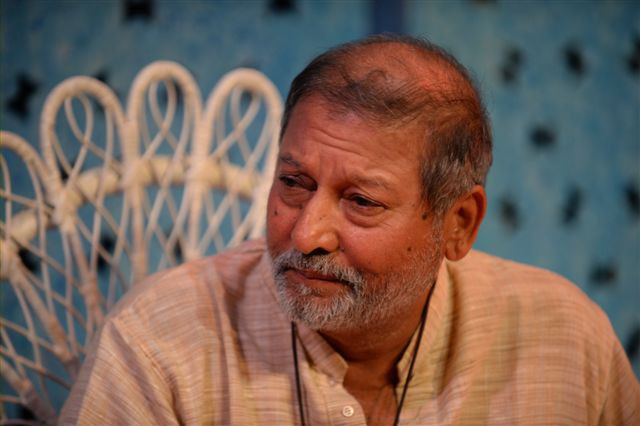
Photo by Chris Lundie

Photo by Chris Lundie

It’s the story of three Anglo Australians who visit India. It’s a family reunion – in more way than one. It’s a play about appreciating the connections we have with a wider humanity.

It explores how aid can help developing countries. It explores how business might do the same thing. (It doesn’t answer these questions, but it raises them. And, in an Australian play, that’s too rare.)

Yes, the play is set in India. And, yes, it’s an Australian play. This is an exciting theatrical choice. We should write – and think – big. ( The politics of identity should not become a tool of reactionary ideology. Remember when the most important question was ‘What is to be done?’, rather than ‘Who am I?’)

And, in Dance’s play, the Indian characters are beautifully realized. They’re living in a society not yet entirely overwhelmed by the culture of technological materialism. But they know its allure, and its danger.

The scene between Roopa (Ambika Asthana) and her father-in-law Vikram (Shashidhar Dandekar), in which they argue their ties to India, is pure theatrical gold. Dandekar’s later monologue about loss and resilience is deeply moving.

Director Lenore Robertson draws some good performances from her cast, eliciting both tears and laughter from the audience.

The final monologue, delivered with powerful understatement by James Herrington, completes an engaging night of theatre. It asks not just ‘who are we?’, but more importantly, ‘what is our role in the world?’

Veronica Kaye


Indian Embrace by Carol Dance

til 25 Aug at Riverside, Parramatta

http://riversideparramatta.com.au/show/indian-embrace/

The Merchant of Venice

12 Aug

Playwrights make plays in the way that barrel wrights make barrels. They just bang ‘em out.

That’s what Shakespeare did with The Merchant of Venice, and all of them.

And that’s what makes Steven Hopley’s current productionwith its brilliant cast, so fascinating and watchable.

(If this seems counter-intuitive or illogical, please stick with me anyway.)

Merchant of Venice

Shakespeare lived before the great age of Romanticism, which promoted artists to the role of high priest. He was just making entertainment, and a living.

He tried not to tread on too many toes.

For example, there is little of the spiritual life in Shakespeare. His plays are remarkably secular.

Was he just being true to his experience? Or was he simply avoiding the great religious controversies of his time? Remember, ‘heretics’ were still being persecuted.

The Merchant of Venice, despite having more talk of religion than most his plays, is intriguing because it’s still not spiritual.

(There are claims the play is anti-Semitic. To a modern sensibility, these claims are often mitigated by the fact that the Christians portrayed fare little better in our estimate than the Jews.)

Shakespeare talks of religion in The Merchant of Venice simply because he is making dramatic use of an imagined difference between Christianity and Judaism.

He exploits an old trope – that of the spirit versus the letter.

Shylock the Jew (played magnificently in this production by Mark Lee) will have his pound of flesh because the contract stipulates he can. And his downfall is ultimately because of this very insistence on the letter of the law.

And Portia (played by Lizzie Schebesta with a beautiful precision) gives her famous speech in praise of mercy. This one moment is an inspiring expression of the spirit. Give up on the law, it says, and just show love.

The spirit versus the letter? ‘We got this right, and the Jews did not.’ This is a story Christians have told themselves through the millennia. Ironically, in its harsh and simplistic judgement, it’s an attitude that negates the very insight it supposedly celebrates, and makes clear that the division between the letter and the spirit is not a division between religious traditions at all.

Rather, it’s a battle that must be fought in every life.

Which brings me back to Shakespeare.

I find him, in many ways, a dissatisfying voice, because he shows so little interest in the spiritual. (A lack of interest which goes a long way to explaining the currently fashionable claim that he’s universal, when really he just speaks to our own materialist society. Is it the greatest of cultural tragedies – that our most acclaimed writer is so deficient in one beautifully rich sphere of life?)

And what of the decision to continually produce his plays? The letter or the spirit? Going perpetually back to the ‘canon’ smacks very strongly of the former. Are we making theatre that breathes life, or is it an exercise in borrowing authority and aiming to get things right?

But this production, with its superb performances and the simple beauty of its staging, is a marvelous piece of theatre.

It’s an eminently watchable performance and an extraordinary stimulant to post show discussion.

See it, and consider both theatrical choices, and life choices.

Veronica Kaye

The Merchant of Venice

at TAP Gallery until 24 August

http://www.sydneyshakespearecompany.com/#!current-production/cb3i


Fireface

6 Aug

Fireface could be read as an exploration of some pretty extreme behaviour.

But it spoke to me of a more universal experience – the eternal dialogue between childhood and adulthood.

To the child, adulthood is a foreign land, and the dubious passport into that land is sexuality. You’re a child until you’ve been with a man, mother tells daughter. It’s poor advice, and she takes it.

Her troubled brother is still in puberty. As he’s told. Repeatedly. As though that explains.

He’s a superb portrait of adolescent self righteousness, believing that only he tells the truth. But, in at least one insight, he’s correct – that it’s the adults who define normalcy, who determine what will be considered a proper life.

Children have an understandable dissatisfaction with this narrowness. Adult breath is stale, we are told.

But as the children’s behaviour increasingly becomes a challenge to the adults in the play, mother offers father a poignant paradox; the children are sacrificing themselves for us. It is children who give life to adults.

Photo by Phyllis Wong

Photo by Phyllis Wong

Fireface is a beautifully rich play, and this production is brilliant. The performances are superb and director Luke Rogers’ staging is a joy to watch.

Fireface leaves an audience with a lot to think about, from the extremities it presents to the eternal tensions that fueled them. It’s a cry from that distant land of childhood.

Or to indulge in imagery suggested by the play; it’s as though childhood were a fire, and we leave that fire unattended, in the belief it will simply die down. But it doesn’t, sometimes with catastrophic consequences.

Veronica Kaye

Fireface by Marius Von Mayenburg (translated by Maja Zade)

featuring Darcy Brown, Darcie Irwin-Simpson, James Lugton, Lucy Miller and Ryan Bennett

at ATYP Under the Wharf until 17 Aug

http://www.atyp.com.au/under-the-wharf/productions/fireface

Beached

1 Aug

Are we our bodies?

Beached tells the story of Arty, a shut in. He must lose weight. According to the stats, that’s true for at least half of us.

In the first world we die because we have too much. With all our privileges, this is what we choose.

Wonderfully written by Melissa Bubnic and cleverly directed by Shannon Murphy, this play is both funny and thought provoking.

There were two moments that hit me right in the gut, as it were.

One was when Arty’s mum, played with comic perfection and emotional power by Gia Carides, tells her very likable son (Blake Davis) that he doesn’t need to lose weight. His fat is him.

Of course, she’s enabling his problem.

But isn’t she right?

Beached

In a society where materialism rules, aren’t we just our bodies? Her ‘enabling’ is just the natural conclusion of the dominant world view.

Kate Mulvany as the social worker assigned to Art is magnificent. She doesn’t share Arty’s problem, but her life is utterly empty. Blake Davis as the TV producer also presents a hilarious portrait of profound shallowness.

And the other moment that hit me? Arty’s explanation of why he needed  to eat – to fill that hole inside.

True of an entire society?

Veronica Kaye

Beached

at Griffin til 31 August

http://www.griffintheatre.com.au/whats-on/beached/

Romeo and Juliet

1 Aug

Passion is about me. Politics is about us.

George Bernard Shaw famously took issue with Shakespeare, arguing that the bard’s politics were naïve.

And consider Romeo and Juliet. Shakespeare gives no explanation for the feud between the families. He makes the unlikely assertion that the warring groups are equal in strength. And the long lasting feud suddenly ends when the older generation realizes something that must have always been apparent – that it was harming the young. I can understand where GBS was coming from. This is not a play about politics.

It’s a play about passion. The purpose of the political context is to show us that the young lovers will risk all to be together. (Without some sort of impediment, desire is not a story.) Their decisions are rash and ill advised. If Othello is a tragedy of jealousy, and Macbeth of ambition, Romeo and Juliet is a tragedy of impulsiveness.

Photo by Eva Kiss

Photo by Eva Kiss

Rainee Lyleson as Juliet and Dan Webber as Romeo do a wonderful job of creating the two lovers, overwhelmed by passions greater than they have known. But a particular pleasure is watching these two actors develop these characters. They begin as almost children, but in the final third of the play, after they are separated, we watch them negotiate the world, no longer merely as excitable adolescents, but as adults who know that desire is but one aspect of life. As an example, Romeo’s dealings with the apothecary of Mantua are those of a man who desperately feels his own circumstances, but still has insight into the lives of others. Shakespeare’s famous, final, absurd scene counters this growing maturity – but that, I guess, is his point. Passion is powerful.

Director Stephen Wallace gets good performances from his entire cast. Byron Hajduczok as Mercutio and Rob Baird as Benvolio are eminently watchable. Alan Faulkner as Peter the servant, the prince, the apothecary and the prologue is superbly versatile. Adam Hatzimanolis gives a terrific portrait of the gloriously varied Capulet.

Much discussion of this production will centre on the decision to set it in the world of the Cronulla riots. I don’t think the play is political. Am I saying this decision is a mistake? Not all. It’s this sort of decision that opens up a play, making us revisit, and reconsider.

Shakespeare gave us a controversial play. It’s only fitting that our productions of our it are equally thought provoking.

Veronica Kaye

Romeo and Juliet

at King Street Theatre until 24 August

http://www.kingstreettheatre.com.au/romeo-and-juliet/


Dangerous Corner

30 Jul

Only God knows the complete Truth. And She’s not sharing.

JB Priestley’s brilliantly intricate play Dangerous Corner is a fascinating exploration of the concept of Truth.

The premise of the play is that everyone has secrets. It’s a popular myth, because it suggests we are more than we seem. It’s a myth that says, despite appearances, that we are actually endlessly fascinating and intriguing. “He must live a double life,” the more catty among us say, “because his life couldn’t really be as dull as all that.”

And much of Priestley’s play involves the unraveling and revealing of the character’s secrets. Director Peter Lavelle, with an intelligent light hand, makes this enthralling theatre. His cast very skillfully present characters torn between the desire to conceal and the seeming relief of letting it all come out.

Photo by Craig O'Regan

Photo by Craig O’Regan

But the play does more. It’s not just an Agatha Christie style whodunit. It raises some very thought provoking ideas about the very concept of Truth itself.

Any chain of questions aimed at discovering the reality of a situation must come to an end, and that end, really, is rather arbitrary. What we call the Truth is simply the point at which we cease asking questions. The Truth is merely the point at which we abandoned the search.

Perhaps only a four year old can perpetually ask ‘why?’ And perhaps that’s why we are told we must become like little ones if we are to enter the kingdom of heaven.

Because all they know is that they don’t.

Veronica Kaye

Dangerous Corner

at The Genesian Theatre until 10 Aug

http://www.genesiantheatre.com.au/index.php?mode=now

Top Girls

25 Jul

Gender issues are not what I usually write about. For obvious reasons.

But it’s not something I’ve had to skate around that often. Which is rather sad.

So it’s an absolute delight to see a cast solely of women and a play that puts issues that women face centre stage.

Both heartbreaking and hilarious, Alice Livingstone’s production of Caryl Churchill’s play is superb. The cast are brilliant.

Photo by Bob Seary

Photo by Bob Seary

Top Girls is a provocative, engaging and deeply annoying title. It encapsulates the thorny issue at the play’s heart, and the issue that makes this play of abiding relevance.

Every member of an oppressed group faces an extra challenge in addition to the many that make them a member of an oppressed group in the first place. That challenge is the responsibility they have to the other members of the group.  An unavoidable question must be faced: “If I personally can break out of the circumstances that previously held me back, am I obliged to help those I left behind?”

Am I an individual? Or am I a member of a group?

( Margaret Thatcher’s answer, it’s worth noting, was “There is no such thing as society. There are individual men and women.”)

For me, the most poignant moment in the play comes at the end of the second act. I don’t do spoilers, so go and see it.  Suffice to say, this moment encapsulates the very issue I’m discussing. It’s a line delivered by Julia Billington, whose entire performance is extraordinary. Billington plays Marlene, the top girl who exists in both the play’s present (Thatcher’s Britain), and in the play’s intriguing opening, a dinner party where the guests are a broad sample of women from the past. (The stories these women share around the table are enough to make you feel that the world really is a vale of tears. Or at least the world we’ve allowed to exist.)

But back to that moment.  Marlene’s line is about one of her relatives, poor simple Angie, played marvelously by Claudia Barrie. Marlene’s line is delivered with throw away perfection. For when our hearts have hardened we no longer have a use for them.

Sharply intelligent and deeply moving,  this play argues for softness but does it with an iron strength.

Veronica Kaye

Top Girls

New Theatre until 3rd August

http://www.newtheatre.org.au/

Electra

16 Jun

To see ancient Greek drama is a blessing.

To see it done well is a gift from the gods.

I saw director Richard Hilliar’s production of Sophocles’ Electra on the last night of its run. I wished I had seen it earlier, because I would’ve gone to see it again.

Firstly, because it was a superb production. Hilliar’s use of the stage is brilliant. The entire cast is wonderful, and Amy Scott-Smith as Electra is just extraordinary.*

Secondly, because well produced classical theatre is a window into another world.

I know many people will disagree with this attitude. They will argue eternal relevance. They will argue that the passions explored in ancient Greek drama are universal.

I doubt the existence of such universals. I’m not sure who would ever be in the position to judge that such feelings were so ubiquitous.

Sophocles wrote in a particular time and place for a particular audience. If he is appreciated now it is because of excellent productions such as this, and because he continues to speak to particular people.

For me, the ancient Greeks are too fierce. And they care too much about family.

Sure, I’m being facetious, but also I’m not.

I suspect some things have been added to the philosophical ‘tool box’ since they lived. And I do mean in terms of ‘ways of seeing’, rather than the obvious material benefits that make our lives longer, safer, and dare I say, more middle class than theirs.

Let me give a single example. It’s a ridiculous historical generalization and I don’t mean to defend it, but here it is anyway:  I suspect something happened on the fields of Assisi that altered human sensibility, or at least added another way of looking at the world to the many already available. When Francis sang to Brother Sun and Sister Moon, and lived a life of what can only be described as extreme gentleness, something else was added to the ‘tool box’.

And this ‘adding’, or at least rediscovering, has happened over and over again. (Though, again as a single undefended example, the early 20th century suffragettes might seriously question whether any ‘rediscovering’ was going on as they fought for representation.)

My point, long winded though I have been, is that Sophocles’ vision of life is particular, and limited. As must everyone’s be.

That’s my universal.

Productions like this are magnificent because they make us realise, or remember, that there can be this ‘way of seeing’ too.

I suspect this is the greatest gift theatre can give.

Veronica Kaye

Electra by Sophocles

at TAP Gallery til 15 June


* For those new to my blog, it’s probably worth pointing out that I write what I call responses, rather than reviews.


Enron

13 Jun

Enron was an energy company. Fittingly, Louise Fischer’s production of Lucy Prebble’s play is high energy, fun and deeply thought provoking.

I don’t usually warm to satires that attack the giants – big business, big government, mass society. Audiences members are never the target. This sort of satire is usually safe, and some how self serving. ‘I’m privileged enough to spend Saturday night in the theatre, but the real injustices in the world are bigger than me, far bigger, so what can I do?”

What can you do? What have you tried.

Photograph © Bob Seary.

Photograph © Bob Seary.

Enron asks us to question our complicity in injustice. Some of the most thought provoking speeches are delivered wonderfully by Matt Young as Enron’s Jeffrey Skilling. They ask us to question whether our  society is reliant on the sort of foolish and greedy choices presented in the play to create and sustain our extraordinary wealth. And, if this is the case, isn’t it a bit rich if we only complain when the pain becomes our own.

Nick Curnow gives an engaging performance as the socially awkward originator of some of Enron’s most dubious accounting practices. Hire the kids that were bullied, says Matt Young’s character, they’re hungry to prove themselves.  We all want ‘in’, and only complain when we personally are excluded.

Yes, there are giants that stalk the earth, but they stand on our shoulders.

Veronica Kaye

Enron by Lucy Prebble

New Theatre til 29 June

http://newtheatre.org.au/

The Removalists

27 May

Full disclosure: I really like this play. I always have.

And Leland Kean’s production is terrific.

I like this play because I don’t like the characters.

I like that these actors let me not like the characters.

I like that the characters don’t like each other. There’s not a lot to like.

I’m thrilled by the revitalizing energy of a play and production like this.

REM 7 - Simmonds, Kenny & Ross handout

We are told at drama school, as we flirt, doze and doodle, that characters need to be sympathetic. Conservatives want it that way. They don’t want to be challenged.

It can be tempting to say: ‘I want to like these people, at least some of them, because I want to believe theatre is a mirror. If I don’t like them (any of them) there are two alternatives: either I’m not likeable, or theatre is not a mirror.

The first alternative does not bear thought.

The second alternative is a possibility, but it will leave me much poorer. That’s because theatre is a magical mirror that does a jolly good job of not just reflecting my momentary appearance, but seemingly the entirety of Life, and that such a thing could be captured and condensed is extremely consoling, for instead of fear at Life’s wildness and open-ended possibility, I can continue in my (privileged ) complacency.

So, if I don’t like the characters I won’t like the play. There’s too much at stake.’

But brilliant satire undercuts this easy out. And this is brilliant satire.

Williamson’s characters are gloriously unsympathetic; too weak, too violent, too selfish.

And Kean’s cast is wonderful. The performances are hilarious. The responses of Caroline Brazier as Kate are worth the price of admission alone. Sam O’Sullivan as Constable Ross provides top class clowning.

The changing power relations are fascinating to watch.  Anger and humiliation are perpetually paid forward.

In this cutting indictment of the violence inherent in our society, I have a favourite scene.  It’s when Kenny, knowing he’ll be beaten by the police, begs the hired removalist for help. And the removalist, the man with no real back history in the play, and so therefore everyman, says it’s not his business.

It’s not our business.

How often do we say that?

Veronica Kaye

The Removalists by David Williamson

at the Bondi Pavillion til 15 June

http://rocksurfers.org/