French Letters and Leather Cleaner

16 Feb

This is like a glass of bubbly; fun, light, effervescent – but with a kick.

Robbie runs a queer sex shop on Oxford Street. For many years it has proven a safe haven for the queer community. Kris, who now works there, was given shelter by Robbie, as was Santi, the drag queen.

But things have changed; developers want the site. Then one evening, Donkey Thursday (long story; at least 8 inches), a seemingly straight couple turn up at the store, and….
Laurent Auclair’s script has great one-liners, and some of the best go to Mat Oldaker as Santi and Dennis Clements as Robbie, who deliver them superbly. But the decision to present the story in real time creates challenges for both actors and audience; does change happen so fast? I assume the script has realism as its goal, but the characters’ occasional meta-theatrical awareness of the audience, and the choice to vary lighting states that in reality would be static, give my assumption a disconcerting shake.

But forget the shake, back to that kick I began with. It’s in some of the characters’ intriguing nostalgia for the past, when to be queer was to be, well… queer.

Every revolution has unintended consequences. The drive to equality can lead to homogeneity. Once accepted, do you simply blend in? Do you merely dissolve, like a sugar doll in a vast tepid ocean?

Successful revolutions always leave a smattering of revolutionaries struggling to find an identity in the new order. It’s a phenomena that invites us to question the concept of identity itself.

Self-definition by opposition is drearily binary and ultimately limiting. You risk being reduced to someone else’s shadow, if you allow your shape to be defined by their light. Or, to reverse the analogy, definition by opposition assumes a monolithic opposition, and maintaining that assumption is a whole lot easier if you don’t point your light too closely at what darkness leaves in convenient simplicity.

We live in the age of identity, where the question “Who am I?” takes precedence over the question “What is to be done?” But, I suspect, identity is one of those things that the fortunate individual ultimately freely chooses to relinquish. But that is a suspicion; what I know is that what is taken from us does untold damage. French Letters and Leather Cleaner is a valuable assertion of the queer community’s continuing need for safe spaces. The revolution ain’t over. (Are they ever?)

You gotta love a piece of theatre that invites such speculation.

Paul Gilchrist

French Letters and Leather Cleaner by Laurent Auclair

Presented by Fruit Box Theatre in association with bAKEHOUSE Theatre Company

At Kings Cross Theatre until 24 Feb

www.kingsxtheatre.com/fruitbox

Image by Matthew Miceli Photography

Big Screen, Small Queen

14 Feb

(Everything I Didn’t Learn at Film School)

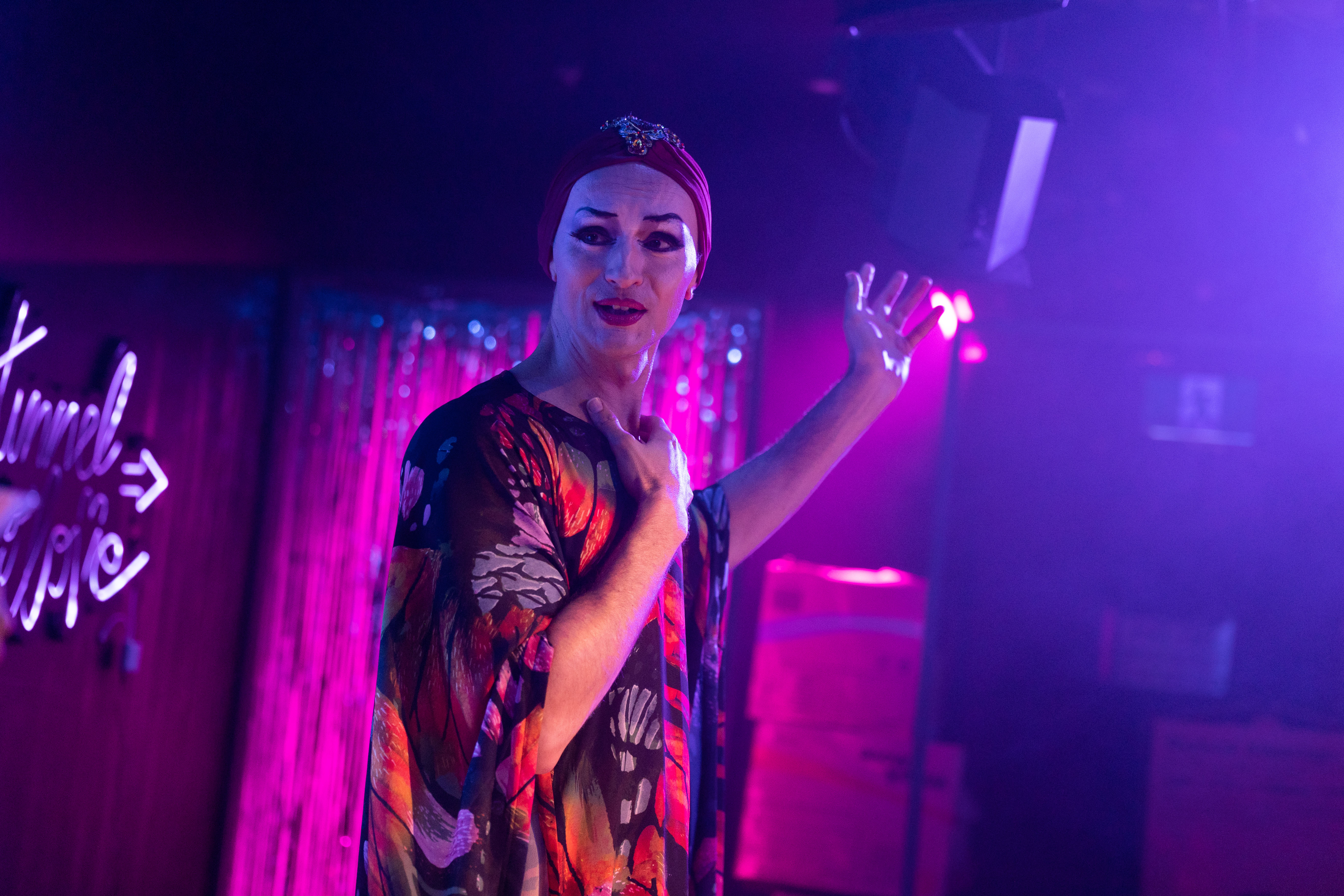
Etcetera Etcetera has an extraordinary stage presence. Big Screen, Small Queen is a sharing of how the performer discovered the artform of drag – when they were supposed to be studying film. (Hence the show’s subtitle.) It’s a humorous and heart-warming tale of self-discovery and self-expression.

In the time honoured tradition of drag, most of the musical numbers are lip-synched, but they are visually spectacular. Performed by Etcetera, Jack Williams and Carter Rickard, and choreographed by Rickard, the dancing is electric. And then there’s the frocks; designed by Erin Caroll and worn beautifully by Etcetera, they’re truly fabulous. Add to this Aron Murray’s magical lighting and the result is a delightful, life-affirming confection.

Etcetera does perform live Peggy Lee’s hit song “Is That All There Is?” It’s a moving and amusing expression of disappointment. For Etcetera, film school was meant to open a doorway to glamour. (Is ‘disappointment’ the correct word? Or is it ‘decadence’? I’m not making a moral point; I don’t mean ‘decadence’ as in excessive indulgence, but rather as the need for more and more stimulation. It’s one of life’s great mysteries that some people can stare rapt at a mere rock pool for hours while others soon tire of the ocean – and so dream a fanta-sea.)

But there’s an absolutely fascinating paradox in drag; it is utterly performative, but in being so performative, so artificial, the performer reveals their true self. Etcetera says early in the show words something like: I can’t trust anyone who hasn’t torn down their identity and rebuilt it from scratch; I can’t trust anyone who hasn’t performed drag.

This show is designed to highlight drag’s glorious paradox. All costume changes (wigs and all) happen in full view. And the whole time there’s a full length mirror on stage and a camera capable of projecting Etcetera’s performance on a screen. The sheer artifice of it all is made apparent. Drag is an archetypal example of what’s termed philosophical irony: none of us are in the position to make God-like pronouncements of ultimate Truth, we’re all just making it up as we go along – and so artificiality is our reality. Our ability to perform is who we are.

It’s a remarkably grand and liberating vision of life (as vast and deep as any ocean, seen or dreamed.)

Paul Gilchrist

Big Screen, Small Queen by Etcetera Etcetera

Presented by Fruit Box Theatre in association with bAKEHOUSE Theatre Company

At Kings Cross Theatre until 23 Feb

www.kingsxtheatre.com

Image by Matthew Miceli Photography

A Broadcast Coup

3 Feb

I used to laugh at reviews that referenced theorists such as Michel Foucault. When the play being critiqued did not actually mention the famous philosopher, and he had most certainly not written the thing – he hadn’t even volunteered to do front of house one night – then a discussion of his ideas seemed somewhat out of place.

But sometimes we learn (and, in doing so, become the cause of mirth in other petty-minded individuals.)

One of Foucault’s most famous works is The History of Sexuality. It’s three volumes long, and being a theatre critic, beyond my attention span. Fortunately, the dynamite is lit in the title: the history of sexuality….. how can sex have a history? Isn’t sex just a biological thing, as fundamental, as universal and as immutable as, say, breathing. Except in terms of some deep evolutionary perspective, how can sex be said to change? But Foucault was pointing out that sex is contingent on other aspects of the human experience. And, for Foucault, the key other aspect is power.

Sex and power; this is playwright Melanie Tait’s subject matter, and she approaches it with sharp humour, vibrant characters, recognisable tensions and a captivating story (and absolutely none of my theoretical pomposity.)

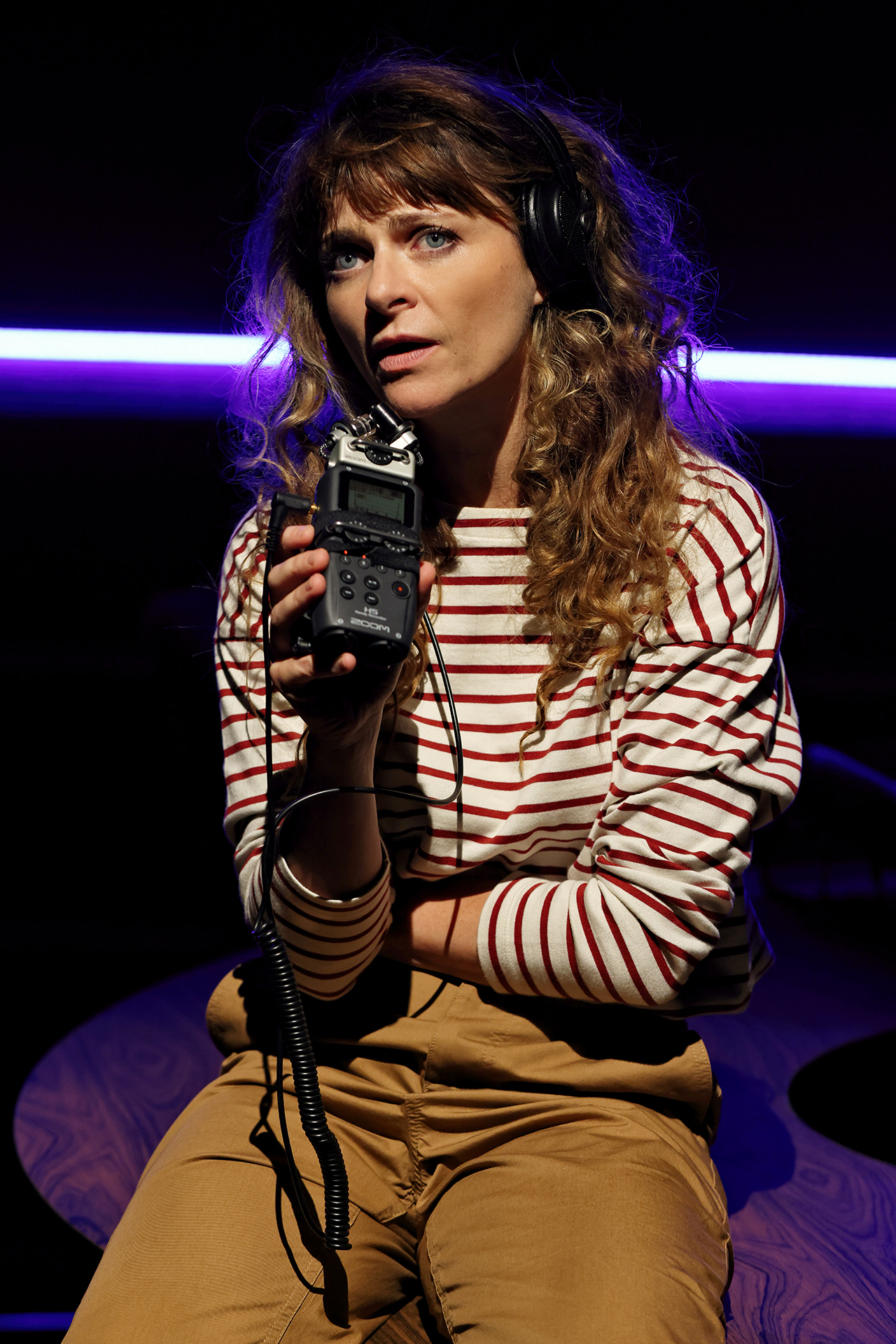
Mike King is a much lauded radio presenter. After so long at the top, his manner is imperious (if not quite Nero, certainly not Marcus Aurelius). In a wonderful portrayal, Tony Cogin captures both Mike’s charisma and selfishness. Mike is faithfully served by Louise (Sharon Millerchip), who admires his talent and cleans up the mess. Mike makes life hell for Troy (Ben Gerrard), the station manager, dismissing him as a mere “bureaucrat”. But new assistant producer, Noa, presents a challenge. Alex King brings to the role a brilliant energy that presents the truth of youth: that the blaze of righteous passion is partly fuelled by naivete.

And then there’s Jez, played by Amber McMahon. I’d pay to hear McMahon read the phonebook (though I appreciate such tickets might be expensive due to the rarity of the prop.) Jez is an ex-colleague of Mike’s, now producing a red hot podcast exposing the mistreatment of women in the workplace.

Tait’s script works a thrilling tension: that power is an aphrodisiac, and that power determines what is deemed acceptable sexual behaviour.

Our society is trying to work this tension out….and if Foucault is right, and sexuality has a history, then change for the better is possible (at least until that better is again redefined.)  

Paul Gilchrist

A Broadcast Coup by Melanie Tait

at Ensemble until 4 March

www.ensemble.com.au

Image by Prudence Upton

Othering

14 Jan

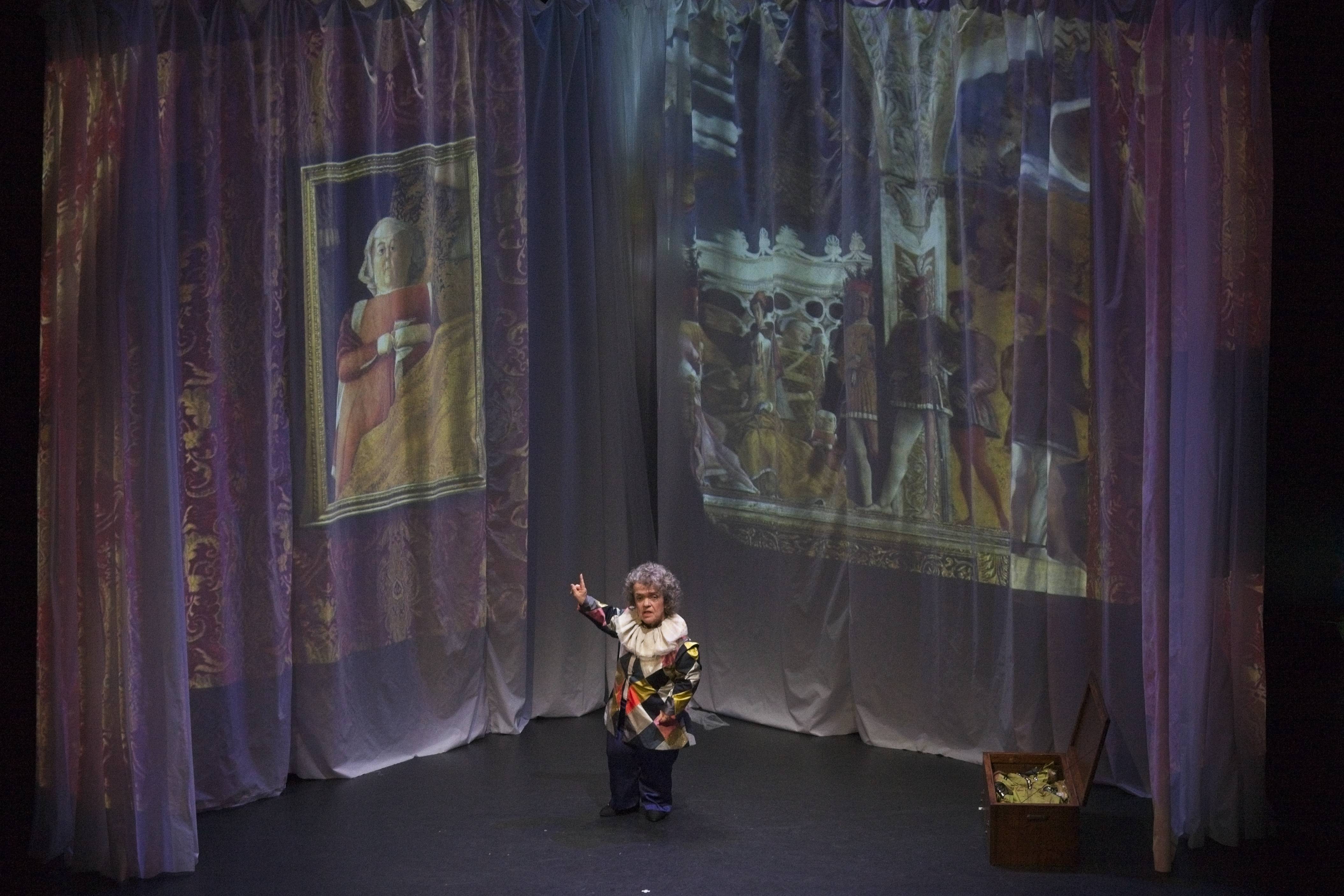
Othering is a sharing by Debra Keenahan of what it is to live as a dwarf. This is theatre as non-fiction.

Othering bears testimony to injustice, adversity and hope. Keenahan has an absolutely beautiful stage presence – warm and humorous, generous and wise.

Keenahan wants not to be othered, that is, wants not to be perceived as fundamentally different. To be othered is a step to dehumanisation. Her claim to equal dignity is magically paired with a pride in who she particularly is. In a playful sequence that begins the show, we’re encouraged to repeat after the performer the word ‘dwarf’. No need for discomfort; diversity in body shape is simply a fact of life. (I will add that the word ‘othered’ has an interesting history. It was virtually non-existent until the mid 1980’s, and before that it was not uncommon for progressives to use a variation of the term in a very different way. They spoke of ‘granting otherness’, that is acknowledging that other individuals were not in any way beholden to our assumptions about them. But every work of art must function within its context.)

In the second half of the performance, Keenahan employs another trope of contemporary theatre making – moving away from the personal to focus on theory. Keenahan’s experience is placed within a framework of cultural studies. With the aid of voice over and projection, we’re offered a fascinating potted history of the representation of dwarfs, from classical times through the Renaissance and the Victorian freak show to contemporary pop culture. The majority of these representations are negative, condescending or downright debasing. Keenahan asserts these representations have facilitated ongoing discrimination and injustice, and that’s no doubt true. (I’d add that the discussion of representation in cultural studies often downplays the audiences’ ability to discern; after all, art tells us as much about the artist – if not more – than it tells us about reality.  And when non-fiction addresses fiction there can be a disconcerting sense of being witness to the meeting of two mutually incomprehensible languages.)

Director Katrina Douglas creates a stage world which affirms Keenahan’s glorious truth telling. The set by her designer, Kate Shanahan, not only facilitates projection but impressively evokes maternity ward, surgical ward and circus tent. The sound design of Paul Prestipino effectively highlights both the ominous and the wondrous.

Any contemporary production with the aim of promoting justice faces an existential challenge. In a pluralistic society like ours, what are the shared values that ultimately enable the achievement of the desired justice? This production reaches for what it hopes will be unalienable and self-evident; Keenahan makes close reference to the Universal Declaration of Human Rights. (And prior to the particular performance I attended there was both a welcome to country and two separate acknowledgements of country. Recently a good friend, a wonderful playwright, queried my occasional reference in my reviews to welcomes and acknowledgements of country. He wondered whether I questioned their value. I do not. But I do think they’ll only have value if we continue to discuss them.) This production follows the belief that the consensus required to achieve justice for the marginalised might derive from the repetition of value statements or of aspirational statements.

But, much more powerfully, it does what live performance can do so brilliantly; it presents us with a real person whose truth is undeniable, and who we refuse to hear only at risk of diminishment of our own humanity.

Paul Gilchrist

Othering by Debra Keenahan

13 – 15 January at Casula Powerhouse Arts Centre (as part of the Sydney Festival)

www.casulapowerhouse.com/visit/othering

Image by Robert Brindley

The Woman and The Car

12 Dec

This is the first outing for indie company Ship’s Cat and they’ve chosen an intriguing piece.

Written by Mark Langham, the play presents Dorothy Levitt, a British racing car driver, and it being the early 1900’s and her being a woman, a feminist icon.

Levitt raced cars, motor boats and flew planes – all at a time when women were denied the vote, and even the right to open a bank account.  Langham doesn’t attempt a detailed history of Levitt’s extraordinary life, but focuses on a few days in 1909 in which she commits to write The Woman and the Car, a guidebook for female motorists. The book’s subtitle was A Chatty Little Hand Book for Women Who Motor or Want to Motor and this very Edwardian phrasing hints at the source of Langham’s unusual choice of tone. This is not a stuffy, pedantic bio-play but a type of drawing room farce. It’s littered with brilliant one-liners and terrific comic set ups and, under the direction of Cam Turnbull, the whole thing feels like a parody of those dreadful one room dramas of the early 20th century (which would be rightfully forgotten if they weren’t resurrected with painful regularity by amateur theatre.) The cast adopt the declarative tone and RP accent that dominate such pieces and play the humour brilliantly.

Lib Campbell is Dorothy Levitt, capturing her independent spirit, her fierce wit, and growing sense of desperation. One of the fascinations of the production is Campbell’s immensely watchable portrayal of Levitt’s character arc, from wise cracking swagger to debilitating misery.

Alexander Spinks is Selwyn Edge, Levitt’s married lover and employee of Napier, the company that provided her car. Selwyn functions in the piece as the archetypal obtuse male. He wants all he can get from Dorothy, both financially and physically, but he can’t make sense of her dissatisfaction with the patriarchy. One of my favourite lines is when Selwyn insists on telling Dorothy what it is that she is feeling: “being a woman – that seems to annoy you greatly”. His lack of understanding and empathy are painfully laughable.

Zoe Crawford is Isabel Savor, a female adventurer absolutely besotted with Dorothy. Though wanting to present as a confidant daredevil, Isabel is plagued by insecurities. She is unfulfilled by the limiting gender roles of her time, but struggles to forge a path of her own. She once proudly “shot a tiger in the face”, but her growing discomfort with hunting’s brutality indicates that her adoption of hyper-masculine behaviour was purely reactionary. A shot at genuine authenticity is possible when she admits her sexual feelings to Dorothy, but when they’re not rejected, Isabel has little idea how to act upon them. Crawford plays both the jokes and the pathos wonderfully.

Now, back to where I started: the unusual tone. Dorothy Levitt didn’t race her way joyously to old age; she’s presented as suffering a growing substance abuse problem, driven by both injuries sustained in competition and her bitter frustration at injustice. So why all the jokes? Some of them are, after all, deliberately rather silly. Don’t they just get in the way of a serious historical story?

Well, no. They capture something of the era, with its droll Edwardian humour. They capture something of Levitt’s exuberance. And, finally, they call attention to the fact that this (theatre, society) is a constructed world. (Man-made, if you like.) A story of patriarchal injustice is told in a way that highlights the artificiality of social structures, and so reminds us that what is made can be remade.

I look forward to seeing more from Ship’s Cat Theatre Co.

Paul Gilchrist

The Woman and The Car by Mark Langham

107 Projects until 18 Dec

www.shipscattheatreco.com

Image by Clare Hawley

Boxing Day BBQ

11 Dec

Sam O’Sullivan’s Boxing Day BBQ is a fun take on some serious fracture lines in our society. Directed by Mark Kilmurry, the cast deliver comic magic.  

The BBQ is a family tradition. It was grandpa’s baby, but he and g-ma are gone, so now the younger generation(s) skate the hot plate. The gathering throws together the usual mix of ill-fitting pieces that make up the insolvable jigsaw that is family. (Comedy plus tragedy equals family; though this play is definitely comedy – the tragedy lies offstage, in the reality this comedy gives us the courage to acknowledge.)  

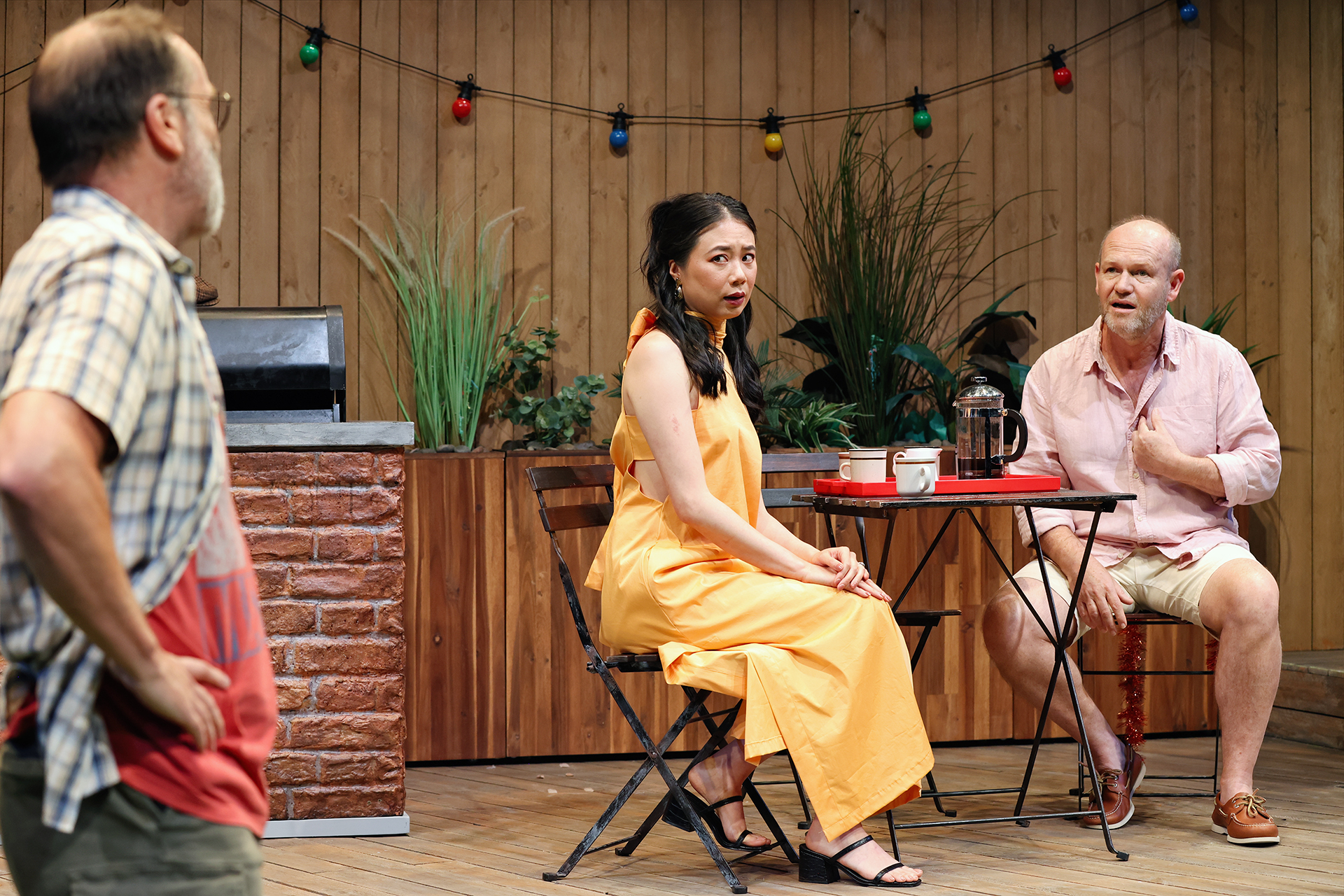
The new self-appointed patriarch, Peter, proudly wields the BBQ mate, finding what scant meaning he can from the upholding of banalities. Brian Meegan wonderfully captures Peter’s mix of unthinking privilege and dismayed emptiness. His daughter, Jennifer (Harriet Gordon-Anderson), is about to volunteer a year of her life as part of the crew of the Sea Bandit (a riff on the environmental activists’ Sea Shepherd.) Peter is horrified. His new wife, Val (Aileen Huynh) is not much of an ally, not because she agrees with Jennifer, but because intellectually she has vacated the field. (More on this below.) O’Sullivan gives Val one liners of beautiful vacuity, which Huynh plays to perfection. Peter’s sister Connie (Danielle Carter) is also at the do, an intelligent, articulate woman navigating both her brother’s obtuseness and her ex-husband’s gentle but futile longing. Jamie Oxenbould as Morris, her ex-husband, delivers a brilliant performance, heart-warming and full of pathos.    

Those fracture lines I began with? O’Sullivan’s play is a musing on objectivity versus subjectivity, and the collapse of these two categories into one in contemporary discourse. This is presented partly through discussions of perception; Peter is a wine merchant who takes for granted the notoriously slippery language of taste descriptors. But it is mainly explored through the characterisation of Val, who consistently avoids the tough issues by asserting the mantra of the lightweight Right: you have to question everything. This is, of course, never the radical and universal doubt of Descartes, but rather the selective use of ignorance to shore up privilege. (In the play, some characters are correct and others are not, and we’re invited to laugh at the inflexibility of the latter, and we do – but I won’t pretend that it wasn’t slightly disconcerting to find myself so easily enjoying the mockery of those who endorse intellectual humility, even when they don’t practise it.)

The play also explores change versus continuity, questioning the value of tradition. We’re told about the monkey step ladder experiment, in which five caged primates are sprayed with icy water if one attempts to climb a certain step ladder. Place a banana at the top of that ladder, replace some of the monkeys, and those remaining familiar with the spraying will police the others – inadvertently ensuring the banana is wasted. Val laughs at this experiment as an example of the absurdity of much that purports to be science but, of course, the story functions as a fable. Mechanical adherence to convention limits our ability to think outside the cage, leaving a lot of bananas wasted – or one planet, as is the case for us as we refuse the changes that might avert environmental disaster. (But traditions and conventions can also have value; they’re a type of cultural capital. One such tradition is that social tensions can be profitably explored through the dramatic trope that posits disparate characters and places them in an inescapable situation like a family Boxing Day BBQ – though O’Sullivan does disrupts this convention, offering the spoonful of honey of some magical realism to ease our acceptance of radical change.)

Finally, the play also offers itself as a representation of generational conflict. In the real war between the generations, the ultimate outcome is dully predictable; all that’s of interest is whether – this time – anything will be learnt from the vanquished before they forever quit the field. But this is comedy, and Boxing Day BBQ is a merry war, a playful paean to reconciliation and hope.

Paul Gilchrist

Boxing Day BBQ by Sam O’Sullivan

Ensemble until 15 Jan

ensemble.com.au

Image by Prudence Upton

The Wasp

9 Dec

I don’t warm to the idea of granting stars to productions. (You know the stars I mean: “This Sydney Festival production of Hamlet by Swahili speaking puppets – Five Stars!!!”) As a writer about theatre I want what I’ve written to be read, and I know if my response to a production is abbreviated to a rating out of five then there goes my audience. (Unless, of course, I give a One Star rating, in which case a whole bunch of goblins pretending to be people will devour every word I’ve written with cold-hearted glee.)

But I don’t like star ratings for other reasons. They imply that productions are being compared and ranked according to some known and accepted criteria.  And they’re always so parsimonious:  Five Stars is hardly generous considering how many stars there actually are in the universe. And, finally (you’re thinking), ratings seem rather counter-intuitive: everything I enjoy eating from Woolies has a pitifully low rating compared to those life denying products that get full marks.

But, having said all that, some productions seem to beg a rating – because anything else I write about them gets dreadfully close to spoiler territory, and that wouldn’t be kind.

The Wasp by Morgan Lloyd Malcom is one of these productions. To discuss the themes of this production (which is what I like to do with every production, and why I attend theatre) is fraught with danger. As a play, The Wasp values twists and turns of plot. And what it values, it does extremely well. It’s an intense ride.

This particular production, presented by Akimbo & Co and directed by Becks Blake, is tight and brilliantly performed.  It’s a two hander (though even that feels like a spoiler.) Heather and Carla meet up years after school. They were very different people then, and things haven’t changed. Helen is awfully middle class and Cara Whitehouse’s portrayal is marvelous, and deeply discomforting. Carla is lower working class (or am I using a middle class euphemism for criminal class?) Jessica Bell as Carla is fantastic, capturing the casual brutality of a woman who’s done it hard. Lloyd Malcom’s script gives the characters a wonderful arc, and these two actors make it work superbly. The initial humour (and there’s a lot of it) is extraordinarily good, and when things get more…well less humorous, we find ourselves in very close company with the fractured and frightened.

Yes, I know, what a vague review. If I was to hazard a spoiler-free observation about the meaning of the play I would suggest it’s about the relationship between kindness and cruelty. We tend to think of these qualities as sort of binary opposites, that is defined by their opposition to each other (like “positive” and “negative” or “on” and “off”). But the play reminds us that the relationship between the two qualities is complex. I don’t mean the cliché that you have to be cruel to be kind. I mean that one of those two qualities can be so overwhelming that even when the other appears, or seems to do so, it’s reduced to a façade, a brittle shell that barely conceals its nemesis.  (And, usually, only one person is deceived….)

So, that star rating I was talking about? The one I was going to give because I’m kind?

Even theatre reviews can have twists.

Paul Gilchrist

The Wasp by Morgan Lloyd Malcom

KXT until 17 December

www.kingsxtheatre.com/

Image by Clare Hawley

A Christmas Carol

1 Dec

Ebenezer Scrooge is one of the best known characters in literature, and his catch phrase “Bah humbug” is oft quoted. (Especially by me when assaulted by Xmas muzak in shopping centres.)

It’s an absolute joy to watch John Bell in this role, and the pantomime-like retelling of Dickens’ famous tale by writer Hilary Bell and director Damien Ryan is delightful.

Dickens was one of those great nineteenth century writers who gave cruelty a bad name. If that seems a joke, as if cruelty could ever have been valorised, it’s indicative of how influential voices like Dickens have been. For much of our history, cruelty has not only been tolerated, it’s been encouraged. (Spare the rod and spoil the child was not the injunction of some sick sadists, or not only so: it was read from the Bible and taught from the pulpit.)  

Dickens had a gift for empathy. It’s suggested by his take on damnation. Marley, Scrooge’s deceased business partner, returns on Christmas Eve to warn of what awaits beyond the grave: an eternal vision of human suffering but no ability to intervene. It’s an odd vision of Hell. Compare it to Sartre’s. A cynic might say that to witness suffering and to do nothing is the very definition of secular heaven, a paradise the privileged enjoy perpetually.

What happens to Scrooge – that the visions he’s shown by the Ghosts of Christmas Past, Present and Future affect a change in his character –  epitomises Dickens’ artistic purpose. If Scrooge’s moral transformation seems merely convenient to the cynic, Dickens might well look down on us and humbly suggest such visions do indeed make a difference. And clearly, by his own definition, he’s in Heaven, because if he is witnessing the suffering we inflict on each other, his stories, and this particular dramatization, do have the ability to intervene. They gently urge kindness.

And Dickens’ stories brim with good will. There are villains, of course, but there are also an extraordinary number of kind souls. (The cynic would say Dickens was a great writer of fiction.) The conceit of this production is that it’s performed by the Crummles, that inept but good-hearted acting troupe from Nicholas Nickleby.  

Part of the fascination of A Christmas Carol is its role in our image of the holiday. Christmas had long been built on solstice feasting but, in an increasingly secularised Victorian England, the day began to shed those other elements that made it a religious festival honouring the supposed incarnation of the divine in Jesus of Nazareth, and morphed into what it has become in the modern West – the day we wish each other well. (Good will to all was Dickens’ every day; we have at least gifted him Christmas.)

Dickens was endlessly comically inventive, and Ryan’s production captures this glorious exuberance. With Bell on stage is a terrific troupe, much more gifted than the Crummles. Valerie Bader, Jay James-Moody, Emily McKnight, Anthony Taufa, and Daryl Wallis on keyboard, give playful performances that evoke both laughter and tears. There’s song, dance, and puppetry.

And there’s one moment between Bell and a puppet (expertly given life by McKnight) that elicits gasps from the audience. You might call it the sound of hearts melting. Or you might call me sentimental. Dickens wouldn’t.

Paul Gilchrist

A Christmas Carol by Charles Dickens, adapted for the stage by Hilary Bell

Ensemble Theatre until 29 Dec

www.ensemble.com.au/shows/a-christmas-carol/

Image by Jaimi Joy

Art + Information

24 Nov

We live in an age of specialist knowledge. The woman sitting across from you in the bus might be a world expert on continental drift. The man ahead of you in the supermarket queue may know more about the venom of the Eastern brown snake than has ever any living soul. The person sitting dully in the park at lunch might not be dreaming of the holidays that will eventually free them from the tyranny of deadlines; they might be musing on the evolution of grass.

The more we know, the more difficult it is to share; especially with those who have no grounding in our speciality. And the sharing is crucial, because knowledge is a communal thing. Much of its value comes from its ability to enrich the community, and much of its pursuit is only possible through the support of that community.

So how can the rest of us come to appreciate what the specialist does?

This set of performance lectures, directed by Kate Gaul, is a magnificent sharing of deep knowledge.

A person (not an actor!) holds the stage and, with evocative light and projection (Morgan Moroney) and sound (Zac Saric), we’re invited into a particular corner of reality.

Beth Yahp, creative writing lecturer at U Syd, tells us of Small Pleasures. In limpid poetic language, she muses on several simple objects – a Christmas beetle, a remnant of cloth, a physio’s “hammer” – reminding us that when we focus solely on the extraordinary we blind ourselves to the value of the everyday. In giving all our attention to the mining disaster, we ignore the riches that come from the routine mining itself.

Tara Murphy, professor of astrophysicist at U Syd, shares a story of Exploding Stars. Exquisitely balanced between the minutiae of working in a lab and the gargantuan event of the collision of two neutron stars, Murphy’s tale is one of truth and awe. She also considers the evolution of the great scientific project; long a practice based on sharing, science has now become such that the ‘hive mind’ is crucial, as no individual alone can make sense of the universe. (Perhaps as it should be, for if there’s any insight the lay person like myself can offer, it’s that the universe is bigger than me.)

Mitchell Gibbs tells us about The Humble Oyster. A PhD in Marine Biology/Biochemistry and a postdoctoral researcher in the School of Geosciences at U Syd, Mitchell is also a Dunghutti man. With moving personal anecdotes, he tells of researching and writing his thesis, his deep dive into speciality, while maintaining close connection with family. He quotes his father, who asserted that if you really understand something, you should be able to explain it to anyone. He speaks with inspiring optimism of his desire to bring indigenous insights into Western academia, for the benefit of all and our fragile environment.

This is not conventional theatre; it’s part of an exciting movement to challenge what we might expect to see on stage. It does, however, share with drama, and fiction in general, one crucial aspect: the focus on the particular, the assumption that this certain corner of reality repays close inspection.

It’s an entertaining night, and a tantalising one, because corners have a way of dissolving, unfolding, and offering extraordinary vistas.

Paul Gilchrist

Art + Information

Seymour Centre until Nov 26

www.seymourcentre.com/event/art-information-2022/

Image by Jacquie Manning

The Dazzle

22 Nov

This is an intriguing piece of theatre; 100 minutes of fascinating language play that doesn’t want to let you go.

Richard Greenberg’s play was written in 2002, but is set in 1940’s New York. It feels earlier, as though the past were something to not let go.

A play about recluses, about hoarders; the whole thing’s about not letting go.

Langley (Alec Ebert) is the more obviously neurotic of two brothers. He was once a performing pianist, but his playing has slowed down, because he hangs on to every note.  Nor does he want to let go of all the stuff he has brought into the house. And change, of any sort, is a problem. When Milly, a wealthy heiress, shows an interest, he longs to be “Adam before the inconvenience of Eve”.

Homer (Steve Corner), the primary carer for Langley, explains his situation as “I am my brother’s…accountant”. Considering the tensions between the siblings, it’s a suitable allusion to Cain and Abel.

It some ways, it feels a little like Henry James on speed; we remain in the drawing room of the brothers’ house and 140 tonnes* of words, fast, loud and fun, bounce off the walls, and fall in bewildering, ever-growing piles around us.

Director Jane Angharad’s cast, despite the contained nature of the play’s world (or maybe because of it) deliver high-energy vocal performances: tight, intense and inspiringly focused.

Meg Hyeronimus as Milly presents an especially engaging character arc, moving adroitly from a glib flirtatiousness to a deep vulnerability tempered by dignity.

Homer makes sense of the title for us; he’s conscious of a “dazzling” array of neurotics who command the world with their imperatives: I cannot throw out a single piece of paper; I cannot listen to poorly performed music; I cannot let things go. The list of imperatives is mine, but I believe they are true to the spirit of the human experience explored – the temptation to control.

(From personal experience) I term it a temptation, and that is, of course, a harsh way to describe what might be called a mental illness, but theatre – and theatre like this especially – dissolves all disputes regarding nomenclature, being like that long warm soak in sparkling suds that loosens all labels.  

Paul Gilchrist

The Dazzle by Richard Greenberg

Meraki Arts Bar until 3 Dec

www.meraki.sydney

Image by Clare Hawley

*140 tonnes of collected items was what was eventually discovered in the home of the Collyer brothers of New York, whose lives inspired this play.