Scenes from an Execution

19 May

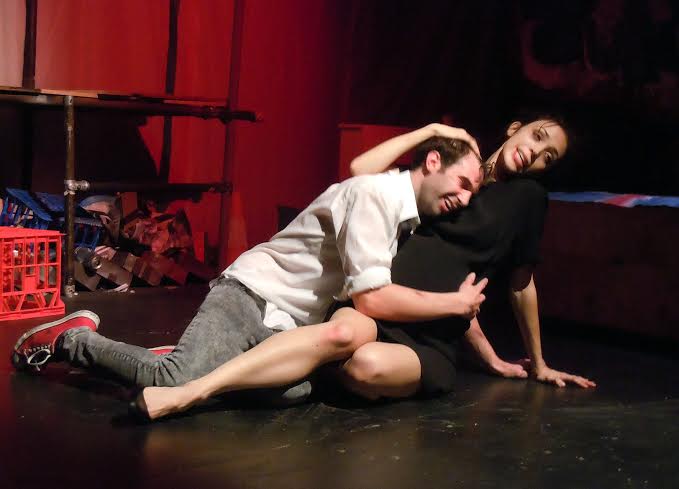
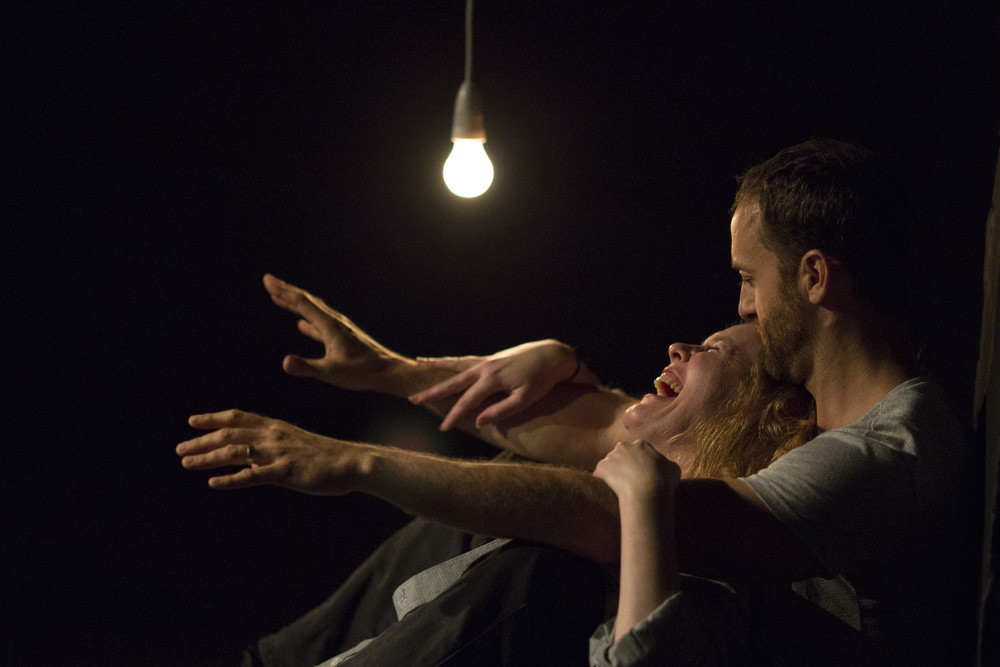
Few people write dialogue better than Howard Barker; it’s funny, vibrant and explosive. And Barker’s Scenes from an Execution is a brilliant play.

It explores the relationship between the artist and society.

Galactia has been commissioned by the State to paint the Battle of Lepanto. She does, and the State is not happy. Galactia portrays war as something dreadful. The State wants it viewed as something glorious.

The play is set in Renaissance Venice. But, of course, it’s not. This is not a piece of historical realism. Barker’s characters could be here and now.

Photo by Katy Green Loughrey

Photo by Katy Green Loughrey

And director Richard Hilliar’s production is wonderful. His cast does terrific work. Lucy Miller as Galactia is magnificent; passionate, determined, and joyfully articulate. Carpeta is her lover. He’s another (competing) painter. Jeremy Waters delivers a beautifully pitched portrayal of cowardice that can’t help love its superior. And Mark Lee’s Urgentino, the Doge of Venice, is comic brilliance.

This is very rich theatre. Barker shares a swag of stimulating ideas. A particularly fascinating one involves the way society tames even the greatest art (but I’m not sure I can explore this one without a spoiler.)

So let me focus on just a single idea: the way society tries to control what art says.

In Galactia’s world, it’s the Church and the State who are the obvious powers. I began this response by suggesting it would be a mistake to assume this play is historical, to assume its message is that only in the dark past did we treat artists poorly.

This play demands we ask ourselves NOW what forces determine what art is allowed to say.

Our current patrons are the state, critics and the audience. What do they demand art say?

Let me offer the following list of absurd generalizations:

  1. Australian theatre must not question the extraordinary privileges that most of us enjoy in comparison to the majority of the world’s population.
  2. Australian theatre must not present characters that are intelligent, powerful political agents, as this would imply it might also be true of its audience (which would challenge the complacent acceptance of demand 1.)
  3. Australian theatre must be ‘professional’. That is, regardless of what the art says (not excepting demands 1 and 2) the focus of discussion must always be on the virtuosity of the production. This demand perpetuates a bourgeois emphasis on career, reduces art to a commercial product, and encourages the competition necessary for a capitalist society.

See this play. It’s very, very good. And come up with your own list.

Veronica Kaye


Scenes from an Execution by Howard Barker

Old Fitzroy Theatre til 31st May

http://www.sitco.net.au/

Amanda

15 May

Transgressive theatre dissolves received wisdoms in an acid bath of wit.

An old tension in psychology is that between nature and nurture. Are we born a particular way? Or is it our experiences that create the person we are?

Writer/director Mark Langham has presented a very funny, very clever play that pushes this tension centre stage. And then pushes it right off.

Amanda2

Amanda, played with an energetic kookiness by Amylea Griffin, is being held by the police for questioning. She has committed some heinous crime, though no-one seems quite certain what it is. In a series of flashbacks, both amusing and disturbing, Elizabeth MacGregor and Paul Armstrong wonderfully portray crazy characters who inhabit Amanda’s back history. This personal history is so wacky we’re clearly not getting reality – whatever that could be.

The concept of identity itself is being questioned (whereas the tired dichotomy of nature versus nurture merely takes the concept for granted and hence perpetuates it.) Langham’s thought provoking play highlights this exploration with a playful recurring motif, that of molecular transfer. If you sit on a bike, there’s a transfer of molecules; the bike seat becomes a little ‘human’, and the human a little ‘bike’. The hard and fast sense of identity is dissolved.

Langham further works this vein by incorporating Brechtian elements into the production. The stage manager (Noemie Jounot) grumbles hilariously in and out of the action. It’s a powerful reminder that this is all verisimilitude; the actors are only playing at creating characters or identities.

And then, thematically, there’s a tension that tears complacent realism apart. The question is raised: What part in our lives is played by fear? What by hope?

(Personal digression: Hope is the most radical of the three Christian virtues. The other two are Love and Faith. Love can speak for itself. Faith is out of fashion; it’s an assertion of knowledge we feel we have no right to claim. Hope, on the other hand, is a glorious unknowing, an appreciation that our visions of our world, and ourselves, are always incomplete.)

Hope is our forgotten virtue. Its very openness makes it difficult for conventionality to portray.

And it is impossible to own.

It requires a letting go.

Veronica Kaye


Amanda by Mark Langham

at TAP Gallery til May 18th

http://www.trybooking.com/Booking/BookingEventSummary.aspx?eid=81259&embed=81259

Trainspotting

9 May

Theatre is for people who can’t handle reality. But, though it can be mind altering, it’s a wiser choice than most illicit substances.

Thematically, this play shouldn’t interest me. I’ve never been much into drugs. (In fact, in 1996, whenever my friends would begin raving about the movie, I’d quietly slip away to the bar again.*)

But this production, directed by Luke Berman, is terrific. The cast of four create – with extraordinary energy, courage and commitment – the world of drug addled 80’s Edinburgh.

Trainspotting

Damien Carr plays Mark (whose story we most closely follow) with a winning, empathy-inducing stage presence. Taylor Beadle-Williams plays an array of ‘lassies’; beautiful portraits of tough women doing it hard in a misogynistic culture. Brendon Taylor’s scene as an unwillingly witness to sexist violence, with his fear that he must intervene, is magic. Leigh Scully perfectly captures a variety of imposing and physically threatening male characters, only later to display an extraordinary range when he so convincingly plays Mark’s mother.

Harry Gibson’s adaptation of the original novel by Irvine Welsh is episodic, wide ranging, and frighteningly effective.

When Life has become a disease, whose symptoms are boredom and disappointment, a cure will be sought.  This play presents the desperate measures people take to self medicate, often with catastrophic consequences.

This is confronting theatre. There’s sex, violence and two hours of Scottish accents. And it works.

It’s both funny and horrifying. It’s hard to imagine how anyone ever thought this tale glorified drug usage. It doesn’t preach – it’s far too cool for that – but honesty is the most powerful pedagogy.

As I began by saying, thematically this show shouldn’t be my cup of tea. I don’t have much patience with people who find Life dull and disappointing. (My parochialism, no doubt, the result of being privileged enough to sit around comfortably drinking too many cups of tea. And fine red wine.)

But this production is eye opening, sympathetic, electric.

And it does what theatre can do so well, throw open windows to other, sometimes harsher, realities.

Veronica Kaye

*Trainspotting is very conscious of the dangers of that most commonly abused of drugs – alcohol.


Trainspotting 

King Street Theatre til 24 May

http://www.kingstreettheatre.com.au/trainspotting/

Thom Pain (based on nothing)

8 May

I try to avoid appearing as one of those self proclaimed experts who compare performances. You know the type. They say things like “I preferred the third grave digger in the ’28 production. Olivier. At the Old Vic. Oh, didn’t you see it?”

Well, the last time I saw Will Eno’s Thom Pain (based on nothing) was in 2009. Luke Mullins. Downstairs Belvoir. Oh, didn’t you see it?

Mullin’s Thom was more aggressive than the current Thom, played by David Jeffrey in this SITCO production, directed by Julie Baz.

ImageBrowser EX Printing Task

Mullin’s was more lash out, than lash in (a play on words I’ve taken from Eno’s brilliant script.) Jeffrey is more inward, more self-deprecating. His performance is touching and very, very funny.

The title is an intriguing entree to the world of the play. The ‘Pain’ is obvious: Thom is disconnected. He speaks of himself in the third person. He refers to a past romantic relationship, but we never get her name.

But Thom Pain is also Poor Tom from King Lear. (Eno’s allusion, not mine.) Like Edgar in Lear, who adopts the persona Poor Tom at a time of crisis, Thom finds in ‘madness’ a type of security. His uproarious ramblings are much more structured than one might initially imagine, and his stories are sharper than any vulnerable tear-laden sharing. This one man show will not leave you feeling you’ve accidentally stumbled into some sort of support group. Thom is very much in control of his narrative. And, with a lot of laughs, you’re going to hear it his way.

Thom Pain also evokes Thomas Paine. (Or at least it does for me. Maybe I’m more nerd than wanker.) Paine was the English/American radical writer responsible for Common Sense, which fired the American independence movement, and The Rights of Man, which defended the French Revolution’s dream of liberty, equality and fraternity. He was a man deeply dissatisfied with the existing order, a man who demanded we could do better. Perhaps predictably, he died estranged from many of his contemporaries. Only six people attended his funeral. Eno’s Thom Pain could conceivably share the same fate.

But I don’t want to push this allusion too far. Eno’s Thom is more existential in his pain. More self centred.

And one of the things that makes this play so very dazzling is its dynamic and endlessly inventive word play. Eno takes simple idiomatic expressions, and inverts them, reverses them, pulls them inside out. (One small example, no doubt misquoted: “I didn’t know where I was, but I know I wasn’t in love.”) Idiomatic language is our companion in the everyday (and so, oddly, an intimation of the eternal). It speaks our common humanity. But Thom is betrayed by this common humanity. Or is he the traitor?

Either way, in this production, the result is hilarious.

Veronica Kaye


Thom Pain (based on nothing) by Will Eno

Old Fitzroy til 10 May

http://www.sitco.net.au/

His Mother’s Voice

4 May

(If this response seems to range far and wide I apologise in advance. I write in response to the plays I see, and this one is big and bold.)

One of the greatest gifts of Marxism is the concept of ideology. One of the greatest curses was the Chinese Cultural Revolution.

Firstly, the Cultural Revolution, where a half of Justin Fleming’s intelligent, thought-provoking play is set.

In 1966, Mao decided to purge China of influences deemed capitalist, reactionary, un-Chinese. The result was a human tragedy of heartbreaking proportions. Millions were persecuted whose only crime was to offer the gift of diversity. Fleming’s play focuses on the trauma suffered by one of these families, targeted simply because of their love of Western music.

Phot by Tessa Tran, Breathing Light Photography

Photo by Tessa Tran, Breathing Light Photography

Director Suzanne Millar and her entire ensemble do a fine job of evoking a society in crisis. The staging is simple, beautiful, and provides the perfect arena to present a truly awful spectacle; naïve exuberance overcome by dreadful paranoia. Renee Lim, as the music teacher determined to pass on her gift to her son, delivers a moving portrayal of steely resilience.

The other half of the story is set in the 1980’s, in both China and Australia, and presents the long term consequences of the Revolution. Dannielle Jackson and Michael Gooley give intelligent, likeable performances as father and daughter, two Australians navigating their connections with people whose trauma is still raw.

For me, two lines from the play encapsulate its philosophy. (I know, it’s a minor crime in itself to attempt such a thing; to force a reduction on what’s decidedly a multi-voiced art-form.)

One of these lines is delivered by Gooley, as the crusty Australian diplomat. “We have to keep the door open,” he says. Discussions must continue.

The second of the lines is foreshadowed by a cool, frightening party official, played admirably by John Goodway.  Then Alice Keohavong, in a wonderfully amusing portrayal of a Chinese emissary in Canberra, snaps it out again. As they bargain the return to China of a talented pianist (played by Harry Tseng), trouble is encountered. Gooley suggests there are ‘contradictions’. “Contradictions? We like contradictions!” chirps Keohavong. The human spirit resists a tyrannous simplicity.

(I try to avoid quoting other writers in my responses, except the playwrights themselves, whom I no doubt misquote. And I apologise for that! But here I’ll quote Kant: “Out of the crooked timber of humanity nothing straight was ever made.” And when we attempt to do so, we do nothing but violence.)

And now, finally, back to where I started, one of Marxism’s gifts: ideology.

In Marxist theory, ideology refers to the cultural norms that aid the perpetuation of particular economic structures. (Let me give a small example of my own. In a capitalist society, co-operation is not encouraged. Competition is. Careerists – people interested primarily in personal advancement – are held up as model citizens. To support this world view, it’s expected that writers about theatre will focus on evaluating performers and productions, as against discussing ideas. And so the prevailing economic structure influences everything; even trivialities like theatre criticism.*)

It was the belief that culture actually mattered that led to the Cultural Revolution. (Though Mao probably misread Marx; Karl was more inclined to believe that the economic structure creates culture, as against culture creating the economic structure.)

But the rub is this: how much do we think culture matters?

Mao launched a maniacal attack, and this sort of lunacy gives cultural introspection a bad name. It leads us to think it’s best to just let a thousand flowers bloom, without ever bothering to stop and smell them.

But surely we should think about cultural content, about the impact of our art? (As against merely the advancement of our careers.)

Mao’s mistake was to think this should be done by state edict rather than discussion. It’s as though he assumed there were problems to be fixed, as against possibilities to be encouraged.

And what does this engaging, exciting production by bAKEHOUSE offer the cultural discussion?

The gift of diversity.

Veronica Kaye

*I’m ignoring the whole (obvious) issue of the commodification of art and the reduction of audience members to consumers as against co-producers.


His Mother’s Voice by Justin Fleming

ATYP til 17 May

http://www.bakehousetheatrecompany.com.au/home/

Macbeth: 9 Scenes Rehearsed

26 Apr

I’ve always thought of Macbeth as the epitome of the crime and punishment story. Macbeth and his wife do horrible, horrible things and so horrible, horrible things happen to them.

For this reason, I’ve often wondered at the presence of the weird sisters. They seem unnecessary, perhaps just a tantalizing tit-bit thrown in to please Shakespeare’s patron, James I, a self appointed expert in matters witchy.

Macbeth: 9 Scenes Rehearsed consists of scenes chosen from the play’s twenty odd scenes, and there’s an interesting focus on the sisters. They’re played with an extraordinary presence by Erica J Brennan, Kate Cooper and Fiona Green. This production is described as “an experiment in the application of the Suzuki Method of Actor Training.” This method has a strong focus on disciplined physical training. Its impact on the presentation of the weird sisters is to give them a reality that, for the first time, helped me understand their purpose in the play.

A rehearsal shot

A rehearsal shot

The crime and punishment reading of Macbeth has an inexorable logic: do evil and you will suffer evil. A sort of cold karma. But would evil be so common if its dangers were so obvious? This production’s weird sisters shine a dreadful darkness on the dilemma.* They’re an awe-inspiring presence beyond, and below, mundane experience, a nightmarish reminder of the turbidity of the human heart. The scene where Macbeth visits the weird sisters “to know by the worst means the worst” features the entire ensemble, and is brilliant, evoking true horror.

Despite being only nine scenes, the production is a very satisfying rendition of the story. The men in the ensemble (Grant Moxom, Gideon Payten-Griffiths and David Buckley) share the role of Macbeth, as the women do with his wife. This is intriguing in the comparisons it offers, but also thought provoking in its subliminal suggestion of the universality of the characters.

Director Shy Magsalin’s application of the Suzuki Method (to which I claim no expertise**) has created an evening of theatre that is beautiful to watch and bewitching to listen to.

Part of the Old 505’s invaluable Freshworks season, this is fascinating stuff.

Veronica Kaye


*Yes, I’m working the whole “fair is foul, foul is fair” conceit.

**I claim no expertise in any acting method. Or, indeed, anything else.


Macbeth: 9 Scenes Rehearsed

at The Old 505 Theatre til 27 April

http://www.venue505.com/theatre

Lies, Love and Hitler

21 Apr

It’s refreshing to see a play about ethics, one that puts the discussion of what’s right and wrong centre stage.

For many years I felt alienated by the obvious fact, that in our pluralistic society, there isn’t one common ethical system. People have different visions of what makes a good life. This troubled me, because it emphasized my youthful isolation.

Then I had a strangely liberating epiphany. I realized that not only do people have differing ethical systems, but they also place vastly different importances on them.

I realized ethics was like aesthetics: people have different visions of what is beautiful, but honestly, many people just don’t think beauty matters all that much. They’ll say, “Yes, the curtains are hideous, but who cares?” (All the while, there are other people who can’t sleep at night knowing those ugly curtains are there, waiting.)

Paradoxically, I was heartened by my youthful epiphany. If many people didn’t take ethics that seriously, then it might be of value if someone did. (Me.)

Lies, Love and Hitler by Elizabeth Avery Scott focuses on a man who took ethics very seriously – the German theologian Dietrich Bonhoeffer.

Photo by Katy Green Loughrey

Photo by Katy Green Loughrey

The play begins by positing a simple dichotomy, one which presumably Bonhoeffer faced: Do we make our ethical decisions based on a set of predetermined rules? Or do we make our decisions based on what we imagine will be the consequences of our actions?

This is an old philosophical chestnut. Rules versus results.

I think it’s a false dichotomy.  I think virtually everyone uses the results model. But, of course, they judge the desirability of the consequences of their actions based on a predetermined set of ‘rules’.

This is what Bonhoeffer did. Living through the Third Reich, he made the decision that the Fifth Commandment could be broken in order to stop Hitler’s brutal lunacy. (I don’t know many people who’d have scruples about this.)

But the play is not primarily about Bonhoeffer’s life. The focus is the present, where a university lecturer and his student have to negotiate the morality of both their relationship, and society’s  sexual power games.

Bonhoeffer appears in the majority of the play as figment of the modern day characters’ imaginations. He gives them advice. He inspires them to confront the issues.

Some people might find this a little cutesy, and query whether the issues facing the two moderns are really commensurate with the trials Bonhoeffer faced.

But we all face ethical challenges, and we have to find support somewhere.

I began by suggesting it was refreshing to find a play that puts ethics in focus, but it’s also good to find one interested in the life of the mind. Not that the play is intellectually heavy. There’s plenty of humour, and some real passion. The performances are enjoyable, with James Scott as the lecturer being lovably goofy, and Ylaria Rogers as the student giving an impressive portrayal of youthful intensity. Doug Chapman as Bonhoeffer is particularly charming, combining intelligence and warmth. Director Rochelle Whyte’s engaging production of this clever play is certainly a conversation starter.

Ultimately, for me, the play is not about ethics. It’s about the idea of having intellectual mentors. And I think this is a vital concept. In a pluralistic society we often feel we’re doing it alone. Chats over coffee with friends or work colleagues somehow don’t always cut it. Our contemporaries are often as confused, and complicit, as we are.

But we live in a literate, historically-aware society and we should take advantage of it. The support networks available are wide and so deep. We’re potentially the inheritors of a vast hoard of treasures. The characters in the play find support from Bonhoeffer. My intellectual mentors are Simone Weil, Catherine of Siena, Joan of Arc, Gandhi and Ramakrishna.

At least thirteen years were spent teaching you to read. Do yourself a favour, and use that skill for something more Life-enhancing than newspaper articles, real estate ads and theatre reviews.

Veronica Kaye


Lies, Love and Hitler by Elizabeth Avery Scott

at the Old Fitz til 3 May

http://www.sitco.net.au/

Construction of the Human Heart

18 Apr

What are stories for? What does language do?

Ross Mueller’s Construction of the Human Heart is a witty, rich and humane exploration of these questions.

Two playwrights live together. They share their experiences of Life, and of its possible opposite; writing.

It begins as though it’s a staged reading, and then becomes beautifully messy.

Director Dino Dimitriadis allows a splendid simplicity, and with masterful restraint creates a space where actors Cat Martin and Michael Cullen can deliver superb performances of Mueller’s provocative script.

Are our stories an attempt to deal with the world? Or are they an attempt to control the world?  Are they coping mechanisms? Or something more sinister?

How much can words capture? And is Life, like so many wild things, simply unable to breed in captivity?

Image ©Matthew Duchesne/ www.milkandhoney.com.au

Image ©Matthew Duchesne/ http://www.milkandhoney.com.au

The title of the play is deliciously ambiguous. Construction? Does this refer to the heart’s inherent structure? Or our deliberate, desperate building of it?

The play deals with fraught emotional issues, but let me focus on something a little smaller, but hopefully still illustrative of the fascinating questions Mueller raises. There’s a series of very funny exchanges about breeding. For example, what would the child of Stephen Hawking and Elle Macpherson be like? So, the issue of pedigree is aired. And then the play is the story of two playwrights. What exactly are playwrights? (They’re even contrasted to TV writers.) Are playwrights something essentially different from other people? What story are we telling ourselves when we make the assertion “We are artists” ? And for what purpose?

What do our stories do?

Veronica Kaye


Construction of the Human Heart by Ross Mueller

TAP Gallery til 3 May

http://www.apocalypsetheatrecompany.com/construction-of-the-human-heart/

Dancing Naked in the Backyard

16 Apr

Not in my backyard. This phrase encapsulates both the greatest challenge and the greatest opportunity for civil society.

There are many things I dislike about ancient Greek culture (just look at some of my posts about their theatre to see what I mean). But one thing I think the Greeks got right was their attitude to the polis; the idea that we’re only whole when we actively take part in the community.

C J Naylor’s thought provoking new play is about Nimby-ism. A group of local residents are challenged by a planned urban development. Not in my backyard, they say. The threat politicizes them.

Is this a good or a bad thing? The play seems to put little faith in the political process. And the politicization of the locals seems to go little further than their own narrow concerns.

Perhaps high rise development is necessary. People do have to live somewhere. And how sprawling do we want our cities to become? The locals’ attitude seems to be based simply on the idea that they were there first. Are they claiming to be an unacknowledged indigenous group?

Dancing Naked

Naylor’s script is intriguingly ambiguous. Samuel Smith is the appropriately sleazy developer, fun to portray, easy to mistrust. But the locals are not particularly admirable either. Alan Long and Estelle Healey play mature residents with the script’s intended kookiness, which allows two possible readings of the characters:  that they are either lovable, or laughable. Zazu Towle and Matt Hopkins play a younger couple, likable but difficult to look up to since they seem to be fighting for their right to sit on their couch.

There are, however, some nice comic moments from all the actors. Sascha Hall as the council bureaucrat delivers some wonderful deadpan disdain.

This is Brave New Word’s third production of original Australian writing. It’s great to see a young company investing in this. There should be more of it.

With its simple, direct and unadorned dialogue, and its reliance on short scenes (which this production didn’t deal with well), Dancing Naked in the Backyard feels a lot like television.  However, that’s probably appropriate. After all, the theme is the challenge, and necessity, of political engagement, and that’s something that should be discussed in every Australian lounge room.

Veronica Kaye

Dancing Naked in the Backyard by C J Naylor

TAP Gallery til 26 April

http://bnwtheatre.com.au/dancing-naked-in-the-backyard/

After Easter

15 Apr

After Easter is a brilliant play. It’s provocative and so very, very rich.

It’s fundamentally the story of Greta, a young woman beset by visions. Nominally of Catholic background, she’s not religious. She has no idea what to make of her experiences, nor do her family.

Our scientific rationalist society can only interpret such experiences as symptoms of mental illness. And, on many occasions, they probably are.

But they can also be indicative of a powerful imagination and a deep compassion.

Ask plenty of dramatists. They have visitations from their characters. Ibsen famously had conversations with Nora from A Doll’s House. (And it’s not beyond my own ‘spiritual’ experience.)

After Easter

Director Roz Riley has created an engaging production. She gets good work from her cast. Karoline Rose O’Sullivan is wonderful as Greta, playing her with a poignant bewilderment, filled with wit and warmth. She gets terrific support from Celia Kelly and Eilannin Dhu as her sisters, both delivering moving portraits of beautifully complex women.

Some people might see this play as a family drama, but it was not on this level that I found it so affecting; not unless by ‘family’ we mean the human family.

Set predominately in a Northern Ireland trying to find its way, this remarkable play reminds us of ways of seeing we often neglect. Not traditional religion, but ways of imagination and compassion. Inspired by such radical visions of the world is how we can find the hope to better it.

Veronica Kaye


After Easter by Anne Devlin

Star of the Sea Theatre til 3 May

http://craftwaresolutions.com.au/