Thought in Theatre

15 Jul

The bias in theatre is that characters do not have ideas.

Characters are presented as beings who have desires, but not thoughts. Or, if they do have thoughts, these thoughts are merely rationalisations of desires.  Discussion involving ideas  are mined for their subtext.

This approach might be useful for actors, but it hides the power of ideas.

This is not some sort of mad call for the presentation of intellectuals on stage. Far from it. My contention, radical though it may seem, is that everyone’s head is full of ideas.

After hunger and thirst, ideas are the primary human experience.

Ideas determine how we see the world and how we act upon it.

So why do characters on stage so rarely discuss ideas?

There’s an obvious answer. (And it’s not that it makes for dull theatre.)

The answer is this: on stage there already is someone presenting a vision of Life, and that person is the writer. They don’t want competition from from their creations. Characters with ideas bear the same relationship to the writer as the monster does to Dr Frankenstein.

To ensure a writer’s vision of Life goes unchallenged she pretends there are no ideas.

Only an amateur makes the mistake of creating a straw man with ideas opposing their own, because even though such straw men are easily knocked down, the possibility there could be alternative ideas has been aired.

I’m fond of misquoting Shelley: “Playwrights are the unacknowledged legislators of the world”.

Why unacknowledged? Because playwrights present their ideas, their visions of life, surreptitiously.

Philosophers fight fair. That’s what makes them philosophers. In a fight, a philosopher attempts to punch you in the head.

A playwright punches you below the belt.

And so they are banned from the ring.

But the pugilistic tendencies remain, and will be indulged, in scrappy street fights and bar brawls – and in that most unlikely intellectual arena, the theatre.

And, as everyone knows, outside the protection of the ring, there is only one rule:

Never throw the first punch, unless you can be guaranteed it’ll be the last.

And, for a playwright, that punch is the complete play.

Veronica Kaye


Electra

16 Jun

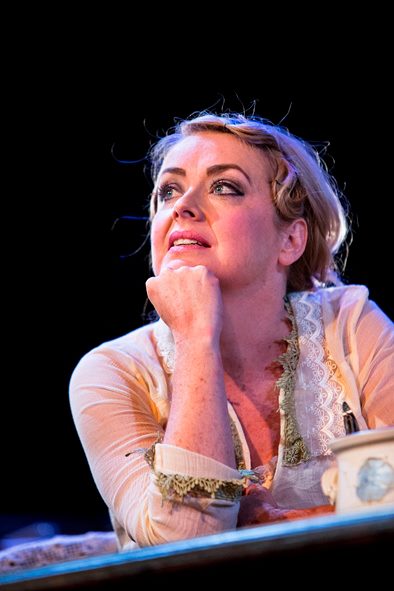
To see ancient Greek drama is a blessing.

To see it done well is a gift from the gods.

I saw director Richard Hilliar’s production of Sophocles’ Electra on the last night of its run. I wished I had seen it earlier, because I would’ve gone to see it again.

Firstly, because it was a superb production. Hilliar’s use of the stage is brilliant. The entire cast is wonderful, and Amy Scott-Smith as Electra is just extraordinary.*

Secondly, because well produced classical theatre is a window into another world.

I know many people will disagree with this attitude. They will argue eternal relevance. They will argue that the passions explored in ancient Greek drama are universal.

I doubt the existence of such universals. I’m not sure who would ever be in the position to judge that such feelings were so ubiquitous.

Sophocles wrote in a particular time and place for a particular audience. If he is appreciated now it is because of excellent productions such as this, and because he continues to speak to particular people.

For me, the ancient Greeks are too fierce. And they care too much about family.

Sure, I’m being facetious, but also I’m not.

I suspect some things have been added to the philosophical ‘tool box’ since they lived. And I do mean in terms of ‘ways of seeing’, rather than the obvious material benefits that make our lives longer, safer, and dare I say, more middle class than theirs.

Let me give a single example. It’s a ridiculous historical generalization and I don’t mean to defend it, but here it is anyway:  I suspect something happened on the fields of Assisi that altered human sensibility, or at least added another way of looking at the world to the many already available. When Francis sang to Brother Sun and Sister Moon, and lived a life of what can only be described as extreme gentleness, something else was added to the ‘tool box’.

And this ‘adding’, or at least rediscovering, has happened over and over again. (Though, again as a single undefended example, the early 20th century suffragettes might seriously question whether any ‘rediscovering’ was going on as they fought for representation.)

My point, long winded though I have been, is that Sophocles’ vision of life is particular, and limited. As must everyone’s be.

That’s my universal.

Productions like this are magnificent because they make us realise, or remember, that there can be this ‘way of seeing’ too.

I suspect this is the greatest gift theatre can give.

Veronica Kaye

Electra by Sophocles

at TAP Gallery til 15 June


* For those new to my blog, it’s probably worth pointing out that I write what I call responses, rather than reviews.


Enron

13 Jun

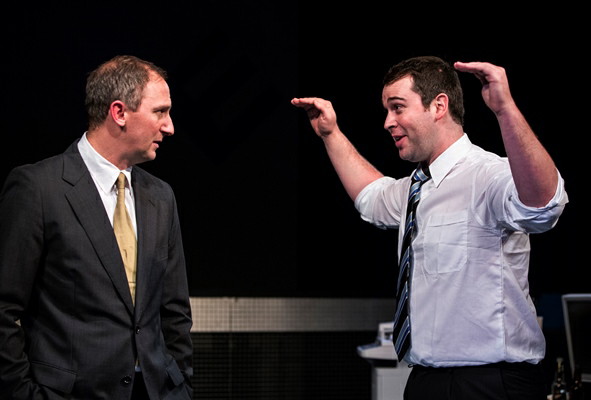
Enron was an energy company. Fittingly, Louise Fischer’s production of Lucy Prebble’s play is high energy, fun and deeply thought provoking.

I don’t usually warm to satires that attack the giants – big business, big government, mass society. Audiences members are never the target. This sort of satire is usually safe, and some how self serving. ‘I’m privileged enough to spend Saturday night in the theatre, but the real injustices in the world are bigger than me, far bigger, so what can I do?”

What can you do? What have you tried.

Photograph © Bob Seary.

Photograph © Bob Seary.

Enron asks us to question our complicity in injustice. Some of the most thought provoking speeches are delivered wonderfully by Matt Young as Enron’s Jeffrey Skilling. They ask us to question whether our  society is reliant on the sort of foolish and greedy choices presented in the play to create and sustain our extraordinary wealth. And, if this is the case, isn’t it a bit rich if we only complain when the pain becomes our own.

Nick Curnow gives an engaging performance as the socially awkward originator of some of Enron’s most dubious accounting practices. Hire the kids that were bullied, says Matt Young’s character, they’re hungry to prove themselves.  We all want ‘in’, and only complain when we personally are excluded.

Yes, there are giants that stalk the earth, but they stand on our shoulders.

Veronica Kaye

Enron by Lucy Prebble

New Theatre til 29 June

http://newtheatre.org.au/

How to avoid that role

3 Jun

A lot of working actors make the same mistake: they want to act.

As a result, they miss the subtle joys of self sabotage.

Here’s some advice to help you miss out on that role again, and so justify that satisfying feeling that the world really is against you:

Be the expert. Everyone loves a know it all. Directors, and especially writers, love to be corrected. Choose the seemingly most unimportant aspect of the play and air your knowledge of that particular field. Choose a minuscule detail of the text and declare it to be wildly inaccurate. Discuss the play’s literary failings. This will guarantee that the writer remembers you. If the writer is not present, don’t bother being a literary expert. Focus your considerable energies on telling the director how the play should be directed.

Be critical. Of anything. Of everything. Creative people just adore working with no sayers. Criticise directors you’ve worked with previously. Criticise other actors. Criticise the type of curtains in the audition room if you have to. Just make sure you leave the director with the sense that you’re a person of true discernment.

Don’t listen Directors are very busy people. If you don’t listen in the audition this sends a clear message that the director won’t have to waste time speaking to you in the rehearsal room.

Do your homework (and then some) If, say, the audition consists of a reading from the play make sure you’re familiar with it. Learn it. Mechanically. Once again the director will be relieved to know she won’t have to waste valuable time with you later.

Channel those nerves It’s natural to be nervous. It’s not natural to be friendly to people you’ve never met, so channel those nerves into an awkward coldness.

Talk, a lot After all, they are looking for a performer. Why waste time working the scene? They’ll be plenty of time for that during the run of the show.

Ask questions  Of course, you’ll have a lot of legitimate questions, ones you have the right to know the answers to. Ask them, but don’t lose the opportunity to turn the tables on the director. If the audition process has made you feel uncomfortable,  take the opportunity to make the director feel uncomfortable. Remember, this is your chance to reverse the power relations. Sure, the director might appear to respond with annoyance, but deep down she’ll really appreciate being treated as an equal.

Respect the text Show how much you value the text by putting it into your own words. The writer will thank you. Your spontaneous improvements will no doubt solve problems she slaved over for months.

And most crucially, Take it personally. A lot of nonsense is talked about how directors want to best serve the play. Don’t be fooled. Casting decisions are not about art. They’re all about you.

Remember, it’s ALL about you.

And, later, when you successfully don’t get the role, make sure you treat yourself. Go to the production and decide the performances were awful. There are few ways of getting more out of an artistic experience than finding fault with other artists.

Veronica Kaye

The Removalists

27 May

Full disclosure: I really like this play. I always have.

And Leland Kean’s production is terrific.

I like this play because I don’t like the characters.

I like that these actors let me not like the characters.

I like that the characters don’t like each other. There’s not a lot to like.

I’m thrilled by the revitalizing energy of a play and production like this.

REM 7 - Simmonds, Kenny & Ross handout

We are told at drama school, as we flirt, doze and doodle, that characters need to be sympathetic. Conservatives want it that way. They don’t want to be challenged.

It can be tempting to say: ‘I want to like these people, at least some of them, because I want to believe theatre is a mirror. If I don’t like them (any of them) there are two alternatives: either I’m not likeable, or theatre is not a mirror.

The first alternative does not bear thought.

The second alternative is a possibility, but it will leave me much poorer. That’s because theatre is a magical mirror that does a jolly good job of not just reflecting my momentary appearance, but seemingly the entirety of Life, and that such a thing could be captured and condensed is extremely consoling, for instead of fear at Life’s wildness and open-ended possibility, I can continue in my (privileged ) complacency.

So, if I don’t like the characters I won’t like the play. There’s too much at stake.’

But brilliant satire undercuts this easy out. And this is brilliant satire.

Williamson’s characters are gloriously unsympathetic; too weak, too violent, too selfish.

And Kean’s cast is wonderful. The performances are hilarious. The responses of Caroline Brazier as Kate are worth the price of admission alone. Sam O’Sullivan as Constable Ross provides top class clowning.

The changing power relations are fascinating to watch.  Anger and humiliation are perpetually paid forward.

In this cutting indictment of the violence inherent in our society, I have a favourite scene.  It’s when Kenny, knowing he’ll be beaten by the police, begs the hired removalist for help. And the removalist, the man with no real back history in the play, and so therefore everyman, says it’s not his business.

It’s not our business.

How often do we say that?

Veronica Kaye

The Removalists by David Williamson

at the Bondi Pavillion til 15 June

http://rocksurfers.org/

The Pursuit of Excellence

21 May

Friend: Veronica, you really should write drama.

Me: Why? So people can fool themselves I’ve got nothing to say?

Friend: No, you stupid grump. Because you listen to people. It’s rare.


The incident my friend was referring to – the one in which I’d allegedly listened – involved a mutual acquaintance commenting on a production we’d seen. “I couldn’t find anything to fault about that,” she said.


Friend: I don’t even remember her saying that.

Me: She did! It made me sick!

Friend: You didn’t like the show?

Me: I did! But not because it didn’t do anything wrong! (then in mock childish voice, you know, that sort of infantile whine that’s an unanswerable indictment of anything it’s directed at) “ I couldn’t find anything to fault about that.”

Friend: (pause) You know, Veronica, about that drink…. I’ve got an early start tomorrow. I better head.


The problem with the pursuit of excellence is not that you’ll never catch it. The problem is you miss so much else.

Doing something with out fault is a secondary virtue. The crucial issue is what you’re trying to do, not how well you do it.

Surely, it’s better to fail at something worthwhile than succeed at something worthless.

Do you really want to be remembered for producing the play that most effectively keeps the world small and cold?


Veronica Kaye


Theatre as just a Trick

11 May

Early in my education I came across a notion that deeply disturbed me.

A drama teacher told me, “It’s not what they say, but how they say it.”

As someone approaching theatre with what I can only describe as a ravenous spiritual hunger, I refused to see it reduced to a series of well executed tricks.

I didn’t want the ultimate accolade to be that a piece of theatre said well (efficiently? effectively?) what we all already knew.

There were (are) so many things I didn’t know. I didn’t want an art form that was so complacent. I didn’t want to be served stones when I needed bread.

Over time, I came to realise that large numbers of audience members see theme as just another technique. Just as a recurring motif, say the animal imagery in Macbeth, creates an attractive textual coherence, so apparently does theme. The fact that both Macbeth and his wife suffer for their crimes is not the meaning of the piece, but rather just a pleasing aesthetic tidiness.

Appreciating the view

Appreciating the view

As I have grown older this view of theatre shocks me less. I’ve come to accept that people will attempt to inoculate themselves from art. In terms of theatre, most people do this by not going. Those of us  forced to go – because of career, or the pursuit of career – adopt other methods.

Most of us don’t want to be changed. We don’t want to be challenged.

And, considering the lives of unparalleled privilege that most of us enjoy, that’s perfectly understandable.

Veronica Kaye

A Butcher of Distinction

9 May

You’ve got to be cruel to be kind. Kind of weird, that is.

Cruelty is the vice par excellence of our society. It has not always been thought such an evil. The medievals routinely used it to ‘purify’ souls.

Yet for us moderns, cruelty’s just plain sick.

But still it remains.

And so every progressive talks of how we must diminish it.

And so we desperately try to explain its causes.

A Butcher of Distinction by Rob Hayes is a very rich night of theatre; very funny, and deeply thought provoking.

It explores the sources of cruelty.

Is it simply that ‘they do evil who have evil done to them’?

Or does cruelty stem from a more deep seated lack of empathy? Is there an almost institutionalized damming of our ability to see others as completely human? Are we living through an Ice Age of the imagination, that leaves us frozen in our isolation, unable to truly connect?

Photo by Lucy Parakhina

Photo by Lucy Parakhina

Teddy, played brilliantly by Paul Hooper, is a rough tough pimp. To him, people are commodities. The play also asks ‘What are the consequences of this attitude?’

This is dark, dark comedy, directed dazzlingly by James Dalton. His cast (Liam Nunan, Heath Ivey-Law and Paul Hooper) deliver top performances; sharp, precise and bitingly funny.

Which brings me to my final point; if cruelty is such a burning issue in our society, it must be presented on our stages. But how is this best done?

A Butcher of Distinction is not a piece of naturalism. (Would we want it to be?)

But what can humour do with such emotionally charged situations as the ones presented in this play?

Laughter sparks us to think. It makes us glory and delight in our ability to connect.

And in connection is the death of cruelty.

Veronica Kaye

A Butcher of Distinction by Rob Hayes

Old 505 Theatre til 26th May

http://venue505.com/theatre

4000 Miles

7 May

Bad plays are hyperbole. Good plays are metaphor. (And, yes, generalizations are annoying.)

And the best metaphors are underplayed. They’re not allegories, but something more subtle and gentle.

We say plays are good

– and this one is. Very. And the production is superb. The cast is uniformly brilliant. And Anthony Skuse, once again, has shown he’s a magnificent director. As an example, the pacing of this piece is enough to make you fall in love with time. Like Philip Rouse’s The Ham Funeral, I’d see this production again purely to enjoy the director’s work; which is, of course, a ridiculous thing to say –

but, anyway, we often say plays are good, without saying how they were good for us.

I don’t mean on what personal basis we judge them to be good, but rather what good they do us.

Good plays help us. We leave the theatre richer than we entered it.

4000-Miles-Hero_EVENTPAGE_0

4000 Miles is a play that offers the gift of tolerance.

Tolerance is sometimes devalued as a virtue; as though it was the poor little cousin of Love. Tolerance seems somehow less passionate, less committed, less generous. But watch four brilliant actors (Diana McLean, Stephen Multari, Eloise Snape and Aileen Huynh) create characters who gently navigate their differences, and Tolerance becomes Love’s twin.

I began by praising metaphor. The old argument is that good plays, by taking a specific situation and presenting them simply, honestly and unadorned, are suggestive of much wider issues.

Amy Herzog’s play is beautifully rich in this type of metaphor.

But it’s also rich in another type, more literary, but subtle. I won’t discuss most of these for fear of spoilers, but I will mention one.

Diana McLean plays Vera, Leo’s grandmother. Vera is what she calls a political progressive. (Just to hear those words on an Australian stage is a delight!) Vera is ageing; she is losing her hearing, she is losing her memory. Sometimes she doesn’t have the words for things, for her political ideas.

But Vera still tries to find them. And still tries to act on them.

And that task isn’t just Vera’s.

Veronica Kaye

4000 Miles by Amy Herzog

until 18 May

http://www.atyp.com.au/under-the-wharf/productions/4000-miles

The Ham Funeral

5 May

Several Australians have won the Nobel Prize, though Patrick White is our only recipient in the frivolous category of Literature.

Alfred Nobel reputedly instituted the prize to assuage the guilt complex he developed after inventing a type of explosive.

Ironically, this play is dynamite.

The Ham Funeral puts the fun back into funeral.

This is incredibly rich theatre. Enjoy the first viewing, and then come back for more.

Phillip Rouse’s director’s eye is magical. The cast is wonderful. Lucy Miller and Rob Baird give extraordinary performances, evoking an eternal battle.

That battle is the one between flesh and thought.

Photo by Bob Seary

Photo by Bob Seary

“Thinking never kept anyone alive,” I probably misquote from the play.

Of course, the issue is whether such a battle is real or not. Why do we forever contrast the mental and the physical? I suspect it’s a lazy, unnecessary division. (And I suspect it’s the soul who’s experienced only scant pleasure in the one who would assert there was no pleasure in the other.)

Perhaps the perceived battle is a result of this insight: pleasures of the flesh seem honest. They are honestly self-serving. Great sex is great sex is great sex is…..

Pleasures of the mind often pretend to be more noble. ‘This is the Truth’ we tell ourselves, and don’t stop to question whether such a ‘Truth’ might simply be one that serves our own interests.

And hence arises the healthy, and deeply stupid, distrust of thought.

Veronica Kaye

The Ham Funeral

at New Theatre til 25 May

http://newtheatre.org.au/