Knowing Your Stuff

23 Mar

Recently I  inadvertently called Martin McDonagh Mark McDonagh.

It was a silly mistake and one I shouldn’t have made. I was appreciative of being corrected.

What interested me was that because of this dumb mistake  I was accused of “not knowing my stuff”.

At this point, I’m supposed to list my qualifications. The 4 years I spent at NIDA. The Masters degree I have from RADA. The Phd I’m working on at Julliard.

Then I’m supposed to mention all the well known people I’ve worked with and the ground breaking critically acclaimed projects I’ve done.

But I won’t do any of this.

I have absolutely NO experience.

And I have absolutely NO qualifications to write about theatre.

NONE WHATSOEVER.

Except what I share with the rest of the human race.

Veronica Kaye

The Pillowman

23 Mar

It’s funny what we’ll laugh at. Context has a lot to do with it. I usually don’t find torture and the murder of children especially amusing.

But in the context of a finely produced, thought provoking play, I apparently do.

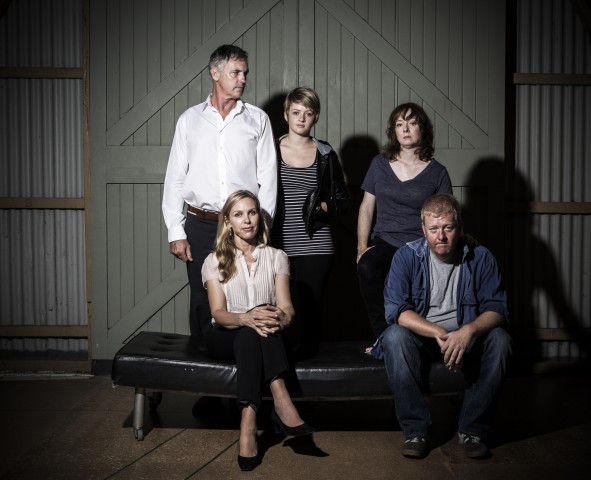
Director Luke Rogers’ production of Martin McDonagh’s play is a top night of theatre. The cast is uniformly excellent.

The Pillowman promo Web (1)

The Pillowman explores storytelling. Katurian is being interrogated about his fiction. What drives him to tell stories? What are the consequences of listening to them?

The answer is a rather vicious circle. It’s what the world inflicts on us that drives us to create stories. And our stories, in turn, affect how we see the world, and what we inflict on it.

In The Pillowman, all of the characters write stories, tell stories, or eagerly listen to them – with, admittedly, some pretty dreadful consequences.

The play presents us as a story driven species.

And that’s a story we’ve been telling ourselves quite a bit lately. It’s the idea behind much  of post-war European philosophy and contemporary American pragmatism.

Of course, it’s not the only story we can tell ourselves.

I often think that the difference between conservatives and progressives is summed up in their attitudes to narrative.

The progressives acknowledge that we tell ourselves stories, all the time. And they tell the tale that all stories are equal.

The conservatives assert there’s only one story, but argue about which one it is. And prefer to call it The Truth.

I tell myself I’m a progressive. It’s a story that boosts my ego.

But, after 140 minutes of high stakes storytelling, The Pillowman left me feeling that perhaps I’m neither progressive or conservative. It left me feeling that maybe there is something to Zen Buddhism and the ideas of Simone Weil. It left me feeling that perhaps we need to learn to shut the f*#*# up.

This is not a criticism. You gotta pay a play that’s utterly absorbing in performance and deeply troubling in the days that follow.

But The Pillowman did make me question the value of stories. It made me feel that perhaps we need to learn to stop the chatter, that maybe we need to learn to be quiet, and wait.

Veronica Kaye

The Pillowman

at New Theatre til 13 April

http://www.newtheatre.org.au/

Doing it yourself

3 Mar

It is a truth universally acknowledged, that whenever a playwright writes a good play, she will be vigorously pursued by prestigious theatre companies.

“My dear Mr Bennet,” said his lady to him one day, “have you heard that Prestigious Theatre Company has a new artistic director?”

Mr Bennet replied he had not.

“Apparently,” returned she, “he is very interested in new Australian work.”

Mr Bennet remained silent. His wife took this as invitation to continue.

“Interested in new Australian work! What a fine thing for our girls!”

“How so? How can it affect them?”

“Mr Bennet, how can you be so tiresome? You know they are all playwrights. This new artistic director will no doubt want to produce their plays.”

Mr Bennet returned to his book.

“Now I’m the first to admit,” continued Mrs Bennet, “I find Lizzy’s plays a little confusing. Other people find them amusing, but to my mind, she never seems to be saying what she really means.”

“It’s referred to as irony,” Mr Bennet stated flatly.

“I know that!” replied Mrs Bennett.

“Of course you do, dear” said Mr Bennet, even more flatly.

Satisfied, Mrs Bennet continued. “And Mary’s plays are so wordy, and I can’t quite understand them, but they’re very clever, I’m sure. And Lydia’s plays are skittish, the work of an immature artist, but they were good enough for Short and Sweet. And Jane, quiet unassuming Jane; she’s always done the right thing. Who wouldn’t want to produce her plays?”

– from the manuscript of the (unpublished) Jane Austen novel Approval and Validation 

Sometimes you just gotta to do it yourself .

You can write a damn good play and it still mightn’t get produced.

Maybe it’s political. And I don’t mean who owes who, or who’s competing with who, or even who’s sleeping with who. I mean political.

Every play is an attempt to convince the audience to see the world in a particular way. Every play is an attempt to affect the world. Your plays will be put on by people who share your vision of the world. And, if there already are a whole lot of people who share your vision, you probably wouldn’t have bothered writing the play in the first place.

So be prepared to do it yourself. And be proud of it.

Veronica Kaye

Cat on a Hot Tin Roof

24 Feb

It’s difficult to say anything intelligent about sex. Fortunately, it’s easy to say something interesting.

Is that just the way we’re made?

To prepare for a Tennessee Williams’ play, I drank a bottle and a half of bourbon, imagined men’s eyes boring through my clothes, and had my date rip open his shirt while yelling ‘VERONICAAAA!!!!’

It must have worked, because I enjoyed Simon Stone’s production of Cat on a Hot Tin Roof.

I enjoyed the performances, especially Alan Dukes as Gooper and Lynette Curran as Big Mama.

I enjoyed the staging, with the turntable working both as a source of humour and tension.

I went away with plenty to think about. Like, how am I going to get me one of those turntables?

The world of Williams is one in which people are driven by animal passions, find that difficult to accept, and so lie to themselves.

This myth accounts for much of the popularity of Williams (that, and the fact he writes like angel.)

It’s a myth that well serves the needs of contemporary Australia. It tells us that we don’t have to live ethical lives. Or, more precisely, that the only moral demand upon us is the one to be truthful. We’re allowed to selfish. In fact, it’s natural.  The only crime is to pretend it’s not the way things are meant to be.

I’m probably talking in ridiculously general terms. (Perhaps I’m being passionately inaccurate.) But this myth is the meta-myth of the plays – the assumptions about  life so intrinsic to the work, that go so deep, that we have difficulty recognising them. Is this what makes  a great playwright? Someone who writes so well that we take their vision of life to be the thing itself?

Of course, in 1955, when it premiered, this play may have been valued for very different reasons. For example, its acceptance of homosexuality was probably groundbreaking. And who could pretend that issue has been resolved?

And let me use that idea to further illustrate my point. If we truly were the passionate creatures that inhabit the Williams’ world, why does it takes so long to resolve issues of obvious injustice? We are yet to legalise homosexual marriage. So many of us are supposedly passionate about it. Yet what have we personally done about it?

That is why the myth is attractive. We use it to tell ourselves that our self obsession is exciting, that as we pay our mortgages and perfect our Pad Thais we’re doing something thrilling.

We’re not.

Let us be truly passionate.

Veronica Kaye

Cat on a Hot Tin Roof

Belvoir, then Theatre Royal, til April 21

http://belvoir.com.au/

A Critic’s Curse

23 Feb

This is one of the things they teach you at reviewer school. Usually on a Friday afternoon, when everything is old.

The Critic’s Curse on Theatre Makers

“May no-one understand your work.

May no-one appreciate your effort.

May my condemnation be taken at its word.

May audiences stay at home, or prefer elective surgery, to your play.

May you touch no-one, as you will not touch me.

May you move no-one, as you will not move me.

May your audience feel only the dryness of their throats, the hardness of their seats, the passing of time.

DSCF9664

May your production be as ephemeral as the melting dew, or the breaking dawn, while my judgement be as eternal and effortless as the ubiquitous electronic screen.

May no-one share your joy, but know only obligation, as I have.

And though you bless all creation with your celebration, may it be only my cold evaluation that remains.”

Veronica Kaye

Dreams in White

20 Feb

Theatre is a result of sloppy thinking.

It’s the consequence of a lazy habit, endemic to our culture.

We take for granted the concepts of character, identity and personality.

As a child I had a black Labrador.  Drawing on all the vast imaginative resources for which children are famous, I called him Blacky.

Blacky was my dog.

But one day, to my horror, I discovered that a neighbour allowed Blacky inside her house and even kept a bowl for him. And called him Cuddles.

It was a betrayal I struggled with for years – right until the poor thing took his final trip to the vet.

And while I grieved Blacky, my neighbour grieved Cuddles.

But the true tragedy was that neither of us knew his real name.

Dreams in White by Duncan Graham is a superbly crafted play. The ensemble is brilliant. Director Tanya Goldberg’s production is eminently watchable.

Both-families-2a-591x480

It tells the story of a man who lives a secret double life.

It’s an appealing myth.

I don’t mean these things don’t happen. Far from it. Walk into any police station and undoubtedly you could hear shocking tales of duplicity from some hard-as-nails-tough-talking senior detective (that’s if he’s got the time before he rushes off to his next ballet lesson.)

What I mean is that the possibility of a secret double life is the sort of thing we like to believe.

It makes our privileged predictable lives seem more exciting.

(I have a secret dual life. I write these responses to theatre, but at the same time  I’m also the artistic director of an ubercool indie company that produces – fearlessly and without funding –  edgy original life changing work. But some would say this is merely fantasy.)

Some would also say that the extremity of the double life presented in this thought provoking play makes the issue seem an aberration or a rarity.

But it should be no surprise we live double (or even triple or quadruple) lives. A little self reflection tells us we are complex. The tragedy is that it’s other people we reduce to mere personalities, identities, characters. Sloppy thinking.

And we shouldn’t forget the contrasting phenomena either. From the inside we know we are complex, but we usually expend an extraordinary amount of energy denying this.  Our lives often become unrelenting attempts to maintain a simple singular vision of ourselves. I am good. Or I am clever. The effort involved in this self creation is extraordinary. And totally misguided.

Veronica Kaye

Dreams in White

at Griffin until 23 March

http://www.griffintheatre.com.au/

MilkMilkLemonade

14 Feb

Creation is God playing Hide and Seek with herself.

She knows herself.

And now she doesn’t.

She becomes the role.

Then remembers she’s the actor.

Milk Milk Lemonade is that sort of exuberant game. Director Melita Rowston’s production of Josh Conkel’s play is superb.

‘Do you mind if I take off my shoes? I can’t dance in them,’ says Emory, played brilliantly by Mark Dessaix. It’s a poignant moment, a moving symbol of liberation. Yet it’s said by a young boy play acting he’s an older girl at her high school prom.

Hide and Seek.

Towering over this production is a giant chicken, designer Antoinette Barbouttis’ ingenious way of presenting the processing plant that dominates the poultry farm where the play is set. Chain smoking Nanna, played by Pete Nettell with a wonderfully larger than life small mindedness, tells Emory that it’s the chicken’s role to be eaten.

And there’s that enormous chicken – an ominous warning. Whatever roles we choose to play, we can’t let others decide them for us.

And Linda the Chicken, played by Sarah Easterman, fights the role Nanna gives her, delivering a beautiful hard-boiled-in-ya-face stand up routine, one of the many crazy elements in this joyous play.

Keiran Foster as Elliot, Emory’s love interest, gives an energetic jack in the box performance. Elliot is painfully trying to push his burgeoning sexuality back into a more conventional box, only to have it explode out again.

We’re not all of one piece, and to underline the point, Conkel gives Elliot an evil parasitic twin, played to kooky perfection by Leah Donovan. “Punch the faggot” the twin says to Elliot.

At another moment Donovan is Starlene, Emory’s doll, forbidden to the boy by narrow minded Nanna.  And it’s Donovan’s performance, as Starlene, of I’ve been to Paradise (but I’ve never been to me) that sums up the play.

It’s a performance that’s deliciously subversive. It asks ‘What – exactly – is a genuine life’?

We play roles. We forget we play roles. We remember. That is the glorious game of life.

And everyone should be allowed to join in.

Veronica Kaye

MilkMilkLemonade

New Theatre til 2 March

http://www.newtheatre.org.au/

The Small Poppies

21 Jan

I like to sit in the front row. And I usually get what I want, especially when it’s general admission. I’m fast, I’m nimble, and I’m not held back by manners.

But at The Small Poppies it was on for young and old.

I was surrounded by little people. There was wriggling. There was giggling. And there was a refreshing absence of pretension. (No comments of the “I see a lot of theatre” type. Not a single six year old sniffed anything like “I saw the 2000 production. At Belvoir. Geoffrey Rush was superb”. Whenever someone begins a comment with “I see a lot of theatre” I’m left wondering whether it’s a claim of expertise, or just a cry for help.)

Felicity Nicol’s production of David Holman’s play is high energy from the get go. I’d only just finished elbowing a five year old when I was assaulted by a cacophony of Outside Voices being used inside.

Yes, Inside.

Children love that sort of thing. And rightfully so. They appreciate there’s little point to theatre if it’s not subversive.

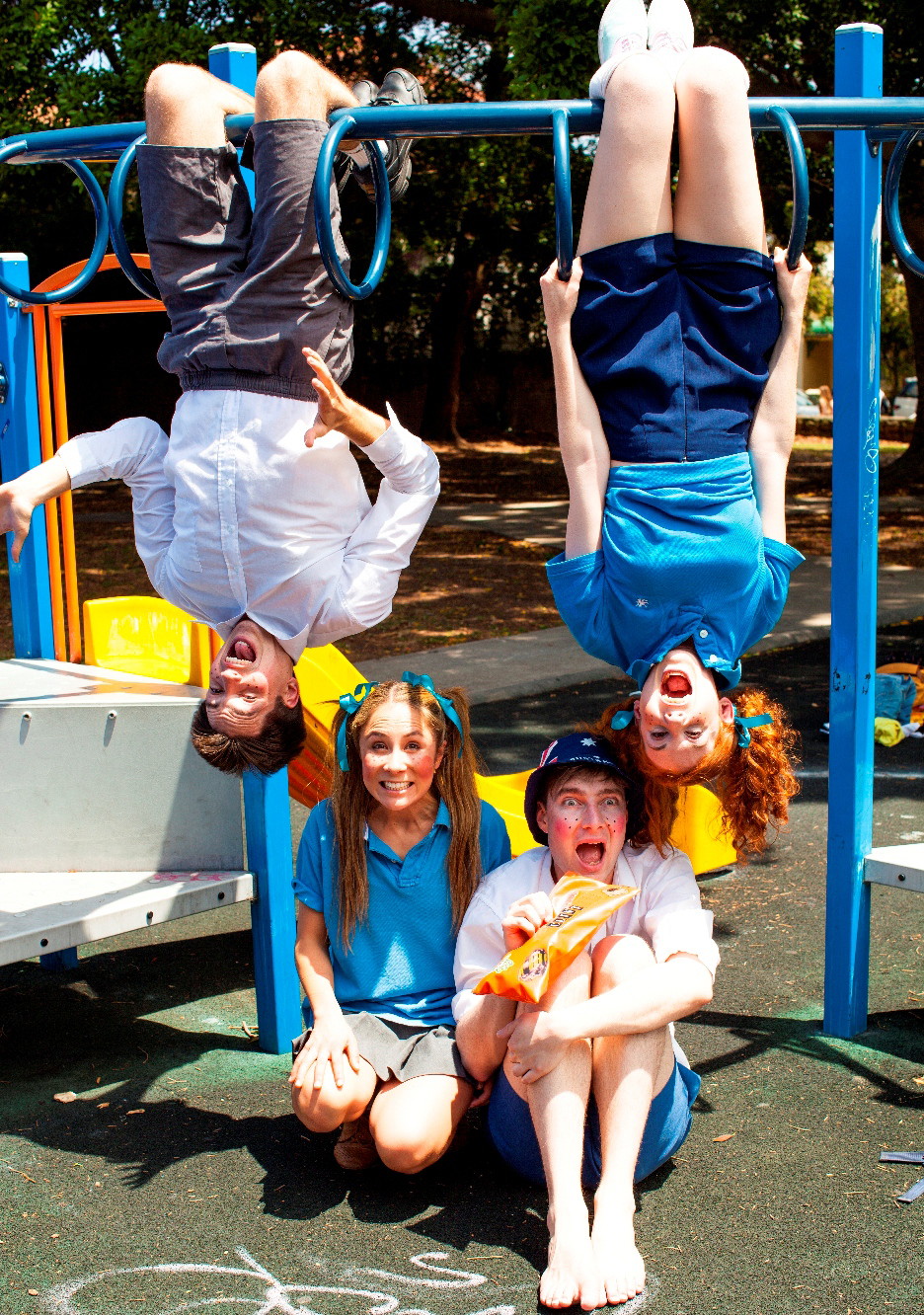
But David Holman’s play is not just for children. Nicol’s ensemble is superb. Playing both adults and kids, they deliver a fun and moving story of three kindergarten children and their parents.

The Small Poppies 5s

But it’s also the story of the extraordinary institution that is school – one the great experiments in human history. Universal schooling, based on the belief  knowledge should be shared equally, is democracy in action. Because we all went through it, we assume it’s natural. It’s not. It has to be made. And made right. And the play honours those who have tried to make it so.

The play is also the story of an ethnically diverse society. Set in the 80’s, the demographics might have changed, but many of the challenges remain. Rosie Lourde’s moving portrayal of Lep, the 5 year old Vietnamese refugee brought me to tears.

Multiculturalism is another of our great experiments. We struggle with it. I’m not proudly Australian. I’m not proudly anything. But watching The Small Poppies I felt we’ve had a go. There’s more to do. And the job, such is its nature, will never be complete. But we’ve had a go. We’ve used our Outside Voices.

And let’s continue to do so. Because, as kids know, that’s what Voices are for.

Veronica Kaye

The Small Poppies by David Holman

New Theatre til 26 Jan

http://www.newtheatre.org.au/

Recommended!

16 Jan

Writing that evaluates theatre doesn’t especially interest me.

I don’t want consumer advice.

Audience members are not consumers. They’re co-producers.

Sure, there’s a place for evaluative writing – the recycling.

No, seriously, the place is on marketing collateral. Artists don’t want to be judged, but they’ll endure it – for the chance to convince potential audience members to co-produce. Who’s going to knock back a “Recommended”?

Reviews are our revenge on theatre. (And not just when we hate it. After all, 5 STARs is rather parsimonious, considering how many stars there actually are.)

In answer to the beautiful multiplicity of theatre, reviews offer a stern monotone. Which is why no-one takes them too seriously. Which is why I don’t write them.

They’re are a bit like trying to catch starlight in a jar.

We need to find ways to respond to art other than mere evaluation.

So what do I want from writing about theatre?

Truth?

To speak truthfully is one of the lessons of childhood. But maturity has a different lesson: to listen truthfully.

To listen truthfully is to hear a voice other than your own and ask ‘In what way is this true?”

Not “Is this true?”

It is true.

But in what way?

Just as actors and writers are called to truthfulness, so are audiences.

Theatre writing that focuses solely on evaluation conceals this.

Creation is a wondrous act.

Appreciation is even more so.

Veronica Kaye

Peter Pan

13 Jan

Children need adults. And adults need children.

In a full life, reason must co-exist with imagination, knowledge with innocence, security with surprise.

This is a very quotable play. In one of my favourite lines, Peter boasts “To die would be an awfully big adventure.”

Peter Pan is a rich myth, but it’s not a universal one. (This is no criticism; the desire for universals is an attempt to contain Life, which was far from Barrie’s purpose.)

The nineteenth century’s interest in childhood coincided with the decreased infant mortality rate. Suddenly, childhood as such could be valued. No longer was it merely a dangerous period, to be gotten through as quickly as possible.

And childhood became an effective contrast to adulthood.  Just as the Industrial Revolution (eventually) decreased infant mortality, it increased the division of labour. Work, and hence adult life, came to appear dreadfully dissatisfying. Peter, asked whether he ever wants to grow up, replies no; he doesn’t want to work in an office.

This tension between childhood and adulthood is a defining aspect of our culture. It has not been so in every culture. It is the result of our privilege.

Many contemporary stories, particularly Hollywood comedies, are the stories of men who refuse to grow up. But too often these stories imply that growing up means only fulfilling expectations and becoming conventional.

Barrie’s story, however, gives a more persuasive vision of maturity. For him, growing up is caring and giving. He adores childhood imagination and innocence, but accepts they are not enough. We rightly adore children, but we cannot respect them.

I don’t want to give the impression this Belvoir production is dark just because it has depth. Far from it. It’s joyous. Tommy Murphy’s adaptation works wonderfully for both adults and children. Ralph Myer’s cast is absolutely terrific. Robert Cousins’ set is versatile and fun.

I began by suggesting this is a very quotable play. Barrie wrote Peter Pan as both play and novel. In this adaptation, Murphy takes a line from the novel and makes it the final line of the performance. Spoken by the mature Wendy, it is one of the most powerful, and shocking, in contemporary theatre.

Veronica Kaye

Peter Pan

at Belvoir til 10 Feb

http://belvoir.com.au/productions/peter-pan/