Tag Archives: Old Fitz

Born on a Thursday

5 Dec

This is a homage, dusted with nostalgia.

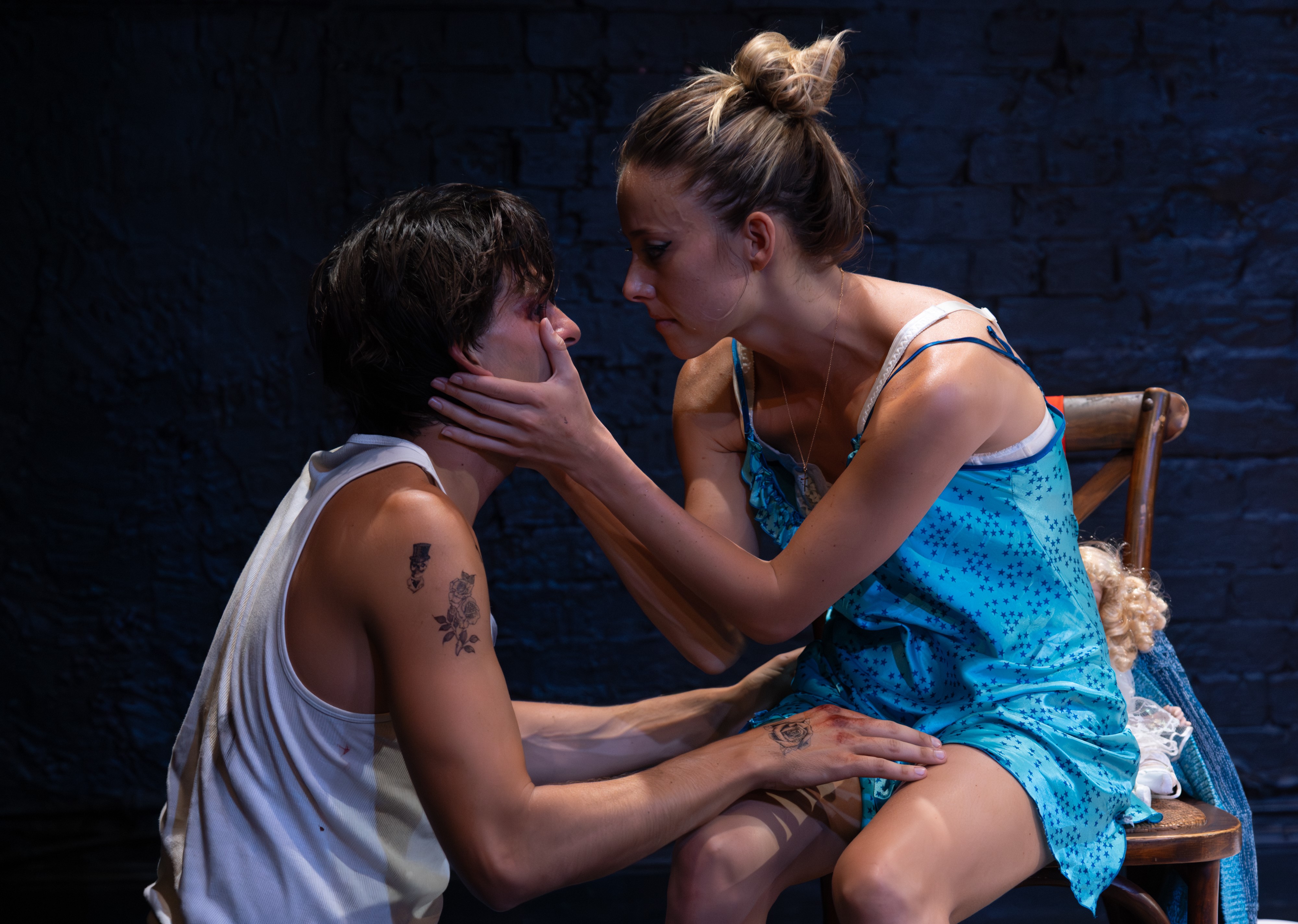
Written by Jack Kearney, Born on a Thursday is set in the late 90’s in western Sydney, and tells the story of single mum Ingrid. Her son, Isaac, has been left mentally incapacitated by a rugby league injury. Her daughter, April, has unexpectedly returned home after a long period of silent absence.  

The pace is gentle, akin to a glacier, whose majestic, barely perceptible movement is only apparent through the occasional violent smashing of things.

It’s also a story built from the withholding of information. Why has April come home now? What actually happened to Isaac? Who was their father? Perhaps this builds suspense; perhaps it reflects the laconic, emotional reticence of the working class. Despite the piece’s length, a lot of these questions ultimately aren’t clearly answered, or when they are, these answers no longer really seem to matter. We’ve moved on, and are witnessing the power of resilience and the wondrous birth of hope. Despite the suggestion of sentimentality that warmly infuses the piece, it’s this sense of moving on that grants it verisimilitude. Not that the characters deliberately or consciously move on, not that we’re being glibly instructed we should leave the past behind – rather we’re being reminded that Life, whatever it is, is something that runs in only one direction.

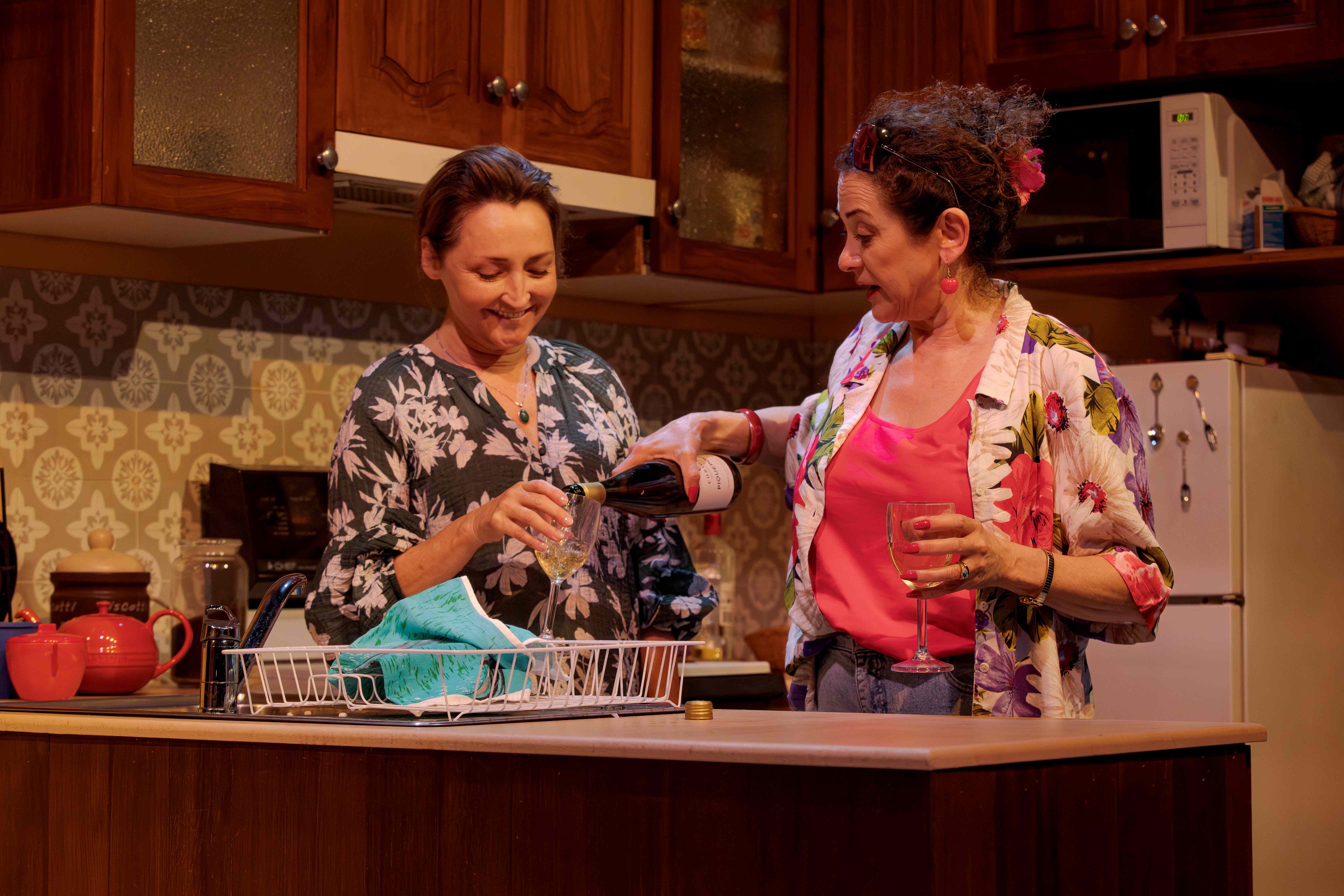
Director Lucy Clements elicits excellent performances from her cast. As April, Sofia Nolan portrays an eminently watchable tension between fragility and strength. As Isaac, Owen Hasluck captures frustrated bewilderment sparring with youthful energy. James Lugton, as the loyal neighbour Howard, gives us a wonderful portrait of gentle, patient persistence. Deborah Galanos, as the wine guzzling Estelle, is hilarious: brash, assertive, yet delightfully changeable. As Ingrid, Sharon Millerchip moves fascinatingly from a no-nonsense coldness to the surprise of joy, the reward for tenacity and its unexpected twin, hope.

Thursday’s child may have far to go, but distance isn’t everything.    

Paul Gilchrist

Born on a Thursday by Jack Kearney

presented by New Ghosts Theatre Company and Old Fitz Theatre,

at the Old Fitz until 14 Dec

oldfitztheatre.com.au

Image by Phil Erbacher

Chicken in a Biscuit

10 Oct

Tyger Tyger burning bright,

In the forests of the night:

What immortal hand or eye,

Dare frame thy fearful symmetry?

Did he smile his work to see?

Did he who made the Lamb make thee?

So wrote William Blake, as he struggled to make sense of the eternal Other.

Blake is not the only writer to wrestle with our relationship with our animal relatives. Christopher Smart in Jubilate Agno asks us to consider his cat Jeffrey – and urges us to see him as a wondrous example of Creation. Jack London’s Call of The Wild invites us to note the huge gap between domestication and an animal’s natural state. Lord Dunsley’s My Talks with Dean Spanley (adapted to film in a version with Sam Neill) has a gentler take on this peculiar relationship.

Chicken in a Biscuit by Mary Rachel Brown and Jamie Oxenbould is the inheritor of a grand tradition.

These writers focus particularly on our relationship with pets, and the style is wacky fun.

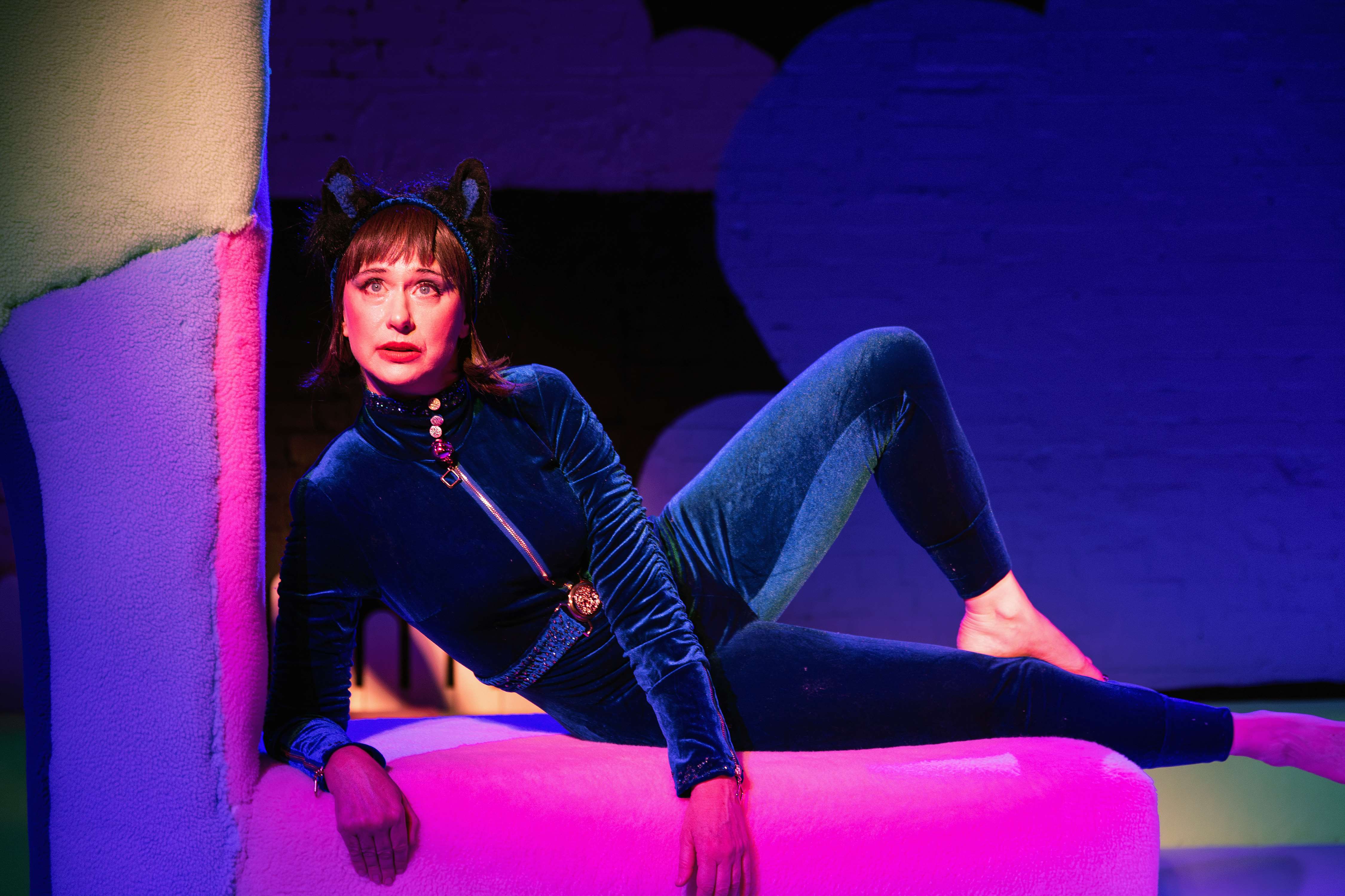
It’s a loose collection of monologues. Half portray pet owners. Half portray pets. In a bold decision, all are performed by human actors.

In the portraits of pet owners, a common note is an interest in unusual expressions of sexuality and a gentle mocking of dagginess. Not that the piece presents as a satirical attack on pet owners – with 75% of Australian households owning a pet, it’s more a comment on humanity and what we find amusing about that very strange species.

The portraits of animals riff on familiar tropes – cats as proudly imperious and dogs as dumbly loyal. In our Age of Offence, I’m sure someone will find the anthropomorphism a little tasteless (maybe me)– but the writers are doing no differently than have generations of cartoonists.

Directed by Brown, performances by Mandy Bishop and Oxenbould are delightful committed silliness.

Paul Gilchrist

Chicken in a Biscuit by Mary Rachel Brown and Jamie Oxenbould

Presented by Fixed Foot Productions

At The Old Fitz until 18 October

oldfitztheatre.com.au

Image by Becky Matthews

Betrayal

23 Jul

I know a lot of us justify the fact we’re yet to win a Nobel Prize in Literature by telling ourselves that it’s really just about who you know.

However, Betrayal by Nobel laureate Harold Pinter raises the disturbing spectre that the prize might also be awarded to those of genuine genius.

Several years ago, and for quite some time, Jerry had an affair with Emma, the wife of Robert, his best friend. Pinter tells most of the story through a reverse chronology, ultimately ending at the beginning.

The impact of reversing the tale’s chronology is twofold.

Firstly, it facilitates dramatic irony. Lies become more apparent, like shards of glass in sunlight. The audience delights in discovering the ways the characters have not been open and honest about the past.

But Pinter’s unconventional structure is not about giving the characters some sort of back history that explains or justifies their infidelity. (I’ve never been a fan of plays that use flashback to explain the present, feeling the question What happens next? is always more interesting than Why did that happen?) What Pinter does is more akin to what a craft-person working in the plastic arts might do. He crafts an object from the concept of betrayal, leaving us as unconcerned with narrative as we would be with, say, a small glass ornament. Instead, the concept is held up to the light, and we’re given glimpses from different angles, to marvel at the way the Truth is tainted.

This leads me to the other stroke of genius displayed in this unconventional structure: it weakens the sense of the passing of Time, as though whatever it is that is being betrayed is beyond Time – which, of course, it is. Every committed relationship we have is an attempt to transcend Time, to deny its inevitabilities, to say This Always, despite all Life’s vagaries.

And this hope filled fantasy of permanence aligns with how we usually think about ourselves as individuals. We imagine we’re like some solid object somehow caught in the current of Time. It’s as though we’ve accidentally fallen into that mysterious river and our natural element is elsewhere. Yes, we acknowledge the current will ultimately beat and batter us till destruction – that’s just a matter of Time – but we don’t see ourselves as fundamentally a part of the world that does that, but somehow outside and opposed to it. The soul-expanding thrill of Pinter’s play about deception is that the characters are continually shocked to discover that their secrets were always known, that their belief in their separation from the wider world was an illusion all along.

Cristabel Sved directs a wonderful production of this superb play. The staging is suitably and deliciously simple. Performances are excellent, offered in a gorgeous understatement that both highlights the glib naivety of those who deny realities greater than themselves, and which creates all the more poignancy when genuine vulnerability and passion are revealed.

Let me highlight a few moments of utter dramatic magic: the deeply human fragility of Ella Scott Lynch as Emma when she is simultaneously known to be unfaithful and aware the affair is over; Andrew Cutcliffe as Robert at a restaurant, cutlery in hand, barely containing his anger towards his supposed best friend; and Matt Hardie and Lynch as the two lovers, in the scene where their affair begins, so wanting to see life-affirming magic in what’s just a garden-variety curse; and Diego Retamales in a terrific comic cameo.

Paul Gilchrist

Betrayal by Harold Pinter

presented by Sport for Jove

until 10 Aug at the Old Fitz

oldfitztheatre.com.au

Image by Kate Williams