This a work of non-fiction, yet it’s highly theatrical. The artist bears witness to her experience, yet her method of telling her truth eschews any mundane assertions of a flat objectivity.
Instead we’re gifted a rich, high-energy performance that serves as an invitation into her emotional and psychological world. We’re not shown a mere map; we’re given a personal tour of the landscape.
Writer/performer Claudia Shnier presents her experiences of obsessive compulsive disorder and of an abusive relationship. The latter seems to exacerbate the former. It’s a story of suffering, but also of strength and resilience.
Shnier employs multimedia to suggest intrusive voices, and her interaction with the technology is superb.
A pair of scissors, a pair of tweezers and a vacuum cleaner double both as their everyday selves and as people in her life, and the commitment to the theatrical metamorphosis of each prop is fascinating.
Shnier’s delivery moves between a fast-paced-almost-aggressive swagger, a playful humour, and a deeply-moving, bewildered vulnerability.
I’ve written previously about the oddness of autobiographical theatre. It seems strange to use the artform for personal sharing, considering the glory of theatre usually derives from its multi-voiced possibilities. And perhaps even more threatening to the autobiographical purpose is the fact that – more than most artforms – theatre seems to court a very public judgement, one as unreflective as it is immediate.
But if sharing is the goal, there are few means more direct and more powerful than standing before an audience and opening one’s heart. And considering that the sting of many a pain is worsened by the fear we bear it in isolation, the sharing of an artist such as Shnier is gloriously generous-spirited, for it assures those who suffer that they’re not alone.
Written by James Elazzi, this is new work, but it’s a historical piece, with everything occurring forty to fifty years ago.
And it’s set in Lebanon, rural Queensland, and Sydney.
This is big storytelling, and it’s terrific to see it on one of our stages (and the Loading Dock and Qtopia deserve credit for giving space to such stories.)
But Saints of Damour is also small storytelling; we’re very much focussed on Pierre, his mother, his wife and his lover. The big historical events remain in the background. (The dramatic form doesn’t make this inevitable, but very different creative decisions would’ve had to been made on the script level if a grand historical drama was to be offered.)
The title is a tease: are these characters saints?
Sure, they feel the weight of duty, especially to family, but they’re also quite prepared to behave in ways that cause serious pain to others. Migrants in a new country, they stick together, but the dust of dishonesty dirties everything. It’s a long time before Pierre’s homosexuality is acknowledge or accepted by anyone except his lover. And Pierre’s decision to not reveal his sexual orientation to his wife before their marriage – even privately – seems unnecessarily cruel.
Are we victims of our circumstances or can we rise above them? That’s the fundamental question the play posits (though I’m not sure if it posits it consciously.)
We talk a lot about theatre that makes us feel seen.
And this narrative feels as though it’s attempting to be true to some particular personal history. I say this because it sprawls, as though it’s trying to capture what actually happened to someone.
Seemingly superfluous to a story, the family spend several years in Goondiwindi. They buy land and try sheep farming, though they’ve had no previous experience. They also open a small shop in town and an ad runs in the local paper telling residents to boycott them. These challenges are not especially developed in the script, it’s as though it’s sufficient they are recorded. Witness needs to be borne. (A similar recording of what appears to be actual events happens when the family move to Sydney: an Anglo-Australian who has lived in this city his entire life, and who has the privilege of a tertiary education, says he’s never seen the Blue Mountains. It seems so unlikely that it has to be based on the truth.)
Ironically, this sense of truth being recorded is emphasised by the play’s treatment of major historical events. Big issues are, oddly, given short shrift; they’re outside the parameters of a story dedicated to documenting personal lived experience. For example, the gay lovers believe they will have more freedom in a Western country, which is probably true, but when Pierre gets to Australia no mention is made of the fact homosexuality remains illegal or that the battle to change that injustice is being fought. It’s outside this story’s scope. Similarly, the outbreak of the Lebanese Civil War is the impetus for the characters’ migration, but the complexity and tragedy of a society tearing itself apart remains curiously offstage. Ethnically, the two lovers are from opposing sides in the conflict, but little is made of this. And, when they’re in Australia, only Pierre is interested in what happens in the homeland, and seemingly only in terms of his lover. No one else seems haunted by the past, or as it is for them, the ongoing present.
It’s the sort of play where characters, when they’re concerned about who might have survived the conflict in Lebanon, say things like I’m concerned about who might have survived the conflict in Lebanon.
As a whole, the dialogue is lucid and limpid. Or direct and flat. It’s a matter of taste.
There are many quick scenes and, aided by a clean, functional design by James Smithers, director Anthony Skuse creates a beautiful sense of flow.
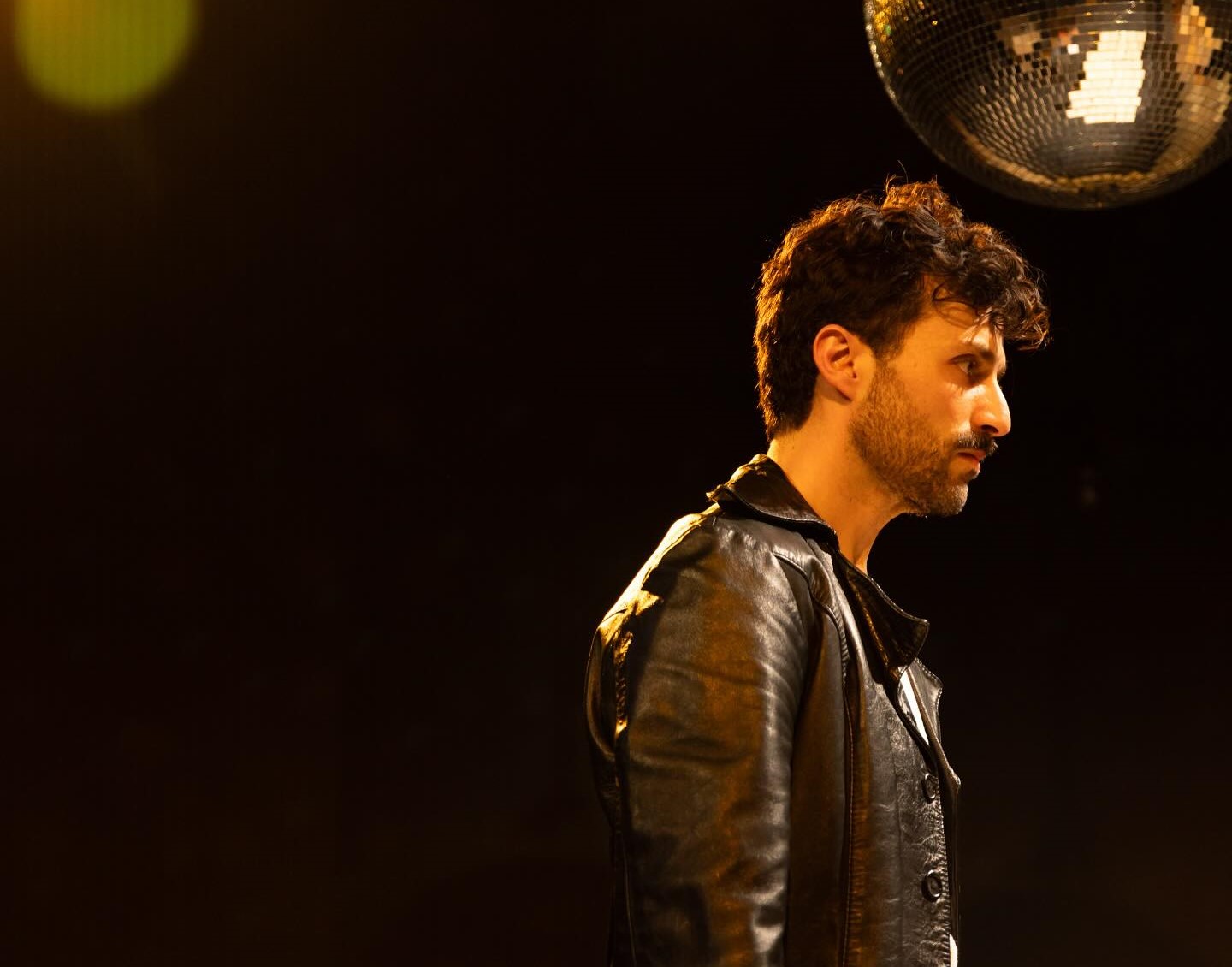
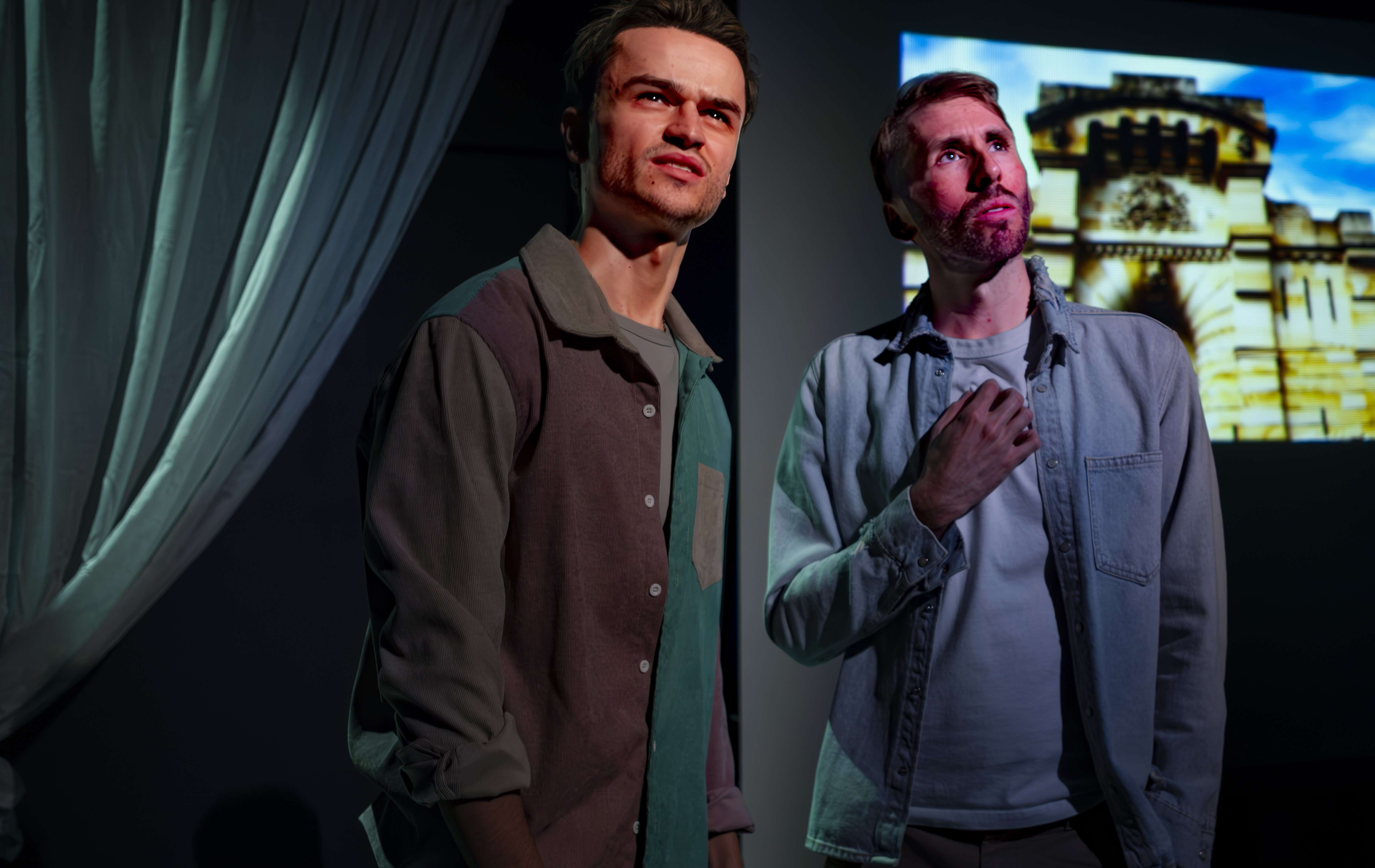
The cast are imminently watchable. The two lovers (Antony Makhlouf and Saro Lepejian) have a delightful, intense chemistry. Nicole Chamoun as Layla, Pierre’s wife, pitches her performance gorgeously between protest and pathos, while still finding that vital spark of joy. Max Cattana as Todd (who’s never been to the mountains) is splendidly gentle and, in other bit roles, displays a laudable versatility. As Pierre’s mother, Deborah Galanos has a glorious waspish tongue (which she also used on us before the performance, asking us to turn off our mobile phones.) At the finale, her bewildered terror, her explosive anger, is a moment in which the piece realises the dramatic form’s full potential (that is, refusing us any easy, unthinking judgement of the characters.)
Stories that make us feel seen – I suspect many audience members will feel this piece does this in spades.
But the title invites more: it’s a provocative reminder that having our challenges acknowledged does not automatically result in our actions being approved. It would be a pity for the dramatic artform if being seen was allowed to diminish into being justified.
Philosophers as great as Plato, Augustine and Foreigner have all wanted to know what love is.
So, a title like this has genuine swagger. Are we, finally, to be given a definitive answer to the greatest of questions?
No.
This is L-O-V-E is an anthology of playlets by American dramatist Allan Staples, here somewhat loosely linked together by a connecting piece written by director Kai Paynter.
The playlets are all about love (romantic love, that is) and they’re all either very funny or very touching – but, of course, no definitive answer to the question What is love? is being offered. It’s more of a shot-gun style scatter sample. Any overarching theory, if one were ever worth attempting, is up to us. (I’m not sure if the playlets were originally intended to be grouped together.)
The eleven-strong ensemble are a little uneven, especially in terms of vocal work, and the changeovers between the playlets would benefit from more pace and pizazz, but the writing is beautiful and some of the performances are magnificent.
A couple process some daunting medical news. Kate Jirelle and Kirk Hastings work brilliantly the surprising humour, and Jirelle as the woman facing the diagnosis finds a gloriously honest and deeply moving vulnerability.
Another couple suspect they may be pregnant, despite having a decidedly unserious relationship. With Georgia Britt and Dominic Di Paolo, the gags fire, but both actors also offer emotionally inspiring performances: Britt presents a poignant dignity and Di Paulo an unexpected chivalry.
Two men bump into each other at an airport. Why did their romance fail? Alex Baum and Rhett Wilks superbly portray the heady mixture of residual resentment and ongoing chemistry.
Presented by The Americas A Theatre Company, there’s an intriguing focus on the USA. During each playlet, a photo of a recent American president is projected on the upstage wall. I was unsure whether these were meant to place the playlets in time. On occasions, I could draw a connection between the concerns of the particular playlet and the policies of the pictured president, or with events during his term, but often I couldn’t. I certainly didn’t need to see a two metre tall projection of Trump’s face.
This focus on the USA is curious, because it positions us to ask if the aim of the piece is to present love as it is experienced American-style. (It’s also quite brave, because since at least the 1940’s, Australian audiences have hardly been deprived of American culture. It’s only recent political events in the northern hemisphere that have left us wondering if America was always more foreign than we assumed.)
But perhaps that’s the point: despite the recent turn in American politics, both disturbing and bewildering – its people are still people, who like us all, worship before the great mystery of love.
Paul Gilchrist
This is L-O-V-E by Allan Staples (with Kai Paynter)
Presented by BearTiger Productions in association with The Americas A Theatre Company
At the Loading Dock Theatre, Qtopia, until 15 March
This is a rom-com. Yes, I know Shakespeare made this sort of thing work, with his poetry and multiple storylines, but it’s a genre I don’t usually enjoy, and one I don’t think particularly suited to theatre.
But, written by Dax Carnay with Aleks Vujicic, Chasing Dick is utterly charming.
A father (Jason Jefferies) and a son (Chris Colley) have both fallen for Dick (Carnay), a trans woman.
Directed by James Lau and Carnay, the performance style is a sort of naïve naturalism, and the characters created are warm and very likeable. Carnay, in particular, is a gifted comic actor.
The result is a show that’s cute, funny, and wonderfully effervescent.
But it’s not just bubbles; there’s some invigorating tensions that give the piece a glorious richness.
Firstly, there’s a fascinating dual narrative in regard to Dick’s backstory. At one point, her Filipino culture is described as conservatively intolerant of her identity, retrograde in comparison to a more open Australia. In another telling, her original culture appears warmly accepting. Is the character indulging in revisionism? If so, it’s a penetrating portrait of the psychological complexity of migration. Or, are the competing narratives indicative of the inescapable contrast between our anxieties and reality? She feared coming out, but was then happily surprised? If so, it’s an insight into abuse’s inevitable and insidious ability to warp our world view; a single snarl erases a thousand smiles, and can hold us back from so many more.
Secondly, there’s a moving interrogation of the trope of the Manic Pixie Dream Girl (MPDG). The MPDG is a female character who sometimes pops up in romantic comedy, a woman of transgressive energy but no apparent interiority, a woman whose sole purpose appears to be aiding the male characters’ growth. Both father and son fall under Dick’s vivacious spell, but she complains You see me, but you haven’t listened to me! She refuses to be reduced to a fetish; she demands to be recognised as a full human being. But, at the same time as rejecting the dehumanising elements of the MPDG, the positive aspects of the trope are retained. Dick does encourage the men to mature. A cynic might reject the lessons these characters are asked to learn as mere psychobabble – of the Tennyson-inspired Better to have loved and lost variety. However, romance might be the silliest of the serious things, but in a world in which the silliest people seem to have gained control of the most serious things, lessons of acceptance, openness and the importance of genuine love have definitely not lost their vitality.
Thirdly, the play offers a transformative exploration of reductive thinking. Confronted by his unexpected feelings for Dick, the elder of her devotees wants to know What am I now? It’s a powerful poke at conservativism. (I, for one, wanted to scream from my seat Why do you NEED a label?) And yet, in a play that positions us to question the oversimplification of labels, Dick says very clearly I am a woman.
And it’s a truly beautiful moment.
The current fashion in our theatre is to be overtly political, to be direct, didactic – and dull. We like to tell our audience what to think. One way we do this is by loudly asserting the rights of marginalised peoples. Jeremy Bentham famously suggested that any talk of rights was nothing more than nonsense on stilts, meaning it was just airy-fairy fancifulness, rights ultimately being guaranteed nowhere and underwritten by nothing. Inadvertently (perhaps) Bentham’s dismissive metaphor highlights the appeal of the language of rights – after all, everyone does stop to watch a person walking on stilts – though he was correct in suggesting it’s not usually a sight that has a life-altering emotional impact.
But when Carnay as Dick asserts I am a woman, she is not speaking the language of rights, she is not furthering an agenda, she is not repeating the party line. She’s being far more radical than that – she is being honest.
I’m not completely dismissing theatre with political attitude, but a piece like this is an invaluable reminder of how we might best connect with our audiences. It is openness that breeds openness, and I suspect many more hearts are melted by sincerity than ever are by slogans. If justice is to stand, it will stand strongest when built on the knowledge of our shared humanity.
Written in a predominantly TV-style realism, The Queen’s City of the South by Mark Salvestro is thoroughly engaging.
Set in contemporary Cooma, this play achieves a strong sense of place, always a real achievement in the dramatic form.
It also builds on some fascinating tensions, pitting city against country and the past against the future.
Director Ryan Whitworth-Jones elicits good performances from the three-strong cast.
Ryan (Salvestro) has returned to his home town from the Big Smoke, and is now well and truly out. Cooma seems to have embraced his very camp community radio program.
His close friend, Maggie (Kath Gordon), is a member of the local historical society. She’d love to relaunch the Festival of the Snows, the street parade that did so much to bring the multicultural town together when she was young.
Her historical passion is tied thematically to the arrival of an outsider, Lucas (Jack Calver), a man similarly intrigued by the past. Lucas is writing a book about his recently deceased grandfather. To his surprise, Lucas has discovered that his grandfather spent time in Cooma. To his greater surprise, he has also discovered his grandfather was gay.
Why Cooma? There’s no record his grandfather ever worked on the Snowy Mountains Scheme …. and then the penny drops: the gaol. After all, homosexual activity remained a criminal offence in this state until 1984 – and Cooma is where that particular set of “offenders” were sent. In the late 1950’s, the then Justice Minister proudly boasted that Cooma was “the only penal institution in the world, so far as is known, devoted specifically to the detention of homosexual offenders”. There’s even a strong suspicion that conversion therapy was practised, something no-one’s rushing to mention at the Cooma Visitors Centre.
Set in the present, the play doesn’t dig too far into what actually happened in the gaol, but rather focuses on contemporary responses to it. As such, it’s a vital interrogation of our relationship with the past. What do we choose to remember and what do we choose to forget? What conversations about the past are we allowed to have? Ryan is given a beautiful line in which he suggests that, in regards to homosexuality, the wider community is happy with gay camp but wants it without any gay trauma. In the varied response to the town’s history, the divide between the two gay men and the presumably straight Maggie is presented with beautiful subtlety and texture.
Our contemporary focus on political rights sometimes leaves little space for consideration of political process. But how is change to come about? You may be certain of what is just, but how do you make society follow suit? The current default position is to simply assert your vision repeatedly and aggressively. It’s a strategy more suited to the creation of division than progress.
Though the denouement is rather quick (not surprising considering the production’s already 100 minutes running time), it’s exciting to see modern Australian theatre with political maturity, a piece that suggests real change can happen, not when those who disagree with us are cast as immutable enemies, but when we seek ways in which people might work, and grow, together.
This is great fun and seriously thought-provoking.
It’s also incredibly difficult to write about without breaking the spoiler rule.
Freddy is finishing his HSC and is about to turn eighteen. Liv, his sibling, has come home from overseas to help him celebrate. But his parents, Beth and Jim, are worried about Freddy’s behaviour – though it’s not like they have everything worked out themselves.
None of that is spoiler material, but the very kernel of the piece is dependent on the withholding of information. The nature of Freddy’s problem is only fully clarified at the play’s resolution. Stories that withhold information have dangers: some audience members clock what’s going on immediately and lose interest, others only understand in the final moments and so become frustrated long before that.
Written by Daniel Cottier and directed by Benjamin Brockman, this piece avoids these pitfalls by its humour, deeply humane vision and wonderful performances.
Nicholas Cradock’s Freddy is a moving portrait of a troubled soul. Nyx Calder as Liv delivers sharp one liners marvellously, but also gives a rich characterisation of caring sibling and angry child. Hester van der Vyveras Beth and Richard Hillair as Jim are hilarious as they work the satire of early middle-aged myopia, but when things get genuinely confronting, they subtlety move to truthful performances of perplexed but heartfelt concern. When the full extent of Freddy’s pain is revealed, van der Vyver’s reaction of bewildered vulnerability is absolutely magnificent
I don’t think I’m giving away too much to say Freddy has mental health issues.
Voice over is used to suggest Freddy suffers from intrusive thoughts. It’s a bold decision. Drama always struggles to present the inner experience of its characters. We guess at a character’s inner world from their words and actions, but as in Life, we can’t really get inside. The Elizabethans invented the soliloquy to try to solve the problem – but it’s only a partial solution, privileging a character’s deliberate, articulated thoughts rather than the ever-changing whirlwind of interiority. The VO powerfully underlines that Freddy is a victim of thoughts he can’t control, but each time it’s used it threatens to pull us out of the world of the play. Why can we hear his voices while his Mum, Dad and sibling can’t? (Yes, I know, the characters don’t hear the soundscape either – but then none of them do.) This VO technique has been used in other productions to create humour – it sets up that expectation – but I was glad it wasn’t employed that way here. What Cottier is exploring is too important for that.
Freddy can’t control his thoughts – and control is a theme that weaves through the piece.
Consider his parents. Mum wants to control Freddy’s study habits and places unneeded pressure on him by repeatedly asserting he will be school dux. Dad wants Freddy to leave his room, to get out and do stereotypical-straight-male-teenager-sort-of-things. Like Mum’s demands, it’s good-natured, but it highlights that teenagers must perpetually navigate parental expectations.
And the younger generation don’t get off unscathed. There’s a poke at their desire to control in the quip They care about everything, that’s why they’re all so depressed.
Chilled Liv seems able to transcend the temptation of control, but even they, in the inevitable argument with Mum about personal pronouns, falls back on But I want you to call me that!
So, what about the focus of the piece? Freddy’s condition? Is this also ultimately about seeking control? His cure obviously is; he needs to get back control of his own thoughts.
But what about the condition itself? Is there an element of control-seeking in his behaviour? On the simplest level, I don’t think this play says so; it’s too beautifully empathetic. But its presentation of poor teenage Freddy’s suffering is so powerful that it becomes apparent that his desire to keep it all to himself is part of what prevents him finding relief.
The piece is a gorgeously gentle, generous-spirited reminder to talk about it, to seek help.
Written by Noëlle Janaczewska and directed by Kate Gaul, it has performer Jules Billington present a persona who shares the story of “re-queering” herself.
The Covid years give the persona both the impetus and the time to re-investigate lesbian voices in fiction, and she juxtaposes her discoveries with her own romantic and sexual history.
The work is remarkable on many levels.
Firstly, it’s a delight to see on stage a persona with an intellectual life. (It’s standard for Australian playwrights to create characters less intelligent than themselves. Why?) The persona discusses the joy she’s found in lesbian writers like Sappho, Amy Levy, Radclyffe Hall and Virginia Woolf. (Though not specifically mentioned in this production, Clarissa Dalloway’s ecstatic response to Sally Seton – “She is beneath this roof….she is beneath this roof!” – is surely one of the most thrilling lines in 20th century fiction.) And the persona, excited by literature, is naturally also excited by language. She kissed her she quotes from a novel, and then savours that In most sentences it’s the verbs that do the heavy lifting; here, it’s the pronouns. She muses mischievously on the changing meaning and connotations of the word queer, and plays punning linguistic games with its spelling. Janaczewska gives this persona language that’s playful, precise and poetic.
Secondly, the work is magnificently transgressive in its form. Annoyingly, no doubt, I keep referring to the persona, rather than the character. I’ve done this because we’re not being offered the regulation artistic facsimile of a person, a created character that we’re invited to comprehend in terms of motivation and to judge in terms of competency of execution. There’s not the slightest whiff of dramatic irony; we know nothing more than the speaker herself. The literary antecedents of this type of thing are the great humanist essays of the likes of Montaigne, but when I say essay, I don’t mean the dull academic sort. The humanist essay has always gloried in sharing the personal in order to facilitate a discussion of the universal, but it also reminds us that, regardless of which grand narrative we choose to lose ourselves in, Life is always lived from the inside, in the particular place and time you find yourself. The magic of Janaczewska’s approach is that she takes this very literary tradition and gives it theatrical form, and so further highlights the individual – the wonder of human Life as it is actually lived. The concrete, the particular, the specific, suggested in the written essay form by only language, is beautifully enhanced here by the performer’s voice and movement. There’s no sloppy abstraction, only marvellous multifaceted reality.
Which leads me to my third point – Jules Billington’s splendid performance. Guided by Gaul, they give a performance that is (to the very syllable, the very glance) exact, crisp and yet still utterly natural. It’s a joy to witness an actor use all the tools in the box with such consummate skill.
With the aid of lighting designer Benjamin Brockman’s hanging globes, Gaul gives Billington a space that evokes the inner world, the liminal, the perpetual becoming, rather than being, which is the hallmark of the life of the intellect.
And, finally, let me consider the work thematically. On the simplest level, it’s about the silencing of lesbian voices.
An analogy (not Janaczewska’s): What we can say is analogous to What we can see. The electromagnetic spectrum consists of a middle ground – all the light we can see – which is bordered on either side by wave lengths beyond human perception. What we can say inhabits a similar spectrum. The middle consists of what can be easily shared and discussed, but this common ground is bookended by two great silences.
On one side is all the things we’re not permitted to talk about. One of these was, and is, the queer sexual experience. We live in a censorious age. Book bannings are increasing. And, with the fear of being cancelled, comes the even more insidious censorship of self.
The past is a wild party because, if you explore literary history, it becomes apparent there’ve been times queer sexuality has been celebrated. Perhaps we’re experiencing a blip, an aberration that was most pronounced with Victorian prudery but still cankers in contemporary conservatism. But there’s hope in looking both into the past and into the future.
But what about the other end of my imagined spectrum of speech? If one border designates the limit of what it is permitted, what does the other border designate? What it is possible. There’ll always be the ineffable, those human experiences which seem beyond artistic representation, where silence reigns supreme.
But, with its gloriously innovative form, The Past is a Wild Party pushes back that boundary as well.
The Loading Dock Theatre is a brilliant addition to the Sydney scene.
I was privileged to see the first show produced there, Michael Gow’s Toy Symphony, presented by Ad Astra.
The play was first produced in 2007 at Belvoir. It tells the story of Roland, a famous playwright suffering writer’s block (though don’t you dare use that phrase in front of him.)
There are three curious aspects to the play.
The first is that it’s almost theatre in the first person. I’m not suggesting it’s autobiographical (who knows?) but it’s fascinating that the focus is so firmly on one central character. And this is highlighted by the fact that good chunks of the play appear to be this protagonist’s personal memories. Furthermore, the protagonist’s problem is quite particular: can he continue to write theatre? (Admittedly, anything of concern to any individual should be of interest to a truly cosmopolitan person. That Gow assumes his audience consists of such broadminded people is a beautifully generous-hearted vision.)
Another curious aspect of the play is its structure. This production was two and a half hours (including intermission) and there are scenes which left me wondering why they were there. They’re interesting in themselves, but I was uncertain of their purpose or value in the play as a whole. Why do we get a scene explaining copyright law? Why are the childhood memories of Como Primary School so thorough? Why do we get a lengthy monologue in which Roland tells an unseen character what he said at his mother’s funeral? These vignettes further suggest the play’s affinity with autobiography, a form which acknowledges that the entire truth of a life can never be told, but that certain select moments will be its best intimation. The truth is clearly outside the text, not inside. This is probably true of all theatre, but to vastly varying degrees. Some plays seem to deliberately ask us to judge whether they’re a fair representation of reality (or, increasingly, they simply assert they are.) Other plays focus instead on drawing us into their world, inviting us to go for the ride. Toy Symphony is the first type, because the vignette form means the world of the play is inherently fractured and incomplete, but the challenge for us is that the truth being represented seems so especially precise, and potentially personal, that it’s difficult for us to judge the representation’s success.
The final intriguing aspect of the play is a recurring conceit. As a child, Roland can conjure people. He thinks of them, and they appear – but not to his mind’s eye alone, to everyone else as well. On one level, this is a literalisation of what playwrights do when they create characters … but the conceit resists such easy interpretation. If it’s meant to suggest the potential creative power of playwrights, you might respond that surely the play itself is an attempt to display this power, and so the conceit begs the fundamental question of realist theatre. (It’s as though a carpenter made a table out of little tables in order to clarify what she can do.) As a result, the play feels like a shot fired in a very Australian culture war, part of that battle in which artists desperately feel they must justify their own existence.
Clearly, this play sent me off into the night with a bundle of questions – exactly what I want from theatre.
Director Michelle Carey deals with this provocative play by presenting it with boundless energy. Gregory J Wilken as Roland gives a performance that’s vibrant and always engaging; juxtaposing the wide-eyed child with the jaded artist. The supporting cast matches his energy, bouncing between realistic portrayals of adult professionals to theatrically enthusiastic children. Let me cherry pick some favourites. Wendi Lanham is eminently watchable as Roland’s therapist. Felix Jarvis as Daniel, an actor in training, gives a wonderful portrait of that youthful mix of confidence and insecurity. Bernadette Pryde is mesmerising in her evocation of the gentle, good humoured primary school teacher. Sam Webb as the school yard bully is suitably both intense and dense, and John Michael Narres’ school principal is deliciously meanspirited.
It was a pleasure to see this piece in an exciting new venue.
Paul Gilchrist
Toy Symphony by Michael Gow
at the Loading Dock Theatre, Qtopia, until 27 April





 Theatre Red