An increasing familiarity with a writer’s body of work offers real delight.
And it’s not just the delight of the know-it-all or the systemiser, the sort of pleasure that comes from a sense of superiority or control.
It’s the joy of meeting the artist behind the work, of getting a sense of their world view, their fascinations and their fears, what they feel they can attempt and what, for whatever reason, they eschew.
Jane Austen famously described her writing as a little bit (two inches wide) of ivory on which I work with so fine a brush, as produces little effect after much labour – and if you’ve had the good fortune to read her six novels, you’ll know that even in her throw away aphorisms she was the master ironist.
But what of Tennessee Williams?
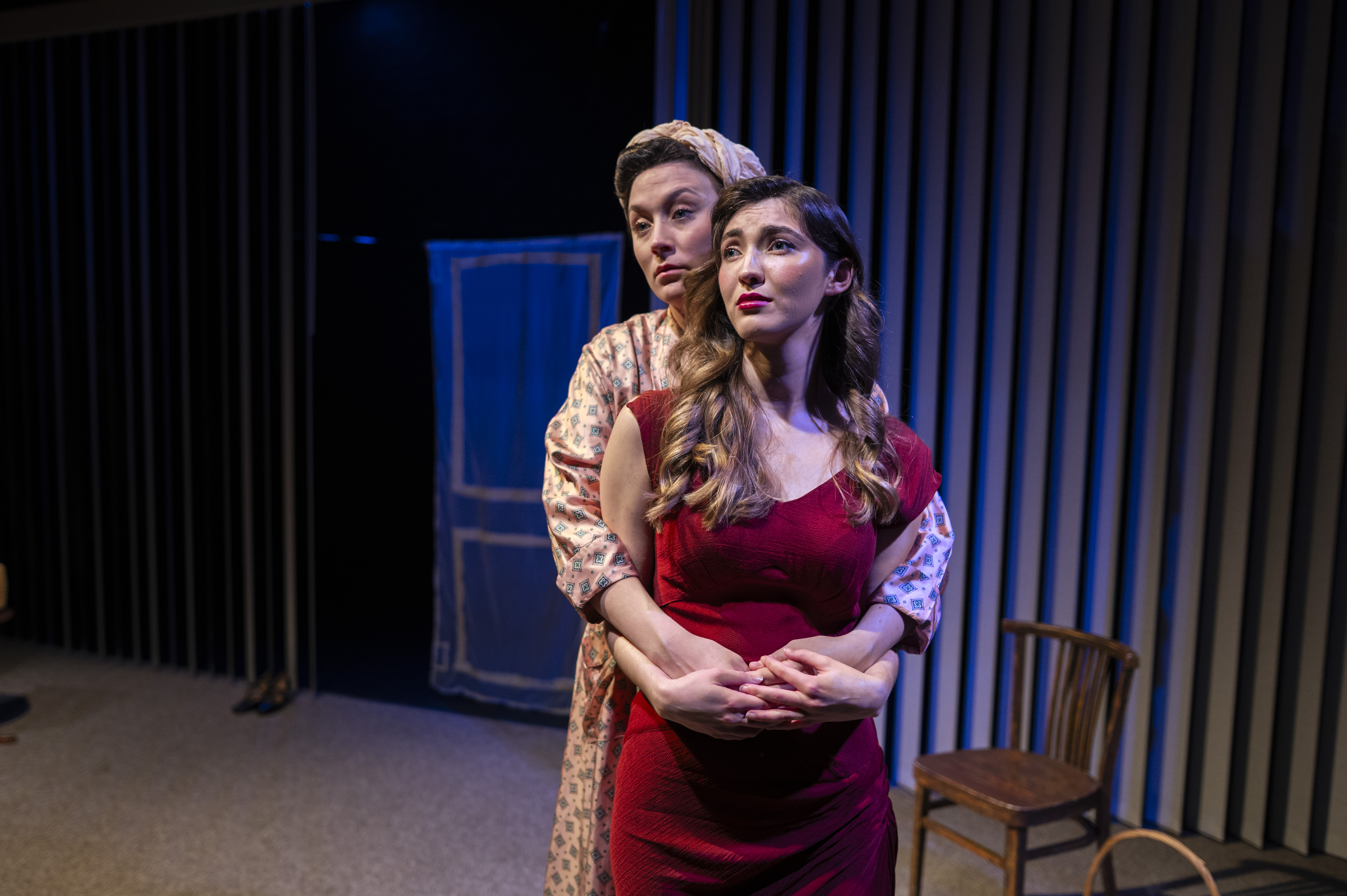
Many of us are familiar with Williams’ full length plays The Glass Menagerie, Cat on a Hot Tin Roof and A Street Car Named Desire, but we’re less familiar with his short works. This production presents three of those playlets: At Liberty, Auto-Da-Fe and This Property is Condemned.
Williams was very proud of many of his short works.
And they further the impression of the artist and his art that many audiences get from his better known plays. On a linguistic level, they’re constructed from a beautifully heightened language that never loses its connection with the genuine vernacular. On a thematic level, they’re built from the tensions between sexuality and respectability, purity and pretension, and loneliness and fulfilment. And because they’re usually performed in a Southern accent (as they are here) they seem to offer a portrait of a particular part of the USA at a particular time. (You might assert that all theatre does something like my last point; that is, depict a specific place and time, but I think that’s true to varying degrees. Williams always seems aware of Society – that demographic cultural phenomena which is the subject of study of sociology, and is posited by modernity because it recognises the ubiquity of the arbitrary. Williams is aware of this Society in a way that, say, Shakespeare is not. You could argue this is because Williams is more interested in the outsider, but Shakespeare has characters like Othello and Shylock. Williams’ outsiders, however, are not obviously outsiders: he’s the great playwright of the hidden subversive.)
Directed by Megan Sampson, this production is a wonderful opportunity to consider the exact nature of the playwright’s genius (and, if you read this before you go, offers the added pleasure of concluding that my assessment of Williams is utterly inadequate or simply absurd.)
I’ll forgo filler and refrain from a description of each playlet; with the whole evening only 50 mins long, scenarios too easily slip into spoilers. Suffice to say, each piece is a treat, and the six different roles, doubled by Helena Cielak, Will Manton and Emma Wright, are brought to life with a precise energy. Cielak portrays two different women who each in their own way balances a radiant presence with a pathos-inducing bluster. Manton creates portraits of both uptight repression and bewildered innocence. And Wright brings fitting focus to two distinct characters who represent firmness in the face of flailing volatility.
Paul Gilchrist
Three (Short) Plays by Tennessee Williams
Presented by Ground Floor Theatre Company
At the Old Fitz, as the Late Show, until 15 August
Image by Robert Miniter
 Theatre Red