Archive | March, 2026

Fair Play

14 Mar

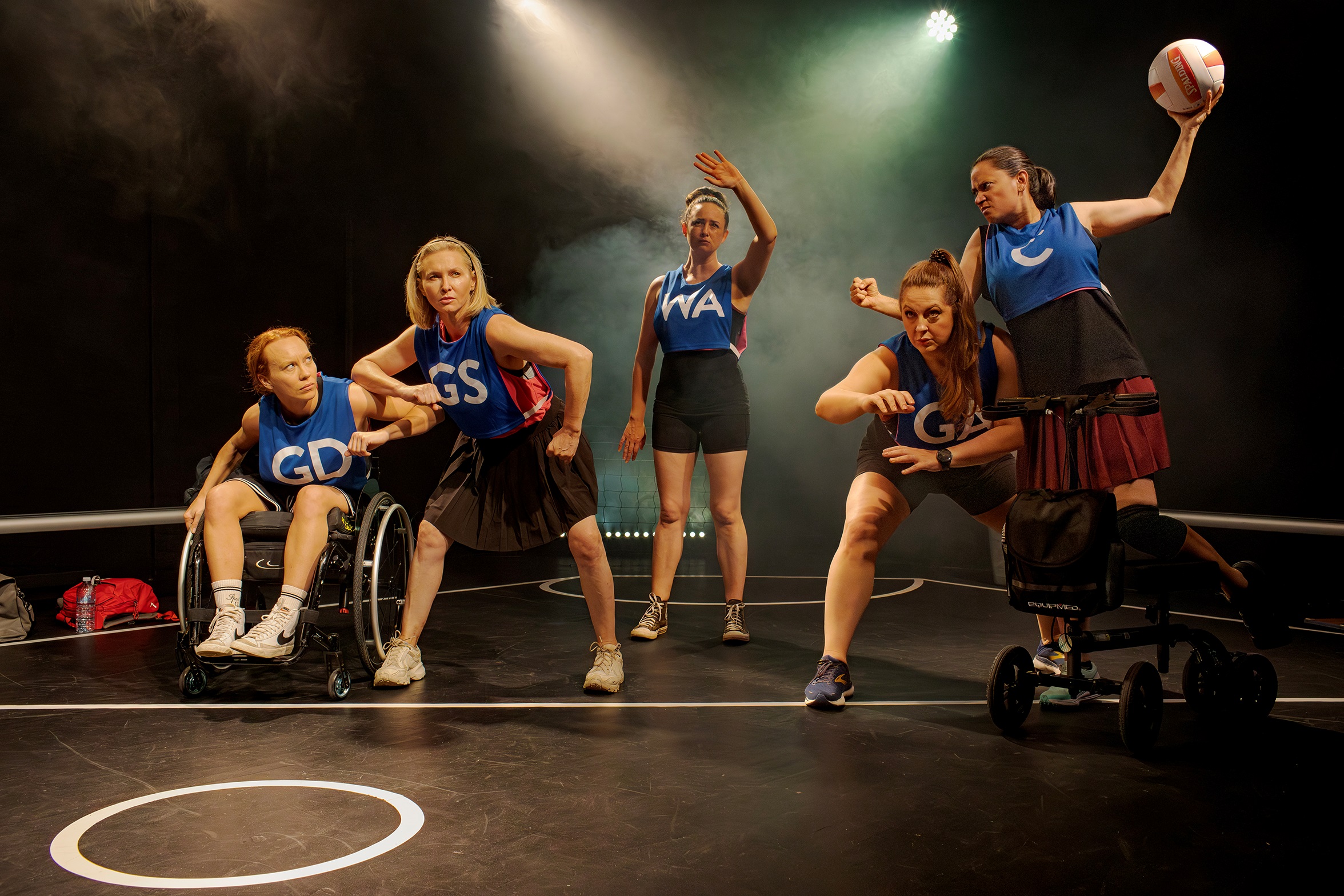
This one would be a challenge to make work: there’s only two actors, it’s 100 minutes long, there’s a huge number of short scenes, and it’s about athletics.

It does work, and gloriously so, thanks to skilful direction by Emma Whitehead and cracking dialogue by Ella Road.

Whitehead marshals a talented team to splendid effect, with projection by Aron Murray, lighting by EJ Zielinski, sound by Mitchell Brown & Osibi Akerejola, design by Kate Beere, and movement choreography by Cassidy McDermott Smith, all creating a pleasingly complete world of vitality and tension.

As Anne and Sophie, Rachel Crossan and Elodie Westhoff give terrific performances. There’s high-energy physicality and well-delivered humour, but also inspiring representations of strength and moving representations of vulnerability. 

For most of the play it appears we’re being given a story of young female friendship, and we could do with more of these on our stages. And it passes the Bechdel test with flying colours; sure there’s talk of boys, but they’re far from the focus of these two young women’s lives – they live to run.

Or is it to compete?

That’s the twist. Competition is not inherent to friendship. There’s something frightening and threatening about competition being the backdrop to this relationship.

Until about 80 minutes into the show I was enjoying the richness of this representation of a friendship played out in an environment hostile to genuine trust and connection – and then it changed into a play about something else. Considering this change happens a long way into the action, to discuss it risks breaking the spoiler rule – but then the idea of rules and who gets to make them is one of the things the play tries to teach us, so I’m going to break it.

Read on at your own peril.

The play becomes a promotion of the argument that a neat binary concept of sex doesn’t fit reality. As one character says, the science isn’t reductive, but society is.

Does the play become didactic? We do hear from the other side. Aired is the view, that in physical competition, a clear binary division between the sexes is fairer. But the arbitrariness, and cruelty, of such a view is made apparent.

I found this change in what the play was doing frustrating, because matters of importance were being rushed. After one event, Sophie says she mistimed her race, that she’d left her run too late – and I think that’s the case here.

But that’s just a dramaturgical complaint (one I can guarantee is not shared by everyone.) There was another aspect of the play I found delightfully provocative.

The play explores the concept of justice in competition –  but the two nouns in that phrase seem at odds. The first is an ethical term, and the other is, well … not. Or, at least, not obviously ethical. In fact, to some overly delicate souls, competition is downright problematic. I know we like to tell ourselves that human societies are fundamentally competitive – but are they? And should they be? Should we be encouraging competition? Is “Faster, Higher, Stronger” really a laudable goal? The fact the Olympic motto was updated in 2021 to include one more word – “Together” – highlights that there’s serious uncertainty about the valorisation of competition. Does the pursuit of justice in competition unwittingly justify a human behaviour that we’d be better off not justifying?

Or, more insidiously, does the pursuit of justice in competition contaminate the very concept of justice itself? Does it risk reducing justice to merely the right of every person to be considered better than other people?

As I said, delightfully provocative, thrillingly energetic and vitally important.

Paul Gilchrist

Fair Play by Ella Road

presented by Lost Thought

at the Old Fitz until 21 March

oldfitztheatre.com.au

Image by Robert Miniter

Monster

12 Mar

Why are there so many violent children?

What do we do about them?

And how do we stop the problem arising in the first place?

Our culture assumes there must be simple answers to questions such as these. We’re certain of the destination, so there must be a path. Perhaps this attitude is a product of our hubris, or a result of the current fashion for self-righteousness. Or maybe it’s a consequence of something closer to universal, the spell of language: if you can formulate a question, then there must be an answer.

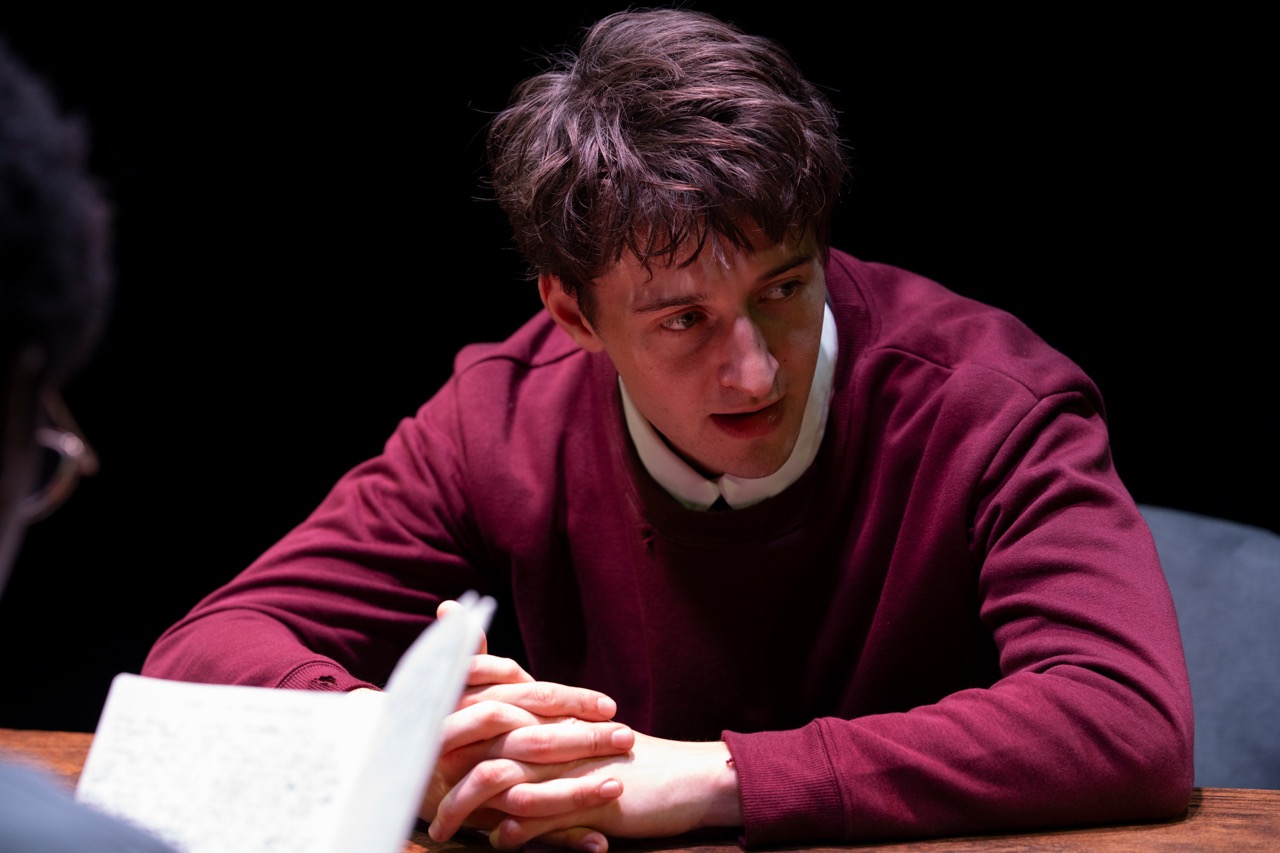
In Duncan Macmillan’s beautifully wise play there are no simple answers.

Fourteen year old Darryl is obsessed with violence. School staff member Tom doesn’t know how to help. And Rita, Darryl’s only remaining family member, desperately wants to pretend he’s just a normal teenager.

There’s a brilliant piece of dialogue between Tom and his partner, Jodi. (I’m probably paraphrasing, but this is its core)

Jodi: Who’s to blame?

Tom: Noone.

Jodi: Then what hope do we have?

Darryl also refers to this blame game.

Counter-intuitively, blame bestows hope. Blame assumes powerful dangerous forces could have been controlled, if only we’d done what was right. (As though perfection were possible in this sub-lunar world, as though we could return to Paradise after the Fall.)

Director Kim Hardwick’s production is excellent; aided by designer Victor Kalka and a splendid cast, there’s a pared back simplicity that lays bare the complexity of the human heart. (There is one simplicity – but more on that later.)

Campbell Parsons as Darryl is magnificent. Macmillan gives Darryl an incendiary idiolect – a hilarious, frightening language sourced from English working class slang and American gansta rap – and Parsons has utter command of this explosive mix. His portrayal of the troubled, piteous Darryl is an utterly fascinating and moving combination of a bouncy-youthful energy, a cynical- saddening understanding of power, and a heart-breaking innocence and self-doubt.

Having just jumped into the role a few days ago, Tony J. Black as Tom does great work, capturing the character’s struggle for patience, his bubbling frustration, and the terrifyingly all-consuming nature of the task of helping Darryl.

Romney Hamilton as Jodi gives a superb portrait of a beautifully imperfect human soul. Though creating a silly woman – one who too easily believes emotional outbursts are Truth –  Hamilton still finds space to evocatively manifest the woman’s real need for companionship and security, and to express both her crushing fear and its all-too-common companion, anger.

Linda Nicholls-Gidley as Rita gives a gloriously rich performance. Confronted about Darryl, she’s defiant, even to obtusity, but also sharply loyal. And after a family loss, Rita has rediscovered her faith. It might be easy to dismiss this as mere rationalisation, and its manifestation – a fascination with angels – is cringey …. but its emphasis on Love is not. It’s the very heart of the piece. (Even Jodi, pondering the possibility that their first child might turn out another monster, asserts We will just love them more.)

So is Love the solution?

Once again, the same habit: a question expects an answer.

But, in the dark middle of the brutal wilderness that is Life, perhaps our chosen path is all the destination we can know.

Paul Gilchrist

Monster by Duncan Macmillan

presented by Tiny Dog Productions, in association with bAKEHOUSE Theatre Co,

at KXT until 21 March

kingsxtheatre.com

Image by Abraham de Souza

As You Like It

10 Mar

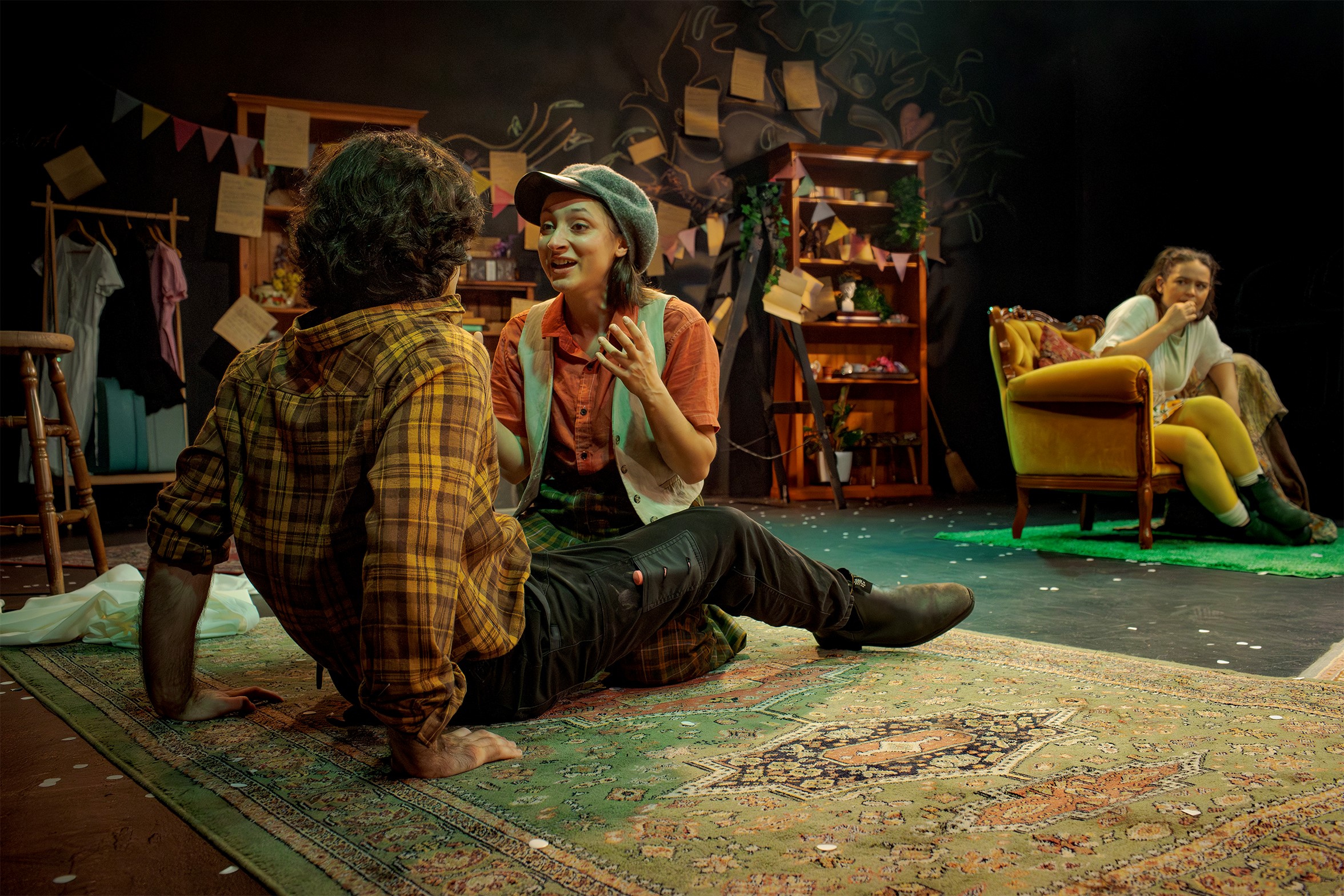
Directed by Alex Kendall Robson, this is a marvellous presentation of a Shakespearean classic.

Full disclosure: As You Like It is one of my favourite Shakespearean plays, and its protagonist, Rosalind, is certainly my favourite Shakespearean heroine.

Rosalind is whip-smart but no fool. (With such a penchant for paradox, might I wear motley?) What I mean is that Rosalind is witty but humble; she entertains no hubristic dreams that her intelligence makes her superior to the world and its grand forces. This being a romantic comedy, the grand force is Love. Rosalind accepts Love’s power – but knows that this power does not automatically grant romantic Love pre-eminence in the human experience.

Rosalind might have said Love is the silliest of the serious things. Instead Shakespeare gives her lines like these: 

Men have died from time to time and worms have eaten them, but not for love.

Love is merely a madness, and, I tell you, deserves as well a dark house and a whip as madmen do; and the reason why they are not so punished and cured is that the lunacy is so ordinary that the whippers are in love too.

Shakespeare gifts us a heroine who is both bubbly and balanced, who both feels and thinks.

Jade Fuda’s portrayal of Rosalind is absolutely brilliant. And I found it a wonderfully fresh interpretation: more giggly and more fraught than customary, and this tender vulnerability, coupled with Fuda’s total command of the wit, makes her portrayal of Rosalind extraordinarily rich.

As You Like It is one of my favourites for other reasons. It includes one of my favourite scenes in the whole of English drama, the one in which Celia accepts exile rather than part from Rosalind. In a play centring on romantic Love, here’s a shining example of a different type of love: friendship. It’s a scene that always brings tears to my eyes, and played here by Fuda and Larissa Turton as Celia it did so again.   

The play also features some of Shakespeare’s greatest poetry.

And this our life, exempt from public haunt,
Finds tongues in trees, books in the running brooks,
Sermons in stones, and good in everything.

So says the Duchess, exiled to the Forest of Arden by her tyrannical sister. The two roles are doubled superbly by Sonya Kerr in a performance that excels both physically and vocally, and with glorious authority juxtaposes compassion and cruelty.

All the world’s a stage,
And all the men and women merely players

So says the melancholy Jaques. Sure, this most famous of lines could simply be read as a case of professional myopia: if Shakespeare had been a footballer he might have said All the world’s a game; or if he had been a risk assessor, All the world’s an accident waiting to happen; or a fisherman, All the world smells of fish. But Shakespeare the dramatist captured something of Life’s bewildering, and perhaps unbearable, lightness – the sense that it all deeply matters, but at the same time, it all doesn’t matter that much. Kendall Robson plays Jaques with splendid humour and a show-stopping poignancy.

O, how bitter a thing it is to look into happiness through another man’s eyes!

So says Orlando, in a stinging moment when it seems his brother has secured love but he never will. Traditionally, Orlando is a challenging role; lover of the effervescent Rosalind, there’s always the danger he may not seem worthy of her, a smaller man than Love’s grand game of hide-and-seek in which he is a prime participant. But here, Pat Mandziy creates a magnificent Orlando, a beautiful balance of confusion and charisma.  

So, as I suggested, a play of unparalleled poetry. (And I think we get almost the whole thing!) The entire ensemble is exemplary; with a mastery of the Elizabethan language and a complete commitment to comic exuberance, we’re invited to a world of delight.

Paul Gilchrist

As You Like It by William Shakespeare

presented by Fingerless Theatre

at Flight Path Theatre until March 14

flightpaththeatre.org

Image by Phil Erbacher

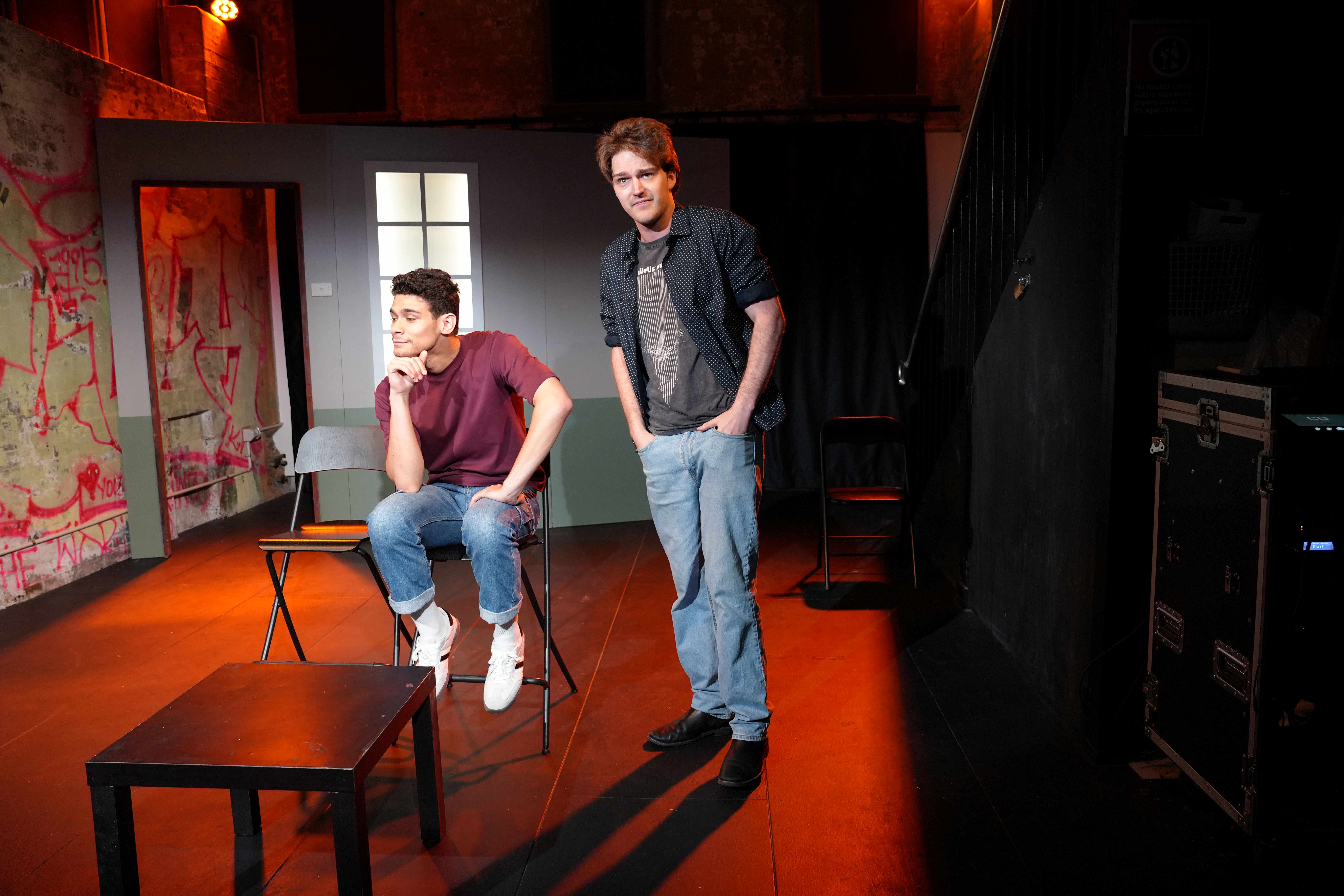
Fag/Stag

7 Mar

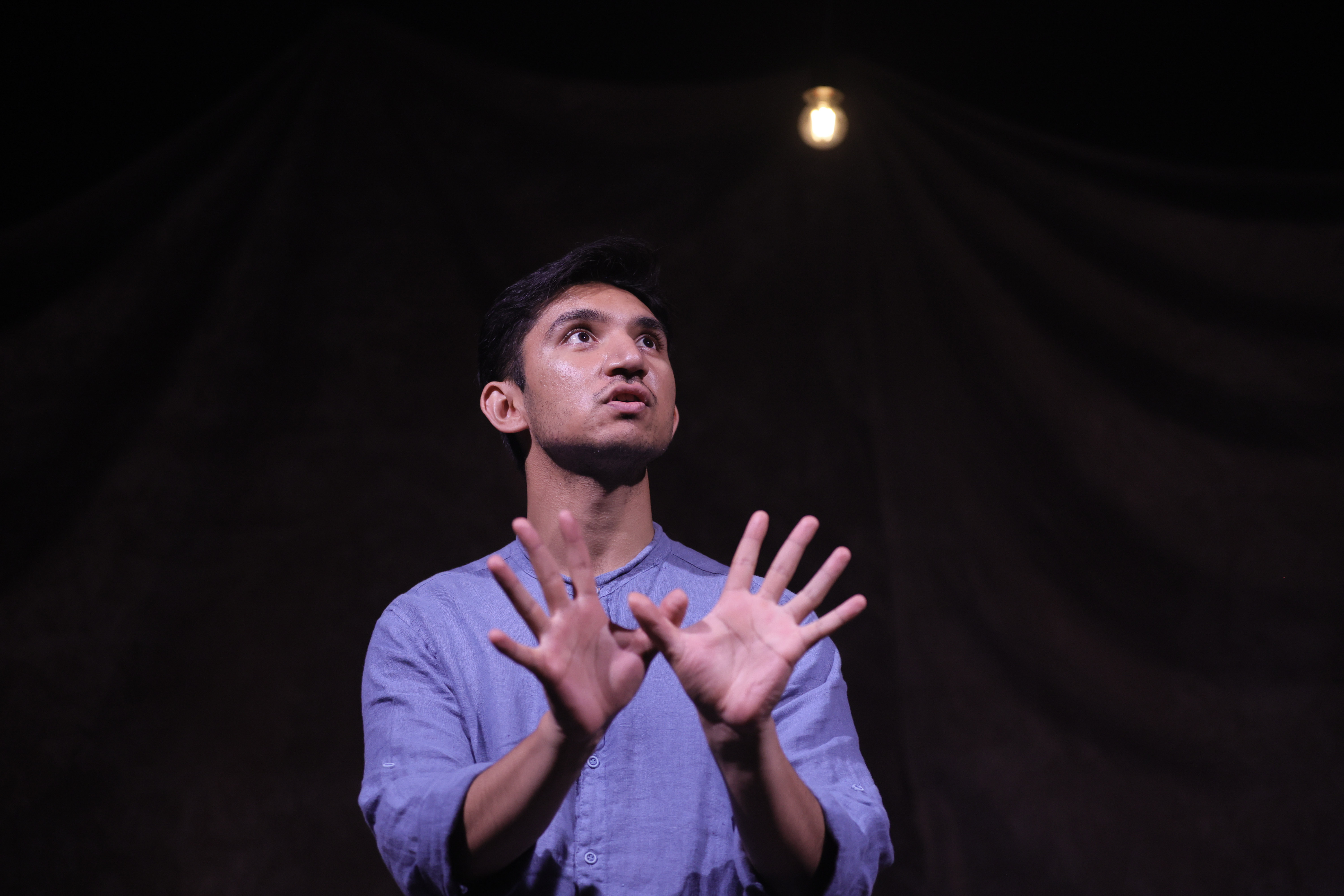
This is a simple, generous-hearted story of the friendship between a gay man and a straight man. It’s funny and engaging.

For the most part, an overly reductive binary opposition between gay and straight is avoided. Instead, directed by Les Solomon and performed by Nathaniel Savy and Tom Kelly, we get rich portraits of two likeable men.

One of the most intriguing creative choices made in Jeffrey Jay Fowler & Chris Isaacs’ script is to reject the convention of presenting a series of dramatic scenes portraying moments in the characters’ relationship. Instead, the two characters directly address the audience, not each other, taking turns to tell us their own version of the unfolding events. This juxtaposition effectively creates humour, but it also makes very apparent to the audience the isolation of the two men, and their differences.

The question is: From where do these differences derive? Because one man is gay and the other straight? Or because, regardless of sexuality, the two men have different psychologies? Or because, at the most fundamental and ontological level, two souls just won’t see the world in the same way – because they have to see it from different places?

The answer is, of course, all three. But it’s the third that’s of particular interest (to me).

Drama struggles to present the inner life of individuals; it’s far more successful in presenting relationships, the life of groups. (If this seems an unusual thing to say, that’s because the Western mind has been so soaked in the dramatic form that this particular presentation of life –  life from the outside – has come to seem entirely natural.)

Though working in an artistic form that privileges the interpersonal, dramatists over the millennia have experimented with ways to represent the personal inner experience. The Elizabethans, for example, embraced the poetic soliloquy. This play, with its beautifully veracious contemporary vernacular, is a fine modern descendant of that experiment.

And so, regardless of its humble focus on the garden-variety experiences of finding romance and friendship, what an experiment like Fag/Stag does is explore one of the greatest of miracles: how we make a connection with others, despite the isolation of our rich but singular inner lives.

Paul Gilchrist

Fag/Stag by Jeffrey Jay Fowler & Chris Isaacs

Presented by Little Stormy Productions in association with Lambert House Enterprises,

At the Substation, Qtopia, until 21 March

qtopiasydney.com.au

Image supplied.

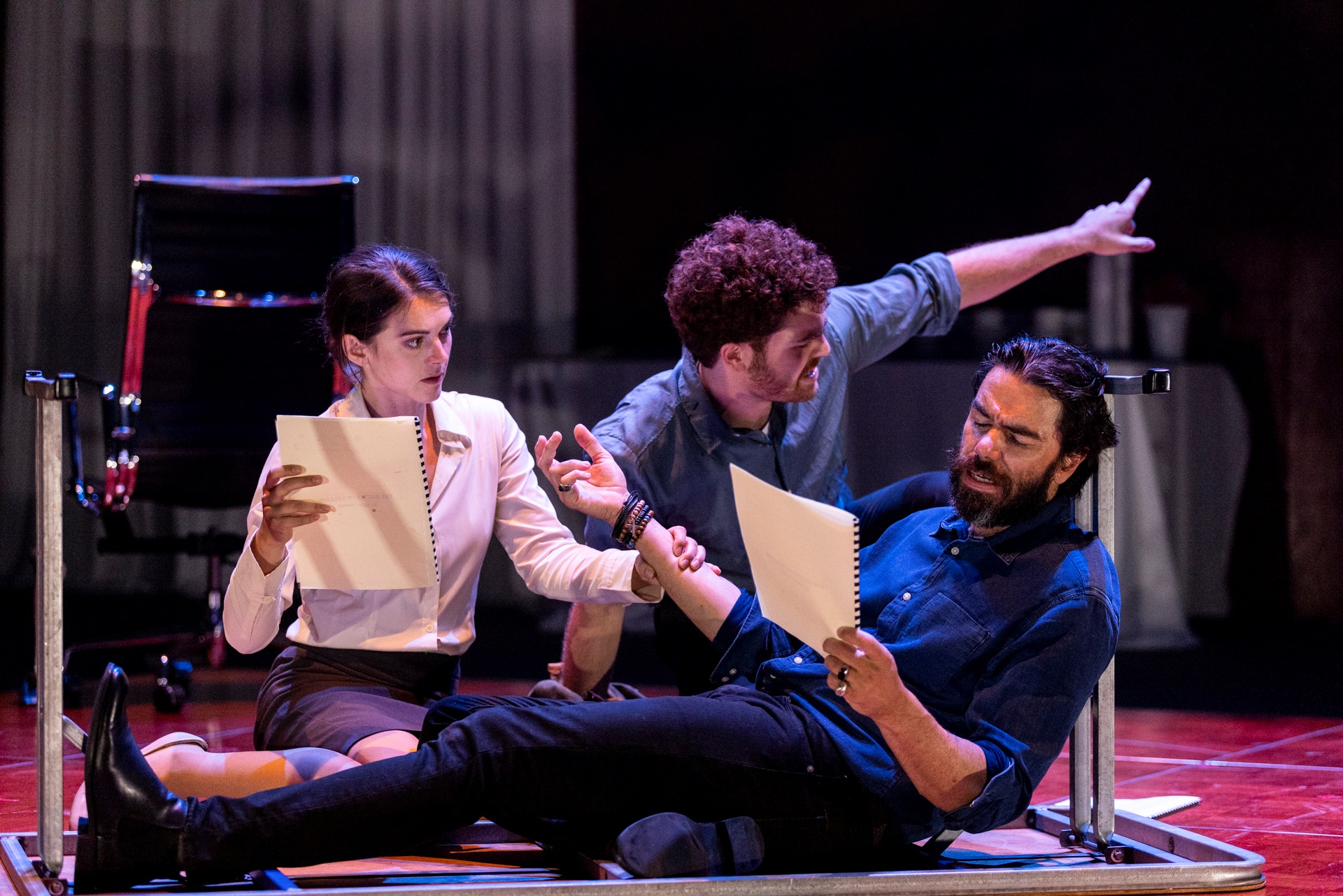
A Mirror

4 Mar

This is an utterly engaging production of a clever, curious piece.

Written by Sam Holcroft, it was first produced in the UK in 2023.

It has a play-within-a-play structure; it’s art about art.

It’s set in a fictional oppressive regime, one in which the Ministry of Culture censors plays critical of that regime and promotes ones that encourage a positive vision. In this regime, plays like Julius Caesar and Romeo & Juliet are banned. It’s not obvious why. Certainly, the Ministry’s response to any new work is to go at it hard with a red pen, eliminating anything deemed inappropriate – from garden-variety profanity to whatever might cast life in the regime in a poor light. Plays, it is dictated, must inspire.

The outer play – the one that frames the other – presents an underground theatre company producing an illegal play. We the audience are included in this act of transgression; we’re addressed as co-conspirators, as though we’ve defiantly come to see this clandestine performance. (Everyone’s familiar with that sometimes-true fantasy that artists are cool rebels, and it was nice to be included in the cosplay – though sitting in my comfortable Belvoir seat after a good meal and a glass of wine, with the promise later of my usual warm bed, I’m not sure I could entirely fool myself that what I was doing was an act of rebellion.) But in the world of A Mirror, surveillance is overarching, and this underground theatre company is prepared, at any moment, to hide their illegal play and us, its audience, behind the pretence of a legal wedding and joyful congregation.

The play-within-the-play, the supposedly illegal play of which we are the risk-taking audience, presents the story of a playwright called to the Ministry of Culture. He is asked to explain a play he has submitted, one which has broken many of the dictated guidelines.

Despite the serious themes of A Mirror, the structure I’ve outlined obviously invites playful mischief – and it’s an invitation director Margaret Thanos and her cast fully embrace. Despite its one hour fifty length, the production has an exhilarating energy.

Performances are splendid. (I’ll refer only to the performers in their roles in the play-within-a-play.) As Čelik, Director of the Ministry of Culture, Yalin Ozucelik is superbly suave, but also animated and personable, a tension that beautifully hints at danger. As his new assistant, Mei, Rose Riley presents a character arc of brilliant comic awkwardness, hilarious enthusiasm, and moving desperation. As Bax, legendary playwright and long-time inhabitant of the theatre milieu, Eden Falk gives a portrayal, equally funny and poignant, of that world’s painful potential to promise more than it can deliver. Faisal Hamza, as Adem, is suitably bewildered by the Department’s unexpected attention.    

But back to those serious themes. Apart from the critique of political repression, Holcroft’s play is about the nature of theatre. The most obvious tension is between theatre as fiction and theatre as non-fiction, or between theatre as myth-making and theatre as reality-recording.

What Holcroft does that is so curious, or so stimulating, is to present these two alternatives in strawman fashion; that is, they are presented so hyperbolically that both seem absurd. Embodied in the attitudes of the Director of the Ministry of Culture, Čelik, the myth-making aspect of theatre is reduced to the promotion of a problematic regime. Embodied in young playwright, Adem, the reality-recording aspect of theatre is reduced to the verbatim transcription of actual conversations. Adem is not even characterised as possessing a gift for dialogue; he just has a photographic memory.

With these two facetious alternatives set before us, we the audience are impishly asked What is the nature, and potential, of theatre?

You could be tempted to think Adem’s perspective is meant to be the correct one; after all, you’ve got to get brownie points for not being actively complicit in oppression. But Čelik gets the best speeches, ones expressing the purpose and power of storytelling. In contrast, for much of the play-within-a-play, Adem seems without an aesthetic philosophy at all, appearing not that far from an individual with Savant Syndrome, exhibiting a political and artistic naivete that is unexpectedly combined with one extraordinary ability. And to assume Adem’s supposedly simple truth-telling is superior to Čelik’s myth-making is to ignore that the very play that might lead you to this conclusion is gloriously artificial, meticulously structured and entirely fictional – nothing like the sort of play Adem would write.

It’s Hamlet who suggests theatre is the holding of a mirror up to nature. The metaphor that Art is a Mirror has long been in circulation, but it is a figure of speech that deconstructs itself. If a mirror exemplifies the reflection of an unadorned reality, while art implies some sort of craft or artifice, then (like all metaphors) the metaphor that Art is a Mirror is more arty than it is mirrory

Of course, theatre can do something mirrors do: both show us ourselves from the outside – which is the exact opposite of how each individual experiences Life. It’s no wonder that both mirrors and theatre can be fascinating in a disturbing way. I’ve quipped before that There are times and places in which theatre has been banned, and if you don’t know why, it’s because you haven’t seen it done well. But I would add, it’s not the being-done-well part that is the only disconcerting, and thrilling, aspect of theatre. And when Savonarola lit his famous Bonfire of the Vanities in Florence, mirrors were among the many soul-sapping fripperies thrown into the flames.

As you can probably tell (if you’re still reading) A Mirror set me thinking.

Real mirrors are flat; only in fantasy is there any through the looking glass. Mirrors just stare back at us, dully. But this play and this production entirely transcend this quality; intelligent and exuberant, it’s all wonderfully invigorating.

Paul Gilchrist

A Mirror by Sam Holcroft

At Belvoir until 22 March

belvoir.com.au

Image by Brett Boardman