Archive | Responses to Plays RSS feed for this section

Pride and Prejudice

19 Jan

Kitty?

What has happened to Kitty???

In this adaptation of Jane Austen’s famous novel, the Bennet’s fourth daughter is utterly, inexplicably, and unjustly erased. I was mortified!!!

Of course, I’m parodying the pedantry of a certain species of Janeite, worshipers of Austen who are horrified whenever this sacred text doesn’t receive the fidelity and respect they feel it deserves.

(However, to be honest, I did feel the absence of the Gardiners. As models of a mature, successful romance, their very existence assures our heroine Elizabeth Bennet that her vision of true love is not just a naïve illusion.)  

Austen’s Pride and Prejudice attracts pedantry because it’s a foundational text of modern romance. The extraordinary number of film and stage adaptations attests to that. But when I say foundational, I don’t mean merely in terms of the literary genre of romance – I mean of the experience itself. Lizzy Bennet is determined to marry only someone she loves. And with love defined as a heady mix of desire, admiration, respect and an unwavering belief in equality, Lizzy’s hopes encapsulate the romantic aspirations of virtually every young modern.

On one level, adaptations of the novel aren’t tricky: Austen is essentially a dramatic writer. (Though there is the issue of that famously ironic narrative voice; do you simply give it to Elizabeth? If so, how do you present the heroine’s emotional and moral growth?)

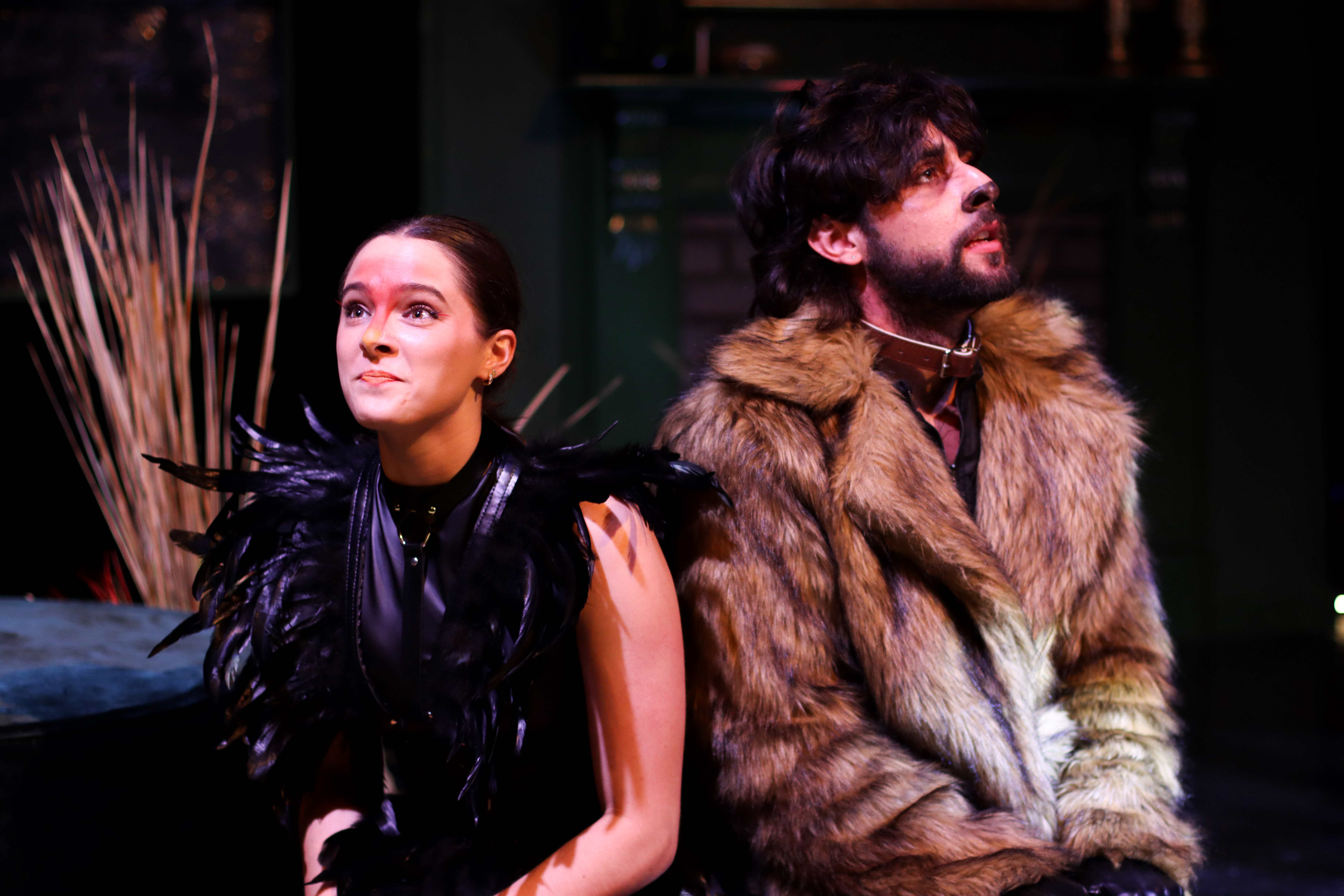
Directed by Emma Canalese, Kate Hamill’s adaptation captures all the key dramatic moments and, if an old, sentimental reviewer’s tears are worth anything, the heart of this piece beats strongly.

However, both in script and performance style, this production juxtaposes the drawing room dramedy of manners of the original text with a wacky theatricality. Sometimes, the deliberate double entendres and the unconventional casting make it feel as though the original is being parodied, or at least not being trusted to engage an audience. Several characters are cast against gender, which adds enormously to the playfulness but not much to the truthfulness. (This is theatre of audacity rather than of authenticity.) Some bold doublings ramp up the silliness, and won’t fail to get a laugh from most audiences. The major challenge is the relative homogeneity of the ages of the cast. Some of the representations of the older characters lack subtlety, and the snap is taken out of the original text’s social bite: Age often has an agenda it imposes on Youth, and the manipulation this entails is partly hidden if the generations are blurred.

Several of the characterisations might disappoint small-minded Janeites. Compared with more conventional adaptations: Darcy (Idam Sondhi) is more socially awkward, and Lizzy (Abbey Morgan) more attitude than sparkle (this Lizzy rejects not only marriage without love but marriage in general – which somewhat alters the impact of the final scenes); Jane (Lucy Lock) is less gentle; Mr Bennet (Steve Corner) is louder, and ultimately closer in characterisation to Mrs Bennet (AJ Evans) – who dominates the action more than she does in the novel; Mary also gets far more stage time and is presented as a mistreated neurotic; Bingley is reduced to a joke. (Bingley and Mary are doubled by Victoria Abbott, who displays extraordinary comic talent.)

But I’m not a pedantic Janeite; did these characterisations disappointment me? All roles are played with an exciting committed energy. (To make a hasty definitive judgement about a work whose main theme is the danger of hasty definitive judgements takes either less self-awareness or more courage than I currently command – which probably makes me fatally unsuited to theatre criticism.)

It is a truth universally acknowledged that no reviewer with literary pretensions can write about Pride and Prejudice without alluding to its famous first line. (So I can tick that off.) What is a little less commonly acknowledged is that all foundational myths must be reinvented, for that’s how they’ll find new audiences – and keep the old ones alive.

Paul Gilchrist

Pride and Prejudice adapted by Kate Hamill

Presented by The Artist Experiment & Dream Plane Productions

At Old Fitz until 8 Feb

oldfitztheatre.com.au

Image by Phil Erbacher

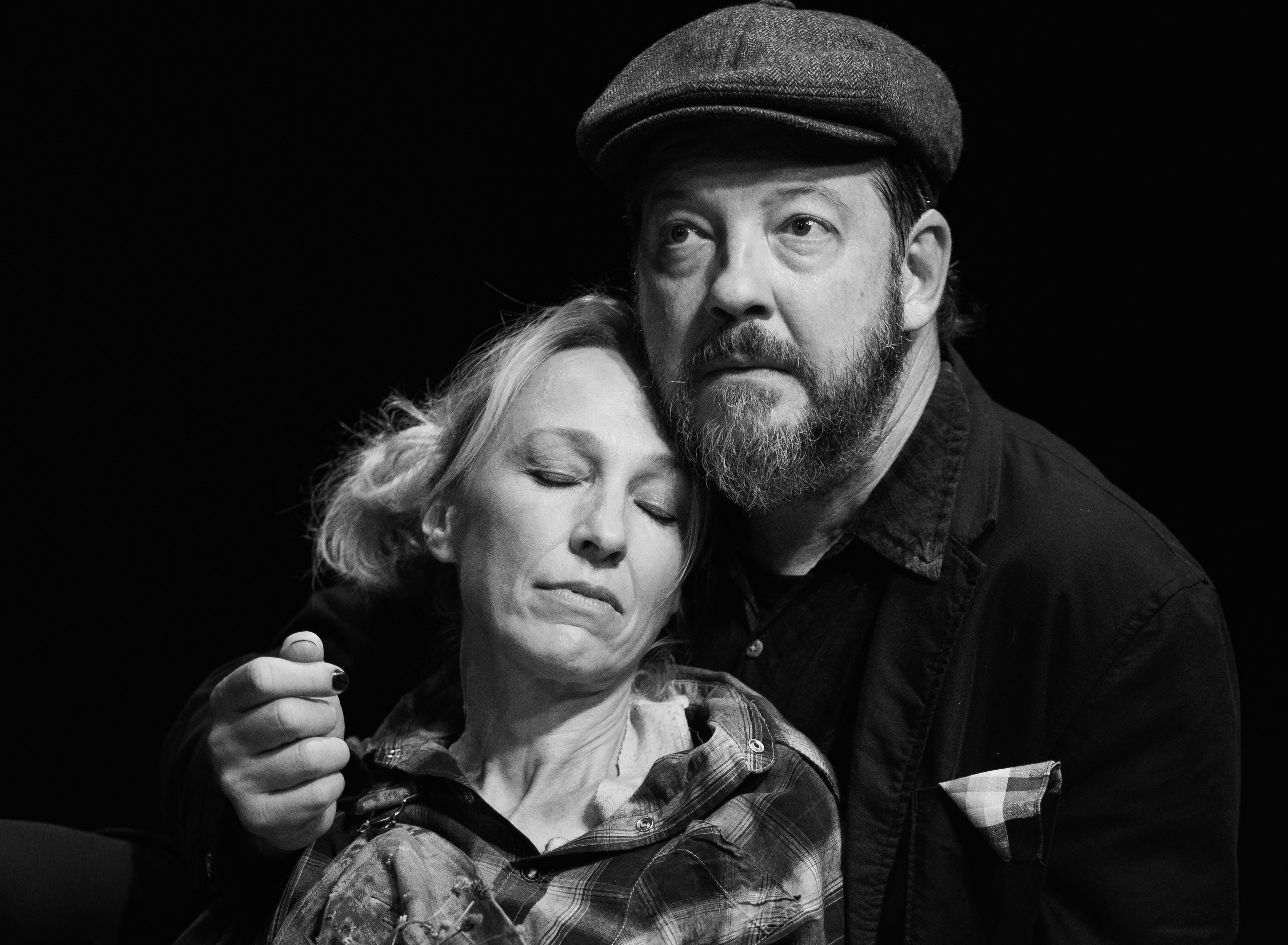
Hamlet Camp

17 Jan

This is a fun night of theatre, one we’re privileged to share with three contemporary legends as they muse on the dramatic form.

It’s also a tantalising potpourri.

It begins with Toby Schmitz, Brendan Cowell and Ewen Leslie each performing a self-written monologue. Schmitz’s monologue is about an actor currently working in a second-hand book store in Newtown; still a purveyor of art, but in rather reduced circumstances: tale teller now retailer. Cowell’s monologue explores how the actor’s life of perpetual rootlessness impacts their relationship with material objects. Leslie’s presents the journey of an out-of-his-depth child TV actor to maturity as a lover of the craft. Each monologue is richly poetic and very funny.

Are they autobiographical? Sort of. I guess. I don’t know. Truth is certainly tempered by poetic licence and the hyperbolic needs of humour. I did take away the sense that the character being presented in each piece was a moderately successful actor. What a disparate, contradictory, explosive mix of words that is! It also operates as a suitable tonal introduction to the madcap comedy that follows.

That’s because – after Claudia Haines-Cappeau’s beautifully evocative dance as Ophelia – there comes the title piece, an extended skit in which three actors who’ve played Hamlet are now going through rehab. It’s written by Schmitz, Cowell and Leslie, three actors who’ve played Hamlet and are now…

If the monologues might be autobiographical, the skit certainly isn’t – at least not if read as realism. It is, however, a puckish peep into the weirdly overwhelming experience that playing the Dane apparently is. As suggested, the play’s the thing.

Or can rehab help them realise that it’s just a thing? One thing among many.

The skit is terrifically amusing, a wonderful opportunity for three great comic actors to strut their stuff. It sparkles with insights into what it is to be a performer. (There are plenty of in-jokes about particular past productions, and these are marvellously mischievous, but they don’t dominate.) Frustration is expressed at directors and their determination to own a play by imposing some bizarre idiosyncratic vision. As one recovering Hamlet says, I’d love a director to say ‘Let’s just do the play.’ Also grumbled about are reviewers. Cowell’s character is disturbed that one reviewer described his Hamlet as mercurial. This observation hints at the sensitivity of performers, but it also left me wondering if the greatest tragedy in theatre is not Hamlet, but that reviews are taken seriously.

Another provocative observation is that we romanticise Hamlet, which I took to mean we overvalue both the character and the performance of that character. One of the sessions at the rehab centre is entitled Offstage Women. It seems to refer to the play’s representation of women and how Hamlet himself mistreats them. It also refers, I think, to how male actors lost in the role mistreat the women in their own lives. I make no comment about the impact playing the famous protagonist might have on an actor’s personal relationships, but I find fascinating the suggestion that audiences are asked to admire Hamlet. Perhaps an actor needs to find that connection, but as an audience member I’m more than happy to dislike a protagonist or, more precisely, to hold such a personal response to a character in abeyance. (Perhaps, like the suspension of disbelief, it’s the key to a mature appreciation of fiction.) Take Macbeth and, to a lesser degree, Lear: the achievement of these tragedies is that we’re presented a monster yet, beneath all, we still see their humanity. (I admit this probably doesn’t accurately describe what’s happening in, say, Othello or Romeo & Juliet – so perhaps there are audience members out there who do actually like Hamlet as a person.)

That’s the joy of Hamlet Camp, it’s a deliciously playful invitation to thought.  

Paul Gilchrist

Hamlet Camp by Brendan Cowell, Ewen Leslie and Toby Schmitz

Presented by Carriageworks and Modern Convict

At Carriageworks until 25 Jan

carriageworks.com.au

Image by Daniel Boud

An Inspector Calls

13 Jan

JB Priestley’s classic play is a subversion of crime fiction. It initially presents as typical detective fare – and then we realise it’s doing something far bigger, more important, and much more thrilling.

The Birlings are celebrating the engagement of daughter Sheila to Gerald. They’re respectable people. When the ladies retire after dinner, and the men remain for a glass of port or two, Mr Birling takes the opportunity to share his wisdom. Every man need only look after himself and his own, the successful businessman pronounces to the younger men. Do that, and all will be right with the world.

And then an inspector calls.

Disrupting this privileged party, the inspector informs them of the recent suicide of a desperate young woman and, through an utterly enthralling chain of questions, asks them to consider their possible culpability.  

I call the play a subversion because crime fiction usually asserts that it’s the detective’s commitment to rationality that will restore order to a fracture world. But this piece places its hope not in logic but in the human heart. If only we’d listen to the still small voice within, we’d realise that it’s not every man for himself, that we’re all in this together and, if the world is fractured, it’s we who might make it whole again.

It’s a beautifully rich piece and, under the direction of Ali Bendall and Mark Bull, this production is both thought-provoking and very entertaining. (That’s no small achievement. Drawing room dramas are notoriously difficult, their seemingly static world can appear to restrict creative choice. And, as a historical piece, set in a distant past even when Priestley first wrote it, Truth could all too easily atrophy into lifeless stereotype.)

The cast handle the challenging material well. David M Bond as Mr Birling is delightfully pompous, and Annabel Cotton as Mrs Birling is deliciously all prickle and pride. The younger generation, newer to the tired old ways of the world, are perhaps a little more shaken. Simon Pearce as Gerald presents moments of touching vulnerability. Rebecca Liquorish as Sheila effectively juxtaposes a frantic fear with the wondrous relief of honesty. Harry Charlesworth as younger brother Eric, the impulsive child who only Shame might mature, offers a moving portrait of moral growing pains.

And Vincent Andriano as the inspector is wonderful, a subtle physical awkwardness that underlines his outsider status contrasting brilliantly with a gloriously authoritative voice that clearly speaks command and consequence.

This is the Genesian Theatre Company’s first production in their new Rozelle home. Fans of the Kent Street proscenium arch will be pleased to see that house preference retained, and fans of engaging theatre will hope this show is an accurate portent of many things to come.

Paul Gilchrist

An Inspector Calls by JB Priestley

Presented by Genesian Theatre until 22 Feb

genesiantheatre.com.au

Stags and Hens

11 Jan

Tomorrow, Linda marries Dave. But tonight is the stags and hens’ parties.

Willy Russell’s play was first produced in 1978 and the action occurs in a dump of a disco in Liverpool in England.

Though it’s nearly fifty years old and set in a foreign country, it’s terrific to see this play on a contemporary Sydney stage. (Though, I must admit, it took a while for my ear to become accustomed to the accents.)

Firstly, it’s very funny. And under the direction of Johann Walraven, the cast commit fully to the comedy. The entire ensemble is brilliantly hilarious.

On the night I saw the show, some members of the audience gasped at some of Russell’s one-liners. Perhaps they thought them politically incorrect? But the awful things some of the characters say, especially the men, are key to Russell’s satire. He’s targeting working class brutality, its fatalism and its seeming inability to tolerate individuality.  

But despite the satire, it’s a sympathetic portrait. There’s a heart-rending sense of missed opportunity, and this is enhanced by the casts’ skill in making the characters likeable, imbuing them with tremendous energy, which has the impact of highlighting how that energy is ultimately either misdirected or thwarted. Chester Lenihan as Robbie, the would-be lady’s man, presents a gloriously funny mix of cockiness and self-doubt. Kirra Jones as Maureen, the drunken cry-baby who just wants a fella, is both very amusing and powerfully poignant.   

And when the play shifts gear, and comedy cozies up to its close-cousin tragedy, the cast are once again up for the script’s demands. Ava McClean as Linda, the bride-to-be, is enormously affecting in her shocked realisation of brutality’s ubiquity. Cameron Sutton as Eddy, the alpha male who lords over his herd but is terrified of change, is a gutsy, confronting portrait of dangerous fragility.

The play is well-named; despite the impending marriage, the focus is not on the personal relationship at the heart of the sacrament, but rather on the dehumanising potential of group dynamics. How do the stags maintain a group identity? How do the hens? And how do the two groups relate?

Maintaining a group identity necessitates policing. Both sexes speak a lot about mateship, but that never seems to go so far as granting each other genuine autonomy or individuality. Instead, there’s an insistence on conformity. It’s a very binary world: you’re either a ‘lad’ or a ‘tart’; you’re either with us or against us. This world of indubitable division is emphasised by the set; scenes mostly happen either in the Gents or in the Ladies.

With our current questioning of binary assumptions, it’s tempting to think we’ve transcended all such narrowness. But, understandably, marginalised people will always seek a greater share of power, and a group identity has long been perceived as one way this might be achieved. In fact, a focus on group identity is presently the height of political fashion and so – by drawing attention to the brutish enforcement that the maintenance of such identities can entail – this production firmly places a troubling, teasing, tickling finger on our societal pulse.

Paul Gilchrist

Stags and Hens by Willy Russell

Presented by Blank Slate Productions

Directed by Johann Walraven

Featuring Grace Easterby, Jonah Elias, Benjamin Itaba, Kirra Jones, Chester Lenihan, Jonathan Serafino, Ellen Peebles, Ava McClean, Cameron Sutton, Hunter Taylor & Madeleine Zinner

At New Theatre until 25 January

newtheatre.org.au/stags-hens/

Image by Robert Catto

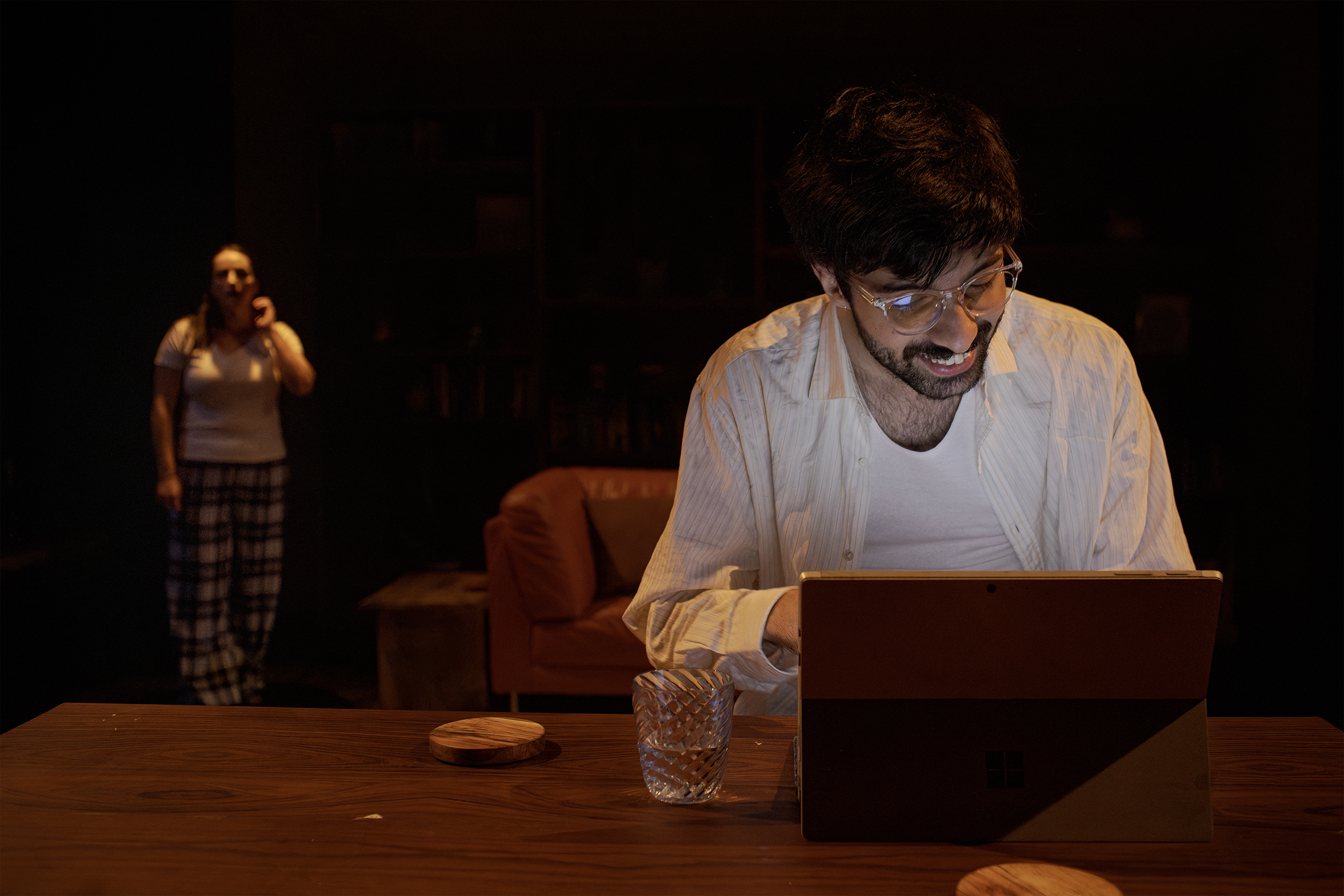
People Will Think You Don’t Love Me

22 Nov

This is a fascinating piece of theatre. The arresting title is an introduction to its key concerns. Philosophers as great as Plato, Augustine and Foreigner have all wanted to know what love is – but an even deeper tradition has long questioned the meaning of those mysterious little pronouns, the you and me of the phrase people will think you don’t love me.

What are you? What am I? To what degree do any of us have a fundamental essence? If so, what does that essence consist of? I don’t mean the particular qualities we might attribute to lovers, qualities like courage, intelligence or kindness. I mean the medium in which such characteristics exist, where they reside. (Analogy: old films were celluloid, and it was in this medium that the particular images that made up any individual film resided.) To cut to the chase, in the currently reigning philosophy of secular materialism, are we simply our physical bodies? If so, then our personal qualities must reside in those bodies. And the tantalising question raised by all this is If you donate an organ to me, do I begin to become you? 

This is the basis of Joanna Erskine’s fabulous play. Michael has a diseased heart. When Rick dies in an accident, Michael is given his healthy heart. And then he changes….

Some people might dismiss the idea as simply weird, or as such a rare experience as to be of little relevance.

But what it’s doing is opening up the concept of selfhood. A couple of decades ago we had an obsession with finding ourselves. It was assumed every individual had an essence and it was the mission of each of us to find that essence and let it shine. More recently, we’ve come to define our essential self in terms of our membership in certain demographic groups. With this sociological rather than psychological focus, we’ve come to see our individuality as a space carved out by the intersection of various statistical sets. We’ve almost replaced the word individuality with identity. We no longer shine like some sort of star, but rather lie small and flat, a mere overlap in a Venn diagram.

But, as I’ve suggested, this play doesn’t so much raise the question of Who we are but What we are.

I don’t want to make the play sound heavy; it’s extremely engaging. (And I certainly don’t want to sound like the kind of pretentious fool who goes to a children’s party and sees innocents being inculcated into the competitive values of capitalism, while everyone else just sees kids playing Musical Chairs.)

But this play won the Silver Gull Award when it was run by subtlenuance, when the parameters were that eligible plays be philosophical or political. Now the award is run by New Theatre, and that phrase has wisely been removed (the average theatre-goer being insufficiently familiar with the philosophical approach to appreciate that their favourite artform is philosophy’s closest cousin. What two human activities are the Ancient Greeks most famous for gifting to Western society? Drama and philosophy.)

Good drama is good philosophy: recognisable situations, presented in accessible language, posing fundamental questions.

And the dramatic form is eminently suited to the investigation of the philosophical concept of the essential self. The creation of individual characters is one of the dramatist’s major tasks. And, as audience members, we judge the success of any particular characterisation by the success of that mysterious trick of combining consistency with unpredictability. Of any character, we want to be able to say I understand why she did that rather than being reduced to the boredom of She was obviously going to do that. And one way theatre keeps that magic mixture of consistency and unpredictability bubbling is the actor, the physical body on stage. Every writer has had an actor in a workshop or rehearsal critique their script: I don’t think my character would say that. One answer is Your character does, indeed, say that. Your physical presence on stage as you say the line is sufficient, because the character exists nowhere else.   

In Erskine’s play, the interrogation of the nature of selfhood is further facilitated by the focus on romantic love. Romance is the type of relationship most based on the assumption that an individual is something particular, something special. (In most other relationships we’re honestly not that interested; we’re content to deal with people as we find them.) There’s a flashback to the night before Michael and Liz’s wedding, where he explicitly outlines why she is the woman he loves. It’s commonplace to assert that people change, and that’s why romance dies. But why are we so hopeful in the first place that the loved one will act consistently? Perhaps sexual love is like the theatrical stage; the centrality of the body somehow implies a permanency of self.

I’ll repeat again, the play is not heavy; it’s a gripping psychological drama (with a smattering of the gothic – I’d love to see more!)

And the awkwardness of the situation, that Michael’s life is only possible because of Rick’s death, provides opportunities for surprising humour. The uncomfortable pauses, the inappropriate comments, the unrecognised hints, all create a linguistic landscape of the alien and the unfamiliar, and under the direction of Jules Billington, the cast present beautifully the tentative navigation of this strange new world. 

Tom Matthews as Michael has an extraordinarily challenging task – the portrayal of two characters battling it out in one body. He achieves this superbly, achieving genuine nuance (and avoiding any temptation to employ the garish strokes more suited to horror.) The duality of his inner world is reflected by the two women in his life, his wife Liz, and Tommy, the partner of Rick who donated his heart. These two characters have tremendous arcs, as they try to come to terms with the most unusual of circumstances. Ruby Maishman’s Tommy moves poignantly from suspicion and the coldness of grief to a wondrous softening as she begins to find Michael’s behaviour oddly familiar. Grace Naoum’s Liz brilliantly transforms from a daggy, uptightness to a bewildered anger, as she finds only loss where she expected victory, and knows not who to blame.

I’ve talked a lot about the philosophical provocations of the play, but its glory is that it’s still grounded in the psychological. As Michael begins to display attributes of the bolder, more brutal Rick, we’re asked to consider whether he is merely acting out his desires. Now that Michael is finally healthy, is he simply claiming a bigger life? Is the whole I-have-your-heart-now-in-my-body-and-it’s-changed-who-I-am a materialistic justification for what are actually just choices? It’s an old trick: disguise decisions as determinism. It’s beyond my control, says the man who really, really, really wants to do it.

In the most stimulating way, the play takes on some of the most dominant assumptions of our culture. It interrogates materialism in two ways, positing its natural but rather disconcerting conclusion, and by uncovering its dubious allure. And it does all this in the way drama does best: offering no answers, just an engaging story.

Paul Gilchrist

People Will Think You Don’t Love Me by Joanna Erskine

presented by Little Trojan in association with bAKEHOUSE Co

at KXT until 30 Nov

kingsxtheatre.com

Image by Phil Erbacher

August: Osage County

16 Nov

This a heart-achingly good production of a modern classic.

Written by Tracy Letts, it was first presented by Steppenwolf in the USA in 2007. I’ve now been fortunate enough to see this play three times in Sydney. This production by Belvoir, directed brilliantly by Eamon Flack, is deeply moving and utterly hilarious.

Set in the near present in Osage County, Oklahoma, it tells the story of a family who gather to deal with the disappearance of a loved one – and to deal with each other. In many ways, Letts is a descendant of Chekhov, presenting a world in which love is real but somehow always misdirected.

This tragi-comedy has become a modern favourite because it provides actors with the chance to really show off their stuff. There are thirteen beautifully rich roles and Flack’s cast grab the opportunities offered and give us something truly special. It’s an ensemble of the highest order.

I’d rather not reduce my response to a list of accolades for individual actors, so here’s the smallest tasting plate from what’s a theatrical feast.

Pamela Rabe is superb as Violet, the matriarch of the family. Her meanness is deliciously funny until pain erodes it to pathos. Tamsin Carroll as eldest daughter Barbara is magnificent; she too perfectly balances humour and heart, and the fearful recognition that she’s becoming her mother is played with a soul-withering awareness that what binds us together is also what keeps us apart. Barbara has her own tensions with her daughter, Jean, played by Esther Williams, who wonderfully captures the precocity and petulance of the intelligent teenager. Barbara’s speech to Jean beginning I don’t care what you do with your life and ending in the most heart-rending way, and then her daughter’s glib response, is a moment of shining insight into the human condition, one of many in this extraordinary play.   

In addition to tragi-comedy, August: Osage County has elements of the state-of-the-nation play. Barbara shares her father’s observation that America has always been a whorehouse, but at least it had promise. Now it’s just a shit hole. (These are not direct quotes from the play.) She muses that cataclysm is preferable to dissipation, and is horrified that the nation’s promise may have slipped away without anyone noticing.

These themes are introduced from the get go. In the opening scene, Beverley (John Howard) hires Johnna (Bee Cruse), a Native American, as a housekeeper. Beverley invites her to read any of his books and quotes to her TS Eliot, “Here we go round the prickly pear” (It’s not the only line in the play from The Hollow Men.) Despite the madness around her, Johnna maintains dignity and a concern for others.

State-of-the-nation plays are an odd genre, inviting us to see a small set of individuals as representative of something much, much larger. It suggests a hubris more natural to the critic than the playwright. But I guess it’s just an invitation (though I’m not sure we gain much by accepting it; currently, we have no shortage of armchair sociologists and patio political scientists.)   

I’ll admit I found the conclusion of this production a little disappointing. I’m not evaluating any skills; I’m simply responding to creative choices. It seems to me the final moments of the play are an opportunity for something majestic, an intimation of eternal custodianship, a sense of the always was, always will be despite everything. But a different choice is made, a somewhat smaller, sadder one. The play concludes with a line from Eliot. That line is not “the end of all our exploring will be to arrive where we started and know the place for the first time” – though I wonder if it might be made to feel as though it is.

But that’s the joy of returning to established work in theatre; we rediscover a past love and we discover how it is loved differently by others. It’s like the speeches at a wedding; always gloriously familiar, always gloriously fresh.

And this production is glorious, both for those who know the play and for those experiencing it for the first time.    

Paul Gilchrist

August: Osage County by Tracy Letts

At Belvoir until 15 December

belvoir.com.au

Image by Brett Boardmann

The House of Bernarda Alba

11 Nov

This is a terrific production of a fascinating play.

Written in the mid-1930’s, the last work by the great Spanish playwright Federico García Lorca, it features only female characters.

After her husband dies, Bernarda, matriarch of the family, insists her five unmarried daughters mourn in the ultra-traditional way. Prohibited from engaging with the wider world, prisoners of patriarchal standards, the household of women live an overwrought, claustrophobic existence.

But eldest daughter Angustias is still permitted to speak to her suitor, Pepe, a man whom we never see or hear. The problem is that she is not the only member of the household with feelings for Pepe.

Previously, I’ve expressed doubts about the efficacy of plays that purport to indict injustice but show only the victims. I know and support what drives this creative fashion, but the resultant work often feels lopsided, unintentionally granting the perpetrators a moral leave pass.

Despite being set in a patriarchy but presenting only women, Lorca’s play avoids these pitfalls. He was an extraordinary playwright, but I suspect freedom from the later theoretical apparatus of second wave feminism might have helped. This type of theory serves a necessary purpose, but not always one useful in the theatre. Sometimes, we can be so soaked in the simplicity of theory – as against the dreadful messiness of human reality – that we represent injustice as though it was merely the result of a few poor or selfish decisions at the last staff meeting. The value of the dramatic form is that it can acknowledge that problems are deep and painfully complex.

In Lorca’s play, women are presented as finding men irresistibly attractive, despite – or perhaps even because of – their brutish behaviour. It evokes for me God’s punishment of Eve in Genesis: “Your longing will be for your husband, and he will dominate you.”   

And, in Lorca’s play, it’s the matriarch who’s the main enforcer of oppression. Now, the idea that individual women will betray the sisterhood to further their own power is not unheard of, but is this what Bernarda is doing? Does she really perceive any alternative?

One of her daughters cries To be born a woman is the worst punishment in the world. She doesn’t offer any corollary. She doesn’t suggest that being a woman is a punishment in this particular time and place, but if only we were to raise our children differently, or if only we were to spend more money on public awareness campaigns, or if only we were to adopt a gender quota in the entertainment sector… No, it’s a cry of eternal despair. And, in the play, this sense of terrible inevitability is further emphasised by the fate of one woman who breaks the seemingly everlasting laws governing female behaviour: no human being discovers and reveals her crime, but rather the dogs of the street. It is as though the blind forces of the universe itself will punish transgressions.

But all this doesn’t mean female oppression is inevitable. What a play represents and what a play invites are not the same thing. It’s one of the weaknesses of our current theatre culture to conflate the two. We’ve come to feel that theatre should represent a situation, tell us what to think about it, and then tell us what to do about it. The churches are all empty, because everyone who wants to preach is in theatre. But theatre that imitates a sermon, or can be reduced to a slogan, is not worth either the time or the ticket price.

It might seem odd to suggest a play with such a bleak vision is invigorating, but a deeply affecting portrait of the human experience like this production is an inspirational invitation to make the world better – and this is the rub – because we’re not being told to do so. Give the audience something to do, and they will love you for it. Less is more.

Director Kim Hardwick’s approach to the whole production follows this maxim, and the result is theatrical brilliance. Set and lighting are minimal, but the use of the space is majestic, a place for a script and a cast that are both superb to shine. An utterly mesmerising languidness, effectively expressing the enervation of oppression, provides the perfect detonation zone for the explosions of tension that come.    

Sarah Chadwick as Bernarda is magnificent, a frightening portrait of a cold heart and an iron will. Linda Nicholls-Gidley as Poncia, her housekeeper, offers a gloriously complex depiction: resentful in servitude, exulting in the little power she has, gleeful in her expression of earthy desire, and fearful in her awareness of the trouble ahead. Romney Hamilton as Angustias wonderfully captures the petulance and insecurity of privilege in a world where it is so very scarce. Teodora Matović is marvellous as the sister pushed from weary despair to sudden and dangerous desperation. Estelle Davis as youngest sister Adela portrays youthful passion and defiance in all its tragic poignancy.

Paul Gilchrist

The House of Bernarda Alba by Federico García Lorca, in a translation by Barry Nielsen.

Presented by Frantic Muse.

At Flow Studios until 17 November

franticmuse.com.au

Image by Holly Mae Steane Price

Draw Two

8 Nov

Fiction is an act of fact shaming. Invented narrative has a magic that can embarrass mere recount. I begin my response to Draw Two this way because it’s a one actor play, and there’s been a disappointing trend recently to reduce this genre to confessional theatre.

Now there can be great confessional theatre, but it has its place (and often that place is in a support group or a prayer meeting.)

Draw Two by Meg Goodfellow is a superbly crafted piece of dramatic fiction, an inheritor of the grand tradition of storytelling. Something has happened to Riley’s twin sister Mia, and she must return to her hometown to collect her little nephew. Goodfellow follows the sage advice of make them laugh, make them cry, make them wait. And though the show’s only 70 minutes (which seems to slip by much faster) the audience is offered a journey that’s both funny and deeply moving.

It’s a story of loss, regret and moving forward. And, perhaps unsurprisingly, considering it’s told by one of a pair of twins, it’s about identity. Commandeered by contemporary political discourse, identity is a word in danger of petrifying into a stone tool we use to beat each other. But Goodfellow’s beautiful script playfully acknowledges the concept’s limitations, reminding us that love dissolves all the barriers that corral identity into isolation.

I began by unfavourably comparing recount to narrative, and Goodfellow makes the most of the narrative form’s potential, moving back and forth through time in a perpetually intriguing manner. She also avoids narrative’s great temptation: the end that resolves all problems; the end, that by slamming shut, leaves us feeling we’ve enjoyed a mere fantasy that belongs back in its box, rather than a fiction that will continue to reverberate through our reality. 

Director Lauren Bennett textures the piece magnificently. The use of projection, built from visual art by Laura Hayley, is gently and gorgeously evocative, and one of the most effective uses of the technology I’ve seen in theatre.

But Bennett’s master stroke is casting. Georgia McGinness as Riley is phenomenal. Goodfellow’s use of the vernacular is brilliant and McGinness inhabits it flawlessly. McGuiness works without props, her splendid control of movement creating the world of the play. She also creates each of the characters who surround Riley – her mother, her lover, an old flame of her sister’s, a tradesman, her nephew – all through subtle changes in voice and nuanced movement. It’s an extraordinary performance.

Paul Gilchrist

Draw Two by Meg Goodfellow

At old Fitz until 17 Nov, as the Late Show

oldfitztheatre.com.au

Image by Georgia Brogan

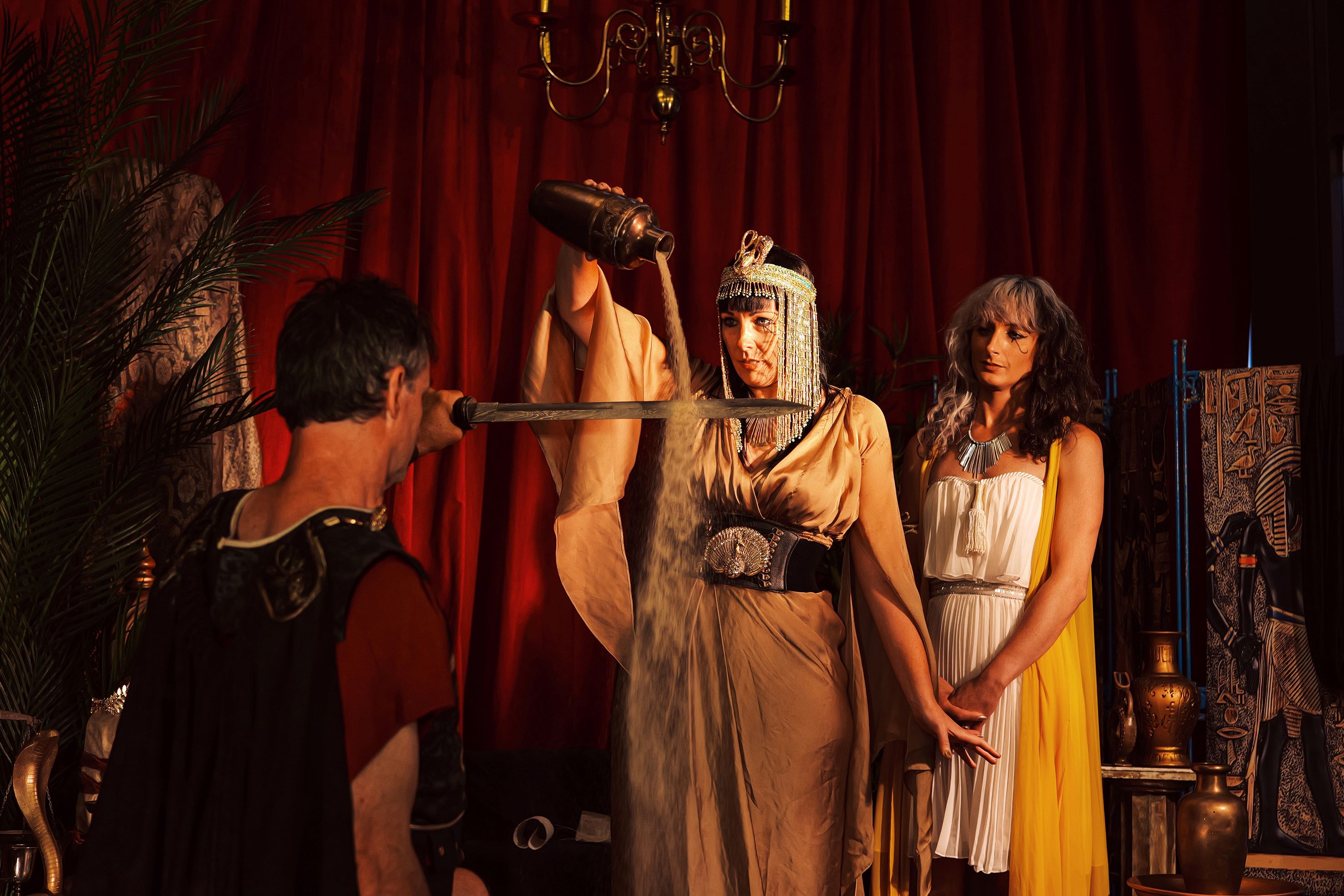
The Female of the Species

8 Nov

The dramatist is the natural enemy of the theorist. Whereas the dramatist delights in the presentation of multiple voices, the theorist subsumes all voices to their singular vision of the world.

In The Female of the Species, Joanna Murray-Smith gives us Margot Mason, a provocateur feminist in the tradition of, say, Germaine Greer or Clementine Ford. To simultaneously poke and praise this type of personality has been in the literary zeitgeist since at least John Irving’s novel The World According to Garp in the late 70’s. But the dramatic form is perfect for reminding us of the vitality of complexity in the face of soul-shrinking reductionism. And, by choosing the particular genre of farce, Murray-Smith gives us something quite special.

Farce is one of the most difficult of genres to perform, especially a piece like this – one which invites high energy physicality but also requires close attention to the witty, erudite dialogue. With a terrific cast directed by Erica Lovell, this production pulls it off, giving us a hilarious, thought-provoking evening of theatre.

Murray-Smith’s protagonist is a superb creation, an incendiary combination of social warrior and self-interest. She’s played brilliantly by Lucy Miller, who gives the character gravitas, scorn and passion (the last of these transcending the temptation to present intellectuals as mere pedants, obsessed with verbal precision.) 

Margot proudly owns the moniker provocateur. She’s certainly provoked Molly, a young student who turns up uninvited to her country house. Jade Fuda is wonderful as Molly, positioning her beautifully between vulnerability and determination. Molly points out that Margot’s published works contradict each other, that she’s just seeking attention. The celebrity writer is unfazed. Her books are not commandments for Life, they’re invitations to thought. (This is despite her deep contempt for her daughter’s more conventional life choices. Lib Campbell plays the utterly exhausted young mother of three in suitable, gorgeous hyperbole.)    

But back to the play’s interrogation of the provocateur. One of the great questions of the intellectual life is Should you only write the Truth? Anyone with any intellectual humility appreciates that a truly serious commitment to Truth might condemn you to silence. But what would that gain? So you compromise. You tell yourself you’ll write the Truth as it appears to you, limited and flawed though that will inevitably be. It’s what you have to offer to the conversation, another stick among many thrown onto the communal fire. But if it’s the conversation, the fire, that’s important, what does it matter what you throw into the mix? After all, the deliberately inflammatory might just shake things up, make the fire burn that bit more fiercely, push back the darkness a little further, hold back the cold a little longer…

Which leads me to another great tension in the intellectual life, that between followers and leaders. We’re in awe of those who can express things neatly, who can tie up the world’s loose ends with some all-encompassing theory. But to mistake what they say for Truth is to confuse the small solidity of the stick with the dangerous vitality of the fire. Hold on too tightly to that dried out old piece of wood and watch the desiccated hollowness spread up your arm and wither your whole life.

Murray-Smith gives Margot a chain of books with curious catchy titles. Her most famous is The Cerebral Vagina, but listen closely for her most recent title. She’s toying with The Female of the Species, but in the play’s closing moments she comes up with another title, one that is gloriously provocative.

I started by suggesting farce is extremely difficult. It’s difficult because it makes so little effort at truthfulness. Instead, it asks us to revel in its very artificiality. And it’s this delightful artificiality that makes farce an ideal vehicle for the examination of the artificiality of our grand narratives. We enjoy them so, but they’re not Life.  

Paul Gilchrist

The Female of the Species by Joanna Murray-Smith

Presented by Rogue Projects

At Old Fitz until 23 November

oldfitztheatre.com.au

Image by Noni Carroll

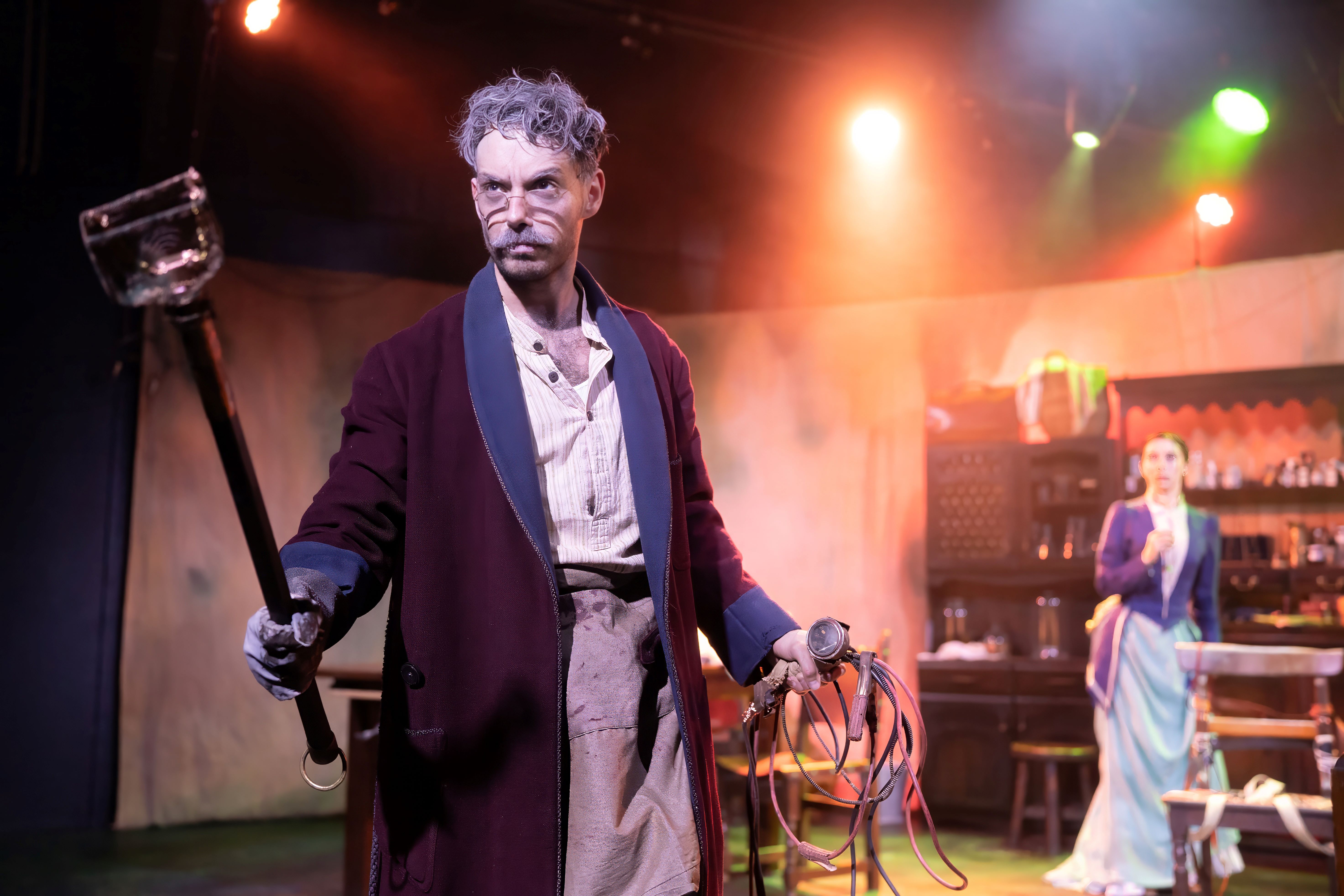
Hedda Gabler

28 Oct

The joy of a classic is twofold: you’ve either seen it before and are fascinated by the choices made by this particular production, or you’re seeing it for the first time and are sharing in an experience that has enthralled millions before you.

This version, adapted and directed by Anthony Skuse, will thrill audiences both familiar with the play and those to whom it is entirely new.

Skuse has tightened the piece so it runs a brisk 90 minutes, a remarkable achievement as there’s not much fat to trim off Ibsen’s original, a piece that can run two hours fifteen.

Hedda has just returned from her honeymoon with her more conventional husband Jørgen Tesman. It’s clearly not a perfect match, a fact underlined by the play’s title: Hedda’s maiden name. In the drawing room of the couples’ newly acquired home is a portrait of her father, General Gabler, watching over all. And, waiting in a drawer, is the set of pistols he bequeathed his daughter.

It’s tempting to read the plays of the second half of Ibsen’s career as documenting social issues. When Nora leaves her husband at the end of A Doll’s House, it can seem like she’s slamming the door on the whole damned patriarchy. And, I guess, if you like your theatre as a type of animated slogan, a sort of cutely repeating GIF, who am I to say you shouldn’t. But I do wonder if reducing Ibsen to a message is to rob the dramatic experience of its richness. From long, hard experience, I’ve come to the conclusion that the best way to pass the time in the theatre is by paying attention to the actual play, rather than holding tight to some theory you brought pre-packed from home.

Ibsen, I suspect, is best appreciated through character rather than message. Famously, he claimed to have spoken to his characters, heard their voices, noted their choice of dress. They weren’t puppets for his particular philosophy, but people….with all the wild heaving breathing contradictions that implies.

Skuse’s version honours this gloriously Life-affirming approach, and Hedda as performed by Ella Prince is beautifully rich and complex. Prince’s Hedda is intense and bewildered, focussed and fraught, iron-strong and vapour-vulnerable. She’s both the pistol and its puff. She’s a long way from some other Heddas I’ve seen: silly middleclass housewives who are close cousins to Emma Bovary, bored with their lives and self-medicating with fantasy. Prince’s Hedda longs for something more, but in a way that’s so genuine, so potent, that it doesn’t so much indict the mediocrity of the society she’s trapped in as offer a Dionysian vision of ecstatic fecundity, of human flourishing …. of tragically lost opportunity.

With a terrific cast, Skuse surrounds Hedda with characters who are tougher and less comically inconsequential than those some directors choose to present. There’s still plenty of humour, but these characters, though not Hedda’s equal in strength, inhabit a psychological world that is neither inconceivably nor prohibitively distant from her own. Considering the notorious final line of the play, this is both ironic and deeply poignant. The use of space is brilliant, making the most of KXT’s traverse stage, and the simple conceit of having characters occasionally sit with us in the front row is a powerful reminder that Ibsen offers people, just like ourselves.  

Paul Gilchrist

Hedda Gabler by Henrik Ibsen, in a version by Anthony Skuse

Presented by Secret House in association with bAKEHOUSE theatre co 

At KXT until 2 November

kingsxtheatre.com

Image by Braiden Toko