Archive | Responses to Plays RSS feed for this section

The Way Things Work

12 Nov

Ever since Dorothy Parker quipped of The House Beautiful that it was the Play Lousy, the more attention seeking of the critical fraternity have dreamed of such gift titles.

And so, if I was of this infantile nature, I would pounce on The Way Things Work and say that it’s Not The Way Plays Work.

But Aidan Fennessy’s play is intriguingly nontraditional in its structure. Two actors play six separate characters in three distinct scenes. The satisfaction of character development is sacrificed for the pleasure of discovering plot connections.

Leland Kean’s cast has fun with the comedy. On opening night there were fluency issues, but these will iron out.

In the first of the triptych, Nicholas Papademetriou is a state minister accused of corruption. He claims that corruption is endemic and systematic whenever there’s a hierarchical power structure.

Photo by Zak Kaczmarek

Photo by Zak Kaczmarek

Without denying the need to explore other possible power structures, the minister’s argument is rather absolutist. A little like saying that human beings will inevitably suffer disease so why bother looking after your health? Or I’ll be tired tonight so why get out of bed this morning?

Corruption is real. But cynicism merely justifies it. It’s one of the ideologies that enables it.

In the final scene, in a deliciously provocative moment, Ashley Lyons plays a hit man searching for a type of honour. The character refers to the Anzacs. ‘They did what was right.’ Does he clearly connect this with what actually happened to them? If this is honour, who’d want it?

A play like this sends you off into the night (a night perhaps both literal and metaphorical) asking whether we have developed the ethical tools to build an honourable society?

Veronica Kaye


The Way Things Work by Aidan Fennessy

A Rock Surfers Theatre Company production

Bondi Pavilion til Nov 29
http://rocksurfers.org/

Platonov

10 Nov

People desiring but never acting.

Chekhov’s plays usually have me thinking about cowardice.

And one evening I will finally muster the courage to just get up half way through the first act and walk out.

Of course, I’m joking.

Platonov is early Chekhov, and more happens in it than usual for the master. (Perhaps too much. And there’s an atypical focus on one character; a young man and his relationships with women. Which I could patronizingly and erroneously suggest is typical of young male heterosexual writers.)

But I don’t want to overstate any of this. This is fascinating theatre, and not just because it offers an insight into the masterpieces that were to come later.

The language of Anthony Skuse’s adaptation is beautifully pitched. Grounded in the late nineteenth century origins of the play, it still speaks with a contemporary living voice.

Photo by Matthew Neville

Photo by Matthew Neville

But the primary joy of this production is the performances. Skuse has gathered an extraordinary group of actors and has created a space in which the entire cast create mesmerizing work.

I’ll mention only four. (It’s a fourteen hander. See it for a master class in acting.)

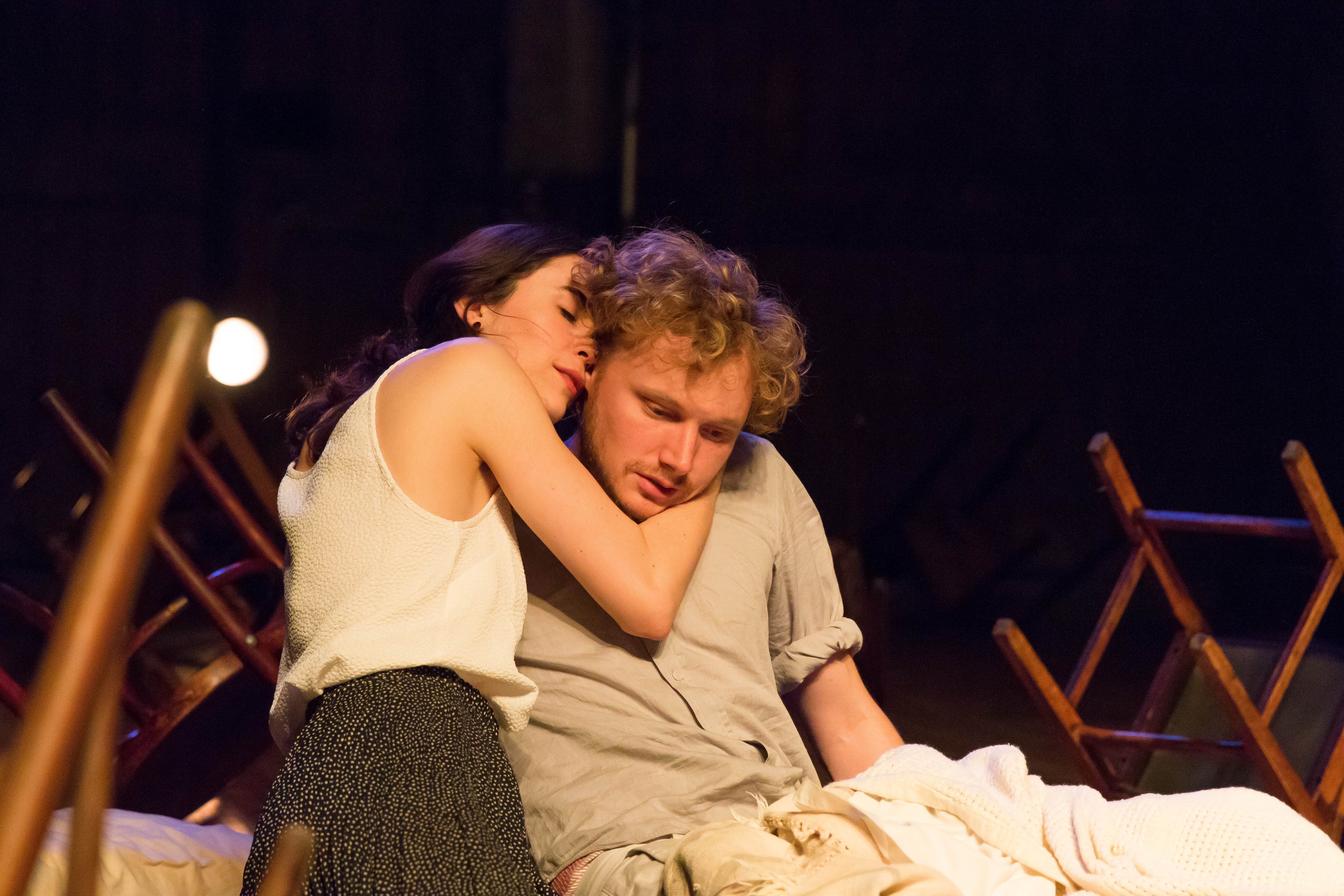
Charlie Garber gives us a thoroughly watchable Platonov. Part charisma, part moral outrage, part self loathing, it’s all leavened with just a sprinkle of humour. Many of the female characters love him, and I suspect so will the audience. As his simple, gentle wife, Matilda Ridgway is heartbreakingly phenomenal. Suzanne Pereira as Anna gives us dignity at odds with desire, and it’s a deeply moving portrait. Geraldine Hakewill plays Sofya with a tense stillness, an intriguing balance between empowerment and bewilderment.

It’s a big play, but I’ll end with reference to a single moment.

Platonov snaps “What God do you serve? What God do any of us serve?” It’s Chekhov’s challenge. Is this (and the plays that follow) an indictment of particular individuals or of an entire society?

We are flawed. The world is flawed. But do we make the world or does the world make us? This is the gloriously humane tension in Chekhov’s vision. It’s what makes him such a compelling dramatist. And it’s what this production captures so wonderfully.

Veronica Kaye


Platonov by Anton Chekhov

directed & adapted by Anthony Skuse

presented by Mophead & Catnip Productions

ATYP, Studio One til 22 Nov

http://www.atyp.com.au/

Daylight Saving

10 Nov

Sometimes I wish I was one of those writers who confuse mean-spiritedness with wit, and word games with truth. If I was, I could have begun my response like this:

“Daylight savings; it’s so confusing! Do you gain an hour? Or do you lose an hour? See this production for the definitive answer. You lose two hours twenty.”

What critics forget, when they write this sort of nonsense, is that these jokes have no doubt already been made in the rehearsal room.

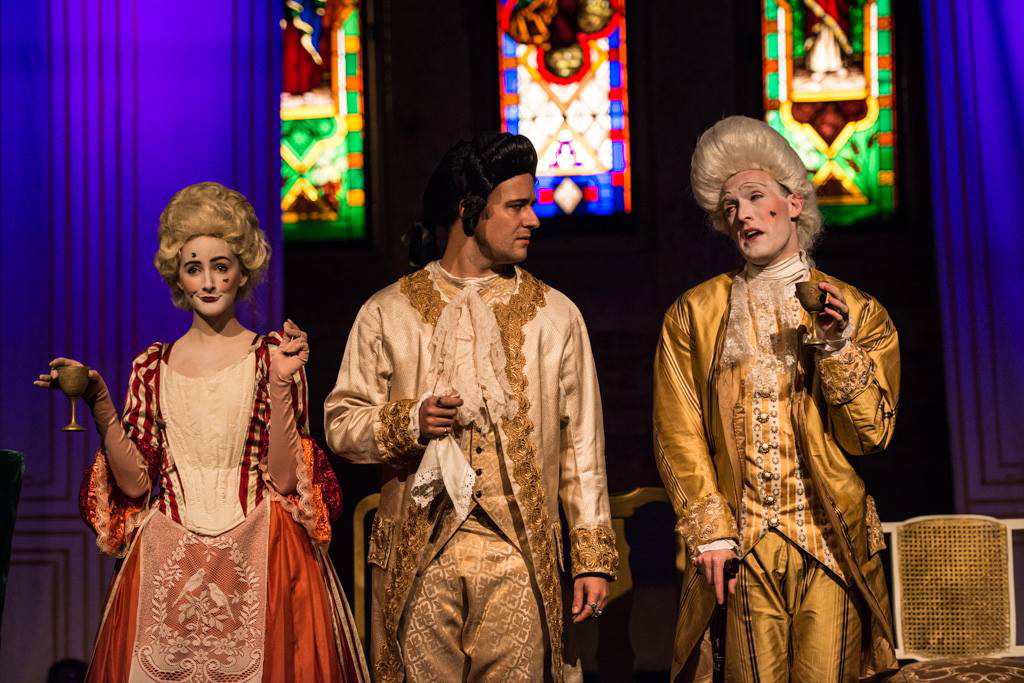
Daylight Saving by Nick Enright is simply a good bit of fun. And Adam Cook’s production is deliberately and delightfully daggy.

Photo by Helen White

Photo by Helen White

At the end of the show you do have to put your watch forward 25 years – because the play’s sensibly been left in its late eighties setting.

A light weight meditation on fidelity, loneliness and lost time, it’s peppered with crazy characters. A celebrity chef, a Wimbledon champion, a Stanford professor, and a host of others sit down to dinner around a table in Pittwater.

The cast have appropriate larks with all this. Rachel Gordon and Christopher Stollery get both laughs and sympathy as the troubled couple. Ian Stenlake is suitably charming and repulsive at turns as the visiting Yank. Belinda Giblin is a wonderfully audacious lady who lunches. (Diana Simmonds deserves a special mention as the voice of the interviewer. The ungenerous might say her performance was such that she was hardly present, but my tip is watch for her name at the next Sydney Theatre Awards.)

Enright’s play is conservatively structured, but shot through with giggle lines. And he gets the last playful laugh. Sitting in the middle of this (now) nostalgic extended sitcom is a thought-provoking exchange:

‘The play’s a crock of shit isn’t it?’

‘Yes. It’s a national classic.’

Veronica Kaye


Daylight Saving by Nick Enright

A Darlinghurst Theatre Production

Eternity Playhouse til 30 Nov

http://www.darlinghursttheatre.com/

Amadeus

30 Oct

Envy is a stupid vice.

Perhaps all vice is. Plato certainly thought so. And he’s not alone.

It’s a common belief that reason and virtue are inextricably linked. To this school of thought, vice is simply the result of faulty thinking.

Envy is usually based on the belief that life is a zero sum game. In other words, your gain is my loss. But is this actually the case? Why would your happiness exclude mine? And, really, how happy could I be if I knew you weren’t?

Peter Schaffer’s Amadeus is a brilliant study of envy, and this production by director Stephen Lloyd-Coombs is terrific.

Amadeus Sal and Vent

Salieri, played wonderfully by Nick Hunter, is faced with the phenomenon that is Mozart. To him it is obvious Mozart is the better composer, and it destroys him. The strength of this play is that Salieri is not reduced to mere cattiness. He’s cold and clear. But his envy is convoluted with his concept of justice. Rather than perceiving justice as something human beings must strive to create, Salieri makes the mistake of believing that it’s a quality inherent in the universe. Such a belief is a recipe for tragedy.

Schaffer’s other major theme is genius. Jasper Garner-Gore’s Mozart is eminently watchable, a big likeable child. Salieri can’t help but acknowledge Mozart’s ability, but is shocked to find him so crass. But why? Why should we be all of one piece? (Curiously, it’s the same type of thought structures that won’t separate reason and virtue.)

The concept of ‘genius’ – which is not used in the play – is an intriguing cultural trope. (I call it a trope because it’s not as if there’s a scientific test for it.)

Why do we like the concept of ‘genius’? What is this trope’s purpose? Does it help us relax, by telling us that we can’t possibly compete?

Or is the label an attempt to quarantine our evaluations from the disease of subjectivity? ‘It’s not just my opinion. He was a genius!’

Of course, an important aspect of the story is that Mozart’s ‘genius’ does go unrecognized, except by Salieri. It’s an appealing notion. Who doesn’t want to believe that their own genius has been under-appreciated? (That Mozart’s ‘genius’ did go unrecognized should make us realize that all evaluations are just human, all too human.)

Which leads me to more of my own evaluation.

The leads are supported by great work by the rest of the cast. Nicole Wineberg as Mozart’s wife, Constanze, gives a captivating portrayal of frisky fidelity. Anthony Finch and Claire Stewart-Moore are marvelously flamboyant as Salieri’s spies and representations of malicious triviality. The costumes by Peter Henson and the set by Ashley Bell are a visual delight.

This is a very entertaining and thought-provoking production.

Veronica Kaye


Amadeus by Peter Shaffer

Genesian Theatre

til Nov 29

http://www.genesiantheatre.com.au/


Procne & Tereus

21 Oct

In Northanger Abbey, Jane Austen’s parody of the gothic novel, the young heroine sees dark motives and hidden horror in the most mundane occurrences. At the novel’s climax, Catherine is confronted about her riotous suspicions. “What have you been judging from? Remember the country and the age in which we live!” Catherine is humiliated, realizing she’s let her imagination run wild.

And this is the challenge of contemporizing the ancient Greeks. Are they of our age?

(I’ve written previously of my attitude to this.*)

Procne and Tereus, written and directed by Saro Lusty-Cavallari, is a fascinating piece of theatre. Like Simon Stone’s Thyestes, this play contemporizes the setting and dialogue, and the result is an engaging immediacy that has the freshness of improvisation.

Procne and Tereus

The performances by Christian Byers, Lulu Howes and Victoria Zerbst are strong, creating captivating rhythms of light and dark.

Like Thyestes, the earlier scenes are very effective, but as the play proceeds an interesting thing happens. As the stakes become higher, there’s an intriguing discordance between the world of the play (as created by the setting and dialogue) and the behaviour of the characters. There is a provocative gap between what we think we know about these people and their actions. It reminds us how much we moderns expect rationality in behavior. (And asks us to consider whether this is a rational expectation.)

Foucault in his History of Sexuality asked us to consider the cultural aspects of what we usually reduce to biology. He pointed out that by claiming universality for particular behaviours we were actually making political assertions.

For me, this play did a similar thing with violence. A stimulating theatrical experiment, it led me to question the correspondence between the ancient and modern worlds, and to ask exactly how violence manifests itself in our contemporary society.

Veronica Kaye

https://theatrered.wordpress.com/2014/07/22/phaedra/

*  https://theatrered.wordpress.com/2013/06/16/electra/


Procne & Tereus

Cellar Theatre

15 -17 Oct (This production has closed.)

Howie the Rookie

7 Oct

Who doesn’t like a bit of rough?

Something about random violence and casual misogyny puts a tune in your flute. You dollies know what I’m talking about. Who doesn’t want to see some scrapping?

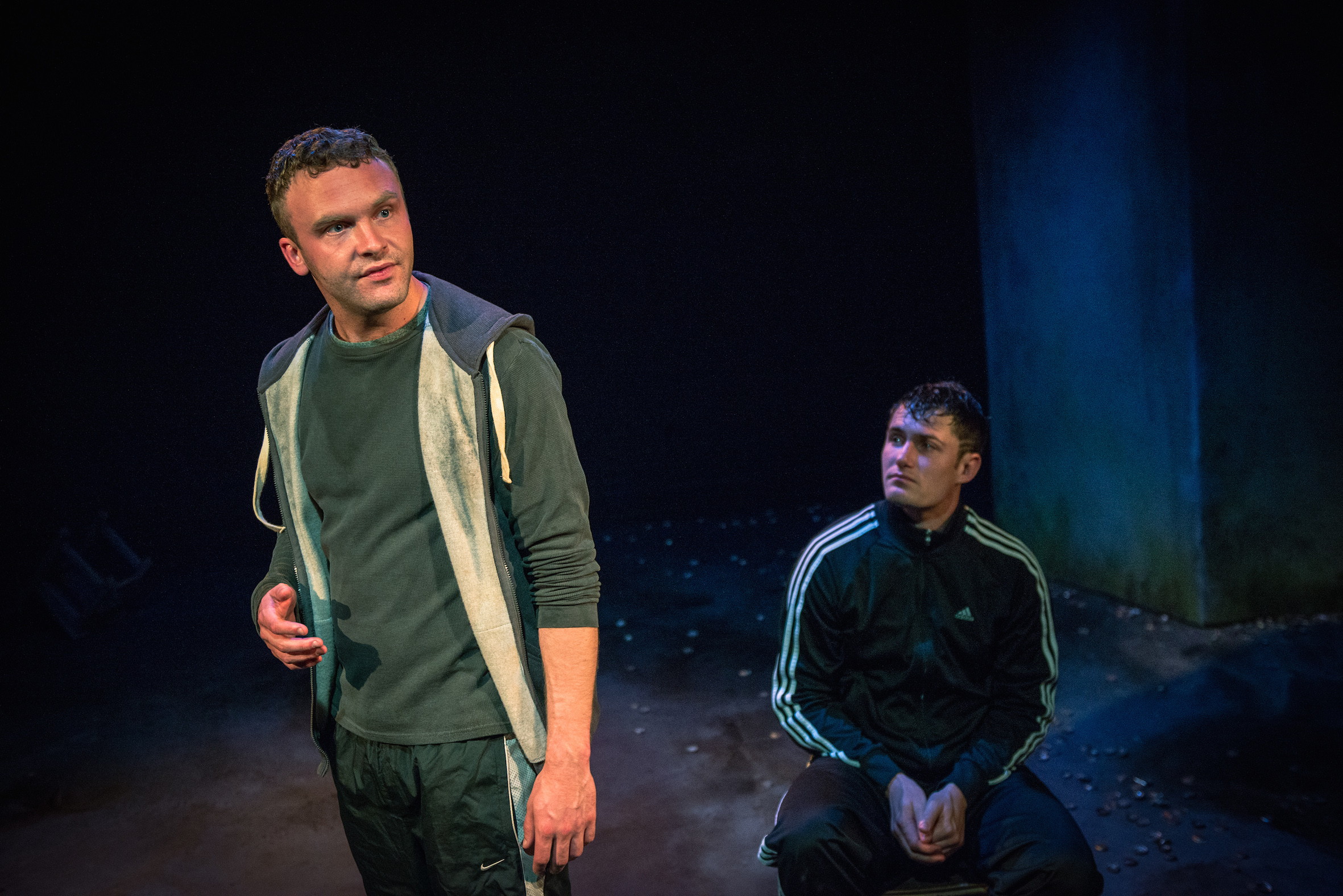
Howie the Rookie by Mark O’Rowe is a finely crafted tale about the bottom of Irish society. I call it a tale because it’s told. Two actors sit on chairs on a bare stage. One begins the tale. The other finishes it.

Photo by Kathy Luu

Photo by Kathy Luu

Despite the simplicity, these are absolutely brilliant performances. Directed by Toby Schmitz, Sean Hawkins and Andrew Henry are sensational. (And, no, they don’t remain seated. The performances are passionate and visceral.)

What does the tale say? Probably that violence begets violence.

This play is foreign. To me, that is. The whole street cred thing’s not my scene. Living a ridiculously privileged life, this type of theatre feels like an exotic holiday. But, if you’re sitting in front of an electronic screen reading this sort of stuff, you could probably do with a holiday.

Veronica Kaye


Howie the Rookie by Mark O’Rowe

Old Fitz til 25 Oct

http://www.sitco.net.au/

Sondheim on Sondheim

7 Oct

A rare night of theatre. I mean in the sense of being uncommon.

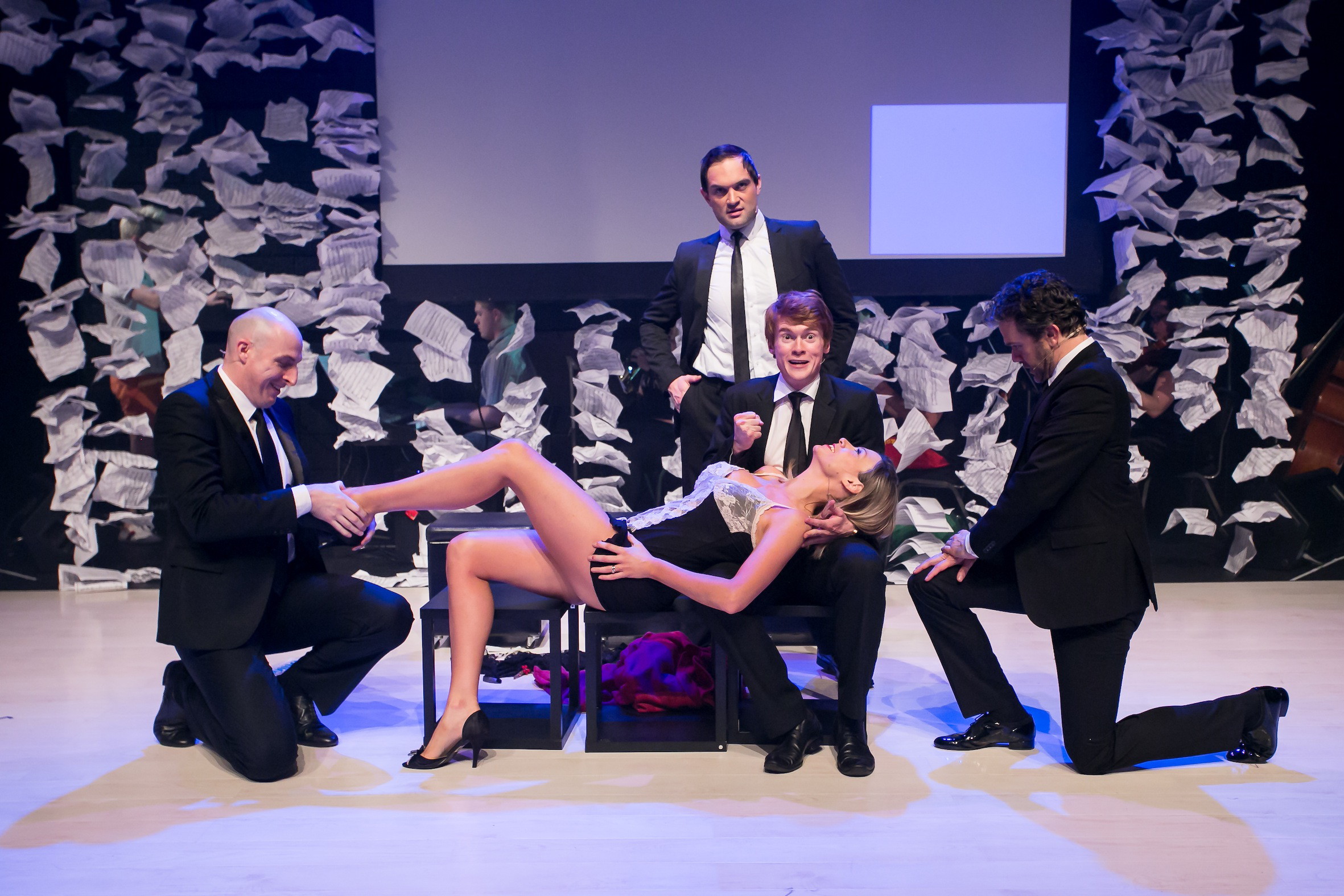
It consists of songs performed live by the extraordinarily talented band and cast, interspersed with projections of Sondheim talking.

He talks about his art and life. I left knowing not much about either. I suspect that was the point.

The man has a certain charm, somewhere between imp and self-obsessed genius. At least, that’s his onscreen persona. He drops one mask in order to show another. It is Sondheim on Sondheim, after all.  For a musical ignoramus like myself, another voice would be helpful, one that could begin to place Sondheim’s achievement somewhere in the vast theatrical landscape. But, of course, this is not a documentary. It’s much more playful and entertaining than that.

And it’s certainly an opportunity to hear some of Sondheim’s vast catalogue performed brilliantly. I expect fans of the American legend will absolutely love this show.

Photo by Michael Francis

Photo by Michael Francis

Sondheim doesn’t do melody. (The show jokes about it.) I sort of wish he did, but then, as I’ve said, I’m a music theatre philistine. (If that’s not a tautology.) His lyrics are very clever, and most of the time I could understand them. Presented out of the context of the individual shows for which they were originally created, and with which I’m not familiar, I did have a creeping fear that their intensity was being diluted.

But there’s certainly enough here for the music theatre novice to be intrigued and enticed. Everyone knows Send in the Clowns (performed wonderfully by Debora Krizak), but there are plenty of other gems. One example is The Gun Song, performed powerfully by Blake Erickson, Rob Johnson, Phillip Lowe and Monique Salle. It’s from Assassins (a Sondheim musical I do know!) Telling of the various attempts on the lives of American presidents, it’s a fascinating exploration of violence and identity, and indicative of Sondheim’s ability to take the musical into previously uncharted territory.

I never tire of pointing out that I don’t really write reviews. I write what shows make me think about. (Yes, self-obsession, but without the genius.) And this one? It made me think about the concept of work.

Sondheim has worked for over fifty years. He’s over 80. God only knows how many songs he’s written. There’s some terrific ones in this show. He’s done the work.

Completely left field biblical allusion: Adam and Eve tended the Garden of Eden even before the Fall. Work is not what you do for a reward; it is the reward.

(Not that you shouldn’t come along to this show and enjoy somebody else’s work; the work of Sondheim and the terrific team behind this very entertaining production, Squabbalogic.)

Veronica Kaye


Sondheim on Sondheim

Seymour Centre til 18 Oct

http://www.seymourcentre.com/events/event/sondheim-on-sondheim/

The MotherF**ker with the Hat

2 Oct

Who doesn’t love a guessing competition?

And the title’s not the most intriguing aspect of Stephen Adly Guirgis’ play.

It’s brilliantly written and brilliantly performed.

The story of addicts – both recovering and not – it’s a very funny and very moving exploration of truth telling.

There’s a marvelous scene in which Jackie (played by Troy Harrison) attempts to explain away an act of infidelity. It’s a tour de force of double talk. His cousin sums up his argument: ‘So except for the fact it actually happened, it didn’t happen.’

Lying to others and lying to yourself are closely related. The best liars lose themselves in the game, with disastrous consequences. It’s like being the hide and seek champion; in your victory you’re alone, undiscovered in some small dark cupboard, while the other kids have moved on to milk and cookies, love and laughter.

Photo by Kurt Sneddon

Photo by Kurt Sneddon

Adam Cook’s cast does a magnificent job. Troy Harrison’s Jackie is an eminently watchable and utterly lovable loser. He’s in love with Veronica, played by Zoe Trilsbach, who gives us a fireball of vivacious self assertion. John Atkinson is Ralph, Jackie’s sponsor. His is a powerful portrayal of self obsession masquerading as strength. Ralph’s wife Victoria, played wonderfully by Megan O’Connell, is sharp tongued and heartbreakingly vulnerable. Nigel Turner-Carroll’s Cousin Julio is a piece of comic genius.

So back to that guessing competition. If you guessed U C – congratulations! And if U C this show you’ll be rewarded with an excellent night of theatre.

Veronica Kaye


The MotherF**ker with the Hat by Stephen Adly Guirgis

Eternity Playhouse til 19th Oct

http://www.darlinghursttheatre.com/

Through These Lines

30 Sep

Inspired by the letters of Australian women who served as nurses in World War One, Cheryl Ward’s Through These Lines is a very engaging and deeply moving homage.

Cleverly directed by Mary-Anne Gifford and brilliantly performed by a superb cast, this docudrama had me in tears.

Kate Skinner as Sister Florence Whiting gives a particularly powerful performance; she’s the sober soul navigating the awful, and absurd, tension between wooing and warring.

Photo by Bob Seary

Photo by Bob Seary

The production plays with the usual tropes of the WW1 myth; larrikin Australians and incompetent brass, but does so with intriguing invention. It did bother me that the war was presented more as natural disaster than the result of human action, but I’m prepared for a lot more of this over the next four years of the centenary of the conflict. It’s an understandable response to the pity of war, and to the enormous challenge of accepting our role in Big History.

These nurses showed enormous courage. And that’s a virtue we certainly need now if we’re to accept our current role.

Veronica Kaye


Through These Lines by Cheryl Ward

Australian National Maritime Museum til Oct 5

http://www.anmm.gov.au/whats-on/calendar/through-these-lines

Brother Daniel

26 Sep

How can we make our ideals become reality? It’s one of the great human dilemmas.

Simone Weil wrote that imaginary good is easy. While our ideas remain in our head, they’re obvious and unproblematic; simple, smooth and flawless. They haven’t yet had to face the roughness, the wild unpredictability, of the external world.

And, in a sense, perhaps all attempts to bring our ideals into fruition are acts of violence. We are, after all, trying to make the world fit our pre-ordained pattern. There’s a type of brutality to it. Like taking the gentle fractal intricacy of a snow flake and forcing it into a round hole. (Like those made by bullets.)

James Balian’s Brother Daniel is a fascinating and intriguing exploration of the complexity and challenge of political action. Director Travis Green presents the tale with tension and humour, and the cast produce some good performances.

Photo by Mark Banks

Photo by Mark Banks

Daniel, played by Adam Hatzimanolis, is being tortured by representatives of a repressive regime, the very regime that twenty years earlier he helped bring to power. Lucinda, played by Mel Dodge, is a young lawyer desperate to help him. She’s a member of a growing student movement, inspired by both the idealism of the earlier revolution and its actual impact. Women didn’t become lawyers in the old days, she reminds Daniel. But Daniel is deeply disillusioned, and not just because of the electrodes. Violence begets violence, but there’s more; the dreadful discordance between dreams and reality.

This is sophisticated theatre. The pleasure and depth of the play is that it offers no simple reading. It reminds us political action is utterly necessary, but won’t tell us how.

Perhaps any such crude certainty would only lay the seeds for future violence? Perhaps we must find our own way, gently.

Veronica Kaye


Brother Daniel by James Balian

TAP Gallery til Oct 5

http://www.tapgallery.org.au/brother-danial-8pm-wed-24-sept-sat-27-sept-tues-30-sept-sat-4-oct-4pm-matinees-sun-28-sept-wed-24-sept-upstairs-theatre/