Archive | Responses to Plays RSS feed for this section

Possessions

4 Apr

Possessions is an absolutely fascinating piece of theatre,  and not the least reason being that the program comes complete with a bibliography listing both primary and secondary sources.

The play presents the lives of the historical Mancini sisters, who lived in seventeenth century Europe. Though extraordinarily privileged, they still faced a world that refused to acknowledge them as independent of their husbands. (It’s worth remembering, that in England for example, a married women wasn’t allowed to own property until 1882.)  The Mancini sisters tried to live life on their own terms, suffered social condemnation, and went on to publish memoirs presenting their side of the story.
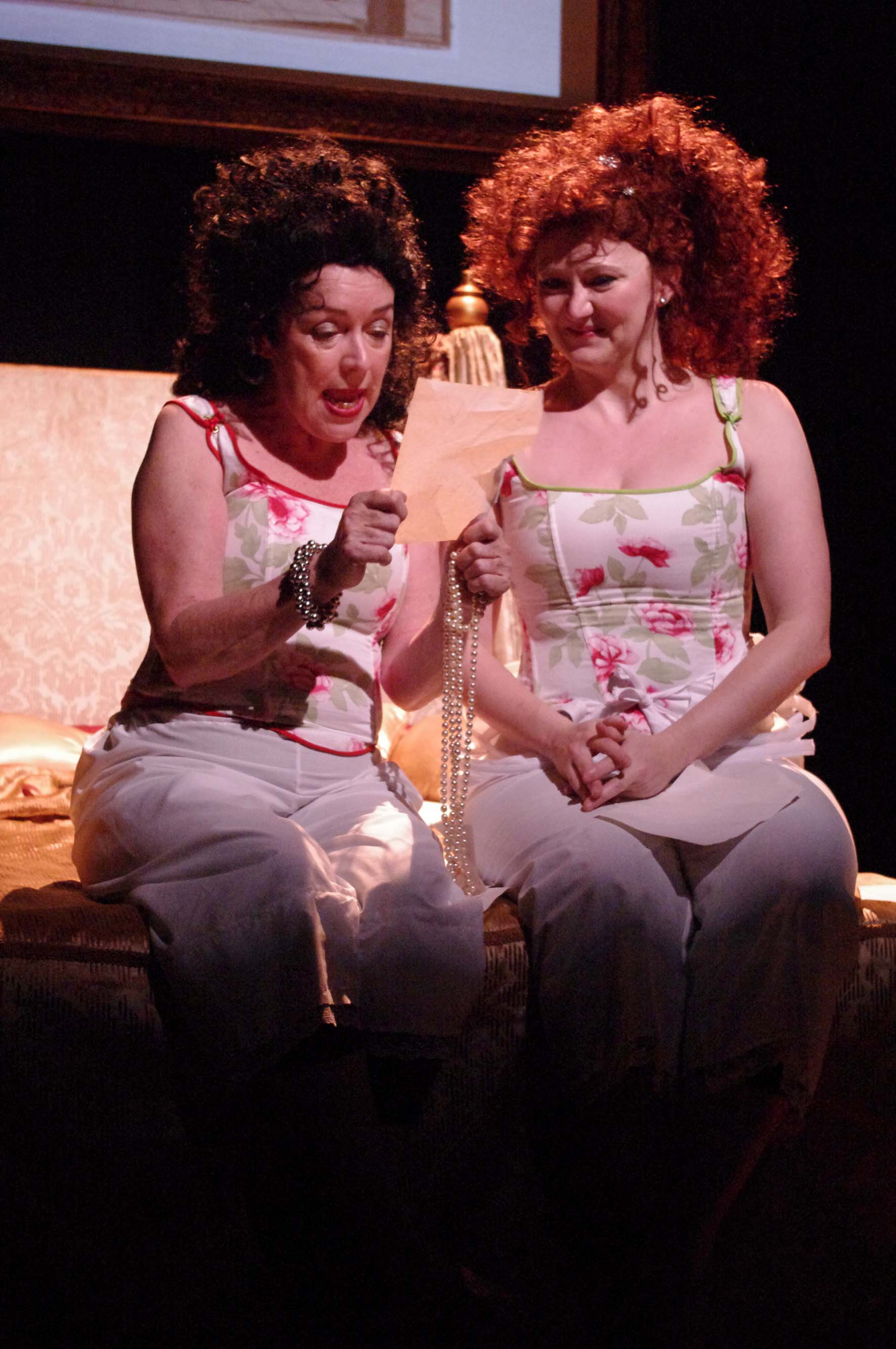
Photo by Penelope Lemon

Photo by Penelope Lemon

Self righteous writers like myself love to pounce gleefully on parochial middle class work and deride it for focusing only on “first world problems”. Is this play a case of “old world problems”?

No, for several reasons.

Firstly, creator/performers Jane Bergeron and Carrie Ann Quinn create a world in which we are playfully transported back and forth between the past and the present. The seventeenth century is never too far from the twenty-first. And the two time frames are in dialogue; Bergeron and Quinn speak both as the characters and themselves. This makes for a show that’s both a lot of fun and thought provoking. Paradoxically, the overt theatricality of the piece isn’t at odds with the aim to present historical truth. It reminds us that we are active participants in our stories, as both characters and authors.

And secondly, only with willful ignorance could it be claimed that the fight for gender equality is over.

Veronica Kaye


Possessions by Jane Bergeron and Carrie Ann Quinn

King Street Theatre til 5th April

http://www.kingstreettheatre.com.au/posessions/
 

Stitching

3 Apr

I’m a sucker for deliberately ambiguous imagery. For me it encapsulates the multiple perspectives that are both the hallmark and high point of drama as an art form.

The imagery I’m referring to in this play is that suggested by the title. Stitching is an image of putting things back together, of mending them. It’s also an image of………but that would be a spoiler.

stitching prod 2

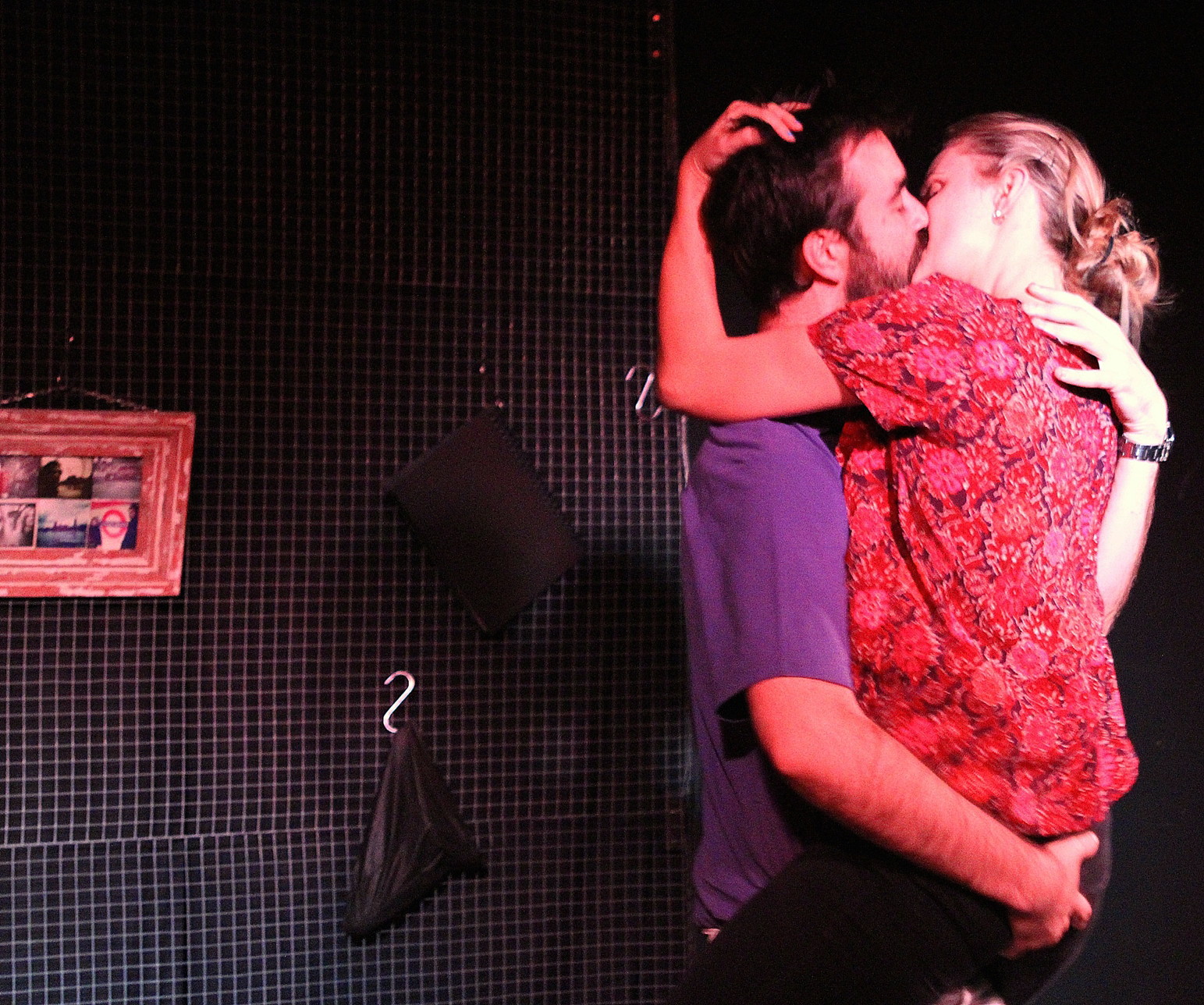
Anthony Neilson’s play is tight and sparse, funny and confronting. It tells the story of Abby (Lara Lightfoot) and Stuart (Wade Doolan) who must decide whether to keep the child she is carrying.

An unplanned pregnancy is the perfect symbol of the enormity of sexuality, the worlds it contain, beautiful and harsh, unexpected and frightening. (Not that I should really call the natural consequences of sexuality a symbol – am I that naive?)

Aided by director Mark Westbrook, Doolan and Lightfoot give beautiful performances, understated and subtle.

After the scenario I’ve briefly sketched, Stitching goes down a psychological path I couldn’t (or didn’t want to) follow. Once again, the spoiler rule prevents me from discussing this much further, but suffice to say it’s about coping mechanisms. It will certainly lead to thought provoking post show discussions.

But see it for yourself. Stitching is a well performed, engaging hour of theatre.

Veronica Kaye


Stitching by Anthony Neilson

TAP Gallery til 12 April

http://www.littlespoontheatre.com/

A Moment on the Lips

2 Apr

Mackenzie Steele’s production of Jonathan Gavin’s A Moment on the Lips is both funny and moving. And the performances are brilliant.

Seven women deal with each other, and Life. And, boy, do they throw a lot at each other! All eight of ‘em.

I often feel alienated by theatre set in the here and now. (And this play is. Well, almost; it’s certainly set within the last decade.) I like a bit of distance. Give me Ancient Greece or Renaissance Europe or Nineteenth Century Russia. Hell, even contemporary America will do. Anything that helps me feel the play is not meant to represent the world I live in.

Beth Aubrey and Sarah Aubrey, photo by Katy Green Loughrey

Beth Aubrey and Sarah Aubrey, photo by Katy Green Loughrey

Because I’m not at home in the world of this play. I don’t share the values of the characters nor their attitudes to each other. Gavin’s script gives equal weight to seven different female characters and so feels like an attempted snap shot of female experience. I’m hardly the person to judge if it’s an accurate one, but I’m troubled by what’s implicit in the attempt – the assumption that it’s possible.

The play feels like a condensed TV series. Everyone has their issues, everyone gets their moment and BIG things happen at regular intervals – though most of them off stage. Actual stage time is dominated by nasty arguments. Throughout my twenties and thirties, I couldn’t watch TV drama because of its flat, confrontational representation of Life.

However, I suspect, many audience members will recognize themselves or people they know in this play. Last night I sat in the back row of a full house, and I don’t do that often enough in indie theatre.

And this production deserves to be seen for the extraordinary performances. Beth Aubrey, Sarah Aubrey, Lucy Goleby, Sabryna Te’o, Ainslie McGlynn, Claudia Barrie and Sonya Kerr do wonderful work. These seven captivating actors certainly create seven intriguing characters.

But it’s the eighth character who troubles me. It’s not that it’s difficult to characterise Life. I just don’t think we should try.

Veronica Kaye


A Moment on the Lips by Jonathan Gavin

Old Fitzroy Theatre, til April 12

http://www.sitco.net.au/


Seven Kilometres North-East

11 Mar

What is the purpose of Art? To remind the miserable that there is happiness, and the happy that there is misery.

Kym Vercoe’s self devised piece does just that. There are moments that are charming and beautiful, and others that are confronting and disconcerting.

Vercoe narrates her multiple trips to Bosnia, and her growing understanding of the region’s very troubled history. Her stage presence is confident, strong, yet vulnerable – a mix that powerfully evokes the magnitude of the historical events and offers a truly human response.

Seven Kilometres North East is a deeply moving and thought provoking piece.

Photo by Heidrun Lohr

Photo by Heidrun Lohr


One of the most unnerving moments occurs when Vercoe realizes that the men responsible for the most shocking of war crimes are probably still living in the town she has repeatedly visited. An acquaintance attempts to calm her, “Don’t worry. They won’t rape or shoot you. It’s not the 90’s.”

In the 90’s,  safely in Australia, I lost friends to arguments about what was happening in the former Yugoslavia. One friend, of Serbian background, went from simply shaking her head and moaning “They’re all crazy” to an intense and painful partisanship. Another friend, defended the NATO air strikes on Belgrade with a fearsome logic: “But we’re the good guys.”

Has theatre the ability to deal with this sort of political and historical complexity? Does it need to? Vercoe’s focus is moral, and she does not offer analysis; she offers judgement. This is not a criticism, though many might think it is. In navigating the human experience empathy gets you further than explanation.

But the piece is far from simplistic. In fact, it’s provocatively self aware. Vercoe refers to thano-tourism; that is, the touring of sites of genocide and mass death. What is the perverse attraction? And we’re forced to ask, is this what Vercoe has succumbed to? After all, why does she need to tell this story? She wasn’t there at the time. Neither were any of her relatives. It’s not her story. (Unless, of course, you subscribe to the idea that we’re all brothers and sisters. As an idea it’s dreadfully unfashionable, and absolutely vital.)

Veronica Kaye


Seven Kilometres North-East by Kym Vercoe

Seymour Centre til 22 March


Waiting for Godot

4 Mar

Waiting for Godot is a seminal theatrical text for many reasons, not the least being that it has inspired two of my favourite critical quips:

“a play in which nothing happens, twice” wrote Vivian Mercer.

And, from a critic I haven’t been able to trace, “Waiting for Godot is a play that would be vastly improved by the addition, on page 2, of the stage direction Enter Godot.

It could be suggested that the play does not so much assert that Life is dull and meaningless as against actively make it so.

Photo by Petros Ktenas

Photo by Petros Ktenas

Because precious little happens in the play, critics have often searched overly long for meaning.

I think it’s just a mood piece. Perhaps that mood could be described as a type of playful pessimism.

And such a mood clearly speaks to many, many people. Directly in front of me in the audience was a young woman wearing a Year 12 jersey. The caption printed on the back?  ‘Bored’ – with the ‘o’ replaced by a smiley face.

And this production by the Riverside Lyric Ensemble is certainly good fun. With a quality cast, director Cameron Malcher presents an entertaining show. Errol Henderson and David Attrill play Estragon and Vladimir with humour and just the right touch of poignancy. Pozzo (Erica Brennan) and Lucky (Clive Hobson) are utterly engaging. Brennan has great fun with Pozzo’s imperious nature. And Hobson makes Lucky’s monologue the show stealer it’s meant to be.

The staging is simple and beautiful. The play has powerful imagery (the tree, the boots, Pozzo’s rope – or is it Lucky’s?) and this imagery is allowed to do its magic.

When first produced, Waiting for Godot was seen as something very new, and for this reason it’s been considered ground breaking. And, theatrically, it is.

But in many ways, it’s one of the final gasps of a dying world view. The play’s sense that Life is depressingly without meaning is strangely quaint, based on the assumption that Life should come with its purpose pre-packaged.

Old gods die hard. 🙂

Veronica Kaye

Waiting for Godot by Samuel Beckett

Riverside Parramatta until 7 March

http://riversideparramatta.com.au/show/waiting-for-godot-2/

Everything I Know I Learnt From Madonna

21 Feb

It’s an unlikely claim.

Wayne Tunks shares with us some of his family history and a lot of his love life.

Spliced into his monologue are Madonna lyrics (which made me aware of how few of her songs I know.)

I’m not exactly sure what Tunks has learned from Madonna. But his tale is engaging; funny at times, and at other times offering insight into the challenges of navigating romance and expressing sexual identity.

Photo by Katy Green Loughrey

Photo by Katy Green Loughrey

The “Everything I Know I Learnt From….” aspect of the title is cheekily appropriated, and suggests much about the tone of this show: confessional and playful.

Does everyone have mentors? Perhaps. Mine are Simone Weil and Catherine of Siena. (I’m guessing Tunks doesn’t know any of their songs either.)

Years ago I was doing a tour of the Whyalla steel works. (Remember, mentor Simone Weil). We met the guide in a lunch room that was adorned with a single safety poster. “Smart People Learn” it said. I laughed. And have been thinking about it ever since.

What have I learnt? And how do I learn? These questions must be asked. They’re the path to wisdom and happiness. The unexamined life is not worth living, says Socrates. Though not as amusingly as Wayne Tunks.

Veronica Kaye


Everything I Know I Learnt From Madonna 

written and performed by Wayne Tunks

Old Fitzroy Theatre until 22nd Feb

http://www.sitco.net.au/


The Dead Ones

21 Feb

A woman stands at a podium. She reads from a script, softly and calmly. To her left is projected a series of family photos.  Margie Fischer shares with us her experience of clearing her family house, once the last of her family are gone.

It’s a wonderfully generous sharing.

Dead Ones Margie 2

And it’s fascinating because it encapsulates two of the fundamental features of our world; our materialism and our sense of lost time. Were anthropologists from another time and place to find this performance, it might be their Rosetta stone. (Another time and place – see how I struggle to disentangle myself?)

As Fischer decides what to keep and what to discard from the now empty family home, she’s only too aware of how objects are imbued with value through their connection with people, and that this stored value will slowly leach away. She realizes there’s little use in keeping much.

As we are shown photos of family members who have passed, I’m reminded of the strangeness of the medium. Do photos capture a moment? Or do they stop time? Stop it like a dam stops a river? Stop the flow of a river, and is it a river anymore?

Our culture is obsessed with movement, with the passing of time, with history. And the trouble with history is that, in it, people go. In every culture people die. In ours, they are gone. And photos, often our most treasured objects, can do only what objects do; they retain value for a while, and then they fade to mere history.

Fischer does not make all the philosophical and cultural generalizations I’m making. Her story is personal, honest and powerful. Powerful like the gentle flow of a river.

Veronica Kaye


The Dead Ones by Margie Fischer

Seymour Centre til 22 Feb

http://www.seymourcentre.com/events/event/the-dead-ones/

Privates on Parade

17 Feb

Set in British Malaya during the 1948 “Emergency”, this is a story of the birth pains of a new world.

Alice Livingstone’s production is also great fun. Overflowing with humour and playful musical numbers, it’s entirely captivating.

Imperialism? They say, to really understand a man, you have to walk a mile in his shoes. What they don’t say, is that in order to do so, the time honoured approach is to first take the man’s shoes from him. (Please excuse the gender specific nature of the language – but it seems appropriate in the context of imperialism.)

Gandhi was fond of saying that imperialism hurt the conquerors just as it hurt the conquered (though not necessarily as much).

Photo by Bob Seary

Photo by Bob Seary

As a British performing military troupe, the men presented in Privates on Parade find themselves in a super heated atmosphere. There’s a troubling juxtaposition between what they do and the military conflict that surrounds them. In this jungle of political intrigue they’re utterly lost, but far from the cloying comfort of home, something begins to grow. Relationships, that for the sake of tidiness would be torn out at the roots in Britain, are allowed to blossom.

Aided by marvelous musical accompaniment, the entire cast does brilliant work. Diana Perini and David Hooley are superb as two lovers, searching for a path through racial prejudice. Jamie Collette and Martin Searles give a moving portrayal of two men in love, painfully aware of the value, and fragility, of their relationship in a closed society. Matt Butcher’s villain is wonderfully (and consciously) pantomime, and achieves both humour and real menace. James Lee gives a show stopping performance as cross dressing Acting Captain Terri Dennis. And Peter Eyers as Major Giles Flack, the local representative of British small mindedness, gives a hilarious portrait of right thinking.

Peter Nichols’ script and Denis King’s music captures a world that needed to change. But the play is also a contemporary call for a more open society. And this production presents it with such life affirming exuberance that you leave the theatre feeling we can make it happen.

Veronica Kaye


Privates on Parade by Peter Nichols. music by Denis King

at New Theatre until 8 March

http://newtheatre.org.au/

Pinball

12 Feb

About twenty minutes into this production I began to cry. They weren’t tears of laughter, though the play is very funny. I wept at the story of injustice.

The play tells the story of Theenie and Axis. They face a society that can hardly acknowledge, let alone accept, their homosexuality. The focus is the custody battle for Theenie’s child, Alabaster.

Pinball

Alison Lyssa’s play was first presented thirty years ago. It’s witty, poetic and rich with allusion. Like some of Dario Fo’s work, it uses farce to explore serious issues, with an emotional impact that’s unexpected, and all the more powerful for that.

Sarah Vickery’s production is set in an almost cartoon-like early 80’s Sydney (except it’s painfully recognizable; I was there.) The production begins with video footage of some of the casually sexist ads of the time. We like to think we’ve moved on.

Despite some opening night hiccups (it being the first night in front of an audience) the cast do well. John Michael Burdon’s presentation of a range of patriarchal figures is highly amusing, but the pick is his all-too-familiar Kurt, Theenie’s bullying brother. Faran Martin gives a beautifully poignant portrayal of his wife; meek, dutiful and utterly lost.

Ali Aitken and Leo Domingan are Theenie’s parents. Their larger-than-Life presentations of smaller-than-Life lives should be (for all of us who live in our lounge rooms) cause for self examination.

Karoline O’Sullivan plays Theenie and Emma Louise her lover Axis, and they’re the emotional centre of the work. O’Sullivan gives a perfectly pitched journey. Louise’s anger tempered by affection is very watchable, and suggestive of a battle we must all face.

In Theenie’s battle, she must also face the law.

I’m fond of misquoting Shelley: “Dramatists are the unacknowledged legislators of the world.” Being a theatre practitioner myself, I guess I like to do this because it’s all very romantic. And completely self serving. There are REAL legislators, and we elect them, and we must keep them accountable. We MUST make our legal system a just one.

The joy of this play is its wonderfully radical sense that we can shape things. If the play has dated, it’s only because some of us have given up on this ideal. Or, from complacency and privilege, never held it in the first place.

Funny and deeply moving, this is exhilarating theatre. It doesn’t merely say ‘this is what the world is’; it asks ‘what do we want the world to be?’

Veronica Kaye


Pinball by Alison Lyssa

at TAP Gallery until 28 Feb

http://www.tapgallery.org.au/pinball-11-28th-february-2014/

Legend!

4 Feb

‘Slips’ Cordon is a top bloke. By his own admission.

Some other Australian legends are admitted to the pantheon. But others are not, and these others are quickly dismissed as sniveling pricks and the like.

One of the irresistible charms of Slips Cordon, the great raconteur, is his indubitable judgements. By sheer strength of personality, he inexorably divides the world into the wheat and the chaff.

Photo by Katy Green Loughrey

Photo by Katy Green Loughrey

This magnificent teller of tall tales shares with us his part in some of the seemingly seminal events of a very Australian twentieth century. The key aspect of each story is that he’s always the hero.

John Derum’s performance is a true delight. Pat Sheil’s script is comic brilliance.

Lex Marinos’ direction is simple and highly effective – the ambiance of a fire side reminisce, an evening of the gentle look backwards, generates hilarity by the absurdity of the contrast with Slips’ truly outrageous stories.

Like Forest Gump, but without the innocence, Slips seems to have been everywhere. And known everyone: Bradman, Phar Lap, Melba, Errol Flynn, Simpson, his donkey. Everyone. And Slips out shines them all.

So Legend is a satire on the big talker? The wanker?

Perhaps.  It’s difficult not to love Slips for his colossal exuberance.

The night is a roll call of Aussie icons. And Slips’  involvement in their famous lives is invariable. The fun is who’ll be next.

And that’s the point. Why are these people (and assorted members of the equine family) our heroes? And, indeed, why have heroes at all? That these names are so very familiar is indicative of a culture beguiled by the simplicity of judgement, and seduced by the safety of the indulgent backward gaze.

Veronica Kaye

Legend! by Pat Sheil

The Old Fitzroy til 15 Feb

http://www.sitco.net.au/