Haircuts

16 Apr

Recently a friend suggested to me that there were too many positive reviews being written in Sydney. I found this a curious statement.

If it’s true, one can only ask ‘Why?’

Here’s some possible explanations:

Perhaps reviewers are just writing irresponsibly in order to secure free tickets. (To shows they don’t like?)

Perhaps reviewers just enjoy status. (I’m reluctant to despair of human nature so easily.)

Perhaps the standard of theatre in Sydney is, in fact, improving. (In comparison to what?)

Perhaps the current crop of reviewers and my friend simply don’t share the same aesthetic values.

Let me expand a little on this idea.

I go to the theatre because I enjoy the art form. What I enjoy most is its fundamental duality. It puts into conflict multiple voices, yet these multiple voices are orchestrated by the one artist, the writer. (Of course, I’m talking about script based work, and I don’t want to undervalue the collaborative nature of theatre.)

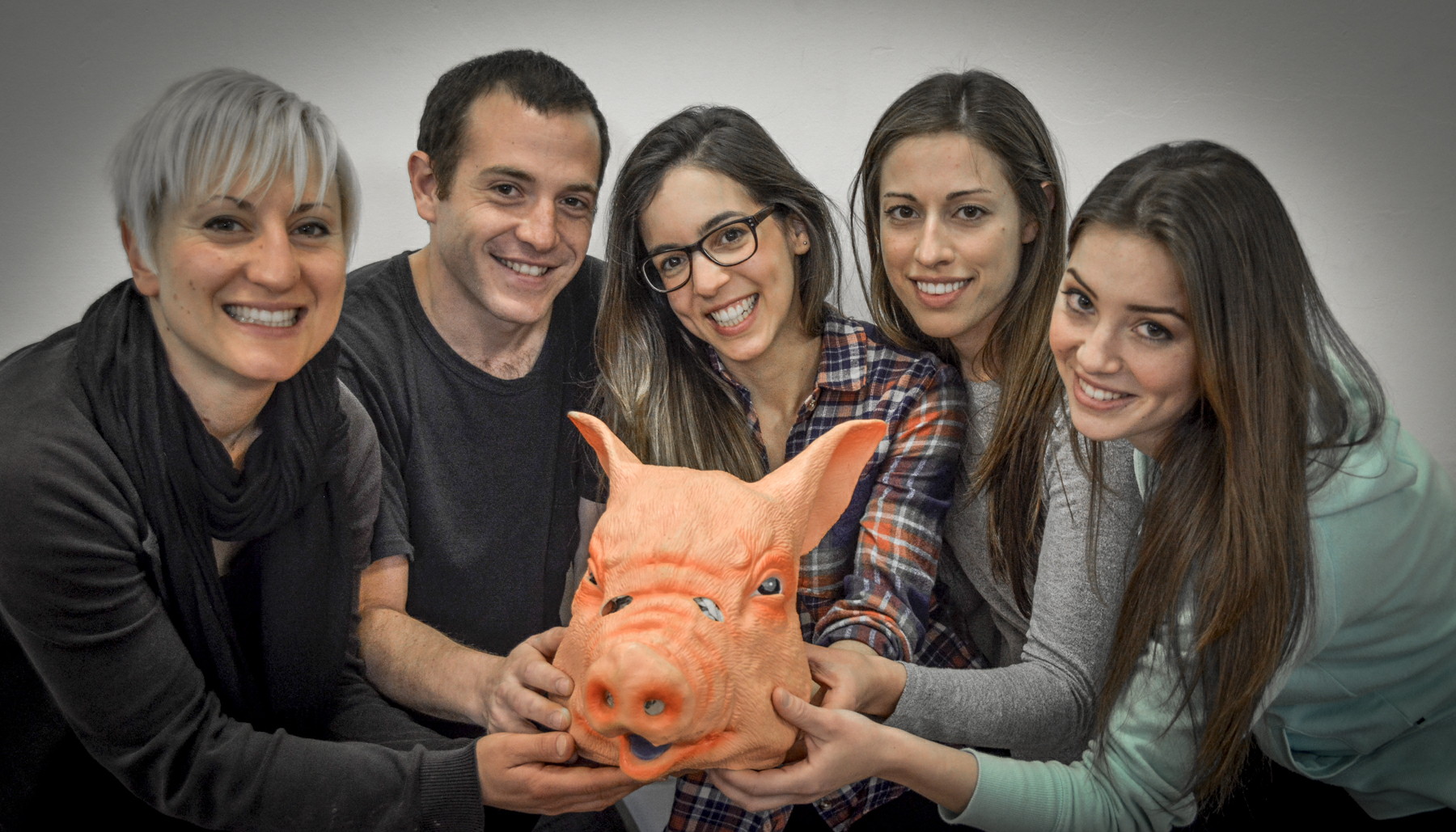
Haircuts 076

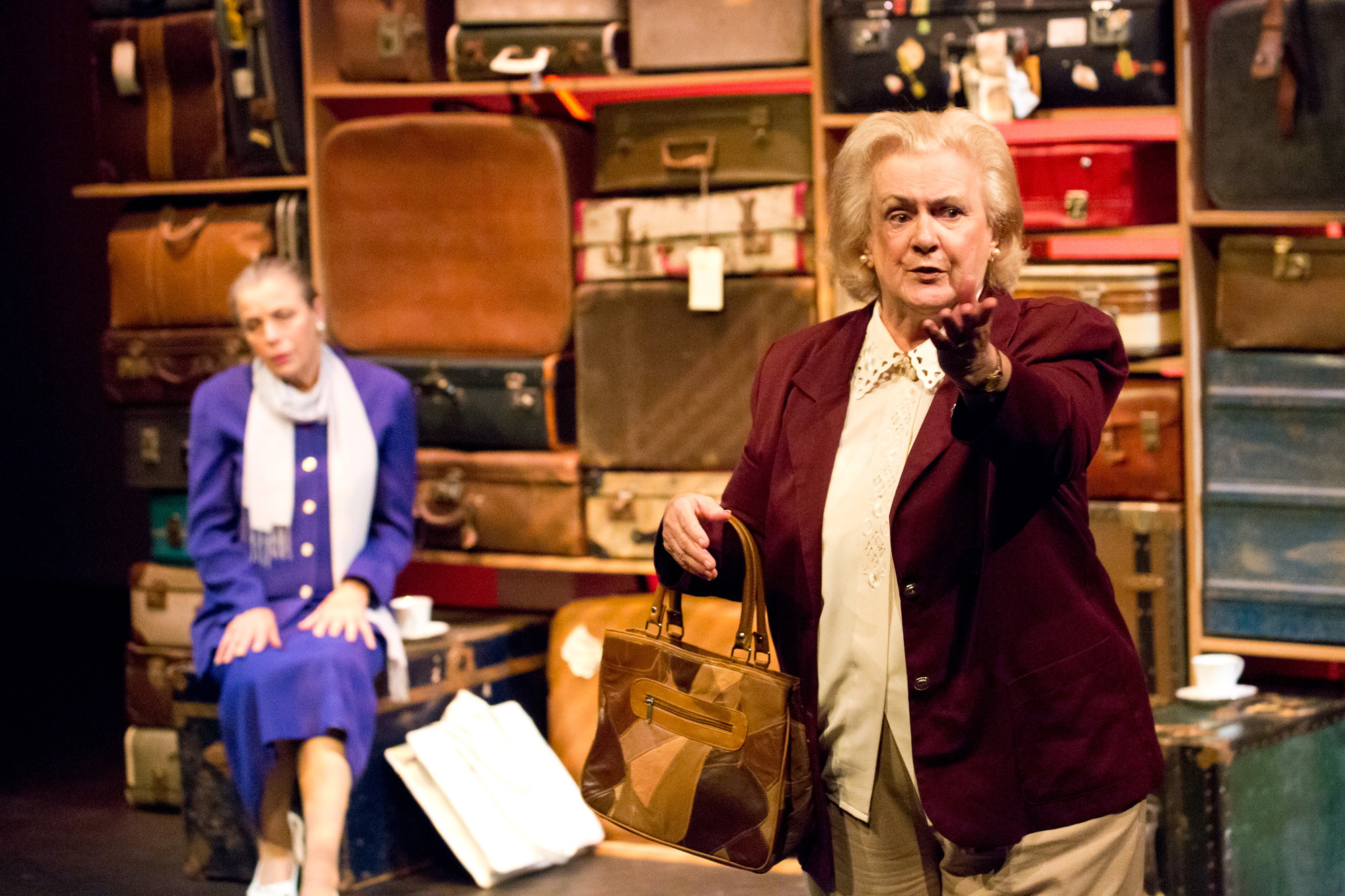
Take Haircuts, directed simply and beautifully by Lex Marinos and performed by a very skilled cast. Written by Con Nats, the show is built on a contrast between two different fathers (John Derum and Adam Hatzimanolis). Fascinating tensions arise. Old wisdom versus new business sense. Parents versus children. Words versus silence.

But these tensions, these multiple voices, build a cohesive universe, and in Nat’s universe, the essential aspect is that human relationships are fractious. The pain of this is intriguingly explored through humour. Broadly, this humour comes in two forms. It’s either gladiatorial, as characters trade insults. Or it’s based on gender or ethnic stereotypes, as characters try to come to terms with the ineffable mystery of the Other.  This vision of life – of a world of damaged human beings desperate to make connections – is what makes Nats an interesting and valuable voice on the Sydney theatre scene.

Veronica Kaye

Haircuts by Con Nats

The Greek Theatre til 26 April

http://www.trybooking.com/Booking/BookingEventSummary.aspx?eid=117988

http://conats.wix.com/haircuts

The Rocky Horror Show

15 Apr

With a production like this, if you write it up well, you get to see your words on the side of a bus.

The night is certainly a bit of fun; right down to the venue’s playfully ironic name. (The Lyric Theatre – where I heard about 30% of the words.)

I was in row U. In most other theatres I would have been in another theatre. (Row U is ‘Just a step to the left, and then 4000 steps to the ba-a-a-a-ack!’  Ok, I didn’t need to hear the lyrics. Many of us know them by heart.)

First produced in 1973, the question is ‘Does the show survive the test of time?’ (From where I was sitting, it struggled with the test of distance.)

Photo by Brian Geach

Photo by Brian Geach

I suspect the element of The Rocky Horror Show that’s a tribute to B grade horror and sci-fi films is lost on contemporary audiences. The show has become a cultural icon for other reasons.  It’s a paean to sensual pleasure, in all its diverse forms. It’s an adult pantomime. (The audience particularly appreciated Craig McLachlan’s constant breaking of the fourth wall.)

The show is the sort of silly mayhem that is our culture’s punishment for having at various times endorsed Puritan prudery and Victorian propriety.  (And, perhaps, it’s a mischievous reminder that we’re being too tardy on marriage equality.)

The show didn’t float my boat. (A phrase which Frank N Furter might repeat back at me, raising his eyebrows and pushing the double entendre, unnecessarily.)

But as Frankie says, when Janet is unimpressed with Rocky, “Well, I didn’t make him for you!”

Judging by the audience’s response last night, there were plenty of people it was made for.

Veronica Kaye

The Rocky Horror Show by Richard O’Brien

Sydney Lyric Theatre til 7th June

www.rockyhorror.com.au

Seeing Unseen

12 Apr

Here’s a list of the top ten plays currently on in Sydney (for the comfort, convenience and edification of the understandably cautious consumer):

Number 1:

I’m not actually going to give any such list.*

That would be to exacerbate the very problem Seeing Unseen addresses so well.

We’re in danger of becoming a society obsessed and dominated by pop consumer sociology.  Statistics supposedly collected to serve us instead come to control us.

Seeing Unseen is a beautiful production. Devised by the company and directed wonderfully by Gareth Boylan, it’s simple, powerful and magnificently performed.

Kerri Glasscock and Michael Pigott play a couple whose every move is watched. Michael Cullen plays the unidentified monitor. He is omnipresent. He records. He gives advice.

Want to know the top ten places for takeaway in your neighbourhood? Want to know the most popular flavour of pie? Want to know the best place for coffee?

Seeing Unseen

Choices are recorded, tabulated and then declared. The effect is dire. What began as freedom, hardens to habit, and finally solidifies into destiny.

It’s a petrifying feedback system.

So, want to know the top ten ways of relaxing? Various drugs make the list, and the monitor is more than happy to administer them. An alternative is animal clips on YouTube. Bed time stories for adults.

The result of all this coddling is the loss of the very realm that best represents our adult autonomy – morality. Kerri Glasscock’s character asks ‘Is this racist?’ She doesn’t want to be racist. Perhaps a survey told her racism was wrong, but she no longer has the ability to recognize it.

Refreshingly, the major target of this satire seems to be us. Sure, there are forces and institutions that will attempt to control our life choices, but Seeing Unseen acknowledges that this is often only possible with our collaboration.

Seeing Unseen is funny, visually stunning and delightfully challenging.

Veronica Kaye

Seeing Unseen by Gareth Boylan, Michael Cullen, Kerri Glasscock and Michael Pigott

Old 505 Theatre til 26 April

http://venue505.com/theatre

*Though, if I had to list my top ten animal clips, one mentioned in this show would certainly make it – Honey Badgers of the Kalahari. I’ve seen what those determined little maniacs can do to a cobra. I’m not taking any chances.

Experiments in Text Two (2): The Seagull

27 Mar

The idea of experimentation in theatre has created in my non-theatrical friends much hilarity.

‘What are you experimenting on?’ they laugh. ‘The audience?’

Which is, of course, true of every piece of theatre.

Putting on a production is like firing up a particle accelerator.  You get a small number of very excited particles and send them hurtling at a larger, more inert mass. Then, after the collision, you know more about the universe.

A director friend of mine points out that he doesn’t put on theatre to garner praise or to make money (once again I hear my friends’ laughter.) He puts on theatre to learn about the world.  What audiences find interesting, repulsive, charming or dull teaches him about people.

This production is an experiment in ensemble work. The cast have worked together (and without a director) for some time, exploring the character dynamics in Chekhov’s play.

The result is a production that’s a joy to watch. The reactions of the actors alone are worth the admission price. These are fascinating performances. (Personally, I was especially taken by Jade Alex as Nina, Daniel Csutkai as Konstantin, and Alison Bennett as Irina – but in an ensemble piece such as this everyone builds on everyone else’s work and the sum is far more than the individual performances.)

Nina

Another way in which this production could be viewed as an experiment is its pop up nature. Here’s a late C19 Russian classic performed in contemporary Australia –without the traditional theatre space which so often facilitates the suspension of disbelief. Performed in the round in a shop front in the Rocks, there’s a stimulating disparity between the Chekhovian characters (and their costuming) and all that surrounds them.

The script, a translation by Peter Carson, is English, but not Australian. Could it be? This is another fascinating experimental aspect. Combined with the space and the staging, the language asks ‘Am I relevant?’ while simultaneously and boldly dismissing as irrelevant that very question.

I haven’t really talked much about the play, which is what I usually do.

Pascal suggested all human problems are the result of our inability to sit still in a room. A ridiculous claim, and probably a correct one.

Chekhov’s also has a ridiculous-but-right claim. It could be stated like this: All our difficulties derive from our desire to be special. In The Seagull, several characters want to be famous. Several characters are. Other characters love characters they shouldn’t. Pining over unrequited love is the archetypal example of that deeply painful and entirely understandable error; the desire to be the centre of attention.

Which is the perfect time for my byline

Veronica Kaye

Experiments in Text Two (2) The Seagull

produced by The Hot Blooded Theatre Co and Hurrah Hurrah

Shop 2.03   140 George St, The Rocks

til 28 March

http://www.trybooking.com/Booking/BookingEventSummary.aspx?eid=120490

Short and Sweet Wild Cards Week 7

6 Mar

As I’ve said before, winning is for losers.

I’m not a fan of contests. I don’t think comparison is a helpful way to approach art.*

When I was a child, my father would draw back the curtain in my room. He would greet the morning with the statement “What a great day for the race!” The first time he said it, imagining some important sporting contest, I asked “What race?”

He replied “The human race.”

I wonder whether any other race matters.

But you can go to Royal Randwick and ignore the results. You can focus on the frocks, drink the champagne, and enjoy the spectacle.  And have a good time. Which is what I did.

Ten very different ten minute pieces, each a different vision. You don’t need to agree with these visions, or how they’re presented. It’s just good to be shown, or reminded, they exist.

But it would be obtuse, bordering on perversion, to suggest I didn’t have favourites.

All Clear, written and performed by Omri Levy, Daniela Stein and Natasha Reuben, and directed by Samantha Bauer, was pacey with sharp, well executed movement.

Feather, written by Pamela Western, was the intriguing story of two women unhappy with their very different lives. Cleverly directed by Lisa Thatcher, and performed with humour and poignancy by Kate O’Keeffe and Amelia Cuninghame, the play was a thought-provoking exploration of how helping others doesn’t need to get quagmired in moralising.

Winter Retreat by Abigail Somma told the story of two lost souls at a meditation retreat. Directed by Anne Brito, the performances by Edric Hong and Nell Nakkan were both funny and moving.

Now, if some pieces speak to me and others do not, who is it exactly that needs to be judged?

Our friends have a moral duty to terrify us. Paradoxically, it reminds us we’re not alone.

Theatre serves the same purpose. Theatre is otherness. A window to other worlds.

So draw back the curtain, let in the light, and enjoy the view.

Veronica Kaye

* Unless you’re running the contest.

Short and Sweet

http://www.shortandsweet.org/festivals/shortsweet-theatre-sydney-2015

Vampire Lesbians of Sodom

1 Mar

Due to the title, the more discerning theatre-goer might suspect this is not a piece of naturalism.

What it is, is a superb piece of nonsense.

Written by Charles Busch and directed by Samantha Young, this tale of two vampires whose rivalry spans the ages is seriously well performed silliness.

lesbian-708x400

It can be easy for these sorts of shows to become sloppy. One wink at the audience too many and suddenly you’re sitting in the studio audience of The Footy Show.

But the performances from this entire cast are tight. This is top class nonsense. Hilarious, high energy and terrific fun.

Eliza Reilly and Nicholas Gell as the two tussling vampires excel (in what are easily the most truthful performances of Sapphic blood lust I’ve seen for millennia.)

This cast and creative team has built upon the outrageous script, adding even more jokes and some clever musical numbers. (Busch’s classic piece is like a well made sandpit; the gifted and youthful at heart will build in it something wonderful, while the strays will use it for other purposes.)

Being insufferably self important, I always write about what a piece makes me think about.

So what is Vampire Lesbians of Sodom about?

Is it just a welcome pause from Life’s earnestness?

Or is nonsense like this actually subversive?

A Mardi Gras show, Vampire Lesbians has the exuberance of the medieval carnival. And exuberance is in itself subversive; a reminder that dull complacency should not be allowed to reduce our mysterious, miraculous world.

Veronica Kaye

Vampire Lesbians of Sodom by Charles Busch

Produced by Brevity Theatre

Kings Cross Hotel til March 7

http://www.brevitytheatre.com.au/vampire-lesbians-of-sodom.html

Beyond Therapy

4 Feb

The title is ambiguous.

Are these crazy characters so far gone they’re beyond therapy?

Or is the play offering a vision of Life that is beyond the need for therapy?

The characters are certainly out there. And they’re absolutely brilliantly performed. From his cast, director Johann Walraven elicits comic performances that are vibrant, energetic, and fully committed to the madness. They’re a joy to watch.

Beyond Therapy

David Hooley and Rebecca Scott as the unlikely lovers are utterly engaging – likeable and deliciously kooky.

Nadia Townsend and Andrew Johnston as the therapists in need of therapy are magnificently ridiculous.

Jasper Whincop (as the jilted gay lover) and Tel Benjamin (as the attractive waiter) take characters that are carefully constructed clichés and play them to the hilt, enthusiastically and gloriously.

Back to that title. Beyond Therapy.

(Here’s a working definition of therapy: therapy is the acknowledgement of our need for support in our attempt to live a life that is both fully conscious and deliberate.)

Does the play present an attitude towards therapy? Is it suggesting therapy is something we should go beyond?

In other words, is the play a satire?

I’m not sure.

Playwright Christopher Durang doesn’t provide a ‘straight man’, someone who might serve as the centre of our responses. All his characters are hilariously over the top. And there’s a deliberately playful meta-theatricality, which reminds us that it’s not ‘Life’ that Durang’s holding a mirror to.

So I’m not sure if it is satire.

But it’s certainly an immensely enjoyable 80 minutes of theatre.

Veronica Kaye

Beyond Therapy by Christopher Durang

King Street Theatre til 14 Feb

http://www.kingstreettheatre.com.au/

The Winslow Boy

28 Jan

Terence Rattigan is often considered a master craftsman of the ‘well made play’. As a natural result, his work goes in and out of fashion.

Adding to this potential for supposed redundancy is the fact The Winslow Boy is set in the years before the First World War.

But the play is a historical drama. It was written a quarter of a century after the time it is set. If elements of the plot and aspects of the characters seem quaint they’re deliberately so. It’s as though Rattigan is looking back at a past era with a gentle nostalgia.

And it’s an oddly gentle play.

Or should I just say it’s odd? Not the overly simple ‘well made play’ the fashionable might dismiss it as.

What’s it about?

Ronnie Winslow’s reputation has been besmirched and must be cleared. It’s a fight for justice.

But the play’s not a court room drama. Set entirely in the Winslow’s sitting room, we’re not seriously expected to follow the legal machinations.

Plenty of people tell the Winslow’s not to bother, so perhaps it’s an exploration of an obsession with justice and its cost.

But the stakes are deliberately set low. Ronnie Winslow is a school boy who is accused of stealing a postal note and is expelled. “Let right be done” becomes the catch cry. But the sacrifices needed in order to achieve this ‘right’ are much smaller than might be imagined. Indeed, it’s quite possible to argue that many of the characters are better off because of their sacrifice, and I don’t mean on some nebulous quasi-spiritual level, but rather on a mundane common sense level. And it’s rather telling that little Ronnie is not particularly concerned about the outcome of the case.

So am I criticizing the play?

Perhaps.

But I can’t overstate how engaging it is. Rattigan seems incapable of writing a dull scene.

Photo by Mark Banks

Photo by Mark Banks

And this production, directed by Nanette Frew, is a very enjoyable night of theatre. The cast provide some excellent performances. David Stewart-Hunter as Ronnie’s fixated father delivers an intriguing mix of humour, pigheadedness and pathos. Sonya Kerr as Ronnie’s suffragette sister Catherine is intelligent, witty and humane. It’s a beautiful role and Kerr does it magnificently. Roger Gimblett’s Sir Robert Morton is brilliantly articulate and perfectly pompous. Tom Massey’s Desmond Curry is a wonderful portrait of the likeable loser.

(Considering Catherine’s relationships with these three men is hard to believe Rattigan hadn’t swallowed his copy of Pride and Prejudice whole.)

But back to my discussion of the play.

What’s it about?

About two and a half hours of enjoyment.*

Veronica Kaye

The Winslow Boy by Terence Rattigan

The Genesian Theatre til 14 Feb

http://www.genesiantheatre.com.au/

* Like Rattigan, I’ve done some swallowing and regurgitating with this line.

Puncture

27 Jan

In a lot of ways, a production like this is outside my brief.

To start with, no one talks. They dance. They sing. They do the most extraordinary aerial acrobatics. But they don’t talk.

It’s spectacular and beautiful. Director Patrick Nolan brings together the various elements wonderfully. Composer Stefan Gregory and choir director Elizabeth Scott create a fascinating world of sound which choreographer Kathryn Puie’s brilliant dancers inhabit.

It’s a tale of intimacy and desire, though tale is probably too strong a word. The various vignettes, inspired by an enormous breadth of time and place, suggest the connection between courtship and dance.

Photo by Prudence Upton

                Photo by Prudence Upton

I began this response with a mischievous admission of inadequacy.

And I’ll end it with another:
The human body; where would we be without it?

Veronica Kaye

Puncture

Riverside Theatre

21- 25 Jan

http://riversideparramatta.com.au/show/puncture-2/

Bad

16 Jan

There aren’t many shows in Sydney with a philosopher as one of characters. Alright, this is a clown version of a philosopher. Some people would say there’s no other sort. (An assertion which the rest of my response, with its usual intellectual pretensions, will no doubt provide supporting evidence.)

Penny Greenhalgh and Kate Walder’s Bad, directed by Scott Witt, is delightfully playful.

Cate Blanchett and Geoffery Rush are about to perform in that much under-rated classic, Mum Where’s my Bucket? However, due to unforeseen circumstances, the two great actors are now unavailable. Step in these two clowns. They find both the execution and the concept of acting challenging.

Photo by Yael Stempler

Photo by Yael Stempler

We usually assume the task of acting is difficult. That’s why we have the myth of the great actor, and fit people like Blanchett and Rush into it.

We don’t usually assume the concept of acting is problematic. We probably should. Pretending to be other people? Fine, if you can actually get your head around what other people are. Which is doubly difficult if you acknowledge you don’t really know who you are.

Bad is an exuberant, engaging subversion of our ideas about theatre.

Penny Greenhalgh’s philosopher is a gentle yet powerful parody of erudition and expertise.  Kate Walder’s stunt man is bouncy and almost irrepressible. He’s textured by the slightest hint of pathos. Dressed to be fired out of a cannon, and filled with the requisite thought-free positivity, just occasionally it seems he has intimations of his fate.

Both performers have a relaxed and deliberate imprecision. It’s as though their characters can’t keep up with the demands of the supposedly important roles they have accepted. This makes them joyfully human and the show a refreshing response to the over seriousness of theatre.

Veronica Kaye


Bad by Penny Greenhalgh and Kate Walder

Old Fitz til Jan 31st,  Late Sessions

http://www.oldfitztheatre.com/bad