Hotel Sorrento

21 Jan

Australia Day is controversial, especially because of the date we choose to celebrate it.  Are we being patriotic, or just parochial?

It’s curious that the people most keen on Australia Day are often the very people most cynical about the only thing that actually makes us Australians. And that is? The fact we vote, pay taxes and are under the legal jurisdiction of the federal government. Australia is a political entity.

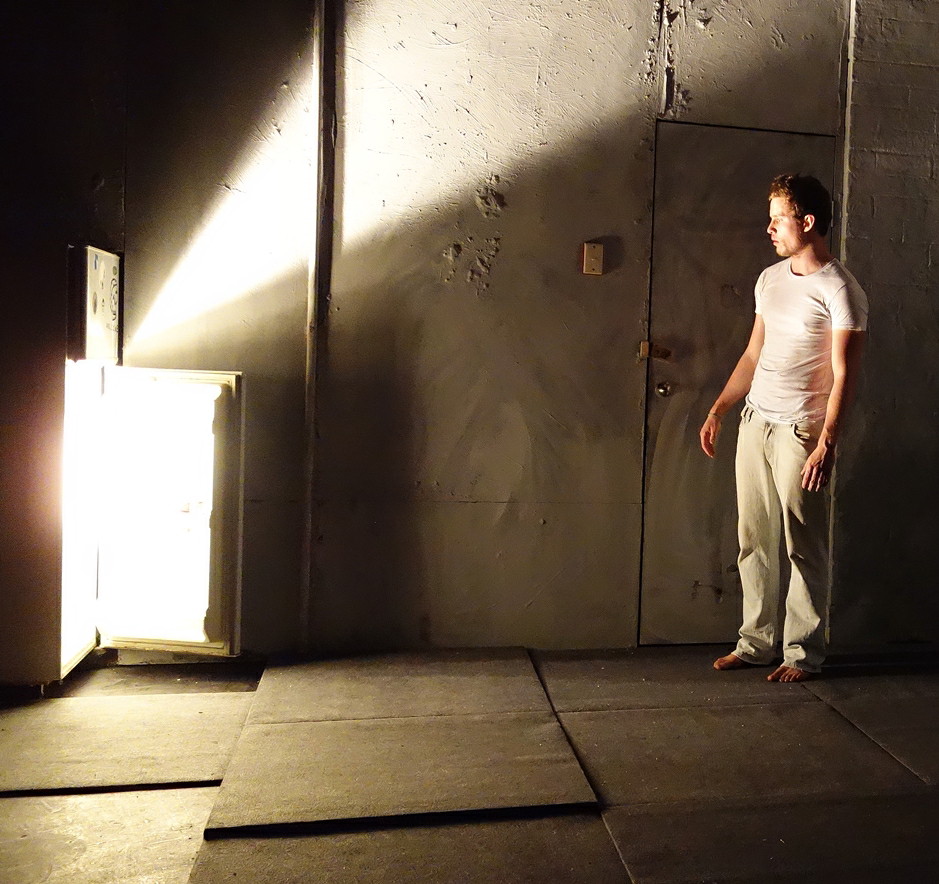
Hannie Rayson’s play is not about Australia Day, but it is about being Australian.

Rayson’s characters argue about Australians; their attitudes to art and artists, and their supposed inability for emotional sophistication.

Meg is the Booker nominated expat. On one level, she has little time for what she sees as Australian smallness. Dick, a leftist journalist, argues passionately against her. How would you know? he says. You haven’t been here for 10 years!

Of course, the play itself is 24 years old. Are Meg and Dick both wrong? Have we changed as a nation?

Or are Meg and Dick both guilty of a simple category error? Is ‘Australia’, as a cultural entity, merely a generalization? How useful is the word ‘Australian’ at all?

This is far from a criticism of the production. It’s what the play made me think about. And if I’d paid for a ticket I would’ve said it was money well spent.
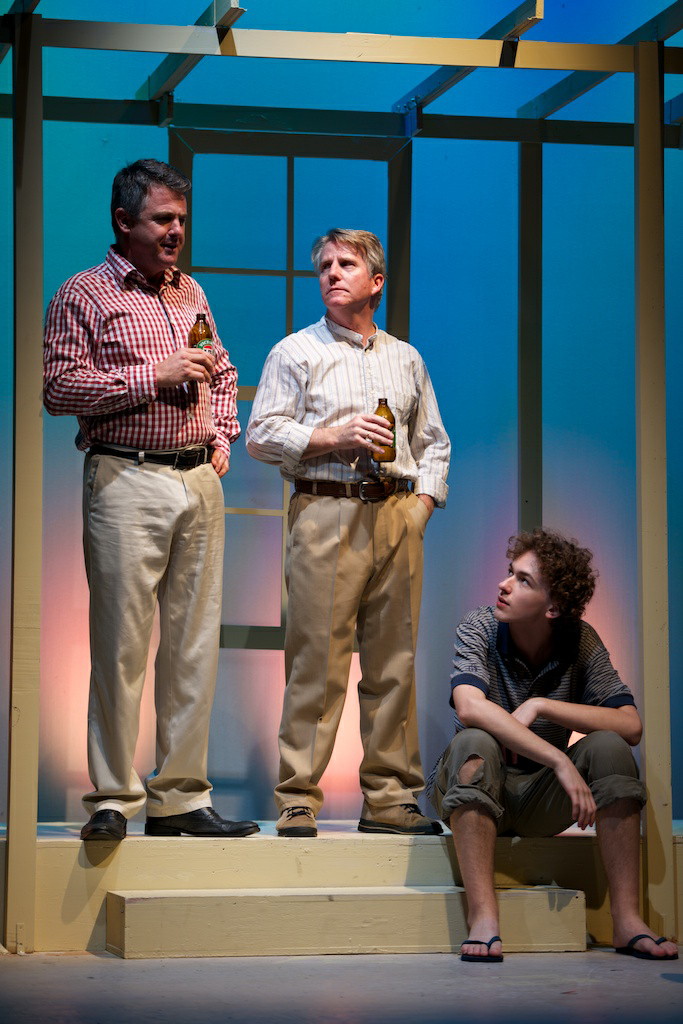
Photo by Mark Banks

Photo by Mark Banks

It’s a funny, moving and very thought-provoking night of theatre. Director Shane Bates has elicited some good performances from her cast. I especially enjoyed Melanie Robinson as Meg, Martin Bell as Edwin, her husband, and Rob White as Dick.

The play also made me think about representational art. Marge paints ‘still life’. At one point, she praises the ability of good art to capture the essence of things. Meg’s novel does this, we are told. As does the work of Helen Garner; it showed Marge something she had always been aware of, but had been unable to articulate or even acknowledge.  In the words of T S Eliot (quoted in the play):  “the end of all our exploring will be to arrive where we started and know the place for the first time”. And, in the middle of this paean to representational art, Dick grabs an apple and bites into it, unaware that it’s part of the ‘still life’ Marge is trying to paint. It’s a cheeky symbol from Rayson.

Is representation what art should attain to? It would be churlish to suggest it wouldn’t be a magnificent achievement. I’m just not sure art can show us the Truth.

A vision of art as Truth is conservative, an always looking backwards, an approach that can inadvertently deny Life, and its possibilities.

Art might be a microscope or a telescope, but it’s also a kaleidoscope. Representational art takes elements of what previously existed and plays with them. Like the Uncertainty Principle in nuclear physics, when we describe the world, we affect it. And that’s not a bad thing. It’s empowering.

There is not an Australia to represent. Australia is not a thing, it’s a happening.*

Let’s see what we can make happen.

Veronica Kaye

*Apologies to E P Thompson, a writer Dick would be quite familiar with.

Hotel Sorrento

til 22nd Febuary at the Genesian Theatre
http://www.genesiantheatre.com.au/

What are reviews for?

15 Jan

The recent International Theatre Critics’ Conference in Anchorage was an amazing opportunity for intense self-reflection for many in my field, and that opportunity was taken by three of us.

On a desultory Wednesday afternoon, I attended a session entitled ‘What are reviews for?’ There was me, the speaker, and one guy nursing a hangover. Our colleagues were exploring the more pressing question of ‘When does the bar open?’

Here is the transcript of the paper given that afternoon:


What are reviews for?

Let me begin by saying that reviews are merely one way you can respond in writing to a piece of theatre. You can also write a letter of complaint to the artistic director. Or you can scrawl obscenities in red paint on the stage door.

Perhaps these approaches have one thing in common; the desire to evaluate. I think that’s what reviews fundamentally do; tell us whether the reviewer thought the production was any good. I’m not suggesting this is all they do, but it’s their crucial component.

Of course, you can write about theatre in other ways. In fact, one of the leading proponents of an alternative approach has honored us with her presence today. (Let the record state that at this moment I went through the motions of glancing around the auditorium, to humbly imply the speaker may have been referring to someone other than me.)

But reviews evaluate.

Have I answered my initial question so soon? No. (Let the record state that at this moment the guy nursing the hangover exited the auditorium.)

I think it needs to be asked what purpose do reviews serve for each of the major stakeholders; audience members, artists, and the critics themselves.

What the general public wants from a review depends on whether they’ve already seen the production. A surprising number of people read reviews the way they read letters to the editor; simply to see what crazy ideas are out there. And just like letters to the editor, there’s a warm pleasure in finding our opinions shared, but a more intense one in finding they’re not. This phenomenon explains the hyperbolic language many critics employ. It gives the theatre going public what they want; drama.

Paul Gilchrist ruining another of my photos from the recent (and entirely fictitious)  critics' conference

Paul Gilchrist ruining another of my photos from the recent (and entirely fictitious) critics’ conference

People tossing up whether they want to see a particular play also read reviews, but less commonly than you might imagine. Decisions to buy tickets are rarely based on carefully argued evaluations, but rather on the general buzz the publicity team manage to create. (For this purpose, a reviewer might include potential pull out quotes when they want to aid the publicist, or avoid them if they don’t. To the untrained eye, reviews can appear equally positive, but publicists see the difference. )

Artists are immensely grateful that reviewers come at all, and sometimes they read the reviews. That is, when they don’t have a publicity team to do it for them. It’s not that artist aren’t interested in the views of critics. No, a critic’s opinion is just as valid as anyone else’s. And some artists care what other people think, though usually not the artists worth their salt.

For artists, the purpose of reviews is to help garner an audience. Obviously, it’s a calculated risk.

We reviewers need to keep in mind that if the artist really valued our opinion, they’d ask us to read the script before the production, or at least get us along to a couple of rehearsals. As it is, they ask us in when they’re finished. Obviously, they don’t intend taking what we say that seriously. (Analogy: We think we’re specialists, yet we’re only ever called in at the autopsy.)

I don’t want to overstate this. A friend* opened on Thursday, a review on Sunday claimed the play was too long, and by Tuesday the show was thirty minutes shorter, and by the writer’s own admission, half an hour better. We can push theatre in certain directions.

Which leads me to the final stakeholder; ourselves. Why do we write reviews? Perhaps for the money? I hear laughter. (Let the record state that there was no laughter from the auditorium at this point. None, whatsoever.)

Do we write in order to give consumer advice? Why would anyone do this, unless they were being paid? I never feel the slightest urge to write advice for anyone considering purchasing, say, a refrigerator.

I write in order to push theatre in the direction I want. I like to think I’m conscious of this (political) motivation behind my writing.

But perhaps I delude myself. Perhaps I write in order feel powerful. Or, perhaps, to assert my existence in a world so large that any of us can be easily overlooked.

Whatever my motivation, if I’m a reviewer, I wish to evaluate. Where does this desire come from? Why is it my purpose?


And then he, too, headed to the bar.

I sat in the empty auditorium, and told myself I don’t write ‘reviews’. I write what I call ‘responses’. Of course, they do include a bit of evaluation.

Perhaps I was just quibbling with words.

Well, if a writer can’t do that, I told myself, I don’t know who can!

And I headed off to do the other thing writers do.

Veronica Kaye

*The speaker’s friend was the obscure Sydney playwright Paul Gilchrist.

Things reviewers hate

10 Jan

And so I continue to file my reports from the International Theatre Critics Conference in Anchorage, an event which has been exciting, thought provoking and entirely fictitious.

Paul Gilchrist ruins another photo

Paul Gilchrist ruins another photo

Here is a transcript of one of the most popular presentations.

Things Reviewers Hate (shared for the edification of theatre makers)

  1. Shows without programs. It doesn’t need to be printed. Electronic will do. It’s difficult enough to do this job without looking like an idiot. There’s so much to process in so little time. Please don’t make it harder.
  2. Not being thanked. Or even acknowledged. Most of us don’t get paid. And those that do are hardly rolling in it. Ok, if we break our part of the bargain and write a rant that slams you as utterly incompetent or truly evil, then perhaps a dignified silence is the best response. Or maybe you should just contact your solicitor. But, in all other cases, an email saying thanks wouldn’t go astray.
  3. Finding positive reviews have been buried. Once again, if we compare you to Hitler, fair enough. But if our only criticism was that, say, the sound design was a little loud, it’s frustrating to find our review is not mentioned on your newsletter or social networks. Ok, it sounds like we’re stalking you. But since most of us write on an electronic format we know how many people have read the review and where those readers come from. I want readers just like you want audiences. You scratch my back…….
  4. Aggression to negative reviews. Sometimes I won’t like what you’ve done and I’ll say it. I don’t expect you to be overjoyed, but it seems a bit rich if you then send death threats. You invited a critic, not your grandmother.
  5. Refusal to accept that we have an existence beyond your work. I have opinions. I have preoccupations. When I write, these are the things I’ll be drawn to. Don’t swallow the lie about critical honesty. I’m not saying I’m going to write anything that I feel to be untrue, but if I think the play is about, say, feminism and you don’t, please don’t complain that I’ve misunderstood. No two people see an art work the same way. And to demand they should is to make the whole dramatic form redundant.
  6. Terrible wine at opening night. Ok, this one’s a joke. A free drink is a free drink. But I would like to raise my glass to all theatre makers. You teach us to see. And you teach us to dream. Thank you.


I would like to thank the writer of this paper, but the critic wished to remain anonymous. (Which is a perfect segue to Things Theatre Makers Hate. Stay tuned.)

Veronica Kaye

Wittenberg

10 Jan

Wittenberg has all the ingredients for a good night out –  allusions to Elizabethan and Jacobean theatre, a scholarly awareness of the German Sturm und Drang movement, all topped off with in depth references to sixteenth century theological debate!

No, seriously, it’s all very accessible. And, yes, it’s terrific fun.

Hamlet is at uni, and his two tutors, John Faustus and Martin Luther, battle for his soul. The mixing of characters derived from both fiction and fact is a sure signal that we’re in for some wackiness.

It’s a game of intellectual tennis with some top class verbal athletes shooting sharp, hilarious volleys back and forth across the net. (Admittedly, it’s a rather loose net. The play is built on what I feel is a false, or at least exaggerated, dichotomy; that between faith and reason. In this way, it’s very much an American play, part of that nation’s culture wars between the Right and the Left. But I’m far from suggesting it’s parochial. Much of the discourse about spiritual experience in the West has long been skewed towards epistemology – by the extraordinary success of the Scientific Revolution.)

David Woodland; photo by Katy Green Loughrey

David Woodland; photo by Katy Green Loughrey

It’s a very watchable game, even if one player is given a tennis racquet and the other only a ping pong bat. The play clearly favours Faustus. He’s presented as the voice of reason and skepticism. David Woodland does a wonderful job of bringing this likable and passionate rogue alive. And Nick Curnow does well to make Luther a marvelously enjoyable prig.

Director Richard Hilliar has elicited fine performances from the whole cast, and writer David Davalos’ brilliant language is a joy to hear.

Articulate, erudite, and a damn good night!

(Though you don’t, in the foyer, want to meet a bore like me,                               who’ll bang on about the privileging of epistemology!)

Veronica Kaye

Wittenberg by David Davalos

at The Old Fitzroy til 25 Jan

http://www.sitco.net.au/


Short and Sweet Cabaret

9 Jan

I realized sometime ago that Life was, in fact, not a cabaret.

At times, I’ve felt Life should lift its game, and would greatly benefit from adopting some of cabaret’s virtues – its sense of mischief, its playfulness, its exuberance.

And last night’s Short and Sweet Cabaret was overflowing with these very qualities.

I’ve made no secret of the fact that I don’t like competitions. Winning is for losers. But the competition that is Short and Sweet is easily ignored, overwhelmed by the vitality of the performances.

Festival director Kate Gaul has assembled a great night of entertainment. And Daryl Wallis as musical director, and spending much of the night on the keyboard, has created magic.

I’m not going to attempt to discuss all thirteen acts, but rather focus on several that especially spoke to me.

Oh, My Shattered Illusions, performed by Kelly Young, is delightfully naughty, and deals with copulation and its two most challenging consequences – STIs and children.

Cienda McNamara’s Hardly The Portrait of a Lady is cleverly written and beautifully sung. It’s a very funny tale of the character’s rivalry with Nicole Kidman, and an insight into the dangers of competition.

Harry + Liv, performed by Charlotte and Evan Kerr, is a perfect vehicle for the artists’ considerable talents, both vocally and on the piano. A simple but charming at home moment between brother and sister is brought alive by two wonderful voices.

Maryann Wright. Photo by Diana Popovska

Maryann Wright. Photo by Diana Popovska

Nuts, performed by Maryann Wright, is a playful presentation of some of history’s eccentrics, and Wright has a brilliant voice.

Another brilliant voice belongs to Josipa Draisma. Her Keep Moving was a marvelously presented collection of songs about the power of dreams.

Brendan Hay "Dance with DeVil"

Brendan Hay “Dance with DeVil”

Also in possession of an amazing voice is Brendan Hay. His Dance with DeVil was polished and witty, and performed with great stage presence.

Jade Yeong’s appropriation of some classic Australian anthems in her Wok Off to Where You Came From is both inspiring and subversive.

Similarly, Bali Padda’s Token Brown Guy raises vital questions about our society’s values. His Hindi rendition of a classic Aussie TV theme is riotous in all the right ways.

I usually make much of the fact that I don’t write ‘reviews’ but rather what I call ‘responses’. A night like this beats my best intentions because there is just so much – a deluge of surprises and spectacles, a torrent of wonders and revelations.

Like the annual flood of the old Nile, it overwhelms Life, and it feeds Life. Of course, it is Life. (Old Chum)

Veronica Kaye

Short and Sweet Cabaret Week 1

til Sat 11 Jan at New Theatre

The cabaret element of the Short and Sweet festival runs til Jan 19

http://www.shortandsweet.org/festivals/shortsweet-cabaret-sydney

Truth in the Theatre Foyer

7 Jan

Recently I’ve filed a couple of reports from the International Theatre Critics’ Conference in Anchorage.

And several people have had the temerity to suggest that no such event is actually occurring.

You can imagine my indignation. (In fact, you’ll have to, as I’m not going to waste a moment describing it.)

As incontrovertible proof, I offer the following:

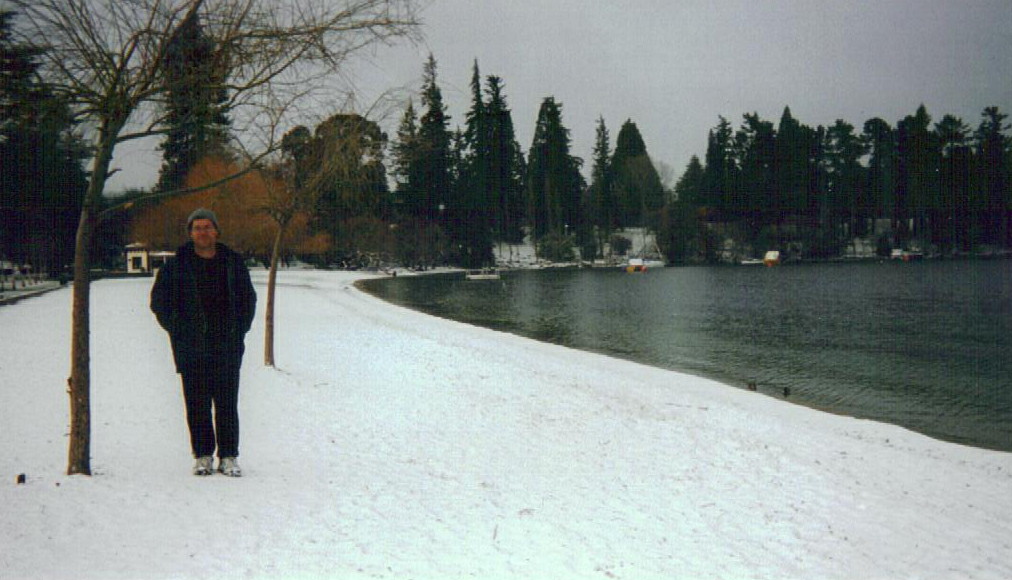
Firstly, this photo

veronica in the snow2

I’m holding the camera. The subject is a pine tree covered with snow. (Annoyingly, Paul Gilchrist, from subtlenuance, has bombed the shot; another example of a playwright getting in the way of the creation of a perfectly good piece of art.)

Secondly, I offer this, the transcript of Paul’s address to the conference:

Truth in the Theatre Foyer

“Recently a friend asked ‘What do you say in the foyer on opening night when the play you’ve just seen is horrible?’

Say it’s wonderful and drink more champagne.

Why does it matter what you think? (The exception is if the play is promoting something evil. In that case, drink even more champagne – then confront the people responsible.)

Otherwise, you have no moral responsibility to be ‘honest’.

In fact, one might question why you feel the need to be ‘honest’ at all.

Annoyingly, I keep suggesting ‘honest’ should be in inverted commas. Why? Because I believe it’s a word used to hide a multitude of sins. Bullies, for example, are always ‘just being honest’.

Before you are ‘honest’ with anyone else, you should be ‘honest’ with yourself.

If you hated the work, ask yourself why. What criteria of yours hasn’t it fulfilled? (You might even remind yourself that it’s unlikely the work was produced in order to satisfy your criteria.) And then, as you reflect, (and this is the serious part) you might ask yourself why you hold those particular criteria? (Perhaps you’ll realize that you have no criteria you can actually articulate. Maybe you respond to a play merely according to whether you want to sleep with the lead actor, or whether your last play was rejected by the literary manager.)

It takes courage to acknowledge that our ‘honesty’ is often just self serving.

I’m not suggesting you shouldn’t have an opinion. And I’m not suggesting you don’t have the right to evaluate the work. (Indeed, if you’re a reviewer, that might be the very reason you were invited.) And, regardless of who you are, if the artist asks you what you think, there’s no need to lie or to hide behind equivocation.

But every evaluation is a political act.

Let me be clear, I’m not suggesting you have to like everything. You can think plays are poorly executed. You can think they’re downright incompetent.

But remember, artists are not offering themselves up for assessment. Or only the worst are.

In a society that rightly prides itself on its pluralism, we should be asking ‘What is this trying to say?’ Or, perhaps more importantly, ‘What is this trying to give?’

(You don’t even need to ask ‘What is this trying to do?’, thinking this is the fairest way to judge the play on its own terms. It’s not asking to be judged at all.)

Let’s not turn art into a competency test. Let’s not have our basic response be ‘Is this good enough?’ Good enough for what?

A work of art is a sharing.  Don’t ask merely ’Was this presented well enough?’ Don’t even ask ‘Is it true?’

Ask ‘In what ways is this true as well?’

Because it is.

Accept the gift, and become richer.” *

Veronica Kaye

*I’d like to thank Paul Gilchrist for this transcript, but not for ruining my photo.

Writing Honestly

6 Jan

Recently I attended the International Theatre Critics’ Conference and reported on the keynote address.

The speaker, a jolly old fellow, had six pieces of advice for reviewers:

  1. Write beautifully.
  2. Give evidence.
  3. Don’t confuse mean-spiritedness with wit.
  4. Go easy on the hyperbolic language.
  5. Write quickly.
  6. Do more than evaluate.

Several of my friends are reviewers. (I’ll own it; after all, Jesus Christ associated with tax collectors and prostitutes.)

A couple of these friends suggested that the six guidelines were missing something crucial: that reviewers should write honestly.

I can’t speak for the man who delivered the address (though I do intend to send him a letter before next Christmas) but I do have some things to say about honesty.

Some might argue that it’s implicit; that honesty is obviously a requirement of a reviewer.

I would argue that it’s not (first and foremostly) the audience you have to be honest with, but yourself.

Why did you like or not like the production?

Why did you think it was about this and not that?

What assumptions have you brought to the performance that informed your evaluation or understanding?

I’m not particularly talking about personal prejudice (you know the sort: you like someone’s work because they bought you beers at uni, or you don’t like it because they didn’t buy you enough.)

I’m talking about political, aesthetic and moral assumptions.

And if you don’t think you make any assumptions, get yourself to a play.

And watch carefully the action on your side of the curtain. (It’s the true magic of theatre.)


Veronica Kaye

Guidelines for Reviewers

6 Jan

Recently, I attended the International Theatre Critics’ Conference in Anchorage. (It’s held in Alaska for the sake of the keynote speaker. He drops in from the North Pole and shares his infallible knowledge of who’s been naughty or nice.)

Lest you suspect I’m just making this up, here’s the summary of his address:

  1. Write beautifully. Or, at least, try. Theatre goers appreciate language. It’s one of the things the artform does so well. Don’t be the weak link.
  2. Give evidence. Regardless of whether you liked the production or not, back up what you say. Remember, your readers are actually interested in the theatre, not you.
  3. Don’t confuse mean-spiritedness with wit. You may have really disliked the production. And you can write that. But put downs are only funny when the target has actual power. Remember, you’re not writing about an evil dictator. Actually, remember you are not writing about an evil dictator; you’re spending your time writing about theatre. Difficult to claim any sort of moral superiority, dickhead. (See, that wasn’t funny.)
  4. Go easy on the hyperbolic language. You didn’t have an orgasm. You weren’t tortured. Really, you weren’t. Save exaggeration for the marketing people. (After all, there’s plenty of them. Billions, really.)
  5. Write quickly. (In so far as this is compatible with point 1). You weren’t given a free seat so you could write for posterity. Posterity doesn’t buy tickets.
  6. Do more than evaluate. Don’t just write about whether you thought the production was done well or not. Theatre is not Olympic diving. Hey, Olympic diving isn’t just Olympic diving. Beauty can’t be reduced to a number. And theatre might even have meaning. It’s an idea worth considering, and writing about. Take the work seriously.

Of course, most critics didn’t hear these guidelines for writing. They were practising the other skill necessary for a reviewer. They were at the bar.

Veronica Kaye

The Dreamer Examines His Pillow

15 Dec

‘What is sex for?’ adult Donna asks her father.

‘For making babies!’ he replies; an answer so shockingly and refreshingly obvious that it hides the very strangeness of the question.

‘What is sex for?’

What is it for?

What’s being expressed here is a powerful desire for structure, an overwhelming need for certainty. Donna is asking someone with supposed authority to tell her how the world is organized. She wants her father to say that things are this way, and not that way, or that way, or that….

John Patrick Shanley’s play is rich and thought provoking. His characters speak with a street poetry that overflows with gloriously fresh imagery. The play bristles and sparkles with the contrast between plain speaking and magical attempts to capture the unknowable.

Donna and Tommy are trying to work it out.  Should they be together or not? It would probably be easier if Tommy knew who he was and what he was responsible for. (Another strand of Shanley’s intriguing exploration of certainty.) It would also be easier if Tommy wasn’t sleeping with Donna’s younger sister.

Photo by Tom Bannerman

Photo by Tom Bannerman

Ainslie Clouston and Scott Lee give brilliant performances as the lovers, and Peter McAllum is wonderful as Donna’s father.

Tom Bannerman’s clever set brings the TAP alive.

Director Vashti Pontaks’ production is funny and deeply stimulating. (And not just because of the discussions of sex, though they’re interesting. Shanley’s vision of sex and romantic love is a controversial one. Of course, the play doesn’t really reduce desire to a mere component in biological reproduction. Indeed, to my taste, Shanley actually overstates the power and importance of sex in our lives. And yes, I know, that’s a bold claim to hide away in a set of parentheses.)

But the play is an exhilarating reminder of the danger of reducing anything to something else.

For when we rob Life of its richness, it is we who are poorer.

Veronica Kaye


The Dreamer Examines His Pillow by John Patrick Shanley

at TAP Gallery til 21st Dec

http://www.unpathed.com.au/

Measure for Measure

11 Dec

Hypocrisy is my least favourite vice.

I don’t mean that I abhor it more than other vices.  Rather, of all the supposed vices, it’s one of those I think least warrants the title.

My problem with hypocrisy is this:  it’s too easily seconded in to attempts to shut down discussions of ethical behaviour.

For example, consider the criticisms aimed at so called ‘chardonnay drinking socialists’. According to some public commentators,  if you drink chardonnay, you’re no longer qualified to discuss the redistribution of wealth in our society. (Have you drunk some of the gawd awful chardonnays out there? I attend the opening nights of small indie theatre companies; I have.* Believe me, quaffing chardonnay doesn’t automatically rocket you into the privileged classes. Unless, of course, you remember that there are a billion people on the planet who don’t have access to clean water.)

Which brings me back to my point. (And, yes, there’ll be talk of theatre soon enough.) If you bemoan the fact that there are children who don’t have clean water and yet afford yourself a glass of wine occasionally you are a hypocrite. But how is that possibly worse than drinking and not mentioning that there are people worse off than you?

I believe we should have ethical aspirations. I believe we should say ‘We could all do better’. Because we could. But hypocrisy is often so shallowly conceived, and flatly presented, that these vital conversations don’t occur.

In Measure for Measure, Shakespeare presents a very simple hypocrite. Angelo is given sovereignty over Vienna while the Duke is absent. He then precedes to prosecute citizens who contravene regulations about sexuality morality, regulations that previously, under the Duke, were not enforced. (To a modern eye, fornication is not a crime, but it’s not too difficult to find contemporary parallels.) Angelo’s hypocrisy springs from the fact he’s guilty of the ‘crime’ but does not acknowledge it.

Nick Hunter plays Angelo with a fair sense of humour, and it’s a good choice. The meat in this play, as I will argue, is elsewhere.

Danielle Baynes2

Danielle Baynes plays Isabella the novitiate, who faces a tough moral dilemma (well, once again, probably not to modern eyes, and possibly not to most Elizabethans). She must decide whether to save her brother’s life at the cost of her virginity. I won’t describe what happens (though I’m not sure if you can be guilty of a spoiler in a Shakespearean play), but suffice to say it leaves one considering justice and mercy and the true nature of love.** Baynes’ performance is powerful. Her response when Angelo tries to force himself on her is heart wrenching. And her final action of the play will ignite many a post-show discussion.

Director Richard Hilliar draws some delightful performances from his cast.  Hailey McQueen is terrific fun as a nun. James Townsend is wonderful as the big talker who doesn’t know when to stop.  (In fact, as this piece is being played in rep with King Lear as part of the Sydney Shakespeare Festival, it’s fascinating to witness such an enormous versatility of performance from the entire cast.)

John Grinston plays the Duke, and does an admirable job.  There’s a suitable mix of gravitas and humour. But the Duke as written is a bizarre character, and it’s hard to know if Shakespeare thought of him as anything but a plot device. But he has a lot of stage time, and ultimately, despite avowing that he has all the other character’s best interests at heart, ends up treating them as little more than puppets.

A cautionary for playwrights, and other omnipotent beings? Or an insight into true hypocrisy?

Veronica Kaye

* For what my opinion is worth, Sydney Independent Theatre Company does not serve gawd awful chardonnay at their openings.

** I never do get round to discussing this in detail. See the play, then discuss it yourself in the bar afterwards, with some good chardonnay.

Measure for Measure

playing with King Lear as part of the Sydney Shakespeare Festival til 21st Dec

http://www.sitco.net.au/