To Kill a Mockingbird

8 Apr

To be honest, I’ve never especially enjoyed the novel. It’s too episodic. And then there’s the whole told-from-a-child’s-point-of-view thing. It’s not the way I like my politics.

And there’s the message. And there is a MESSAGE: that you need to walk in someone else’s shoes before you can judge them. So bleedingly obvious!

Of course, I’m being facetious. I’m one of the many who’ve been unconsciously shaped by this classic.

Photographs © Bob Seary

Photo © Bob Seary

To Kill a Mockingbird is one of the most popular stories of the 20th Century. It encapsulates the drive for social justice that’s one of the crowning achievements of our culture. Or, it could be strongly argued, the novel didn’t so much encapsulate as cause. Like Dickens in the 19th century, Harper Lee was one of those voices that pushed our society to something better. (Yes, I believe literature can change the world.)

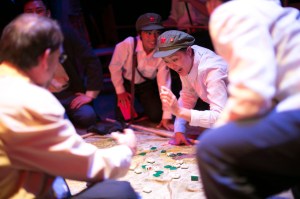
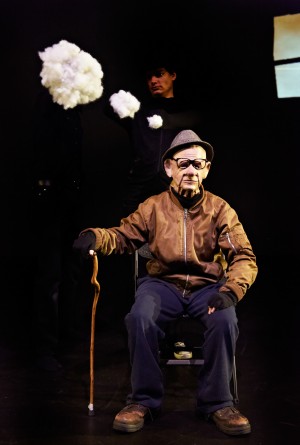
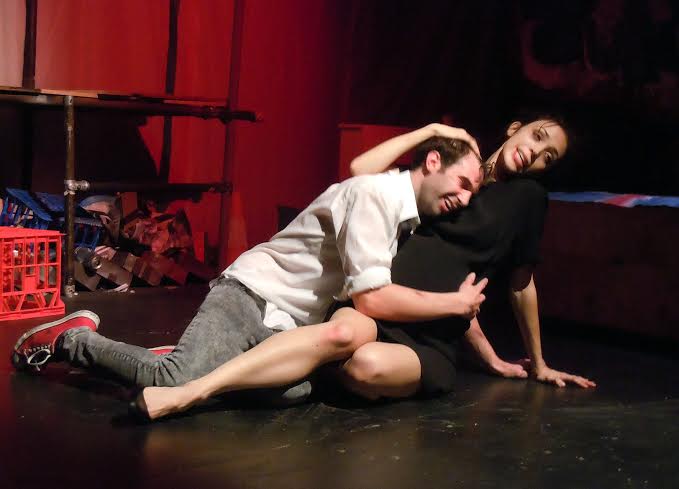
Christopher Sergel’s stage adaptation retains the power of the novel. Annette Rowlison’s production is amusing, engaging and very affecting. Lynden Jones as Atticus Finch has an extraordinary vulnerability that makes his performance deeply moving. The child actors (Teagan Croft, Hudson Musty and Kai Lewins) must carry a large part of the story, and they’re some of the best young performers I’ve seen. Dave Kirkham’s Sheriff Tate is a wonderful portrait of the simple but good man struggling with issues he’d rather avoid.

Set designer Sasha Sinclair gives us the town of Maycomb as a series of run down houses, evoked by their front doors. This might seem awkward when the story becomes a courtroom drama, but ultimately it’s an incredibly effective image. To Kill a Mockingbird is not really Scout’s story. It’s Maycomb’s; the larger world’s. Maudie Atkinson is given a narrator’s role in the stage version, and she’s played with a warm intelligence by Sarah Carroll. Maudie has the feel of the omniscient stage manager from Thornton Wilders’ Our Town, and her voice reminds us it’s Maycomb that’s really on trial. That the town can’t stand Atticus’ defence of Tom Robinson shows it’s guilty of a social blindness that’s deep and abiding.

Exactly how far we’ve come in the last fifty years regarding racial bigotry is an open question.  But theatre like this leads us to continue to ask that question. And to ask where else our blindness might lie.

For in fifty years, will later generations say that we had our doors shut tight, blind to the bleedingly obvious.

Veronica Kaye


To Kill a Mockingbird

New Theatre til 19 April

http://newtheatre.org.au/whats-on/season-2014/to-kill-a-mockingbird/

Subverting the Review

4 Apr

Recently some of my theatre-making friends have been complaining about the standard of reviewing in this city. Not that they’ve been marching in the street about it. And I doubt they’ve sent off any terse emails. They’ve just been grumbling over their post-show drinks.

They’re not complaining that the reviews are unfavourable. They’re complaining that they’re badly written.

What makes a good review?*

Now, that’s a good question. Who gets to determine that?

Now, where are those pigeons?

Now, where are those pigeons?


It’s commonly said, that in their judgement of productions, reviewers can be neither right nor wrong. It’s accepted that their evaluations are subjective.

Clearly, this ‘problem’ also faces anyone attempting to define what a good review should be.

And let me go further. If I was to go to a play determined that it should fit certain parameters or structures I’d be missing the whole point of the creative endeavour. And that, I believe, is also true of writing about theatre.

Theatre is magic making, life giving, world creating. An insistence that reviews be a certain thing is a refusal to play. Don’t be the shy kid who won’t join in.

Veronica Kaye


*I guess they could start by being literate. Though I’m not sure who gets to determine that either.

Possessions

4 Apr

Possessions is an absolutely fascinating piece of theatre,  and not the least reason being that the program comes complete with a bibliography listing both primary and secondary sources.

The play presents the lives of the historical Mancini sisters, who lived in seventeenth century Europe. Though extraordinarily privileged, they still faced a world that refused to acknowledge them as independent of their husbands. (It’s worth remembering, that in England for example, a married women wasn’t allowed to own property until 1882.)  The Mancini sisters tried to live life on their own terms, suffered social condemnation, and went on to publish memoirs presenting their side of the story.

Photo by Penelope Lemon

Photo by Penelope Lemon

Self righteous writers like myself love to pounce gleefully on parochial middle class work and deride it for focusing only on “first world problems”. Is this play a case of “old world problems”?

No, for several reasons.

Firstly, creator/performers Jane Bergeron and Carrie Ann Quinn create a world in which we are playfully transported back and forth between the past and the present. The seventeenth century is never too far from the twenty-first. And the two time frames are in dialogue; Bergeron and Quinn speak both as the characters and themselves. This makes for a show that’s both a lot of fun and thought provoking. Paradoxically, the overt theatricality of the piece isn’t at odds with the aim to present historical truth. It reminds us that we are active participants in our stories, as both characters and authors.

And secondly, only with willful ignorance could it be claimed that the fight for gender equality is over.

Veronica Kaye


Possessions by Jane Bergeron and Carrie Ann Quinn

King Street Theatre til 5th April

http://www.kingstreettheatre.com.au/posessions/


Natural Born Producers

3 Apr

Hey writer, who is the best person to produce your play? You.

Sure, if Andrew Upton calls, let it go to message bank, and get back to him at your convenience.

Or if some 22 year old with more enthusiasm than ability wants to stage your play in a car park in Fairfield, go for it. (It’s difficult to see you as serious writer if you won’t help mount a production of your play that could be truly awful.)

So why are you the best producer? Because you care. Because you want it to happen. Because you wrote the play to be seen.

gilchrist ship

I’m not dismissing the people with real skills and experience in the field of producing. If they want to do it, you’d be a fool to stop them. But while you are waiting for that stampede of interest…..

The relative exclusion of the writer from the process is a historical accident. Sophocles was there. Shakespeare was there. Moliere was there. The current division of labour is very bourgeois, and has gone hand in hand with an obsession with status. (Writing that is worthwhile challenges established values, so a writer seeking status is as absurd as a spy wanting recognition.)

But what about the money? I hope you make an absolute heap. And then distribute it to the people who need it. But the obsession to get paid for your work is another bourgeois cultural phenomenon. As is calling it ‘work’. We all need to eat, but if you value your voice only for the cash you can make out of it you’ve allowed it to be reduced to just another commodity. Would government funding or private sponsorship have made the Sermon on the Mount better?

‘But if it was any good wouldn’t someone pay me for it?’ That attitude is loud and clear in our society, and perfectly designed to silence dissent.

Why did you write the play in the first place? If you wrote it in the hope of gaining fame or wealth it’s probably not worth being produced. Our society has heard quite enough of that voice.

But if you wrote it in order to share a vision of life, don’t stop now.

If you wrote it to remind the miserable of happiness, or the happy of misery, don’t stop now.

Veronica Kaye

Stitching

3 Apr

I’m a sucker for deliberately ambiguous imagery. For me it encapsulates the multiple perspectives that are both the hallmark and high point of drama as an art form.

The imagery I’m referring to in this play is that suggested by the title. Stitching is an image of putting things back together, of mending them. It’s also an image of………but that would be a spoiler.

stitching prod 2

Anthony Neilson’s play is tight and sparse, funny and confronting. It tells the story of Abby (Lara Lightfoot) and Stuart (Wade Doolan) who must decide whether to keep the child she is carrying.

An unplanned pregnancy is the perfect symbol of the enormity of sexuality, the worlds it contain, beautiful and harsh, unexpected and frightening. (Not that I should really call the natural consequences of sexuality a symbol – am I that naive?)

Aided by director Mark Westbrook, Doolan and Lightfoot give beautiful performances, understated and subtle.

After the scenario I’ve briefly sketched, Stitching goes down a psychological path I couldn’t (or didn’t want to) follow. Once again, the spoiler rule prevents me from discussing this much further, but suffice to say it’s about coping mechanisms. It will certainly lead to thought provoking post show discussions.

But see it for yourself. Stitching is a well performed, engaging hour of theatre.

Veronica Kaye


Stitching by Anthony Neilson

TAP Gallery til 12 April

http://www.littlespoontheatre.com/

A Moment on the Lips

2 Apr

Mackenzie Steele’s production of Jonathan Gavin’s A Moment on the Lips is both funny and moving. And the performances are brilliant.

Seven women deal with each other, and Life. And, boy, do they throw a lot at each other! All eight of ‘em.

I often feel alienated by theatre set in the here and now. (And this play is. Well, almost; it’s certainly set within the last decade.) I like a bit of distance. Give me Ancient Greece or Renaissance Europe or Nineteenth Century Russia. Hell, even contemporary America will do. Anything that helps me feel the play is not meant to represent the world I live in.

Beth Aubrey and Sarah Aubrey, photo by Katy Green Loughrey

Beth Aubrey and Sarah Aubrey, photo by Katy Green Loughrey

Because I’m not at home in the world of this play. I don’t share the values of the characters nor their attitudes to each other. Gavin’s script gives equal weight to seven different female characters and so feels like an attempted snap shot of female experience. I’m hardly the person to judge if it’s an accurate one, but I’m troubled by what’s implicit in the attempt – the assumption that it’s possible.

The play feels like a condensed TV series. Everyone has their issues, everyone gets their moment and BIG things happen at regular intervals – though most of them off stage. Actual stage time is dominated by nasty arguments. Throughout my twenties and thirties, I couldn’t watch TV drama because of its flat, confrontational representation of Life.

However, I suspect, many audience members will recognize themselves or people they know in this play. Last night I sat in the back row of a full house, and I don’t do that often enough in indie theatre.

And this production deserves to be seen for the extraordinary performances. Beth Aubrey, Sarah Aubrey, Lucy Goleby, Sabryna Te’o, Ainslie McGlynn, Claudia Barrie and Sonya Kerr do wonderful work. These seven captivating actors certainly create seven intriguing characters.

But it’s the eighth character who troubles me. It’s not that it’s difficult to characterise Life. I just don’t think we should try.

Veronica Kaye


A Moment on the Lips by Jonathan Gavin

Old Fitzroy Theatre, til April 12

http://www.sitco.net.au/


Seven Kilometres North-East

11 Mar

What is the purpose of Art? To remind the miserable that there is happiness, and the happy that there is misery.

Kym Vercoe’s self devised piece does just that. There are moments that are charming and beautiful, and others that are confronting and disconcerting.

Vercoe narrates her multiple trips to Bosnia, and her growing understanding of the region’s very troubled history. Her stage presence is confident, strong, yet vulnerable – a mix that powerfully evokes the magnitude of the historical events and offers a truly human response.

Seven Kilometres North East is a deeply moving and thought provoking piece.

Photo by Heidrun Lohr

Photo by Heidrun Lohr


One of the most unnerving moments occurs when Vercoe realizes that the men responsible for the most shocking of war crimes are probably still living in the town she has repeatedly visited. An acquaintance attempts to calm her, “Don’t worry. They won’t rape or shoot you. It’s not the 90’s.”

In the 90’s,  safely in Australia, I lost friends to arguments about what was happening in the former Yugoslavia. One friend, of Serbian background, went from simply shaking her head and moaning “They’re all crazy” to an intense and painful partisanship. Another friend, defended the NATO air strikes on Belgrade with a fearsome logic: “But we’re the good guys.”

Has theatre the ability to deal with this sort of political and historical complexity? Does it need to? Vercoe’s focus is moral, and she does not offer analysis; she offers judgement. This is not a criticism, though many might think it is. In navigating the human experience empathy gets you further than explanation.

But the piece is far from simplistic. In fact, it’s provocatively self aware. Vercoe refers to thano-tourism; that is, the touring of sites of genocide and mass death. What is the perverse attraction? And we’re forced to ask, is this what Vercoe has succumbed to? After all, why does she need to tell this story? She wasn’t there at the time. Neither were any of her relatives. It’s not her story. (Unless, of course, you subscribe to the idea that we’re all brothers and sisters. As an idea it’s dreadfully unfashionable, and absolutely vital.)

Veronica Kaye


Seven Kilometres North-East by Kym Vercoe

Seymour Centre til 22 March


Waiting for Godot

4 Mar

Waiting for Godot is a seminal theatrical text for many reasons, not the least being that it has inspired two of my favourite critical quips:

“a play in which nothing happens, twice” wrote Vivian Mercer.

And, from a critic I haven’t been able to trace, “Waiting for Godot is a play that would be vastly improved by the addition, on page 2, of the stage direction Enter Godot.

It could be suggested that the play does not so much assert that Life is dull and meaningless as against actively make it so.

Photo by Petros Ktenas

Photo by Petros Ktenas

Because precious little happens in the play, critics have often searched overly long for meaning.

I think it’s just a mood piece. Perhaps that mood could be described as a type of playful pessimism.

And such a mood clearly speaks to many, many people. Directly in front of me in the audience was a young woman wearing a Year 12 jersey. The caption printed on the back?  ‘Bored’ – with the ‘o’ replaced by a smiley face.

And this production by the Riverside Lyric Ensemble is certainly good fun. With a quality cast, director Cameron Malcher presents an entertaining show. Errol Henderson and David Attrill play Estragon and Vladimir with humour and just the right touch of poignancy. Pozzo (Erica Brennan) and Lucky (Clive Hobson) are utterly engaging. Brennan has great fun with Pozzo’s imperious nature. And Hobson makes Lucky’s monologue the show stealer it’s meant to be.

The staging is simple and beautiful. The play has powerful imagery (the tree, the boots, Pozzo’s rope – or is it Lucky’s?) and this imagery is allowed to do its magic.

When first produced, Waiting for Godot was seen as something very new, and for this reason it’s been considered ground breaking. And, theatrically, it is.

But in many ways, it’s one of the final gasps of a dying world view. The play’s sense that Life is depressingly without meaning is strangely quaint, based on the assumption that Life should come with its purpose pre-packaged.

Old gods die hard. 🙂

Veronica Kaye

Waiting for Godot by Samuel Beckett

Riverside Parramatta until 7 March

http://riversideparramatta.com.au/show/waiting-for-godot-2/

Everything I Know I Learnt From Madonna

21 Feb

It’s an unlikely claim.

Wayne Tunks shares with us some of his family history and a lot of his love life.

Spliced into his monologue are Madonna lyrics (which made me aware of how few of her songs I know.)

I’m not exactly sure what Tunks has learned from Madonna. But his tale is engaging; funny at times, and at other times offering insight into the challenges of navigating romance and expressing sexual identity.

Photo by Katy Green Loughrey

Photo by Katy Green Loughrey

The “Everything I Know I Learnt From….” aspect of the title is cheekily appropriated, and suggests much about the tone of this show: confessional and playful.

Does everyone have mentors? Perhaps. Mine are Simone Weil and Catherine of Siena. (I’m guessing Tunks doesn’t know any of their songs either.)

Years ago I was doing a tour of the Whyalla steel works. (Remember, mentor Simone Weil). We met the guide in a lunch room that was adorned with a single safety poster. “Smart People Learn” it said. I laughed. And have been thinking about it ever since.

What have I learnt? And how do I learn? These questions must be asked. They’re the path to wisdom and happiness. The unexamined life is not worth living, says Socrates. Though not as amusingly as Wayne Tunks.

Veronica Kaye


Everything I Know I Learnt From Madonna 

written and performed by Wayne Tunks

Old Fitzroy Theatre until 22nd Feb

http://www.sitco.net.au/


The Dead Ones

21 Feb

A woman stands at a podium. She reads from a script, softly and calmly. To her left is projected a series of family photos.  Margie Fischer shares with us her experience of clearing her family house, once the last of her family are gone.

It’s a wonderfully generous sharing.

Dead Ones Margie 2

And it’s fascinating because it encapsulates two of the fundamental features of our world; our materialism and our sense of lost time. Were anthropologists from another time and place to find this performance, it might be their Rosetta stone. (Another time and place – see how I struggle to disentangle myself?)

As Fischer decides what to keep and what to discard from the now empty family home, she’s only too aware of how objects are imbued with value through their connection with people, and that this stored value will slowly leach away. She realizes there’s little use in keeping much.

As we are shown photos of family members who have passed, I’m reminded of the strangeness of the medium. Do photos capture a moment? Or do they stop time? Stop it like a dam stops a river? Stop the flow of a river, and is it a river anymore?

Our culture is obsessed with movement, with the passing of time, with history. And the trouble with history is that, in it, people go. In every culture people die. In ours, they are gone. And photos, often our most treasured objects, can do only what objects do; they retain value for a while, and then they fade to mere history.

Fischer does not make all the philosophical and cultural generalizations I’m making. Her story is personal, honest and powerful. Powerful like the gentle flow of a river.

Veronica Kaye


The Dead Ones by Margie Fischer

Seymour Centre til 22 Feb

http://www.seymourcentre.com/events/event/the-dead-ones/