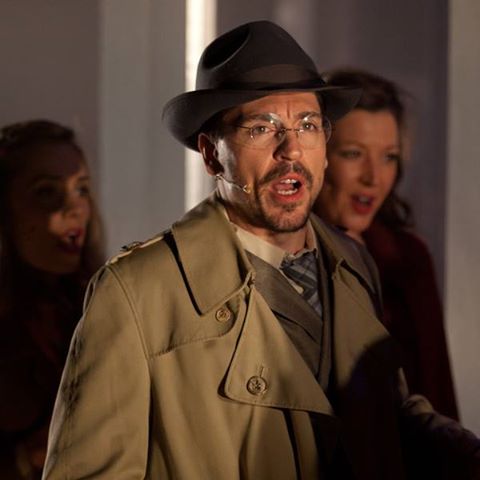
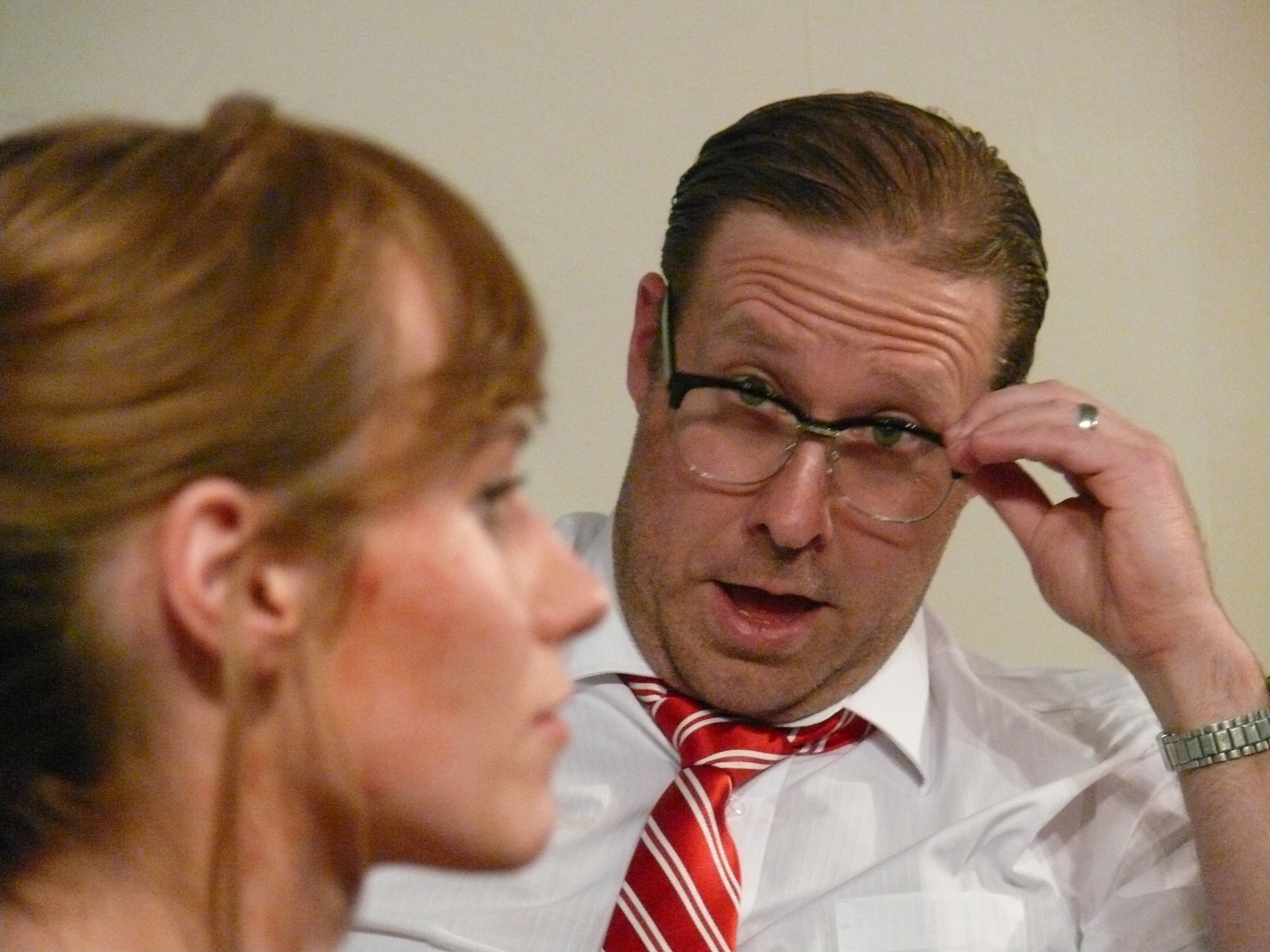
The Dreamer Examines His Pillow

15 Dec

‘What is sex for?’ adult Donna asks her father.

‘For making babies!’ he replies; an answer so shockingly and refreshingly obvious that it hides the very strangeness of the question.

‘What is sex for?’

What is it for?

What’s being expressed here is a powerful desire for structure, an overwhelming need for certainty. Donna is asking someone with supposed authority to tell her how the world is organized. She wants her father to say that things are this way, and not that way, or that way, or that….

John Patrick Shanley’s play is rich and thought provoking. His characters speak with a street poetry that overflows with gloriously fresh imagery. The play bristles and sparkles with the contrast between plain speaking and magical attempts to capture the unknowable.

Donna and Tommy are trying to work it out.  Should they be together or not? It would probably be easier if Tommy knew who he was and what he was responsible for. (Another strand of Shanley’s intriguing exploration of certainty.) It would also be easier if Tommy wasn’t sleeping with Donna’s younger sister.

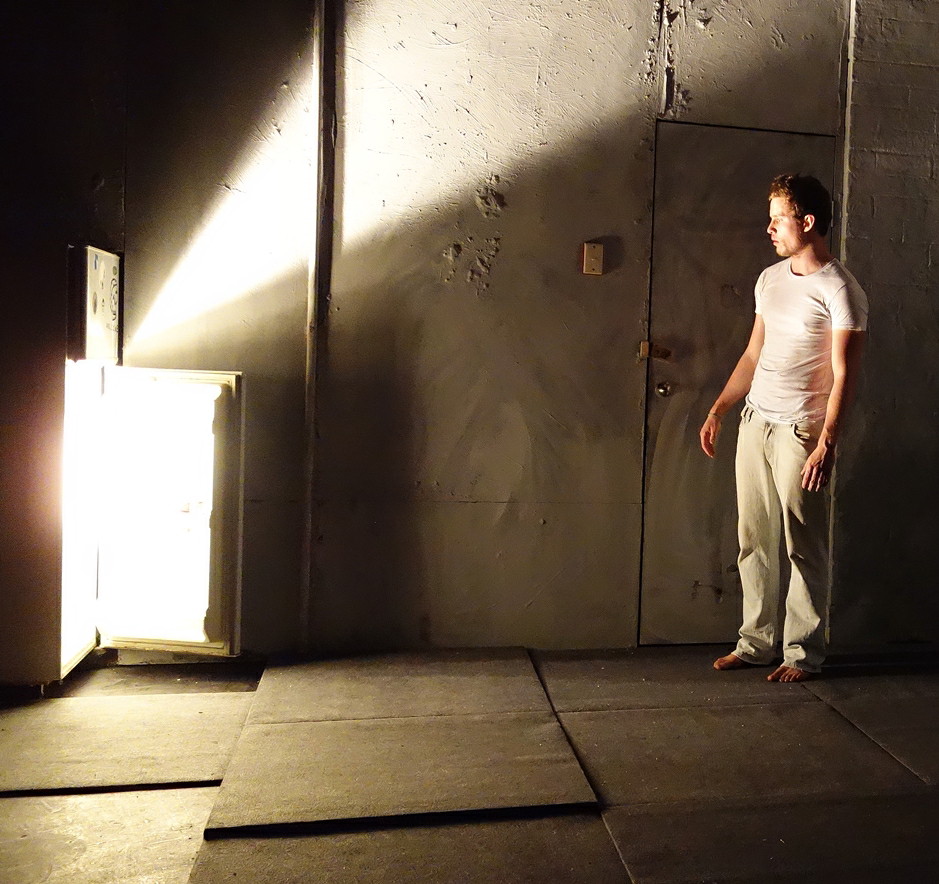
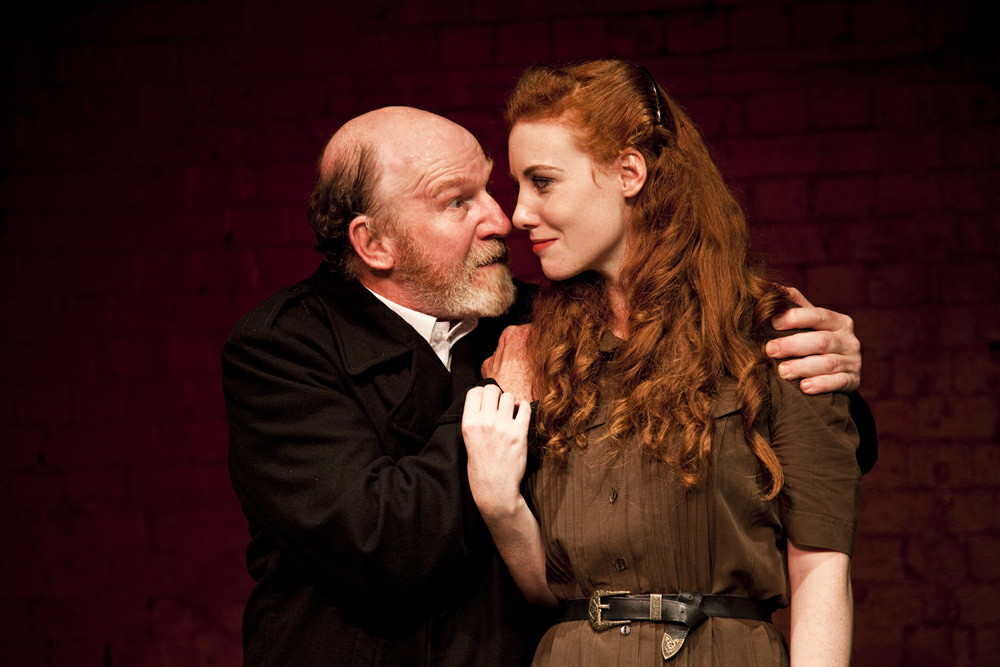
Photo by Tom Bannerman

Photo by Tom Bannerman

Ainslie Clouston and Scott Lee give brilliant performances as the lovers, and Peter McAllum is wonderful as Donna’s father.

Tom Bannerman’s clever set brings the TAP alive.

Director Vashti Pontaks’ production is funny and deeply stimulating. (And not just because of the discussions of sex, though they’re interesting. Shanley’s vision of sex and romantic love is a controversial one. Of course, the play doesn’t really reduce desire to a mere component in biological reproduction. Indeed, to my taste, Shanley actually overstates the power and importance of sex in our lives. And yes, I know, that’s a bold claim to hide away in a set of parentheses.)

But the play is an exhilarating reminder of the danger of reducing anything to something else.

For when we rob Life of its richness, it is we who are poorer.

Veronica Kaye


The Dreamer Examines His Pillow by John Patrick Shanley

at TAP Gallery til 21st Dec

http://www.unpathed.com.au/

Measure for Measure

11 Dec

Hypocrisy is my least favourite vice.

I don’t mean that I abhor it more than other vices.  Rather, of all the supposed vices, it’s one of those I think least warrants the title.

My problem with hypocrisy is this:  it’s too easily seconded in to attempts to shut down discussions of ethical behaviour.

For example, consider the criticisms aimed at so called ‘chardonnay drinking socialists’. According to some public commentators,  if you drink chardonnay, you’re no longer qualified to discuss the redistribution of wealth in our society. (Have you drunk some of the gawd awful chardonnays out there? I attend the opening nights of small indie theatre companies; I have.* Believe me, quaffing chardonnay doesn’t automatically rocket you into the privileged classes. Unless, of course, you remember that there are a billion people on the planet who don’t have access to clean water.)

Which brings me back to my point. (And, yes, there’ll be talk of theatre soon enough.) If you bemoan the fact that there are children who don’t have clean water and yet afford yourself a glass of wine occasionally you are a hypocrite. But how is that possibly worse than drinking and not mentioning that there are people worse off than you?

I believe we should have ethical aspirations. I believe we should say ‘We could all do better’. Because we could. But hypocrisy is often so shallowly conceived, and flatly presented, that these vital conversations don’t occur.

In Measure for Measure, Shakespeare presents a very simple hypocrite. Angelo is given sovereignty over Vienna while the Duke is absent. He then precedes to prosecute citizens who contravene regulations about sexuality morality, regulations that previously, under the Duke, were not enforced. (To a modern eye, fornication is not a crime, but it’s not too difficult to find contemporary parallels.) Angelo’s hypocrisy springs from the fact he’s guilty of the ‘crime’ but does not acknowledge it.

Nick Hunter plays Angelo with a fair sense of humour, and it’s a good choice. The meat in this play, as I will argue, is elsewhere.

Danielle Baynes2

Danielle Baynes plays Isabella the novitiate, who faces a tough moral dilemma (well, once again, probably not to modern eyes, and possibly not to most Elizabethans). She must decide whether to save her brother’s life at the cost of her virginity. I won’t describe what happens (though I’m not sure if you can be guilty of a spoiler in a Shakespearean play), but suffice to say it leaves one considering justice and mercy and the true nature of love.** Baynes’ performance is powerful. Her response when Angelo tries to force himself on her is heart wrenching. And her final action of the play will ignite many a post-show discussion.

Director Richard Hilliar draws some delightful performances from his cast.  Hailey McQueen is terrific fun as a nun. James Townsend is wonderful as the big talker who doesn’t know when to stop.  (In fact, as this piece is being played in rep with King Lear as part of the Sydney Shakespeare Festival, it’s fascinating to witness such an enormous versatility of performance from the entire cast.)

John Grinston plays the Duke, and does an admirable job.  There’s a suitable mix of gravitas and humour. But the Duke as written is a bizarre character, and it’s hard to know if Shakespeare thought of him as anything but a plot device. But he has a lot of stage time, and ultimately, despite avowing that he has all the other character’s best interests at heart, ends up treating them as little more than puppets.

A cautionary for playwrights, and other omnipotent beings? Or an insight into true hypocrisy?

Veronica Kaye

* For what my opinion is worth, Sydney Independent Theatre Company does not serve gawd awful chardonnay at their openings.

** I never do get round to discussing this in detail. See the play, then discuss it yourself in the bar afterwards, with some good chardonnay.

Measure for Measure

playing with King Lear as part of the Sydney Shakespeare Festival til 21st Dec

http://www.sitco.net.au/

King Lear

6 Dec

King Lear is a brilliant play. And much discussed.

I’ve always been intrigued by Simone Weil’s reading. She saw a tussle between power and honesty, and concluded they were mutually exclusive. The opening sequence certainly prepares us for this view. Regan and Goneril sing their father’s praises in exchange for property. Cordelia is discreet, and is punished for it.

Orwell has a famous essay about Shakespeare and Tolstoy. He reminds us that Tolstoy didn’t especially warm to Shakespeare and had a particular dislike for this play. The story, it would seem, was too close to the bone for the great Russian writer.

I, too, find the story confronting. It’s the tragedy of the great moral gesture.

The play begins with Lear’s grand renunciation. The problem is he can’t maintain the grandness. Leof Kingsford-Smith’s portrayal is wonderfully and heartrendingly accurate. There’s a pomposity to the early Lear. We don’t dislike Lear for it – it’s common enough in older men. In fact, it awakens our pity. As the Fool later says, aren’t we supposed to grow wise before we grow old? Lear hasn’t. Will we?

But like us all, Lear doesn’t understand himself. Having made the grand gesture he wants gratitude, and is devastated when he doesn’t receive it. Who hasn’t been in the same situation? You are kind, and then you’re not acknowledged for that kindness, and so you become bitter. If you choose kindness (or any other moral gesture) perhaps it’s best to stick with it all the way.  (A lonely path, I suspect. But to what vistas might it lead?)

Lear

Director Richard Hilliar’s production is moving and engaging. Kingsford-Smith’s marvelous Lear is amply supported by some strong performances. Amy Scott-Smith presents an admirably icy Regan. This is nicely balanced by Hailey McQueen’s Goneril; a beautiful portrait of a small soul, troubled by inklings of self knowledge, but lacking the courage to confront them. Danielle Baynes as Cordelia is dignity and honesty personified.

And, in the world of the play, there’s no place for a character like Cordelia.

Many eighteenth century productions rewrote the final scenes. In their original form they were deemed too painful.

Or were they just too honest?

Is virtue really so little rewarded in this world?

Who knows? For most of us, it’s too hard to stick to, to find out.

And that’s the tragedy.

Veronica Kaye


King Lear

at the Old Fitzroy Theatre, as part of the Sydney Shakespeare Festival with Measure for Measure

until 21 Dec

for program dates http://www.sitco.net.au/

Triune

28 Nov

The myth I grew up with was that younger people were more radical than older people. As people ‘grew up’, they settled. They collaborated. They became the problem.

As I have grown older myself I’ve come to realise how self-serving this myth is.

More and more I’ve come to feel that many young people are actually conservative. It shows itself most clearly in the extraordinary snobbery of youth. Life (as well as everything else smaller on the scale) must be done a particular way. To use a trivial example, it’s in the small-mindedness of someone who says,  if you’re not performing at Griffin by 30, you’ve failed.

But snobbery can be forgiven. After all,  it’s just fear.

Triune by Brave New Word is an intriguing exploration of our changing expectations of Life.

It’s based on the conceit of one character having a three-way conversation with the younger and older versions of themselves. It asks, how do our values change and how do they stay the same?

I’ll admit I had trouble relating to any of the values held by the character at any stage in his life (too much interest in sex, drugs and travel, and as a result of the chosen structure, too much interest in himself.) But it’s the nature and worth of drama that it presents different world views, and it would be to fall into the very error of parochialism, that I began this article criticizing, to complain that the character on stage was not living Life as I think it should be lived.

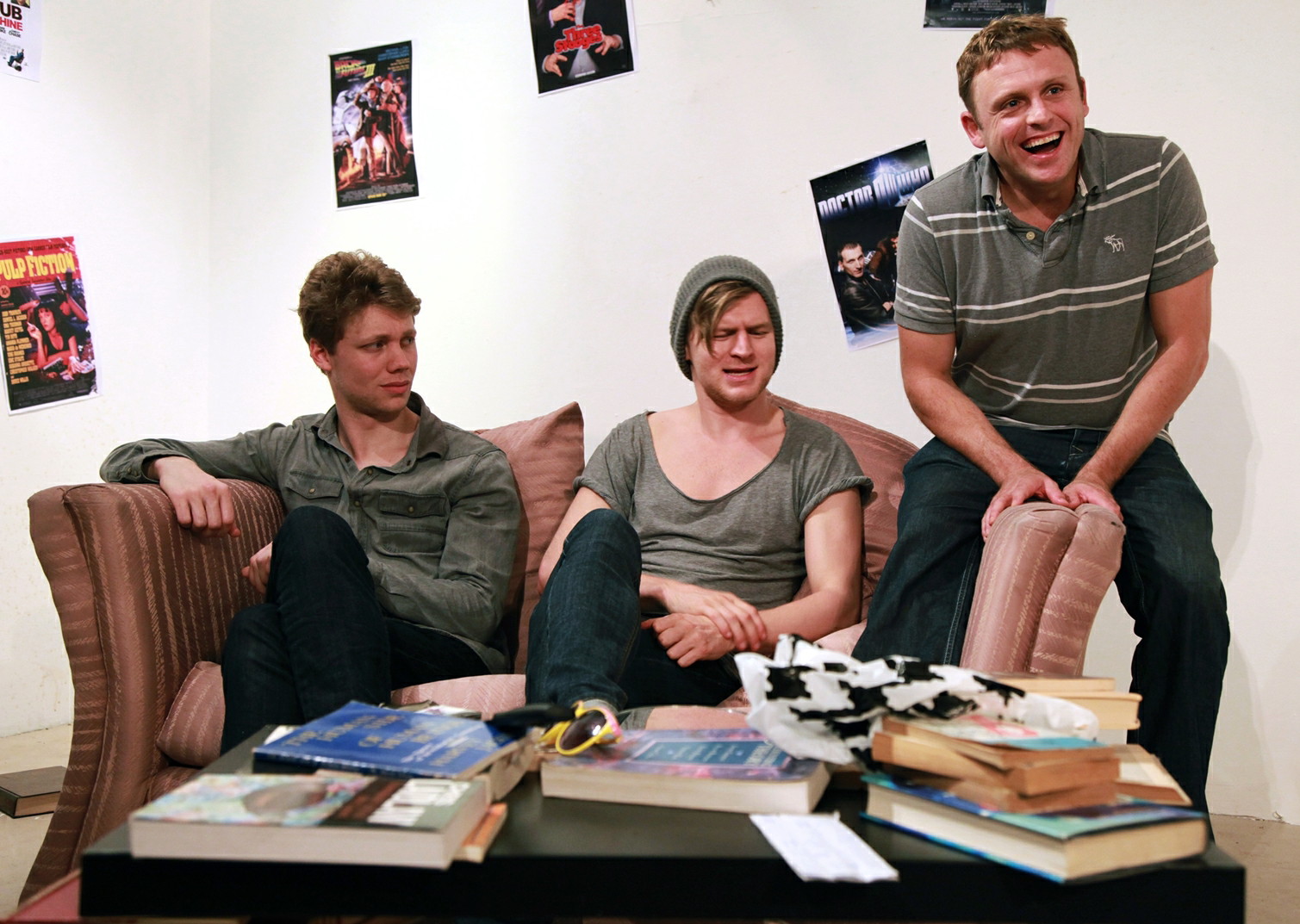
Photo by David Hooley

Photo by David Hooley

This piece was devised by the company and there are some wonderful moments. It’s a quick one hour show, and I would’ve loved to see a little more stage time to develop some variations in pace.

The joy of this piece is its assertion that the older character of the triune is actually the wisest. This is a beautiful affirmation of the process of Life, a declaration that it’s not something to be afraid of. It’s a generous spirited acceptance that Life is always, and gloriously, greater than our vision of it.

Veronica Kaye


Triune

Brave New Word

TAP Gallery until 7 Dec

http://www.tapgallery.org.au/2013/09/truine-22-october-7-november/

Dying For It

26 Nov

To live, it is said, we must have a purpose. And so, it follows, we must die for one. Sort of.

In Dying For It, adapted by Moira Buffini from the original play by Nikolai Erdman,  Semyon is contemplating suicide. Virtually no-one tries to save him. Instead, they try to co-opt him into dying for their own chosen cause.  

In 1920’s Russia, the idea of living for a purpose was in the zeitgeist, and not just on a pop culture level, but as a government directive. You will live for the People’s State. It is this, I suspect, that drove Erdman to write the play. And then earned him time in Siberia.

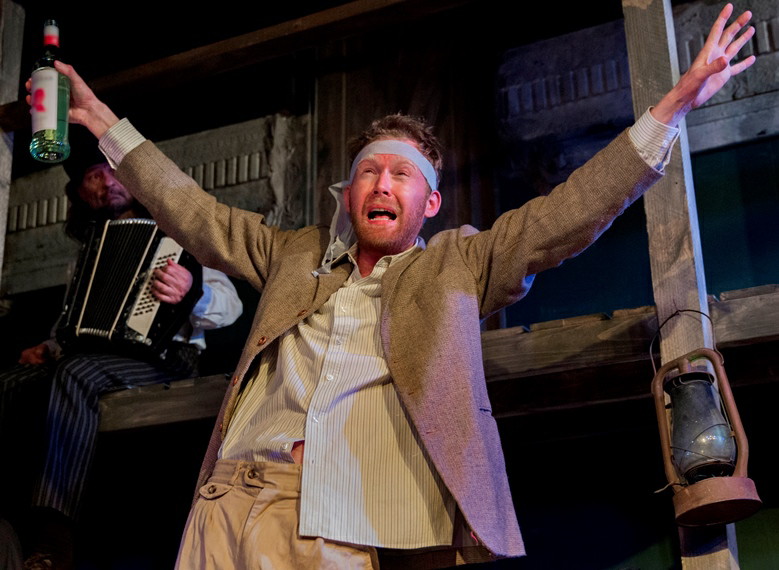
Photo by Bob Seary

Photo by Bob Seary

It’s an interesting play to choose now. How many of us feel a pressure to live for a cause? Our sad experience, if anything, (and if I can borrow a phrase) is the unbearable lightness of being. The only serious attempt to suggest we live for a purpose comes from the infantile world of advertising. 

So why the popularity of the play? After all, Buffini is not the only modern writer to adapt it. Simon Stone was at it only a few years ago.

Well, it’s certainly funny. And director Peter Talmacs makes this clever farce come alive. Johann Walraven does a brilliant job as the bewildered Semyon, and the entire cast shine with the exuberance that makes this a truly fun night. (And Tom Bannerman’s set deserves a mention. Imposing and appropriately ramshackle, it evokes the claustrophobia of the human spirit oppressed.)

Perhaps the play’s attraction is the contemporary spectre of terrorism; the tragedy, and horror, of dying for a cause when it might have been better lived for.

But there’s also the end of the play.

Stone’s take, I recall, was rather different. Semyon was left in his coffin, inadvertently forced to play dead when he was not – a poignant symbol.

The conclusion of this version is even more powerful. A killer punch. Sure, it may be an ill-judged hope that any ideology could encapsulate the wildness of Life, but this final scene is a reminder that this failure does not give us leave to run from Life.

For we are not in it alone.

It is the true People’s State.

Veronica Kaye

Dying For It

adapted by Moira Buffini, from the original play by Nikolai Erdman

New Theatre til 21 Dec

http://www.newtheatre.org.au/

Atomic

25 Nov

This is the story of Big History intersecting with individual lives. It’s the story of some of the people responsible for the development of the atomic bomb.

This sounds like weighty stuff (and it is) but this new musical does what the best of the genre does so well – revitalize ways of looking at the world.

The cast are terrific. David Whitney is great fun as a Berlusconi-inspired, philandering, status-obsessed Enrico Fermi. Simon Brook McLachlan almost steals the show as an uber-confident fast-talking Robert Oppenheimer. Christy Sullivan and Lana Nesna are mesmerising as they pinball back and forth between serious scientists, Rockette style dancers and Andrew sisters twins. Blake Erikson creates a fascinatingly morally ambiguous scientist. But the night belongs particularly to Michael Falzon and Bronwyn Mulcahy, who play Leo and Trude Szilard. Their performances are brilliant, and it is they who are the focus of the story.

Atomic

Leo Szilard invented the chain reaction that made the atomic bomb possible. The fear the Nazi’s would complete the bomb first drove he and his comrades to work on the Manhattan Project. When it was obvious that race had been won, Szilard campaigned to limit the use of this weapon in war. We know how successful he was. The opening sequence shows a young couple flirting – just as the bomb is dropped on Hiroshima. It’s extraordinarily moving.

The score (Philip Foxman) and lyrics (Foxman, Gregory Bonsignore and Danny Ginges) are top class. And, yes, it’s a fun night, but I began this response by suggesting that it was the story of Big History and the individual. And after the war has finished, and Leo Szilard is no longer working on weaponry, there’s an interesting exploration of the idea of responsibility and recompense. And Trude sings touchingly of the special man she loves.

But I am left with the feeling that Leo is not so special. Not because he wasn’t a brilliant scientist and an avid campaigner, but because I don’t know if his situation is really so different from ours. We like to think we’ve avoided History, that our lives can be lived below the big issues of the day. But that’s just a self serving myth. In possibly the most powerful moment in the show, we see desperate refugees from Hitler’s Germany told to just go home. And so we’re reminded that every generation must face Big History.

Veronica Kaye

Atomic

NIDA Parade Theatre til 30 Nov

www.atomicthemusical.com

The Crucible

24 Nov

The Crucible has drawn more tears from me than any other play.

And this incarnation by Emu Heights Productions is a powerful and deeply affecting presentation of a classic text.

There’s a heart rending three way tension in the play – that between what people say is true, what people think is true, and what actually is true.

It’s an exploration of the relationship between truth and power. (Does it suggest that real truth belongs only to the utterly powerless?)

It reminds us that assertions of truth are often politically motivated. (I’m inclined to say they always are.)

The Crucible

One of the reasons I find this play so affecting is Miller’s characterization of Reverend Hale, here played admirably by John Michael Burdon. Hale begins as the good-hearted but unconsciously ego driven expert only to become the great life affirming doubter. In the final scene, he advises Proctor to give the life saving lie, and I always leave the theatre wondering whether in this outlook there’s a blessed humility.

In contrast to Hale is Proctor’s warmhearted (or should I say red blooded?) common sense. The magic of Miller’s characterization is that Proctor is a man in his prime yet dogged by self doubt. Vincent Andriano portrays this marvelously. Proctor won’t make grand metaphysical statements; his feet are too firmly on the ground. But he knows what is not the case.  He can clearly say what is not true.  And, by sticking to this, he ultimately finds (or is it more accurate to say he creates?) a positive truth: that he is indeed a good man.

Director Ian Zammit has elicited strong performances from his cast. It’s a big one (nineteen) so I won’t try to describe all the performances. But I particularly enjoyed Naomi Livingstone’s multi-leveled portrayal of Abigail, a fascinating and frightening balance between playful coquette and cold hearted assassin, giving way at pivotal moments to the honest vulnerability of a woman terrified she may have over played her hand.  Emily Elise’s Mary Warren is a deeply moving portrayal of a girl out of her depth. And David Attrill wonderfully captures Giles, contentious, foolish and lovable; a portrayal crucial for the full impact of what must be one of theatre’s most moving offstage deaths.

And a last word about the design. It’s fluid and beautiful.

It’s one of the many elements that have gone into making this a very engaging and accessible production, one that has no doubt both pleased Miller fans and introduced great theatre to new audiences.

Veronica Kaye

The Crucible by Arthur Miller

Joan Sutherland Performing Arts Centre

15 -23 Nov

More info about Emu Heights Productions

http://www.emuheightsproductions.com.au/

The Maintenance Room

21 Nov

I used to live with a cop. He was a good man, but like us all, he suffered his personal demons.

One Tuesday morning he came home from a night shift more quiet than usual. I asked him how the shift had been. He’d driven around in a patrol car with his partner. At about 1 am they’d got a pizza. At 3 at a late night servo they’d got Slurpees. At 4 they got a call to a house where a teenage boy had hanged himself.

He’d left a note blaming dad.

‘And what was I doing?’ my flat mate said. ‘Just driving around!’

Then, for a while, he said nothing.

‘If I’d been there,’ he said finally, ‘I know what I’d have told that kid: Things change. I know shit all about your dad. Maybe he is the biggest dickhead in the world, I don’t know. But things change. I’m not saying him. I’m saying you.’

For 20 years I’ve told that story to anyone who’ll listen.

In Gerry Greenland’s thought provoking play, two men fortuitously meet at a time in their lives when they both desperately need someone to help them revitalize their world views.

Photo by Geoff Sirmai, Sirmai Arts Marketing

Photo by Geoff Sirmai, Sirmai Arts Marketing

The charming foibles and emotional struggles of these two men are played brilliantly by Lynden Jones and Kim Knuckey. It’s wonderful to see two quality actors play their range. Directors Allan Walpole and Christine Greenough have crafted an engaging piece of theatre.

Walpole’s set design is both effective and evocative. It’s a messy maintenance room at the top of a tall building – we are delving into the grubby hidden recesses of the human heart and the stakes are sky high.

The driving symbol of this piece is maintenance – the importance of not letting our attitudes, and relationships, drift into dangerous disrepair.

It left me thinking about one of the great unremitting conflicts – that between power and fortune, between the things we can control and the things we cannot. But the front in this conflict is perpetually on the move, depending on our life circumstances. To live fully, a vibrant awareness of this movement must be maintained.

Veronica Kaye

The Maintenance Room by Gerry Greenland

at King Street Theatre til Nov 30

http://www.kingstreettheatre.com.au/the-maintenance-room/

Love Field

29 Oct

Billed as ‘a flight of fantasy’, this is a theatrical confection, a fascinating non-typical Australian play.

It’s a conversation between Lyndon Johnson and Jackie Kennedy, set only hours after JFK’s assassination.

Despite being peppered with historical allusion, Ron Elisha’s play is not an attempt to present a truthful account. But it’s certainly engaging, thought provoking theatre.

Photo by Tessa Tran, Breathing Light Photography

Photo by Tessa Tran, Breathing Light Photography

Director Michael Dean elicits eminently watchable performances from both Ben Wood and Lizzie Schebesta.

And Nick Plummer and Susan Millar have done a wonderful job of transforming the simple downstairs TAP white box theatre into the interior of AirForce One.

With two famous people and their milieu presented the play becomes, if not hagiography, then certainly an exhibition of icons. Johnson and Kennedy as political royalty? This is a fascinating tension. America is a democracy, isn’t it? And aren’t we?

The play is an exploration of the connection between the personal and the political.

It can be tempting to believe that our politics (and our morality) are something we attempt to live up to, a guide for our behavior. But a piece that looks at the personal lives of the politically powerful can draw attention to the possibility that our politics are often simply self serving.

And, of course, we’re all politically powerful.

And it’s self serving to assume we are not.

Veronica Kaye

Love Field by Ron Elisha

Downstairs TAP til Nov 2

http://www.bakehousetheatrecompany.com.au/

An Ordinary Person

29 Oct

This one’s a conversation starter.

It’s a truism that our response to a play is based on our personal taste. But it’s often assumed that our taste in theatre is similar to (say) our preference for a particular flavour of ice cream.  It’s thought to be an almost physical response, beyond our control. Like sexual orientation.

I constantly argue that it’s not. Our taste in theatre is based (enormously, though not entirely) on assumptions I would class as political, and therefore assumptions which can be, and should be, questioned.

Pic Katy Green Loughrey

Pic Katy Green Loughrey

Despite being billed as a comedy, Robert Allan’s play is a passionate exploration of a controversial and crucial issue. This highly intriguing play explores the concept of victimhood.

My political assumptions about seeing oneself as a victim could be stated in this way:

  1. What we can give up does us good.
  2. What is taken away from us does us harm.

Do my ideas align with those presented by the play? On the balance, I would say no.

Director Julie Baz draws some good performances from her cast. (I particularly enjoyed Carla Nirella’s portrayal of a woman navigating issues of loyalty and morality.)

This is confronting new work. As it should be.

Do see it, and be prepared for some lively post show discussion.

Veronica Kaye


An Ordinary Person by Robert Allan

Old Fitz til 16 Nov

http://www.sitco.net.au/