Tag Archives: Ensemble

Dial M For Murder

4 Dec

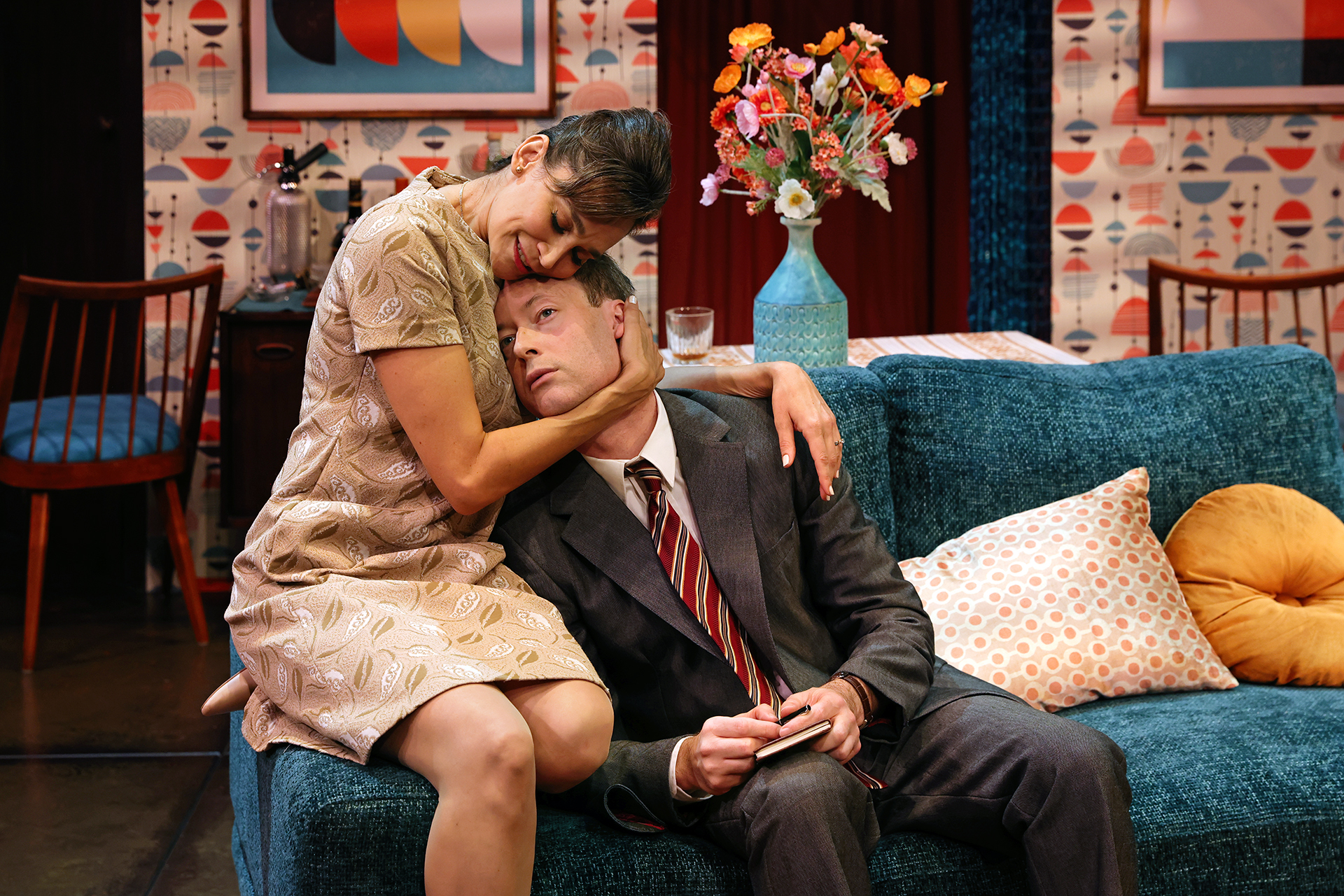
This is a delightful mix of comedy and intrigue.

The film many people know – the one starring Grace Kelly and directed by Alfred Hitchcock – was adapted from a play by Frederick Knott. This version, directed by Mark Kilmurry, is an adaption by Jeffrey Hatcher of that original play.

It’s a classic thriller. I’ll avoid any plot details because it’s so easy to land in spoiler territory. I’ll simply suggest it’s the story of the supposed perfect murder.

Of course, thrillers are not everyone’s cup of tea. Though they’re tales of the most violent crimes, they too commonly function as little more than mind puzzles; like a type of dementia-delaying-sudoku, they exercise our brain but never our empathy.  

And thrillers often seem so very untruthful. This is partly because they’re peopled with characters who have the skill and intelligence to meticulously plan the perfect murder, but who seem entirely bereft of the irrational passion that might lead them to bother in the first place.

Thrillers also seem untruthful because their characters talk far too much about the truth. THIS is WHAT happened. THIS is WHO dunnit. THIS is HOW they did it. Truth assertions like these are much rarer in Life than thrillers would have us believe. Pass the salt is far more common an utterance than THIS is the salt. In Life, definitive statements of truth are rare, and the sane amongst us know that rarity doesn’t automatically equate with value.

But, as I suggested, this is a classic thriller – structured in such an amazingly intricate way that it’s a joy to watch unfold. (Everyone has seen those wizards of triviality who line up dominoes in the most elaborate, surprising patterns: the final flick doesn’t result in fine art, but it does make for pure fun.)   

And Kilmurry creates a fascinating world in which tight suspense is tempered by the tickle of humour. Anna Samson successfully combines a bewildered terror with a bewitching mischief. Garth Holcombe as her husband is gloriously coldblooded, divertingly duplicitous, and hilariously insincere. Kenneth Moraleda’s Inspector Hubbard is a wonderfully worthy inheritor of one of the grand tropes of the genre: the master professional who deliberately invites underestimation. Suave but goofy, seemingly innocuous but oh-so-persistent – it’s a terrific performance.

Paul Gilchrist

Dial M For Murder by Frederick Knott, adapted by Jeffrey Hatcher

at Ensemble until 11 Jan

ensemble.com.au

Primary Trust

26 Jun

To misquote Gandhi, We’re all children of God, it’s just that some of us are more childlike than others.

Kenneth is such a person.

Gentle, hesitant, uncertain, he lives a plain life and keeps to himself. He works at a second-hand bookstore. Every night he goes to Wally’s and drinks Mai Tais with his only friend, Bert. It’s difficult for Kenneth to imagine Life without Bert – and that’s curious, because Life doesn’t give many of us a Bert after the age of four. (Bert is the only character in Eboni Booth’s Pulitzer Prize winning play who transcends – in his own wondrous way – the inescapable doubts and wistful regrets of this sublunary world.)

When Kenneth’s bookshop is sold, he’s worried how he’ll find employment. (He got his first job only thanks to a social worker.) At the advice of Corrina from Wally’s, he applies for a position at a bank with the evocative name Primary Trust. According to Kenneth, the manager employs him because he reminds him of his brain-damaged brother.

As his friendship with Corrina develops, his special relationship with Bert changes, in a way that’s confronting (for Kenneth) but beautiful and hopeful.

The supreme importance of relationships like friendship is emphasised by an exquisitely simple speech by Corrina about her best friend, Denise. Corrina loves Denise. We don’t know why: in fact, we know virtually nothing about the briefly mentioned and never seen Denise – except that she doesn’t look after her cat as well as she might. But sometimes, when Corrina thinks about Denise, she cries. Perhaps this sounds sentimental? I think Corrina is just being honest, and being honest with Kenneth is life-changing. It’s this sort of openness that helps him find the connections he so desperately needs.

Primary Trust is an absolutely delightful comedy, informed by a sense of small town dagginess reminiscent of Thornton Wilder’s Our Town. (The set, by James Browne, with a back wall of many coloured doors emphasises this sense of the parochial presented playfully.) But unlike Wilder’s play, this story is one character’s (Kenneth’s), and the view from eternity that warmly infuses the conclusion of Our Town is absent, replaced by the vision, courageous and true, that the only heaven there is we must find here, amongst the struggling souls who surround us.

Except for one alluded-to-but-not-expanded-upon instance of racial injustice, the world around Kenneth is not malignant, only forgetful. (Or a little too complaisant: The sky is blue, what can you do?) But a little reaching out goes a long way.

Yes, it’s an exploration of trauma, highlighting the humanity of those who suffer – but what the play primarily offers is not a portrait of pain but rather models of kindness (the consistent, persistent type that engenders trust.)

Directed by Darren Yap, performances are gorgeously engaging. As Kenneth, Albert Mwangi is superb, both immensely likeable and poignantly pathetic. With a compassionate charisma, Charles Allen plays Bert, wonderfully portraying the perpetual patience and positivity of the best friend of our dreams. Angela Mahlatjie’s Corrina is magnificent: honest and humble yet hopeful; softly unassuming and utterly soul-expanding. And she and Peter Kowitz do some hilarious doubling, with Kowitz’s bank manager true comic gold. Booth’s script –which captures the wavering richness of real speech – calls for virtuoso vocal work, and the cast delivers (aided, no doubt, by the remarkable skills of dialect coach Linda Nicholls-Gidley.)

This Ensemble production is a glorious invitation to laugh, and an irresistible reminder of our shared humanity.

Paul Gilchrist

Primary Trust by Eboni Booth

at Ensemble until 12 July

ensemble.com.au

Image by Prudence Upton

The Half-Life of Marie Curie

18 Jun

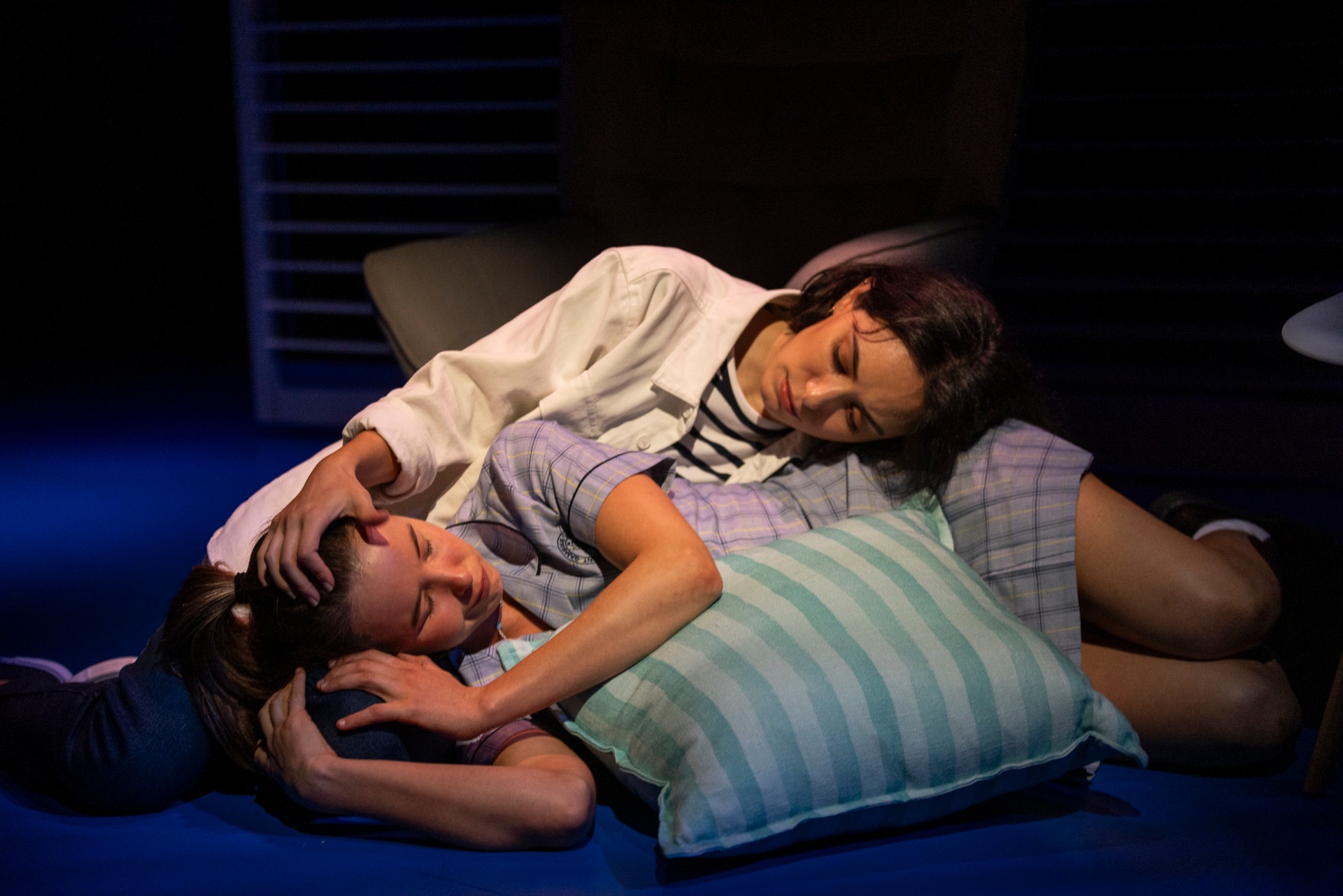
It’s the summer of 1912, and Marie Curie’s good friend and colleague Hertha Ayrton invites her to England to escape the scandal that threatens to destroy her.

Curie has had an affair with a married man, and so now she’s not only a two time Nobel laureate, but also a home-wrecker. The second of these monikers, it would seem, trumps the first. (It can be difficult to believe the misogynistic, hypocritical rage directed at Curie. Or it should be. Unfortunately, history proffers too many examples.)

The wonder of Lauren Gunderson’s play is – that with a focus on this one brief historical moment, and with only two characters – she creates something of incredible beauty and richness.

The critique of the patriarchy is suitably sharp, but even more stimulating is the representation of the complexity of female relationships.

Firstly, there’s a depth to their experience of men. Institutionally, socially, at large, men are unjust: fearful little soulless moustached marionettes, incapable of granting women equality. But on a personal level, both women, now widows, have had husbands who were the best of humankind. William Ayrton called his wife BG (beautiful genius) and Pierre Curie refused a Nobel Prize unless it was shared with his wife. Even Paul, the married man who Curie loves, for all his vacillation, offers an undeniable joy. And it’s worth noting that Ayrton has taken her first name from a poem by a man: “Hertha” by Algernon Swinbourne. His poem, she says, gave her the courage to believe in her own worth as a woman.

And secondly – for those concerned the play might not pass the Bechdel Test – (it does, with flying colours) – the friendship between the two woman themselves is portraited brilliantly. There’s fierce loyalty and honest admiration. There’s shared humour (and whisky) and the glory of two top class minds in conversation. But there’s also an unspoken (delightful and light-touched) homoeroticism. And there’s an argy-bargy that sails awfully close to bullying. Ayrton asserts that Curie is strong, is resilient, can transcend the scandal – but she asserts it just a little too often. Curie is wounded. She doesn’t know who she is anymore, and being told you’re an otherworldly goddess, when you’re feeling so very human, is akin to erasure.

Directed by Liesel Badorrek, Gabrielle Scawthorn and Rebecca Massey give utterly engaging performances. They play each note of Gunderson’s script with a meticulous awareness of its possibilities, bringing to the fore both the delicious humour and the deep humanity. Scawthorn’s Curie is a terrific portrait of power in pain, fraught but ever able to inspire awe. Massey’s Ayrton is beautiful bustle, fire-hearted affection, and no nonsense determination. On a stripped back stage, the physicality of the actors is paramount, and these two are extraordinary: powerfully embodying both suffering and exultation.

(This is probably the time to mention design. James Browne provides a raised transparent podium, which can be encircled by a transparent curtain. It’s spare but layered, aligning with a script that presents a seemingly single, simple historical moment only to reveal its complexity. The choices of lighting designer Verity Hampson and projection designer Cameron Smith wonderfully evoke this complexity – as well as the unseen physical forces that these two scientists explored.)

I was saying Curie is feeling so very human – with all the vulnerabilities and vagaries that entails. And that’s why Gunderson chooses this moment to set her play. Gender tensions might be crucial to the piece, but so is another tension: that between the supposed objectivity of science and the unavoidable subjectivity of the people who work in it. Curie says she loves science, but not scientists. Both women muse on the fact that proof is real, but recognition is political.

And just as the tension between the sexes is represented with a humane richness, so is this tension between knowledge and its knowers. The women’s belief in inviolable proof is undercut by their greatest conflict. The spoiler rule prevents me giving detail about the moment, but the tension is one in which scientific findings are disputed, where two passionate, intelligent women debate when – and if – knowledge can ever become complete. Truth maybe immutable, but Science remains an all too human endeavour.

Constructed from such vital tensions, and presented with such mastery, Ensemble’s production of The Half-Life of Marie Curie is superb theatre.

Paul Gilchrist

The Half-Life of Marie Curie by Lauren Gunderson

at Ensemble Theatre until 12 July

ensemble.com.au

Image by Prudence Upton

The Lover & The Dumb Waiter

8 May

Directed by Mark Kilmurry, this is an evening of two short works by the great Harold Pinter.

Everyone’s familiar with the famous Pinter pause, that cessation of dialogue that acknowledges the world’s incomprehensibility, and seems to respond with all the world’s malevolence.

These two works employ the Pinter pause sparingly, preferring instead a related technique: the gap in exposition.

Take The Dumb Waiter. Two hit men wait in a basement room for instructions regarding their next job. We don’t know who their target will be. We don’t know why they will be targeted. We don’t know who issues the instructions. The dumb waiter installed in the room delivers food orders as though from a café above, and we don’t know why these orders make the hit men so very anxious. Only one of these uncertainties is clarified in the course of the piece, but this clarification only births further uncertainties.

Kilmurry fully embraces the comic possibilities of the scenario, and Gareth Davies and Anthony Taufa play the hitmen with terrific humour. (If Tarantino hasn’t seen a good production of The Dumb Waiter, I’d be shocked.) But Davies and Taufa also poignantly convey a rising panic, a terror in the face of power structures they know exist but don’t understand.

And that’s what the gaps in exposition do: they invite us into a similarly disorientating, dangerous world; they ask us to consider whether it reflects our experience, as individuals who are neither impotent nor omnipotent, who suffer from arbitrary power but are also complicit in its tyranny.

If The Dumb Waiter is comic, The Lover is even more so. Richard and Sarah are husband and wife, but she openly has an afternoon lover. Davies and Nicole Da Silva present this surprising couple with a delicious straight-faced matter-of-factness. Both performers glory in the particularly middle-class language Pinter gifts these characters, a dialect that’s precise yet euphemistic, fussy yet biting. Having presented an unexpected but believable relationship, Pinter proceeds, in splendid comic scenes, to reveal its complexities. But he never does so completely, once again allowing gaps in exposition to invite (or is it necessitate?) our full engagement.

Romantic love is an odd thing. We like to think that in it we can be our true selves, but simultaneously we are playing a role, that of the lover, the projection of the desires of the Other. Like Whose Afraid of Virginia Woolf? by Edward Albee, also first produced in 1962, The Lover expresses the collision of the desire for authenticity (the hallmark of the next two decades in Western culture) with the realisation that radical individuality might be a fantasy. Neither impotent nor omnipotent, we are complicit in the illusions from which we suffer – and our attempted solutions merely perpetuate those illusions.

Wonderfully performed and tremendously funny, this double bill is an excellent introduction to Pinter’s genius.

Paul Gilchrist

The Lover & The Dumb Waiter by Harold Pinter

At Ensemble until June 7

ensemble.com.au

Image by Prudence Upton

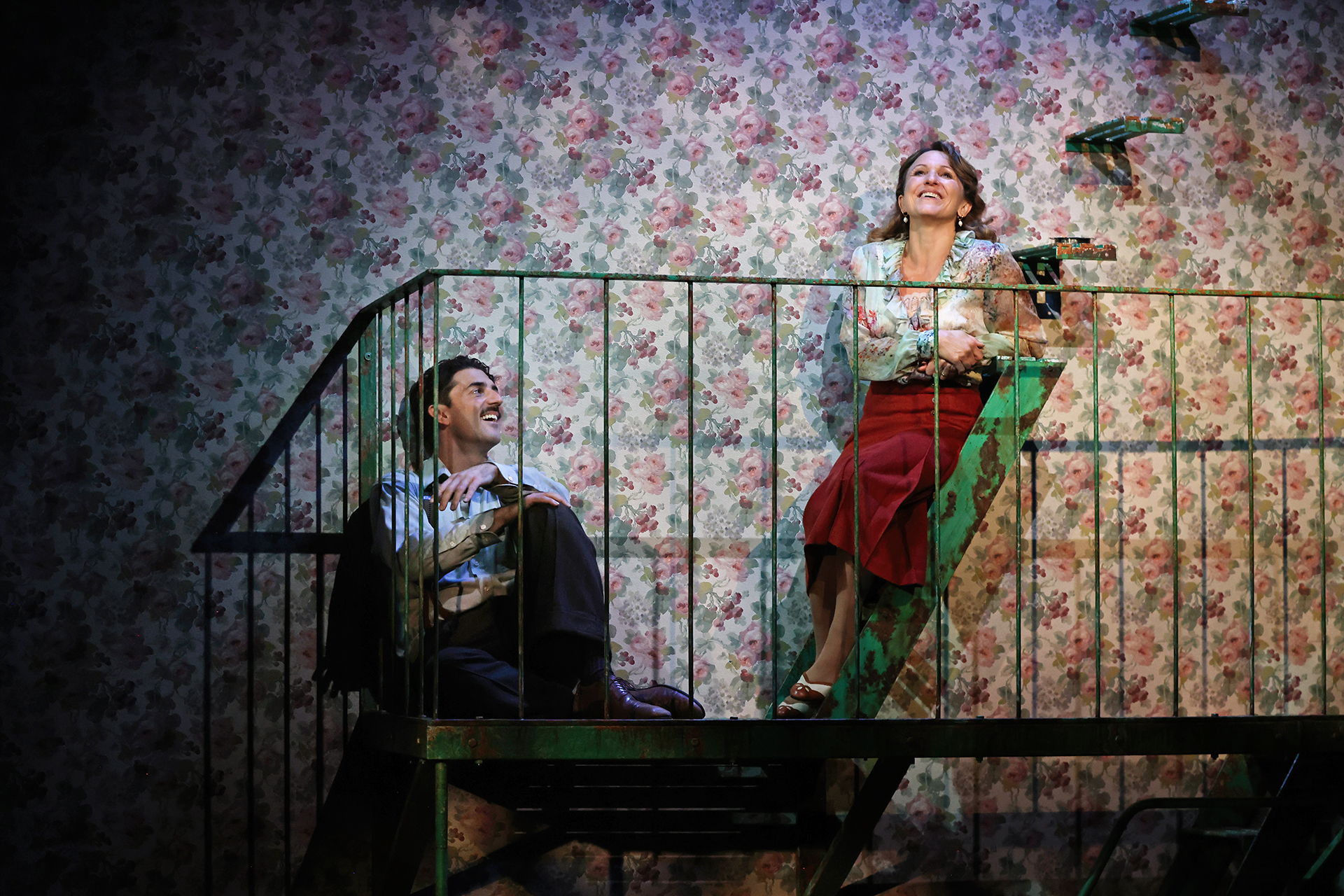
The Glass Menagerie

27 Mar

This is a beautiful production of a superb play.

The Glass Menagerie was first produced in 1944, and it launched Tennessee Williams’ career.

This slightly amended version is a poignant meditation on dreams, memory, and regrets.

Blazey Best is absolutely magnificent as Amanda, matriarch of a small house, evoking both laughter and pathos as she presents the fading southern belle, all attitudes, airs and … anguish. Once, in a single afternoon, she had seventeen gentleman callers. Now she worries for her daughter Laura, who has no gentleman callers at all.

Laura has a slight defect in her leg, but suffers more from her crippling shyness. Her life has reduced to playing records and tending her ornamental glass menagerie. Bridie McKim is brilliant as Laura, portraying perfectly her painfully overwhelming self-consciousness, while still finding those heartrending moments where hope glimmers through.

Tom, Laura’s brother, chafes under the responsibility he has to his fatherless family, and can barely endure his banal warehouse job. He also narrates the play, stepping out of the action to muse on the distance between mundanity and magic, between the average life and the adventurous one. Tom is a partially autobiographical creation; he dreams of being a writer, and his family situation is not unlike that of Williams’ youth. Danny Ball is mesmerising in the role, capturing both Tom’s energy and his desperation.

Tom also rankles under his mother’s insistence he find his sister a beau. The tyranny of women snaps back Amanda, with scathing satire.

He brings Jim to dinner.

Tom Rodgers offers a splendid portrait of Jim, bubbling and brimming with naïve enthusiasm. His scene with McKim’s fraught Laura is dramatic gold.

Liesel Badorrek’s production is a wonderful opportunity to see a classic of the American stage.

Paul Gilchrist

The Glass Menagerie by Tennessee Williams

at Ensemble Theatre until 26 April

ensemble.com.au

Image by Prudence Upton

Colder than Here

21 Sep

Go gentle into that good night….(with apologies to Dylan Thomas.)

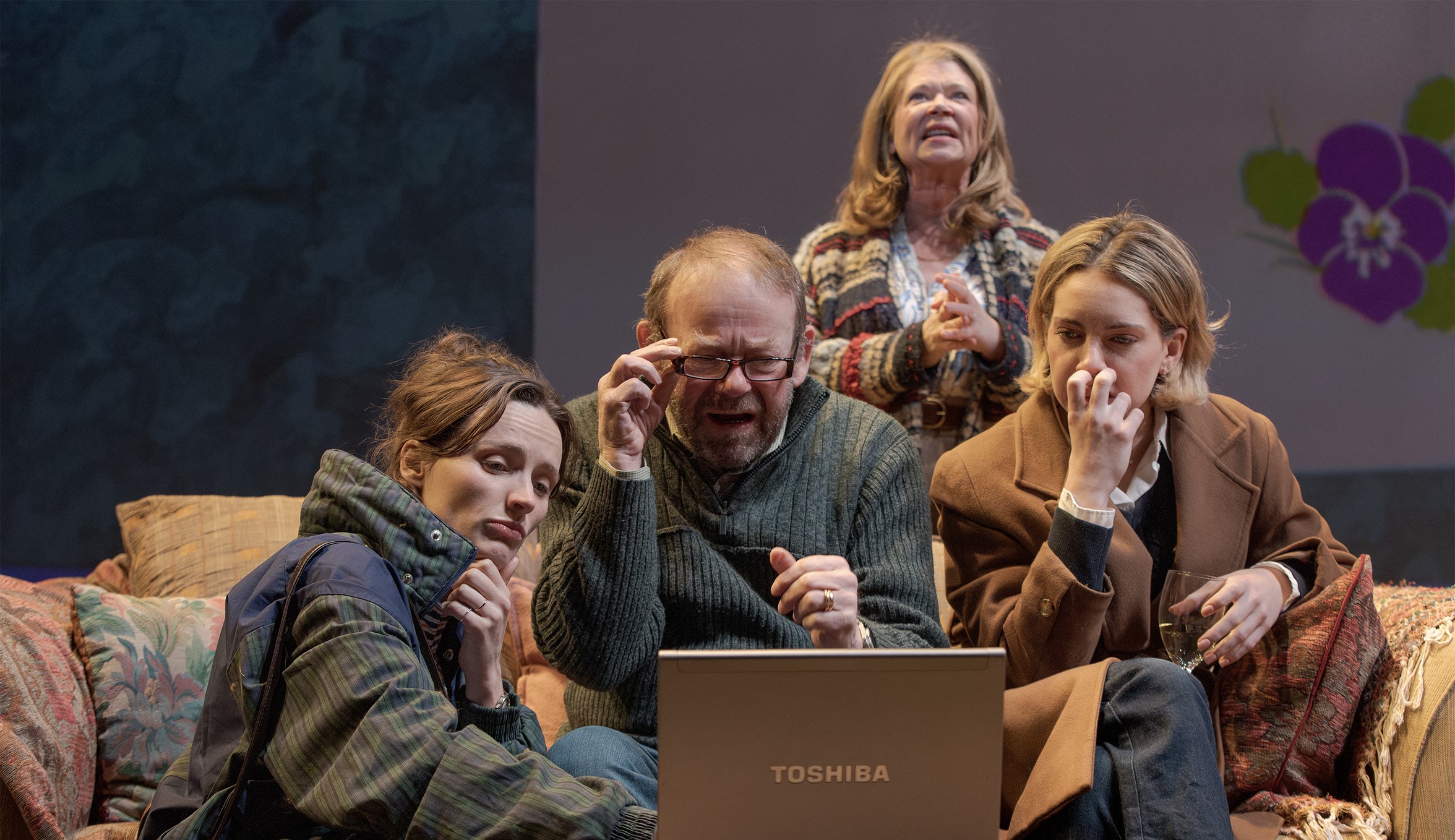
In Laura Wade’s play, Myra is dying of cancer. She has six months to live.

Her husband and two adult daughters struggle to deal with this. (Myra seemingly less so.)

Told with gentle humour, it’s an unusual story to put on stage – because it’s so very, very common an experience. That almost seems the point of the piece, the mundanity of it all.

Apart from being kept busy dying, Myra seems most interested in where she will be buried and what will be painted on her coffin. I’m not sure why. Perhaps it’s a coping mechanism, but the script offers so little about Myra that it’s difficult to tell. This British play is definitely set in a post-Christian world: there’s no judgement or evaluation of what Myra’s life has been worth, and no thought of an afterlife. Her death, like her life, is part of no grand soul-lifting (or even crushing) narrative.

In some ways, Colder than Here reminds me of Margaret Edson’s W;t, but without that play’s references to John Donne’s religious poetry which make apparent the relative spiritual poverty of modern secular materialism. Perhaps in this play, in which a richer worldview is never even alluded to, the pathos is more powerful.

Or perhaps we’re being offered comfort. Perhaps we’re being reminded, that after all, none of it matters that much. Perhaps it’s the equivalent of standing in a century old graveyard and finding peace in the knowledge that in an hundred years’ time no one will mourn you, that you will be forgotten, as all are forgotten.

Not that Myra’s family isn’t troubled by her impending death. In fact, the play’s focus does seem mostly on the family members who will survive her – on her Death as against her Dying. (Dying being what the sick person does, it’s only those who remain who experience Death.)

But the family are a rather hapless bunch; they clearly love Myra, but their responses are a mixture of bewilderment, confusion and self-concern. Before the giant Death, they are little people. The confrontation forces them to grow, but not very much. Nor is there a Life-affirming defiance in the face of the Great Inevitability, there’s no sense that though “we cannot make our sun stand still, yet we will make him run” (with no apologies to Andrew Marvell.) If Death can’t provoke from us Poetry, or at least Rhetoric, you got to wonder what Death is for.

Director Janine Watson elicits fine performances from the cast, each actor successfully finding the balance between humour and fragility. Hannah Waterman as Myra begins with an almost cheeky sense of fun, that might be part acceptance part denial, but gradually textures this with the increasing irritability of a person in genuine pain. Huw Higginson as her husband perfectly delivers the one-liner-wit that is clearly key to the couple’s ongoing attraction, but also movingly presents a man emotionally frozen, overwhelmed by the demands of the moment – a deepening cold that holds no promise of future warmth. Charlotte Friels as Myra’s eldest daughter offers a poignant portrait of a woman responsible and mature, but one imperceptibly and frighteningly losing her sense of centre. As younger sister Jenna, Airlie Dodds gives us perhaps the most fascinating journey of the characters, unexpectedly charming in her initial clumsy self-centredness before growing to a greater awareness of others, but one still subtly tinged with the personal absorption which is the hallmark of current perceptions of what it is to be human.   

This is a simple piece, a small piece, but in these qualities an honest one, both a powerful encouragement to acceptance and a surreptitious challenge to the pettiness of our vision of Life.

Paul Gilchrist

Colder Than Here by Laura Wade

At Ensemble until 12 Oct

www.ensemble.com.au/shows/colder-than-here/

Image by Phil Erbacher

Uncle Vanya

1 Aug

This is a classic play; it’s very funny and deeply humane.

Directed by Mark Kilmurry, this is the second production of the play I’ve seen this year. I’d happily see it again.

Chekhov follows the usual comic trope of outsiders disrupting the stable world of convention. (Think Benedict and Don John arriving in Messina in Much Ado.) Chekhov’s twist is that the interlopers don’t energise the original inhabitants, they enervate them.

Professor Serebryakov and his young wife, Yelena, have come to live at the family estate, and they bring with them indolence. Vanya realises it’s contagious, but can’t remain immune.

Though written in late 19th century Russia, the play is provocatively relevant. It juxtaposes two questions our society continues to wrestle with: Who am I? versus What is to be done? Vanya thinks he’s a failure, that his life has been a waste. Understandably, he’d like to blame others. But is this really the way forward?

Joanna Murray-Smith’s adaption retains the original setting (there’s a samovar, there are peasants) but the language is our modern vernacular, allowing Chekhov’s brilliance to shine.

Under Kilmurry’s direction, a terrific cast honour Chekhov’s famed honesty and truthfulness.

Out of the crooked timber of humanity, Chekhov creates a confronting beauty. Everyone is unfortunate, flawed and foolish – and still utterly lovable. (Even the pompous old professor, played wonderfully by David Lynch; his awkward, explanation-requiring, Gogol joke is comic gold.) Everyone’s in love with the wrong person. No one’s advice is quite right for anyone else. I don’t think this is a spoiler, but proceed with this paragraph at your own risk. Sonya’s beautiful final speech might be right for her, but can it really mean that much for her Uncle Vanya? But he accepts it, in silence; it’s what his niece can bring to the table, and if he has grown at all through the events of the play, he’s learnt to listen without criticism.  

Yalin Ozucelik as Vanya offers an irresistible figure of both hilarity and pathos. Chantelle Jamieson as Yelena initially plays indolence in the key of annoyance, a surprising choice, but one which pays off magnificently, delivering a second act of intensely moving vulnerability. Tim Walter, the visiting doctor who sets the women’s hearts afire, beautifully balances charm and dissolution. Abbey Morgan as Sonya offers a performance that is gloriously natural, an encapsulation of the Chekhovian genius; humanity in its unadorned simplicity, in its labyrinthine complexity, in its troubled passage through the sea of time, guided by hope and threatened by despair.

Paul Gilchrist

Uncle Vanya by Anton Chekhov, adapted by Joanna Murray-Smith

at Ensemble until 31 August

ensemble.com.au

Image by Prudence Upton

Masterclass

20 Jun

It’s a tradition for the less inventive of my reviewing colleagues to play with the title of a show when they write it up.

A show called, say, Simply the Best will be responded to with the highly inventive quip this show is simply the best. Or admiration for a production of Twelfth Night might be expressed in the gushing creativity of I can’t wait for Thirteenth Night!

Formulaic wit is how mediocrity shields itself from the dangerous provocation of genius.

If I actually read theatre reviews, I’d be tallying how many times the reviewers fall into the formulaic with this production.

Terrence McNally’s Masterclass gives Lucia Mastrantone the opportunity to show what an extraordinary performer she is. (And so you can probably guess what the formulaic quip will be.)

Opera icon Maria Callas is offering instruction to young singers. Apart from the occasional psychological flashback to Callas’ troubled past (which I’m not sure are necessary), the play operates as a vignette, a character portrait of a legend.

Callas is presented as a diva. She is fussy, self-obsessed, inconsiderate and deeply, deeply serious about the art.

It’s hilarious and wonderfully stimulating.

Mastrantone is utterly brilliant. She catches the glorious humour in every nuance of the script. In even the simplest of pauses, in the stare that’s a fraction of a second too long, in the smile that flits across her face, she projects a woman of intense vivacity. It’s a performance of phenomenal attention to detail. But equally impressive is its remarkable openness to possibility: the fourth wall is firmly down, and Mastrantone as Callas responds with exhilarating ease to the wild unpredictability of the audience.

Director Liesel Badorrek gives her a terrific support cast. Callas famously lost her voice in later years, so Mastrantone is not called upon to sing, but the rest of the cast gives us a delicious taste of the operatic art form. Bridget Patterson is very funny as the nervous student whose lesson establishes just how challenging working with Callas will be – and later Patterson reveals an outstanding voice. Elisa Colla is hysterical as the student attempting to follow instructions beyond her understanding, but both her voice and her final response to the master are truly beautiful. Matthew Reardon as a cocky young tenor is enormous fun, a joy to both watch and hear. Maria Alfonsine’s work as piano accompanist (and musical director) is marvellous and she induces many a giggle as she deals with Callas’ obtusity. Damian de Boos-Smith is magnificent on the cello, and as the surly stage attendant not at all cowed by the diva.

The play ultimately poses some provocative questions. What makes an artist? What is art? What is it worth? What does it cost? Perhaps you shy away from such questions.

But priceless is an evening in the company of a woman whose genius provokes them.

It’s a masterclass in acting.

Paul Gilchrist

Masterclass by Terrence McNally

At Ensemble until 20 July

ensemble.com.au

Image by Prudence Upton

Switzerland

8 May

This is an extraordinarily intriguing, extraordinarily odd play.

Written by Joanna Murray-Smith, and first produced in 2014 by the Sydney Theatre Company, it’s since been produced around the world.

It presents the novelist Patricia Highsmith as she is visited in her Swiss home by an emissary from her American publisher.

Highsmith was a real person, the writer of many novels, including those featuring the protagonist Tom Ripley. (Admission: If it hadn’t been for the Matt Damon film, I probably would know nothing about either the real person or the fictional one.)

Ripley – as even myopic theatre reviewers like myself know – is talented. He is a master of deceit, seduction and, most of all, murder. In creating Ripley, Highsmith was on to a winner – or so the critics and the sales suggest. (To me, it all seems simply bizarre. Or untruthful. But the challenging of parochial assumptions about human nature is what this piece is all about.)

Anyway, in Murray-Smith’s invented meeting between writer and messenger, the bone of contention is whether Highsmith can be convinced to write one more Ripley novel before she dies. It’s a beautiful example of how clarity of motivation can keep us utterly hooked, while also providing the playwright with the most delicious opportunities for subversion.

The play is set late last century, and part of its fascination is how quickly the assumptions of the literary world Highsmith inhabited have come to seem so distant from those of the present.

In juxtaposition to our contemporary literary focus on bearing witness to what’s been done to us, here are at least three ideas the play provocatively throws forth:

  1. Writers are, or can be, neutral. (Like Switzerland.) Their job is not to tell us what is morally wrong. They simply present the truth of human nature. And they can do so in a way that renders our moral compass irrelevant. (Highsmith, apparently, makes us root for Ripley.)
  2. Writers have the ability to do what they do because of the horrible things that have happened to them. (Francis Bacon supposedly was locked in a cupboard as a child, and that’s why he became a great painter.) Our personal suffering does not position us to bear witness to injustice, but rather to see into the human heart, and to portray powerfully what we find there.
  3. The human heart is dark. Civilization is a veneer and, in truth, we are violent beasts. This idea has long be in stock, but our current focus on sociology rather than psychology has hidden it way at the back of the shelf.  

Just these three ideas should send any audience out into the night burning with questions. (There’s a fourth idea I’d like to talk about, but I’ll get back to it at the end.) It’s a privilege to see such a rich, sophisticated, utterly engaging work.

Captivated by the play, I’ve said nothing about the production. Under Shaun Rennie’s direction, it’s brilliant.

Toni Scanlan as Highsmith is glorious: snappy, curmudgeonly, hilariously acerbic until a certain familiarity about her visitor encourages a pathos-inducing vulnerability.

Laurence Boxhall as Edward is magnificent. Initially playing a terrific comic balance between the awkwardness and confidence of youth, Boxhall gradually, and mesmerizingly, morphs the character into something grippingly different.

It’s a joy to watch two consummate actors do such masterful work.

Now, the end. Don’t worry, there’ll be no spoilers – because I didn’t really understand the end. (Or, at least, it sent me out into the darkness alight with questions.)

But that fourth idea? Teasingly offered for our consideration is the relation between the writer’s created world and their reality. By extension, it’s a tantalising invitation to ask ourselves Does our vision of the world actually create our world?  

Paul Gilchrist

Switzerland by Joanna Murray-Smith

At Ensemble until 8 June

ensemble.com.au

Image by Brett Boardman

The Great Divide

17 Mar

Wallis Heads is a beautiful but sleepy coastal town. Multi-million dollar property developer Alex Whittle thinks it’s ripe for a make-over.

As the new playground for the rich, jobs and money will pour in. It’s entirely logical, if driven by self-interest.

And the local mayor thinks it’s a terrific idea, especially since Whittle will fund a brand new council chambers.

But where will all this leave the little people? Any chance for maintaining a pristine environment will be gone. Any possibility of social housing will disappear. Market forces will mean new jobs, but the people working them will no longer be able to pay the rent.

That’s the great divide of the title, the division of the rich from the less so.

Single mum Penny, stacking shelves at Woolies to make ends meet, has had enough. There are things you have to fight for.

In the battle for hearts and minds, one field of engagement is Rachel, Penny’s teenage daughter. To widen the cracks in an already fractious mother-daughter relationship, Whittle expresses belief in Rachel’s big dreams, aspirations her more caring mother tempers with caution.

David Williamson’s script has a majestic simplicity, an exquisite clarity. In many ways, it’s not a new story. But, in the most important ways, it’s a true story. I don’t mean it’s non-fiction; I mean it openly deals with genuine tensions in our society.

There’s gentle humour aplenty, sprinkled with silent assassin satire; it’s a warm, hearty chicken soup, laced with shards of glass.

Mark Kilmurry’s cast is magnificent. Georgie Parker as Whittle plays every note of the script with a precision and attention to detail that’s an utter comic delight.

I haven’t cried in many Williamson plays, except from laughter, but here the mother-daughter relationship is presented with an honesty and insight that had my eyes stinging with salt only a scene or two in. Emma Diaz as Penny and Caitlin Burley as Rachel are extraordinary.

Maybe the end of play has a whiff of the deus ex machina about it. (Ironic, considering what the deus is in this case…. I don’t think the spoiler rule prohibits me from mentioning the word election.) This is not a criticism of the script; the dramatic form simply has it limits. Drama confidently represents the struggles between individuals and between small groups, but it can only hint at larger movements. Its power is not to represent the masses, but to galvanise them. What we can’t see on stage, we’re encouraged to enact ourselves. Democracy is drama in the daylight. And that aphorism, like the play that inspired it, is an invitation.    

Paul Gilchrist

The Great Divide by David Williamson

at Ensemble until April 27

ensemble.com.au

Image by Brett Boardman