Tag Archives: review

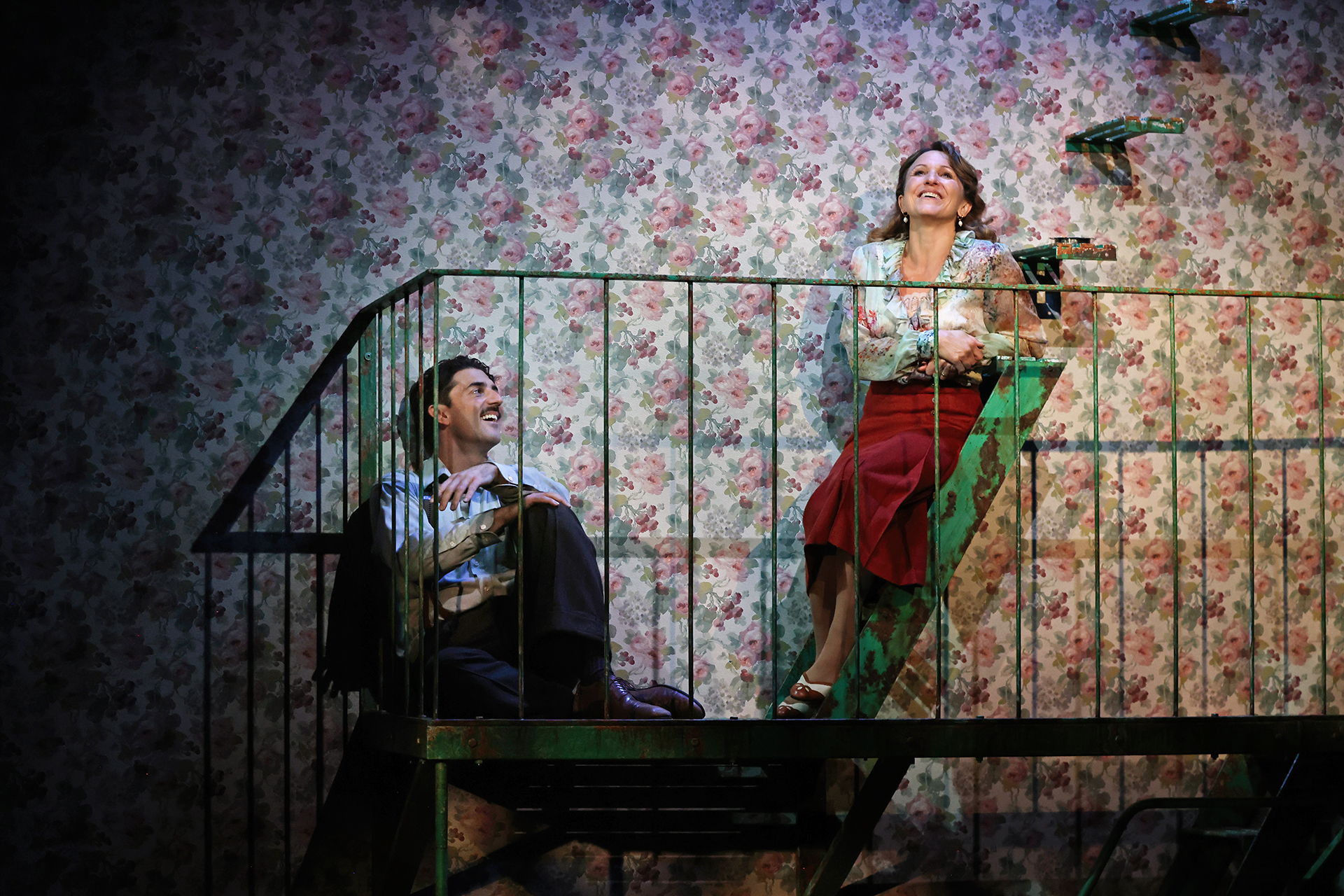
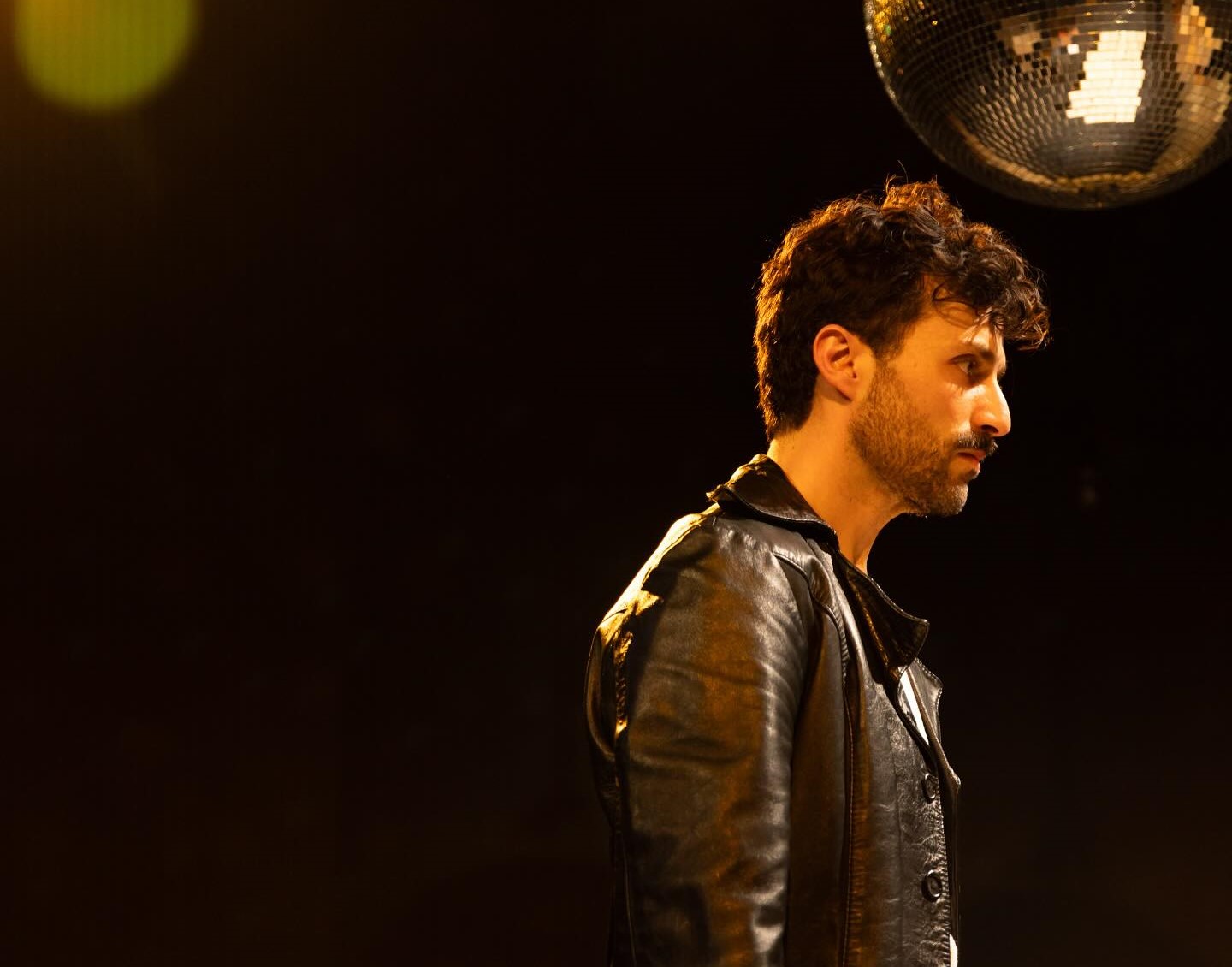
Saints of Damour

31 Mar

Written by James Elazzi, this is new work, but it’s a historical piece, with everything occurring forty to fifty years ago.

And it’s set in Lebanon, rural Queensland, and Sydney.

This is big storytelling, and it’s terrific to see it on one of our stages (and the Loading Dock and Qtopia deserve credit for giving space to such stories.)

But Saints of Damour is also small storytelling; we’re very much focussed on Pierre, his mother, his wife and his lover. The big historical events remain in the background. (The dramatic form doesn’t make this inevitable, but very different creative decisions would’ve had to been made on the script level if a grand historical drama was to be offered.)

The title is a tease: are these characters saints?

Sure, they feel the weight of duty, especially to family, but they’re also quite prepared to behave in ways that cause serious pain to others. Migrants in a new country, they stick together, but the dust of dishonesty dirties everything. It’s a long time before Pierre’s homosexuality is acknowledge or accepted by anyone except his lover. And Pierre’s decision to not reveal his sexual orientation to his wife before their marriage – even privately – seems unnecessarily cruel.

Are we victims of our circumstances or can we rise above them? That’s the fundamental question the play posits (though I’m not sure if it posits it consciously.)

We talk a lot about theatre that makes us feel seen.

And this narrative feels as though it’s attempting to be true to some particular personal history. I say this because it sprawls, as though it’s trying to capture what actually happened to someone.

Seemingly superfluous to a story, the family spend several years in Goondiwindi. They buy land and try sheep farming, though they’ve had no previous experience. They also open a small shop in town and an ad runs in the local paper telling residents to boycott them. These challenges are not especially developed in the script, it’s as though it’s sufficient they are recorded. Witness needs to be borne. (A similar recording of what appears to be actual events happens when the family move to Sydney: an Anglo-Australian who has lived in this city his entire life, and who has the privilege of a tertiary education, says he’s never seen the Blue Mountains. It seems so unlikely that it has to be based on the truth.)

Ironically, this sense of truth being recorded is emphasised by the play’s treatment of major historical events. Big issues are, oddly, given short shrift; they’re outside the parameters of a story dedicated to documenting personal lived experience. For example, the gay lovers believe they will have more freedom in a Western country, which is probably true, but when Pierre gets to Australia no mention is made of the fact homosexuality remains illegal or that the battle to change that injustice is being fought. It’s outside this story’s scope. Similarly, the outbreak of the Lebanese Civil War is the impetus for the characters’ migration, but the complexity and tragedy of a society tearing itself apart remains curiously offstage. Ethnically, the two lovers are from opposing sides in the conflict, but little is made of this. And, when they’re in Australia, only Pierre is interested in what happens in the homeland, and seemingly only in terms of his lover. No one else seems haunted by the past, or as it is for them, the ongoing present.  

It’s the sort of play where characters, when they’re concerned about who might have survived the conflict in Lebanon, say things like I’m concerned about who might have survived the conflict in Lebanon.

As a whole, the dialogue is lucid and limpid. Or direct and flat. It’s a matter of taste.

There are many quick scenes and, aided by a clean, functional design by James Smithers, director Anthony Skuse creates a beautiful sense of flow.

The cast are imminently watchable. The two lovers (Antony Makhlouf and Saro Lepejian) have a delightful, intense chemistry. Nicole Chamoun as Layla, Pierre’s wife, pitches her performance gorgeously between protest and pathos, while still finding that vital spark of joy. Max Cattana as Todd (who’s never been to the mountains) is splendidly gentle and, in other bit roles, displays a laudable versatility. As Pierre’s mother, Deborah Galanos has a glorious waspish tongue (which she also used on us before the performance, asking us to turn off our mobile phones.) At the finale, her bewildered terror, her explosive anger, is a moment in which the piece realises the dramatic form’s full potential (that is, refusing us any easy, unthinking judgement of the characters.)

Stories that make us feel seen – I suspect many audience members will feel this piece does this in spades.

But the title invites more: it’s a provocative reminder that having our challenges acknowledged does not automatically result in our actions being approved. It would be a pity for the dramatic artform if being seen was allowed to diminish into being justified.  

Paul Gilchrist

Saints of Damour by James Elazzi

At the Loading Dock Theatre until 6 April

qtopiasydney.com.au  

Image by Emma Elias

The Glass Menagerie

27 Mar

This is a beautiful production of a superb play.

The Glass Menagerie was first produced in 1944, and it launched Tennessee Williams’ career.

This slightly amended version is a poignant meditation on dreams, memory, and regrets.

Blazey Best is absolutely magnificent as Amanda, matriarch of a small house, evoking both laughter and pathos as she presents the fading southern belle, all attitudes, airs and … anguish. Once, in a single afternoon, she had seventeen gentleman callers. Now she worries for her daughter Laura, who has no gentleman callers at all.

Laura has a slight defect in her leg, but suffers more from her crippling shyness. Her life has reduced to playing records and tending her ornamental glass menagerie. Bridie McKim is brilliant as Laura, portraying perfectly her painfully overwhelming self-consciousness, while still finding those heartrending moments where hope glimmers through.

Tom, Laura’s brother, chafes under the responsibility he has to his fatherless family, and can barely endure his banal warehouse job. He also narrates the play, stepping out of the action to muse on the distance between mundanity and magic, between the average life and the adventurous one. Tom is a partially autobiographical creation; he dreams of being a writer, and his family situation is not unlike that of Williams’ youth. Danny Ball is mesmerising in the role, capturing both Tom’s energy and his desperation.

Tom also rankles under his mother’s insistence he find his sister a beau. The tyranny of women snaps back Amanda, with scathing satire.

He brings Jim to dinner.

Tom Rodgers offers a splendid portrait of Jim, bubbling and brimming with naïve enthusiasm. His scene with McKim’s fraught Laura is dramatic gold.

Liesel Badorrek’s production is a wonderful opportunity to see a classic of the American stage.

Paul Gilchrist

The Glass Menagerie by Tennessee Williams

at Ensemble Theatre until 26 April

ensemble.com.au

Image by Prudence Upton

Two Hearts

20 Mar

Romance is such a garden variety human experience that we often forget its potentially wondrous result.

(Or, to slightly misquote Chesterfield, the pleasure is momentary, the position ridiculous, and the consequence damnable.)

Written by Laura Lethlean and directed by Kirsty Semaan, Two Hearts tells the story of Him (Yarno Rohling) meeting Her (Danette Potgieter), and of what follows.

Throughout, the couple are shadowed by It (Lisa Hanssens).

For a while, it’s a guessing game as to what (or who) It is. I suspect some audience members might find this frustrating or dissatisfying, but not as frustrating or dissatisfying as when they realise the answer. You could suggest that the answer to the question of who is It? begs the fundamental question of the play.  (I’m attempting to avoid breaking the spoiler rule, so forgive me for being so vague. When a play risks so much on one dramatic trick, it seems poor form to reveal the nature of that trick in a review; a bit like revealing who did it in a whodunnit.)

But, perhaps the fundamental question of the play lies elsewhere (away from the issue I’m not naming, the issue that’s both very current and also universal, the issue I suspect many audience members will have very decided attitudes regarding, attitudes which will remain unchanged by this play.)

Perhaps, rather, the fundamental question is how do we navigate memory and regret, how do we construct a narrative of our lives? Though some scenes between the couple are played in naturalistic dialogue, many are played in a manner that suggest both the woman and the man are recalling events and trying to determine the truth of that moment. Sometimes the characters will play out the actions of the scene while seemingly remaining in their own internal worlds, trying to recall (or assert) how it all actually occurred. For example, the couple sit down and He says something like We were sitting next to each other and this is juxtaposed with Her reflection (rather than Her response), something like We sat far apart. This motif of reflection on the past is furthered by scenes in which It asks the man and woman, separately, about decisions made during the relationship. Combined with a sometimes heightened poetic language, and a muted but expressive lighting design (Jasmin Borsovsky), and a movingly melancholic sound design (Charlotte Leamon), we get the sense of two individuals grappling with a great mystery, the passing of Time and all the loss that entails.

Potgieter and Rohling as the young couple are wonderfully believable, both in their initial excitement as the romance blossoms, and in their growing frustration as it threatens to fade. The differences between the two lovers are subtly portrayed in both script and performance.

The character She is gently performative – I want people to like me – and perhaps a little more selfish – a friend has said to her You are the happiest person I know, because you are the most selfish. Both despite these flaws, and through them, Potgieter beautifully creates a character who we like and who we pity (which is probably the most suitable response we can have to any other person.)

In contrast to Her, He is more genuine, perhaps a little simpler. He dreams of being a musician but is self-deprecating enough to realise it is unlikely to happen. Rohling’s presentation of the character brims with warmth, and as things begin to go wrong in the relationship, his portrayal of a sad, anguished bewilderment is superb.

As It, Hanssens has the oddest of roles – but pulls it off with aplomb. With both movement and voice, she effectively evokes something passionless yet present, something uncomplicated yet curious, something without skin in the game, but that watches eternally. (There’s an infinite pathos in a figure who stands always at the bank, as the river of Time slides endlessly by.) To use the body in a way that suggests the soul is a remarkable achievement.

Two Hearts is a piece that is as gently disconcerting as it is softly beautiful.

Paul Gilchrist

Two Hearts by Laura Lethlean

presented by Space Jump Theatre

at Flight Path Theatre until March 29

http://flightpaththeatre.org

Image by Philip Erbacher

No Love Songs

17 Mar

This is a micro-musical: two performers, accompanied by a musician on key board – whole thing 80 minutes long.

Apparently, it’s inspired by the life experiences of song writer, Kyle Falconer, and one of the writers of the book, Laura Wilde. (The other writer is Johnny McKnight, and the piece is directed by Andrew Panton and Tashi Gore.)

As the title suggests, it’s a relationship story, but not your conventional one. This is no romance ending with And Reader, I married him. A baby is born in the third scene.

How do Lana and Jess navigate this new arrival?

Hint: it’s not a baby bliss story.

Firstly, I’ll be shallow and sharp.

Neither character is particularly charming. They’re incredibly judgemental, criticising her mother, the women at play group, and even a guy who wears socks (or doesn’t wear socks?) with a particular type of shoe. A lot of things are shite. A lot of emotions are punctuated with fuck. And we hear about her vag, her tits, and the need to shit while giving birth.

Despite referring to themselves as the Dream Team, Lana and Jess never seem particularly close, and this is emphasised by the structure of the piece, in which each often sings alone, or talks directly to the audience about the other.

And they constantly refer to the baby as the Little Man, suggesting they haven’t really got their heads around the fact he’s a child, and the enormity of their new responsibilities. (And it left me wondering if they would’ve referred to a female child as the Little Woman.)  

They’re really just oversized adolescents who need to grow up.

But, as I suggested, I’m being sharp and shallow.

To respond in this manner to dramatic characters is to deny the sophistication of the dramatic form.  

Let me dig deeper.

There’s hints of a troubled prehistory. One of the early songs, musing on their future as parents, expresses the hope they don’t become monsters. This begs a backstory we’re never told, this pathos-inducing hope betraying unacknowledged darknesses in their own pasts, and effectively establishing how self-unaware these characters are.

But I’m still sticking to the surface, the spoiler rule holding me back – but the need for content warning, and a more genuine assessment are pushing me forward.

It’s story of postnatal depression.

And that can hit any woman. Charming or not. Self-aware or not. And it does, with a dreadful, often unrecognised, frequency.

No Love Songs’ raw portrayal of the pain of this experience is wonderfully honest (and transcends all the other chip-on-the-shoulder type of supposed honesty that otherwise pervades the piece, the type that automatically equates Telling it how it is with ugliness, and seems unable to do anything but assume that there actually is A way it is.)

Keegan Joyce and Lucy Maunder give terrific portrayals of these challenging characters. Accomplished musical performers, they present the songs beautifully, and the dialogue with skill. The jokes work, and the suffering is heartrending.

Falconer’s songs are engaging and the music is splendidly produced (though I did wonder whether an arrangement beyond synthesiser keyboard and acoustic guitar might have been interestingly edgy.) It was a joy to hear every word (except, perhaps, when Lana was rhymed with trauma.)

The piece is billed as a modern love story. It’s an intriguing piece of code, one best deciphered as a comment on what this story is comfortable exploring, as against suggesting this story is concerned with particularly modern aspects of love. Because these things have always happened and hopefully, in bravely speaking of them, those who suffer can find the support they deserve.

 Paul Gilchrist

No Love Songs by Kyle Falconer, Laura Wilde and Johnny McKnight,

at The Foundry Theatre, at Sydney Lyric,

until 13 April

http://nolovesongs.com.au

Image by Brett Boardman

Love

14 Mar

This is a fine production of a brilliant script. First performed in 2005, Love by Patricia Cornelius presents a love triangle between Annie, Tanya and Lorenzo.

Annie is a sex worker. Tanya and Lorenzo live off her earnings and, in exchange, give her what she needs. They give her affection, and protection. The only thing Tanya and Lorenzo seem to have in common, apart from a desire for Annie, is the demand that she continues to work and bring in the cash. Between Annie’s two lovers, we’re tempted to trust Tanya more, but we don’t automatically assume she’s morally superior to Lorenzo – and that’s indicative of the wonderful richness of the script.

Cornelius has a wonderful ear for the vernacular. These down-and-out characters speak in the highly-modal, subtlety-free assertions, repetitions and retractions which are the linguistic province of society’s rejects. In particular, Lorenzo’s ethical statements display the binary certainty of one only too familiar with perpetual reprimand. Cornelius offers the poetry of the underclass, of the inarticulate, and in its unflinching truthfulness, these characters are granted the dignity we too often deny their real life counterparts.

Director Megan Sampson elicits admirable performances from the cast.

Izzy Williams as Annie is poignantly vulnerable and naive, but tempers these qualities with a hunger for life that enhances the pathos of her situation.

Georgia-Paige Theodos as Tanya powerfully evokes the toughness and isolation of a woman marginalised for being who she is.

Rhys Johnson as Lorenzo is gloriously high energy, part puppy, part crocodile.

We’re presented a nuanced psychological portrait of each character, and an evocation of the fraught world in which they inhabit. It’s one of brutality, sometimes unthinking, sometimes not. The characters show little awareness of wider sociological or political issues; their marginalisation is so complete that they seem almost incapable of viewing themselves as victims. Only rarely is the myopia of their narrow world transcended: once, in Lorenzo’s cruel taunting of Tanya that society has a place for him, but refuses one to her; and in the final moments of the play, when Annie tries to make sense of what they are, in imagery that’s as surprising as it is sad.

Paul Gilchrist

Love by Patricia Cornelius

presented by New Ghosts Theatre Company,

at the Old Fitz until 21 March

oldfitztheatre.com.au

Image by Patrick Phillips

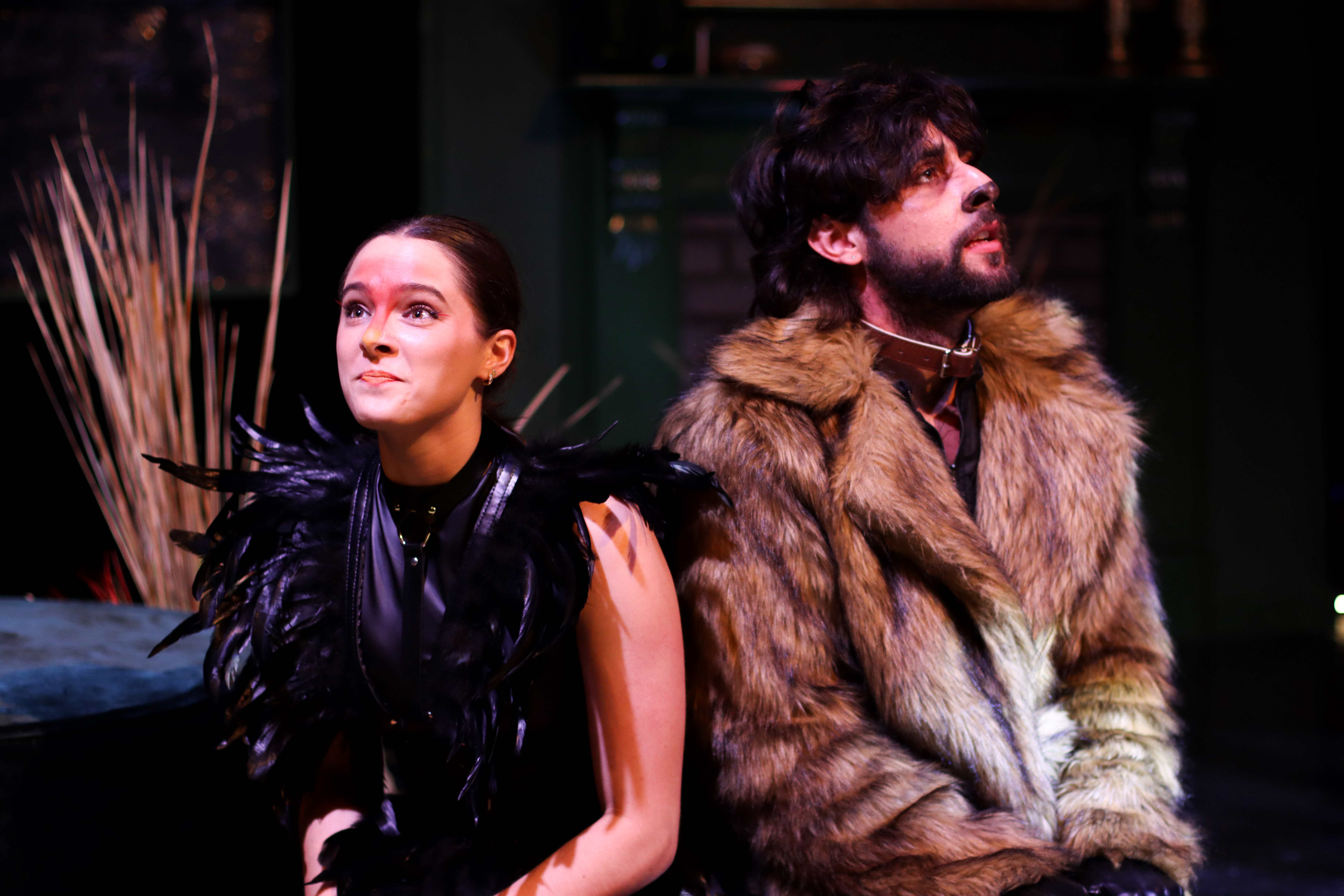
The Moors

13 Mar

Written by Jen Silverman and first produced in 2016 in the US, there’s certainly more than a whiff of the Brontes about this.

There’s a dissolute called Branwell. There’s a newly arrived governess. There are sisters, whose father was a minister, and at least one of whom wants to be a famous author. There’s a surly servant. There’s someone locked away in the attic. There is a large, ever-present, dog. And, of course, there are the moors, bleak, bare and stretching far away.

But don’t be mistaken, this is no bio-drama. (The Brontes are never mentioned.) It’s a glorious, hilarious, deeply moving postmodern celebration of …. some of the Brontes’ most passionate concerns.

Right through the nineteenth century and up until modernism, the English novel famously pursued realism. But there were fascinating variations on the form. Dickens played with the comic. Collins played with the criminal. The Brontes played with the dark. What makes, say, Jane Eyre or Wuthering Heights standout is their embrace of the Gothic, their obsession with the dangerous, often unacknowledged, darknesses deep within us.

In The Moors, the darkness being plumbed is the disturbing link between love and control. Mistress of the house, Agatha, controls her brother, and wants to control the new governess. She also just wants her. This pattern is repeated with the dog and a moor hen.

Yes, there are talking animals. And there are musical numbers. And a heap of humour.

There’s also mischievous play on theatrical conventions. The perplexed governess is perpetually told that the one room (the only room) is another. The sole servant acts as though she were two different servants. Time doesn’t flow at its usual pace – well, at least not when you’re writing a diary, as is the younger sister who desperately wants to be a famous author. 

So, how do all these mischievous comic tricks combine with the Gothic?

It certainly makes for an extraordinarily entertaining night of theatre. (The 110 minute show doesn’t seem slave to Time’s usual habits, but rather zips through like that wanna-be novelist’s diary.)

But, curiously, these mischievous comic tricks don’t result in a parody of the Gothic. Indeed, they don’t even weaken it. (The story of the fraught relationship between the dog and the hen is made more enthralling by its anthropomorphic element, refusing us a glib disapproval of certain disconcerting behaviours, and so ensuring the emotional impact of the conclusion.) 

Perhaps the mischievous tricks suit our postmodern sophistication. It could be argued that the Gothic dwindled into mere adolescent horror as soon as we acknowledged the existence of the sub-conscious, and so Silverman’s tricks are merely the spoonful of sugar that makes the quaint old genre more palatable to contemporary tastes.

Or perhaps her tricks are an expression of the Gothic spirit itself, impishly revealing a previously disguised darkness. Each of the key moments in this play are driven by something one of the characters has written or a story one of the characters tells – and that hints at the location of the darkness being probed. In our post-modern culture, we’re hyper-aware of the telling of narratives, and we proudly claim agency over our own. We rightly critique the dominant narrative, for its bias, for its blindness, but how closely do we consider the narrative with which we wish to replace it? They told a Tale, we say, but as we tell ours, almost unbeknownst to us, it comes to be Truth.

Silverman’s tricks highlight this tussle of Tale and Truth. And, in this tussle, both are torn, exposing the blood and bone beneath. Perfect Gothic.

Director Jessica Fallico knows exactly the gift of a play she has and presents it magnificently.

The cast are brilliant. The scenes between the dog and the moor hen are riveting. As the bird, Jasmine Sarkis superbly encapsulates that most disquieting of mixtures: wonder and openness, born of and blighted by inexperience and ignorance. Michael Giglio, as the beast, perfectly balances warmth with neediness. As the ever-changing servant, Brittany Macchetta is splendidly nimble; with terrific use of voice and movement, she slips seamlessly between sullen and deferential. As Emily, the newly arrived governess, Georgina Dula presents a fascinating journey, taking the character from vexed bewilderment to daunting agency. Kalani Guillien is outstanding; as Agatha, mistress of the house, she is unapologetically imperious, yet deeply complex. As the younger sister, Hudley, Emily Smith excels; giddy with childish excitement and misplaced enthusiasms, she is a comic delight.

Paul Gilchrist

The Moors by Jen Silverman

presented by Dancing Dog Productions in conjunction with Waterloo Studios Theatre Sydney

at Waterloo Studio until March 16

dancingdogprod.com

Image by Stephanie Stephens.


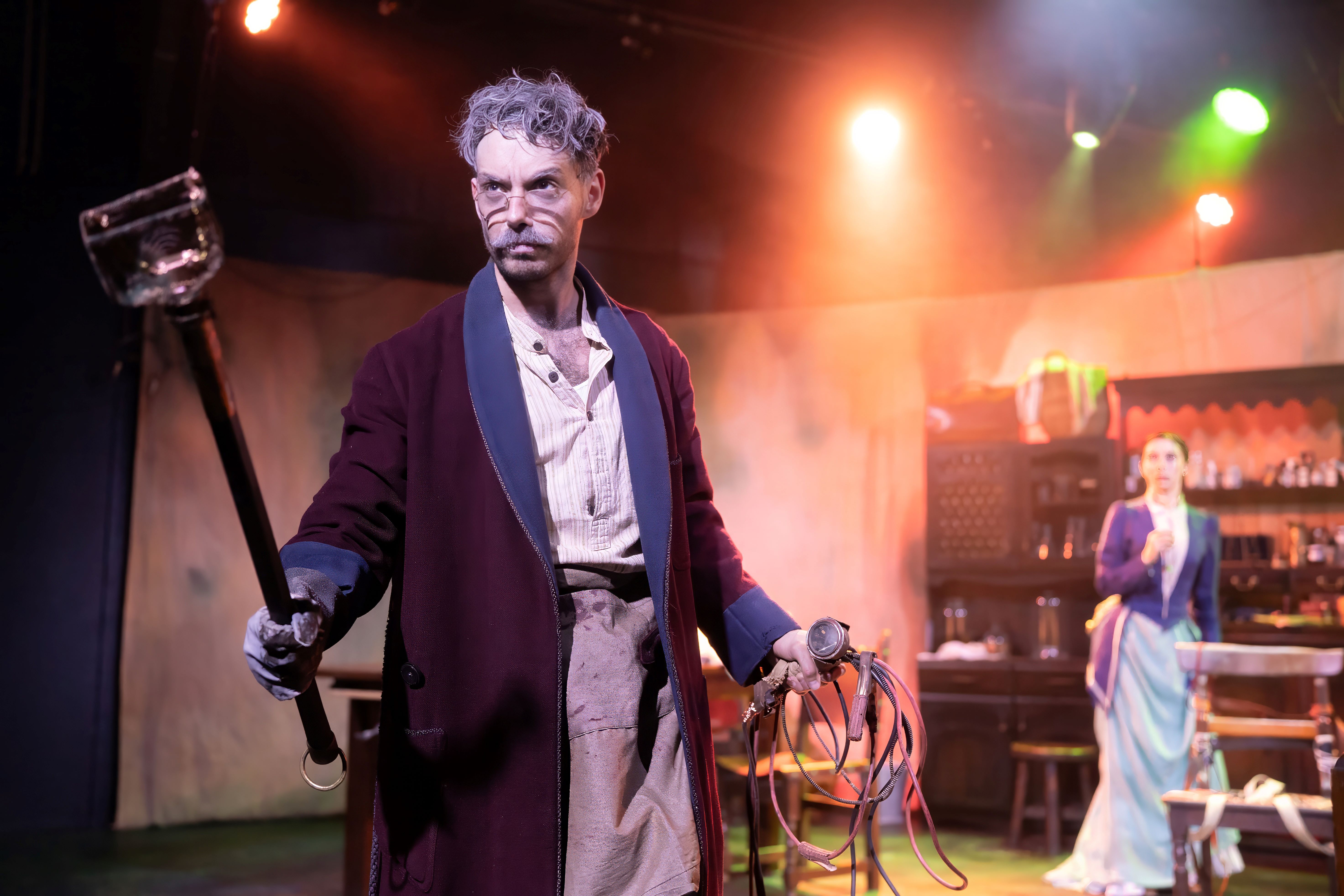
Turpentine

24 Feb

This is new Australian work and it’s a Victorian Gothic comedy. Such bold choices are always invigorating.

Set in the London of the late 1800’s, it tells of a desperate mother (Megan Elizabeth Kennedy) who begs a mad scientist (Tommy James Green) to enact a dreadful procedure.

In the broadest sense, the Gothic is a response to the Enlightenment and the Scientific Revolution – and to the extraordinary technological developments that followed. Often the Gothic is a plea: Not so fast! Be wary where all this is leading! Don’t so glibly dismiss the wild darkness within us!

It’s interesting how the Gothic changes through the nineteenth century. In Mary Shelley’s Frankenstein (1818), it’s a warning against intellectual hubris; be careful what you do with this newfound science. By Bram Stoker’s Dracula (1897) the warning has changed; now it’s an assertion that our rational scientific world view is limited, blinding us to the dangers that lie beyond its myopic vision. Shelley says be wary of the power, Stoker says don’t overestimate it.

Turpentine by Tommy James Green is closer to Shelley’s work thematically, but because it positions itself as comedy, the Gothic beast’s bite is softened. It’s tempting to see it simply as the unadulterated opportunity for larger than life characters and some entertaining mayhem.

Directed by Katherine Hopwood Poulsen, the cast energetically commit to the craziness. Vocal delivery (excluding that of the mute, played by Freddy Hellier) would benefit from more variety, both for the sake of emotional impact and comedic effect, but also for audience comprehension. Though the decision to set the play in London allows resonance with the grand tradition of the Gothic, I wonder whether an Australian setting might have freed the performers from the accent work that limits the production’s impact (though enhances its intended silliness.) As the piece stands, references to British colonialism effectively employ the Gothic’s ability to gaze into the darkest chambers of the human heart, but considering our nation’s troubled history, a change of setting wouldn’t diminish the potency of a similar, but more local, exploration.

Despite its playful intention, the piece takes its narrative structure seriously: it’s a genuine two act play, rather than a mere cavalcade of comic nonsense. Act One invites us into this wild Gothic world and cleverly sets up the events of Act Two. (Though I wonder if the dramatic question of the first act could be further clarified by establishing earlier the reasons for the doctor’s reluctance to perform the procedure. Let the question be whether the bereft mother can convince him despite what he fears. We know the procedure is impossible in the real world, but by introducing its nature and consequences earlier we know the rules of the game being played, and so can give our attention to the human truths that game serves to highlight. Note how Shelley’s Frankenstein spends little time on how the monster is created, directing our focus instead to the very real human experience of hubris and its terrible repercussions. My suggestion would also giving meaning to the doctor’s first act babbling, positioning it as a recognisable avoidance strategy, rather than merely colourful characterisation.)  

Yes, I know, I’m indulging in that most annoying – and pointless – of dramatic criticisms: describing the play I wish had been written, rather than discussing the play that actually was. We critics think we’re specialists, though we’re only ever called in for the autopsy.

Design by Alex Baumann and James Shepherd is especially evocative, establishing a world of potions and poisonous pleasures. Sound design by Kyle Stephens deals ingeniously with the curse that occasionally strikes this theatre, and which its name in glorious honesty acknowledges. If external noises do intrude, an ominous rumbling thunder disguises them, while simultaneously suggesting the frightening secret tensions which are the Gothic’s speciality.

I mentioned an autopsy before, but I don’t want to suggest Turpentine lies cold on the slab. It’s deliciously audacious, with the potential to be truly electrifying.

Paul Gilchrist

Turpentine by Tommy James Green

Presented by Popular Playhouse

At Flight Path Theatre until March 1

flightpaththeatre.org

Image by Jack Aliwood

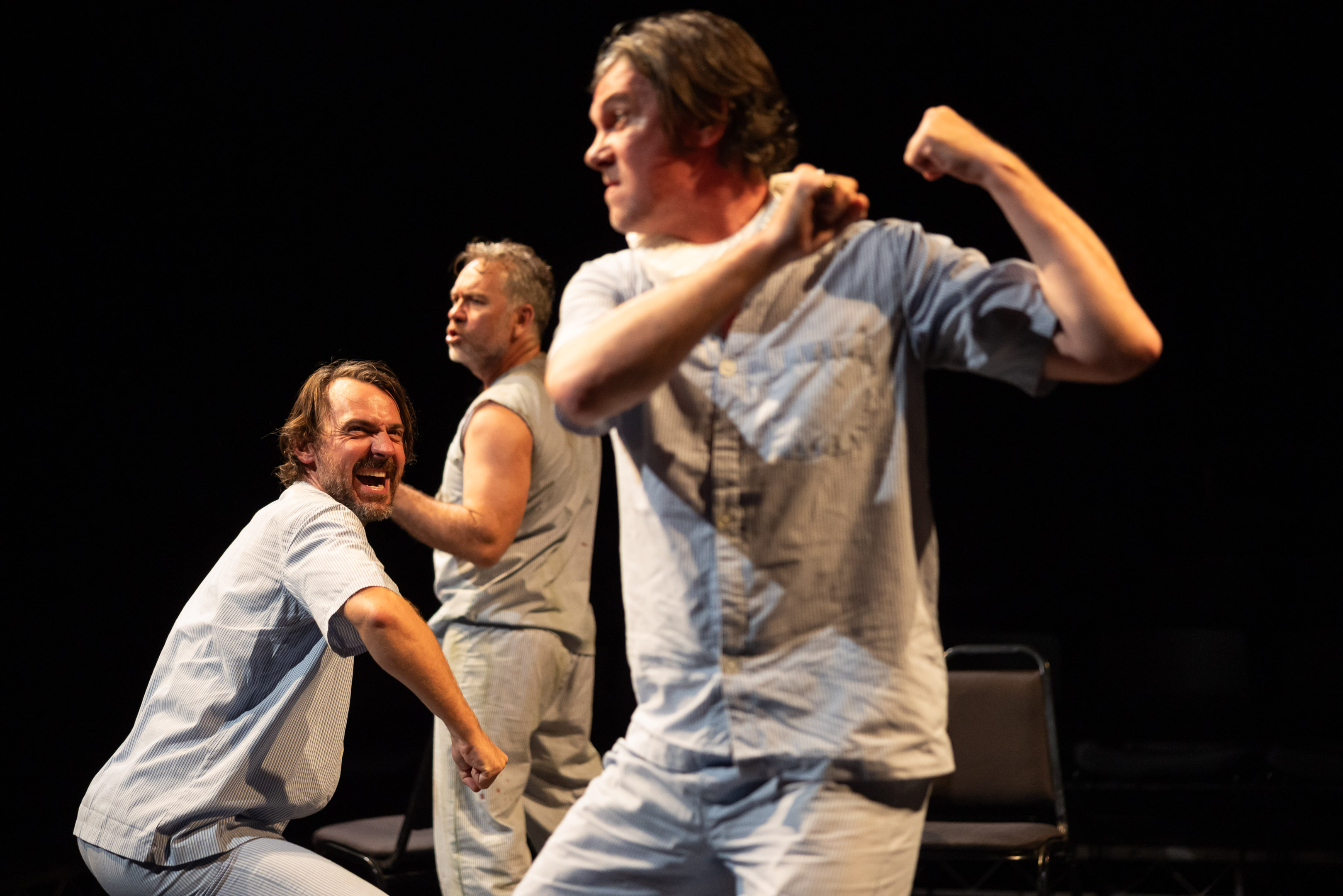
Hamlet Camp

17 Jan

This is a fun night of theatre, one we’re privileged to share with three contemporary legends as they muse on the dramatic form.

It’s also a tantalising potpourri.

It begins with Toby Schmitz, Brendan Cowell and Ewen Leslie each performing a self-written monologue. Schmitz’s monologue is about an actor currently working in a second-hand book store in Newtown; still a purveyor of art, but in rather reduced circumstances: tale teller now retailer. Cowell’s monologue explores how the actor’s life of perpetual rootlessness impacts their relationship with material objects. Leslie’s presents the journey of an out-of-his-depth child TV actor to maturity as a lover of the craft. Each monologue is richly poetic and very funny.

Are they autobiographical? Sort of. I guess. I don’t know. Truth is certainly tempered by poetic licence and the hyperbolic needs of humour. I did take away the sense that the character being presented in each piece was a moderately successful actor. What a disparate, contradictory, explosive mix of words that is! It also operates as a suitable tonal introduction to the madcap comedy that follows.

That’s because – after Claudia Haines-Cappeau’s beautifully evocative dance as Ophelia – there comes the title piece, an extended skit in which three actors who’ve played Hamlet are now going through rehab. It’s written by Schmitz, Cowell and Leslie, three actors who’ve played Hamlet and are now…

If the monologues might be autobiographical, the skit certainly isn’t – at least not if read as realism. It is, however, a puckish peep into the weirdly overwhelming experience that playing the Dane apparently is. As suggested, the play’s the thing.

Or can rehab help them realise that it’s just a thing? One thing among many.

The skit is terrifically amusing, a wonderful opportunity for three great comic actors to strut their stuff. It sparkles with insights into what it is to be a performer. (There are plenty of in-jokes about particular past productions, and these are marvellously mischievous, but they don’t dominate.) Frustration is expressed at directors and their determination to own a play by imposing some bizarre idiosyncratic vision. As one recovering Hamlet says, I’d love a director to say ‘Let’s just do the play.’ Also grumbled about are reviewers. Cowell’s character is disturbed that one reviewer described his Hamlet as mercurial. This observation hints at the sensitivity of performers, but it also left me wondering if the greatest tragedy in theatre is not Hamlet, but that reviews are taken seriously.

Another provocative observation is that we romanticise Hamlet, which I took to mean we overvalue both the character and the performance of that character. One of the sessions at the rehab centre is entitled Offstage Women. It seems to refer to the play’s representation of women and how Hamlet himself mistreats them. It also refers, I think, to how male actors lost in the role mistreat the women in their own lives. I make no comment about the impact playing the famous protagonist might have on an actor’s personal relationships, but I find fascinating the suggestion that audiences are asked to admire Hamlet. Perhaps an actor needs to find that connection, but as an audience member I’m more than happy to dislike a protagonist or, more precisely, to hold such a personal response to a character in abeyance. (Perhaps, like the suspension of disbelief, it’s the key to a mature appreciation of fiction.) Take Macbeth and, to a lesser degree, Lear: the achievement of these tragedies is that we’re presented a monster yet, beneath all, we still see their humanity. (I admit this probably doesn’t accurately describe what’s happening in, say, Othello or Romeo & Juliet – so perhaps there are audience members out there who do actually like Hamlet as a person.)

That’s the joy of Hamlet Camp, it’s a deliciously playful invitation to thought.  

Paul Gilchrist

Hamlet Camp by Brendan Cowell, Ewen Leslie and Toby Schmitz

Presented by Carriageworks and Modern Convict

At Carriageworks until 25 Jan

carriageworks.com.au

Image by Daniel Boud

Hedda Gabler

28 Oct

The joy of a classic is twofold: you’ve either seen it before and are fascinated by the choices made by this particular production, or you’re seeing it for the first time and are sharing in an experience that has enthralled millions before you.

This version, adapted and directed by Anthony Skuse, will thrill audiences both familiar with the play and those to whom it is entirely new.

Skuse has tightened the piece so it runs a brisk 90 minutes, a remarkable achievement as there’s not much fat to trim off Ibsen’s original, a piece that can run two hours fifteen.

Hedda has just returned from her honeymoon with her more conventional husband Jørgen Tesman. It’s clearly not a perfect match, a fact underlined by the play’s title: Hedda’s maiden name. In the drawing room of the couples’ newly acquired home is a portrait of her father, General Gabler, watching over all. And, waiting in a drawer, is the set of pistols he bequeathed his daughter.

It’s tempting to read the plays of the second half of Ibsen’s career as documenting social issues. When Nora leaves her husband at the end of A Doll’s House, it can seem like she’s slamming the door on the whole damned patriarchy. And, I guess, if you like your theatre as a type of animated slogan, a sort of cutely repeating GIF, who am I to say you shouldn’t. But I do wonder if reducing Ibsen to a message is to rob the dramatic experience of its richness. From long, hard experience, I’ve come to the conclusion that the best way to pass the time in the theatre is by paying attention to the actual play, rather than holding tight to some theory you brought pre-packed from home.

Ibsen, I suspect, is best appreciated through character rather than message. Famously, he claimed to have spoken to his characters, heard their voices, noted their choice of dress. They weren’t puppets for his particular philosophy, but people….with all the wild heaving breathing contradictions that implies.

Skuse’s version honours this gloriously Life-affirming approach, and Hedda as performed by Ella Prince is beautifully rich and complex. Prince’s Hedda is intense and bewildered, focussed and fraught, iron-strong and vapour-vulnerable. She’s both the pistol and its puff. She’s a long way from some other Heddas I’ve seen: silly middleclass housewives who are close cousins to Emma Bovary, bored with their lives and self-medicating with fantasy. Prince’s Hedda longs for something more, but in a way that’s so genuine, so potent, that it doesn’t so much indict the mediocrity of the society she’s trapped in as offer a Dionysian vision of ecstatic fecundity, of human flourishing …. of tragically lost opportunity.

With a terrific cast, Skuse surrounds Hedda with characters who are tougher and less comically inconsequential than those some directors choose to present. There’s still plenty of humour, but these characters, though not Hedda’s equal in strength, inhabit a psychological world that is neither inconceivably nor prohibitively distant from her own. Considering the notorious final line of the play, this is both ironic and deeply poignant. The use of space is brilliant, making the most of KXT’s traverse stage, and the simple conceit of having characters occasionally sit with us in the front row is a powerful reminder that Ibsen offers people, just like ourselves.  

Paul Gilchrist

Hedda Gabler by Henrik Ibsen, in a version by Anthony Skuse

Presented by Secret House in association with bAKEHOUSE theatre co 

At KXT until 2 November

kingsxtheatre.com

Image by Braiden Toko