Tag Archives: Jen Silverman

The Roommate

24 Jun

This a terrific production of a wonderfully rich, wonderfully funny play.

Written by Jen Silverman and directed by Lee Lewis, it’s a beautifully sophisticated use of the comic trope of the outsider who shakes up the status quo.

Sharon has taken a new roommate, Robyn. Sharon is conservative, inexperienced and uptight. She lives in Iowa, where she says there is no culture – she’s from Illinois. Robyn is from New York and is street-smart, experienced and, it would appear, more self-assured.

One of the joys of the piece is its presentation of the friendship between two middle-aged women. Sharon may feel that she’s slipping out of view, but the play says not so fast, and hauls her centre stage. Robyn warns her not to become old before her time. It’s a glorious celebration of second chances.

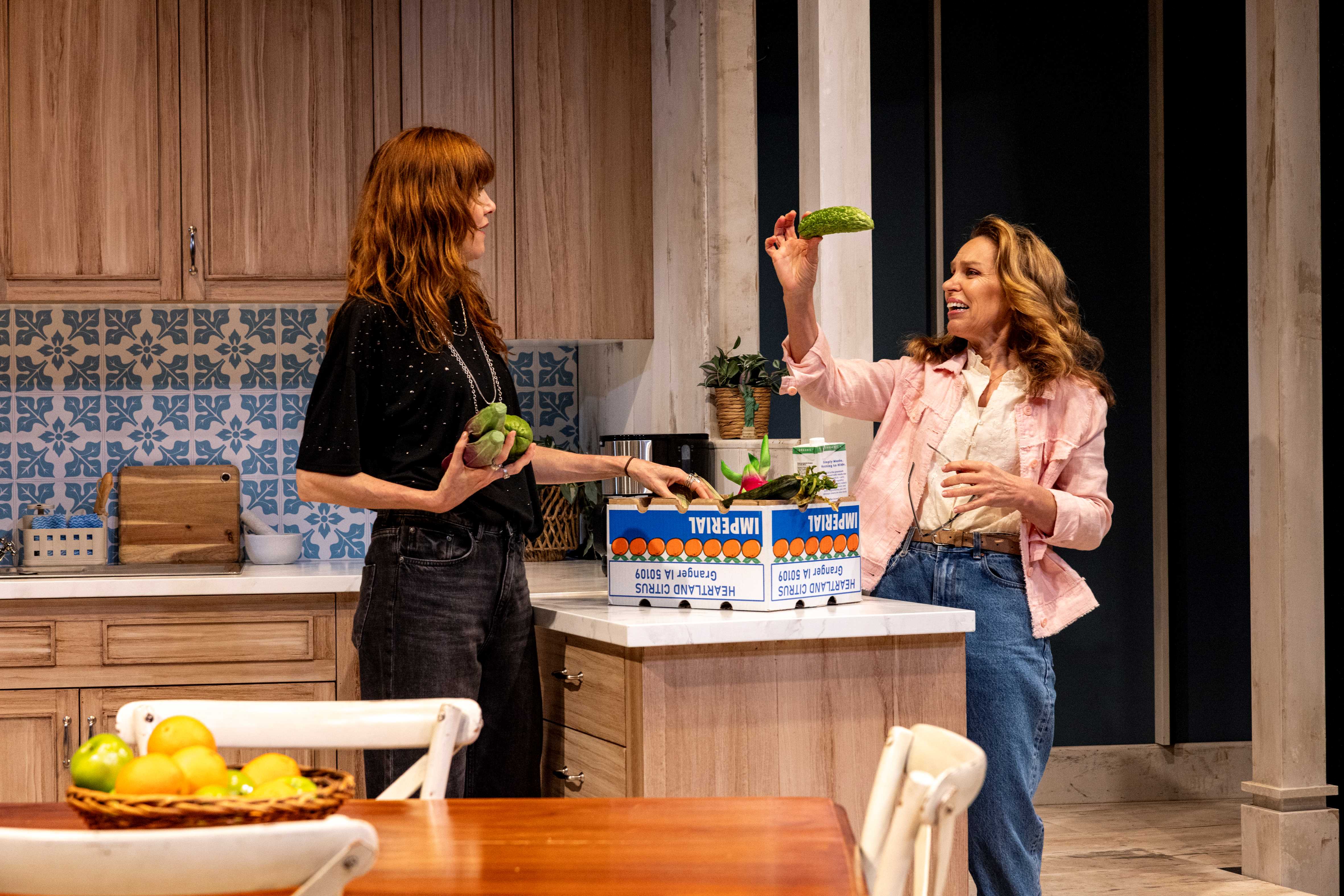
As Sharon and Robyn, Lucy Bell and Belinda Bromilow are utterly superb, creating characters who are both comic magic and entirely grounded in Truth.

The setup may seem sitcom, but don’t be fooled. The play is an absolutely engaging investigation of identity and how it’s created.

Is our identity unchanging? Or is it fluid? Asked if she is a bisexual, Robyn replies we look for labels for ourselves but sometimes they don’t really fit. Robyn, after all, is an ex-smoker – after this next cigarette.

Is our identity determined by the role in which society casts us? A bewildered Sharon says she was once a wife, but is no longer; was once a mother, but has become redundant; is now a roommate, but….  

Or do we have genuine agency? Are we free to create ourselves? Robyn has made some pottery dolls. Made people. (And breakable people.) She jokingly calls them voodoo dolls, evoking – just momentarily – a sense of the small spirit that might make such tiny parodies. And then there’s what Robyn has been doing for money, entailing a rather cavalier approach to self-invention.

And, if identity is a perpetual becoming, is this liberating or simply disorientating? Is it growth or is it just instability? Is there any outside certainty to guide the changes or to measure them against? Should there be? Robyn wonders if she has influenced her daughter too much. Sharon wonders if she has influenced her son at all.

But Sharon bemoans that she’s always been told what to do – by her mother, by her ex-husband. She senses, that in the making of a self, some of her self must be involved. Are we condemned to always define who we are by reference to others, either aligning with their expectations or rejecting them?

I can’t repeat it, of course, but the final line is a playfully provocative invitation to consider how we might embrace that greatest of Life’s opportunities, self-making.

If free to make ourselves, what is most intoxicating? The sheer freedom of it? Or the sheer miracle of self?

Both sassy and sad, the final line asks how grand our vision of self might be.

Paul Gilchrist

The Roommate by Jen Silverman

at Ensemble until 25 July

ensemble.com.au

Image by Brett Boardman

The Moors

13 Mar

Written by Jen Silverman and first produced in 2016 in the US, there’s certainly more than a whiff of the Brontes about this.

There’s a dissolute called Branwell. There’s a newly arrived governess. There are sisters, whose father was a minister, and at least one of whom wants to be a famous author. There’s a surly servant. There’s someone locked away in the attic. There is a large, ever-present, dog. And, of course, there are the moors, bleak, bare and stretching far away.

But don’t be mistaken, this is no bio-drama. (The Brontes are never mentioned.) It’s a glorious, hilarious, deeply moving postmodern celebration of …. some of the Brontes’ most passionate concerns.

Right through the nineteenth century and up until modernism, the English novel famously pursued realism. But there were fascinating variations on the form. Dickens played with the comic. Collins played with the criminal. The Brontes played with the dark. What makes, say, Jane Eyre or Wuthering Heights standout is their embrace of the Gothic, their obsession with the dangerous, often unacknowledged, darknesses deep within us.

In The Moors, the darkness being plumbed is the disturbing link between love and control. Mistress of the house, Agatha, controls her brother, and wants to control the new governess. She also just wants her. This pattern is repeated with the dog and a moor hen.

Yes, there are talking animals. And there are musical numbers. And a heap of humour.

There’s also mischievous play on theatrical conventions. The perplexed governess is perpetually told that the one room (the only room) is another. The sole servant acts as though she were two different servants. Time doesn’t flow at its usual pace – well, at least not when you’re writing a diary, as is the younger sister who desperately wants to be a famous author. 

So, how do all these mischievous comic tricks combine with the Gothic?

It certainly makes for an extraordinarily entertaining night of theatre. (The 110 minute show doesn’t seem slave to Time’s usual habits, but rather zips through like that wanna-be novelist’s diary.)

But, curiously, these mischievous comic tricks don’t result in a parody of the Gothic. Indeed, they don’t even weaken it. (The story of the fraught relationship between the dog and the hen is made more enthralling by its anthropomorphic element, refusing us a glib disapproval of certain disconcerting behaviours, and so ensuring the emotional impact of the conclusion.) 

Perhaps the mischievous tricks suit our postmodern sophistication. It could be argued that the Gothic dwindled into mere adolescent horror as soon as we acknowledged the existence of the sub-conscious, and so Silverman’s tricks are merely the spoonful of sugar that makes the quaint old genre more palatable to contemporary tastes.

Or perhaps her tricks are an expression of the Gothic spirit itself, impishly revealing a previously disguised darkness. Each of the key moments in this play are driven by something one of the characters has written or a story one of the characters tells – and that hints at the location of the darkness being probed. In our post-modern culture, we’re hyper-aware of the telling of narratives, and we proudly claim agency over our own. We rightly critique the dominant narrative, for its bias, for its blindness, but how closely do we consider the narrative with which we wish to replace it? They told a Tale, we say, but as we tell ours, almost unbeknownst to us, it comes to be Truth.

Silverman’s tricks highlight this tussle of Tale and Truth. And, in this tussle, both are torn, exposing the blood and bone beneath. Perfect Gothic.

Director Jessica Fallico knows exactly the gift of a play she has and presents it magnificently.

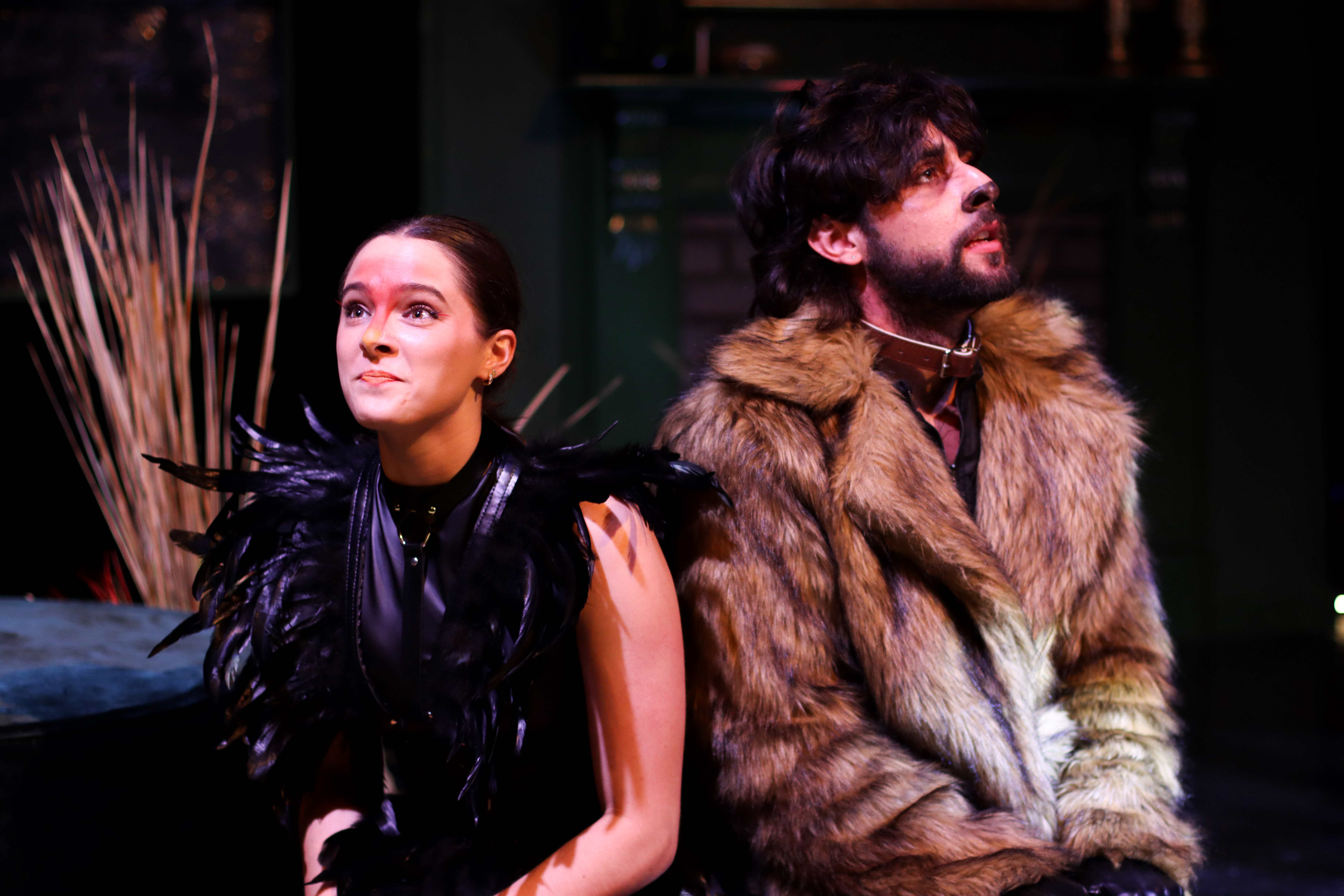
The cast are brilliant. The scenes between the dog and the moor hen are riveting. As the bird, Jasmine Sarkis superbly encapsulates that most disquieting of mixtures: wonder and openness, born of and blighted by inexperience and ignorance. Michael Giglio, as the beast, perfectly balances warmth with neediness. As the ever-changing servant, Brittany Macchetta is splendidly nimble; with terrific use of voice and movement, she slips seamlessly between sullen and deferential. As Emily, the newly arrived governess, Georgina Dula presents a fascinating journey, taking the character from vexed bewilderment to daunting agency. Kalani Guillien is outstanding; as Agatha, mistress of the house, she is unapologetically imperious, yet deeply complex. As the younger sister, Hudley, Emily Smith excels; giddy with childish excitement and misplaced enthusiasms, she is a comic delight.

Paul Gilchrist

The Moors by Jen Silverman

presented by Dancing Dog Productions in conjunction with Waterloo Studios Theatre Sydney

at Waterloo Studio until March 16

dancingdogprod.com

Image by Stephanie Stephens.