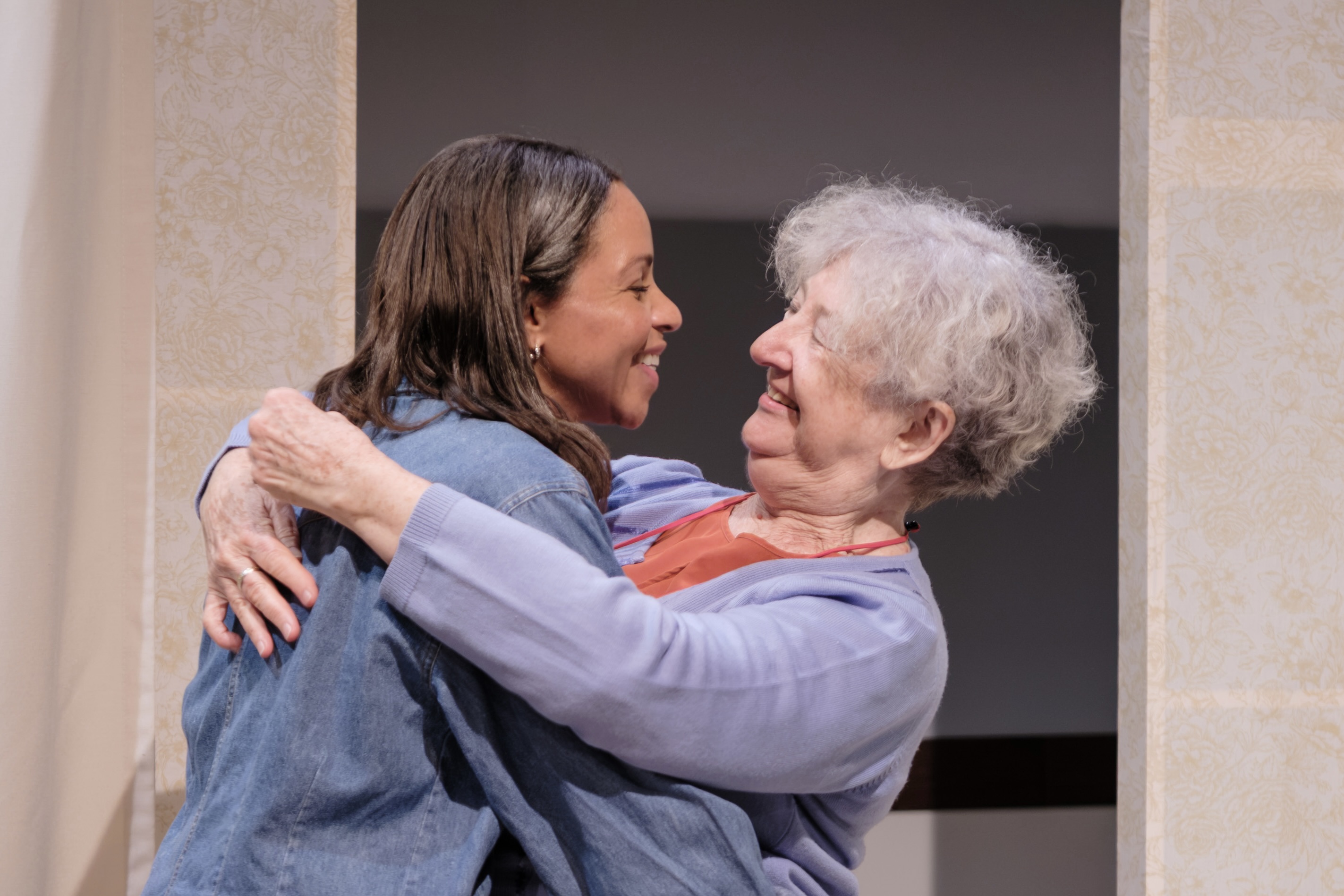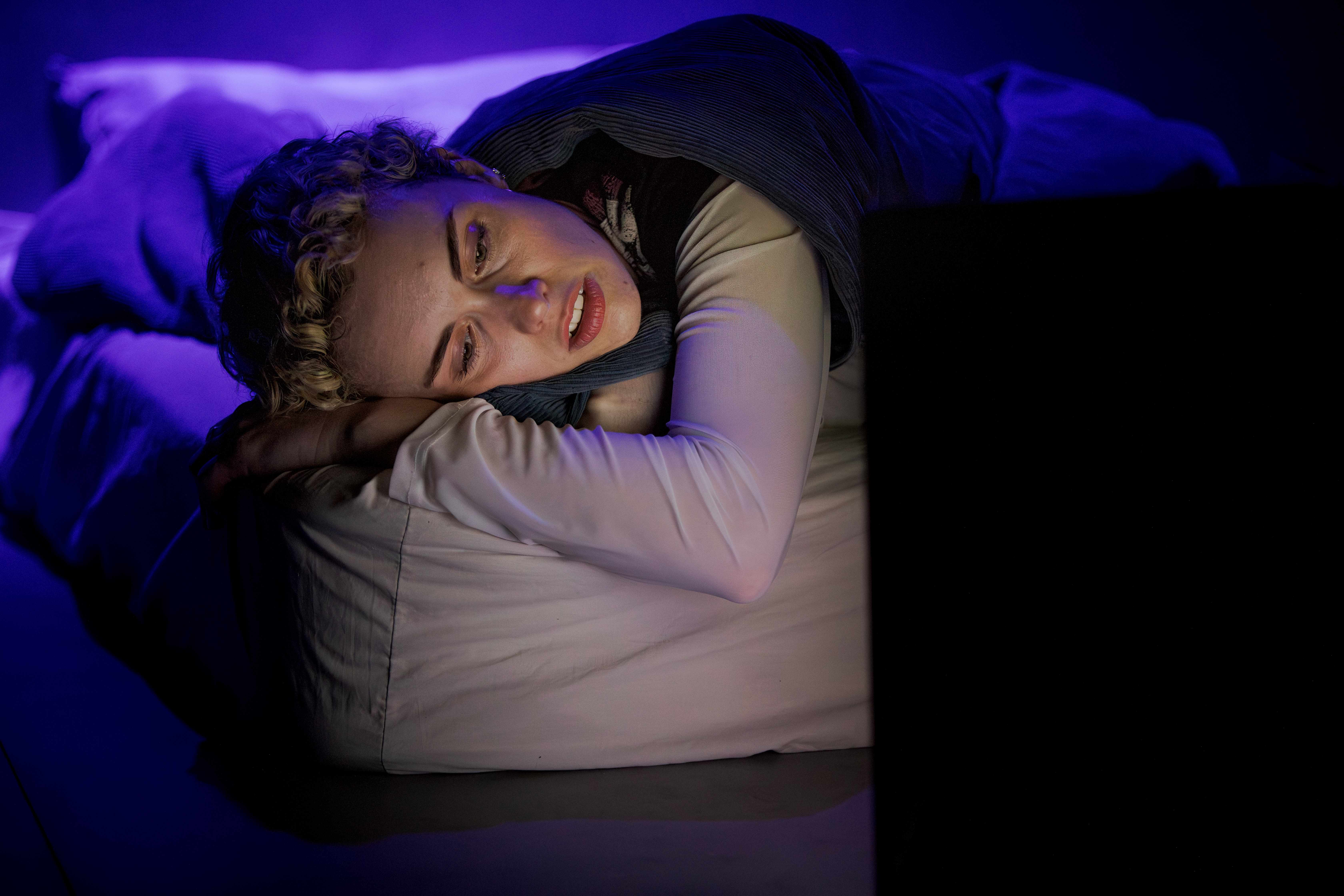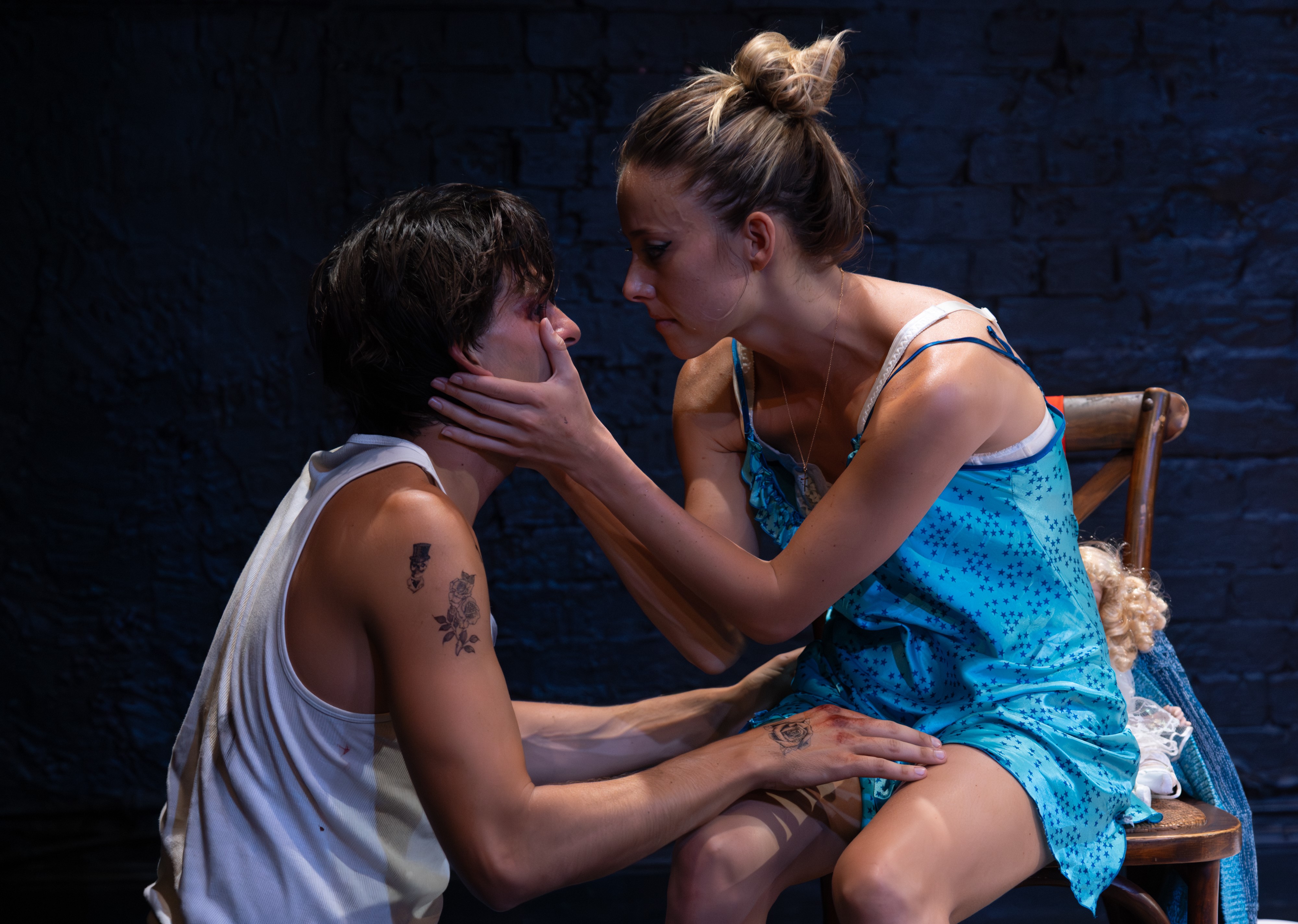
Tag Archives: reviews

Crotchless

5 Nov

This is a fine comedy. 

It’s written by Eloise Aiken, this year’s winner of the Katie Lees Fellowship.

The Fellowship is designed to support young female/female identifying theatre makers, and here it has once again shown itself to be a vital contribution to the Sydney theatre scene.

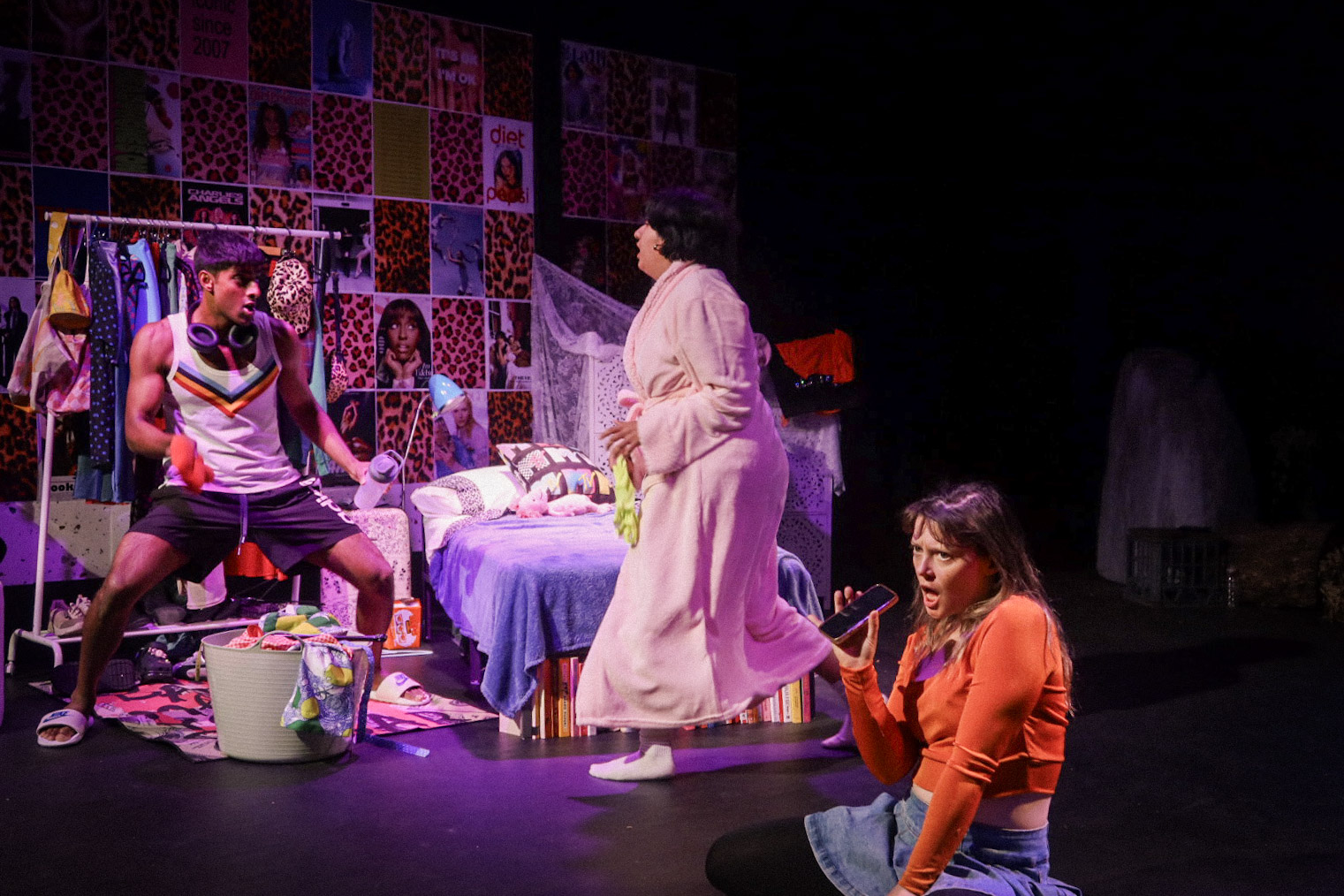
Crotchless is about how contemporary teenagers and their parents navigate the cultural reactions to feminism.

Aiken has a great ear for comic dialogue; the script is funny and truthful and shit. (And, in case it’s not obvious, the last of those three adjectives is meant as an admiring imitation of Aiken’s uncanny ability to portray the language use of the young, rather than some vocab-deficient, mean-spirited evaluation of the play.)

Teenage Shona has dating issues, but it’s her twin brother Owen’s dive into the rabbit hole of misogyny that especially troubles her. Trish, the twins’ single mum, acknowledges Shona’s concerns but is less certain how to prevent her son’s disturbing moral diminishment.

The piece is driven by some fascinating tensions.

One tension is that between the broader culture and personal agency. Owen is admonished for listening to misogynistic podcasts and told to read feminist texts. Of course, what we put into our heads is important, but we’ve come to view ourselves almost as if we were passive computers: just load the correct software and we’ll run appropriately. It’s an understandable but disconcerting assumption – because it seems to erase the possibility of both critical thinking and moral discernment.  (But, we do live in a culture that has rather suddenly become aware of the concept of Culture, and everyone who’s seen Terminator 2 knows the frightening consequences of suddenly becoming self-aware. Skynet isn’t alone in its over-reaction to the unexpected advent of choice.)

Closely related to the tension between instruction and intellectual agency is that between confrontation and love. Should we simply condemn those who disagree with us? Or, as Trish suggests, will that just drive them further away? Is a strict insistence on moral conformity merely counter-productive? Must individuals learn for themselves?  

That Crotchless posits both sides of these tensions suggests its maturity of vision, its beautifully honest awareness of the complexities of Life. If it ultimately comes down a little too heavily on one side of all this, the feel-good-tell-it-how-it-is-for-victory-and-empowerment side, that’s completely understandable. After all, it is a comedy. (And, anyway, is the conclusion of a play actually the sum of its meaning and value? Especially when it’s a comedy. Perhaps the comic happy ending is just one more dramatic convention, as meaningful, say, as the fourth wall.)

Madeleine Withington’s direction is splendid; the pace and bounce is spot on.

Performances are comic excellence. 

Esha Jessy is thoroughly engaging as Shona, the quick-witted teenage girl caught between vigorous assertions of female worth and a risky desire for the rather unworthy male Other.

As Owen, Ashan Kumar brilliantly captures the inarticulate energy of the teenage boy, the hilariously non-threatening high-modality, informed with just the right hint of danger: a cute, clumsy oversized wolf cub trying out his fangs.

Sarah Greenwood is utterly superb. Her performance dances with the lightness of comedy, yet her portrayal of Trish truthfully represents the challenges of maternal love, in all its poignant mix of strength and vulnerability. Greenwood also doubles as Shona’s best friend, Malory, and delivers a playful-almost-parody that is a delight in itself, but also serves to highlight the glorious complexity of her portrait of the more mature of the women.

Paul Gilchrist

Crotchless by Eloise Aiken

At Flight Path Theatre until Nov 8

flightpaththeatre.org

Image by Alex Macleay

A Behanding in Spokane

10 Oct

Twenty-five years ago, Carmichael’s hand was cut off. He’s been searching for it ever since.

This is a black comedy by Martin McDonagh, the writer of The Beauty Queen of Leenane, The Cripple of Inishmaan and The Pillow Man.

First presented in 2010, it’s the first of McDonagh’s plays set in America. 

75 minutes long, the action plays out (almost) in real time. Two grifters have come to Carmichael’s motel room, hoping to sell him a hand – which may or not be his.

It’s tremendous fun, with great laugh-out-loud lines. Directed by Kai Paynter, we’re treated to hilarious high-energy performances. (There were a few tiny hiccups, in vocal work and in staging, but I did see a preview.)

As the grifters, Cynthia Taylu and Alexander W. Hunter have a very amusing bickering repartee and both deliver terrific portrayals of comic fear.

As a motel employee, Christopher Northall is wonderfully quirky, a true loose cannon, brazenly outside usual motivations and empathies.

As Carmichael, James Yeargain brilliantly captures the character’s heartless determination, a frightening brutality which reaps enormous comic rewards when he falls into petty quibbles with the other characters.

But with the avalanche of politically incorrect language and suggestions of extreme violence, what’s it all about?

Crazed determination? Carmichael has been looking for his (unusable) hand for a long, long time.  

Crazed consistency? On the phone, Carmichael’s mother questions whether he can legitimately claim to be racist if he finds women of colour sexually attractive. And the motel employee hangs on to a resentment which the current horrific circumstances should render utterly irrelevant.

Or perhaps, like many black comedies, it’s more about clearing the air.

Black comedies often seem untruthful – some people dismiss them as such – but they function as an invitation to break free from the spell of language and artistic representation. (A critic with even more authority than me has warned of the danger of bewitchment by our own creations, commanding “Thou shalt not make unto thee any graven image….”)

Through their mischievous and vicious exuberance, comedies like this refuse to be confused with the real thing. They remind us that our words, and the worlds they conjure, are not actually reality – certainly not in its totality – and that spirit of cheeky rebellion is gloriously liberating.

Paul Gilchrist

A Behanding in Spokane by Martin McDonagh

Presented by The Americas, A Theatre Co, in association with Beartiger Productions

At Schell Medical Corp (Flow Studios 88) until 12 October

theamericas.beartigerproductions.com

Image by Lola Carlton

Port

27 Sep

This is a fine production of an intriguing play.

Written by Simon Stephens, it’s set in Stockport in the UK over a fifteen year period, beginning in the late 1980’s. I call it intriguing because, in some ways, it’s novelistic in its ambition.

Focusing on the life of Racheal, it’s a bildungsroman (of sorts.) We watch Racheal as she moves from a young girl to a young woman. The journey is difficult. Her parents are absent or abusive or lost. Her younger brother is hyperactive to a degree that promises little peace. She makes poor decisions regarding men.

Is she growing? Or just surviving? I’m not sure.

Racheal’s story (if story is the right word) is constructed from multiple vignettes. Presented in chronological order, each is a slice of fifteen minutes or so of her life. In one, she’s eleven and she’s sheltering in the car with her mother and brother. In the next, she’s perhaps fourteen and in a hospital waiting room, as her father watches over his dying father-in-law. Etc. There are large time jumps between these vignettes and only occasionally do characters remain in the story (if story is the right word.) Of course, much has happened in between these vignettes and we have to piece together the parts.

Sometimes, what happens has little background and not much follow up. There are a lot of unanswered questions. Examples: Racheal faces constant accusations of sexual misconduct, which we assume is garden-variety misogyny, but as so much of her life is excluded from the vignettes, we’re not sure; her father is supposedly weird, but in what way, we’re not sure; in one scene she’s extremely cruel, but how she later makes peace with this behaviour, or indeed, if she ever feels the need to, we’re not sure; she finds a man with whom she clicks, but why they don’t stay together, we’re not sure.

In the midst of all this uncertainty, one certainty is that some audience members will be frustrated. Others will see it as an invigorating invitation to make lively guesses, to wonder at connections, to play armchair psychologist – exactly what we do every day when faced with the inevitable mystery of other people’s lives. (And I don’t mean just the unknown and unknowable lives of the strangers we see on our daily commute; I mean everybody. While our own life is experienced in first person, existentially, everybody else’s life is experienced from the outside, with us relegated to mere audience. This is why drama seems to capture Life, or least large aspects of it, while remaining entirely and obstinately blind to other aspects.) 

In this honest presentation of mystery, its brave refusal to fill in gaps, the script achieves a thrilling level of verisimilitude. It reflects exactly how we know other people: only in patches. (Often, we try to sew those patches together, to make something whole, to make a thing of comfort – but, if we’re honest, we really only have a pile of scraps.)

The time jumps between vignettes demand substantial transitions, and director Nigel Turner-Carroll choreographs these beautifully.

And within each vignette wonderful opportunities are offered to actors, and Turner-Carroll’s first-rate ensemble makes the most of them. (Some people would could call this an actors’ play; that is, one in which the principal enjoyment comes from the appreciation of the craft done well.)

Owen Hasluck plays Billy with enormous energy, creating a character who is eminently lovable and heartrendingly vulnerable.

Megan O’Connell as Racheal’s mother gives us a terrifically believable portrait of toughness bred from circumstance.

Kyle Barrett as Racheal’s father effectively portrays the laconic working class man, intimations of brutality vying with fragility. Later, he doubles as one of Racheal’s lovers, and this characterisation fascinatingly and frighteningly develops elements of the older character.

James Collins, as another of Racheal’s lovers, splendidly portrays a gentler masculinity, and their final scene together is the play’s surprise standout moment of suspense.

But it’s Racheal’s play, and Grace Stamnas gives a performance that’s entirely engaging – astonishing in its range, yet always mysteriously, evocatively, (and appropriately) incomplete.

Paul Gilchrist

Port by Simon Stephens

Presented by December Theatre Company in association with bAKEHOUSE Theatre

At KXT until Oct 4

kingsxtheatre.com

Image by Philip Erbacher

Agony

11 Sep

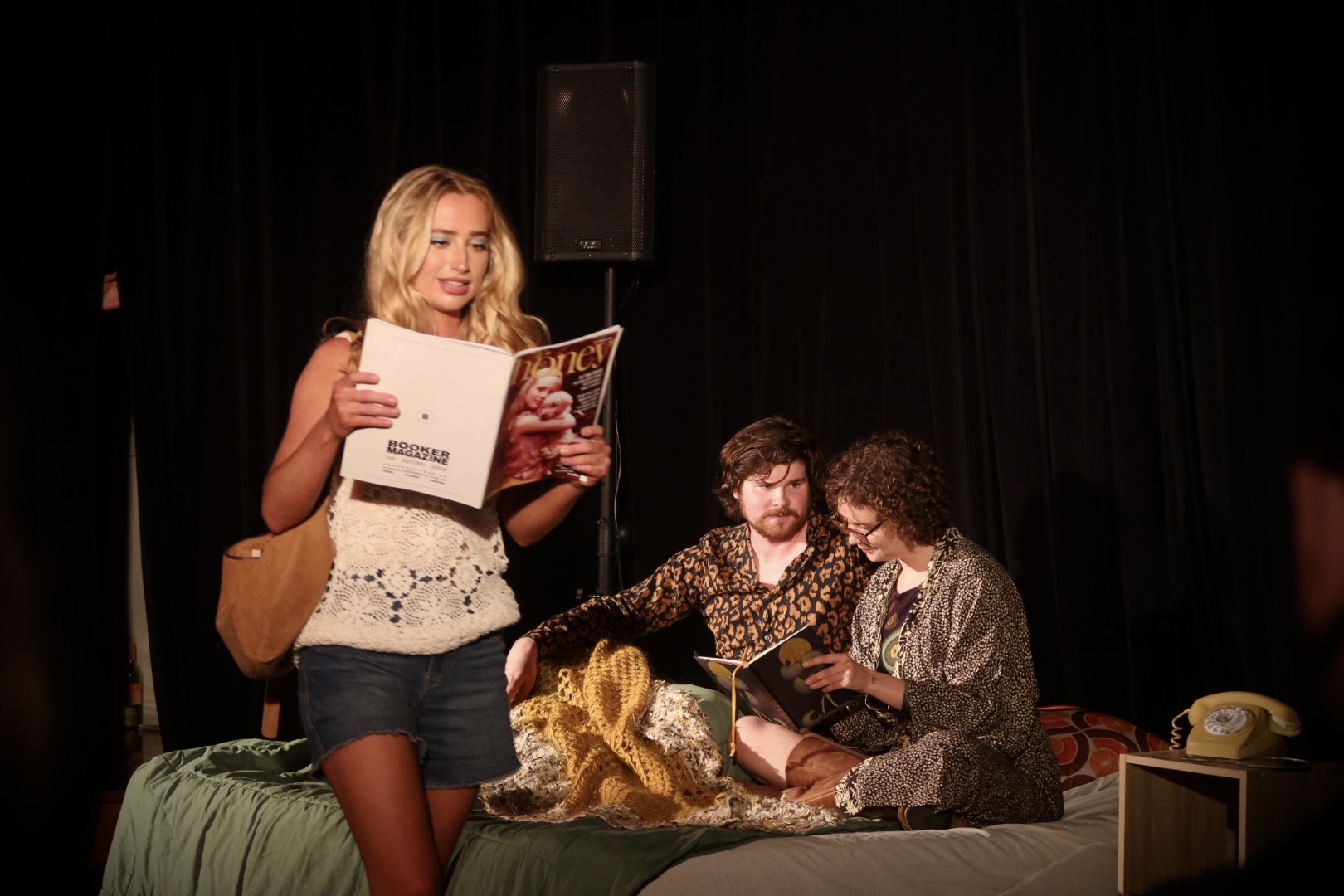
Written and directed by Mariika Mehigan, this is a delightful historical comedy.

It took me a while to clock that it actually was a historical piece – though the costumes, and the presence on stage of a landline, should’ve been a giveaway. (I guess it’s a symptom of my obtuseness – and of something far more important, which I’ll discuss later.)

Agony is set in the 1970’s, at the height of second wave feminism and the sexual revolution. And high school student Bronnie has just had sex for the first time.

It was less than satisfying.

She seeks advice from Tanya, the “agony aunt” for teen magazine Honey. Problem is Tanya’s having problems of her own in the bedroom.

This raises the thorny question: Who of us has sufficient authority to hand down advice? How easily the handing down of advice slips into the laying down of law. Tanya is unlikely to abuse her position, but she’s aware that a young woman genuinely asking for guidance may well receive instead only instruction in the conventional, heteronormative, patriarchal narrative (which is like asking for bread and being given stones.)

The script is funny and cleverly structured, evocatively juxtaposing the stories of two women seeking their authentic selves.

Mehigan’s characterisations are superb, surprisingly and stimulatingly subtle for a 50 minute comedy. And as director she draws from her cast captivating performances (though occasionally there could be a little more attention to vocal projection.)

Laetitia Opie as teenage Bronnie is excellent, having a wonderful stage presence, and displaying top class comic skills as she delivers her advice-seeking monologues. Her repeated refrain, that her boyfriend is a bit of a prick, beautifully recalls the deliberate ambiguity of the world of Puberty Blues, where self-assertion and tragic resignation combine to create both humour and pathos.

Sophie Newby plays both Dean (the above mentioned prick) and Kay, Bronnie’s best friend. Newby’s performance is admirably versatile. Dean is stupidly and suitably self-centred, and Kay (gay though never explicitly labelled as such) is an inspiring model of quiet confidence and independence. 

Louie O’Carroll plays Tanya, the advice columnist, and gives an engaging presentation of that trickiest of positions: the dizzyingly, enervating dance of determination and doubt. She marvellously captures the poignancy of the play’s closing moment. 

Callum Wilson as Tanya’s boyfriend, Sean, offers a terrifically amusing portrait of evolving masculinity. In response to the women’s libbers (who clearly terrify him) he’s too nice to adopt the chauvinistic cliché of the dismissive swagger. Ironically, his supposed sensitivity only further muddies Tanya’s journey to authenticity.

I began by suggesting that I didn’t immediately recognise Agony as a historical piece. That’s a testament to its contemporary relevance. The tension inherent in sexuality is that while it’s deeply personal, it can’t be entirely private. Individual desires can only be fulfilled in the social world (even if we try to reduce that world to the supposed secrecy of the bedroom.) The tensions navigated by the characters in Agony are still faced by young people today. And to be reminded of what happened in the 60s and 70s, when activists strove to bring into the open these tensions, and to have sexual diversity honestly acknowledged, is a glorious gift of hope.

Paul Gilchrist

Agony by Mariika Mehigan

at the Emerging Artist Sharehouse (Erskineville Town Hall)

as part of the Sydney Fringe, until 13 Sept

sydneyfringe.com

Image supplied.

Emerald City

24 Jul

David Williamson is a legend of Australian theatre and Emerald City is one of his best known plays.

First produced in 1987, it tells the story of screenwriter Colin who brings his family to Sydney to further his career.

True to traditional satirical structure, the play is constructed from dichotomies: Sydney versus Melbourne; the Eastern Suburbs versus the Rest of our Sprawling Metropolis; Private Schools versus State Schools; America versus Australia; Entertainment versus Art; Ambition versus Acceptance; Hypocrisy versus Integrity.

Each of these dichotomies evoke the more fundamental binary division of Evil versus Good.

The game we’re asked to play is to consider whether these dichotomies are overly simplistic or just plain false. We’re encouraged to do this by intriguing character arcs and piercingly funny one-liners.

As a screenwriter, Colin gives the advice that something always has to be at stake – but it’s not reasonable to assume a theatre reviewer will relate to a story in which characters seek glamour and success. (Some might even suggest that ambition is not a particularly interesting subject – unless it leads you to kill the king of Scotland and afterwards deliver some hauntingly desperate soliloquys.)

Inoculated by hard experience, two-bit reviewers might be immune to the siren song of Success – but that immunity is hardly universal. Many conversations about Art do sound like demarcation disputes, or performance reviews, or quality control panels, or price negotiations. But only one conversation is vital. And it happens in the desert, when the artist battles with the devil – alone, naked and true – and in that battle forfeits her ego to win her soul. And tired but free, she returns to the city, and scratched in the dirt if necessary, she offers a vision of the kingdom of heaven.

This play attempts no such a vision – but it does effectively make the primrose path to hell appear a little less rosy.  

Mark Kilmurry’s production is a fascinating opportunity to observe the challenges of the actors’ craft. Satirical roles can be surprisingly tricky, especially when the characters themselves are granted an aptitude for mocking comic observation. It’s fun to watch Tom O’Sullivan as Colin and Rachel Gordon as his wife Kate navigate the slippery duality of being both declaimers of foibles and figures of ridicule themselves. Juxtaposed with these two is the more straightforward characterisation of the hustler Mike, who is transparently duplicitous, a gloriously self-seeking philistine – and Matt Minto embraces the role with a wonderful physicality and a mirth-inducing energy.

Paul Gilchrist

Emerald City by David Williamson

At Ensemble Theatre until 23 Aug

ensemble.com.au

Image by Phil Erbacher

Mr Red Light

11 Jul

A group of innocent people are held hostage for an hour and a half, which is coincidentally also the story being told on stage. (Thus would I seriously begin my review, if I were to accept my role in the grand tradition of theatre criticism, a role that posits my superiority to the storytellers. But I won’t – for reasons that will become apparent by the end of my response.)

After a failed attempted to rob a bank, Mr Red Light ends up in the Joker’s Pies store next door.

Despite a gun being waved around for the entirety of the show, the vision is comic and the key word wacky. There’s fun wordplay, set-based visual gags and very committed slapstick humour.

Written by Carl Bland (with Peter Bland and Peta Rutter) the play is absurdist or surrealist in intent, with the incredible scenario serving to invite thought about the human condition.

Dramatists love the trick of offering their characters no possibility of escape (and audiences go along with it because – as I’ve suggested – it often mirrors their own experience of being in a theatre.) But it’s a trick that demands careful consideration of the physicality of the performances; it’s inevitable that close proximity will have to reflect both intimacy and antipathy, and in so far as this genre is a distant cousin of naturalism, there’s enormous pressure to get the pacing right to make this all appear, if not believable, then at least somehow related to reality.

This production is certainly a giggle generator, but it suffers from an imprecision in the physical humour which is matched by a lack of rigour in the linguistic performances. And though the set by Andrew Foster impresses, some of the visual puns seem gratuitous. 

The plot plays out in real time, but texture is created by breaks into flashbacks, imagined scenarios and surprising perspectives.

This suggests the aspect of the human condition being explored is our ability to tell stories. Stories are shelter one character says. But not when they’re merely ever-repeated internal monologues: that sort of unexamined private narrative only prevents us experiencing Life’s fullness. Two of the characters have succumbed to the habit of telling themselves the story that they’re perpetually unlucky. (Always hitting red lights.) Another tells herself a constant narrative of guilt. We are storytelling creatures, but it’s only when we share those stories that their magic becomes apparent. It’s only when we sit around the fire and share with others the journey we’ve survived that stories perform their miracle: the transformation of disparate individuals into a close-knit community.

The unlikely conclusion of this piece is a hyperbolic assertion of this magical ability of stories. And though I feel this production struggles to cast that spell, it’s indubitably a joyful celebration of why theatre matters.

Paul Gilchrist

Mr Red Light by Carl Bland (with Peter Bland and Peta Rutter)

Presented by Nightsong

At Riverside Theatres until 12 July

riversideparramatta.com.au

Image supplied

Primary Trust

26 Jun

To misquote Gandhi, We’re all children of God, it’s just that some of us are more childlike than others.

Kenneth is such a person.

Gentle, hesitant, uncertain, he lives a plain life and keeps to himself. He works at a second-hand bookstore. Every night he goes to Wally’s and drinks Mai Tais with his only friend, Bert. It’s difficult for Kenneth to imagine Life without Bert – and that’s curious, because Life doesn’t give many of us a Bert after the age of four. (Bert is the only character in Eboni Booth’s Pulitzer Prize winning play who transcends – in his own wondrous way – the inescapable doubts and wistful regrets of this sublunary world.)

When Kenneth’s bookshop is sold, he’s worried how he’ll find employment. (He got his first job only thanks to a social worker.) At the advice of Corrina from Wally’s, he applies for a position at a bank with the evocative name Primary Trust. According to Kenneth, the manager employs him because he reminds him of his brain-damaged brother.

As his friendship with Corrina develops, his special relationship with Bert changes, in a way that’s confronting (for Kenneth) but beautiful and hopeful.

The supreme importance of relationships like friendship is emphasised by an exquisitely simple speech by Corrina about her best friend, Denise. Corrina loves Denise. We don’t know why: in fact, we know virtually nothing about the briefly mentioned and never seen Denise – except that she doesn’t look after her cat as well as she might. But sometimes, when Corrina thinks about Denise, she cries. Perhaps this sounds sentimental? I think Corrina is just being honest, and being honest with Kenneth is life-changing. It’s this sort of openness that helps him find the connections he so desperately needs.

Primary Trust is an absolutely delightful comedy, informed by a sense of small town dagginess reminiscent of Thornton Wilder’s Our Town. (The set, by James Browne, with a back wall of many coloured doors emphasises this sense of the parochial presented playfully.) But unlike Wilder’s play, this story is one character’s (Kenneth’s), and the view from eternity that warmly infuses the conclusion of Our Town is absent, replaced by the vision, courageous and true, that the only heaven there is we must find here, amongst the struggling souls who surround us.

Except for one alluded-to-but-not-expanded-upon instance of racial injustice, the world around Kenneth is not malignant, only forgetful. (Or a little too complaisant: The sky is blue, what can you do?) But a little reaching out goes a long way.

Yes, it’s an exploration of trauma, highlighting the humanity of those who suffer – but what the play primarily offers is not a portrait of pain but rather models of kindness (the consistent, persistent type that engenders trust.)

Directed by Darren Yap, performances are gorgeously engaging. As Kenneth, Albert Mwangi is superb, both immensely likeable and poignantly pathetic. With a compassionate charisma, Charles Allen plays Bert, wonderfully portraying the perpetual patience and positivity of the best friend of our dreams. Angela Mahlatjie’s Corrina is magnificent: honest and humble yet hopeful; softly unassuming and utterly soul-expanding. And she and Peter Kowitz do some hilarious doubling, with Kowitz’s bank manager true comic gold. Booth’s script –which captures the wavering richness of real speech – calls for virtuoso vocal work, and the cast delivers (aided, no doubt, by the remarkable skills of dialect coach Linda Nicholls-Gidley.)

This Ensemble production is a glorious invitation to laugh, and an irresistible reminder of our shared humanity.

Paul Gilchrist

Primary Trust by Eboni Booth

at Ensemble until 12 July

ensemble.com.au

Image by Prudence Upton

Heaven

19 May

This is a beautiful play, beautifully presented.

Written by Irish writer Eugene O’Brien, it tells the story of a middle-aged couple at a crisis point, and it does so with humour and insight.

Kate Gaul’s direction is wonderfully simple, unaffected in a way that allows the brilliance of the writing and performance to shine.

The piece is constructed from two intertwining monologues. Husband and wife Mal and Mairead attend a family wedding. The couple seem to get on well, but they’re never shown speaking to each other because each is in the process of exploring something that will challenge their relationship. Fitting the setting, that challenge is sexual.

Mairead has met an old flame, the man with whom, in her twenties, she had the best sex of her life. Mal is confronting his repressed homosexual desires.

The title? Heaven? Do they both seek a joy that will utterly transcend their merely comfortable relationship? Have both become aware that Eternity fast approaches, with its mysterious, unsatisfying promise of either oblivion or pleasures of a less certain nature?  

In contrast to the metaphysical connotations of the title, both characters use very physical metaphors to express their needs and doubts, underlining that they’re far from finished with this plane of existence. She asks is this where my 50 years has lead? He wonders whether he has the courage to enter the world below, the lower dimension.

Because of my peculiar (and un-Australian) penchant for digging into metaphor, I should make clear that the play is not in any way religious (except what it has in common with all serious philosophies: an awareness of the tension between our inner lives and our outward relationships.)

This is, however, modern Ireland, and the hand of Catholicism is still heavy. Mairead tells of going to England for an abortion. Mal’s sexual fantasies are couched in the language of his desire for Jesus, effectively suggesting the complexity of his emotional situation, its guilt and its passion.

As the couple, Lucy Miller and Noel Hodda are absolutely superb.

Miller’s Mairead is gloriously tough. She doesn’t edit her speech. She’s a proud playground bully. She’s utterly disdainful of her daughter’s choice of partner. Reflecting on the death of her abusive father, she hisses that cancer sometimes takes the right ones. She’s deeply sensual and unafraid to fulfill her needs. Yet, she never speaks a word against Mal. It’s a magnificently rounded portrait, strength sparring with uncertainty, delivered with captivating power.

Hodda’s Mal is gentler, softer – desirous of the direction Mairead gives his life. Hodda plays the humour of the-dag-who-dares with consummate skill, but also marvellously portrays the internal battle between desire and doubt.

It’s a temptation with a production like this to be so taken by the skill of the makers that you forget the meaning, that (to mangle Yeats) you fall in love with the dancers, and forget the dance. But this production – an exploration of the tension between our inner and outer worlds, epitomised in its presentation of a marriage under threat – achieves the perfect marriage between artistry and Art.   

Paul Gilchrist

Heaven by Eugene O’Brien

Presented by Bitchen Wolf

At the Loading Dock Qtopia, until May 31

qtopiasydney.com.au

Image by Alex Vaughan

Various Characters

9 May

I’m not a fan of Australian theatre’s obsession with teenagers. For me, it suggests a tiresome childishness in our intellectual outlook, a mawkish nostalgia that resists adulthood, a fear of responsibility being allowed to trump the embracing of opportunity.

But I also know that childhood leaves no survivors*, and if you want to explore vulnerability (whatever its cause), the teenage years are a very good place to start.

And that’s what Šime Knežević does in his beautifully written Various Characters, directed with skilful subtlety by Victor Kalka.

Set in Western Sydney in the early 2000’s, most of the characters are teenagers.

Nina (Georgia Da Silva) has lost her mother and is living unhappily with her aunt. She desperately wants to visit her sister in Melbourne, but she doesn’t have the cash. The solution? Sell the dog. But she can’t sell it to just anyone; it has to go to a good home. Both touching and funny, this initial scene operates as a perfect symbolic introduction to the wider problems the characters face: insecurities that threaten to degenerate into desperation.

Knežević captures the teenage voice brilliantly (though some of the actors go a little overboard in their embodiment of youthful apprehension and would benefit from greater vocal projection.)

Da Silva, Maliyan Blair, Nashy MZ and Tate Wilkinson-Alexander as the teenagers capture the age’s enthusiasms and doubts, and give performances that are both amusing and affecting.

The two adult characters seem only a small step away from children, a powerful suggestion that the challenges the teenagers experience are ubiquitous. After all, this is ethnically diverse Western Sydney under a conservative government (and, some would say, a perpetually conservative mono-culture.)

Dog-purchaser and police officer Raoul expresses the confusion of a man who has somewhat unwillingly conformed to the hegemony. Tony Goh’s portrait is simultaneously comic and pathos-inducing.

Greta has lost her job, but there’s a market at Bigge Park and she hopes to kickstart a business venture with a stall selling Croatian food. She was born in Australia, but is proud of her heritage and dreams of a community open-hearted enough to embrace and celebrate diversity. Kate Bookallil as Greta gives a splendid performance, evoking magnificently the character’s fierce determination and quiet despair.

Paul Gilchrist

Various Characters by Šime Knežević

Presented by Plus Minus Productions, in association with Virginia Plain and Flight Path Theatre

At Flight Path until 17 May

flightpaththeatre.org

Image by Robert Miniter

*I haven’t been able to find the source of this quote.

Mummy, I’m Scared

11 Apr

This is a work of craziness and true comic commitment.

Set in the late nineteenth century, it tells the story of a family of women intent on summoning a spirit via a séance.

I call it a story – and for the show’s 50 minute duration, the plot works very effectively – but it’s really just a fast moving vehicle for some humorous hijinks.

It’s a three hander, written by Fia Morrison, and performed by Morrison, and her co-collaborators Alison Cooper and Georgia Condon.

There’s a lot of doubling, and this adds to the show’s enormous verve.

All three performers display great physicality, and Morrison herself excels in the type of magical facial expression that’s gloriously hyperbolic and glowing with mischievous energy. (Rather than the Theatre of Authenticity, this is the Theatre of Audacity, inviting an audience response of I can’t believe you’re actually doing that!)

All three performers have thrilling, distinctive vocal styles, and use these to mine and shine the comic nuance of Morrison’s lively script. Cooper is particularly adept at the throwaway gag. (Admittedly, at times, I lost lines from all three actors, but in a show like this, that’s always a risk courted for the sake of sheer exuberance.)

The historical setting makes sense of the focus on seances and the supernatural. The world weariness of fin de siècle society, with its rejection of traditional religion and its growing awareness of the inadequacy of any substitutes, encouraged the most audacious of spiritual experiments.

But the setting also facilitates key aspects of the show’s humour and impact.

Somewhere in the last hundred years or so, the acting fraternity has developed a way of portraying (faux) late Victorian and Edwardian historical characters, one epitomised by a thoroughly declarative vocal style. (It’s one of the styles employed in this production.) Where does it come from? Perhaps it’s our shared response to amateur theatre’s penchant for quaint old drawing-room dramas. Or perhaps, more broadly, it’s modernism’s response to the era that preceded it. Virginia Woolf famously quipped “on or about December 1910, human character changed”. But from wherever the trope derives, the declarative style we routinely give to historical characters is a delightful and deliberate denial of their inner life. And in this consciously comic erasure of psychological complexity, the performers themselves gift us a playfully subversive reminder of genuine human vitality.

Paul Gilchrist

Mummy, I’m Scared by Fia Morrison

Morrison was mentored by Mish Grigor, and the piece is presented as part of ArtsLab: Reverb, a program from Shopfront Arts that showcases the talents of emerging artists.

Until 12 April at Shopfront

shopfront.org.au (for tix and full program)