Tag Archives: reviews

Song of First Desire

21 Feb

Drama is in love with the productions of time, to misquote William Blake. Drama is an artform concerned with duration. Unlike, say, lyric poetry or sculpture, drama represents what happens next.

This was done and so This followed, and then This … and so on. As Arthur Miller has suggested, drama is the artform that portrays the chickens coming home to roost.

As a consequence, dramatists have long been attracted to historical stories. (Shakespeare wrote plenty, over a third of his output. But more on him later.)

Song of First Desire is set in Spain, and through intertwined stories, explores the ways in which the Civil War of the 1930’s continues to cast a dark shadow over that nation. If war is hell, then civil war is its innermost ring (to borrow from both Sherman and Dante.)

One strand of the story tells of a Columbian immigrant who comes to contemporary Spain and finds himself working in a house with some rather scarred occupants. The other strand of the story is set in the same house, but in 1968, nearly thirty years after the Civil War, but while the nation was still controlled by Franco’s victorious fascists (a dictatorship which lasted until at least 1975.)

The characters in the two story lines are personally connected, but I have to admit it took me a long time to figure out exactly the nature of those connections. Now, I know that there are members of the audience who like to have something to think about while the characters onstage are just talking – but for me, having to pay attention to the present action while simultaneously attempting to draw the connections with the past was a multi-tasking challenge: not so much chewing gum while walking as putting together a 3D jigsaw puzzle while riding a unicycle. Homer is rightly blamed for inventing the flashback, and it’s probably worth noting that Shakespeare maintains a healthy abstinence from the technique. (What happens next? always being a more interesting question than Why did that happen?)

But having said all that, this production is one hour fifty minutes long without an intermission – yet the time flew, and offered the glorious, heartrending vistas born of such flight.

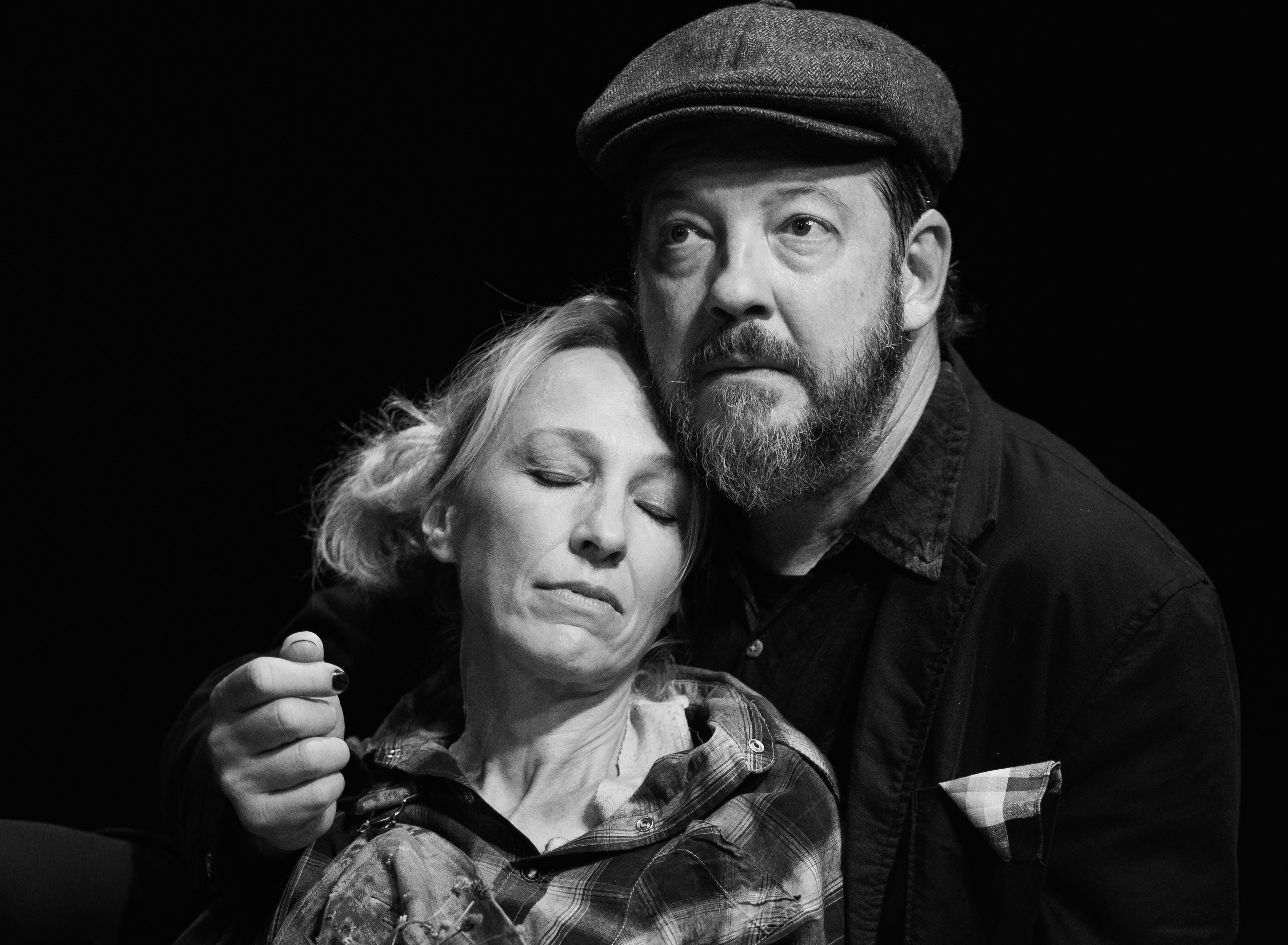
Writer Andrew Bovell and director Neil Armfield are Australian theatre legends, and masters of the craft, and this piece is utterly enthralling. The four-strong cast (Kerry Fox, Borja Maestre, Jorge Muriel and Sarah Peirse) are brilliant, embracing the challenges of doubling and creating remarkably vivid characters in each of the two storylines.

If Bovell is more interested in disrupting a story’s chronology than, say, Shakespeare, it’s possibly because as a modern he’s working our contemporary interest in historical sociology. We knowing our present is a product of our past, but is it also its prisoner?

In Song of First Desire several characters suggest there are some doors to the past that should be left shut, but they say it in such pained desperation we wonder if it’s a word of the wise or a cry of the wounded.

Now, I know there are members of the audience who like to have something to think about after the characters stop talking – and Bovell’s powerful play is a provocative invitation to consider our own nation’s dialogue with its past. As a society, do we consciously forget in order to move forward? Or do we consciously remember in order to heal? And is either of these options actually psychologically possible?

Though no Spaniard, French philosopher and later mystic Simone Weil volunteered for the Republicans in their battle against the fascists in the Civil War. And though not concerned exclusively with the history that each of us carries, she wrote a line that resonates with Bovell’s vital interrogation, and which here I’ll paraphrase: What’s taken from us does us harm; what we relinquish does us good.

Paul Gilchrist

Song of First Desire by Andrew Bovell

At Belvoir until 23 March

belvoir.com.au

Image by Brett Boardman

Cruise

19 Feb

In the war between the generations, the final result is inevitable. All that’s in doubt is what the victors will learn from the vanquished, before they too ultimately join the ranks of the defeated.

Jack Holden’s Cruise was first performed in 2021 in London. A young gay man works at a phone help line. An older man calls, and is disgruntled to be answered by such an inexperienced responder. Already annoyed at one of the older gay men working at the centre, the young man is taken aback. The tension between the generations is established.

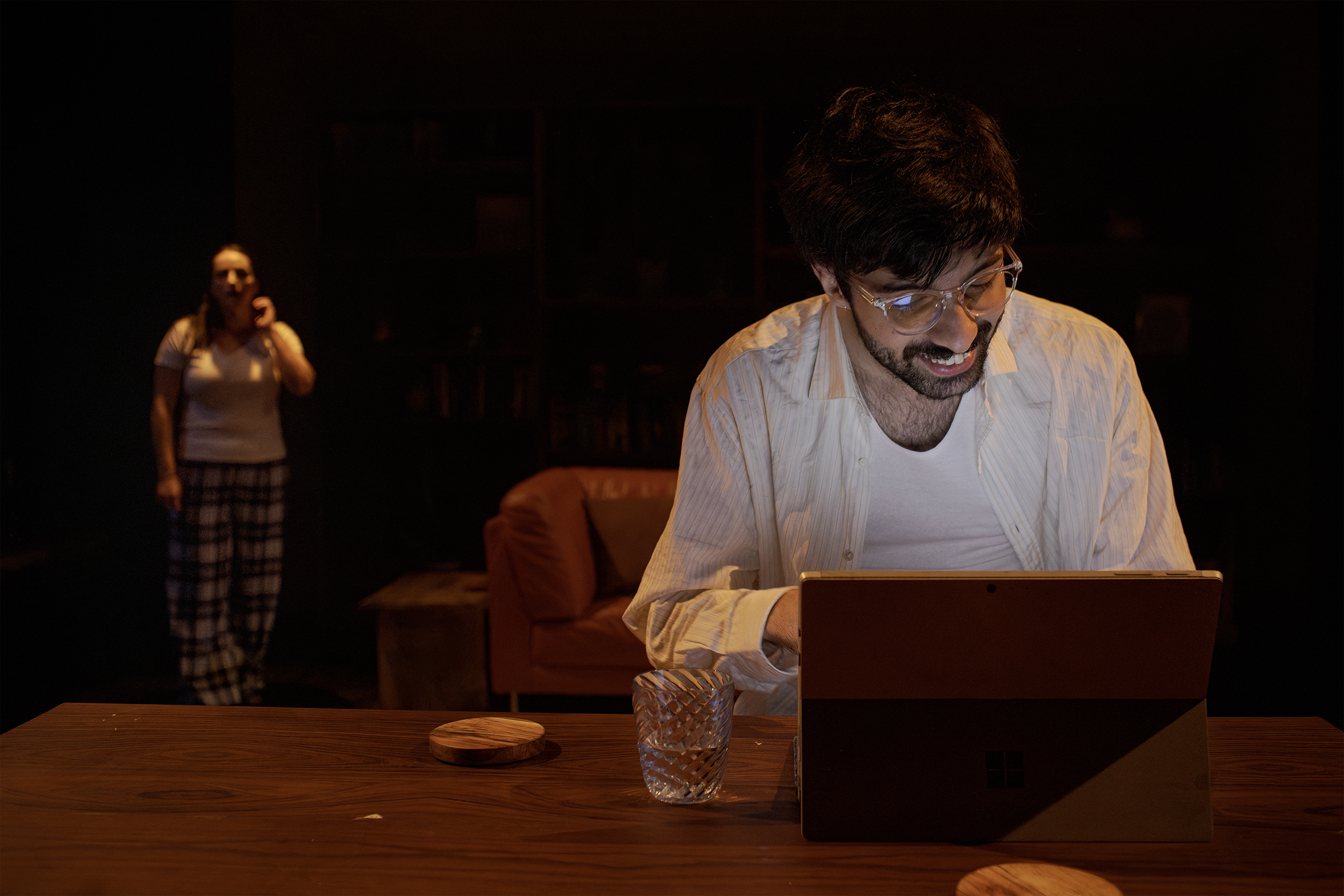
This is a 90 minute monologue, with Fraser Morrison playing an astounding number of characters. Morrison’s control of voice and movement is superb. It’s an absolutely extraordinary performance. (And credit must also go to his terrific support team: director Sean Landis, accent coach Linda Nicholls-Gidley and movement director Jeremy Lloyd.)

The basic set up of the piece is that the older man tells the younger man his personal history, of his time in Soho in the 1980’s. It’s parties and promiscuity, dancing and drugs, and true love… and true love’s awful nemesis. There’s oodles of charm, plenty of humour, and at the dawning of that cruelly indiscriminate plague, distress, dread, and soul-deep sorrow.

As an outsider to this world – I spent the 80’s not in dance clubs but in libraries – a piece like this is a beautiful gift. To witness a community in the process of building itself, to observe it openly constructing its history, is a wonderful privilege. (Self-indulgent digression: While in those libraries, I was learning about love in a way very different to that of the characters in Cruise, reading the history of mysticism, first in Christianity, then in Judaism, then Islam and then from further east. So, History and Love – where the lesson is that Eternity is in love with the productions of Time, to quote William Blake.)

And that’s the glorious wisdom of this piece: by knowing our history, by knowing the sorrows and solaces of those who came before, we gain the strength to step into the future. And what’s more, knowing our place in Time is the best preparation for the joys which seem to transcend it.

Paul Gilchrist

Cruise by Jack Holden

presented by Fruit Box Theatre in association with bAKEHOUSE Theatre Company

at KXT until 22 Feb

kingsxtheatre.com

Image by Abraham de Souza

Antony & Cleopatra

13 Feb

This is an odd one.

It’s probably the most abridged version of this play you’ll see outside a school incursion.

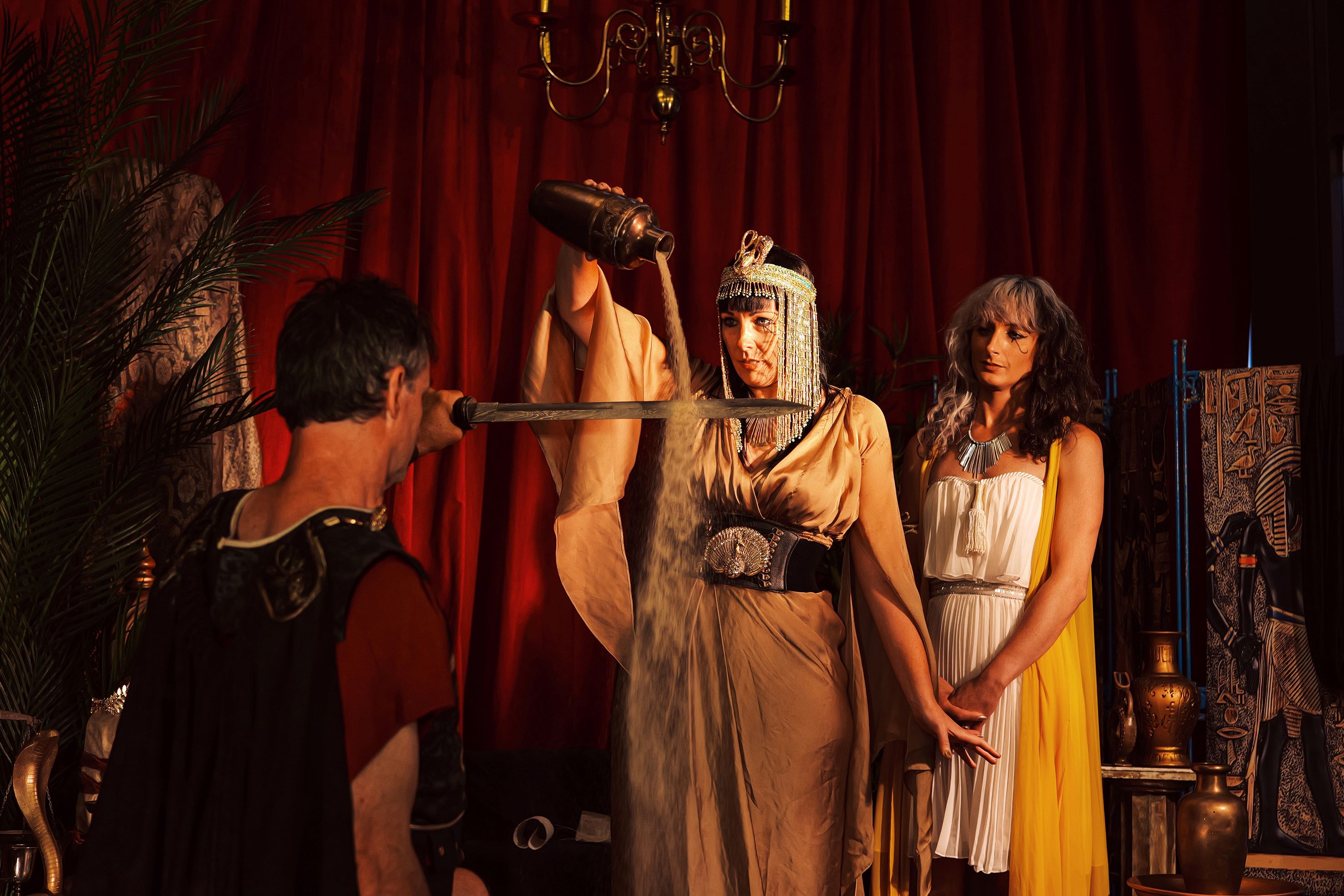
It’s all performed by three actors: Charles Mayer as Antony, Jo Bloom as Cleopatra, and Charley Allanah as everybody else (or at least everybody else who isn’t cut.) Performances are bold and spirited. For reasons that will become more apparent later in my response, design focuses on costume, and these by Letitia Hodgkinson are beautifully lavish.

There’s also a narrator or guide, a role taken by Nathan Meola. He almost gets as much stage time as Shakespeare, though far fewer words. He appears to be adlibbing. He speaks very slowly and quietly, as though he’s speaking to the guests at a spiritual retreat. We’re thanked for the journey each of us has made to get to the theatre, and it’s acknowledged that the journey may have been difficult. (There’s even talk of snow.) We’re asked several times if we feel safe, and at each repetition I feel a little less so. His speaking style is a curious mix of condescension and coercion, made all the more disconcerting by the very convincing illusion that it’s not a created dramatic character being performed. He asserts that we humans are not immune to stories and, for a moment, I question my own humanity – until I recall that he’s ignoring a rather vital point: the power of a story depends on how well it’s told. This narrator recaps what we’ve seen and tells us what we’re about to see – which may seem superfluous, even to those unfamiliar with the play. He also assumes we’re deeply affected by the performance. (In our current theatre scene, in which there’s far too much of telling audiences what to think, it’s refreshing to be told what to feel.)

The marketing describes the production as immersive – which can mean a lot of different things, but here means you may not get a seat. We’re needlessly shuffled back and forth between the foyer (where there aren’t enough seats) and the theatre (where there are plenty.) These changes of location, and the narrator, have a slowing effect, but the whole thing is only 90 mins, including interval.

Shakespeare’s play is reduced to the story of two people going through a dark night of the soul to find eternal love, or divine love, or some such thing. (At least that’s what the narrator tells us is happening.) The political tensions and the grand clash of civilizations are given little space. This reduction enhances the sense the play is being used as a vehicle for a certain New Age philosophy.

So is it “Shakespeare”?

That’s an absurdly conservative question, based on some disturbing essentialist assumptions. But I’ll answer it anyway.

On one level – a particularly academic one – the answer is No. Shakespeare and his contemporaries dragged theatre away from being what was almost a religious ritual, with narratives dominated by religious perspectives. They moved the artform away from the traditional Mystery play. These Elizabethans still acknowledged that spiritual experiences existed (in a way that, say, Jane Austen seemingly does not) – but they viewed those experiences as part of the wider human experience, not necessarily as its key. To be essentialist, they were humanists.

But, soaked in Renaissance humanism, Shakespeare was not an essentialist. He looked at the world with humility and wonder, and I suspect he wouldn’t dismiss a production like this, but would ever so gently chastise those who might. After all, as his most famous creation says, “There are more things in heaven and earth than dreamt of in your philosophy… “

Paul Gilchrist

Antony & Cleopatra by William Shakespeare

Presented by Come You Spirits

At The Lounge, The Concourse until 22 Feb

theconcourse.com.au

Image by Syl Marie Photography

Wife

21 Oct

Written by Samuel Adamson and directed by Darrin Redgate, Wife is boldly structured.

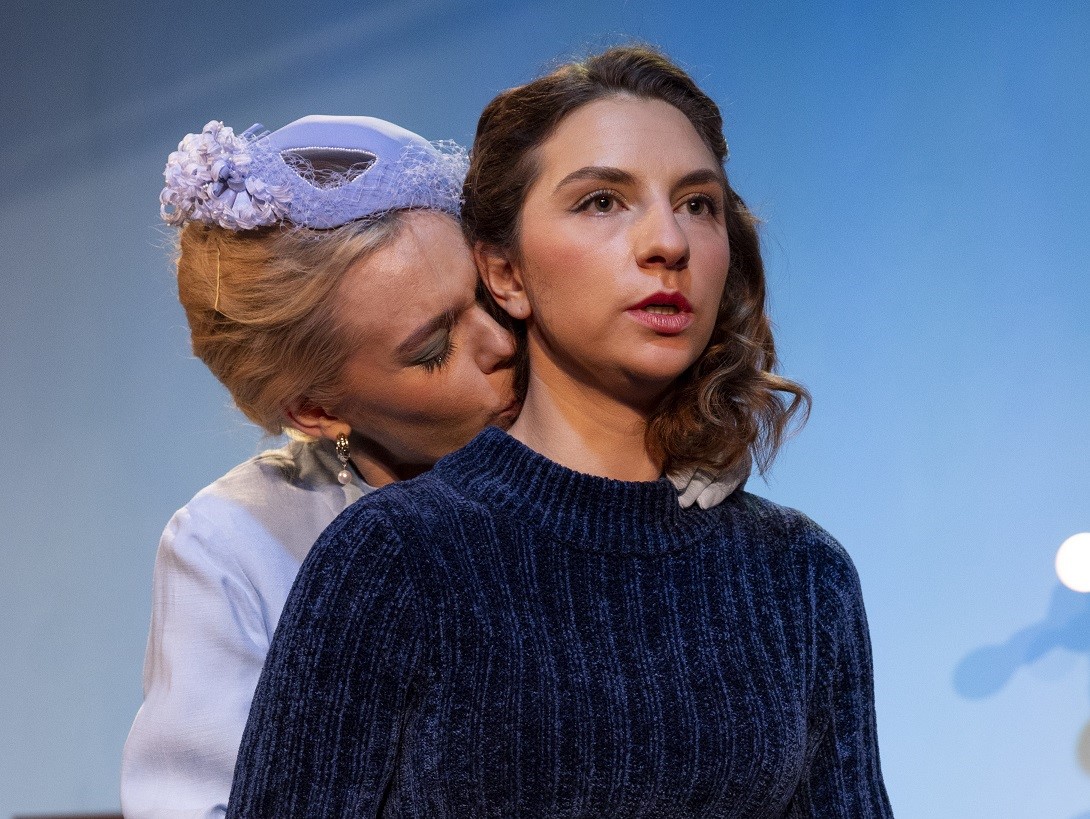
It spans almost an hundred years, but is created from half a dozen twenty minute or so real-time scenes. We start in the late 1950’s, in the dressing room of an English actress (Julia Vosnakis) who’s just played Nora from Ibsen’s A Doll’s House. She’s visited by an intimate friend (Imogen Trevillion) and her boorish husband (Will Manton). We then skip twenty five years to a bar in London, where one of two gay lovers (Henry Lopez Lopez & Manton) is the son of one of the women in the first scene. And then we skip….. you get the idea.

There’s always at least two links between the scenes: someone is related to someone from an earlier scene, and there’s just been a performance of A Doll’s House.

The charm and intrigue of the piece comes from picking out these connections. (Occasionally, some of the cast’s accent work make this more intriguing than necessary.) The script asks a lot from its actors: establish a character quickly but deeply, then let it go and build another. Redgate’s cast are to be congratulated on their commitment to this challenge. A highlight is Imogen Trevillion, informing each of her characters with a truthfulness that both embraces and belies the brevity and bounce of each performative opportunity.  

But back to those links between the scenes. The family connections might hold the piece together, but the ongoing connection to Ibsen’s play is its beating heart.

Nora famously walks out of her marriage because she feels she can’t be an authentic person within an institution constructed from middle-class, patriarchal norms.

Each of the scenes in Wife either explicitly interrogates Nora’s decision or, by presenting tensions that result from power imbalances in intimate relationships, implicitly returns to the issues Ibsen’s heroine encapsulates.

Does this mean Wife asserts the importance or relevance of theatre? Could a piece of theatre effectively do this? You can’t prove a made-up story is relevant by telling another made-up story, not even a cluster of them. You could suggest it, but you could also just produce the original play and allow the audience themselves to determine the relevance.

And, anyway, the relevance of one play proves, or even suggests, very little about all the rest of theatre. It’s probably best to see Wife (as the title implies) as part of the ongoing discussion of the politics of personal relationships (of which Ibsen was a stimulating participant.)

Excitingly, this play applies a queer lens to the perennial discussion. A director (Peter Walters) of one the multiple productions of Ibsen’s play expresses the opinion that marriage and queerness might not be such a good …. marriage. (The Yes outcome of the plebiscite should be celebrated, but that doesn’t mean everyone now has to get hitched. Nora rejected patriarchal and middle-class values because they prohibit authenticity; might not hetero-normative values deserve similar short shrift?)

In every intimate relationship, multiple forces collide. The brute impersonal drive of sex collides with the rich inner emotional lives of the lovers. And these collide with the social expectations of both individuals, knowing as they do that the world always awaits, just on the other side of the bedroom door, eyes ever to the keyhole. And the collision of these cosmically-disparate forces is star-birthingly spectacular. It’s no wonder that mystics of all traditions, in their attempt to express their meeting with the Divine, have fallen back on the language of sexual love.

To the never-to-be-completed conversation about this happiest of collisions, Wife is a fascinating addition.

Paul Gilchrist

Wife by Samuel Adamson

At New Theatre until 2 November

newtheatre.org.au

Image by Bob Seary