Archive | June, 2026

Garry Starr: Classic Penguins

18 Jun

Never before has something that made me want to throw up been created with such genius.

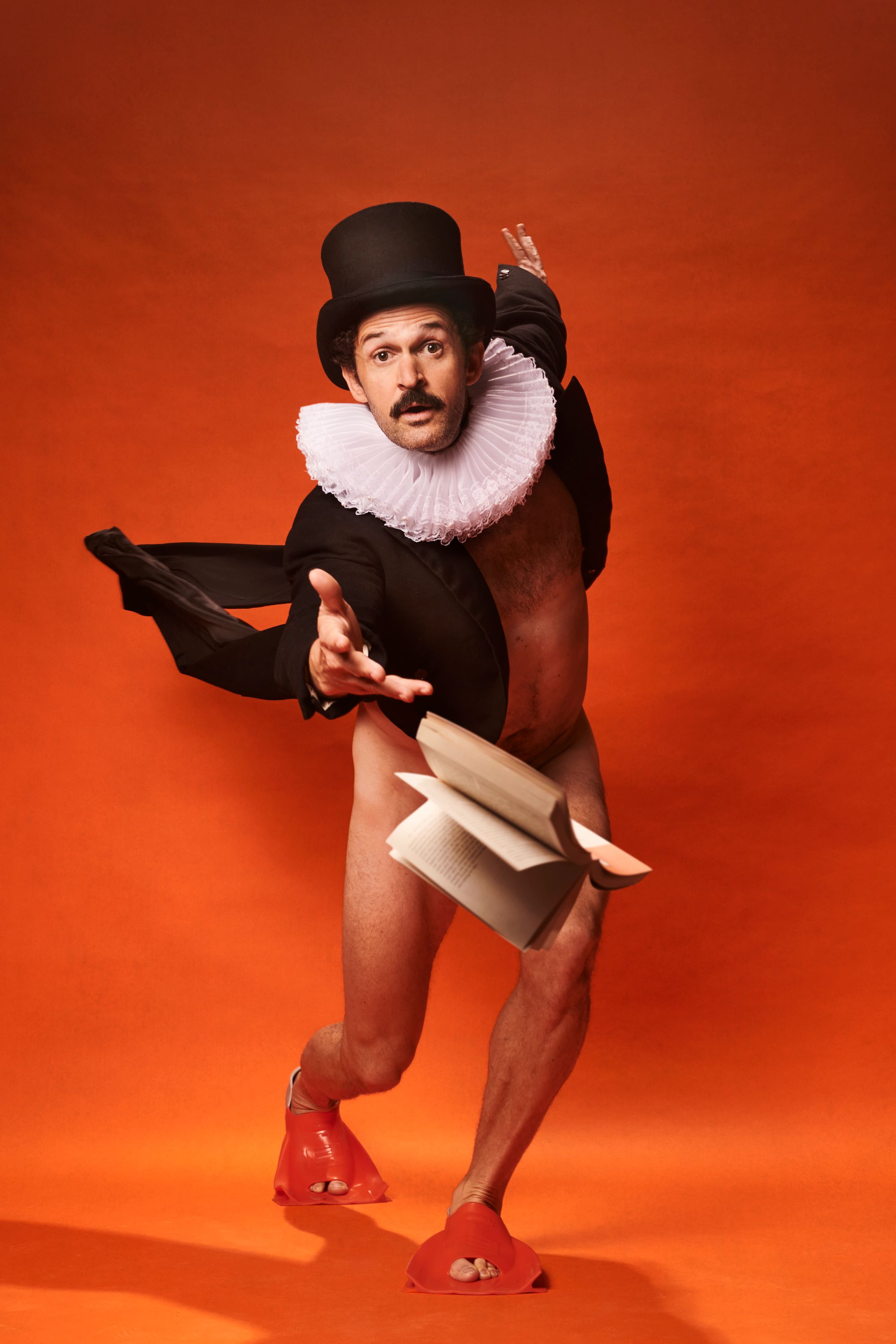
Garry Starr (Damien Warren-Smith) is an absolutely superb clown, excelling in the ability to generate laughter through both voice and movement.

The conceit of Classic Penguins is, that in just on 70 minutes, Starr will lead us through every single work of literature published as a Penguin Classic.

In this, he fails. (Intentionally.)

He does not fail in the presentation of a piece of glorious, glee-inspiring comedy.

Very little (if any) knowledge of the classics is needed to enjoy Classic Penguins. The book titles are just clever hooks for Starr to hang some miraculous, madcap mayhem.

I should come back to my opening sentence. High-modal hyperbole it may appear, but I’m being honest about my personal experience of the vomit-inducing nature of the show.

Let me delineate the reasons for my response: Nudity; A lot of nudity; Nudity with a mischievous focus on the less noble aspects of the human physiology; Audience participation (voluntary); Physical stunts performed no doubt safely but with a disconcerting verisimilitude of danger; The flagrant breaking of the 3 second rule regarding food that has fallen to the ground; & The sharing of food mouth-to-mouth.

Two important caveats to the preceding list: It would make more interesting reading if annotated by my psychotherapist; & My response is clearly idiosyncratic – underlined by the fact that the majority of the audience instantaneously leapt to their feet for a standing ovation. (At the end of the show.)

There is something deeply saddening about this brilliantly audacious comedy; not in its execution, but in the response it garnered. The performer’s playful pushing of imaginary boundaries was greeted with such a seemingly universal shocked delighted that I was left with an overwhelming sense of sorrow: Are there really so many souls, who in silent, stultifying desperation, suffer lives of self-imposed imprisonment?

But to these gloomy intimations, perhaps only this can be said: Garry Starr definitely offers The Great Escape; and I really should book in to see that psychotherapist.  

Paul Gilchrist

Garry Starr: Classic Penguins – created/written by and starring Damien Warren-Smith,

at Carriageworks until 5 July

carriageworks.com.au

Image by Matt Crockett

Everyone Knows I’m a Pervert

16 Jun

You might argue this is a prime example of the Theatre of Audacity.  You could argue it asks to be valued because it surprises and shocks. It has us say of the actors I can’t believe you stood in front of people and did that! (I’m contrasting it to the Theatre of Authenticity, which asks to be valued because of its veracity and honesty. It has us say of the actors You made me believe that was true.)

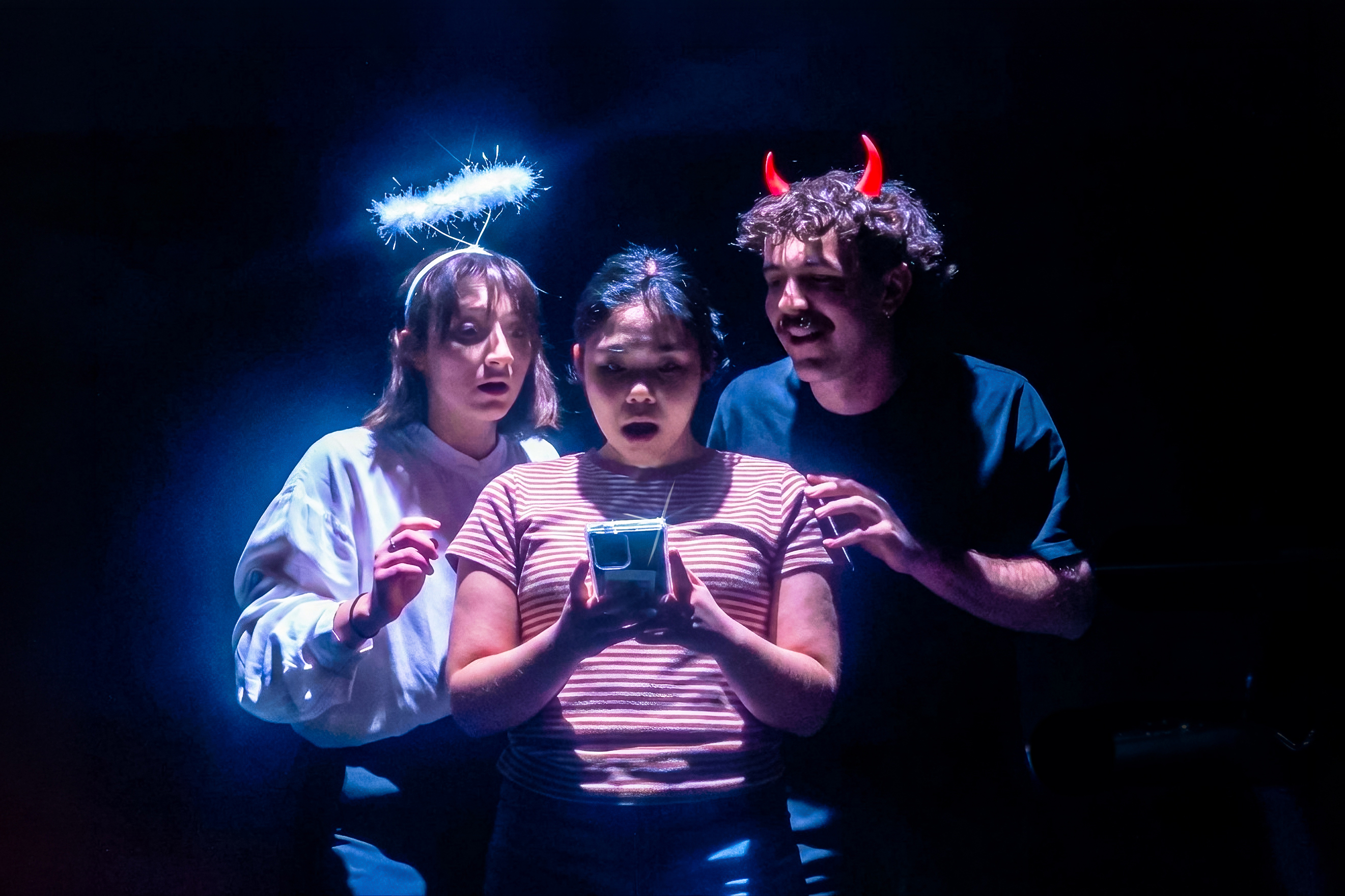
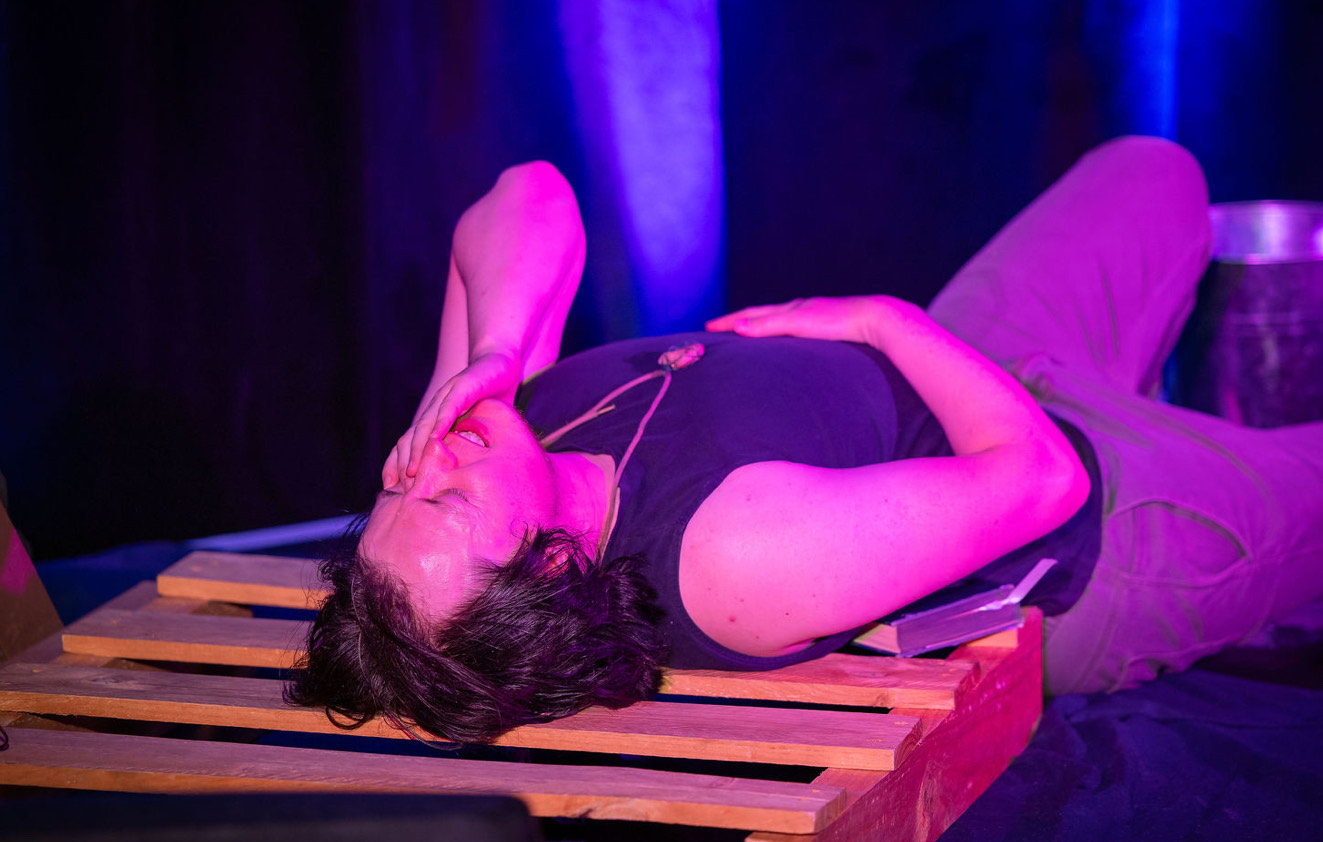
Everyone Knows I’m a Pervert by Taylor Fernandez playfully tells the story of Chastity, who accidently shares a saucy email with all her contacts. I wasn’t sure why this was such a problem, since Chastity also writes an erotic blog called The Vaginal Chronicles. (I’m guessing the Chronicles are anonymous – but the pace is so intense and the exuberance so stupefying, I think I missed that point of exposition.)

The show is certainly fast and furious, and ninety minutes long. (In the style of much of the humour, I can suggest it needs a good edit … a good, long, HARD edit.)

Directed by Beatrice Blackwell, the cast (Jenny Guigayoma, Jade Fuda & Jake Walker) totally commit to high-energy performances.  

In suggesting the show’s audacity, rather than its authenticity, I have a few caveats.

Firstly, the show presents a poetic (by which I mean life-affirming) Truth. But more on that later.

Secondly, very few of the sexual acts mentioned by the characters are perversions. They’re not uncommon acts, and they’re certainly not taboo. What is in our society? There’s only the illegal. (I think one such act was mentioned.)

Perversion is, of course, in the eye of the beholder, and I guess that’s the point: Chastity suffers guilt about things she really shouldn’t. To compensate for this guilt, she wades in even deeper, like Macbeth when he says “I am in blood stepped in so far, that, should I wade no more, returning were as tedious as go o’er” – except for the fact Shakespeare’s tragic hero goes on to actually do things. Chastity just talks about doing things.

And, thirdly, the way she speaks about these acts is revealing. Chastity talks of sex as merely mechanical pleasure. The utter absence of intimacy is tragic, and this sadness is the truth of the piece; the pity, the poetry.

Paul Gilchrist

Everyone Knows I’m a Pervert by Taylor Fernandez

Presented by NIDA in association with bAKEHOUSE Theatre Co.

At KXT until 20 June

kingsxtheatre.com

Image by Laura Elaine

Proof

16 Jun

Written by David Auburn, Proof has an absolutely extraordinary first act. It brilliantly works the element of surprise – which means I can’t tell you very much.

Suffice to say,  it’s set on the porch of the home of a family of mathematicians. The University of Chicago is perhaps just over the fence. Robert has produced works of genius across multiple fields of mathematics. But then he is attacked by mental illness. His daughter Catherine, a potential genius herself, becomes his prime carer. The job has clearly taken its toll.

The opening of my review implies the second act doesn’t compare to the first, but if that’s a criticism, it’s akin to suggesting that a 24 carat stone is worthless junk besides the Hope Diamond.

If I was in charge of marketing this play to a new audience, I might suggest it’s A Beautiful Mind meets The Big Bang Theory (which explains why I’m not in marketing.) It’s probably enough to point out that, in 2001,  Proof won both the Tony Award for Best Play and the Pulitzer Prize.

The title tells us it’s about the search for certitude, but it’s ultimately not the mathematical certitude we might expect. In fact, there’s very little maths in the play at all. Except for the fact it’s about prime numbers, we never really know the subject matter of the ostensible titular proof.  And the play doesn’t manifestly use maths as some kind of metaphor (as, for example, the Uncertainty Principle is used in Michael Frayn’s Copenhagen.) This absence of maths is partly structural; with the four characters that Auburn posits, there’s really no one who is the complete innocent who could stand in for an ignorant audience and have the maths explained to them. And the genius of the maths can’t really be shown (unlike Shaffer’s Amadeus, in which the music can simply be played, or Edson’s W;t, in which the poems are recited.)

So (no doubt to the great relief of many) there’s not much maths.

Instead we get a family drama of genuine heart and humour.

But the Proof is in the performance. Auburn has set a tough task: characters of top-class intellect, characters suffering mental illness (or maybe they don’t…)

Director Adam Dunn’s cast produces some fascinating work, the highlight of which is the emotional presence of the actors. Occasionally performances would gain from a greater focus on vocal technique – but we’re gifted an engaging night of theatre.

Kate Wooden as Catherine displays an exciting range, from sharp wit to weary confusion to raw vulnerability. As her father, Robert, Justin Knights is pathos-inducing. As Hal, a young academic interested in both the maths and Catherine, Johnny Nguyen is so likeably goofy as to make us suitably suspicious – but the scenes of romantic intimacy between he and Catherine are played with a truthfulness that is disarming. Claire, Catherine’s older sister, is intimidated by the genes of genius that flow through her family and guilty for her absence during her father’s illness, and Beth Williams gives a splendid performance of that great retreat, that soul-shrinking pretence of control and practicality with which we hide from Life’s most daunting mysteries.   

Paul Gilchrist

Proof by David Auburn

Presented by Sydney Acting Studio

Until June 21 at Redfern Acting Studio

sydneyactingstudio.com

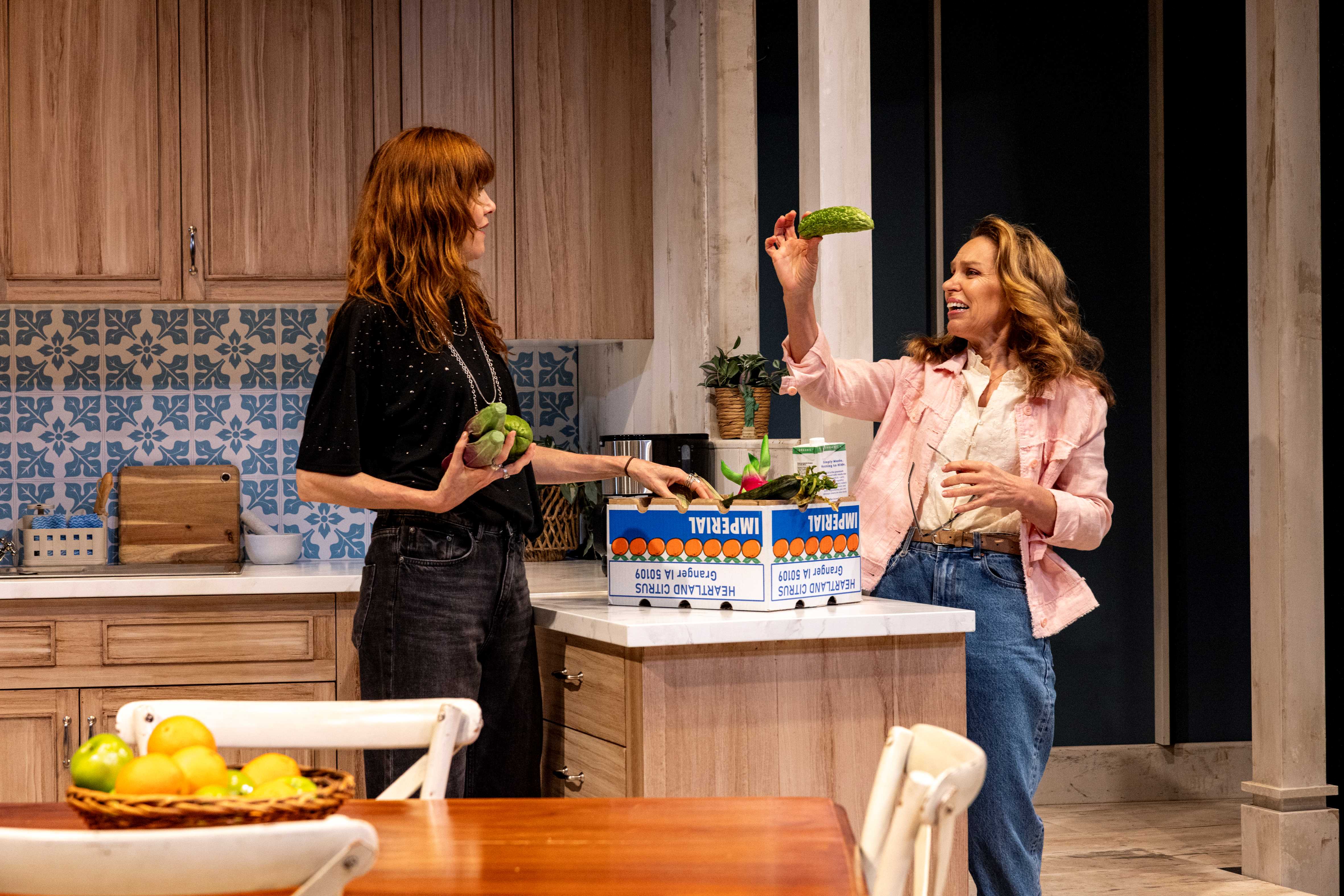
Image supplied  

Cadaver Synod

3 Jun

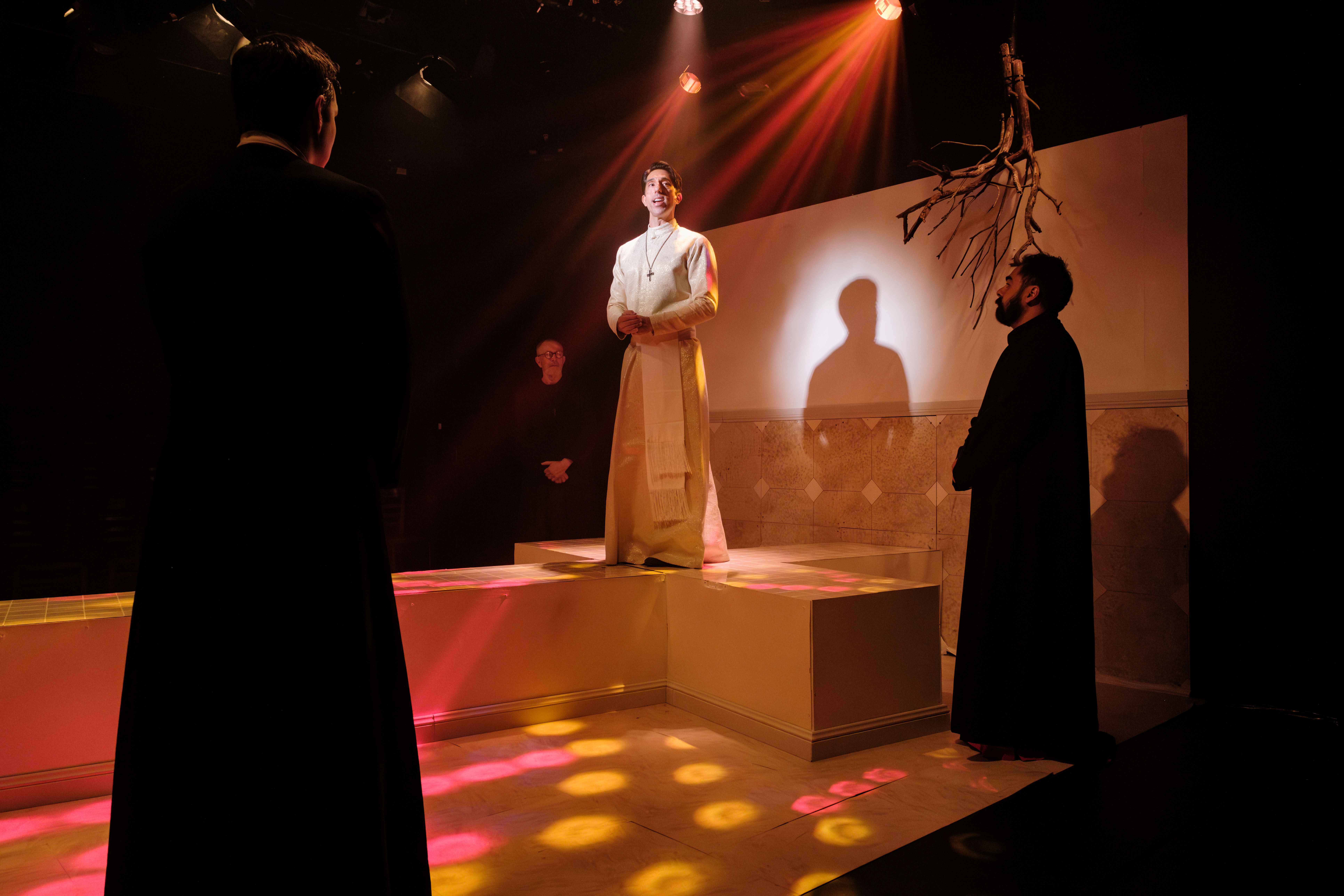
Written by Ruby Blinkhorn, this is bold, exhilarating storytelling. 

It’s set in the Vatican of the 9th Century CE, it’s inspired by historical events, and it’s original Australian work!

Thank God for the refreshingly cosmopolitan audacity of this creative team.

(By the way, a good historical drama is almost enough to make you believe in God. The soul-enriching assumption that an audience will connect with characters who don’t live in the contemporary world is akin to the belief that all humankind is a single family, the members of which are to be both loved and pitied – a sentiment beautifully expressed in the well-known religious phrase We are all Children of God.)    

Not that this production asks you to believe in God. (But more on that later.)

Pope Stephen is being pressured by more worldly authorities to condemn the corruption of his predecessor, Formosus. The exact details of the demanded condemnation are nothing but shocking: Formosus must be exhumed and his corpse put on trial. Understandably, Stephen is somewhat reluctant.

It’s a universal tale: Can evil be resisted? (Nb the passive voice. But more on that later.)

The piece is replete with the anachronisms endemic to the genre. Some are historical, made for the sake of simplicity (like the positing of a King of Italy or the poverty-stricken-but-still-literate orphan.) Others are linguistic (phrases like OK, We’re good? and Let’s wrap this up) employed to narrow the gap inherent in the sharing of a story set in a foreign country over a millennium ago. Other anachronisms playfully generate recognitional humour (like the sense that the discussions in the 9th Century Vatican were uncannily like modern corporate meetings.)

There’s plenty of laughs. Much of them come from delightful reversals of expectations as the supposed holy men indulge in language and behaviour that doesn’t match the moniker. Occasionally the piece threatens to diminish into farce (or even satire – more on that soon) but there’s a serious story here, and Blinkhorn brings it home powerfully.

Under the direction of Mathew Lee, the cast give captivating performances. As Stephen, Nat Jobe offers a riveting portrait of moral determination, lamb-like gentleness and naive idealism, presenting this fraught mix so that his emotional suffering becomes utterly convincing. As young Gabriel, Leon Walshe gives us an innocence so complete it’s frighteningly oblivious to danger, and all the more heartbreaking for that. As the Machiavellian John, Luke Fewster is all smooth talking smarm and ominous machinations. Yasna Delo as Lucia, voice for the worldly authorities (and for herself), is suitably waspish. Diego Retamales’ Brother Abraham is a terrific comic addition, all huffs and puffs that leave him hilariously unaware of the stakes. As senior cleric Paul, Mark Langham provides both wry humour and vital gravitas; it’s a performance that helps lift the piece to grandeur.

The end of the story is perhaps too quick, and the steps in Stephen’s final journey too close together, but enormous, crucial questions are raised.

Stephen’s spiritual experience is framed entirely in terms of Faith. And it’s Faith in the way Modernity conceives it: as an unwavering loyalty to an unverifiable vision of Life. I suggested the piece was in danger of slipping into satire, and Stephen’s response to the suffering of the aforementioned orphan is a prime example. He doesn’t seem to be much of a doer. But Paul, one of his brothers in Christ, denounces him very clearly and passionately for this very fault.

It’s worth noting that when Jesus of Nazareth was asked to sum up the law and the prophets he reportedly focussed, not on Faith, but on Love. “Thou shalt love the Lord thy God with all thy heart, and with all thy soul, and with all thy mind, and with all thy strength: this is the first commandment. And the second is like, namely this, Thou shalt love thy neighbour as thyself. There is none other commandment greater than these.”

And Love is not some fuzzy feeling – and it’s certainly not a belief. Love is a doing. Stephen seems to have tragically forgotten this.

In the context of the culture wars of contemporary society, this thrilling piece reminds us we must not privilege attitude over action.

Paul Gilchrist

Cadaver Synod by Ruby Blinkhorn

presented by NIDA in association with bAKEHOUSE Theatre Co

at KXT on Broadway, until 6 June

kingsxtheatre.com

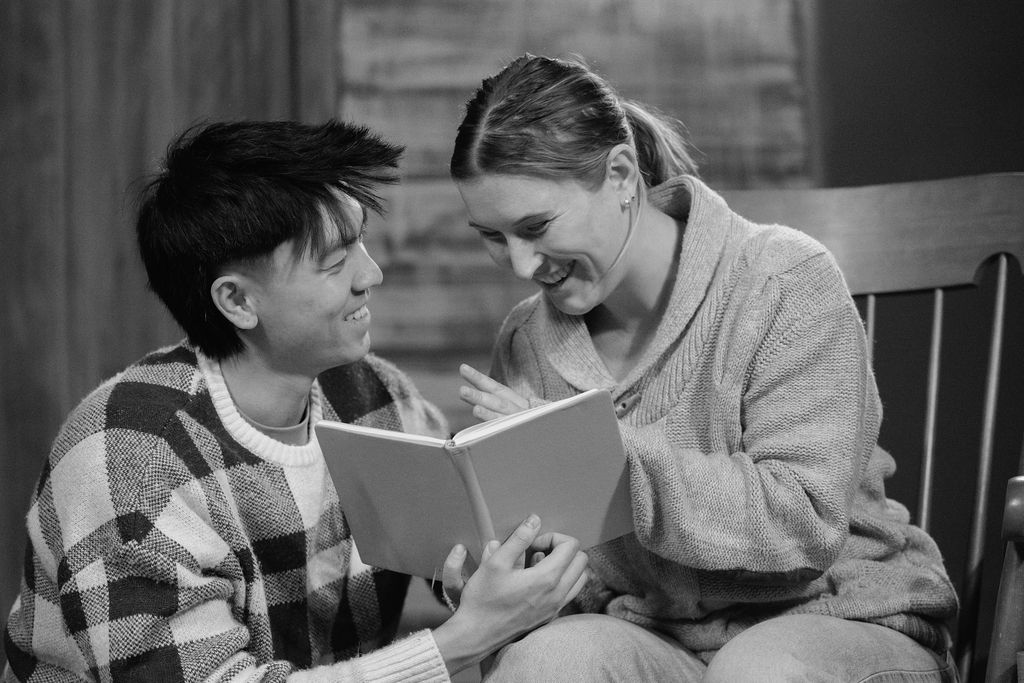
Image by Robert Catto