Tag Archives: Theatre Review

A Chinese Christmas

14 Dec

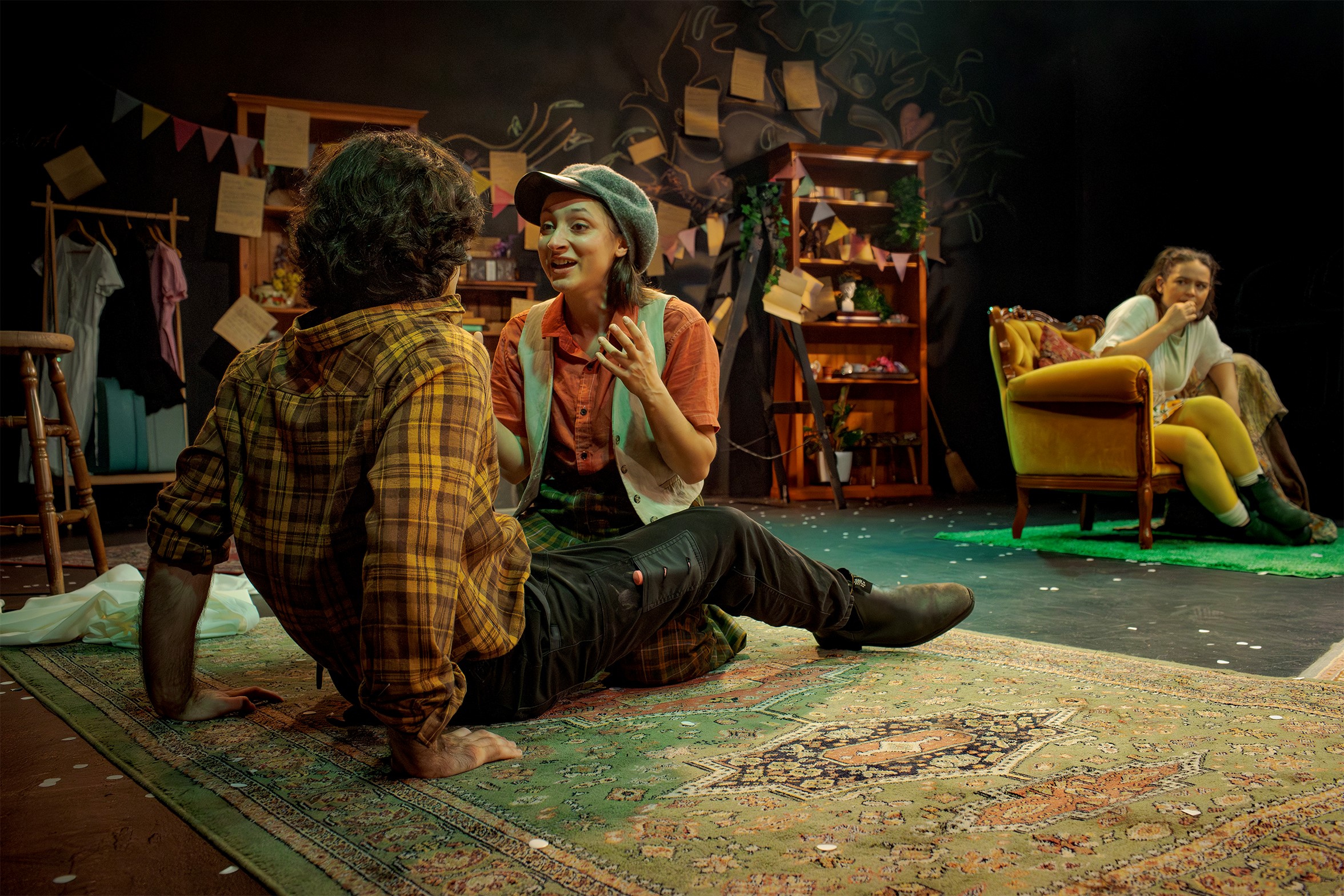
One of the many things that makes KXT an invaluable part of the Sydney theatre scene is their support of early career artists.

Directed by Monica Sayers, this is Trent Foo’s debut play. It tells the story of Heepa, who visits the underworld to enlist the aid of his ancestors to ensure his Paw Paw attends the family Christmas.

Despite this particularly Australian-Chinese setting, the piece deals with a universal theme: our relationship with those who came before us.

Heepa expresses a mix of feelings towards his grandmother: a rejection driven by his hunger for independence, a gratitude for all she’s done, and a regret that too often the first of these emotions has trumped the second. It’s a wild, heart-breaking, soul-making blend of feelings, a mix experienced by most of us, and it’s easy to imagine that the migrant experience only ramps up the intensity.

The whimsical conceit of the piece – that the protagonist speaks to his deceased ancestors – is the perfect vehicle for the exploration of what we owe family. (In contrast, the Christmas aspect of the piece is rather lightweight; the veneration of the dead taking precedence over the Christian myth. In fact, the Christian myth is given rather short shrift, reduced to the irrelevant Virgin birth and dismissed as ridiculous, no more worthy of attention than a laughable Chinese melodrama. For some audience members, however, the unspoken tension between the two spiritual traditions will be both provocative and thrilling. In contrast to the veneration of the dead, the Christian myth is about transcending our ancestors and shedding the common inheritance of selfish misery supposedly passed down from our forebears, Adam and Eve. Ultimately, it’s about new beginnings and looking forward. Add to that the conceit of the Divine choosing to enter the human world via a stable, the child of two nobodies, the birth witnessed by farm animals, and you have a tale that challenges all commonly accepted human values. Absurd simplification: you could place the two traditions, the veneration of the dead and the Christian myth, in stark contrast – one asserts the importance of connections, the other the importance of fresh starts. And a healthy spirituality requires both.)

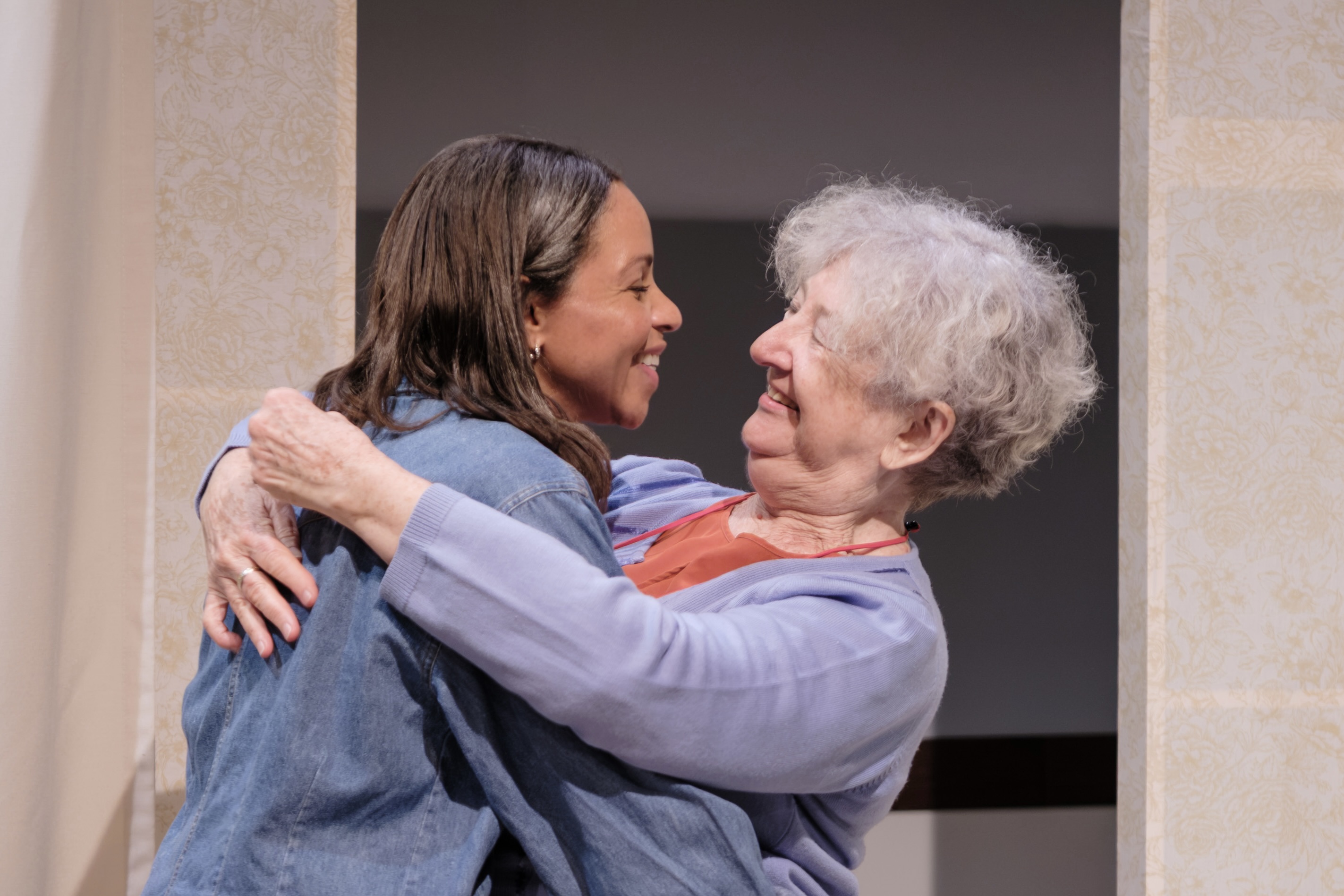
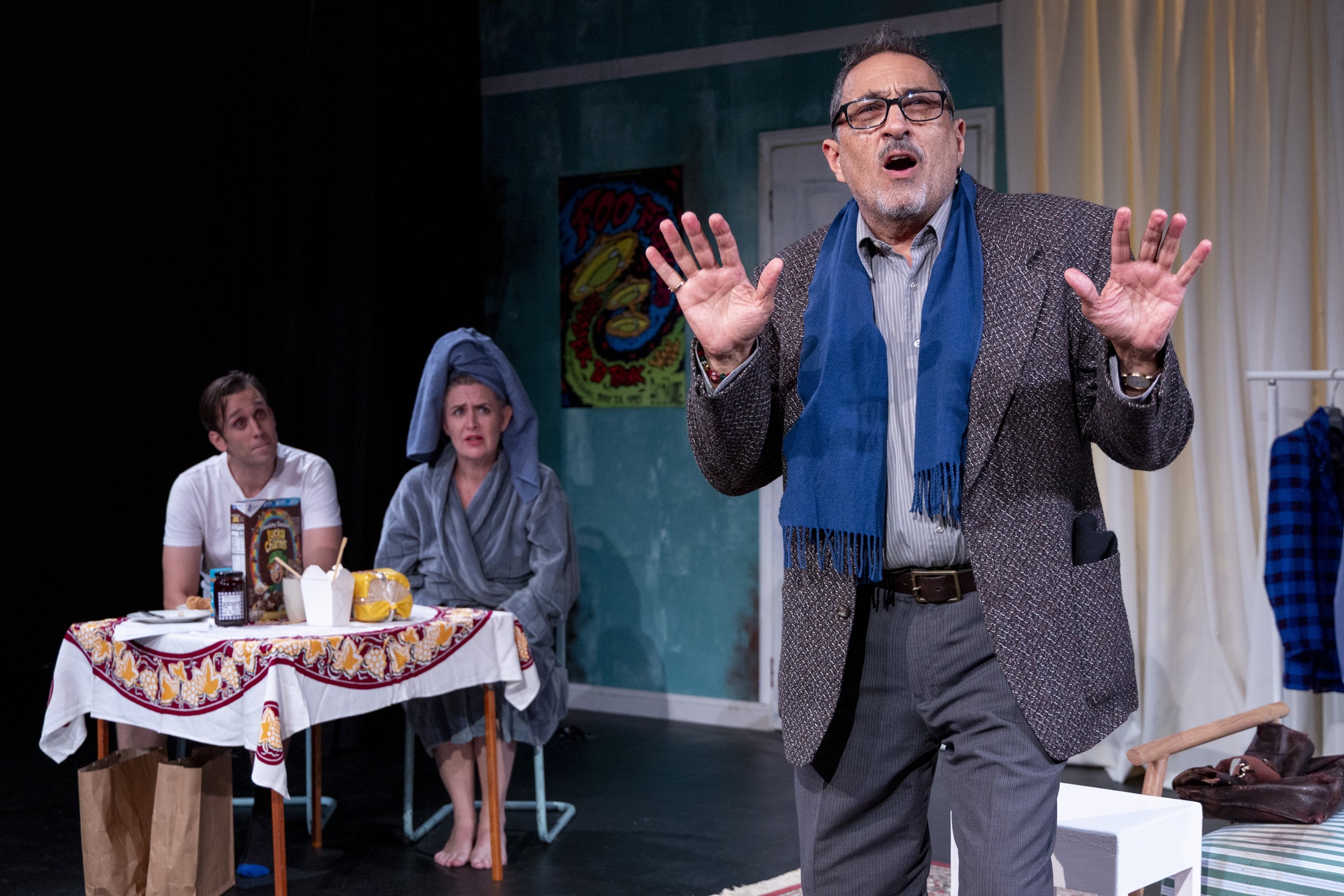
Portraying Heepa, Foo has an easy stage presence, a charming, playful, natural manner that leans delightfully into the script’s use of the youthful vernacular. For the majority of the piece, the structure is amusingly loose, as Heepa shares anecdotes about his relationship with his Paw Paw. The finale is very moving (but the plot is dependent on the protagonist withholding information, and so the overall impact of the piece will be determined by whether you believe this reticence aligns psychologically with the way the earlier anecdotes are delivered.)

As Heepa’s Paw Paw, Tiang Lim beautifully combines comedy with dignity, playing with the grandma tropes of being overly demanding yet not openly affectionate, while at other times projecting a mature nobility, one that’s both inspiring and pathos-inducing.

Performing on traditional instruments, Jolin Jiang creates an accompaniment which is wonderfully evocative. As an actor, she creates a character of poignant mystery.

Paul Gilchrist

A Chinese Christmas by Trent Foo

Presented by FooFrame Productions in association with bAKEHOUSE Theatre Co,

At KXT on Broadway until Dec 20

kingsxtheatre.com

Image by Robert Miniter

The Forked Tongue

11 Dec

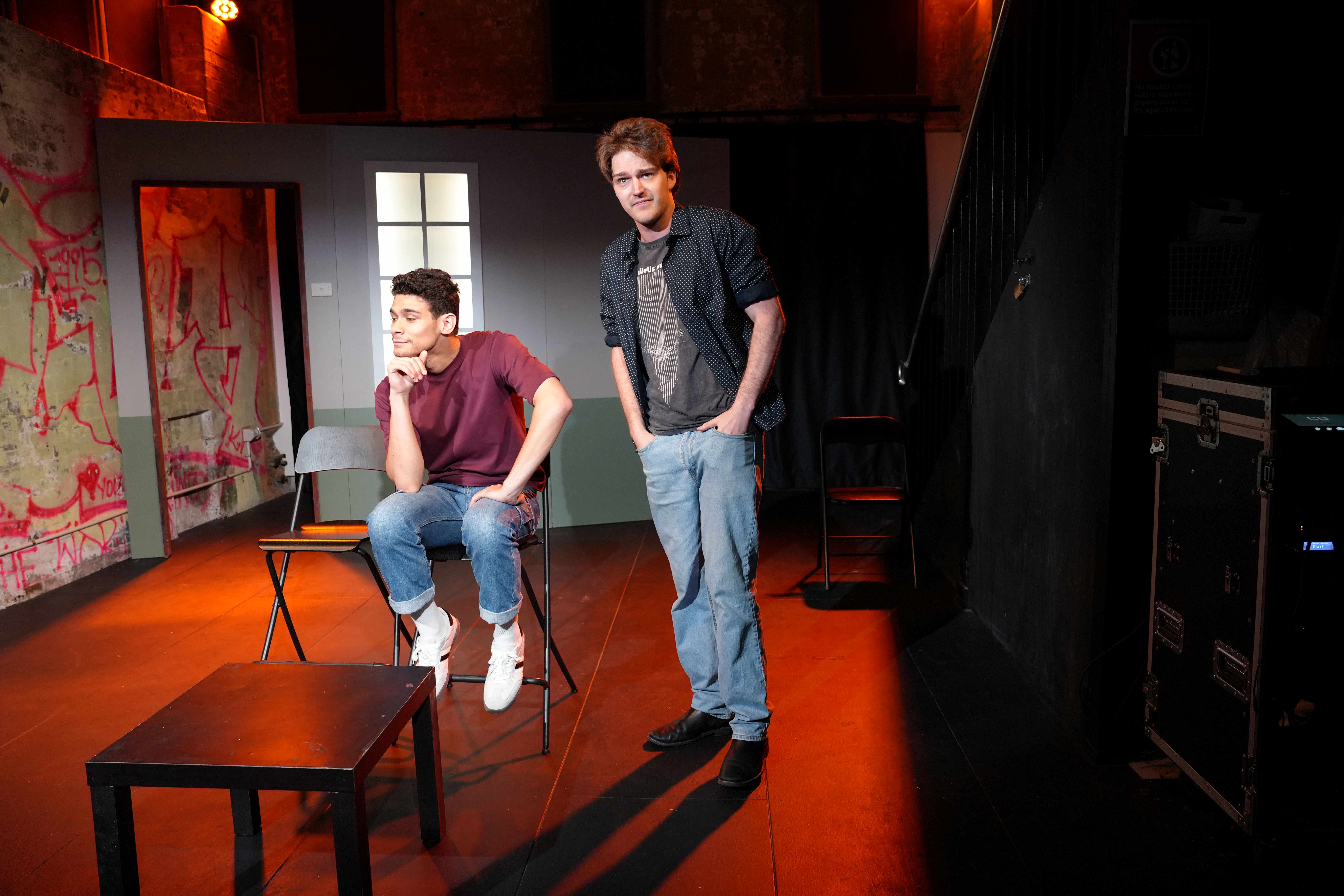
This a passionate cry against the injustice of sexual assault.

But it’s the way this cry is presented that makes The Forked Tongue such an intriguing piece of theatre.

I’d like to discuss three elements of this presentation.

The first of these relates to myth.

Written by Babette Shaw and directed by Kirsty Semaan, The Forked Tongue tells the story of Medusa, but – we’re told – not the one we know.  A reasonable number of people might find this an odd claim, because I suspect a reasonable number of people don’t know any story about Medusa. After all, she is a character from Ancient Greek mythology, a cultural creation of a faraway place and a long ago time.

But if you’ve wasted vast swathes of your life and have more than a passing familiarity with the culture of the classical world, you’ll be aware that Medusa, like most Ancient Greek mythical characters, is rather nebulous. A lot of classical authors mention her, but they’re short on detail, rarely agree on her story, and seem little interested in her psychology.    

But to distil: Medusa is a Gorgon, a monster, the one with snakes for hair, so hideous that she turns people into stone if they meet her eye.

It’s a myth ripe for feminist subversion – and subverted it has been. This is the second piece of theatre I’ve seen this year in Sydney that employs the Medusa motif. You might argue that observation alone counters my claim that Medusa is a relative unknown in our culture. Or you might not: you might read it as evidence that storytellers are want to emphasise stories, attributing to them far more importance than the average person does. Perhaps this is indicative of the deep insight of storytellers. Or perhaps it suggests their parochialism. All the world is a stage says the playwright; All the world smells of fish says the fisherman.

Leaving aside the value of interrogating old myths, I’ll move on to the second fascinating element of the piece: the clash that results from the modern appropriation of classical culture. When Modernity tangles with Antiquity, it really is the clash of the Titans and, in the case of The Forked Tongue, leads to some rather explosive theatre.

Let me start with a trivial example. Medusa is at work at the temple of Athena. She has rushed there this morning, fearful of being late again. It is though she works in retail and can’t afford to miss the train one more time. This is the mundane detail of the bourgeois novel – and that’s not a criticism: these modern artworks display an interest in interiority and equality which is at the very heart of the contemporary social justice project, a project unknown to a classical world in which women had virtually no power and one third of the population were slaves.

Another example (but with a different conclusion.) When Medusa is confronted by the predatory Poseidon, it’s at the end of her shift at the temple. She’s closing up. She’s alone. He asks her for a drink. She politely refuses. He violently takes what he wants. We’re asked How could the experience be consensual, considering the difference in position in pecking order of the two? Poseidon is presented as the creepy boss who abuses his power. It’s a very modern take, and one that effectively indicts such behaviour. However, if there had been any Ancient Greeks in the audience (I don’t think there were) they might have responded But Poseidon is a god! In the modern world, encounters with the Divine have become so rare we’ve forgotten that the value of such encounters is that they overturn …. pretty much everything. A terrible beauty is born. All encounters with the Divine were – and are – a type of assault. Does that justify any type of actual human assault? NO. But Poseidon’s dreadful violence reminds us of the existence of a sphere of Life beyond Project-Social-Progress, a sphere of Life where individuals are confronted with the utter capriciousness of the universe, and no well-meaning-committee-endorsed-protocols can protect them.

Modernity versus Antiquity. Time has determined the victor, but a play like this poses the question (at least for me) of what we’ve gained and what we’ve lost.

And the final creative decision making this a fascinating piece of theatre is the characterisation. It’s a one actor piece, and Emilia Kriketos is marvellous, showing enormous skill both vocally and physically. She also has the challenge of portraying three characters – Medusa, Athena, and a modern narrator – and presents these variations with aplomb.

In giving her version of Medusa’s tale, the modern narrator asserts there’s more than one side to every story. You might wonder if there’s a logical inconsistency here, or something oddly self-defeating. It’s certainly unusual for a character in drama – or, in this case, outside the drama – to make such an assertion. It’s like a used car salesman saying Trust me: at every repetition we feel a little less inclined to do so. Any commentary on the tale reminds us it’s just a tale (about a tale – which brings me back to my first question about storytellers and fishermen….)  

As you can see – with its bold decisions and beating heart – this piece will spark much discussion.

Paul Gilchrist

The Forked Tongue by Babette Shaw

presented by Left Leg Productions

at the Substation, Qtopia until Dec 13

qtopiasydney.com.au

Image by Signature Photography by Kirsty Semaan

Born on a Thursday

5 Dec

This is a homage, dusted with nostalgia.

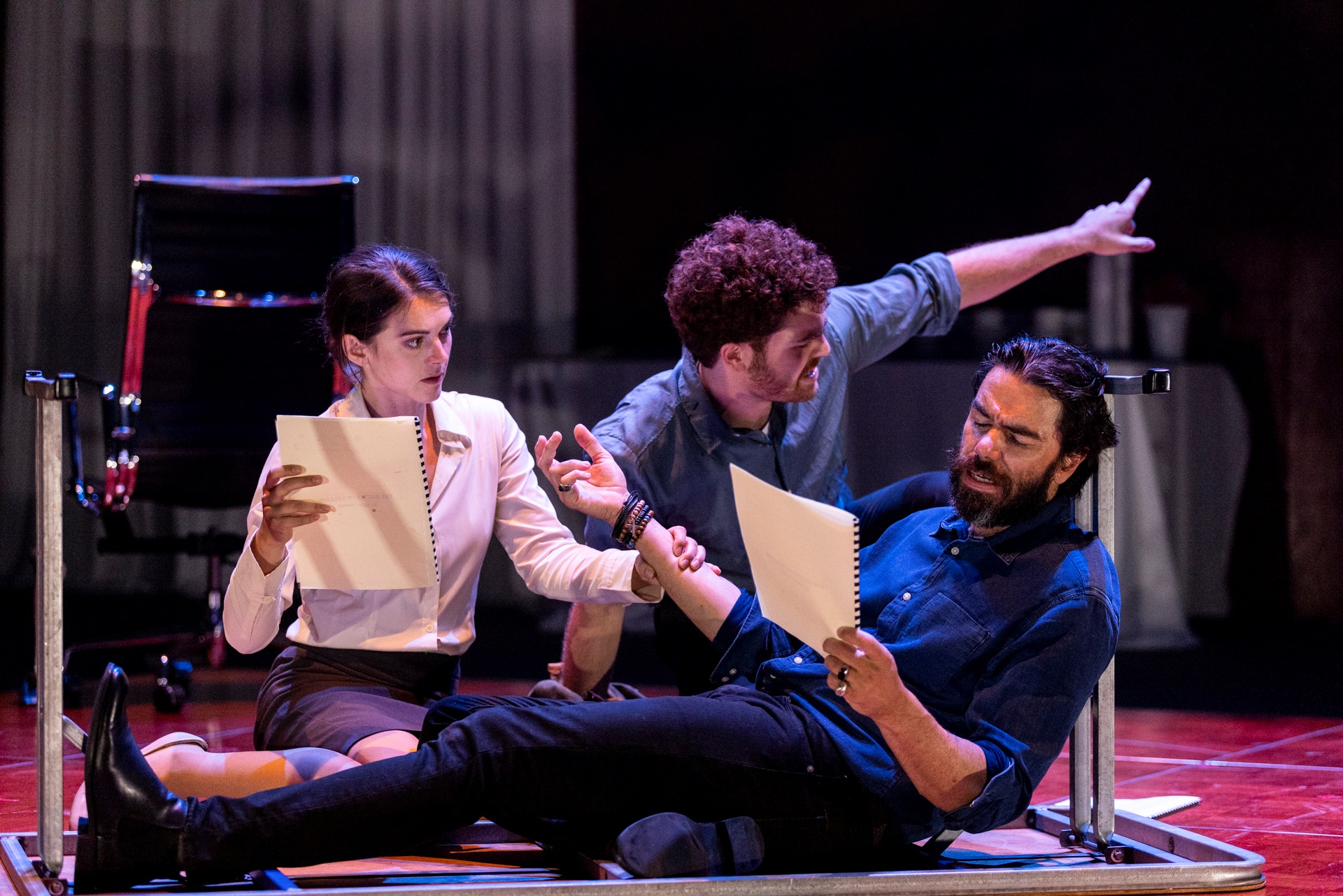
Written by Jack Kearney, Born on a Thursday is set in the late 90’s in western Sydney, and tells the story of single mum Ingrid. Her son, Isaac, has been left mentally incapacitated by a rugby league injury. Her daughter, April, has unexpectedly returned home after a long period of silent absence.  

The pace is gentle, akin to a glacier, whose majestic, barely perceptible movement is only apparent through the occasional violent smashing of things.

It’s also a story built from the withholding of information. Why has April come home now? What actually happened to Isaac? Who was their father? Perhaps this builds suspense; perhaps it reflects the laconic, emotional reticence of the working class. Despite the piece’s length, a lot of these questions ultimately aren’t clearly answered, or when they are, these answers no longer really seem to matter. We’ve moved on, and are witnessing the power of resilience and the wondrous birth of hope. Despite the suggestion of sentimentality that warmly infuses the piece, it’s this sense of moving on that grants it verisimilitude. Not that the characters deliberately or consciously move on, not that we’re being glibly instructed we should leave the past behind – rather we’re being reminded that Life, whatever it is, is something that runs in only one direction.

Director Lucy Clements elicits excellent performances from her cast. As April, Sofia Nolan portrays an eminently watchable tension between fragility and strength. As Isaac, Owen Hasluck captures frustrated bewilderment sparring with youthful energy. James Lugton, as the loyal neighbour Howard, gives us a wonderful portrait of gentle, patient persistence. Deborah Galanos, as the wine guzzling Estelle, is hilarious: brash, assertive, yet delightfully changeable. As Ingrid, Sharon Millerchip moves fascinatingly from a no-nonsense coldness to the surprise of joy, the reward for tenacity and its unexpected twin, hope.

Thursday’s child may have far to go, but distance isn’t everything.    

Paul Gilchrist

Born on a Thursday by Jack Kearney

presented by New Ghosts Theatre Company and Old Fitz Theatre,

at the Old Fitz until 14 Dec

oldfitztheatre.com.au

Image by Phil Erbacher

Cowbois

25 Nov

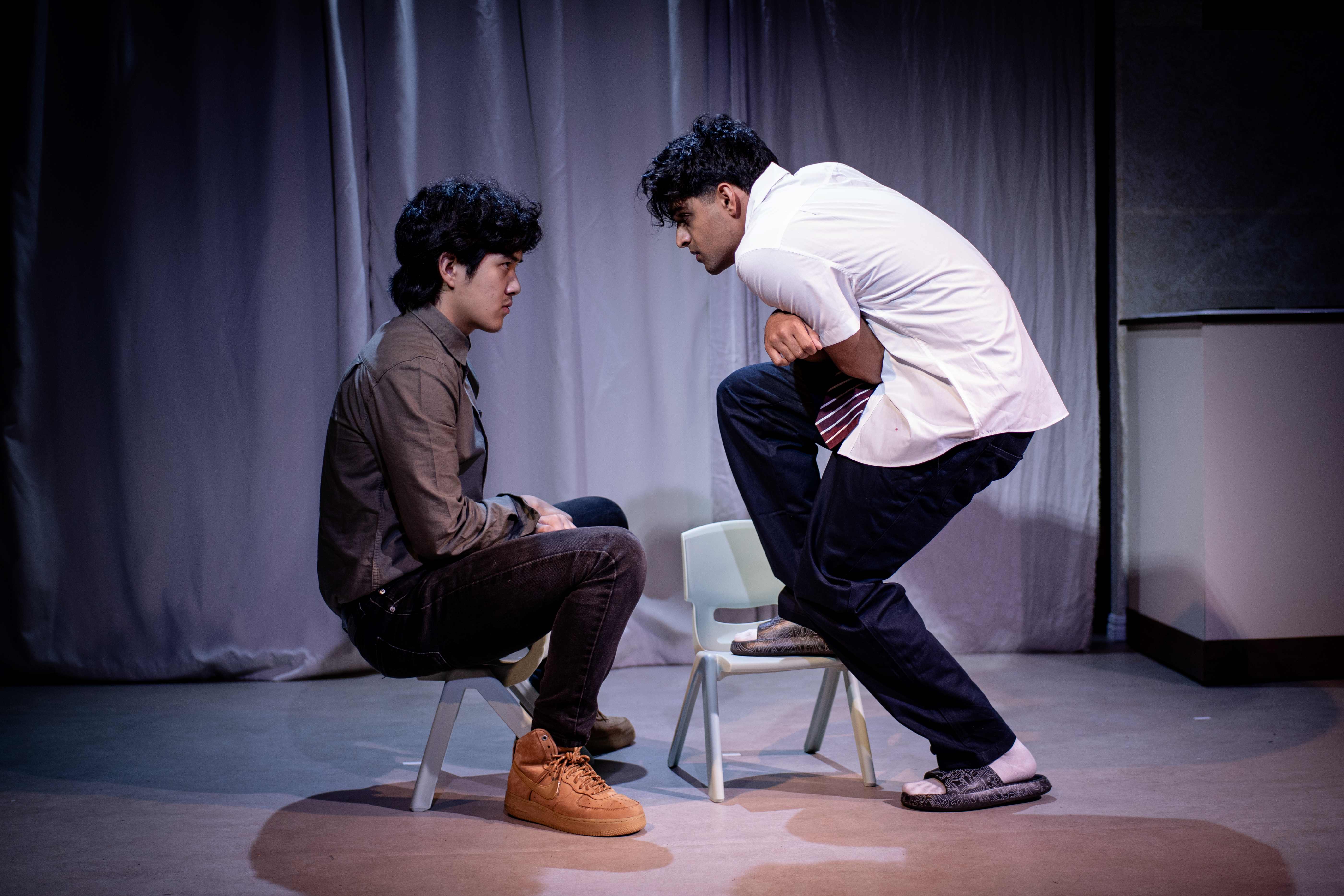
Siren Theatre’s production of Cowbois by Charlie Josephine is an absolute visual delight, a whole lot of fun, and a poignant cry from the heart.

We’re in a small Wild West town, but all the men have gone off to find gold. Left to themselves, the women begin to wonder about possibilities, and with the arrival of charismatic outlaw Jack Cannon, they find gold of a very different sort.

There’s an exhilarating blend of genres: Western meets Magical Realism.

The Wild West is the ideal setting to interrogate assumptions about gender. (The West being a literary myth in which men are men, women are women…..and women are invariably either school teachers or show girls.) It’s a myth that begs explosion – and it gets it here. Jack is a trans man, and he offers a vision of gender identity radically different from what the towns people have previously known. It’s joyous and liberating, and Magical Realism helps represent his life-changing impact.

It’s a case of guns, glitter, and glorious growth.

Director Kate Gaul creates visual magic. The use of space is wonderful and the tableaux alone are spellbinding. Lighting design by Brockman and sound design by Aisling Bermingham add to the enchantment. Clay Crighton’s original songs complete the charm.

There are superb performances. Jules Billington as Jack is the embodiment of charisma, tempered with moments of confronting rawness, of searing emotional honesty. (Wait for when the words “cruel” and “fight” are uttered.) Matthew Abotomey as the drunken sheriff gives a performance of virtuosic range and marvellous physicality. Amie McKenna gives a terrific turn as a smart-mouthed school teacher, displaying brilliant comic timing. Emily Cascarino as the saloon keeper radiates intelligence, wonder and determination. Crighton’s cameo as a laughing trouble-maker is show-stopping.

Being a Western, at the finale there’s a shoot-out. This is handled with comic aplomb by the team. However, the subtext of this shoot-out is not to my peculiar political taste. I find dissatisfying the assumptions that the pursuit of a fair, full life is best described as a fight, that harmony is dependent on having common enemies, and that those enemies are expendable. But my political taste or not, there’s no doubt that what we’re given is a genuine expression of what it feels to experience this particularly cruel form of injustice, one that heartlessly denies who you are, and who you might become.

Paul Gilchrist

Cowbois by Charlie Josephine

Presented by Seymour Centre and Siren Theatre Company

At Seymour Centre until 13 Dec

seymourcentre.com

Image by Alex Vaughan

Gravity

20 Nov

On the way to the theatre, my plus one asked if we were seeing a new play. I replied Yes, that considering the title, it must’ve been written at least post-1687, the year Isaac Newton published Philosophiae Naturalis Principia Mathematica.

A joke like that doesn’t belong in Bradford Elmore’s Gravity; his play is genuinely funny.

But there’s a connection. Elmore presents characters who are intelligent – and this is the surprise for an Australian play – they can read! And they do.

Not that the piece is overly cerebral. Far from it. It’s just that the characters in Gravity have an active interest in the written word – and actually discuss it!

Christopher and Heather have a love of literature and David has a fascination with astronomy.

And all this isn’t gratuitous, a case of a playwright choosing to focus on some bizarre corner of society in order to present a gritty new angle, or an example of a dramatist claiming to give voice to some neglected minority.

The literature and astronomy operate as motifs that give the play a wonderfully rich texture. But to discuss that, I must first outline the play’s basic scenario.

Christopher (Wesley Senna Cortes) and Heather (Annabelle Kablean) have been married for ten years, and he feels he still loves her. But he has now also fallen in love with David (Drew Wilson). How can this be resolved?

Back to the motifs.

David’s interest in astronomy allows consideration of opposing forces, of the difficulty of orbiting two bodies simultaneously, of the danger of being torn apart. But it also posits balance, the possibility of a smooth, untroubled, eternal motion (the type we imagine is enjoyed by the stars.) The relevance to the play’s scenario is beautifully thought-provoking.

Heather and Christopher’s interest in literature allows musings on narrative, and how we’ll stick to things, despite the emotional pain, because we need to know how it turns out. As a play about the challenges of fidelity, the connection is clear.  Discussions of literature also facilitate some playful games about preference, of the Austen-or-Dickens, Tolstoy-or-Dostoevsky type. I’ve made up these examples, but the mischievous premise behind these sort of games – that loving one somehow excludes loving the other – is central to the play’s exploration of relationships.

Anthony Skuse directs and designs, and in this deliciously simple space there’s a gorgeous flow to the movement. Skuse also elicits fine performances from his cast, who make the humour crackle and the heart cry.

Whether you ultimately find the conclusion of the piece satisfying will probably hinge on your willingness to watch it devolve from the higher stakes of dramedy to the easy cheerfulness of rom-com. But I suspect satisfaction might also depend on your own values and emotional experience; what you consider Love, and what you consider Truthful. (Though, if your sole aim in visiting the theatre is to see a reflection of yourself, a visit to the aptly named vanity in your bathroom would suffice. Embrace doubt and surprise; they’re some of the artform’s greatest gifts.)

Paul Gilchrist

Gravity by Bradford Elmore,

produced by Rogue Projects,

at The Loading Dock, Qtopia until 29 Nov

qtopiasydney.com.au

Image by Phil Erbacher

So Young

18 Nov

In writing this review, I’ve allowed the most time to pass I ever have between seeing a show and putting my response on the page.

This is partly because of that pesky thing called Life, which with annoying persistence tries to sideline Art.

But it’s also because – by the time I saw So Young at the Old Fitz – the whole run had sold out. (Though do check for wait lists – tix may become available.)

When responding to theatre I try to write in a way that doesn’t suggest that the producing company has simply outsourced its marketing – but Outhouse’s production of Douglas Maxwell’s play is brilliant.

So Young is the story of forty-something Milo finding love again after the early death of his wife. His longtime friends Davie and Liane are shocked to find this new love, Greta, is only 20 years old.

We live in a culture obsessed with demographic divisions. Each one of us is labelled and firmly put in our box. This superb play is about two of the most dominant of these devilish divisions: youth versus age and male versus female. But it’s also about the only demographic division that ultimately matters: the quick versus the dead.

Under the direction of Sam O’Sullivan, the play blazes with humour and heart.

As Liane, Ainslie McGlynn’s performance is magnificent, beautifully boiling and bubbling with the grief that masquerades as anger.

As Davie, Jeremy Waters gives us a splendid portrait of blokeish bonhomie, with that longing for pleasant peace presented in all its complexity. Is it wisdom? Or is it weakness?

Henry Nixon as Milo offers a bewitching bewilderment in the face of Life’s two greatest mysteries – Death and Love.

Aisha Aidara as Greta is gloriously youthful. She marvellously captures youth’s perceived pitfalls – its social naivety, its careless certainty – while all the time radiating courage.

And courage and its close cousin compassion are the qualities most needed by those of us still on this side of the only division that matters.

Paul Gilchrist

So Young by Douglas Maxwell

Produced by Outhouse Theatre Company

At the Old Fitz until Nov 22

oldfitztheatre.com.au

Image by Richard Farland

Crotchless

5 Nov

This is a fine comedy. 

It’s written by Eloise Aiken, this year’s winner of the Katie Lees Fellowship.

The Fellowship is designed to support young female/female identifying theatre makers, and here it has once again shown itself to be a vital contribution to the Sydney theatre scene.

Crotchless is about how contemporary teenagers and their parents navigate the cultural reactions to feminism.

Aiken has a great ear for comic dialogue; the script is funny and truthful and shit. (And, in case it’s not obvious, the last of those three adjectives is meant as an admiring imitation of Aiken’s uncanny ability to portray the language use of the young, rather than some vocab-deficient, mean-spirited evaluation of the play.)

Teenage Shona has dating issues, but it’s her twin brother Owen’s dive into the rabbit hole of misogyny that especially troubles her. Trish, the twins’ single mum, acknowledges Shona’s concerns but is less certain how to prevent her son’s disturbing moral diminishment.

The piece is driven by some fascinating tensions.

One tension is that between the broader culture and personal agency. Owen is admonished for listening to misogynistic podcasts and told to read feminist texts. Of course, what we put into our heads is important, but we’ve come to view ourselves almost as if we were passive computers: just load the correct software and we’ll run appropriately. It’s an understandable but disconcerting assumption – because it seems to erase the possibility of both critical thinking and moral discernment.  (But, we do live in a culture that has rather suddenly become aware of the concept of Culture, and everyone who’s seen Terminator 2 knows the frightening consequences of suddenly becoming self-aware. Skynet isn’t alone in its over-reaction to the unexpected advent of choice.)

Closely related to the tension between instruction and intellectual agency is that between confrontation and love. Should we simply condemn those who disagree with us? Or, as Trish suggests, will that just drive them further away? Is a strict insistence on moral conformity merely counter-productive? Must individuals learn for themselves?  

That Crotchless posits both sides of these tensions suggests its maturity of vision, its beautifully honest awareness of the complexities of Life. If it ultimately comes down a little too heavily on one side of all this, the feel-good-tell-it-how-it-is-for-victory-and-empowerment side, that’s completely understandable. After all, it is a comedy. (And, anyway, is the conclusion of a play actually the sum of its meaning and value? Especially when it’s a comedy. Perhaps the comic happy ending is just one more dramatic convention, as meaningful, say, as the fourth wall.)

Madeleine Withington’s direction is splendid; the pace and bounce is spot on.

Performances are comic excellence. 

Esha Jessy is thoroughly engaging as Shona, the quick-witted teenage girl caught between vigorous assertions of female worth and a risky desire for the rather unworthy male Other.

As Owen, Ashan Kumar brilliantly captures the inarticulate energy of the teenage boy, the hilariously non-threatening high-modality, informed with just the right hint of danger: a cute, clumsy oversized wolf cub trying out his fangs.

Sarah Greenwood is utterly superb. Her performance dances with the lightness of comedy, yet her portrayal of Trish truthfully represents the challenges of maternal love, in all its poignant mix of strength and vulnerability. Greenwood also doubles as Shona’s best friend, Malory, and delivers a playful-almost-parody that is a delight in itself, but also serves to highlight the glorious complexity of her portrait of the more mature of the women.

Paul Gilchrist

Crotchless by Eloise Aiken

At Flight Path Theatre until Nov 8

flightpaththeatre.org

Image by Alex Macleay

Chicken in a Biscuit

10 Oct

Tyger Tyger burning bright,

In the forests of the night:

What immortal hand or eye,

Dare frame thy fearful symmetry?

Did he smile his work to see?

Did he who made the Lamb make thee?

So wrote William Blake, as he struggled to make sense of the eternal Other.

Blake is not the only writer to wrestle with our relationship with our animal relatives. Christopher Smart in Jubilate Agno asks us to consider his cat Jeffrey – and urges us to see him as a wondrous example of Creation. Jack London’s Call of The Wild invites us to note the huge gap between domestication and an animal’s natural state. Lord Dunsley’s My Talks with Dean Spanley (adapted to film in a version with Sam Neill) has a gentler take on this peculiar relationship.

Chicken in a Biscuit by Mary Rachel Brown and Jamie Oxenbould is the inheritor of a grand tradition.

These writers focus particularly on our relationship with pets, and the style is wacky fun.

It’s a loose collection of monologues. Half portray pet owners. Half portray pets. In a bold decision, all are performed by human actors.

In the portraits of pet owners, a common note is an interest in unusual expressions of sexuality and a gentle mocking of dagginess. Not that the piece presents as a satirical attack on pet owners – with 75% of Australian households owning a pet, it’s more a comment on humanity and what we find amusing about that very strange species.

The portraits of animals riff on familiar tropes – cats as proudly imperious and dogs as dumbly loyal. In our Age of Offence, I’m sure someone will find the anthropomorphism a little tasteless (maybe me)– but the writers are doing no differently than have generations of cartoonists.

Directed by Brown, performances by Mandy Bishop and Oxenbould are delightful committed silliness.

Paul Gilchrist

Chicken in a Biscuit by Mary Rachel Brown and Jamie Oxenbould

Presented by Fixed Foot Productions

At The Old Fitz until 18 October

oldfitztheatre.com.au

Image by Becky Matthews

A Behanding in Spokane

10 Oct

Twenty-five years ago, Carmichael’s hand was cut off. He’s been searching for it ever since.

This is a black comedy by Martin McDonagh, the writer of The Beauty Queen of Leenane, The Cripple of Inishmaan and The Pillow Man.

First presented in 2010, it’s the first of McDonagh’s plays set in America. 

75 minutes long, the action plays out (almost) in real time. Two grifters have come to Carmichael’s motel room, hoping to sell him a hand – which may or not be his.

It’s tremendous fun, with great laugh-out-loud lines. Directed by Kai Paynter, we’re treated to hilarious high-energy performances. (There were a few tiny hiccups, in vocal work and in staging, but I did see a preview.)

As the grifters, Cynthia Taylu and Alexander W. Hunter have a very amusing bickering repartee and both deliver terrific portrayals of comic fear.

As a motel employee, Christopher Northall is wonderfully quirky, a true loose cannon, brazenly outside usual motivations and empathies.

As Carmichael, James Yeargain brilliantly captures the character’s heartless determination, a frightening brutality which reaps enormous comic rewards when he falls into petty quibbles with the other characters.

But with the avalanche of politically incorrect language and suggestions of extreme violence, what’s it all about?

Crazed determination? Carmichael has been looking for his (unusable) hand for a long, long time.  

Crazed consistency? On the phone, Carmichael’s mother questions whether he can legitimately claim to be racist if he finds women of colour sexually attractive. And the motel employee hangs on to a resentment which the current horrific circumstances should render utterly irrelevant.

Or perhaps, like many black comedies, it’s more about clearing the air.

Black comedies often seem untruthful – some people dismiss them as such – but they function as an invitation to break free from the spell of language and artistic representation. (A critic with even more authority than me has warned of the danger of bewitchment by our own creations, commanding “Thou shalt not make unto thee any graven image….”)

Through their mischievous and vicious exuberance, comedies like this refuse to be confused with the real thing. They remind us that our words, and the worlds they conjure, are not actually reality – certainly not in its totality – and that spirit of cheeky rebellion is gloriously liberating.

Paul Gilchrist

A Behanding in Spokane by Martin McDonagh

Presented by The Americas, A Theatre Co, in association with Beartiger Productions

At Schell Medical Corp (Flow Studios 88) until 12 October

theamericas.beartigerproductions.com

Image by Lola Carlton

Samson

5 Oct

This is the first production by Luminar Theatre Company. Debuts are always thrilling, a sign of a vibrant scene and a promise of things to come.

Samson by Julia-Rose Lewis was first produced at Downstairs Belvoir in 2015.  I probably saw it; it’s reminiscent of a lot of new Australian plays from the time.

Set in a country town, it presents four teenagers dealing with grief.

It was Lewis’ first play and it throws down plenty of challenges for a director and their cast. It has a large number of short scenes. None of the characters seem to have sufficient dialogue. Some ideas are repeated too often (I need to get out of this town!) while others are left tantalisingly, or frustratingly, oblique (the recurring motif of burning.)

No one over twenty is given any stage time nor, it seems, has much impact on the lives of the characters we do see. I find this odd. What I take to be the themes of the piece – grief, guilt and metaphysical speculation – are experienced by everyone, not only teenagers. It could be argued that the piece’s purpose is to present a snap-shot of rural youth, but if so, why choose a moment in which they are confronted by problems that are so universal? Perhaps it all operates as a metaphor: the characters’ immaturity symbolising the inadequacy of us all in the face of Life’s grand questions.

Having suggested the play is an odd creature, one which some will find flawed while others will find powerfully resonant, what about this production? How does it deal with the challenges presented?

Director Chloe Callow and her design team use the space well. Sound design by Rhiannon Jean, lighting design by Julian Dunne and set design by Max Shaw effectively evoke a world of lost souls, tantalisingly suggestive of the gothic, but never giving in to the temptation to give that genre full rein – the character’s problems are genuinely existential, but aren’t soaked in a sensationalism that would reduce them to the rousing rather than the real.  

Callow also helps her eminently watchable cast (Samuel Ireland, Henry Lopez Lopez, Ava Jones and Jean) find the appropriate and always engaging tension between the characters’ natural youthful energy and the bewildering enervation of their loss.

Perhaps it would’ve been better for the company to choose a script in which the cast were asked to play characters of their own ages. But, even still, there are wonderful moments: of exuberant humour and lively physicality, and of honestly portrayed suffering and gentle commitment to the craft of truth-telling.

I look forward to seeing more from Luminar.

Paul Gilchrist

Samson by Julia-Rose Lewis

Produced by Luminar Theatre Company

At The Greek Theatre, Marrickville

Until Oct 11

Image by Simon Pearce