Benefactors

23 Jun

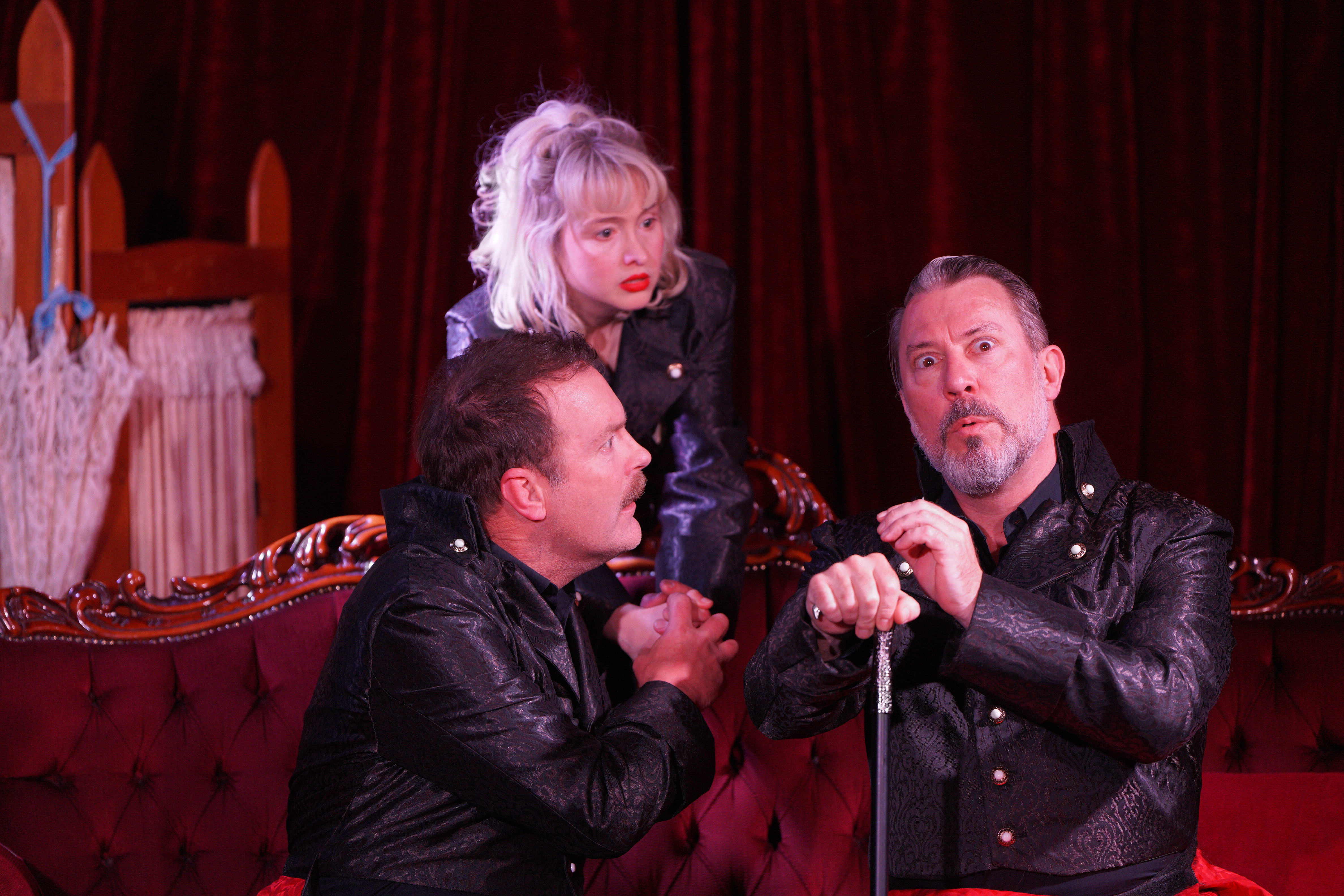
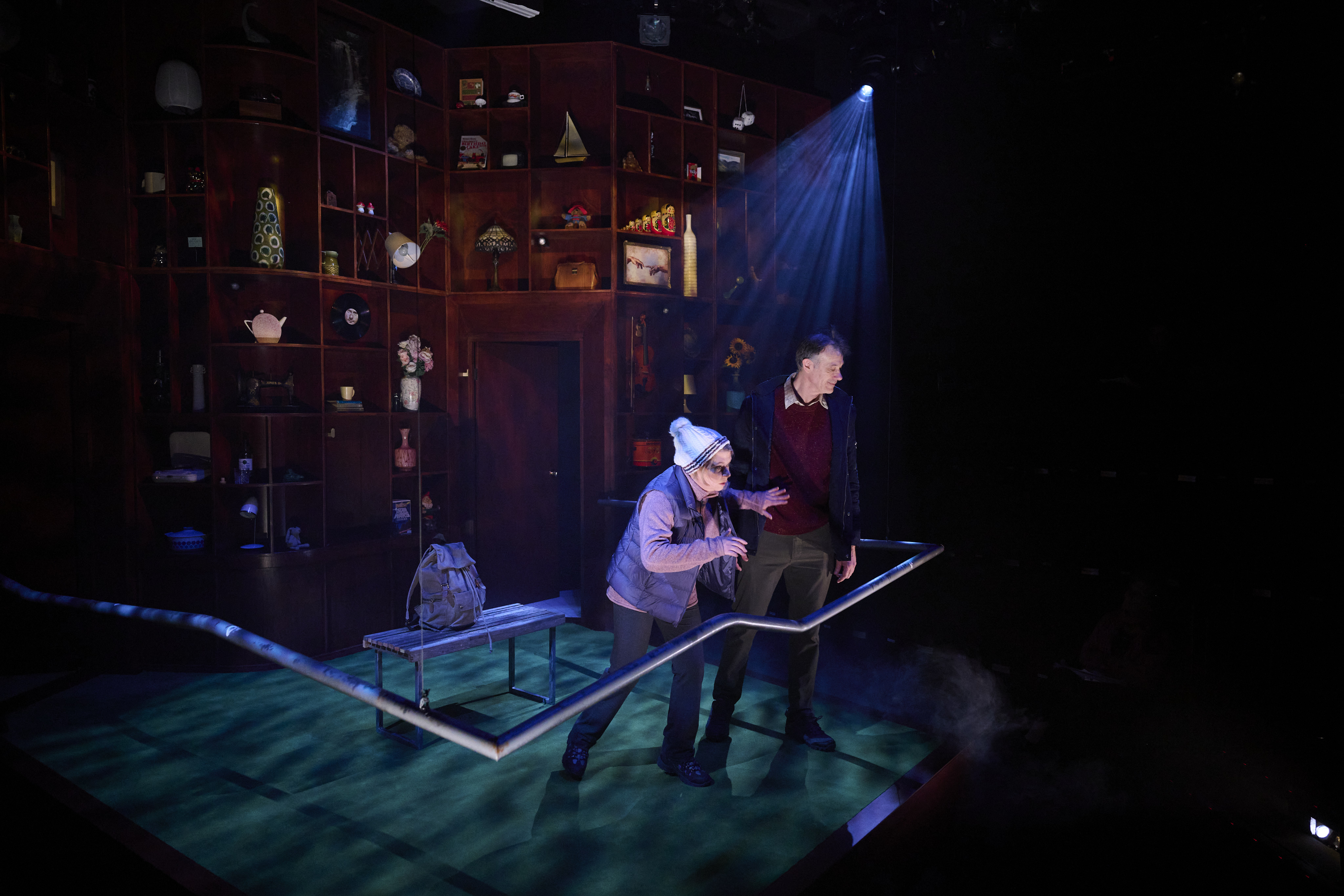
Michael Frayn’s Benefactors is a beautifully rich play and Mark Kilmurry’s production is superb.

Set in late 60’s England, it’s a comic four-hander presenting the changing dynamics of two marriages.

Colin and Sheila live near David and Jane, but visit so often it’s as though they live with them. It’s an old dramatic trick, the juxtaposition of two couples so they compare relationships, and we do too.

This comic exploration happens in the foreground of architect David’s plans for a housing development. An old grey district will be torn down, to be replaced by two whopping towers

Frayn directly references Ibsen’s The Master Builder and overtly connects the building project – its hubris, its hollowness, its hope – with other human ambitions. Of course, it’s a literary conceit dating back to Genesis, to the unknown writer who crafted the story of the tower of Babel. Frayn is working in a grand tradition and does so magnificently, offering humour and deep insight.

Kilmurry and his team know they have a gem to work with and they make it shine. Gareth Davies’ David is a gorgeous mixture of narrow obsession and gentle-heartedness. His final line is gold. Emma Palmer’s portrait of Jane is fascinatingly complex: a sharp, intelligent woman, brave enough to acknowledge her bewilderment at the workings of time. Colin, played by Matt Minto, is a delightfully provocative concoction of arrogance and perceptiveness. Megan Drury, as Colin’s pitifully perplexed wife Sheila, delivers a performance both hilarious and deeply moving.

The world is imperfect. What do we do? Accept the flaws? Tear everything down and start again? Or do we beaver away, slowly attempting to rehabilitate what we have? And, whatever our decision, time flows on, washing away some of the old problems, while ever depositing new ones.  

Benefactors is both a wonderful evening’s entertainment, and an invitation to return to further explore its extraordinary richness.  

Paul Gilchrist

Benefactors by Michael Frayn

at Ensemble until 22 July

ensemble.com.au

Image by Prudence Upton

Rabbits on a Red Planet

18 Jun

Rabbits on a Red Planet (book by Andy Leonard and Irving Gregory, score by Ryley Gillen) is a sci-fi satirical musical. It’s wonderful to see a new Australian musical on stage. Congratulations to the producing company and Flight Path Theatre.

Following environmental degradation (and possibly other hijinks), giant mutant rabbits are wreaking havoc across the planet. In response, and in the hope of big profits, tech billionaire Rob Muskas (Leonard) funds the alteration of the Martian environment to enable human habitation. Light and fun, the piece satirises a range of intertwined contemporary issues: the appalling impact of colonialism; the bull-headedness of both conspiracy theorists and those who deny crises; the lack of empathy for those seeking safety; environmental irresponsibility; and the self-seeking nature of capitalist ambition. In all this, there are some good laughs and valid points.

Gillen’s score is entertaining, and “King of Mars” (performed by the ensemble with Leonard as lead) is particularly catchy. Isabella Kohout and Jenna Wooley have exceptionally beautiful voices.

Having so many elements, musicals are an especially ambitious form of theatre, and in this production the lyrics and the dialogue – both content and delivery – could do with some sharpening.

But theatre is not space flight; when you get it wrong, no-one dies.

We just don’t get to visit new worlds.

(So, I guess, theatre is like space flight.)

Paul Gilchrist

Rabbits on a Red Planet (book by Andy Leonard and Irving Gregory, and score by Ryley Gillen)

at Flight Path Theatre until 24 June

www.flightpaththeatre.org

Image by Anthony Stone

Consent

10 Jun

This is a marvellous play presented by an extraordinary team.

As the title suggests, it’s based on crimes of sexuality, both what is illegal and what is too little or too large for legislation. (The law is a net we drag through the ocean of reality; the small slips through the mesh, the large tears it asunder.)

Nina Raine’s Consent is built on serious conflict. Not the type of conflict where two characters fight for the same thing, whatever that random thing is: the farm, the man, or dominance. No, it’s conflict born of those unfathomable fissures in the human condition. Sometimes, when we’re particularly brave or clear-eyed, we acknowledge that our deepest held values might be at odds with each other; that it might not all fit together. (It’s sort of the Gödel’s Theorem of values.) It’s what Hegel expressed in the line “Genuine tragedies in the world are not conflicts between right and wrong. They are conflicts between two rights.” In its reference to the great Greek tragedies, Consent makes explicit this type of tension.

But this is a contemporary play set in modern London. It contrasts the need for a legal system with the unavoidable limitations of a legal system. And, in asking which way justice, the play presents the battle between empathy and logic.

It interrogates empathy’s disturbing whole-heartedness. Sure, we must listen to the victim, but as is said in the play (I paraphrase) If you’re hurt enough, you become stupid.

Also explored is the troubling relationship between the valorisation of empathy and the desire to make others suffer the same pain we have felt. Empathy and revenge are perhaps closer cousins than one might imagine.

But rationality won’t necessarily save us either. The conflict between the letter of the law and its spirit is age-old, and legal logic can be especially pedantic. As one character points out, if you were to come across that sort of pedantry outside a courtroom, you’d naturally assume the speaker was disingenuous.   

The play also asks us to consider the difference between I’m sorry and I apologise, and to compare repentance with forgiveness. This isn’t semantics, it’s a genuine gift for the soul.

The play’s construction emphasises the inevitability of conflicting perspectives, with the stage sometimes split into two parallel and contrasting scenes. Likewise, the characterisation asserts complexity. Characters we initially despise will shine with unexpected goodness, and vice versa.

And under Craig Baldwin’s direction, the absolutely terrific ensemble present beautifully rich performances. Anna Samson’s Kitty is magnificent, offering both real heart and a glimpse into its darkest chambers. Nic English, playing her husband Edward, gives a superb portrait of cold intellectual arrogance and the emotional confusion it hides. Jeremy Waters’ Jake is wonderfully narcissistic, until he is gloriously, and so truthfully, not. Jennifer Rani, playing his wife Rachel, portrays magnificently that type of justified resentment that arrests moral growth. Anna Skellern’s Zara positively floats with exuberance until it’s punctured by betrayal. Sam O’Sullivan’s Tim is an eminently watchable combination of uncertainty and strength, a performance that captures the physicality of doubt and the verbal virtuosity of conviction. Jessica Bell as Gayle is a splendid working class counterpoint to all these privileged professionals, But Gayle is also a victim of rape, and Bell encapsulates perfectly both her incandescent rage and aching vulnerability.

Life is hard. Life is complex. Maybe we can’t make it all fit together. But we’re in it together. Consent is a deeply humane play, brilliantly presented.

Paul Gilchrist

Consent by Nina Raine

At Seymour Centre until 24 June

presented by Outhouse Theater Co

seymourcentre.com

The Hound of the Baskervilles

8 Jun

It’s fascinating (to me, at least) that Arthur Conan Doyle’s The Hound of The Baskervilles and Joseph Conrad’s Heart of Darkness were written within a year or so of each other.

It’s common knowledge that the phrase “Elementary, my dear Watson” never actually appears in any of the novels or short stories featuring Sherlock Holmes. But its spirit permeates their pages. Logic will discover the criminal, and order will be restored. Despite appearances, all is ultimately simple and secure.

But while Conan Doyle was writing this paean to rationality, Conrad’s colonialist Mister Kurtz was having another vision. A too privileged glimpse into the savagery of the human heart drew from Kurtz the cry “The horror, the horror”. It’s another type of simplicity, but one void of any security. Enter the 20th Century.

It probably seems I’ve begun far too seriously for a response to the Genesian Theatre’s production of The Hound of the Baskervilles. After all, Steven Canny and John Nicholson’s adaption is a silly spoof. And, under the direction of Richard Cotter, it’s splendid fun.

Three actors – Alyona Popova, Kate Easlea and Oliver Harcourt-Ham – play all the characters, and do so brilliantly. Cotter creates a theatrical space in which verbal play and physical humour thrive.

Popova as Sherlock Holmes captures the hilariously hyperbolic confidence of the great detective. (And, in another of her roles – a yokel attempting to wrangle an recalcitrant and unseen horse – her physicality is point perfect.) It’s an absolutely superb performance.

Easlea is terrific as her Dr Watson navigates playing second fiddle to a man who would be the entire orchestra. Her movement is also wonderful, either standing in Edwardian rigidity, arms at angle in a great coat, or nonchalantly pulling a pistol on some harmless, and imagined, sheep.

Harcourt-Ham as Henry, the Canadian heir to the Baskerville estate, draws huge laughs with his excellent comic timing and his gentle straight-faced matter-of-fact-ness. His yokel with cow, inexplicably and gloriously in a hessian bag, is also very funny.

Overall, it’s tremendously enjoyable.

But why do we enjoy spoofing works like The Hound?

I guess it’s because there’s something very quaint about their world view. For example, Henry sees Miss Stapleton (another role for Popova) and instantly falls in love, a fantasy mocked in a beautifully realised dance sequence. Similarly, the three lead male characters behave like such good-natured chums. (They’re gentlemen after all, and Englishmen at that – except for the Canadian, who is an honorary one while Britannia blithely rules the waves and the map of the world remains stained pink.) Easlea and Harcourt-Ham, in their giggly roughhouse, marvellously encapsulate the childlike aspect of this.

But most importantly, Holmes restores order through logic.

I suspect we’re no longer sure that’s possible.

And the hound never appears on stage, an omission that keeps the horror, the horror at bay.  

Paul Gilchrist

The Hound of the Baskervilles by Arthur Conan Doyle (adapted by Steven Canny and John Nicholson)

at Genesian Theatre until 17 June

genesiantheatre.com.au

Image by LSH Media

माँ की रसोई Maa Ki Rasoi – My Mother’s Kitchen

5 Jun

I don’t read the program before a show, nor after it (except to get the names of the creative team.)

I took Maa Ki Rasoi to be a sharing. I assumed the performer was sharing her personal story of her relationship with her mother. My assumption was supported by actor Madhullika Singh’s generous-spirited vulnerability, her warm-hearted performance style.  And my assumption was further encouraged by the meta-theatricality; we see the protagonist, a theatre maker, overtly choosing how to best tell her story.

If a personal sharing, this piece is part of a contemporary trend. It’s fascinating that personal testimony has become so common in theatre. We speak of the need to tell our stories, and this ubiquitous phrase has come to mean bearing witness to actual and specific lived experience. I’m not suggesting dramatists can’t or shouldn’t do this, but it’s curious that we’ve come to think it’s what they mainly do. (Hamlet undoubtedly reflects Shakespeare’s interests and assumptions, but does anyone really think it’s his personal story?)

Closely related to our desire to tell our stories is our interest in representation. It can only be good when our stages reflect the diversity of our population. But just as the phrase tell our stories has come to mean something very particular, so has representation. It’s come to mean something akin to speaking for, as we might imagine an elected representative speaks for her electorate. But an elected representative is chosen. Theatre makers aren’t chosen by those whom we increasingly assume they represent. In this piece, the protagonist makes a generalisation about South Asian mothers (already a rather broad category.) Am I being asked to consider this generalisation as testimony, information to add to my store of knowledge of South Asian mothers? Or am I being asked to consider the generalisation as I would’ve previously done in a theatre; that is, assume it’s telling me something about the protagonist’s mental habits?  

But this piece was not what I imagined. Maa Ki Rasoi is written and directed by Pratha Nagpal and, as previously suggested, performed by Madhullika Singh; so it’s not simply a personal sharing. (And, to anyone uninterested in the dramatic form and its development, all my earlier comments will appear just so much self-indulgent digression.) The piece mimics a personal sharing. I’m not suggesting this mimicry is dishonest or inauthentic, certainly no more than theatre is generally.

It’s a gentle story, presented with an overly gentle pace. The protagonist ponders the importance of cooking in her mother’s life. Both Nagpal’s writing and Singh’s performance present beautifully the tension between the wish for autonomy and the guilty regret of dismissing tradition. There’s delightful humour in the ironic exploration of words like feminism and patriarchy, abstractions that naturally fail to capture real life’s complexity. There’s also an intriguing use of the phrase safe space (or was it safe place?) Several times we’re told the kitchen is her mother’s safe space. Unless this phrase is in the process of morphing to mean happy space, what’s missing is a description of from what it is that her mother requires safety. It’s a poignant omission.

There are several other absences that are equally powerful. Many phrases in an Indian language (Hindi?) aren’t translated, and that refusal to privilege English speaks eloquently of both the joys and pains of the migrant experience. Similarly, for 45 minutes, the kitchen is empty. Spoken of, but absent, the protagonist’s mother is a wonderful symbol of how those we love imbue our every thought and feeling.

Paul Gilchrist

Maa Ki Rasoi – My Mother’s Kitchen by Pratha Nagpal  

at KXT until 4 June, as part of the TAPE OVER Festival

kingsxtheatre.com

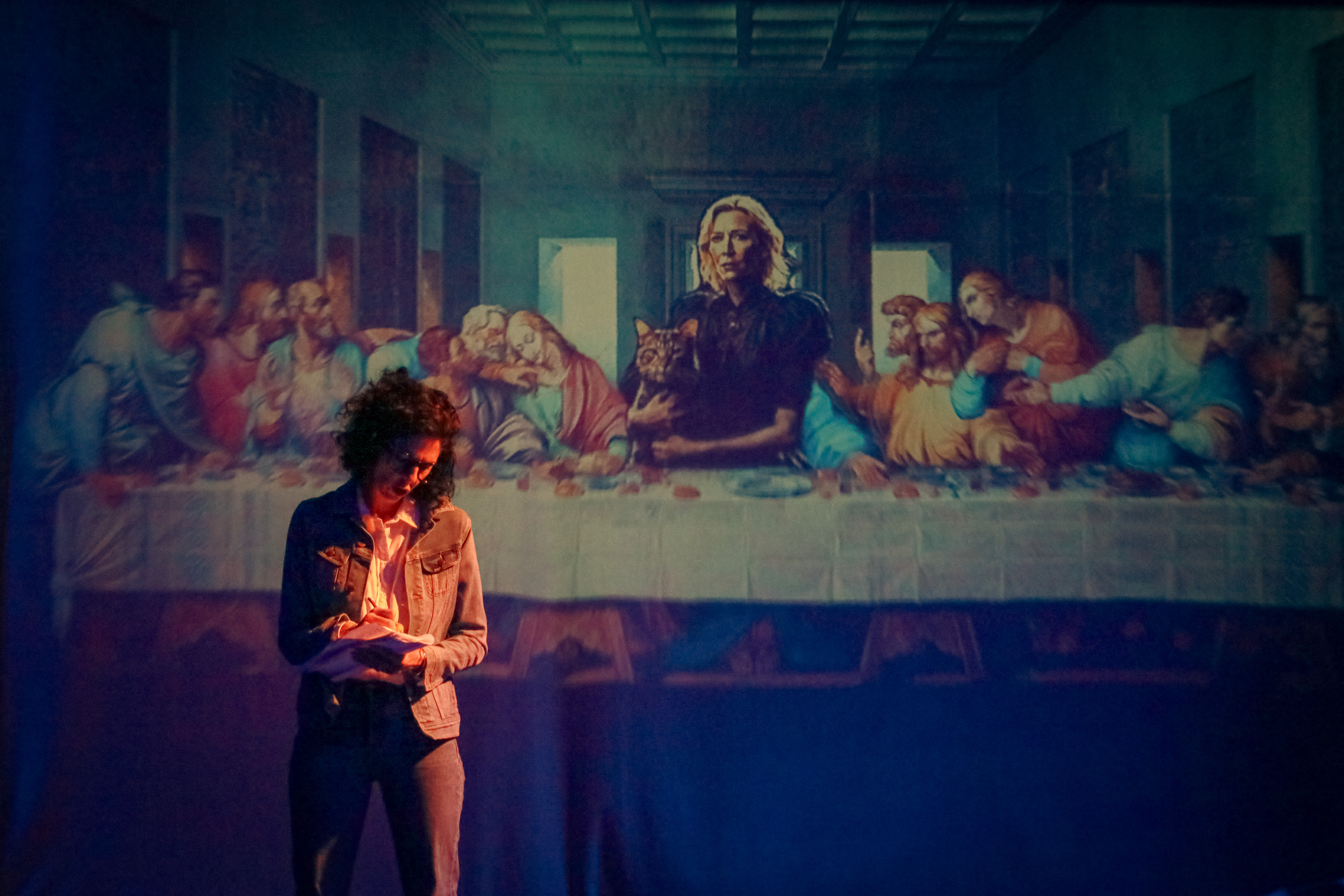
Scenes from the Climate Era

2 Jun

Eschewing a narrative is a bold choice. But as the title suggests, that’s what playwright David Finnigan does. We’re offered separate short scenes, all set in a world in which climate change is a very real challenge. (Our world.)

Sometimes these scenes are set twenty years in the past, sometimes twenty years in the future, sometimes now.  Here’s a few examples: a young couple consider the environmental impact of having a baby; an expert is told before a TV interview that hope is compulsory; a woman speaks to her counsellor about her climate related fears; a man tends the last living member of a dying frog species; a family in Penrith face the horror of 55 degree heat.

Finnigan’s script is both humorous and moving. Director Carissa Licciardello gives her cast a beautiful open playing space and their creation of the multifarious characters is brilliant.   

Many of the scenes forgo subtext; they’re about what they’re about – unless, that is, we’re actually being invited to consider them through the lens of a recurring motif. This motif is that our response to climate change has four stages: denial, the seeking of solutions, despair and then, finally, hope.

And though these four stages might offer an approach to each individual scene, I don’t think they’re the work’s overriding structure. But maybe they are. Does it matter? What do we expect theatre to offer in terms of an issue such as climate change? (To start with, climate change is so big, so wide reaching, while theatre’s strength is the particular and the specific.) Do we want theatre to offer solutions? Are we seeking motivation? Or will we settle for a snapshot of the phenomena as it is experienced by our species?

If we decide our goal is consciousness raising, then we get stuck on the snag that drama is fiction. The audience doesn’t know if anything the characters say is true. You could argue that’s the case in reality (and so Art imitates Life) except that drama’s forte is to present individual perspectives, usually in conflict, and its characters speak in order to achieve something, and that something is rarely the propagation of Truth. (Is the artform fundamentally cynical? No, it simply acknowledges that Pass the salt is a more common use of language than This is the salt.)  

This piece will certainly prove fuel to plenty of post-show conversations about climate (and, as is often case with such conversations, about the choice of fuel.)

Paul Gilchrist

Scenes from the Climate Era by David Finnigan

Belvoir until 25 June

belvoir.com.au

image by Brett Boardman

Short Blanket

28 May

(not that anyone would care, but I think) What makes theatre an extraordinary artform is that it can do two extraordinary things.

The first of those extraordinary things is that theatre embodies thoughts and feelings. Ideas that are rich, complex and subtle, and feelings that are intense, ephemeral and ineffable, are embodied by an actor: through their voice, through their movement, and through their spatial relationship with their material environment and the people who inhabit it. If theatre can be said to fairly represent reality, it does so because of this sense of the concrete. As in the mysterious miracle that is Life, certain things just are.

The second of the extraordinary things theatre does is that it allows different voices. Characters have their own distinct perspective. This doesn’t only facilitate conflict; it also manifests multiplicity. If theatre can be said to fairly represent reality, it does so because of this sense of the unresolved. As in the mysterious miracle that is Life, nothing is neat.

What makes Short Blanket by Matt Bostock a terrific piece of theatre is that it embraces both of theatre’s extraordinary attributes. (New Australian work, especially in the indie scene, is prone to attempt only the first of them.)

Short Blanket is one of the most exciting new shows I’ve seen for quite a while; it’s whip-smart, with a beating heart.

It’s the story of writing a play, or more specifically the story of development hell. (I suspect writers only endure the development process – The I-don’t-think-my-character-would-say-that sort of torment – because at some time something like it will have to be lived through if the two special attributes of theatre are to be achieved.)

In Short Blanket, Lainey’s play is being workshopped. She wants to represent the challenges Asian Australians experience, or perhaps more broadly, the pain of the global majority in a world yet to fully divest itself of colonialism. But not everyone wants it presented her way. Actor Dominique wants it angrier. Actor Joey wants it more forgiving. Company artistic director Gloria wants it more saleable. I’m simplifying (as the mono-voice of a review will do) but I’m hoping to capture Short Blanket’s sense that not everything is obvious or inarguable (despite certainty being a rather fashionable fallacy at the moment.) A play that uses the dramatic form so well is fully conscious that not every aspect of reality can be easily represented in that dramatic form. As Gloria says to Lainey, (I paraphrase) You don’t have a story, you have a feeling.

How do you represent injustice in an artform that requires an audience to sit through it and to pay for the privilege? Why use the dramatic form for this purpose at all? Every tool is not for every job. (A personal digression: it is odd that we modern theatre makers see ourselves as a sort of priestly class, responsible for the ethical education of others.) The script is very aware of the tricky question of what value we are to put on theatre. One character suggests, that if your audience is predominantly white, it won’t matter if your show is crap, because they’ll still say it was a privilege to have seen it.

Tiffany Wong’s cast do wonderful work. Andrea Magpulong’s Lainey captures the tension between the desire to make a show happen and the desperate need to bear witness. Dominique Purdue brilliantly presents the actor’s journey from initial excitement to bitter disillusionment as her hopes for the project flounder. Joseph Tanti as Joey embodies both the brutal arrogance of the privileged characters he performs in the workshopped play and the difficulties of telling a story that isn’t his. Monica Russell as the artistic director of the company effectively marries both the cold rationality required for financial realities and the resentment of a pioneer who feels her long efforts are being ignored. Sayuri Narroway as the director of the workshop presents a calmness that cleverly hides a different agenda.

Wong uses the intimate Meraki space marvellously, effectively presenting both the world in which the artist characters perform and the world in which these artists reflect on that performance.

The last image of Short Blanket is especially powerful. The spoiler rule means I shouldn’t really describe it. But I can say it functions gloriously as both an indictment of injustice, and as an invitation to ponder from where our motivation for theatre-making should come.

Paul Gilchrist

Short Blanket by Matt Bostock

presented by Slanted Theatre

at Meraki Arts Bar until 3 June

meraki.sydney

Party Girl

26 May

“I don’t believe in anything,” says a woman dressed as a fairy.

It’s a provocative line, in several ways.

It encapsulates the key tension driving this very funny piece: an earthy, jaded, sharp-mouthed protagonist pretends to be a magical, fantastical being. It’s how you add some glitter to children’s parties. It’s also how you pay for your next bottle of vodka.

Lucy Heffernan, who wrote and performs Party Girl, is extraordinary. Her magnificent stage presence, her marvellous voice, her mean electric guitar all result in this under-an-hour show being a theatrical joy.

Fairy Sparkles tells of a day performing at kid’s parties. Linking her tale together are references to the rules of being a fairy. They are nothing but practical: Arrive in costume. Don’t be late. Don’t park too close to the birthday girl’s house. Don’t smoke.

But it’s not just the contrast between fictional fantasy and cynical pragmatism that fuels the show. At home, Mum is falling apart, a victim of mental illness. Where’s the magic in a world where this can happen? It’s hard to be ethereal when shit’s so real.

Director Lily Hayman uses the KXT traverse stage beautifully. A blank space, it slowly fills with detritus. It’s lit evocatively by Tyler Fitzpatrick, her design suggesting both rock performance with haze and the confusion of conflicting visions of life.

Linked to the whole pub rock vibe is the show’s awareness of class inequality, reinvigorating in a theatre scene currently focussing on alternative theories of privilege.   

Which oddly enough, brings me to the other way in which “I don’t believe in anything” is a provocative statement.

It’s a line that draws attention to the glorious ambiguity of that word believe. Believe to be true or believe to be of value? A thing can be true but not important (or helpful.) Can things be not true but important (or helpful)?

Yes, that’s what magic is. Not the magic that happens to you; I mean the type you cast yourself.  The world we experience is the spell we cast….up to a point. Where exactly that point is, the point where our personal magic ceases and the brute force of reality takes over – and it will – is a thing to argue. And a thing to test.

Paul Gilchrist

Party Girl by Lucy Heffernan

at KXT until May 28, as part of the TAPE OVER Festival

www.kingsxtheatre.com

Image by Clare Hawley

Girl Band

21 May

Directed by Lucy Clements, Girl Band by Katy Warner is a wonderful satire on the music industry and pop culture – but it’s also a poignant exploration of power.

It’s 1994 and The Sensation Girls are on the cusp. Orchestrated by the ever unseen Darren and Craig, they’re a line up to inspire young women (and to make a heap of money, though not for the Girls themselves.) In one song, each of the group introduces themselves: “I’m smart! I’m sexy! I’m strong! I’m smiley! I’m sassy!” For young women, it’s no doubt an invaluable lesson in self-esteem (and stereotyping, and alliteration.)

With composition by Zoe Rinkel and lyrics by Warner, the production also beautifully skewers the music produced by manufactured groups.  “Boy Crazy” not only doesn’t pass the Bechdel test; its inane repetition ensures it can’t pass the Goldfish test. “I’m boy crazy. Boy crazy. I’m boy….” You know the rest.  Wisely, we’re not asked to listen to the entire song.

Similarly, the choreography by Amy Hack captures brilliantly the double standards of this musical genre. The lyrics of “Maybe” suggest a sweet uncertainty about the singer’s romantic interest, but the hilarious pseudo-sexy choreography leaves little doubt.

The play is set in the rehearsal room as the five group members prepare for a big industry showcase. Chaya Ocampo as Jade gives a terrific comic performance as a show business character whose “I’m smart!” is deliciously and unconsciously ironic. Jade Fuda and Meg Clarke as lovers capture the tensions created by management’s homophobic insistence on secrecy. LJ Wilson as MJ sings “I’m smiley!” while being delightfully not. MJ’s smarting because previous lead Didi has left and the vacated role has gone to new girl, Kiki. Of course, that’s not her real name, just another imposition from above. Kiki or Kathleen (played with magical exuberance by Madeline Marie Dona) is going to shake things up. Why can’t the girls have more creative control?

And so it comes down to power. Becky is the group’s choreographer, and Hack is magnificent in the role. While very funny, it’s simultaneously a deliberately disturbing portrait of complicity. Becky is reluctant to make waves, and there’s much more to management’s malevolence than just a cynical commitment to inauthenticity.

And that’s where the play’s exploration of power becomes particularly provocative. Our workplace can create misery in many ways, but are all those ways related? The slippery slope argument will always appear most convincing to those who have known real fear.

Paul Gilchrist

Girl Band by Katy Warner

at Riverside until 27 May

riversideparramatta.com.au

Image by Phil Erbacher

Relativity

16 May

In one of my favourite cartoons, two dogs walk down the street and one complains to the other “It’s always ‘good dog’, never ‘great dog’.”

I was reminded of this comment on parsimony and praise as I watched Relativity by Mark St. Germain.

Not surprisingly, the play’s about Albert Einstein, though the title might be more than just a reference to his most famous theory.

The play explicitly asks “To be a great man, do you have to be a good one?” In the context of the story – Einstein receiving a surprise visitor to whom he is intimately and somewhat awkwardly related – the positing of this question so openly tells us that psychological veracity is not what’s being valued here.

So it’s a play of ideas? Well, the play’s fundamental question is an odd one. “To be a great man, do you have to be a good one?” ‘Great’? What does that actually mean? Does it mean ‘exceptionally good’? But that would beg the question. Or does ‘greatness’ simply mean to be held in high-esteem for reasons other than ethics? In which case, why connect greatness and goodness at all?

Discussions of greatness are often mere valorisations of celebrity. But, if instead, the fundamental question being asked is about the nature of goodness, then the play deals with this enormously complex issue rather obliquely. (This Einstein says Hitler was evil while an adulterer is not – a distinction you don’t need to be Einstein to make.)

What if I let go my philosophical pretensions, and see the play as just a historical portrait? This means I’m being asked to care if the actual Einstein was a good man or not, and that still presupposes a fascination with celebrity (and it’s not going to make any difference to the physics.) And another thing; since what’s portrayed is a private and presumably imagined conversation, can it be taken as an accurate representation of the man? In this play, Einstein says that thirty years of an average person’s life is not as valuable as a great work of art. Did the real man say anything like that?

Clearly, the play is thought-provoking.

It’s a three hander and director Johann Walraven elicits utterly watchable performances from his cast.  Nicholas Papademetriou as Einstein is a beautiful mixture of gentle-hearted humour and a laser sharp intellect. Nisrine Amine as his surprise visitor wonderfully tempers bewilderment at Einstein’s complexity and a cold anger at his self-absorption. Alison Chambers as Einstein’s housekeeper, and lover, is delightfully amusing when she’s manipulating him, and deeply poignant when the power relations are less clear.

Paul Gilchrist

Relativity by Mark St. Germain

at Riverside Parramatta from 10 – 13 May

riversideparramatta.com.au

Image by Iain Cox