Dancing Naked in the Backyard

16 Apr

Not in my backyard. This phrase encapsulates both the greatest challenge and the greatest opportunity for civil society.

There are many things I dislike about ancient Greek culture (just look at some of my posts about their theatre to see what I mean). But one thing I think the Greeks got right was their attitude to the polis; the idea that we’re only whole when we actively take part in the community.

C J Naylor’s thought provoking new play is about Nimby-ism. A group of local residents are challenged by a planned urban development. Not in my backyard, they say. The threat politicizes them.

Is this a good or a bad thing? The play seems to put little faith in the political process. And the politicization of the locals seems to go little further than their own narrow concerns.

Perhaps high rise development is necessary. People do have to live somewhere. And how sprawling do we want our cities to become? The locals’ attitude seems to be based simply on the idea that they were there first. Are they claiming to be an unacknowledged indigenous group?

Dancing Naked

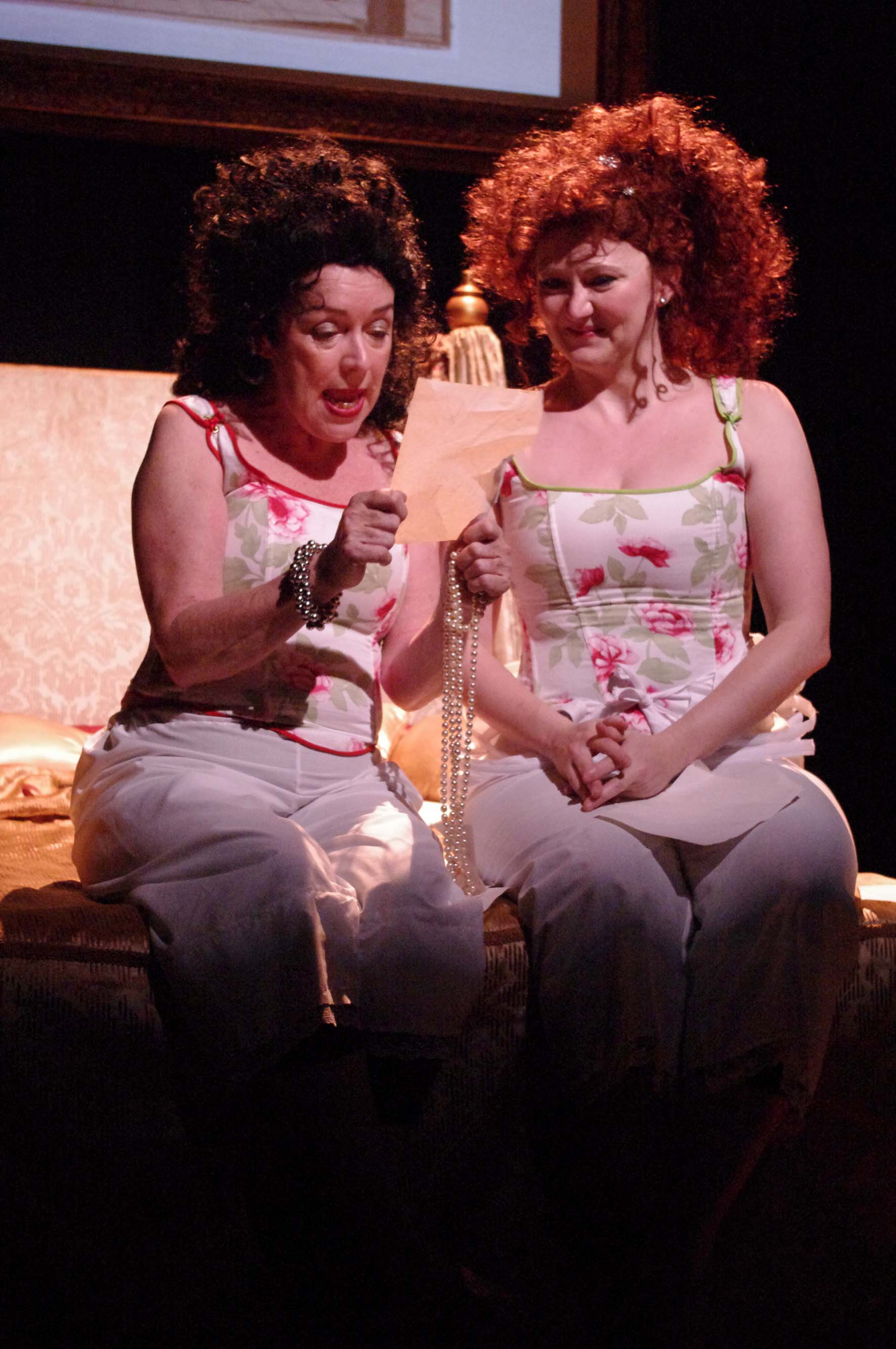
Naylor’s script is intriguingly ambiguous. Samuel Smith is the appropriately sleazy developer, fun to portray, easy to mistrust. But the locals are not particularly admirable either. Alan Long and Estelle Healey play mature residents with the script’s intended kookiness, which allows two possible readings of the characters:  that they are either lovable, or laughable. Zazu Towle and Matt Hopkins play a younger couple, likable but difficult to look up to since they seem to be fighting for their right to sit on their couch.

There are, however, some nice comic moments from all the actors. Sascha Hall as the council bureaucrat delivers some wonderful deadpan disdain.

This is Brave New Word’s third production of original Australian writing. It’s great to see a young company investing in this. There should be more of it.

With its simple, direct and unadorned dialogue, and its reliance on short scenes (which this production didn’t deal with well), Dancing Naked in the Backyard feels a lot like television.  However, that’s probably appropriate. After all, the theme is the challenge, and necessity, of political engagement, and that’s something that should be discussed in every Australian lounge room.

Veronica Kaye

Dancing Naked in the Backyard by C J Naylor

TAP Gallery til 26 April

http://bnwtheatre.com.au/dancing-naked-in-the-backyard/

After Easter

15 Apr

After Easter is a brilliant play. It’s provocative and so very, very rich.

It’s fundamentally the story of Greta, a young woman beset by visions. Nominally of Catholic background, she’s not religious. She has no idea what to make of her experiences, nor do her family.

Our scientific rationalist society can only interpret such experiences as symptoms of mental illness. And, on many occasions, they probably are.

But they can also be indicative of a powerful imagination and a deep compassion.

Ask plenty of dramatists. They have visitations from their characters. Ibsen famously had conversations with Nora from A Doll’s House. (And it’s not beyond my own ‘spiritual’ experience.)

After Easter

Director Roz Riley has created an engaging production. She gets good work from her cast. Karoline Rose O’Sullivan is wonderful as Greta, playing her with a poignant bewilderment, filled with wit and warmth. She gets terrific support from Celia Kelly and Eilannin Dhu as her sisters, both delivering moving portraits of beautifully complex women.

Some people might see this play as a family drama, but it was not on this level that I found it so affecting; not unless by ‘family’ we mean the human family.

Set predominately in a Northern Ireland trying to find its way, this remarkable play reminds us of ways of seeing we often neglect. Not traditional religion, but ways of imagination and compassion. Inspired by such radical visions of the world is how we can find the hope to better it.

Veronica Kaye


After Easter by Anne Devlin

Star of the Sea Theatre til 3 May

http://craftwaresolutions.com.au/


Cough

13 Apr

The dialogue between adulthood and childhood is an endlessly intriguing one. Children learn from adults and adults from children.

But it’s also through this intergenerational dialogue that we define ourselves. Don’t be such a child, adults tell each other.

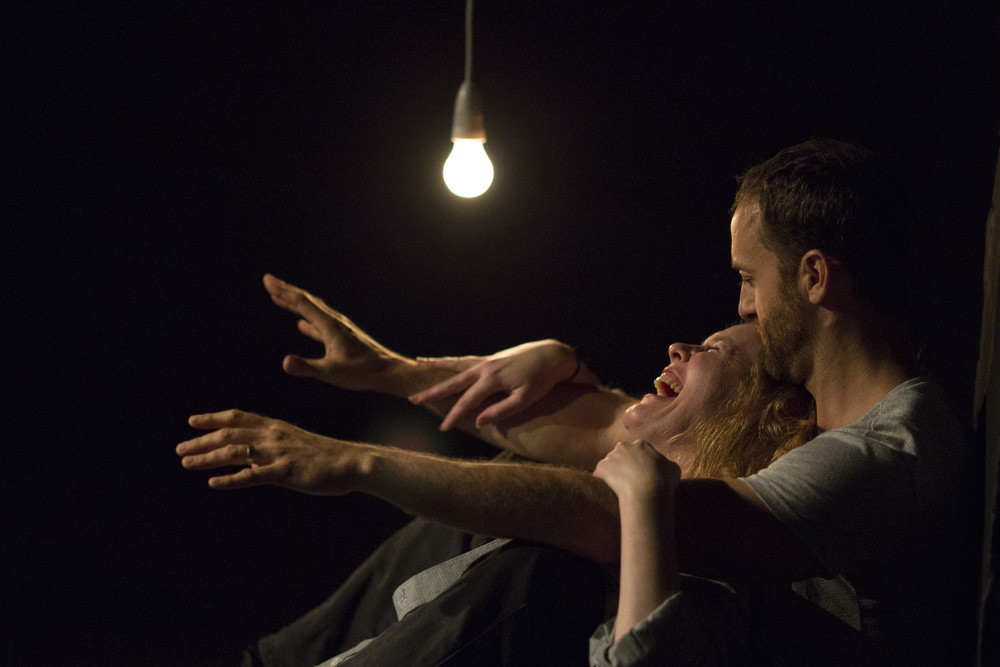
Cough is set in a daycare centre, and playwright Emily Calder’s presentation of the two generations is fascinating. Much of the humour in this very funny play comes from the immaturity of the adults. Concern has been corrupted into fear, and the parents fret endlessly about their children’s welfare. But the children’s lives are also filled with trepidation.

Provocatively, both generations are played by the same actors. This brings to the foreground the issue: Is fear a learnt behavior? Or is it simply the human condition? (These questions are highlighted by the hilarious discussions between the parents about child rearing methods. ‘That’s just a theory. It’s definitely a theory!’ they snap.)

Photo by Lucy Parakhina

Photo by Lucy Parakhina

The performances are fabulous, with Vanessa Cole, Tim Reuben and Melissa Brownlow slipping between child and adult in a splendidly subversive manner. Tom Christophersen is the fourth in the ensemble, and his creation of Frank, the creepy toddler, is comic magic.

Director James Dalton production is wonderfully inventive and a sensual delight (especially keeping in mind this is not high budget theatre.) He is aided admirably by his design team. Benjamin Brockman’s lighting design is brilliant. The soundscape by Tom Hogan is appropriately ominous.

Cough might be about fear, but it’s also about connections. The generations are inextricably linked, and there’s a real pathos to this. But, of course, there’s also something deeply moving. The play is satirical, but something more. The final image is a beautiful blossoming challenge. Tantalizingly ambiguous, it’s filled with foreboding, but it’s also suggestive of that other shared human characteristic – the potential for wonder.

Veronica Kaye


Cough by Emily Calder

107 Projects til 20th April

http://unhappen.org/cough

The Gigli Concert

10 Apr

To be honest, I didn’t understand this play.

A man suffers from depression. (I appreciate the clinical term can misrepresent the experience.) The man runs a counseling service based on Dynamatology, a system of seeming psycho-babble. He gets no clients. One day another man knocks on his door and asks for help. He too suffers from depression. (see note above). I’m not sure he warms to the label. He doesn’t like philosophy or psychology. What he wants is to be able to sing like the opera singer Gigli. Their sessions begin. There is no attempt to teach him to sing.

Photo by Wendy McDougall

Photo by Wendy McDougall

Of course, I’m being facetious. Again. The singing is a symbol – of a life lived fully and passionately; of an eternal ‘yes’ saying; of a type of healing. I think.

I also think the fundamental dramatic quality is multiplicity; multiplicity of voices onstage, and multiplicity of responses offstage. No play speaks to everyone. This one didn’t speak to me. I didn’t understand the challenges faced by the main characters. And so the evening seemed too long. But clearly it spoke to a large number of the audience.  There were plenty of laughs, and that pin drop silence that suggests intense fascination and total immersion.

The play is often considered Tom Murphy’s masterpiece and John O’Hare’s production is top class. The cast (Patrick Dickson, Kim Lewis and Maeliosa Stafford) give extraordinary performances.

So what do I make of a night like this? Do I wallow in the sense of alienation it creates for me personally? Do I recall other productions when it seemed I was the only sympathetic ear?

What I can do is make a recommendation: this is quality, thought provoking theatre. Go see it for yourself.

After all, if the play said anything to me, it was as a paean to the virtue of listening. Our Dynamatologist realizes he is out of his depth, but he listens anyway. And the results are beautiful.

Veronica Kaye

The Gigli Concert by Tom Murphy

at Eternity Playhouse til 4 May

http://www.darlinghursttheatre.com/whats-on/the-gigli-concert


Can theatre change the world?

8 Apr

Recently a friend told me if you want to change the world you need to do something more immediate than theatre.

On one level, I have no argument with this. Direct political action and social service are indisputably more important than art. Don’t write a play about the homeless. Volunteer for a soup kitchen.

But on another level, I think my friend’s well meaning comment is only half the truth.

Firstly, our values need to come from somewhere. I believe one place they spring is from our stories.

I believe we should produce theatre that shares beautiful and empowering ways of looking at the world. As I’ve said elsewhere, we need to make theatre that reminds the miserable of happiness and the happy of misery.

We should aim to produce theatre that adds something useful to the cultural toolbox. (Of course, this can be done in many ways besides theatre. Perhaps to have the biggest cultural impact you should create an internet meme.)

Even by doing nothing we have an impact

Even by doing nothing we have an impact

Perhaps this is an overly sophisticated view. Perhaps we are noble savages, born perfect and corrupted by society. In which case, theatre (and all art) is at best an unpleasant noise, and at worse an inducement to evil.

Which leads me to my second objection to my friend’s well meant comment.

I think everything we do changes the world. Or perpetuates it. The world is made by us. Or, at least, an enormous part of it – the human part. (And increasingly large parts of the non-human world, too. There’s an old joke: everyone complains about the weather, but no-one does anything about it. Human-made climate change has stripped the giggle out of that one.)

Our choices matter. We should choose to be – and to encourage – curiosity and joy, compassion and tolerance. And we should do it in the way we talk, how we vote, in what we choose to eat, how we spend our money, and in the making of our art.

Veronica Kaye

To Kill a Mockingbird

8 Apr

To be honest, I’ve never especially enjoyed the novel. It’s too episodic. And then there’s the whole told-from-a-child’s-point-of-view thing. It’s not the way I like my politics.

And there’s the message. And there is a MESSAGE: that you need to walk in someone else’s shoes before you can judge them. So bleedingly obvious!

Of course, I’m being facetious. I’m one of the many who’ve been unconsciously shaped by this classic.

Photographs © Bob Seary

Photo © Bob Seary

To Kill a Mockingbird is one of the most popular stories of the 20th Century. It encapsulates the drive for social justice that’s one of the crowning achievements of our culture. Or, it could be strongly argued, the novel didn’t so much encapsulate as cause. Like Dickens in the 19th century, Harper Lee was one of those voices that pushed our society to something better. (Yes, I believe literature can change the world.)

Christopher Sergel’s stage adaptation retains the power of the novel. Annette Rowlison’s production is amusing, engaging and very affecting. Lynden Jones as Atticus Finch has an extraordinary vulnerability that makes his performance deeply moving. The child actors (Teagan Croft, Hudson Musty and Kai Lewins) must carry a large part of the story, and they’re some of the best young performers I’ve seen. Dave Kirkham’s Sheriff Tate is a wonderful portrait of the simple but good man struggling with issues he’d rather avoid.

Set designer Sasha Sinclair gives us the town of Maycomb as a series of run down houses, evoked by their front doors. This might seem awkward when the story becomes a courtroom drama, but ultimately it’s an incredibly effective image. To Kill a Mockingbird is not really Scout’s story. It’s Maycomb’s; the larger world’s. Maudie Atkinson is given a narrator’s role in the stage version, and she’s played with a warm intelligence by Sarah Carroll. Maudie has the feel of the omniscient stage manager from Thornton Wilders’ Our Town, and her voice reminds us it’s Maycomb that’s really on trial. That the town can’t stand Atticus’ defence of Tom Robinson shows it’s guilty of a social blindness that’s deep and abiding.

Exactly how far we’ve come in the last fifty years regarding racial bigotry is an open question.  But theatre like this leads us to continue to ask that question. And to ask where else our blindness might lie.

For in fifty years, will later generations say that we had our doors shut tight, blind to the bleedingly obvious.

Veronica Kaye


To Kill a Mockingbird

New Theatre til 19 April

http://newtheatre.org.au/whats-on/season-2014/to-kill-a-mockingbird/

Subverting the Review

4 Apr

Recently some of my theatre-making friends have been complaining about the standard of reviewing in this city. Not that they’ve been marching in the street about it. And I doubt they’ve sent off any terse emails. They’ve just been grumbling over their post-show drinks.

They’re not complaining that the reviews are unfavourable. They’re complaining that they’re badly written.

What makes a good review?*

Now, that’s a good question. Who gets to determine that?

Now, where are those pigeons?

Now, where are those pigeons?


It’s commonly said, that in their judgement of productions, reviewers can be neither right nor wrong. It’s accepted that their evaluations are subjective.

Clearly, this ‘problem’ also faces anyone attempting to define what a good review should be.

And let me go further. If I was to go to a play determined that it should fit certain parameters or structures I’d be missing the whole point of the creative endeavour. And that, I believe, is also true of writing about theatre.

Theatre is magic making, life giving, world creating. An insistence that reviews be a certain thing is a refusal to play. Don’t be the shy kid who won’t join in.

Veronica Kaye


*I guess they could start by being literate. Though I’m not sure who gets to determine that either.

Possessions

4 Apr

Possessions is an absolutely fascinating piece of theatre,  and not the least reason being that the program comes complete with a bibliography listing both primary and secondary sources.

The play presents the lives of the historical Mancini sisters, who lived in seventeenth century Europe. Though extraordinarily privileged, they still faced a world that refused to acknowledge them as independent of their husbands. (It’s worth remembering, that in England for example, a married women wasn’t allowed to own property until 1882.)  The Mancini sisters tried to live life on their own terms, suffered social condemnation, and went on to publish memoirs presenting their side of the story.

Photo by Penelope Lemon

Photo by Penelope Lemon

Self righteous writers like myself love to pounce gleefully on parochial middle class work and deride it for focusing only on “first world problems”. Is this play a case of “old world problems”?

No, for several reasons.

Firstly, creator/performers Jane Bergeron and Carrie Ann Quinn create a world in which we are playfully transported back and forth between the past and the present. The seventeenth century is never too far from the twenty-first. And the two time frames are in dialogue; Bergeron and Quinn speak both as the characters and themselves. This makes for a show that’s both a lot of fun and thought provoking. Paradoxically, the overt theatricality of the piece isn’t at odds with the aim to present historical truth. It reminds us that we are active participants in our stories, as both characters and authors.

And secondly, only with willful ignorance could it be claimed that the fight for gender equality is over.

Veronica Kaye


Possessions by Jane Bergeron and Carrie Ann Quinn

King Street Theatre til 5th April

http://www.kingstreettheatre.com.au/posessions/


Natural Born Producers

3 Apr

Hey writer, who is the best person to produce your play? You.

Sure, if Andrew Upton calls, let it go to message bank, and get back to him at your convenience.

Or if some 22 year old with more enthusiasm than ability wants to stage your play in a car park in Fairfield, go for it. (It’s difficult to see you as serious writer if you won’t help mount a production of your play that could be truly awful.)

So why are you the best producer? Because you care. Because you want it to happen. Because you wrote the play to be seen.

gilchrist ship

I’m not dismissing the people with real skills and experience in the field of producing. If they want to do it, you’d be a fool to stop them. But while you are waiting for that stampede of interest…..

The relative exclusion of the writer from the process is a historical accident. Sophocles was there. Shakespeare was there. Moliere was there. The current division of labour is very bourgeois, and has gone hand in hand with an obsession with status. (Writing that is worthwhile challenges established values, so a writer seeking status is as absurd as a spy wanting recognition.)

But what about the money? I hope you make an absolute heap. And then distribute it to the people who need it. But the obsession to get paid for your work is another bourgeois cultural phenomenon. As is calling it ‘work’. We all need to eat, but if you value your voice only for the cash you can make out of it you’ve allowed it to be reduced to just another commodity. Would government funding or private sponsorship have made the Sermon on the Mount better?

‘But if it was any good wouldn’t someone pay me for it?’ That attitude is loud and clear in our society, and perfectly designed to silence dissent.

Why did you write the play in the first place? If you wrote it in the hope of gaining fame or wealth it’s probably not worth being produced. Our society has heard quite enough of that voice.

But if you wrote it in order to share a vision of life, don’t stop now.

If you wrote it to remind the miserable of happiness, or the happy of misery, don’t stop now.

Veronica Kaye

Stitching

3 Apr

I’m a sucker for deliberately ambiguous imagery. For me it encapsulates the multiple perspectives that are both the hallmark and high point of drama as an art form.

The imagery I’m referring to in this play is that suggested by the title. Stitching is an image of putting things back together, of mending them. It’s also an image of………but that would be a spoiler.

stitching prod 2

Anthony Neilson’s play is tight and sparse, funny and confronting. It tells the story of Abby (Lara Lightfoot) and Stuart (Wade Doolan) who must decide whether to keep the child she is carrying.

An unplanned pregnancy is the perfect symbol of the enormity of sexuality, the worlds it contain, beautiful and harsh, unexpected and frightening. (Not that I should really call the natural consequences of sexuality a symbol – am I that naive?)

Aided by director Mark Westbrook, Doolan and Lightfoot give beautiful performances, understated and subtle.

After the scenario I’ve briefly sketched, Stitching goes down a psychological path I couldn’t (or didn’t want to) follow. Once again, the spoiler rule prevents me from discussing this much further, but suffice to say it’s about coping mechanisms. It will certainly lead to thought provoking post show discussions.

But see it for yourself. Stitching is a well performed, engaging hour of theatre.

Veronica Kaye


Stitching by Anthony Neilson

TAP Gallery til 12 April

http://www.littlespoontheatre.com/