Tag Archives: John Patrick Shanley

Danny and the Deep Blue Sea

18 Jan

I last saw this play more than a decade ago, and I’ve never read it, yet going into this production at the Old Fitz, I still remembered a line from the script.

“I forgive you.”

It’s a line we all desperately need to hear more often – though, I admit, it’s not one that seems especially memorable from either a theatrical or literary perspective.

But it’s the context in which it’s used in John Patrick Shanley’s Danny and the Deep Blue Sea which makes this line so very extraordinary.

The spoiler rule means I can’t describe that context. But I can say that line is followed closely by this line “Just because it doesn’t make sense, doesn’t mean it isn’t true” – which might give a hint of the type of experiences Shanley is exploring.

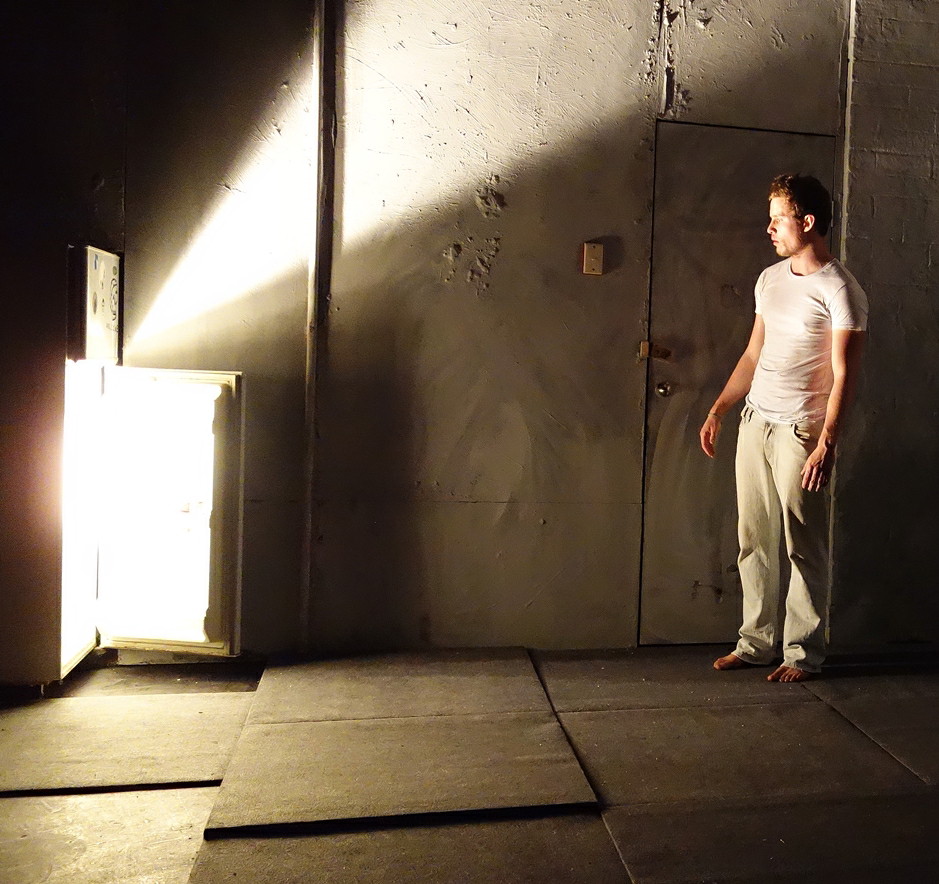
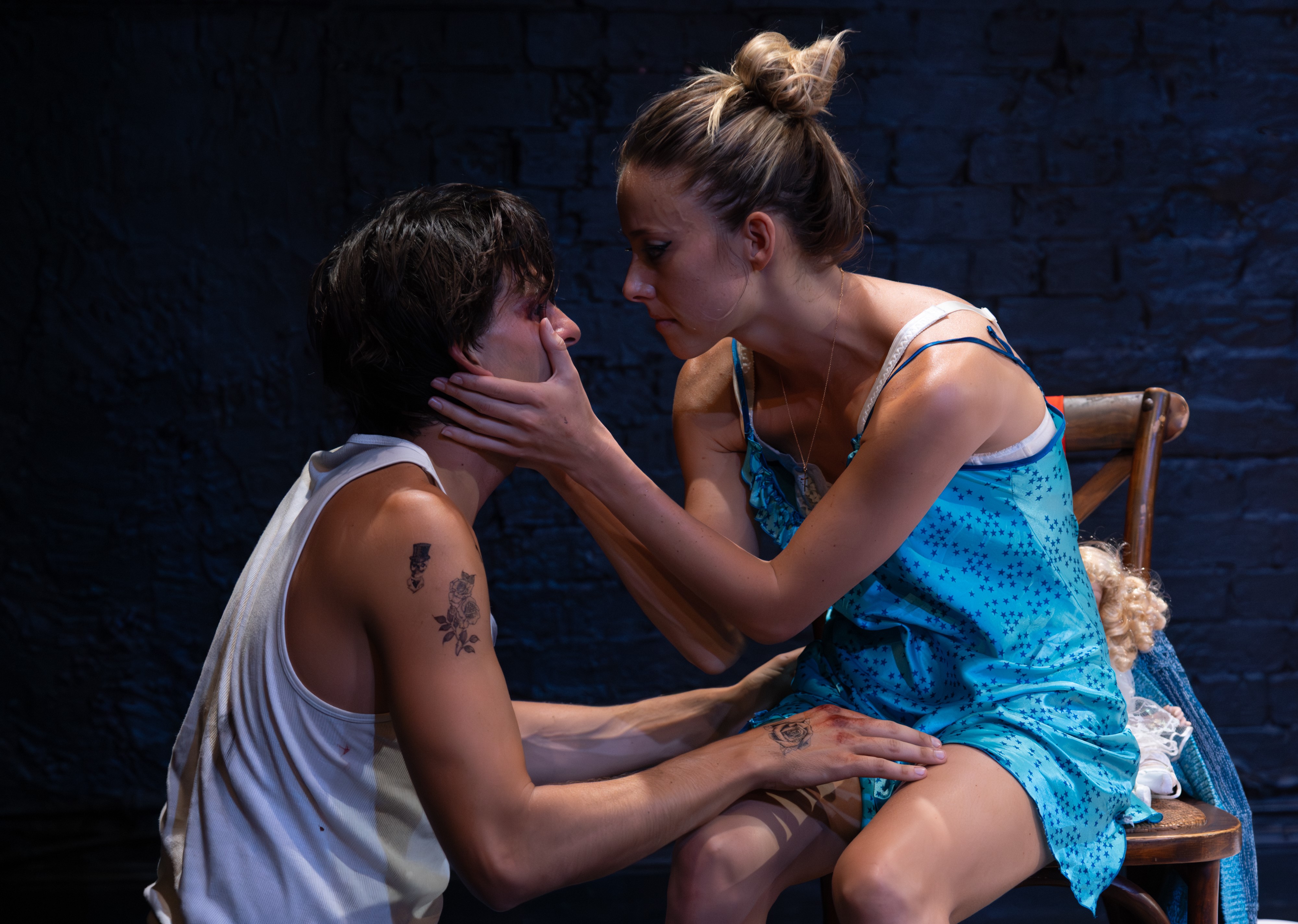
But first, some basics. Danny and the Deep Blue Sea is a 70 minute two-hander that’s very funny and deeply moving. Roberta meets Danny in a deadbeat bar. Danny is a fighter, though more in the style of perpetual belligerence than praiseworthy resilience. He’s at war with the world. And any victories he’s achieved are entirely Pyric; he might have just killed a man. His behaviour is a clear red flag, but it doesn’t frighten Roberta. In fact, she courts the danger. Perhaps she feels she needs to be punished; she certainly feels she’s done something awfully wrong.

These characters are big and colourful, passionate and physical, and under the superb direction of Nigel Turner-Carroll, JK Kazzi and Jacqui Purvis give utterly beautiful performances. 

But back to that line (or, at least, the line adjacent to that line): “Just because it doesn’t make sense, doesn’t mean it isn’t true.” This is an assertion of the supra-rational, and though the play is not religious in any conventional way, Shanley does explore material that’s often the province of religion: deep human faults, deep human needs and the regenerative nature of love.

In addition, as Danny and Roberta try to imagine a relationship together, we’re asked to consider the power of make believe, to contemplate hope’s miraculous ability to untether the future from the past. Despite their self-loathing, by being “nice” to each other, perhaps these two can gain some control of their destiny, and might yet share in the good things of Life.

It’s agency born of imagination, and so it retains the childlike quality of innocence, seeing only the world’s promise.

Perhaps it won’t work out. After all, both characters can be brutal, Danny especially so.

But didn’t I say the production was funny?

Well, it is. Not that it’s a black comedy. Nor is the potential for violence taken lightly. The humour is an expression of the love the playwright, and these actors, have for the characters. It’s a love we’re invited to share, and it’s a very easy, and very worthwhile, invitation to accept. (Especially when you’ve heard that line.)

Paul Gilchrist

Danny and the Deep Blue Sea by John Patrick Shanley

presented by NicNac Productions

at the Old Fitz until 1 Feb

oldfitztheatre.com.au

Image by Tony Davison

Four Dogs and a Bone

19 Sep

Brenda: I want to be famous!

Bradley: Why?

Brenda: I don’t know! *

First and third lines said with equal force.

This encapsulates John Patrick Shanley’s satire on the film industry.

This play is very funny. It’s jam-packed with tremendous one-liners.

Amanda Collins, photo Katy Green-Loughrey

Amanda Collins, photo Katy Green-Loughrey

It’s probably one of Shanley’s less substantial plays. The assertion that the film industry is laughable is hardly ground-breaking stuff. However, an enormous amount of money is invested in the triviality that is film while children starve (in the South Sudan as I write). So that means satires like Four Dogs and a Bone don’t lose their bite.

Shanley has created big characters and director Kate Gaul allows her cast to fill them. Design and blocking is kept appropriately simple, creating the space for linguistic brilliance and joyous hyperbole. There were a few opening night problems with pacing, but these will mend, and the cast will provide a terrific night’s entertainment.

Theatre’s revenge on film. Stage’s little brother is big on budget, but small on substance. And Shanley has fun with this. Victor, played by Paul Gerrard, is a stage writer hungry for money and therefore ripe for seduction by celluloid. Collette, played with glorious energy by Amanda Collins, is the star of the movie, but Collette is hampered by that most disgraceful of descents: she’s a theatre actor. Brenda is Collette’s support in the film and hence her rival in life. (Melinda Dransfield gives a delightful portrait of the nightmare performer: a façade of sweetness masking utter self obsession.) Belinda gleefully tells Colette that she looks grotesque in the daily rushes. As a stage actor, she is too big. A delicious irony – after all, regardless of performance style, big budget film rarely does subtlety.

Veronica Kaye

* Possibly a paraphrasing; my hunger for accuracy unequal to Brenda’s desire for fame.


Four Dogs and a Bone by John Patrick Shanley

Old Fitz til 27 Sept

http://www.sitco.net.au/


The Dreamer Examines His Pillow

15 Dec

‘What is sex for?’ adult Donna asks her father.

‘For making babies!’ he replies; an answer so shockingly and refreshingly obvious that it hides the very strangeness of the question.

‘What is sex for?’

What is it for?

What’s being expressed here is a powerful desire for structure, an overwhelming need for certainty. Donna is asking someone with supposed authority to tell her how the world is organized. She wants her father to say that things are this way, and not that way, or that way, or that….

John Patrick Shanley’s play is rich and thought provoking. His characters speak with a street poetry that overflows with gloriously fresh imagery. The play bristles and sparkles with the contrast between plain speaking and magical attempts to capture the unknowable.

Donna and Tommy are trying to work it out.  Should they be together or not? It would probably be easier if Tommy knew who he was and what he was responsible for. (Another strand of Shanley’s intriguing exploration of certainty.) It would also be easier if Tommy wasn’t sleeping with Donna’s younger sister.

Photo by Tom Bannerman

Photo by Tom Bannerman

Ainslie Clouston and Scott Lee give brilliant performances as the lovers, and Peter McAllum is wonderful as Donna’s father.

Tom Bannerman’s clever set brings the TAP alive.

Director Vashti Pontaks’ production is funny and deeply stimulating. (And not just because of the discussions of sex, though they’re interesting. Shanley’s vision of sex and romantic love is a controversial one. Of course, the play doesn’t really reduce desire to a mere component in biological reproduction. Indeed, to my taste, Shanley actually overstates the power and importance of sex in our lives. And yes, I know, that’s a bold claim to hide away in a set of parentheses.)

But the play is an exhilarating reminder of the danger of reducing anything to something else.

For when we rob Life of its richness, it is we who are poorer.

Veronica Kaye


The Dreamer Examines His Pillow by John Patrick Shanley

at TAP Gallery til 21st Dec

http://www.unpathed.com.au/