Tag Archives: KXT

Port

27 Sep

This is a fine production of an intriguing play.

Written by Simon Stephens, it’s set in Stockport in the UK over a fifteen year period, beginning in the late 1980’s. I call it intriguing because, in some ways, it’s novelistic in its ambition.

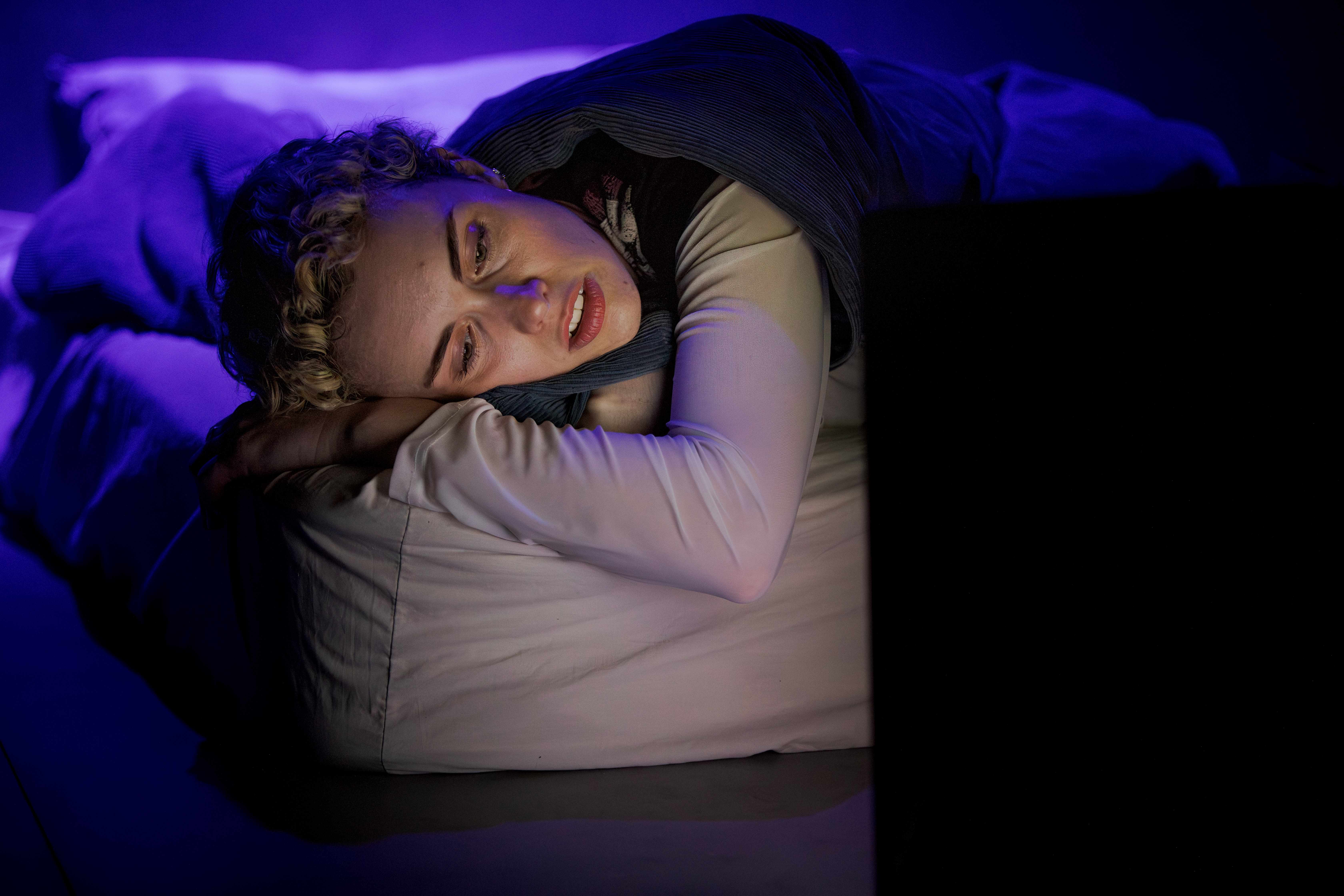
Focusing on the life of Racheal, it’s a bildungsroman (of sorts.) We watch Racheal as she moves from a young girl to a young woman. The journey is difficult. Her parents are absent or abusive or lost. Her younger brother is hyperactive to a degree that promises little peace. She makes poor decisions regarding men.

Is she growing? Or just surviving? I’m not sure.

Racheal’s story (if story is the right word) is constructed from multiple vignettes. Presented in chronological order, each is a slice of fifteen minutes or so of her life. In one, she’s eleven and she’s sheltering in the car with her mother and brother. In the next, she’s perhaps fourteen and in a hospital waiting room, as her father watches over his dying father-in-law. Etc. There are large time jumps between these vignettes and only occasionally do characters remain in the story (if story is the right word.) Of course, much has happened in between these vignettes and we have to piece together the parts.

Sometimes, what happens has little background and not much follow up. There are a lot of unanswered questions. Examples: Racheal faces constant accusations of sexual misconduct, which we assume is garden-variety misogyny, but as so much of her life is excluded from the vignettes, we’re not sure; her father is supposedly weird, but in what way, we’re not sure; in one scene she’s extremely cruel, but how she later makes peace with this behaviour, or indeed, if she ever feels the need to, we’re not sure; she finds a man with whom she clicks, but why they don’t stay together, we’re not sure.

In the midst of all this uncertainty, one certainty is that some audience members will be frustrated. Others will see it as an invigorating invitation to make lively guesses, to wonder at connections, to play armchair psychologist – exactly what we do every day when faced with the inevitable mystery of other people’s lives. (And I don’t mean just the unknown and unknowable lives of the strangers we see on our daily commute; I mean everybody. While our own life is experienced in first person, existentially, everybody else’s life is experienced from the outside, with us relegated to mere audience. This is why drama seems to capture Life, or least large aspects of it, while remaining entirely and obstinately blind to other aspects.) 

In this honest presentation of mystery, its brave refusal to fill in gaps, the script achieves a thrilling level of verisimilitude. It reflects exactly how we know other people: only in patches. (Often, we try to sew those patches together, to make something whole, to make a thing of comfort – but, if we’re honest, we really only have a pile of scraps.)

The time jumps between vignettes demand substantial transitions, and director Nigel Turner-Carroll choreographs these beautifully.

And within each vignette wonderful opportunities are offered to actors, and Turner-Carroll’s first-rate ensemble makes the most of them. (Some people would could call this an actors’ play; that is, one in which the principal enjoyment comes from the appreciation of the craft done well.)

Owen Hasluck plays Billy with enormous energy, creating a character who is eminently lovable and heartrendingly vulnerable.

Megan O’Connell as Racheal’s mother gives us a terrifically believable portrait of toughness bred from circumstance.

Kyle Barrett as Racheal’s father effectively portrays the laconic working class man, intimations of brutality vying with fragility. Later, he doubles as one of Racheal’s lovers, and this characterisation fascinatingly and frighteningly develops elements of the older character.

James Collins, as another of Racheal’s lovers, splendidly portrays a gentler masculinity, and their final scene together is the play’s surprise standout moment of suspense.

But it’s Racheal’s play, and Grace Stamnas gives a performance that’s entirely engaging – astonishing in its range, yet always mysteriously, evocatively, (and appropriately) incomplete.

Paul Gilchrist

Port by Simon Stephens

Presented by December Theatre Company in association with bAKEHOUSE Theatre

At KXT until Oct 4

kingsxtheatre.com

Image by Philip Erbacher

The Bridge

6 Sep

In the battle between the generations, the outcome is inevitable; all that’s in question is what the victors will learn from the vanquished before their final defeat.

The Bridge by Sunny Grace, Richie Black and Clare Hennessy is a fun comedy.

But it’s also a story of generational conflict.

Alyssa is covering Medea’s Curse on Tik Tok.

Amanda, who wrote the song, is not impressed. She’s the archetypal bad girl of 90’s Aussie rock. She Gave-it-to-the-Man good and hard  – and now she lives in Canley Vale with her adult son, teaching teenagers on Zoom to play Smoke on the Water.

Stories of generational conflict are as old as humanity. But our contemporaries often give two twists to this ancient tale.

The first twist – facilitated by our faith in Progress – is that the conflict is an ideological one, rather than just an unseemly scuffle for power. (Many people of a certain age will see in the self-righteousness of youth nothing more than an unconscious powerplay – and will look back at their own younger self with horror.)

The second twist – a product of a sociology infected by the disease of marketing –  is that the generations are somehow monolithic, that to make generalised assertions about Boomers or Gen X is insightful rather than mere intellectual laziness.

The Bridge, though aware of these contemporary twists, sensibly delivers them light. Directed by Lucinda Gleeson, it focusses the audience not on pseudo-sociology, but on the terrific one-liners and the excellent comic performances.

Zoe Carides gives us an Amanda who is hilariously plain-speaking. Brendan Miles as her manager beautifully expresses the frustrations inevitable in the attempt to curb a force of nature. Hennessy as Alyssa is an engaging mix of exuberance, defiance and doubt. Matt Abotomey, in a range of roles, displays a thrilling comic virtuosity.

The production runs 95 mins and occasionally loses pace. I was left wondering whether the script would benefit from a trim. The story begins in the 90’s, but its heart is now.  I’m not sure we really need to see any of the past. Let it be backstory and allow it to enrich the dialogue in the present (and this suggestion from someone who has too often complained about modern theatre’s obsession with backstory.)

And though the whole issue of whether these characters achieve fame or success was never going to resonate with a theatre reviewer, there remains a heartwarming comedy of the generations, and of the construction of bridges more important than any found in pop songs.

Paul Gilchrist

The Bridge by Sunny Grace, Richie Black and Clare Hennessy

Presented by CrissCross Productions in association with bAKEHOUSE Theatre

At KXT until 13 September

kingsxtheatre.com

Image by Ravyna Jassani

Blackbird

30 Jun

This one’s probably not for date night.

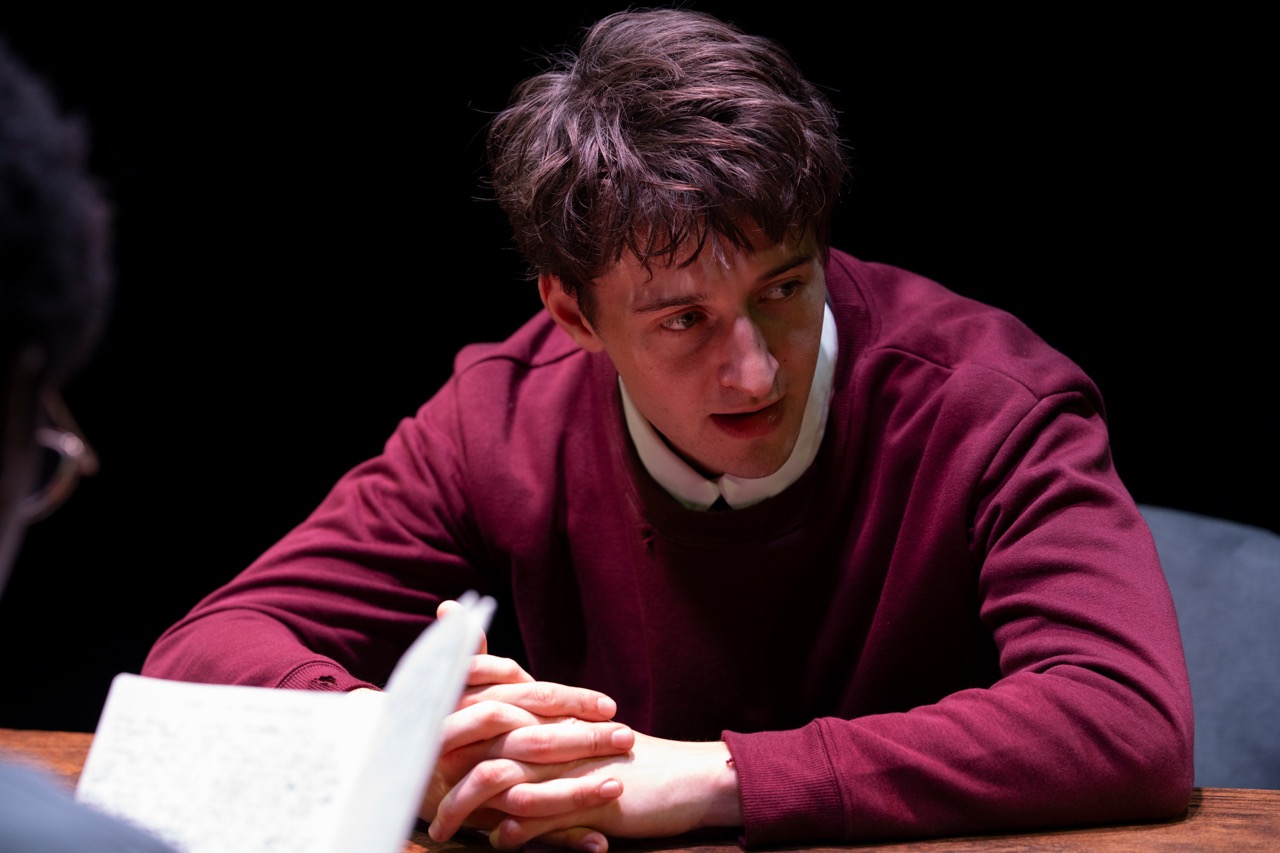
Late twenties-something Una confronts middle-aged Ray about what he did to her fifteen years ago.

To misquote Voltaire, if this play did not exist, it would be natural to assume it did. Written by David Harrower, it won the Olivier for Best New Play in 2007. And if you were a parochial Australian theatre reviewer – yes, the first two adjectives are tautologous – if you were a parochial Australian theatre reviewer, you might be inclined to view this piece as the epitome of the modern British play. It’s gritty. It presents two characters in a room in real time. It goes to a place most of us don’t want to go. It’s constructed from staccato dialogue that eventually blossoms into beautifully written monologues. It gives voice to characters who in public discourse are standardly reduced to stereotypes: either victim or villain.

As a result, it’s tempting to see it as a well-executed writing exercise or some sort of feat of dramatic ability. And there’s certainly much to admire about the skill. It would be terrific to show aspiring playwrights: What does it do? What doesn’t it do?

I’ve suggested a little about what it does, but what about what it chooses not to?

Despite Ray getting half the dialogue, we don’t really ever learn much about him. This is partly because we’re always deliberately left uncertain whether he is being honest or whether he is performing. This could engage an audience or it could tire them. The challenge is that the more realistically Ray is played, the more banality there is in his evil, the less we will see and enjoy – if enjoy is the right word –  what might be a theatrical Machiavellian duplicity. But another reason we’re left not knowing much about Ray is because his faults, obvious on an ethical level, remain opaque on an ontological level. If you’re of the hopelessly hopeful school that assumes that every human fault is only the desire for some good somehow gone wrong, then it’s difficult to see, with his particular fault in this presentation, what that good ever was. I suspect twenty years ago, the play encapsulated the movement, the moment, when for the first time this particular crime and its prevalence was openly and seriously discussed. And that was sufficient.

There’s another thing the play deliberately doesn’t do. What we’re shown on stage occurs fifteen years after the original crime. Ray has tried to move on. Una can’t. We hear a lot about the past, but we don’t see it. (Would we want to? No. But then, do we want to be shown the present?) This is a play primarily about consequences rather than causes. What we are shown is how individuals – both perpetrator and victim – try to deal with the past, how they create narratives to try to make sense of their guilt, their pain. But as we haven’t been shown that past, this personal narrative building is oddly untethered, pushing us back on assumptions we held before we entered the theatre. As I’ve said, perhaps twenty years ago ….

But, in the face of those who suffer, and who continue to suffer, it’s ENTIRELY INADEQUATE to say But we’ve talked about this already. Every evil must be faced anew; the price of innocence is eternal vigilance.

Directed by Pippa Thoroughgood, this production powerfully urges that vigilance. Performances are committed and courageous. Charlotte De Wit’s Una is a pathos-inducing portrait of fracture: assertiveness battling uncertainty. Her monologue in which vulnerability predominates is delivered superbly. Phil McGrath’s Ray is aptly unsettling: mundanity blends with belligerence, despondency becomes indistinguishable from duplicity.

Paul Gilchrist

Blackbird by David Harrower

Presented by HER Productions in association with bAKEHOUSE Theatre Co.

At KXT until 5 July

kingsxtheatre.com

Image by Ravina Jassani

IRL

7 May

Alexei has been chatting with Thaddeus on Messenger for ages, but they’ve never seen each other, and now it’s time to meet in real life. (IRL)

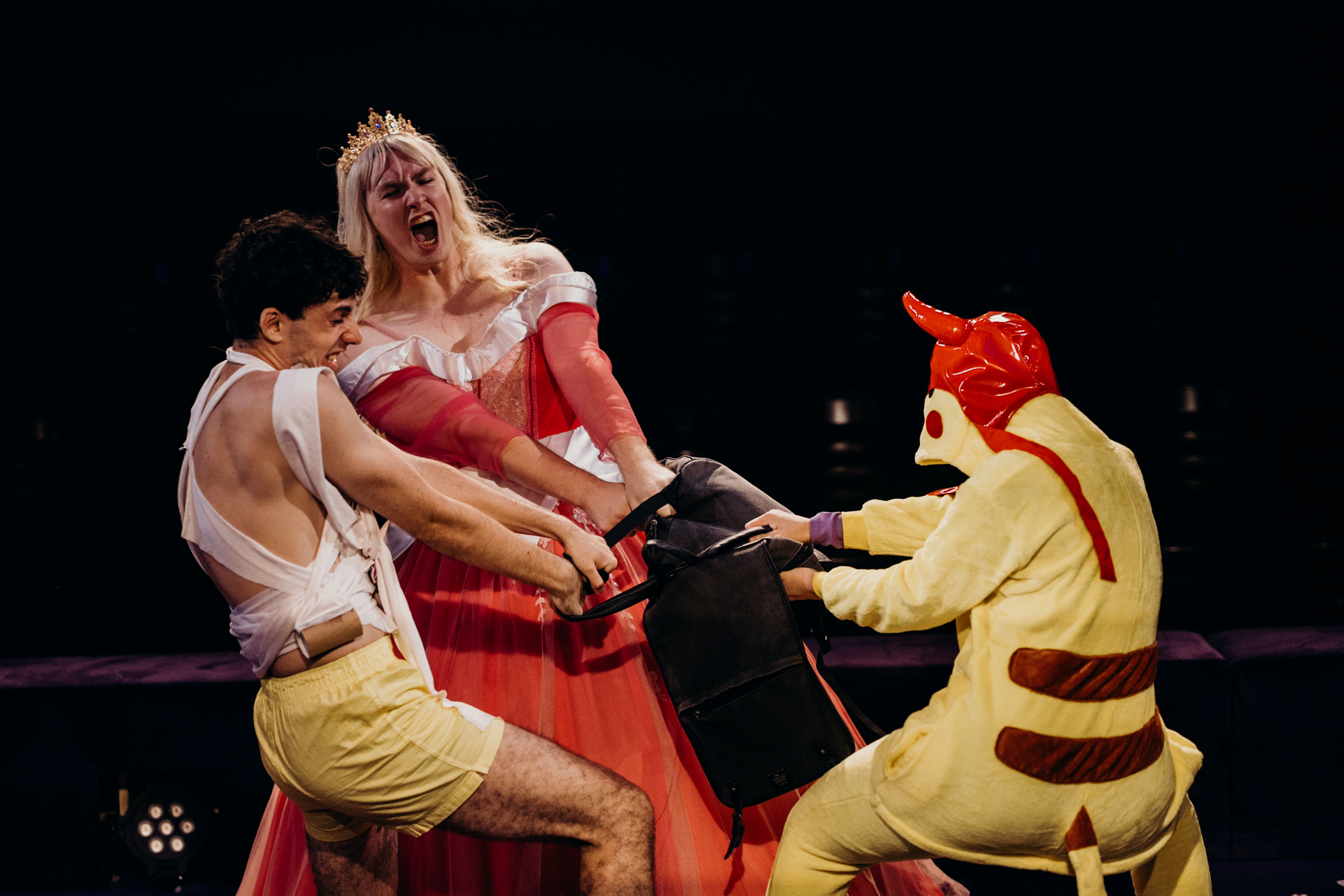
Alexei suggests Supernova for their first date. He arrives in his customary Disney princess-style outfit. Before their rendezvous, Thaddeus is tricked out of his clothes by a mysterious woman. Alexei comes to the rescue, but without revealing his identity.

It’s a crazy fun comic set-up that puts centre stage the concept of personal authenticity. When is it appropriate to play roles, and when should we just be ourselves? (Whatever the second of those two options means.)

As the two young lovers, Andrew Fraser and Leon Walshe are utterly charming, finding both the humour and heart in Lewis Treston’s beautiful script.

But I have to admit, it was the juxtaposition of this romantic comedy with a second story thread that I found utterly fascinating.

Alexei’s best friend, Taylor, is now a TV celebrity, working in America with some of the biggest names in the industry. She’s scheduled to speak at Supernova, but the pressure created by the inauthenticity of the role she’s asked to play becomes too much. In a glorious theatricality akin to Harper’s choice in Angels in America, Taylor opts out – not by entering a fridge like Kushner’s character, but by joining some tropical fish in the deep blue (which I’m guessing is an allusion to Finding Nemo.)

While psychologically AWOL, Taylor’s body is inhabited by Phoenix, a super villain with a strong family resemblance to Marvel’s Thanos. (Bridget Haberecht is absolutely terrific in each of these incarnations.) Like Thanos, Phoenix is zealously committed to a grand mission – the Great Forgetting – which will free society from its obsession with pop culture and facilitate true authenticity.

It’s not as crazy an idea as it sounds: Phoenix makes clear the link between pop culture and capitalism – all the cosplay characters prancing around Supernova are owned by just six major corporations.

Ignoring the capitalism thing for a moment, do we need to be freed from stories?

Indeed, can we be freed from stories?

There are several elements of Treston’s very funny, very clever script that seem to posit liberty from stories as a longed for possibility. Taylor is uncertain about the validity of the whole acting game and dreams of more authentic employment. Thaddeus is in the closet, and crucial to his character development is the dropping of any disguise and the showing to the world his true identity. And the coming together of the young lovers – the emotional heart of the story – appears to necessitate the shedding of any performative behaviour if they are to find the real thing. The last of these is particularly curious. Is romance real? Or is it a social construct, built from all the stories we’ve been told? (I found myself comparing this piece with Stoppard’s The Real Thing, a play which clearly asks whether true love is, after all, just one more performance?)

What is our relationship with stories? Presented here in the most delightfully accessible way, it’s a serious philosophical question.

(Warning! Boring, self-indulgent, reviewer digression ahead! When religious mystics seek a genuine encounter with the divine, they reject or bypass institutional authority, yet still they recount their visions in the tropes of the dominant narrative. Christian mystics see Jesus, Hindu mystics see Krishna. Zen Buddhism bucks this trend, suggesting that in the attaining of enlightenment, all narrative is shed – but, in doing so, it only affirms the fundamental importance of story in everyday life. On a secular level, modern pragmatism also displays an hyper-awareness of narrative. Responding to a society that is more soaked in story than any other in human history, modern pragmatism posits philosophical irony: an acceptance that no grand narrative can be privileged, yet a life without a guiding narrative seems inconceivable. It’s ironic because we know our particular chosen grand narrative can’t be proven true but, in a consciously playful way, we commit to it all the same. Treston’s world of perpetual pop culture references, and of a Supernova forest of competing yet somehow compatible narratives, seems a close cousin to modern pragmatism. But I’ll get back to that forest very soon.)  

Director Eugene Lynch elicits exuberant, high-energy performances from his superb cast. The physicality and the mock fights are especially impressive, combining sound (Daniel Herten), lighting (Topaz Marlay-Cole) and movement (Cassidy McDermott-Smith) with hilarious precision.

So, that fairy tale forest ….. Ultimately, what does the play suggest our relationship with narrative should be?

Does it suggest we should outgrow cosplay? That we should dismiss story and live in something called reality?

All that seems too simplistic a reading, one that denies the characters’ obvious joy in performance, and one that’s blind to the production’s deliciously-sweet and invitingly-rich final image.

Paul Gilchrist

IRL by Lewis Treston

Presented by The Other Theatre in association with bAKEHOUSE Theatre

At KXT until 10 May

kingsxtheatre.com

Image by Justin Cueno

These Youths Be Protesting

10 Apr

Aye, they do be protesting.

I’m not sure why the title of this one is in Pirate. The rest of the play is not, and that’s probably a wise decision, as it’s set in contemporary Australia, me hearties. (Yes, I’ve got to admit, I’ve been fighting the temptation to write my response entirely in the language of the buccaneer. After all, in a flat, consumerist society such as our own, what is any serious theatre review but some quaint, seemingly old-fashioned, musty document … but one that shows the way to hidden treasure?)

And this play, written and directed by Izabella Louk, certainly has its treasures.

I’m guessing it’s inspired by the student climate crisis protests of a few years ago, where young people quite understandably answered criticism that they should be in school with the assertion they’d like to be, if only the adults would do their job and protect the planet.

All the characters in this play are fifteen and, surprisingly, that’s the source of its strength.

Louk and her talented cast nail the high energy of youth, and the piece is fast-paced and very funny. Karrine Kanaan as the bossy would-be school captain offers a terrific satirical portrait of the obsession with self-advancement. Rachel Thomas’ Georgie is hilariously prim, and her journey to independence fascinating. Hamish Alexander’s Jimbo is slow-witted and good-hearted, great fun and greatly inspiring. Mây Tran’s Mandi is the serious heart of the play, and her impassioned speech about the challenges and necessities of political engagement is deeply affecting. But the script also gives Mandi plenty of scathing sarcasm, and Tran delivers it with delicious bite.

In these four characterisations, there’s a real sense of the dreams and doubts of youth.

But in making all the characters fifteen, doesn’t the play risk being about being fifteen? Is it a creative decision that threatens to overwhelm the more pressing issue of climate change?

Perhaps. Louk’s script reveals a maturity of political vision that belies its dramatis personae. The challenges of political action are candidly presented: How do you deal with those who support your cause but do so for selfish or stupid reasons? How do you work with people who claim to have the same goal as you but demand a different strategy? How do you not hate those who oppose your cause or, even more provokingly, seem entirely oblivious to it? How do you cope with the hate directed at you?

These challenges are not presented to dissuade us from political action, but to clarify what it is. Despite the current rhetoric, everything is not political. There are the things we can only do alone and there are the things we can only do together. The second of these clauses describes the political sphere of life, and its key word is together. Learning how to do things with other people is the key to political action.

This might seem naïve and simplistic, but this recognition of the true nature of politics is invaluable. The play may portray children, but many adult Australians appear to believe they’re being politically engaged when they’re merely spouting opinions. By representing the political sphere of life as it is first encountered by a group of teenagers – as they first learn to work together – the adults in the audience are gently, and surreptitiously, given a lesson in political maturity. (It’s a trick Harper Lee uses to great effect in To Kill A Mockingbird.)

On an even plainer level, the play’s exclusive representation of youth has an irresistible emotional impact. In regard to that most critical of issues, climate change, reason alone should prompt action, but the sight of fear in the eyes of a child is a powerful motivator.

Paul Gilchrist

These Youths Be Protesting by Izabella Louk

Presented by Blinking Light Theatre, in association with bAKEHOUSE Theatre

At KXT until 19 April

kingsxtheatre.com

Image by Karla Elbourne

Ophelia Thinks Harder

26 Mar

This is high energy feminist fun (with a few scenes that are less fun and more confronting.)

Written by Jean Betts in 1993, it’s an appropriation of Shakespeare’s Hamlet, one that places Ophelia centre stage.

Ophelia has feelings for Hamlet, but she can’t pretend he’s not utterly obnoxious. Her father and her brother are far too interested in her virginity. And Gertrude offers unwanted advice about how to live as a woman in a man’s world. (Don’t think too much.)

Betts cleverly weaves elements of the original text into her version of the story. With only a little tweaking, Ophelia gets all Hamlet’s major soliloquys, and they work magnificently. (Though I have to say I was less excited by the interpolation of so many lines from the other plays and the sonnets. Fortunately, my eyes no longer make that clicking sound when they roll. But what I found tiresome, others will find erudite and inventive.)

There’s also an appropriation of a poem by A E Housman, which is intriguing, and anachronistic (though that can hardly matter in a play like this.) It’s a brave writer who puts her words alongside the Bard and possibly the last great popular poet (that is, before modernism alienated the average reader.) But Betts definitely holds her own, and sometimes left me feeling I’d prefer more of her and less of them.

Alex Kendall Robson directs a terrific cast, and the key note is vitality. This is a wise decision; few people come out of a production of Hamlet wishing it were longer. (To stay or not to stay has been pondered at many an intermission. This version, at 150 mins including interval, keeps its engine at full throttle to keep us engaged.)

Brea Macey is superb as Ophelia – but I’ll get back to that.

Shaw Cameron as Hamlet is deliciously brutal, offering an engrossing portrait of the worst of privilege and entitlement. His physicality, especially, is a highlight, being both enthralling and threatening (as hinted in my first paragraph.)

Lucy Miller as Gertrude is a delight. Having accepted the misogyny of her society, the Queen has adopted a transgressive Machiavellianism that makes the character captivating. Many audience members have waited a long, long, long time to see the closet scene with this Gertrude.

Eleni Cassimatis as Ophelia’s maid servant gives the piece a poignant gravity, a terrible, galvanizing awareness of the dangers of this patriarchal world.

Pat Mandziy as Horatio offers a male character beyond the myopic, self-obsession of the other men, and both his performance and his text is crucial for the humane, richness of the work.

I started this article with the bland assertion that this is a feminist piece. Perhaps it occasionally overplays this element. The set is dominated by a painting of the Virgin Mary, and discussion of the history of the Church’s attitude to women gets a lot of stage time, a curious decision considering its all placed in the world of the Elizabethan playwright who was perhaps the most secular (admittedly, in a very religious society.) And this historical focus emphasises the academic. I’m not in a position to comment on whether contemporary women feel the challenges they currently face become more surmountable with the aid of a history lesson, especially one going back to Aristotle, Aquinas and the (aptly named) Church Fathers. I’ve written before that theory has little place in theatre, the form being more suited to the dreadful messiness of human reality than theory’s seductive simplicity.

Having said all that, by positing the protagonist’s problem in sociological or cultural terms, she must respond (at least partially) in kind. The result is that Ophelia has not only an emotional journey, but an intellectual one. 

But the rub is, her response to the theoretical language in which her problems are explained is not to simply regurgitate that language but rather to consider and test how it might inform her life. That is, she thinks – and I, for one, am thrilled to see a thinking character on the Australian stage.

Macey’s Ophelia is glorious, expressing beautifully the conflict between her self-doubt and her fundamental sense of dignity as a person. Macey powerfully presents Ophelia’s growing awareness that, for all her enervating inconsistencies, she deserves more agency than she’s permitted. Betts does well not to make Ophelia some kind of virago; the play is classic bildungsroman, a genre far better fitted to the dramatic form than any platform for slogan sprouting heroines. In the open-ended nature of the conclusion of Ophelia’s journey, there’s a splendid, invigorating optimism.

We know what we are, but know not what we may be.

Paul Gilchrist

Ophelia Thinks Harder by Jean Betts

Presented by Fingerless Theatre, in association with bAKEHOUSE Theatre

At KXT until 29 March

http://kingsxtheatre.com

Image by Phil Erbacher

Don’t Save Me

3 Mar

The premise of Don’t Save Me is so thought-provoking that it almost makes redundant the actual writing or production of the play.

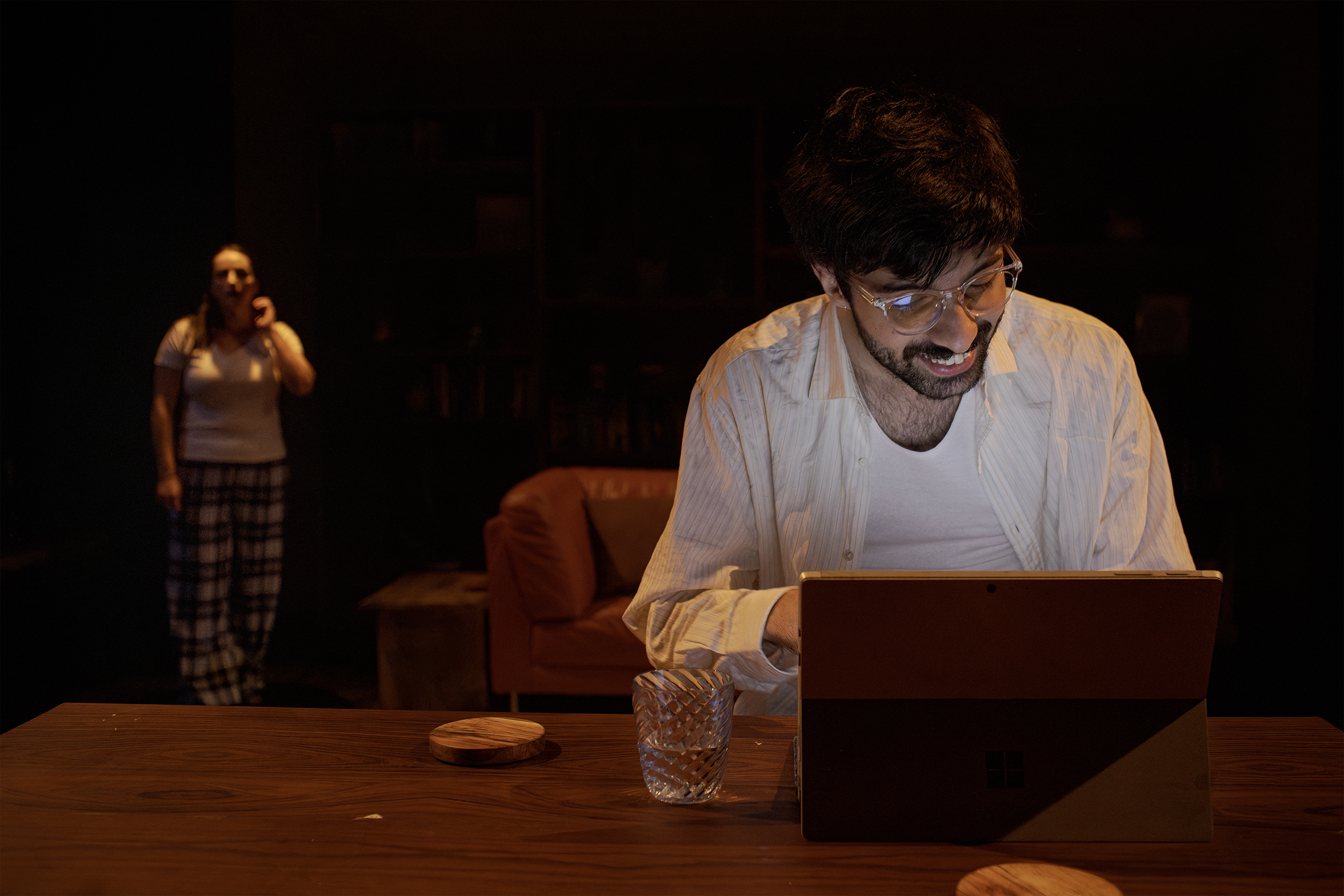
Jade (Holly Mazzola) is dying. Her husband Pat (Ben Itaba) secretly records their conversations, so she can be brought “back to life” by AI.

Does Pat have the right?

Written by Karina Young and directed by Nelson Blake, the focus of the play is primarily, and narrowly, ethical.

But when Jade discovers Pat’s plan, and objects, his response is a flat But you’ll be dead – which doesn’t quite trump all further argument, but feels awfully close to doing so. The dead, after all, don’t have rights. (You can lie about the dead, but you can no longer libel them.) And, with little time left, and that time to be inevitably filled with physical suffering, Jade’s insistence on her rights seems odd, an unacknowledged avoidance strategy as against a justified indignation. (Life perceived solely through the lens of rights is particularly barren. As victims of blind circumstance, which we all ultimately are, rights offer little counsel and even less consolation.)

And, with its sights firmly on ethics, the play sidesteps more interesting ontological issues. Instead of Should we do it? how about Could we do it?

The answer to the second of these questions is not only dependent on technology, but also on what we think it is to be a person. Are we just a collection of relatively consistent words and behaviours? If so, AI is perfectly capable of replicating us. However, vitally aware of our own agency, our freedom and the endless dynamism of being alive, we resist such a reductive vision of personhood

But the experience of love raises a thorny problem. We love particular people. Or, if we’re talking romance, solely one person. Based on what? Their relatively consistent words and behaviours? If that is so, Pat’s reductive AI plan is disturbingly little different from his choice to marry Jade in the first place!

And that’s why a deeper psychological exploration would have been fruitful. We don’t see Pat make the decision to record his wife. He’s already doing it before the play begins. We don’t see him so overwhelmed by the sheer wonder of his wife’s existence, that in the mad hope it might continue, he desperately clutches at straws. Similarly, when Jade discovers Pat’s plan, her response is merely anger. It doesn’t seem to occur to her to seriously consider why her husband might be tempted. She’s too focussed on her supposed rights to openly face the awful, bewildering mystery of ultimate loss. (Even when she asserts she is scared of death, we aren’t shown her fear, only her anger that her husband has failed to recognise her emotions.) For most of the 90 minutes of the play, the characters are remarkably unchanging, altering only in mood rather than outlook – and that’s a pity, because character development is a terrific dramatic tool to explore the moral, philosophical and emotional complexities of any thorny issue.

Indeed, the characters appear to be deliberately infantilised: her sister (Raechyl French) attempts to bribe her way back into Jade’s trust with ice-cream; the married couple’s dream holiday is Disneyland; they build a pillow fort in the loungeroom; and their relationship appears to consist of home cooking, including the baking of cookies, and watching reality TV on the couch. (Admittedly, the last of these could be an invitation to consider authenticity, after all, the play is about AI.)

But why are they such static children?

It functions as a powerful portrait of fear, of debilitating terror before those two most dreadful agents of change: Technology, control of which we’ve lost, and Death, whose measure we never had.

Paul Gilchrist

Don’t Save Me by Karina Young

presented by Puncher’s Chance Co in association with bAKEHOUSE Theatre Co

at KXT until March 8

kingsxtheatre.com

Image by Phil Erbacher

Cruise

19 Feb

In the war between the generations, the final result is inevitable. All that’s in doubt is what the victors will learn from the vanquished, before they too ultimately join the ranks of the defeated.

Jack Holden’s Cruise was first performed in 2021 in London. A young gay man works at a phone help line. An older man calls, and is disgruntled to be answered by such an inexperienced responder. Already annoyed at one of the older gay men working at the centre, the young man is taken aback. The tension between the generations is established.

This is a 90 minute monologue, with Fraser Morrison playing an astounding number of characters. Morrison’s control of voice and movement is superb. It’s an absolutely extraordinary performance. (And credit must also go to his terrific support team: director Sean Landis, accent coach Linda Nicholls-Gidley and movement director Jeremy Lloyd.)

The basic set up of the piece is that the older man tells the younger man his personal history, of his time in Soho in the 1980’s. It’s parties and promiscuity, dancing and drugs, and true love… and true love’s awful nemesis. There’s oodles of charm, plenty of humour, and at the dawning of that cruelly indiscriminate plague, distress, dread, and soul-deep sorrow.

As an outsider to this world – I spent the 80’s not in dance clubs but in libraries – a piece like this is a beautiful gift. To witness a community in the process of building itself, to observe it openly constructing its history, is a wonderful privilege. (Self-indulgent digression: While in those libraries, I was learning about love in a way very different to that of the characters in Cruise, reading the history of mysticism, first in Christianity, then in Judaism, then Islam and then from further east. So, History and Love – where the lesson is that Eternity is in love with the productions of Time, to quote William Blake.)

And that’s the glorious wisdom of this piece: by knowing our history, by knowing the sorrows and solaces of those who came before, we gain the strength to step into the future. And what’s more, knowing our place in Time is the best preparation for the joys which seem to transcend it.

Paul Gilchrist

Cruise by Jack Holden

presented by Fruit Box Theatre in association with bAKEHOUSE Theatre Company

at KXT until 22 Feb

kingsxtheatre.com

Image by Abraham de Souza

The Hero Leaves One Tooth

25 Jul

The myth of a vagina equipped with teeth has been with us for quite a while. The myth functions in several ways. It expresses the male fear of women, their dangerous allure, their power, the fact that the sexual act radically changes the participants. It also expresses the female desire for safety, the longing to secure themselves from sexual assault.

I don’t want to oversimplify; if the meaning of the myth was obvious and indubitable it wouldn’t be a myth, but merely a parable or fable, or even a truism. Myth works well in drama because it invites reflection rather than reduces to sermon.

And Erica J Brennan’s take on the myth of vagina dentata warmly invites reflection. Brennan reworks it as speculative fiction, imagining the phenomena to have occurred to most contemporary women. How we would navigate this concrete physicalization of our subconscious fears and desires?

Brennan sets the action in a dinner party, the archetype of privileged normalcy, and lets the characters attempt to make sense of it all. Their dialogue is stilted and sparse, evocative of the challenges of the new world in which together they find themselves, but also of the deep troubling internal darkness that alone they’ve always inhabited. Director Cam Turnbull effectively ramps up the sense of dislocation by slowing the pace. Lighting designer Jasmin Borsovszky also powerfully disrupts any illusions of a comfortable reality with unexpected and haunting variations. The addition of clever, catchy songs by Jake Nielsen further subverts complacency.

The cast do some good work. A highlight is Kira-che Heelan, as Neeve, offering an engaging performance that marvellously mixes the horror, the despair, the anger and the hope. Claudia Shnier’s Sasha is beautifully and provocatively part conniving minx and part feminist warrior, and all vulnerable human being, as she attempts to cope with forces much larger and more ancient than herself. David Woodland’s Mark, in his desperate, bumbling attempts to make connections despite the world’s brutality, is a splendidly sympathetic everyman.

The Hero Leaves One Tooth is like a gem dragged up from the underworld; deliberately only half-polished, it glimmers and shines while still suggesting the darkness from where it came.  

Paul Gilchrist

The Hero Leaves One Tooth by Erica J Brennan

Presented by Ratcatch Theatre in association with bAKEHOUSE Theatre Company

At KXT until 29 July

www.kingsxtheatre.com

Image by Clare Hawley

माँ की रसोई Maa Ki Rasoi – My Mother’s Kitchen

5 Jun

I don’t read the program before a show, nor after it (except to get the names of the creative team.)

I took Maa Ki Rasoi to be a sharing. I assumed the performer was sharing her personal story of her relationship with her mother. My assumption was supported by actor Madhullika Singh’s generous-spirited vulnerability, her warm-hearted performance style.  And my assumption was further encouraged by the meta-theatricality; we see the protagonist, a theatre maker, overtly choosing how to best tell her story.

If a personal sharing, this piece is part of a contemporary trend. It’s fascinating that personal testimony has become so common in theatre. We speak of the need to tell our stories, and this ubiquitous phrase has come to mean bearing witness to actual and specific lived experience. I’m not suggesting dramatists can’t or shouldn’t do this, but it’s curious that we’ve come to think it’s what they mainly do. (Hamlet undoubtedly reflects Shakespeare’s interests and assumptions, but does anyone really think it’s his personal story?)

Closely related to our desire to tell our stories is our interest in representation. It can only be good when our stages reflect the diversity of our population. But just as the phrase tell our stories has come to mean something very particular, so has representation. It’s come to mean something akin to speaking for, as we might imagine an elected representative speaks for her electorate. But an elected representative is chosen. Theatre makers aren’t chosen by those whom we increasingly assume they represent. In this piece, the protagonist makes a generalisation about South Asian mothers (already a rather broad category.) Am I being asked to consider this generalisation as testimony, information to add to my store of knowledge of South Asian mothers? Or am I being asked to consider the generalisation as I would’ve previously done in a theatre; that is, assume it’s telling me something about the protagonist’s mental habits?  

But this piece was not what I imagined. Maa Ki Rasoi is written and directed by Pratha Nagpal and, as previously suggested, performed by Madhullika Singh; so it’s not simply a personal sharing. (And, to anyone uninterested in the dramatic form and its development, all my earlier comments will appear just so much self-indulgent digression.) The piece mimics a personal sharing. I’m not suggesting this mimicry is dishonest or inauthentic, certainly no more than theatre is generally.

It’s a gentle story, presented with an overly gentle pace. The protagonist ponders the importance of cooking in her mother’s life. Both Nagpal’s writing and Singh’s performance present beautifully the tension between the wish for autonomy and the guilty regret of dismissing tradition. There’s delightful humour in the ironic exploration of words like feminism and patriarchy, abstractions that naturally fail to capture real life’s complexity. There’s also an intriguing use of the phrase safe space (or was it safe place?) Several times we’re told the kitchen is her mother’s safe space. Unless this phrase is in the process of morphing to mean happy space, what’s missing is a description of from what it is that her mother requires safety. It’s a poignant omission.

There are several other absences that are equally powerful. Many phrases in an Indian language (Hindi?) aren’t translated, and that refusal to privilege English speaks eloquently of both the joys and pains of the migrant experience. Similarly, for 45 minutes, the kitchen is empty. Spoken of, but absent, the protagonist’s mother is a wonderful symbol of how those we love imbue our every thought and feeling.

Paul Gilchrist

Maa Ki Rasoi – My Mother’s Kitchen by Pratha Nagpal  

at KXT until 4 June, as part of the TAPE OVER Festival

kingsxtheatre.com