Tag Archives: Old Fitzroy

So Young

18 Nov

In writing this review, I’ve allowed the most time to pass I ever have between seeing a show and putting my response on the page.

This is partly because of that pesky thing called Life, which with annoying persistence tries to sideline Art.

But it’s also because – by the time I saw So Young at the Old Fitz – the whole run had sold out. (Though do check for wait lists – tix may become available.)

When responding to theatre I try to write in a way that doesn’t suggest that the producing company has simply outsourced its marketing – but Outhouse’s production of Douglas Maxwell’s play is brilliant.

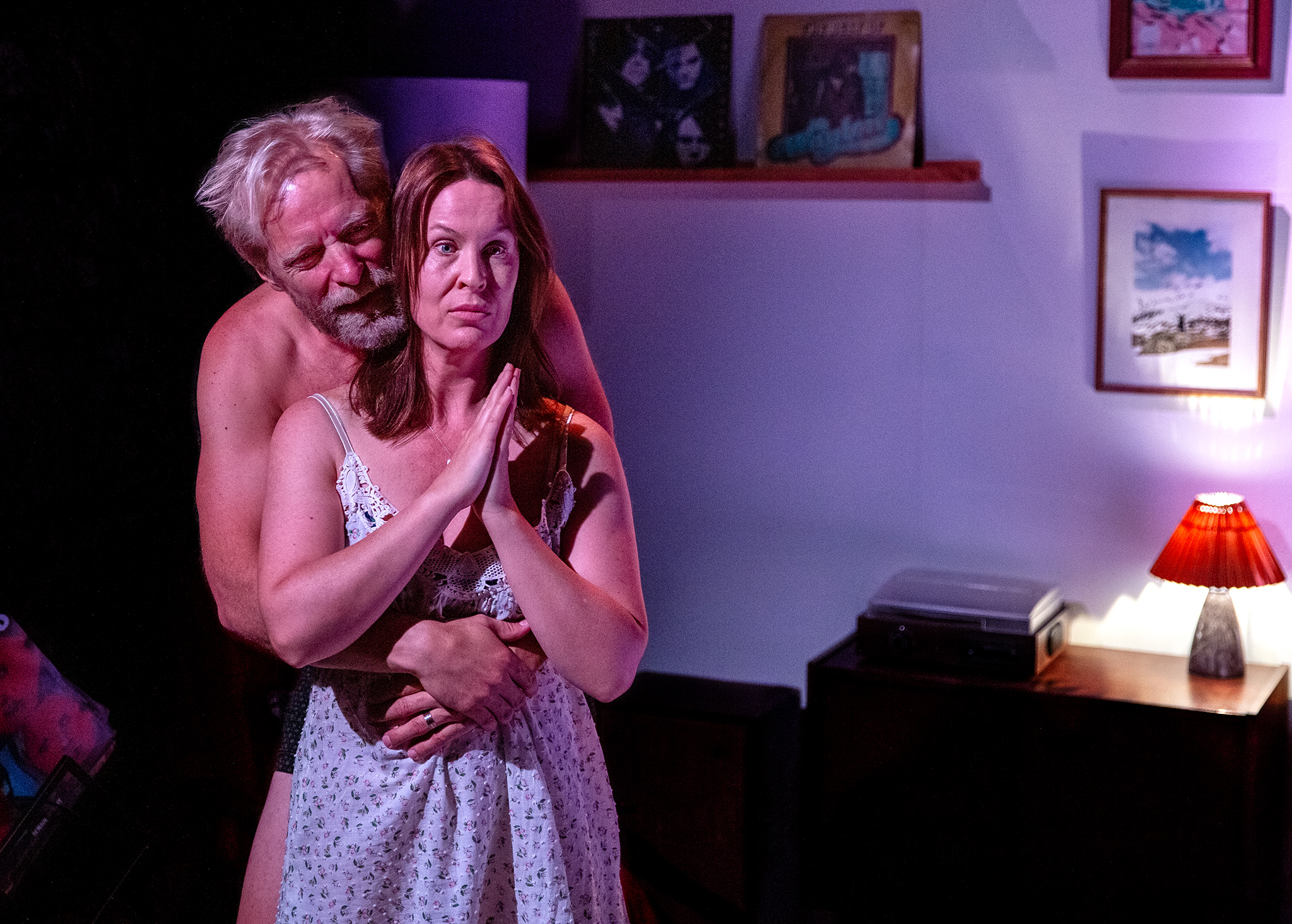
So Young is the story of forty-something Milo finding love again after the early death of his wife. His longtime friends Davie and Liane are shocked to find this new love, Greta, is only 20 years old.

We live in a culture obsessed with demographic divisions. Each one of us is labelled and firmly put in our box. This superb play is about two of the most dominant of these devilish divisions: youth versus age and male versus female. But it’s also about the only demographic division that ultimately matters: the quick versus the dead.

Under the direction of Sam O’Sullivan, the play blazes with humour and heart.

As Liane, Ainslie McGlynn’s performance is magnificent, beautifully boiling and bubbling with the grief that masquerades as anger.

As Davie, Jeremy Waters gives us a splendid portrait of blokeish bonhomie, with that longing for pleasant peace presented in all its complexity. Is it wisdom? Or is it weakness?

Henry Nixon as Milo offers a bewitching bewilderment in the face of Life’s two greatest mysteries – Death and Love.

Aisha Aidara as Greta is gloriously youthful. She marvellously captures youth’s perceived pitfalls – its social naivety, its careless certainty – while all the time radiating courage.

And courage and its close cousin compassion are the qualities most needed by those of us still on this side of the only division that matters.

Paul Gilchrist

So Young by Douglas Maxwell

Produced by Outhouse Theatre Company

At the Old Fitz until Nov 22

oldfitztheatre.com.au

Image by Richard Farland

Three (Short) Plays by Tennessee Williams

11 Aug

An increasing familiarity with a writer’s body of work offers real delight.

And it’s not just the delight of the know-it-all or the systemiser, the sort of pleasure that comes from a sense of superiority or control.

It’s the joy of meeting the artist behind the work, of getting a sense of their world view, their fascinations and their fears, what they feel they can attempt and what, for whatever reason, they eschew.

Jane Austen famously described her writing as a little bit (two inches wide) of ivory on which I work with so fine a brush, as produces little effect after much labour – and if you’ve had the good fortune to read her six novels, you’ll know that even in her throw away aphorisms she was the master ironist.

But what of Tennessee Williams?

Many of us are familiar with Williams’ full length plays The Glass Menagerie, Cat on a Hot Tin Roof and A Street Car Named Desire, but we’re less familiar with his short works. This production presents three of those playlets: At Liberty, Auto-Da-Fe and This Property is Condemned.

Williams was very proud of many of his short works.

And they further the impression of the artist and his art that many audiences get from his better known plays. On a linguistic level, they’re constructed from a beautifully heightened language that never loses its connection with the genuine vernacular. On a thematic level, they’re built from the tensions between sexuality and respectability, purity and pretension, and loneliness and fulfilment. And because they’re usually performed in a Southern accent (as they are here) they seem to offer a portrait of a particular part of the USA at a particular time. (You might assert that all theatre does something like my last point; that is, depict a specific place and time, but I think that’s true to varying degrees. Williams always seems aware of Society – that demographic cultural phenomena which is the subject of study of sociology, and is posited by modernity because it recognises the ubiquity of the arbitrary. Williams is aware of this Society in a way that, say, Shakespeare is not. You could argue this is because Williams is more interested in the outsider, but Shakespeare has characters like Othello and Shylock. Williams’ outsiders, however, are not obviously outsiders: he’s the great playwright of the hidden subversive.)

Directed by Megan Sampson, this production is a wonderful opportunity to consider the exact nature of the playwright’s genius (and, if you read this before you go, offers the added pleasure of concluding that my assessment of Williams is utterly inadequate or simply absurd.)

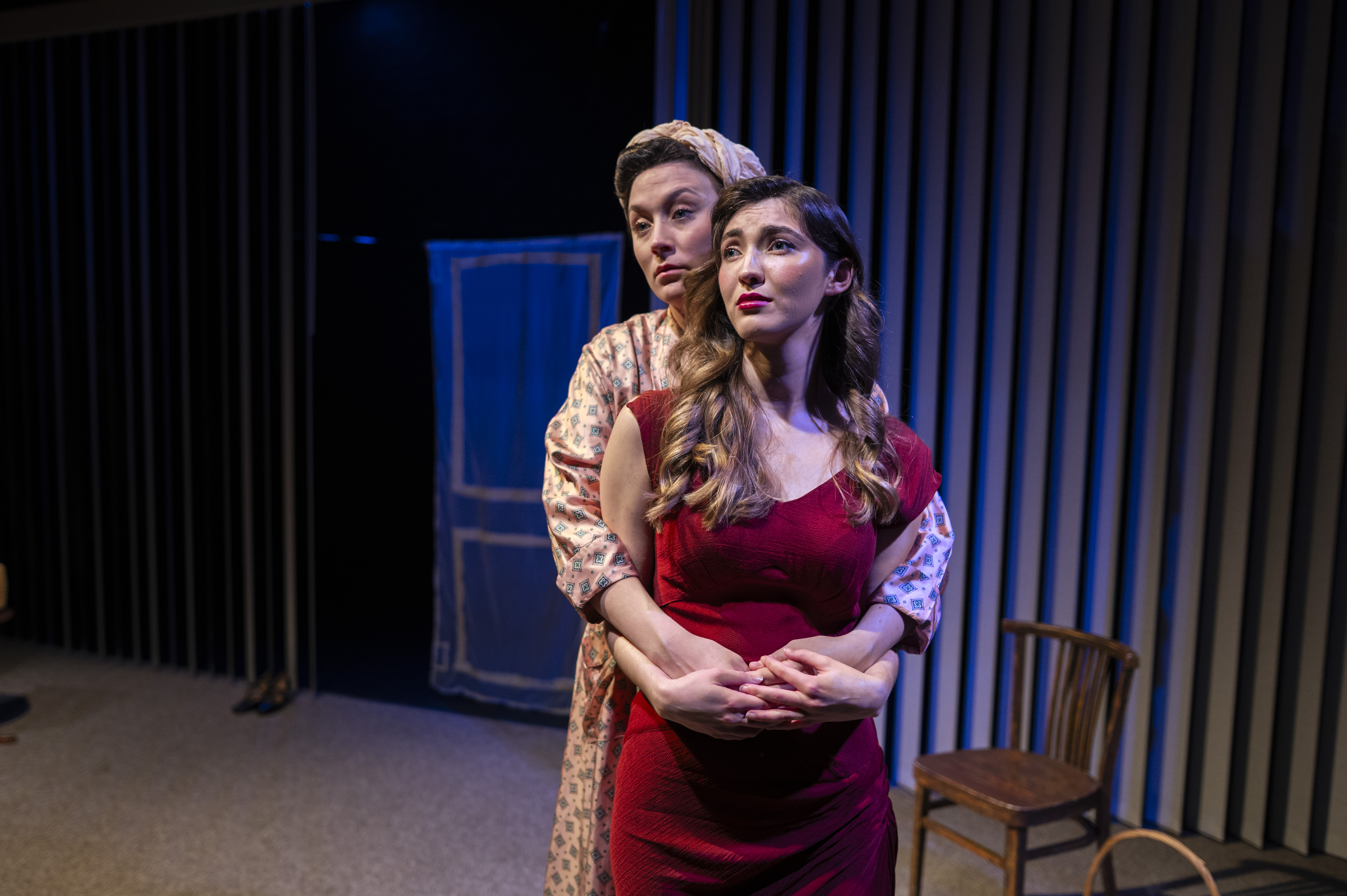
I’ll forgo filler and refrain from a description of each playlet; with the whole evening only 50 mins long, scenarios too easily slip into spoilers. Suffice to say, each piece is a treat, and the six different roles, doubled by Helena Cielak, Will Manton and Emma Wright, are brought to life with a precise energy. Cielak portrays two different women who each in their own way balances a radiant presence with a pathos-inducing bluster. Manton creates portraits of both uptight repression and bewildered innocence. And Wright brings fitting focus to two distinct characters who represent firmness in the face of flailing volatility.

Paul Gilchrist

Three (Short) Plays by Tennessee Williams

Presented by Ground Floor Theatre Company

At the Old Fitz, as the Late Show, until 15 August

oldfitztheatre.com.au

Image by Robert Miniter

Fewer Emergencies

28 Jul

This one resists an easy reductive reading – and that makes for thrilling theatre.  

In Martin Crimp’s Fewer Emergencies, four characters appear to be constructing a narrative. The narrative they tell each other is a story (or stories) of a couple who marry and raise a child. The four characters (one of whom may be the actual child) add to each other’s ideas for the narrative. They echo suggestions they like and challenge those they don’t. They toss up various motives for the actions of the characters, and insist – sometimes successfully – on consistency.

It’s oddly reminiscent of a TV writers’ room – but it’s most certainly not. The narrative building that Crimp is exploring is far less specific than that. It’s the narrative building that is the common inheritance of humanity.

Crimp’s script is an absolute delight – funny, horrifying, invigorating.

The narrative his four characters construct is part-cliché and part-inspiration. And that’s true of the narratives we build of our own lives: the cliché aligns us with a community, the inspiration grants us individuality.

Crimp plays with linguistic clichés: That only makes it worse; Don’t help me; Things are getting better.

But he also undercuts these clichés with a glorious poetry of the vernacular, making music from its rhythms and repetitions.

There’s also some startling imagery: In a drawer, awaits the island of Manhattan; Dangling over the suffering child is a dazzling key (a tantalisingly ambiguous symbol of varieties of opening – to reality’s wildness, or of the understanding.)

Crimp also has fun with clichés of the narrative kind: The troubled marriage that results in a troubled child; The formula for happiness being money plus property plus family plus shopping; And GOOD shopping – not just the usual big brands.

But these narrative clichés are also mischievously disrupted: With intimations of frightening mental illness; With scenes of appalling violence; With magical realism.

It would be easy to do this sort of theatre really badly. (I can certainly imagine botching it. My inner nightmare narrative, in common with everyone’s, consists of cliché tempered with terrifyingly unique personal disasters.)

But director Harry Reid pulls it off brilliantly, creating an extraordinarily engaging 60 minutes of theatre. Aided by a clever lighting design by Izzy Morrissey, Reid uses the space magnificently, presenting a piece as visually exciting as it is linguistically. He also elicits from his cast (Clay Crighton, Olivia Hall-Smith, Bayley Prendergast and Monica Sayers) wonderful performances. Without the usual safety net of dramatic realism – the verisimilitude to recognisable individuals – the cast display virtuoso skill, captivating us with both voice and movement. Crighton’s physicality, powerfully suggesting determination’s battle with fear, and confusion’s with certainty, is a highlight.

Paul Gilchrist

Fewer Emergencies by Martin Crimp,

presented by The Company Theatre,

at The Old Fitz, as a Late Show, until 3 August.

oldfitztheatre.com.au

Image by Robert Miniter.

Dear Elena Sergeevna

4 Apr

This is an absolute cracker of a play.

Written by Lyudmila Razumovskay in the 1980’s in the Soviet Union, it’s a masterclass in building tension.

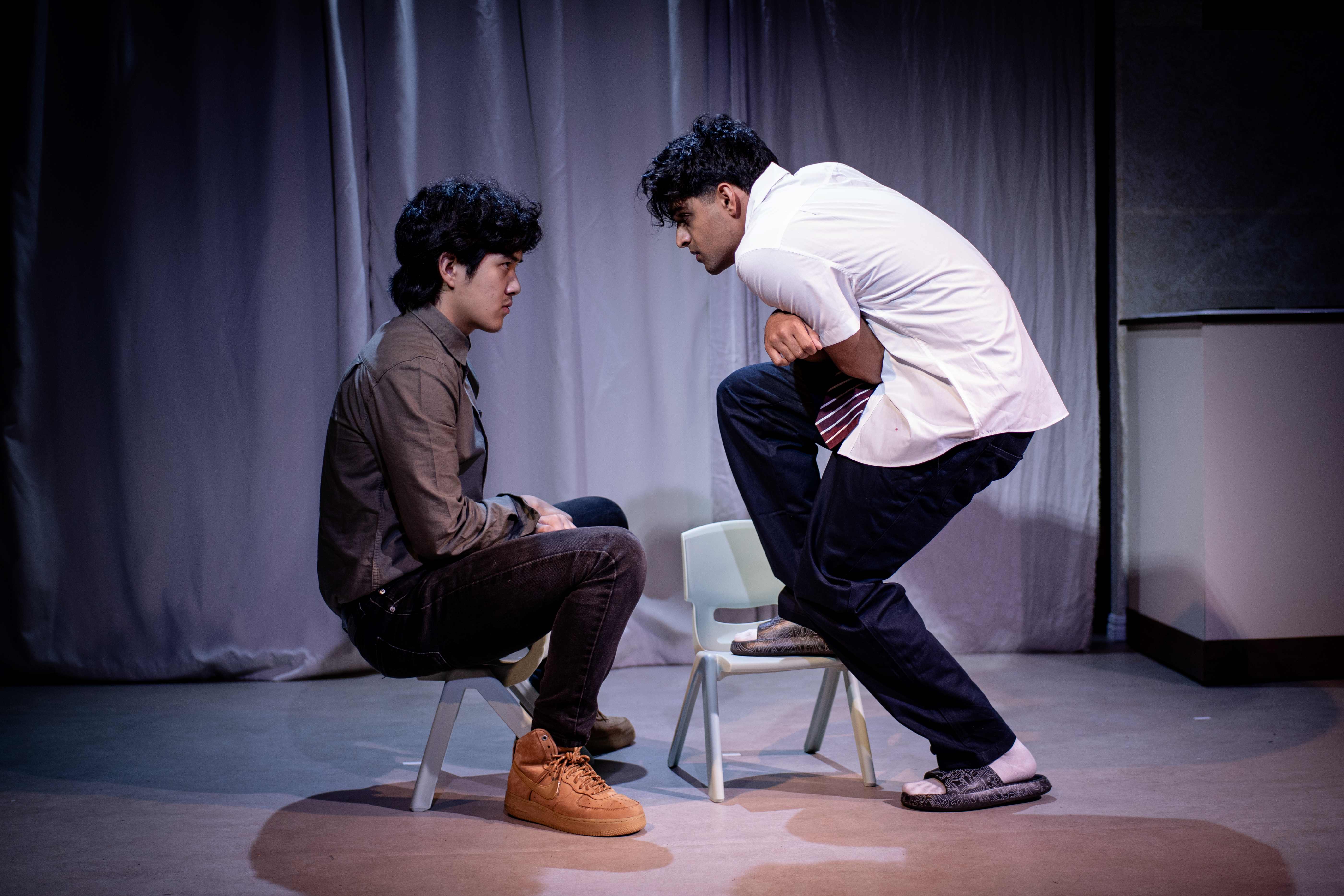
Four senior high school students arrive at the home of their teacher on her birthday. She is surprised. The students bear gifts, and one dubious request.

This is a classic battle-of-the-generations tale. Elena stands for an idealism which the students think is quaint and naïve. Elena thinks the younger generation are cynical materialists. We are your children, they tell her.

What makes this exploration of intergenerational conflict so rich is that Razumovskay makes it obvious that it’s not simply a matter of conflicting intellectual fashions. She recognises it’s also about power. The younger generation are fighting, not just for a new vision of the world, but for ownership of it. (It’s been suggested elsewhere that one reason Stalin’s purges didn’t lead to the total collapse of Communist Russia, despite their seeming irrationality and their certain brutality, is that there were sufficient young people who knew they would benefit. The murdered fill unmarked graves, but leave vacant more coveted positions.)

In this case, the young people want what they want, and one weapon they use to get it is to suggest Elena’s ethics are old fashioned, out of touch with hard reality. Anyone of a certain age is familiar with this strategy, only now the trick has been updated so that the younger generation’s claim is that they are more moral than their elders.

But it’s really about power. Volodya, the student ringleader, says it explicitly.

Volodya is a terrific portrait of a talented, dangerous young man. Once again, in tribute to the richness of the play, Volodya’s suggestion that his generation are the inheritors and natural development of Communism has sufficient a ring of Truth to make it perfect material for drama. (Out of the crooked timber of humanity….) With the collapse of the traditional religious consensus in Europe in the nineteenth century, the cry Everything is Permitted was heard in the winds that urged change. No longer was Communism, or any other political philosophy, to be restricted by old parochial moralities. If you had to crack a few eggs to make an omelette, you had to crack a few eggs. But it proved only a small step from Everything is Permitted to Everything is Possible. With the right planning, the right organisation, anything could be achieved. Hannah Arendt has observed this is a core belief of totalitarian movements. And Volodya has learnt from the masters. He comes to Elena’s apartment determined to make her give into their will. His friends will gain materially if she submits, but for him it’s just the thrill of dominance. (Those familiar with 1984 will see a whiff of the villain O’Brien about him.)

This production, directed by Clara Voda, makes some bold, thrilling decisions. Fitting the societal interrogation which is the play’s purpose, Voda goes for an ultra-realistic style of performance. This means the talented cast achieve an impressive level of authenticity (especially considering they all play characters substantially different in age to themselves.) Faisal Hamza as Volodya is particularly frightening, exuding the type of allure usually reserved for rattle snakes. Madeline Li as Lyalya captures the pathos-inducing, innocent arrogance of youth. As Pasha, Toby Carey nails that quiet sense of entitlement that screams ignorance – and its usual attendant, moral myopia. Harry Gilchrist as the group goof is likeable when required and threatening when not. Teodora Matović as Elena portrays a spiritual strength in the face of rising panic.

The ultra-realism of the production does have drawbacks. Sight lines are sometimes obstructed, and vocal delivery, while aiming for verisimilitude, occasionally slips into inaudibility.    

Paul Gilchrist

Dear Elena Sergeevna by Lyudmila Razumovskaya

produced by Last Waltz Productions

at the Old Fitz until 11 April

oldfitztheatre.com.au

Image by Noah David Perry

Pride and Prejudice

19 Jan

Kitty?

What has happened to Kitty???

In this adaptation of Jane Austen’s famous novel, the Bennet’s fourth daughter is utterly, inexplicably, and unjustly erased. I was mortified!!!

Of course, I’m parodying the pedantry of a certain species of Janeite, worshipers of Austen who are horrified whenever this sacred text doesn’t receive the fidelity and respect they feel it deserves.

(However, to be honest, I did feel the absence of the Gardiners. As models of a mature, successful romance, their very existence assures our heroine Elizabeth Bennet that her vision of true love is not just a naïve illusion.)  

Austen’s Pride and Prejudice attracts pedantry because it’s a foundational text of modern romance. The extraordinary number of film and stage adaptations attests to that. But when I say foundational, I don’t mean merely in terms of the literary genre of romance – I mean of the experience itself. Lizzy Bennet is determined to marry only someone she loves. And with love defined as a heady mix of desire, admiration, respect and an unwavering belief in equality, Lizzy’s hopes encapsulate the romantic aspirations of virtually every young modern.

On one level, adaptations of the novel aren’t tricky: Austen is essentially a dramatic writer. (Though there is the issue of that famously ironic narrative voice; do you simply give it to Elizabeth? If so, how do you present the heroine’s emotional and moral growth?)

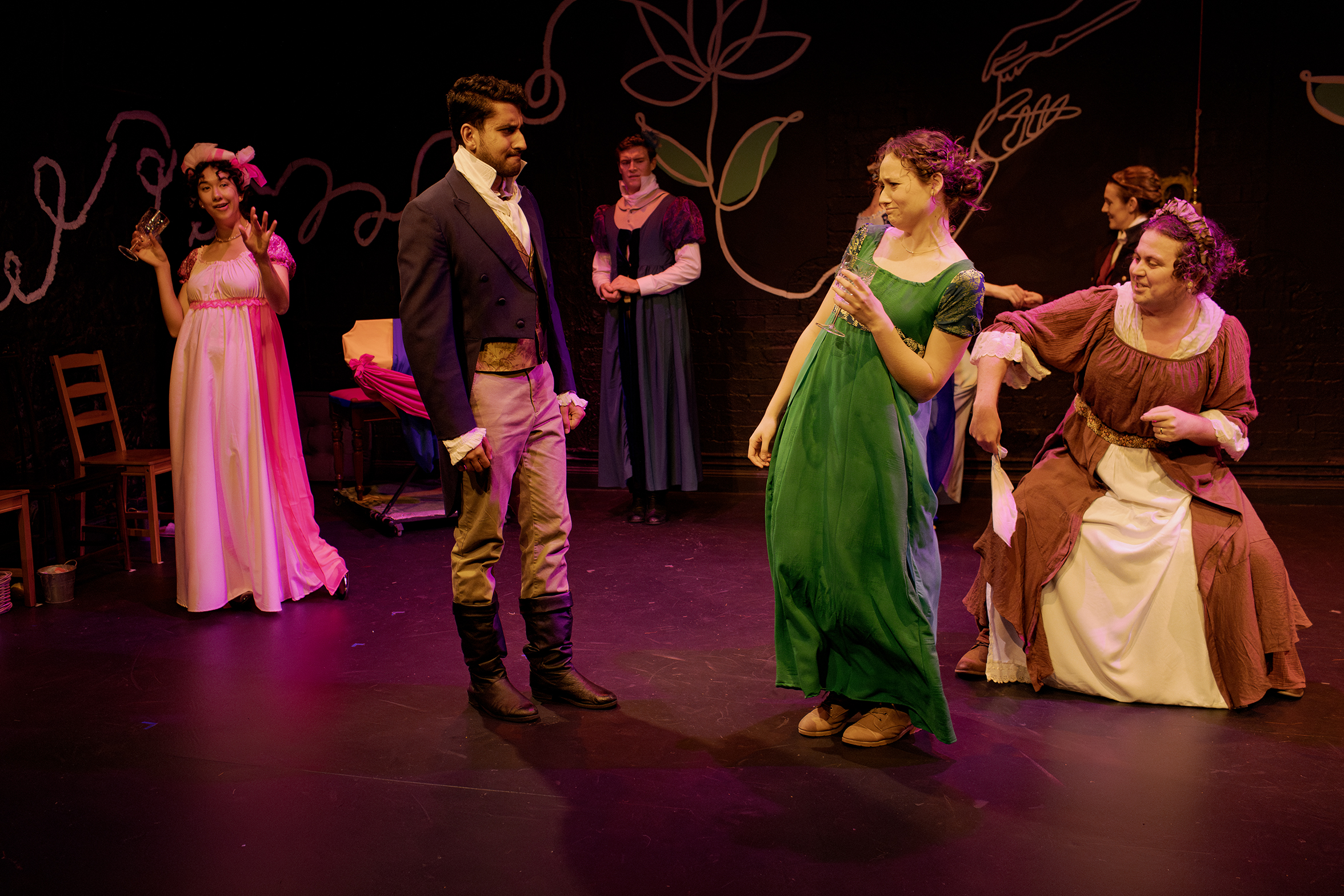
Directed by Emma Canalese, Kate Hamill’s adaptation captures all the key dramatic moments and, if an old, sentimental reviewer’s tears are worth anything, the heart of this piece beats strongly.

However, both in script and performance style, this production juxtaposes the drawing room dramedy of manners of the original text with a wacky theatricality. Sometimes, the deliberate double entendres and the unconventional casting make it feel as though the original is being parodied, or at least not being trusted to engage an audience. Several characters are cast against gender, which adds enormously to the playfulness but not much to the truthfulness. (This is theatre of audacity rather than of authenticity.) Some bold doublings ramp up the silliness, and won’t fail to get a laugh from most audiences. The major challenge is the relative homogeneity of the ages of the cast. Some of the representations of the older characters lack subtlety, and the snap is taken out of the original text’s social bite: Age often has an agenda it imposes on Youth, and the manipulation this entails is partly hidden if the generations are blurred.

Several of the characterisations might disappoint small-minded Janeites. Compared with more conventional adaptations: Darcy (Idam Sondhi) is more socially awkward, and Lizzy (Abbey Morgan) more attitude than sparkle (this Lizzy rejects not only marriage without love but marriage in general – which somewhat alters the impact of the final scenes); Jane (Lucy Lock) is less gentle; Mr Bennet (Steve Corner) is louder, and ultimately closer in characterisation to Mrs Bennet (AJ Evans) – who dominates the action more than she does in the novel; Mary also gets far more stage time and is presented as a mistreated neurotic; Bingley is reduced to a joke. (Bingley and Mary are doubled by Victoria Abbott, who displays extraordinary comic talent.)

But I’m not a pedantic Janeite; did these characterisations disappointment me? All roles are played with an exciting committed energy. (To make a hasty definitive judgement about a work whose main theme is the danger of hasty definitive judgements takes either less self-awareness or more courage than I currently command – which probably makes me fatally unsuited to theatre criticism.)

It is a truth universally acknowledged that no reviewer with literary pretensions can write about Pride and Prejudice without alluding to its famous first line. (So I can tick that off.) What is a little less commonly acknowledged is that all foundational myths must be reinvented, for that’s how they’ll find new audiences – and keep the old ones alive.

Paul Gilchrist

Pride and Prejudice adapted by Kate Hamill

Presented by The Artist Experiment & Dream Plane Productions

At Old Fitz until 8 Feb

oldfitztheatre.com.au

Image by Phil Erbacher

The Cherry Orchard

15 Aug

This is not the one by Chekhov. Though it is, sort of. Gary Owen has taken the bones of the story and buried them in Thatcher’s Britain.

It’s odd (though enjoyable) that we’ll put on a century old Russian play in contemporary Sydney. And the odd (though enjoyable) dial is ramped up further when we put on a British adaptation of an old Russian play. (And even more so when you consider that this particular adaptation is actually a historical drama, set forty years earlier than the time it was written. And then add the fact that this is the second modern British play informed by Chekhov’s The Cherry Orchard presented by this particular producing company in the last two years.)

It’s mirror reflecting on mirror, endlessly fascinating.

As I suggested, the bones of the story are the same: a privileged family in the process of disintegration. With the matriarchy asleep at the wheel, will they get to keep their estate?

Owen’s version keeps the pre-story of the death of the matriarch’s son, but soaks her grief in alcohol. The result is that the play seems smaller than Chekhov’s, haunted by a dead child and highlighting substance abuse. The sense of social change enervating an entire class is weakened, though perhaps it’s my historical ignorance that makes it difficult to find connections between Thatcher’s anti-working class revolution and the malaise of the landed gentry in fin de siècle Russia.

Under the direction of Anthony Skuse, performances are marvellous. Deborah Galanos as Rainey the matriarch has a tough job – the script rarely has her without a drink in hand – but she beautifully balances bullying charisma and vulnerability. Jane Angharad as her adopted daughter, struggling to keep her home and navigating a precarious romantic relationship, is deeply moving. Charles Mayer as Rainey’s twitty brother is great fun. James Smithers as the young would-be-radical is excellent, combining a boasting bravado with the ominous sense he might sell out. He’s having a fling (or is it?) with Rainey’s daughter, played with a glorious vibrant intelligence by Amelia Parsonson, and their scenes together are electric.

Paul Gilchrist

The Cherry Orchard by Gary Owen

At the Old Fitz until Aug 24

oldfitztheatre.com.au

Image by Braiden Toko

Do You Mind?

26 Apr

Wittgenstein suggested a work of philosophy could consist entirely of jokes.

Can a piece of theatre consist entirely of questions?

Written and performed by Shay Debney, Do You Mind? is such an attempt.

The script is beautifully whimsical and very funny. It allows Debney to showcase his extraordinary linguistic and vocal skills and his delightful physical comedy.

Recently I wrote, that to be left with questions is exactly what I want from a piece of theatre … so how can I not be satisfied with this?

Some of the questions Debney poses to the audience are simply about our personal tastes or experiences. Other questions are the equivalent of a Zen koan, joyful little puzzles that tease us out of complacency. (They’re of the family of – but not including – What is the sound of one hand clapping?)

We live in the Age of Assertion and Grand Theory. Everyone seems to know the answer to everything. Certainty is now equated with commitment.  A piece of theatre that reminds us of the value of the question is a rejuvenating antidote to this dullness of mind.

Questions help us dig deeper, to see that things may not be as simple and flat as we’d lazily like them to be. We reanimate our world through questions. Questions are how we unwrap the gift that is Life.

Not that Debney’s questions are what most people would call political: they’re impishly playful.

Since we’re on the topic of questions, you might ask this question: Can a show like this – one that doesn’t construct a traditional character and which eschews a traditional narrative arc – is this a show capable of retaining my attention? At just under an hour, the experiment is exactly the right length. Director Julia Robertson masterfully creates changes of pace and pleasing variations of texture. And, anyway, Debney has such a warm, vibrant stage presence that we’re keen to stay for the ride.

(I’ve got to note that it’s refreshing to see a one-person show that’s not autobiographical. In shows in which an actor talks about themselves, I often have to fight the temptation to suggest that the size of the cast directly correlates with the level of interest the play is capable of generating.)

For theatre nerds, Do You Mind? also poses intriguing questions about form.

Peppered with questions delivered in direct address, the audience of which I was a part seemed uncertain when (or whether) they were expected to provide answers. (In conventional question/answer format: Q. Is there audience participation? A. Only if you want there to be.)

But what this mischievous little show does is illuminate the strange miracle that is art. Every single piece of theatre ever made is created by both the artist and the audience. However, we tend to privilege the first of these two. If you think my choice of the word privilege is perverse, just try putting on a show in your room by yourself and see if you don’t come to feel that the audience is every bit as important as you. A show like this spotlights the agency of those who attend.

By focussing on the magic of the question – questions of all types – this little show is a glorious gift, a reminder of the childlike wonder to be found in the choice to be forever unwrapping.

Paul Gilchrist

Do You Mind? by Shay Debney

at the Old Fitz, as a late show, until April 27

www.oldfitztheatre.com.au/

Image by Julia Robertson

Everything is Sh*t

28 Feb

I have to admit, I was excited about this show because of its title. After all, who doesn’t like a guessing game?

Taking my seat in the theatre, I entertained the possibilities. Could the mystery phrase be Everything is Shut, and we were about to be treated to a story of arriving in a small country town on a Sunday afternoon?

Or perhaps the secret phrase was Everything is Shot, and in store for us tonight was a re-creation of a wrap party, that wild celebration that marks the finalisation of filming, when it’s all in the can?

Lost in anticipation as I was, you can imagine my utter shock when I learned that the missing word was Shit!

Everything is Shit!!!

Some people might be comfortable with scatological language, and perhaps even enjoy it (like pigs in shit, as the saying goes.) But even the faecally tolerant might object to the gross generalisation in the title.

After all, everything is not shit.

As an indisputable piece of evidence, I offer this show.

It’s decidedly not shit.

This rock cabaret is terrific.

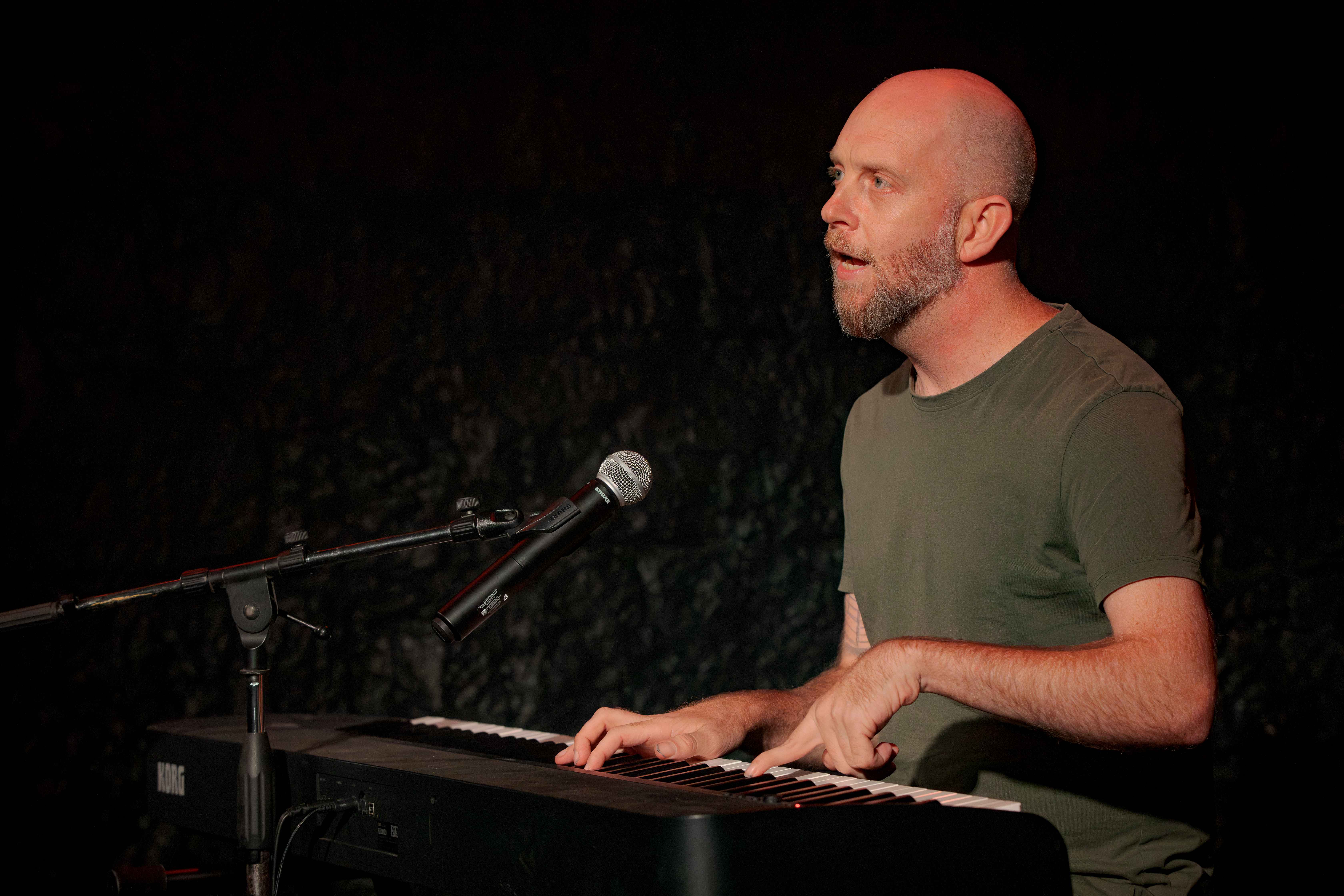
Writer and performer Andy Freeborn has a glorious stage presence. Freeborn’s songs are amusing and poignant. The band is magnificent. Outrageous metaphor warning: the band is a boa constrictor – steel-tight but very much alive. It’s an absolute delight to hear Freeborn on the keyboards jam with this team, making magic before our ears. I especially enjoyed Austin Hal on drums and Alec Steedman on violin, as they respond to Freeborn’s choices with lightning speed, or when they send down a few electrifying bolts of their own. (Snakes, and now lightning; my figurative language is clearly struggling to capture the energy on stage.) Creating a wonderful texture, Ren McMeiken takes lead vocals for a few of Freeborn’s songs, and displays a voice that’s pure gold. (Reptiles, climatic events and now metallurgy.)     

So, back to that title. It refers to the trauma that Freeborn’s family suffered because of their parent’s marriage breakdown.

The show is a sharing.

I’ve mention before the preponderance of sharings currently on our stages. Perhaps this genre has always overlapped with the genre of cabaret.

I’m not a huge fan of either genre. As a lover of language, cabaret often doesn’t do it for me. Despite the potential beauty of the lyrics, they’re often so difficult to catch on first hearing. And the banter between songs leaves me cold. (If Life is a cabaret, it’s because so much of it is either incomprehensible or superficial.) And I don’t usually warm to sharings because I chose to attend a theatre not a support group.  

As a sharing, this work values honesty and openness. Freeborn appears utterly committed to honesty; for example, they admit their banter is entirely unscripted, a totally unnecessary confession. At other times they appear more reticent, leaving us to guess at their experiences. I have no problem with this; a catalogue of traumatic events is rarely entertaining. And, anyway, in the titular song, Freeborn sings Everything is Shit, but that’s Ok. They’ve found a way out of the darkness.

Freeborn calls the show a healing through song. I’m glad it is, for the artist. For us, the show’s simply an absolutely joyous paean to resilience and transformation.

Veronica Kaye

Everything is Sh*t by Andy Freeborn

At Old Fitzroy Theatre until March 1

www.oldfitztheatre.com.au/

Image by HollyMae Steane Price

Orphans

24 Apr

Recently, as I passed my local RSL, I noticed posters for I Still Haven’t Found What I’m Looking For, the U2 Tribute Show, and Holding Back the Years, the Simply Red Tribute Show.

When I was younger, these sort of performers were called ‘cover bands’. I’m too uncool to know whether this term is still in fashion. However, I am cool enough not to be especially interested in this type of performance. I have no doubt the musicians in question are superb. In fact, they could well be better than the artists they are imitating. But still, there’s something less than satisfying about the form.

Few people seem to share my quibbles about what I call ‘cover theatre’. Whenever I see a local company produce a foreign play, or a play we have all seen before, I’m a little bemused. It feels like borrowed authority. Part of me wishes we could……I don’t know…… just transcend it.

Orphans is, of course, ‘cover theatre’. It’s also wonderfully done.

Photo by Rupert Reid

                   Photo by Rupert Reid

By Lyle Kessler, the play is set in Philadelphia’s underworld. (Why are artists attracted to stories about criminals? To quote the musical Chicago, is it because neither group ‘got enough love in their childhood’?)

Orphans is funny and thought-provoking. Director Anthony Gooley elicits from his cast terrific performances, deliberate hyperbolic, close kin to cartoon. It’s delightfully physical (which has its dangers; on the night I attended a crucial reveal came too early because a hidden prop suddenly popped into view.)

Treat and Philip (played by Andrew Henry and Aaron Glenane) are two adult orphans desperately in need of a father figure. Treat needs to learn moderation. Philip needs to learn to be brave. And so Harold arrives (played by Danny Adcock.) Harold might be a gangster, but he offers ‘encouragement’.

It’s an engaging production, with some powerful set pieces. Harold, who is also an orphan, speaks of the time he and the other orphans escaped the home where they were cruelly treated. They roamed the city, and then returned to the orphanage only when their hunger got the better of them. But “they had seen what they had to see.”

A play about parenting is a play about authority. We need it. And we need to transcend it.

Veronica Kaye

Orphans by Lyle Kessler

Old Fitz til 9 May

http://www.oldfitztheatre.com/

Bad

16 Jan

There aren’t many shows in Sydney with a philosopher as one of characters. Alright, this is a clown version of a philosopher. Some people would say there’s no other sort. (An assertion which the rest of my response, with its usual intellectual pretensions, will no doubt provide supporting evidence.)

Penny Greenhalgh and Kate Walder’s Bad, directed by Scott Witt, is delightfully playful.

Cate Blanchett and Geoffery Rush are about to perform in that much under-rated classic, Mum Where’s my Bucket? However, due to unforeseen circumstances, the two great actors are now unavailable. Step in these two clowns. They find both the execution and the concept of acting challenging.

Photo by Yael Stempler

Photo by Yael Stempler

We usually assume the task of acting is difficult. That’s why we have the myth of the great actor, and fit people like Blanchett and Rush into it.

We don’t usually assume the concept of acting is problematic. We probably should. Pretending to be other people? Fine, if you can actually get your head around what other people are. Which is doubly difficult if you acknowledge you don’t really know who you are.

Bad is an exuberant, engaging subversion of our ideas about theatre.

Penny Greenhalgh’s philosopher is a gentle yet powerful parody of erudition and expertise.  Kate Walder’s stunt man is bouncy and almost irrepressible. He’s textured by the slightest hint of pathos. Dressed to be fired out of a cannon, and filled with the requisite thought-free positivity, just occasionally it seems he has intimations of his fate.

Both performers have a relaxed and deliberate imprecision. It’s as though their characters can’t keep up with the demands of the supposedly important roles they have accepted. This makes them joyfully human and the show a refreshing response to the over seriousness of theatre.

Veronica Kaye


Bad by Penny Greenhalgh and Kate Walder

Old Fitz til Jan 31st,  Late Sessions

http://www.oldfitztheatre.com/bad